Table of Contents
- Drawstring Bag vs Gym Backpack for Training: The Direct Answer
- Key Differences at a Glance
- Capacity, Dimensions and Packing Efficiency
- Comfort, Weight and Carry Dynamics
- Materials, Weather Resistance and Durability
- Access, Organisation and Security
- UK Price, Value and Cost per Use
- Which Works Better in Real British Scenarios?
- Testing Standards and Bulk Custom Orders
- Common Buying Mistakes to Avoid
- Final Verdict: Who Should Choose Each?
- Frequently Asked Questions
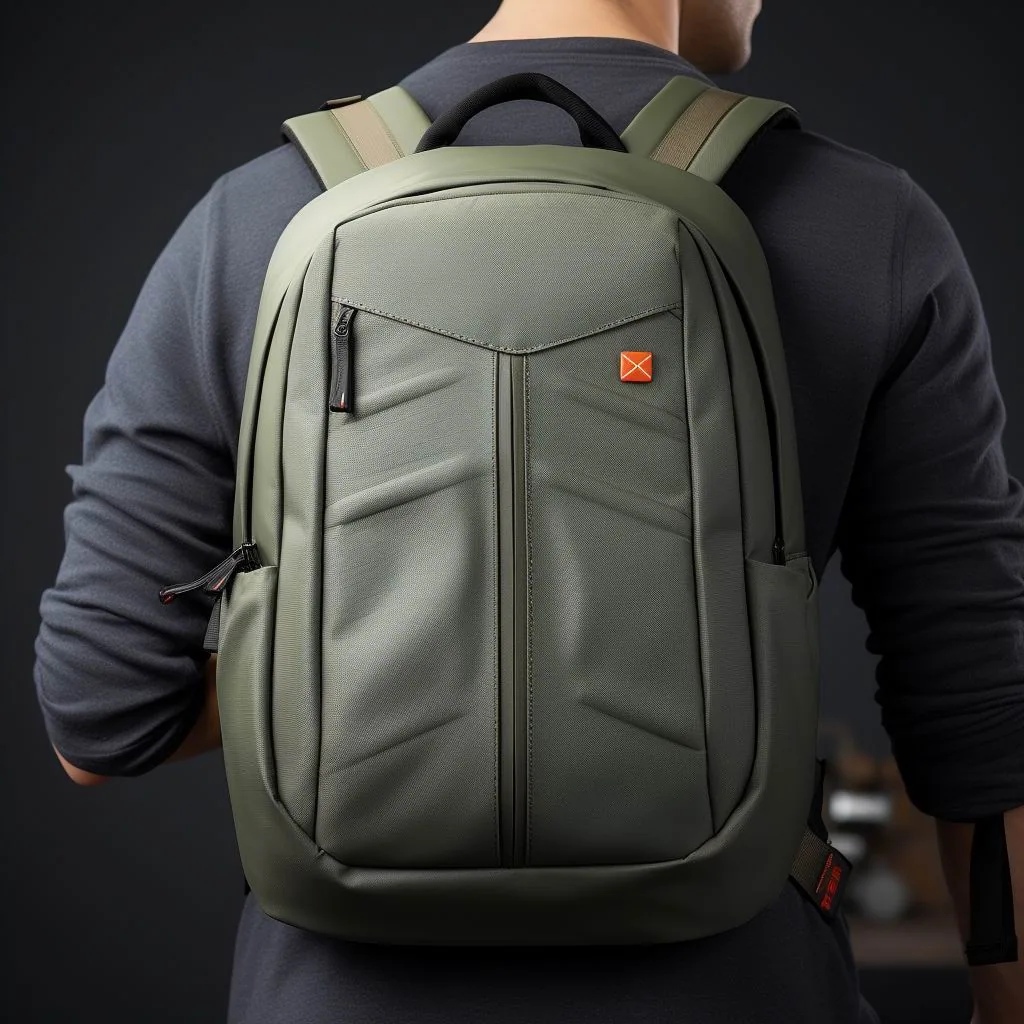
Drawstring Bag vs Gym Backpack for Training: The Direct Answer
For a training session that involves shoes, a bottle and a towel, a drawstring sack is the correct tool and a gym backpack is over-specified by roughly 500 g. For a session that involves shoes, a towel, a wet kit, a belt, knee sleeves and a change of clothes for the office afterwards, the drawstring stops working and the gym backpack becomes the only sensible answer. The dividing line is not litres. It is whether anything in the bag is wet, heavy or sharp.
Put a number on the pressure, because that is the real objection to the drawstring and it is usually argued about rather than measured. A 4–6 mm cord resting on the trapezius over a contact length of about 300 mm per shoulder gives roughly 1,800–3,600 square millimetres of load-bearing area. A 65 mm padded strap gives about 39,000 square millimetres across the same length. Carry 6 kg and the cord is delivering roughly ten times the contact pressure of the padded strap. At 3 kg, on a fifteen-minute walk, nobody notices. At 7 kg, on a twenty-minute cycle, it is the reason people switch.
The contents decide it. A standard strength session kit is: trainers at 900 g measuring 31 × 12 × 10 cm, a shaker bottle at 420 g filled, a small towel at 300 g, a training belt at 1.2 kg for anyone squatting over 100 kg, knee sleeves at 340 g, chalk at 150 g, a phone and keys at 350 g. That is 3.7 kg and about 11 L dry. A swim session adds goggles, a towel that weighs 600 g dry and 1.1 kg wet, and a pair of flip-flops, taking the wet load to around 2.4 kg. A drawstring handles the first case comfortably and the second badly, because there is nowhere to put a wet towel except against your shirt.
- Choose a drawstring for dry kit under 4 kg and a walk of fifteen minutes or less.
- Choose a gym backpack as soon as wet kit, a lifting belt or a laptop enters the session.
- Choose a drawstring for the locker, the boot of the car and the washing pile; choose the backpack for the journey.
- Choose the backpack if you cycle, because a drawstring swings with every pedal stroke.
Key Differences at a Glance
The figures below compare a representative 16 L drawstring sack against a representative 26 L gym backpack. Both are mainstream UK high-street products rather than specialist items.
| Attribute | Drawstring sack | Gym backpack |
|---|---|---|
| Capacity | 12–20 L | 22–30 L |
| Empty weight | 120–260 g | 620–950 g |
| Carry system | Two 4–6 mm cords over the shoulders | Two 60–70 mm padded straps plus a sternum strap |
| Contact area at the shoulder | About 1,800–3,600 mm² | About 39,000 mm² |
| Closure | Single drawcord with a cord lock | #8 or #10 zip, often two compartments |
| Wet provision | None | TPU-lined wet pocket or a ventilated base compartment |
| Shoe provision | None, or a mesh base panel | Separate ventilated compartment, 200 × 150 mm mesh plus eyelets |
| Folded size | Roughly 180 × 120 × 40 mm | Roughly 380 × 300 × 90 mm, does not fold |
| Retail price in the UK | £6–£18 | £28–£75 |
| Unit cost at 500 pcs | About £1.60–£3.40 | About £7–£14 |
Two rows deserve comment. The folded size matters more than it looks: a drawstring packs into a suitcase, a locker or a car door pocket, which is why people who own a perfectly good gym backpack still keep a drawstring in it. And the unit cost row is why every UK gym chain, football club and corporate wellness programme ends up ordering drawstrings in quantity — at 500 pieces a branded sack costs less than a month's membership.
The gym backpack's real advantage is not capacity, it is separation. Its entire reason for existing is to keep a wet towel, a pair of muddy trainers and a clean work shirt in the same container without any of them touching. Once you have carried a soaked towel against a shirt for forty minutes on the Central line, you understand the product.
Capacity, Dimensions and Packing Efficiency
A drawstring sack has no structure, so its stated capacity is close to meaningless and its usable capacity depends entirely on the shape of what goes in. A 16 L cylinder will accept 16 L of clothing because clothing is soft and compressible. The same sack will accept about 11 L of training kit, because a pair of trainers at 31 × 12 × 10 cm is a rigid rectangular block occupying 3.7 L and leaving roughly 2 L of unusable space around it in a round bag.
A 26 L gym backpack has the opposite property. It is a box with a divider, and the divider is what makes the volume usable: trainers go into the base compartment, the shaker stands upright in a side pocket 70 mm in diameter, the towel rolls into the wet pocket, and the main compartment takes a change of clothes, a wash kit and a 14-inch laptop without any of them fighting for the same space. Usable volume on a good 26 L gym bag is around 23–24 L, which is a higher proportion than most commuting packs manage.
The practical consequence is that the honest comparison is 16 L against 26 L and not 16 L against 16 L. If you buy a gym backpack in the same nominal volume as your drawstring, you will gain the separation and lose nothing except 600 g, because the box shape recovers the volume the cylinder wasted around the trainers.
- Lunchtime weights, 45 minutes: trainers, a bottle, a small towel, a belt and chalk. About 11 L and 3.7 kg, all dry. Drawstring.
- Evening strength session with a change for the office: the above plus a shirt, trousers, a wash kit and a 14-inch laptop. About 20 L and 6.5 kg. Gym backpack.
- Swim and sauna: goggles, a towel at 1.1 kg wet, flip-flops, trunks and a wash kit. About 15 L and 3.2 kg. Gym backpack with a wet pocket, without exception.
- Cycle to the gym and on to work: the above plus a D-lock, lights and a waterproof layer. About 22 L and 7.5 kg. Gym backpack with a sternum strap.
- Parkrun with a bag drop: a phone, keys and a light layer. About 5 L and 0.9 kg. Drawstring, and the gym backpack is absurd here.
The locker dimension is the constraint people forget. Most UK chain gym lockers are about 300 mm wide and 450 mm deep with a hinged door. A 26 L gym backpack at roughly 46 × 30 × 22 cm fits with the trainers compartment uppermost. A 30 L version at 50 cm tall usually does not fit lying flat and has to go in vertically, which costs you the top shelf. Measure the locker at your branch before buying anything over 28 L.
Comfort, Weight and Carry Dynamics
Carry comfort is the axis on which the drawstring loses, and the reason is geometric rather than a matter of foam. Two round cords concentrate load onto a narrow band of the trapezius, and because the sack has no back panel and no structure, its centre of mass sits roughly 120–160 mm behind your shoulders and swings with every step. A gym backpack has a flat back panel that holds its contents within about 90 mm of the spine, plus a sternum strap that stops lateral movement.
The load at which this becomes uncomfortable is about 4 kg for most people on a fifteen-minute walk. Below that, the drawstring is genuinely more convenient than the backpack, because it weighs 150 g instead of 800 g and stuffs into a pocket when you get there. Above 6 kg, or on a bike, it becomes actively bad: the swing is asymmetric, it pulls one shoulder down, and over a twenty-minute ride that produces the neck tightness that physiotherapists see from commuters who carry a shoulder bag on one side.
For the gym backpack, the specification that matters at this load is the sternum strap and the strap width. Look for 60–70 mm straps with 8–10 mm of closed-cell foam, a sternum strap with an elastic section, and a back panel with raised channels. The elastic section matters because a rigid strap across the chest restricts breathing during the walk from the weights room to the changing room, which is exactly when you most want to breathe.
There is one scenario where the drawstring is categorically better and it is worth naming: carrying the bag for less than five minutes at a time, several times a day. Kit from the car to the locker, kit from the locker to the poolside, kit from the washing machine to the airer. In that pattern the 650 g you save matters more than the ergonomics, because no single carry lasts long enough to hurt.
Materials, Weather Resistance and Durability
Drawstring sacks are made from 190T to 420D polyester, sometimes with a PU coating on the inside face. The failure mode is not abrasion, it is tearing at the eyelets. The cord runs through four to eight metal or plastic eyelets punched into the top hem, and every time you hoist a loaded sack by one cord, the entire load is transferred through two of them. A reinforcement patch of at least 40 × 40 mm behind each eyelet is what separates a £6 sack that lasts four months from a £16 one that lasts three years.
The second failure point is the cord lock. A spring-loaded plastic lock on a 4 mm cord slips under a 5 kg load, and once it slips the sack opens at the top and dumps its contents. Metal locks with a positive grip are worth the £1.50. If you have ever watched a sack of kit empty itself onto a station platform, that is the failure you saw.
Gym backpacks fail somewhere else entirely: the TPU lining of the wet compartment and the mesh of the shoe compartment. TPU laminate is hydrolytically stable but it does not like being folded when wet, and repeatedly folding a damp lining creates a crease that cracks within about eighteen months. The maintenance answer is to hang the compartment open to dry for eight hours after every swim, which is tedious and doubles the life of the bag.
Weather performance is modest on both and rarely matters, because neither bag is carried far in the rain. A 1,500 mm coating on the gym backpack's outer face handles a ten-minute walk from the car park; drawstring sacks are usually uncoated and will soak through in about three minutes. If you walk to the gym in Manchester between October and March, the gym backpack with a 3,000 mm shell is the only one that keeps a dry shirt dry, and that is a genuine reason to upgrade.
There is a hygiene dimension that belongs in this section because it drives the specification. Damp kit left in a closed bag for twelve hours develops the smell that no amount of air freshener removes, and shared gym equipment is a recognised route for skin infections. Wash towels at 60 °C, hang the wet compartment open, and follow standard hand hygiene guidance published by the Centers for Disease Control and Prevention. For anyone carrying kit as part of their job, the HSE manual handling guidance also applies to how the bag itself is lifted and carried.
Access, Organisation and Security
A drawstring sack offers exactly one opening and one compartment. That is its virtue and its limit. You reach in, you feel around, you find the thing. For five or six items this is faster than any pocket system, because you are not making decisions about where things go. For fifteen items it is a disaster, because everything below the first three is unreachable without tipping the whole bag out on a bench.
A gym backpack should offer four zones and no more. A ventilated base compartment for trainers, a wet pocket for a towel, a main compartment for clothing and a wash kit, and one external zipped pocket for a phone, keys and a membership card. Each extra divider beyond that steals volume and, in this category specifically, traps moisture. Twelve narrow pockets in a gym bag is a design failure dressed up as a feature.
Security is where the drawstring is genuinely weak and it is rarely discussed. A drawcord closure is not a barrier. It holds the mouth of the sack roughly closed, it does not resist a hand, and in a busy gym changing room or on the Tube it is an open invitation. Gym backpacks are not much better by default, but at least they can be fitted with a locking slider on the main compartment, which deters casual rather than determined theft.
The practical rules that work. Keep your phone and wallet in a zipped pocket, not an open mesh one. Do not hang the bag on a hook outside the changing room with the locker key in an external pocket — put the key on a wristband. On public transport, put the bag on your lap or between your feet rather than on a seat beside you. And never put a house key in the same pocket as anything bearing your address.
UK Price, Value and Cost per Use
Training kit gets used hard and replaced often, which is the opposite of commuting kit. A gym bag used five times a week sees 260 uses a year, gets thrown into lockers, sits damp, and is washed roughly monthly. On that basis cost per use falls fast and the more expensive item is very often the better buy.
| Product and band | What you get | Realistic life at 260 uses a year | Cost per use |
|---|---|---|---|
| Drawstring £6–£10 | 190T–210D body, four unreinforced eyelets, plastic cord lock | 4–8 months | About 3–5p |
| Drawstring £14–£22 | 420D body with a PU backing, reinforced eyelet patches, metal cord lock | 2–3 years | About 2–3p |
| Gym backpack £26–£45 | 420D body, mesh shoe compartment, no wet pocket, basic #8 zip | 18 months–2.5 years | About 8–12p |
| Gym backpack £55–£85 | 600D base, TPU-lined wet pocket, ventilated base compartment, #10 zip, sternum strap | 4–6 years | About 4–7p |
The pattern is unusually clear. In both formats the upper band is better value per use than the lower one, because the failure is structural rather than cosmetic. A £7 drawstring whose eyelets tear at month six costs 5p a use. A £17 one that lasts three years costs under 2p. A £32 gym backpack whose TPU lining cracks at eighteen months costs 10p a use; a £65 one that survives five years costs 5p.
For gyms and clubs buying in quantity the calculation changes again. At MOQ 500 pcs a branded 420D drawstring with reinforced eyelets costs roughly £1.60–£3.40 delivered, which is less than a single month's direct debit and produces a membership-welcome item that survives two years of use. The same budget in a 26 L gym backpack buys about 120–180 units at £7–£14, which is the better gift for a tiered membership but a poor one for a mass onboarding campaign.
Budget £12 a year for consumables either way: a replacement cord and lock at £5, a mesh wash bag at £4 and a 200 ml bottle of sports-gear detergent at £3, which is formulated to remove the odour that ordinary detergent leaves behind.
Which Works Better in Real British Scenarios?
Four training patterns cover almost everyone, and in each one the answer is decided by what is wet, heavy or sharp rather than by the volume on the label.
Scenario one: a lunchtime weights session at a city-centre chain gym, twelve minutes' walk from the office, kit going into a locker. Contents are trainers, a bottle, a small towel, a belt and chalk: 3.7 kg, 11 L, entirely dry. The drawstring wins. It weighs 160 g, it fits in a desk drawer, and at the end of the day it goes in the washing machine with the kit. A 26 L backpack for this is 700 g of unnecessary structure.
Scenario two: an early-morning swim at a local leisure centre before work, then straight to the office. Contents are a wet towel at 1.1 kg, trunks, goggles, flip-flops, a wash kit, a shirt and trousers, and a 14-inch laptop: about 5.4 kg, 18 L, with 2.4 kg of it wet. The gym backpack wins outright, and specifically one with a TPU-lined wet pocket. There is no version of the drawstring that survives this, because a wet towel in a drawstring sack sits directly against your work shirt for the entire journey.
Scenario three: a cycle commute to the gym and on to work, roughly twenty minutes each way, in Bristol, in February. Contents are the swim kit above plus a D-lock, lights and a waterproof shell: 7.5 kg, 22 L. The gym backpack wins, and it needs a sternum strap and a padded harness to do it. A drawstring on a bike swings with every pedal stroke, pulls asymmetrically on one shoulder, and is the reason people arrive at work with a stiff neck.
Scenario four: Saturday parkrun, bag drop, five minutes from the car. Contents are a phone, keys, a light layer and a bottle: 0.9 kg, 5 L. The drawstring wins and the gym backpack is absurd. This is the case the drawstring was designed for, and it is worth keeping one in the car for it even if you own a far better bag.
Testing Standards and Bulk Custom Orders
We are a sourcing and programme-management company. We develop branded bag programmes with vetted production partners and manage specification, sampling, inspection and shipment. Our partners run a 4,950 m² SGS-verified production floor with 7 production lines, 149 machines and 137 colleagues, at 200,000 pieces a month. QUANZHOU JUNYUAN BAGS was founded in 2014; its founder has been in the bag trade since 2004.
For gym chains, clubs, corporate wellness programmes and event organisers, the commercial parameters are fixed: MOQ 500 pcs per style and colourway, sampling in 6–10 working days (12–15 for complex builds with a TPU-lined wet compartment and a ventilated base), bulk production 35–50 days, inspection at AQL 2.5 under ISO 2859-1, T/T 30/70, FOB Xiamen.
The screening tests we apply differ sharply between the two products.
- Drawstring eyelet pull: each eyelet pulled to 120 N, because a loaded sack hoisted by one cord transfers the entire load through two of them.
- Cord lock slip: a 5 kg static load held for 60 seconds with no more than 5 mm of slip.
- Cord abrasion: 3,000 cycles of the cord drawn through a loaded eyelet, then a visual check for fraying.
- Gym backpack: TPU lining flexed 2,000 times while damp, then hydrostatically checked for pinhole leakage.
- Gym backpack: shoe-compartment mesh pulled to 90 N at four seam points, and a 180 N pull on every buckle.
Fabric abrasion and coating references come from ASTM textile standards, textile method detail from AATCC, and the sampling plan that governs how many units are pulled from a batch and how many defects are tolerated is set out in ISO 2859-1. Any ingress-protection claim on a welded wet pocket is graded under the IEC 60529 code.
Final inspection is carried out to AQL 2.5 under ISO 2859-1, and our production partners issue a measurement report with every approved sample recording empty weight in grams, usable volume by block fill, packed external dimensions and rated load. On arrival in the UK we pull cartons from two or more pallet positions rather than one, which stops a run of faults hiding in a single section of the shipment.
On branding for this category: a single-colour screen print at 200 × 150 mm on the front panel of a drawstring survives about thirty domestic washes at 30 °C. Heat transfer prints look better and last about fifteen. For the gym backpack, an embroidered crest at 70 mm on the front pocket reads from two metres and outlasts the bag. Confirm Pantone references and retain two sealed approval samples before the 500-piece run.
To start a programme, send your artwork, quantity and delivery date to service@junyuanbags.com or message us on WhatsApp at wa.me/8617750020688. We will confirm the eyelet reinforcement, the cord-lock rating and the print position in writing before sampling begins.
Common Buying Mistakes to Avoid
Six mistakes come up repeatedly, and the first four all appear within three months.
- Buying the cheapest drawstring. Four unreinforced eyelets and a plastic cord lock mean the eyelets tear at month six, which is a worse outcome than spending £10 more.
- Carrying a drawstring on a bike. It swings, it loads one shoulder asymmetrically, and twenty minutes of it produces the neck tightness people blame on their pillow.
- Putting a wet towel in the main compartment. There is no gym bag that survives a damp interior for twelve hours; use the wet pocket, and hang it open for eight hours afterwards.
- Buying a gym backpack without a wet pocket because it looked tidier. The wet pocket is the entire reason to own the product.
- Choosing 30 L because it was the same price as 26 L. A 50 cm bag will not lie flat in a 300 mm-wide locker and you will fight it every morning.
- Leaving the bag in a hot car between sessions. Damp kit at 40 °C for six hours is how a £70 bag becomes unrecoverable in one summer.
For bulk orders there are two more. The first is printing on the base panel, which is where the bag is set down on a locker floor thirty times a day. The second is ordering a single colourway for a mixed-sex membership without checking uptake; most chains find a 60/40 split between a dark base and a light one is closer to demand than a single colour.
None of these is fatal, but each is avoidable with a five-minute check before purchase rather than a return afterwards, and each one costs more than the difference between the two bags you were weighing up.
Final Verdict: Who Should Choose Each?
Choose the drawstring if your session is dry, your load is under 4 kg and your walk is under fifteen minutes. It weighs 160 g, it folds into a pocket, it goes in the wash with the kit, and at 260 uses a year a £17 reinforced version costs under 2p a session. It is also the correct bag for parkrun, for the boot of the car and for the bag drop.
Choose the gym backpack as soon as a wet towel, a lifting belt or a laptop enters the picture. Separation is the product: a ventilated trainers compartment, a TPU-lined wet pocket and a main compartment that stays dry is worth 650 g of empty weight five days a week.
Choose both if you train three or more times a week. A £65 gym backpack for the swim-and-work days and a £17 reinforced drawstring for the lunchtime weights session costs £82 and covers every pattern above. That is less than one month of a premium London gym membership.
The answers below cover the questions we are asked most often by UK gym-goers and by clubs ordering in quantity.
Frequently Asked Questions
For a lunchtime weights session, is a drawstring sack or a gym backpack the better call?
The drawstring, provided the load stays under 4 kg and the walk under fifteen minutes. Trainers, a bottle, a small towel, a belt and chalk come to about 3.7 kg and 11 L.
A 26 L backpack for that session is 700 g of structure you carry for twelve minutes and then put in a locker.
How many litres do I need for a swim-and-lift double session?
Eighteen to 22 L. The swim half alone is a wet towel at 1.1 kg, trunks, goggles, flip-flops and a wash kit, which is about 14 L and 2.4 kg of it wet.
Add a change of clothes and the total lands near 20 L, which is past the point where a drawstring makes any sense.
What should each option weigh before I put kit in it?
A 16 L drawstring should be 120–260 g; a 26 L gym backpack 620–950 g. The 650 g difference is what you are paying for separation and a padded harness.
If a gym backpack claims 26 L and weighs under 550 g, it has no wet-pocket lining and probably no back panel.
Does a £12 drawstring really fail faster than a £45 gym backpack?
Yes, but the more useful comparison is a £7 drawstring against a £17 one. The cheap version fails at the eyelets in four to eight months; the reinforced one lasts two to three years.
Cost per use at 260 sessions a year is 3–5p for the cheap sack and under 2p for the reinforced one.
Can either carry a 14-inch laptop safely on the cycle home?
Only the gym backpack, and only if it has a suspended sleeve with 8–10 mm of closed-cell foam and 20–25 mm of clearance above the base. A drawstring offers no protection at all.
On a bike, add a sternum strap; without it the pack moves laterally on every pedal stroke.
Which one keeps a soaked towel away from my work shirt?
Only the gym backpack with a TPU-lined wet pocket. That pocket is the entire reason the product exists.
Hang it open for eight hours after use: repeatedly folding a damp TPU lining cracks it in about eighteen months.
What is a sensible UK price for each format?
£14–£22 for a drawstring with reinforced eyelet patches and a metal cord lock, and £55–£85 for a gym backpack with a TPU wet pocket, a ventilated base compartment and a #10 zip.
In both cases the upper band is cheaper per use than the lower one.
Will either fit a 300 mm gym locker with trainers inside?
A 26 L gym backpack at roughly 46 × 30 × 22 cm fits lying flat. A 30 L version at about 50 cm tall usually has to go in vertically, which costs you the top shelf.
Measure your branch's lockers before buying anything over 28 L; they vary by chain and by site.
Is a drawstring safe for a 7 kg load on a bike?
No. Two 4–6 mm cords give about 1,800–3,600 mm² of contact area against roughly 39,000 mm² for a padded strap, so at 7 kg you are carrying about ten times the pressure.
Add the swing and the asymmetric pull and it is the most common cause of the stiff neck cyclists blame on their pillow.
Can one bag do Monday gym, Wednesday swim and Saturday parkrun?
One gym backpack covers the gym and the swim; the parkrun is where it is absurd, because you need 5 L and a bag drop.
Keep a £17 reinforced drawstring in the car for the parkrun and use the gym backpack for the two weekday sessions.
How should we spec 500 branded units as a membership welcome pack?
Fix one product, one colourway split and one print position. A 420D drawstring with reinforced eyelets runs about £1.60–£3.40 a unit at MOQ 500 pcs per style and colourway, sampling 6–10 working days, bulk 35–50 days, AQL 2.5 under ISO 2859-1, T/T 30/70, FOB Xiamen.
Print on the front panel, never on the base, and expect a single-colour screen print to survive about thirty washes at 30 °C.
Which checks predict whether either option survives a year of daily use?
For the drawstring: a 120 N pull on each eyelet, a 5 kg cord-lock slip test for 60 seconds, and 3,000 cycles of the cord drawn through a loaded eyelet.
For the gym backpack: 2,000 flex cycles of the damp TPU lining, then a hydrostatic pinhole check, plus a 180 N pull on every buckle.
What cleaning routine stops the smell after six weeks?
Hang the wet compartment open for eight hours after every session, wash towels at 60 °C and use a sports detergent formulated for synthetic kit, since ordinary detergent leaves the odour behind.
Wipe the interior with a pH-neutral solution monthly, dry it fully open, and never leave damp kit in a hot car.