Table of Contents
- Daypack vs Travel Backpack for City Breaks: The Direct Answer
- Key Differences at a Glance
- Capacity, Dimensions and Packing Efficiency
- Comfort, Weight and Carry Dynamics
- Materials, Weather Resistance and Durability
- Access, Organisation and Security
- UK Price, Value and Cost per Use
- Which Works Better in Real British Scenarios?
- Testing Standards and Bulk Custom Orders
- Common Buying Mistakes to Avoid
- Final Verdict: Who Should Choose Each?
- Frequently Asked Questions
Daypack vs Travel Backpack for City Breaks: The Direct Answer
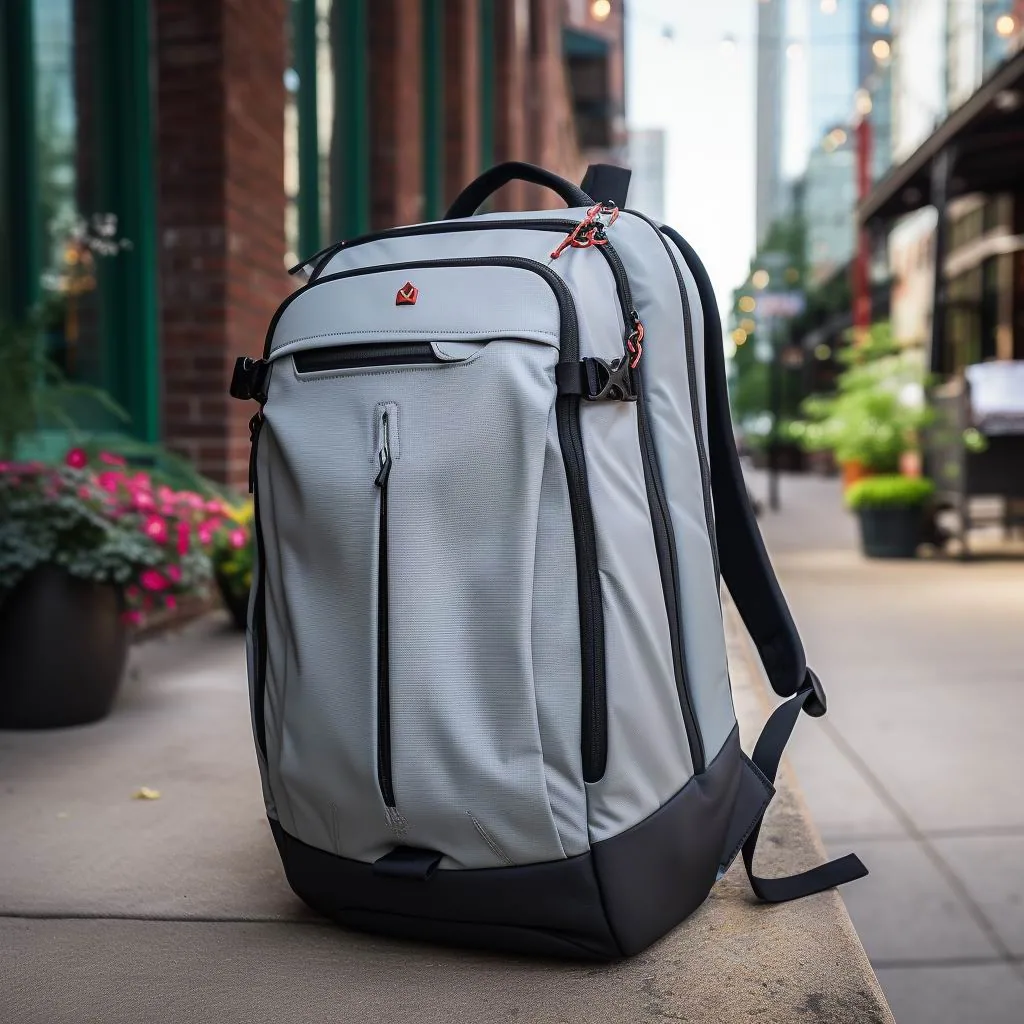
For a two- to four-night city break, take the travel backpack. A 38–44 L travel pack with a clamshell opening swallows three nights of clothing, a wash kit, a 14-inch laptop and a pair of shoes in a shape that still passes the 55 × 40 × 20 cm cabin gauge most UK short-haul carriers apply to a paid cabin bag. A 20 L daypack does not: it will take the laptop and a light layer and then force you into a check-in bag, which is where the money and the time go.
The daypack wins in exactly one situation, and it is a common one: when you are already travelling with a wheeled cabin case, or when the city break is really a long day trip with an overnight. In that case the daypack is the bag you carry through the Uffizi or up the Royal Mile while the case stays at the hotel, and a 30–40 L travel pack is simply too much bag to carry around a gallery for six hours.
The arithmetic that decides it is a three-night autumn trip. Two shirts at 380 g, a merino jumper at 420 g, jeans at 650 g, underwear and socks at 340 g, a wash kit at 450 g with six 100 ml bottles, a 14-inch laptop at 1.55 kg, a charger and cables at 350 g, trainers at 780 g, a paperback and a shell jacket at 590 g. That is about 6.2 kg of contents. Add a 1.5 kg travel pack and you are at 7.7 kg, under the 10 kg limit that applies to a Ryanair priority trolley and inside the 15 kg easyJet allowance. Put the same 6.2 kg into a 20 L daypack and roughly 2 L of it will not fit, and the bag will bulge to 28 cm deep and refuse to close comfortably.
- Take a 38–44 L travel pack for two to four nights with hand luggage only.
- Take a 18–22 L daypack when a wheeled case is already going in the hold or the overhead locker.
- Take the travel pack if the trip involves a train or metro at both ends; a wheeled case loses on cobbles and staircases.
- Take the daypack if your accommodation is a fourth-floor walk-up and you need to leave the big bag somewhere and go out.
Key Differences at a Glance
The table below compares two representative products rather than the whole of each category. The point is the shape of the difference, not the individual numbers, because a badly designed 40 L pack loses to a well-designed 22 L one in most real situations.
| Attribute | 18–22 L daypack | 38–44 L travel backpack |
|---|---|---|
| Packed dimensions | About 44 × 28 × 18 cm | About 55 × 36 × 24 cm |
| Empty weight | 550–850 g | 1.35–1.95 kg |
| Opening | Horseshoe or panel zip, 300–400 mm | Full clamshell, 500–600 mm, opens flat like a suitcase |
| Packing method | Stuff and dig | Packing cubes in two stacked layers |
| Laptop provision | Suspended 14-inch sleeve, 8–10 mm foam | Rear-access 15–16 inch sleeve, 10 mm foam, 25 mm base clearance |
| Harness | 55–65 mm straps, sternum strap, no hip belt | 65–75 mm straps, load lifters, stowable hip belt |
| Carry duration | Comfortable to about 4 hours | Comfortable to about 40 minutes, then it is a transit bag |
| Cabin status | Fits the free personal-item gauge of most carriers | Fits the paid large-cabin gauge only |
Note the carry-duration row, because it is the one most people get wrong. A daypack is designed to be worn for hours. A travel pack is designed to be worn for the duration of a transfer — airport bus, check-in queue, metro, ten-minute walk to the apartment — and then opened and emptied. Buying a travel pack and expecting it to be comfortable for a full day of sightseeing is the most common disappointment in this category.
The other asymmetry is the harness. Travel packs increasingly come with a stowable hip belt and hideaway shoulder straps so the bag can be checked in without shredding its webbing on a conveyor. That is genuinely useful on the way home if you have bought wine, and it costs about 180 g and £15 over a fixed-harness equivalent.
Capacity, Dimensions and Packing Efficiency
Nominal litres are a poor guide here because the two formats pack in fundamentally different ways. A daypack is a vertical tube: you drop things in and retrieve them from the top. A travel pack is a horizontal box: it opens flat, you lay cubes in it, and you retrieve things by unzipping the front. That single geometric difference matters more than the difference between 20 L and 40 L.
In a 20 L tube, a pair of trainers measuring 31 × 12 × 10 cm consumes 3.7 L on its own and blocks the entire lower half of the bag. In a 40 L clamshell, the same trainers lie flat in one corner of the base layer and cost you nothing in accessibility. This is why an honest comparison is not 20 L against 40 L; in practice the travel pack gives you roughly 2.4 times the usable volume and about four times the usable access.
The packing-cube method is what unlocks it. Three cubes — one 8 L for shirts and trousers rolled, one 4 L for underwear and socks, one 3 L for cables, chargers and the wash kit — turn a 40 L clamshell into something you can unpack in ninety seconds in a hotel room and repack in two minutes on the last morning. Without cubes, the same bag becomes a 40 L tube and inherits every disadvantage of the tube.
- Long day out, no overnight: 6–9 L of contents. An 18 L daypack, which is a free personal item on every UK carrier.
- One night by rail or a short hop: 12–16 L. A 20–22 L daypack, free if you pack it flat to 20 cm deep.
- Two nights, hand luggage only: 22–28 L. A 38–40 L travel pack, usually a paid large cabin bag.
- Three to four nights in mixed weather: 30–36 L. A 40–44 L travel pack, and check the depth gauge before you book.
- Five nights or more: 40 L plus. A travel pack plus a packable 12 L daypack, checking the large bag and carrying the small one.
The gauge check is the step people skip. Ryanair's free personal item is 40 × 20 × 25 cm; its priority trolley allowance is 55 × 40 × 20 cm. easyJet includes a 45 × 36 × 20 cm small cabin bag and charges for a 56 × 45 × 25 cm large one. British Airways allows 56 × 45 × 25 cm plus a 40 × 30 × 15 cm personal item. These figures change, so check the current version on the carrier's site before every trip, and measure the bag packed rather than trusting the label. The industry reference for cabin baggage dimensions and the IATA working group material behind it is published at iata.org.
Comfort, Weight and Carry Dynamics
Here the daypack wins, and it wins on the axis that matters: the number of hours the bag is actually on your back. A 20 L daypack at 750 g carrying 5 kg sits close to your spine, has a centre of mass roughly 80 mm from your back, and can be worn for a full day in Edinburgh without comment. A 42 L travel pack at 1.7 kg carrying 8 kg has its centre of mass about 140 mm from your spine and, after ninety minutes, produces the lower-back fatigue that sends people into a café.
The reason is geometry, not padding. A travel pack is deep, because depth is what lets it pass a cabin gauge while carrying volume. Depth pushes the load away from the spine, and the further the load sits from your back, the more your lumbar muscles work to stop it rotating backwards. The countermeasure is a hip belt and load lifters, which is exactly what travel packs have and daypacks do not — but they only help if you actually use them, and most people travelling through an airport do not.
Strap specification reflects the load. A 20 L daypack uses 55–65 mm straps with 8–10 mm of foam and no hip belt, which is correct up to about 6 kg. A 42 L travel pack needs 65–75 mm straps with 10–12 mm foam, a sternum strap and a hip belt of 40–60 mm webbing to move a third to a half of the load off the shoulders once you pass 7 kg. If the travel pack you are looking at has no hip belt at 42 L, it is a commuting bag with a travel label on it.
There is also a transit penalty that has nothing to do with physiology. A 42 L pack on your back takes 600 mm of corridor, catches on restaurant chair backs, has to be removed in every shop you enter in Florence, and will be refused at the door of half the museums on the Continent. The standard solution is a packable 12 L daypack weighing 180 g, folded into the travel pack and deployed on arrival. It is the single most useful £22 in city-break kit.
Materials, Weather Resistance and Durability
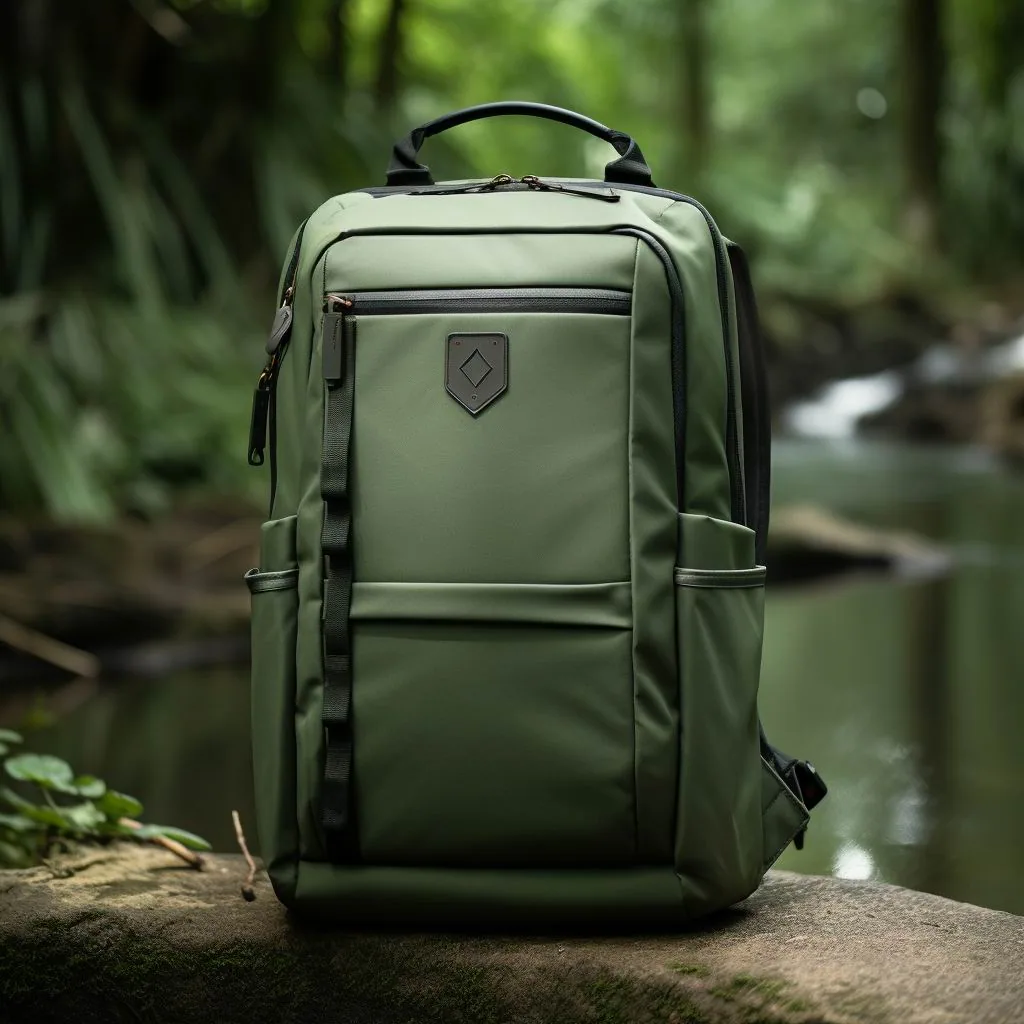
The two formats are built from the same family of fabrics but stressed differently. A daypack lives on pavements and office floors and fails at the base corners and the zip ends. A travel pack lives in aircraft holds, overhead bins, metro crowds and hostel floors, and fails at the harness attachment points and the clamshell zip track.
Body fabric: 420D recycled polyester at about 165 g per square metre is the mainstream choice for both, doubling abrasion life to roughly 15,000 Martindale cycles compared with a 210D shell that shows through at about 8,000. Travel packs increasingly use a 600D base at 240 g per square metre because the base is what gets dragged across an airport floor and stood in a puddle on a platform at Gare du Nord.
Weather: assume both are shower-resistant and neither is waterproof. A 1,500 mm coating handles forty minutes of drizzle; 3,000 mm with taped seams handles a British working day. For a city break the exposure is different from commuting — it is a two-hour walk in the rain in Porto followed by a warm bar, and the failure mode is a wet shirt rather than a ruined laptop. Put the electronics in a dry pouch, carry a packable rain cover rated to 3,000 mm, and stop worrying.
The travel-pack-specific failure is the clamshell zip. A 600 mm perimeter zip on a bag packed to 95 per cent is under constant tension, and the classic failure is not the teeth but the slider, which spreads under diagonal load. Look for a #10 coil rather than #8 on anything above 38 L, check that the zip has a storm flap over its full length, and test it packed rather than empty. A zip that closes cleanly on an empty bag in a shop tells you very little.
One further point applies to both: any built-in battery, charging lead or light needs UKCA marking before it can be sold in the UK, and textile products must carry fibre composition labelling. Guidance for businesses on product safety duties is published by the Office for Product Safety and Standards on gov.uk.
Access, Organisation and Security
This is where the two formats diverge most sharply, and where the travel pack's case is strongest. A clamshell opening that lays the bag flat means you can see every item at once in a hotel room without unpacking. A top-loading daypack means everything below the first item is invisible, and on a three-night trip that is most of your clothing.
For the daypack the answer is a small number of well-placed external pockets: a 200 mm front zipped pocket for a passport wallet and a phone, two mesh side pockets for a 500 ml bottle and a compact umbrella, and an internal slip for a cable pouch. More than that and you are carrying empty pockets, each of which costs 20–40 g and reduces the main volume.
For the travel pack the hierarchy matters. Passport, wallet and boarding pass go in a rear panel pocket against your back, behind the harness, which is the only genuinely secure location on any backpack. The laptop goes in a rear-access sleeve that opens away from the body-facing panel, so that security can pull it out without exposing the main compartment. Liquids go in one transparent bag at the top, because you will need it four times in the first hour at the airport.
On theft: the realistic risk on a European city break is a crowded metro carriage, not a dark alley. Barcelona's L3, Rome's Line A at Termini and the RER B into central Paris are the classic pickpocket locations. The measures that work are boring and effective. Keep valuables behind at least one closed barrier. Use a small carabiner or a locking slider on the main compartment. Do not carry a wallet in an open side pocket. And on a train, put the bag on the floor between your feet rather than in the overhead rack, where you cannot see it.
A 20 L daypack is actually the more secure of the two formats in a crowd, simply because it is small enough to wear on your front without looking ridiculous. That is a real advantage in a packed tram in Lisbon, and it is the strongest argument for the packable-daypack combination.
UK Price, Value and Cost per Use
City-break kit gets used twelve to twenty times a year, not two hundred and forty. That changes the value calculation completely: a £160 travel pack used fifteen times a year for six years costs about £1.78 per trip, which is trivial against a £45 checked-bag return fee. On that basis the travel pack pays for itself in under four return trips.
| Format and band | What you get | Expected life at 15 trips a year | Cost per trip over six years |
|---|---|---|---|
| Daypack £30–£55 | 210–420D body, basic coil zip, minimal back structure, no hip belt | 2–3 years | £1.10–£1.55 |
| Daypack £60–£110 | 420D body, suspended 14-inch sleeve, taped seams, sternum strap | 5–7 years | £0.95–£1.30 |
| Travel pack £70–£120 | 600D base, clamshell opening, #8 zip, hideaway harness | 3–5 years | £1.30–£2.00 |
| Travel pack £130–£220 | Laminated shell, #10 zip with storm flap, load lifters, hip belt, stowable straps | 7–10 years | £1.55–£2.60 |
The interesting row is the third one. A £90 travel pack with a #8 zip will probably need a slider replacement in year four, which costs £18 at a UK repairer or £6 and twenty minutes if you do it yourself. A £160 pack with a #10 zip and a storm flap will not. Over six years and ninety-odd trips that difference is worth having, but only if you actually keep the bag that long, and most people replace travel luggage for reasons of fashion rather than failure.
Add the accessories: three packing cubes at £24, a packable 12 L daypack at £22, a 3,000 mm rain cover at £11 and a cable pouch at £9. That is £66 against a £140 bag, and it improves the trip more than spending the same £66 on a more expensive bag.
Finally, weigh the fee avoidance. A £45 return checked-bag fee on a Ryanair or easyJet short-haul booking, avoided four times a year, is £180 a year. A travel pack that reliably passes the large-cabin gauge is not a purchase, it is a saving.
Which Works Better in Real British Scenarios?
Four situations cover almost every city break a UK buyer takes. In each case the honest answer comes from the walking, the stairs and the surface underfoot, not from the litres.
Scenario one: three nights in Edinburgh in October, flying from Stansted, staying in a third-floor flat on the Royal Mile. You will walk 9 km a day on cobbles and setts, climb 62 stairs to the flat, and carry the bag through Waverley at rush hour. The travel pack wins decisively here, because a wheeled case on the Royal Mile is a punishment and a 20 L daypack cannot hold three nights of October clothing. Take the 40 L travel pack, plus a packable daypack for the day you climb Arthur's Seat.
Scenario two: two nights in Lisbon in June, flying from Gatwick, hotel with a lift. Here the travel pack is right for the flight but wrong for the city. Lisbon's calçada pavement is loose limestone setts on a 12 per cent gradient, and Tram 28 is standing-room only. Travel pack for the transfer, packable daypack for the city, and leave the main bag at the hotel. This is the combination that most experienced city-break travellers converge on within about three trips.
Scenario three: a Friday-night rail trip to Paris on Eurostar with a Monday return, two meetings on the Monday. Now the 20 L daypack is genuinely competitive, because Eurostar has no liquids restriction and no cabin gauge, because you will walk from a hotel near Gare du Nord to the Marais and back twice a day, and because 14-inch laptop, one shirt, a wash kit and a charger is genuinely only 11 L. Take the daypack and pack the shirt rolled in a 4 L cube.
Scenario four: four nights in Kraków in February, flying from Luton, an apartment with no lift on the fourth floor. Travel pack, and specifically one with a hip belt, because you will carry 9 kg including a coat, boots and a warm layer up 78 stairs with no lift. The packable daypack folds away and is not needed; what you need instead is a hip belt that actually transfers load and a shell rated to withstand six hours of sleet.
Testing Standards and Bulk Custom Orders
We are a sourcing and programme-management company working with vetted production partners. We develop the specification, manage sampling and inspection and run the shipment; our partners operate the machinery. Their floor is a 4,950 m² SGS-verified facility with 7 production lines, 149 machines and 137 colleagues, producing 200,000 pieces a month. QUANZHOU JUNYUAN BAGS was established in 2014, and its founder has worked in the bag trade since 2004.
For travel brands, corporate incentive programmes and clubs ordering in quantity, the commercial parameters are fixed: MOQ 500 pcs per style and colourway, sampling in 6–10 working days from approved artwork (12–15 for complex builds with a bonded clamshell and a hideaway harness), bulk production 35–50 days, inspection at AQL 2.5 under ISO 2859-1, T/T 30/70, FOB Xiamen.
The screening tests we apply to travel packs differ from the daypack routine.
- Clamshell zip cycle: 4,000 open-and-close cycles on a bag packed to 90 per cent, because that is the realistic tension a jammed-full 40 L bag puts on a #10 track.
- Harness attachment pull to 200 N on hideaway systems, since the stowage pocket is a stress concentrator.
- A 1.5× lift test holding rated load multiplied by 1.5 for 60 seconds at the haul handles, which is how airport staff actually move the bag.
- Spray exposure of 30 minutes at 300 litres per hour per square metre, then an internal paper-towel inspection.
- Wheel-less drop: six drops from 900 mm onto concrete at different orientations with 8 kg inside.
Abrasion and coating references come from ASTM textile standards, textile test method detail from AATCC, and the sampling plan is defined in ISO 2859-1. Any ingress-protection claim on a welded wet pocket should arrive with the test report and the code it was graded against rather than a symbol on the label, and current cabin baggage thinking sits with the IATA baggage programme.
Final inspection is carried out to AQL 2.5 under ISO 2859-1, and our production partners issue a measurement report with every approved sample recording empty weight, usable volume by block fill, packed external dimensions and rated load. For UK deliveries we open cartons from more than one pallet position so a defect cluster cannot hide within a single batch area.
On specification discipline: standardise on one capacity band and vary colour or branding, because a mixed fleet of 22 L and 42 L units creates spare-part and training problems that cost more than the saving from buying two sizes. Define logo position within 2 mm, confirm Pantone references, and retain two sealed approval samples before authorising the 500-piece run.
To open a programme, send your specification, quantity and delivery window to service@junyuanbags.com or message us on WhatsApp at wa.me/8617750020688. We will confirm the zip gauge, the harness attachment and the cabin dimensions in writing before sampling starts.
Common Buying Mistakes to Avoid
Five mistakes account for most of the regret in this category, and all of them show up on the first trip rather than the fifth.
- Buying a 40 L travel pack and expecting to sightsee with it. It is a transit bag. Pack a 12 L foldable daypack inside it.
- Trusting the stated depth against a 20 cm gauge. A bag labelled 20 cm deep measures 23–25 cm once packed. Measure it loaded and buy 20 mm under the limit.
- Packing a travel pack without cubes. Without them a clamshell is just a big tube and you lose the entire advantage of the format.
- Choosing a travel pack with no hip belt at 40 L plus. It is a commuting bag with a travel label, and your lower back will confirm it within an hour.
- Putting a passport in an external side pocket. It takes three seconds for you to reach and about the same for someone else on a crowded metro.
Two further errors are specific to the UK. The first is assuming that the cabin allowance you used last year is the one you will get this year; check it, because carriers have changed both dimensions and fees repeatedly. The second is buying a bag with no UK service address; a warranty claim that requires shipping to a non-UK address typically costs three weeks and £18 in postage, which is most of the value of the warranty.
Each of these is caught by a five-minute check before purchase rather than a return afterwards, and each one costs more than the difference between the two bags you were choosing between.
Final Verdict: Who Should Choose Each?
Choose the 38–44 L travel backpack if your city break is two to four nights, hand luggage only, and involves a flight. It will pay for itself in avoided bag fees within two years, it passes the large-cabin gauge if you buy 20 mm under it, and it opens flat in a hotel room so you can see everything you own.
Choose the 18–22 L daypack if you already travel with a wheeled case, or if the trip is a long day with one overnight. It is the bag you will actually carry for six hours, it passes every free personal-item gauge in Europe, and on a crowded tram it is small enough to wear on your front.
Choose both if you take three or more city breaks a year. A 40 L travel pack plus an 180 g packable daypack is the combination most experienced travellers arrive at, and it costs less than one premium wheeled cabin case.
The answers below cover the questions we field most often from UK buyers choosing between the two.
Frequently Asked Questions
For a three-night break, is a 20 L daypack or a 40 L travel pack the better call?
The 40 L travel pack, decisively. Three autumn nights needs 30–36 L of contents once you count shoes, a wash kit and a warm layer, and a 20 L tube physically cannot hold that.
The daypack's role on that trip is as the bag you carry around the city while the travel pack is at the accommodation.
Which cabin gauge does each format actually pass at Stansted, Gatwick and Luton?
A 20 L daypack packed to 18 cm deep passes the free 40 × 20 × 25 cm personal-item gauge on Ryanair. A 40 L travel pack at about 55 × 36 × 24 cm passes the paid large-cabin gauge if you keep depth at 20 cm.
Measure the bag packed, buy 20 mm under the limit, and check the carrier's current figures before every trip.
How much does the empty bag eat out of a 10 kg cabin allowance?
A 40 L travel pack at 1.35–1.95 kg takes 14–20 per cent of a 10 kg priority allowance, leaving 8.0–8.6 kg for contents, which is comfortable for three nights.
A premium pack loaded with a hip belt, load lifters and a hideaway harness sits at the top of that range; strip those and you gain 300 g but lose the ability to carry it for more than half an hour.
Which one survives four floors of stone stairs in an Edinburgh tenement?
The travel pack, because a hip belt transfers a third to a half of the load off the shoulders on a long stair climb. A wheeled case is the real loser on that staircase.
Specifically, look for a hip belt with 40–60 mm webbing, and use it — most people travelling through an airport never engage it.
Can a travel pack protect a 14-inch laptop through airport security and a metro?
Yes, provided the sleeve has rear access, 10 mm of closed-cell foam and at least 25 mm of clearance above the base. Rear access lets security pull the device out without exposing the main compartment.
Avoid sleeves that share a wall with the body-facing panel; that is where the pressure goes when the bag is jammed into an overhead bin.
Which format handles a November downpour in Edinburgh better?
Neither is waterproof; both are shower-resistant at best. The travel pack usually wins because it more often ships with a rated rain cover and a storm flap over the main zip.
Put electronics in a £9 dry pouch and carry a 3,000 mm cover, and the difference between the two formats disappears.
What is the right spend for each format in the UK, and what does it buy?
£130–£220 for a travel pack buys a #10 zip with a storm flap, load lifters, a real hip belt and a hideaway harness; £70–£120 buys a #8 zip that will probably need a slider in year four.
For a daypack, £60–£110 buys a suspended 14-inch sleeve and taped seams that will last five to seven years.
Which packs more efficiently into a 300 mm hostel locker?
The travel pack, because it is a box rather than a tube. A 40 L pack at 55 × 36 × 24 cm drops into a 300 mm-wide locker with room for the packable daypack beside it.
A 20 L daypack is smaller but the same height, so it wastes vertical space above it and cannot be compressed.
Should I use a daypack if my load sits above 8 kg?
No. Above 7 kg you need 65–75 mm straps, a sternum strap and a hip belt, and almost no 20 L daypack offers all three.
The exception is a structured 22 L hiking-style daypack with a webbing belt, which will carry 8 kg for an hour or so on flat ground.
Is one travel pack practical for a Tuesday client meeting and a Saturday flight?
Yes, if it has a rear-access laptop sleeve and a separate front compartment for a folded shirt in a 4 L cube. That is the standard mixed-use configuration.
What it will not do is look like a business bag; if the meeting matters more than the flight, carry a slim 14 L laptop brief and pack it inside the travel pack.
How should we spec 500 branded units for a UK travel club or incentive programme?
Fix one capacity band, usually 40 L, then vary colourway and branding. Mixed fleets create spare-part and training problems that cost more than the saving.
State MOQ 500 pcs per style and colourway, sampling 6–10 working days, bulk 35–50 days, AQL 2.5 under ISO 2859-1, T/T 30/70, FOB Xiamen, and define logo position within 2 mm before sign-off.
Which checks predict whether either bag survives its first year?
For the travel pack: 4,000 clamshell zip cycles at 90 per cent fill, a 200 N pull on the hideaway harness attachment, and six 900 mm drops with 8 kg inside.
For the daypack: 3,000 zip cycles, a 180 N buckle pull and a 30-minute spray test with paper towels inside.
What luggage fees does each format avoid on Ryanair, easyJet and BA?
A 20 L daypack inside the free personal-item gauge avoids the fee entirely but forces a checked bag on trips over one night. A 40 L travel pack inside the large-cabin gauge avoids a return fee typically quoted at £30–£50.
At four return trips a year that is £240–£400, which is the entire cost of a premium travel pack in under two years.