Table of Contents
- The first 48 hours after a failed shipment
- Reject, rework or credit: the decision framework
- Documenting defects against AQL 2.5 and ISO 2859-1
- Allocating cost when the defect is disputed
- Rework timelines: what 10 to 20 days really means
- Refunds, credit notes and replacement shipments
- Pre-shipment inspection as the structural fix
- Golden samples and approved-sample governance
- Writing a defect clause that holds up
- Frequently Asked Questions
The first 48 hours after a failed shipment
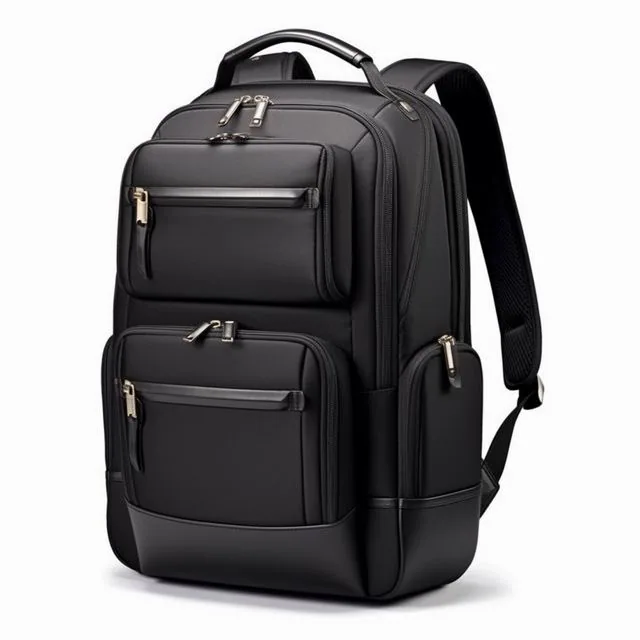
A failed backpack shipment should be frozen, photographed and quantified against AQL 2.5 within 48 hours of discovery, because every route afterwards — rework, credit or replacement — depends on evidence gathered before anyone moves a carton. The worst outcome is not a defective batch; it is a defective batch that nobody documented properly, which turns a $12,000 order into an argument nobody can win.
The controlling numbers are simple. Final inspection runs to AQL 2.5 per ISO 2859-1, with critical defects at zero tolerance. Bulk production runs 35 to 50 days after sample approval, so a batch found defective at the factory gate still has a production window in front of it, while a batch found defective in a UK warehouse has already consumed freight, duty and 20% import VAT. That difference in timing is worth more than any negotiation tactic.
This guide sets out the decision framework — reject, rework or credit — how to document defects so the numbers are defensible, how to allocate cost when the factory disagrees, realistic rework timelines of 10 to 20 days, how credit notes and replacements are structured, and the two preventive controls that stop most of this happening: pre-shipment inspection and a properly governed golden sample.
The framework below assumes you have an inspection report in hand. If you do not, the first task is not negotiation but evidence: a sample-to-lot inspection to AQL 2.5, a defect classification, and photographs aligned to the unit numbers. Everything after that is arithmetic and tone.
Reject, rework or credit: the decision framework
Three routes exist, and the choice is dictated by where the goods are, what the defect is, and whether the fault is functional or cosmetic.
| Situation | Evidence needed | Recommended route | Usual cost bearer |
|---|---|---|---|
| Cosmetic defects within AQL limits (minor stitching, thread ends, slight shade variation) | Inspection report with defect classification and count | Accept, with a 1% to 3% credit for the reduced sellable ratio | Shared |
| Major functional defects beyond AQL (zip failure, strap pull-out, leaking coating) | Sample count against Ac/Re, photos, video of failure | Rework at origin before shipment | Supplier labour, buyer freight |
| Wrong specification versus approved golden sample (material, hardware, dimensions) | Side-by-side comparison against the signed sample | Rework or remake; rejection if the batch cannot be corrected | Supplier |
| Wrong colour, logo or labelling | Pantone/CMYK reference and logo artwork with placement spec | Rework where logo can be re-applied; credit if the error is irrecoverable | Supplier |
| Defects discovered after UK delivery | Receiving inspection record, carton and unit photos | Credit note against the next order plus a corrective action plan | Negotiated |
| Transit damage (crushed, wet, pilfered) | Bill of lading condition notes, insurance survey | Marine insurance claim, not a supplier claim | Insurer |
The most important line is the last one. Transit damage is not a manufacturing defect, and a buyer who opens a dispute with the factory over crushed cartons wastes the one asset that matters in a defect negotiation: credibility.
The second most important point is that rejection is rarely economic once goods have left China. Returning 1,000 backpacks by sea costs roughly $1,200 to $2,500 and takes 8 to 12 weeks round trip; by air it costs $5 to $7 per kilogram, more than the unit price. Rejection is therefore a pre-shipment tool. After shipment, rework, credit or replacement is the realistic set.
Documenting defects against AQL 2.5 and ISO 2859-1
AQL 2.5 per ISO 2859-1 is the acceptance standard used at final inspection, and it only works if the inspection is run to the standard rather than to opinion. The lot size determines the sample size; the sample size and the defect class determine the accept and reject numbers.
| Lot size (units) | Sample size, general level II | Accept (Ac) at AQL 2.5 | Reject (Re) at AQL 2.5 |
|---|---|---|---|
| 501 to 1,200 | 80 | 5 | 6 |
| 1,201 to 3,200 | 125 | 7 | 8 |
| 3,201 to 10,000 | 200 | 10 | 11 |
| 10,001 to 35,000 | 315 | 14 | 15 |
Defects are classified before counting. Critical defects — sharp hardware edges, broken needle fragments, restricted azo dyes above the permitted limit, anything that could injure a user — carry zero tolerance regardless of AQL. Major defects, meaning the product cannot be sold or will fail in normal use, are counted at AQL 2.5. Minor defects, meaning cosmetic issues a reasonable buyer would accept at a discount, are usually counted at AQL 4.0. A shipment can pass on minors and fail on majors, and the report must show both counts.
A 500 piece minimum order means an 80 unit sample, 16% of the batch, which is why the 500 piece MOQ per style and colour is also where inspection economics start to work; a 3,000 unit order samples 200 units at 6.7%.
What makes a report defensible is the boring part: sequential unit numbers, photographs per defect with the unit number visible, the defect description in standard language, the count against Ac/Re, and the inspector's signature with date and location. A factory that disputes a finding will not dispute a numbered photograph. A factory that is shown twelve photographs of the same zip failure does not argue about whether it happened; it argues about price, which is a much better conversation to have.
Allocating cost when the defect is disputed
Most defect disputes are not about whether something is wrong; they are about who pays for it. Getting to a number quickly is worth more than winning the principle, because every week of argument is a week of stock you cannot sell.
The cost stack on a defective batch has five components: the unit cost of the goods, typically $8 to $25 depending on 420D to 900D fabric, the freight and insurance already spent, duty at 9.7% on the CIF value, import VAT (recoverable, so usually excluded from the negotiation), and the opportunity cost of missing a sales window. On a 1,000 unit order at $12 FOB Xiamen, the first four total roughly $14,300 once duty and freight are included. Any settlement below 8% of landed value is usually cheaper than pursuing a return.
In practice, allocations settle into a few patterns. Where the defect is clearly the factory's — wrong material, wrong hardware, wrong logo — the supplier bears rework labour and replacement components, and the buyer bears the freight difference if the shipment has to be re-booked. Where the defect is a shared design problem — a zip specification that was too light for the load, approved by both sides — a 50/50 split on rework cost is common and defensible. Where the defect is cosmetic and within AQL, a credit of 3% to 8% of order value is the norm, applied against the balance or the next order rather than as cash.
Three levers make a settlement faster. Withhold the 70% balance until the inspection report is agreed, since payment terms are the strongest form of leverage a buyer holds. Offer to take the batch at a discount rather than demanding a remake, which is often the supplier's preferred outcome and preserves your launch date. And put the agreed corrective action in writing with a date, so the same defect does not appear on the next production run. The aim is a resolved order and an improved process, not a won argument.
Rework timelines: what 10 to 20 days really means
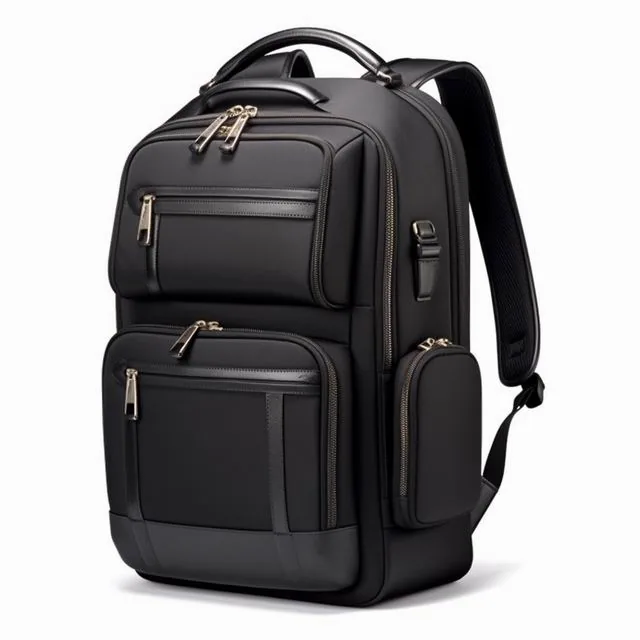
Rework is not a quick fix, and buyers who plan for three days are the ones who miss their launch. A realistic rework cycle for a backpack batch runs 10 to 20 days depending on what has to change and how much of the batch is affected.
The clock starts when the defect list and photographs are agreed, not when you first complain. Days 1 to 3: supplier reviews the report, checks the retained sample and the production records, and confirms the rework route. Days 3 to 5: replacement components are pulled from stock or ordered — zips, buckles, webbing, logo badges. This is where most of the delay hides, because a 900D polyester body is easy to re-sew but a specific YKK zip or a custom moulded buckle may not be in stock. Days 5 to 15: rework on the line, which for 300 units of zip replacement is typically 8 to 10 working days including re-inspection. Days 15 to 20: re-inspection to AQL 2.5 and re-packing.
Two constraints compress or extend that window. A full batch rework of 1,000 units will collide with the next order already in the 35 to 50 day production queue, so the rework slot must be negotiated explicitly rather than assumed. And a rework that changes the pattern — a wrong panel size, for example — needs a new sample approval, which adds 6 to 10 working days on top.
What you should ask for at the start of any rework is a dated plan with three milestones: components confirmed, rework complete, re-inspection passed. Then hold the balance payment against the last milestone. If the rework window pushes past your launch date by more than two weeks, price the alternative — a partial shipment of the good units plus a credit for the balance — before the vessel booking closes.
Refunds, credit notes and replacement shipments
Three financial instruments resolve most defect cases, and each has a different effect on cash, stock and the relationship.
Credit notes are the default. A credit against the outstanding balance, or against the next order if the balance is already paid, is fast, cheap to administer and easy for both sides to accept. Typical values run from 3% to 8% of the affected order value for cosmetic issues, and up to 30% where a proportion of units is unsellable. Insist on a credit note document with the order reference and a stated defect reason, not a verbal agreement, because it is the record that supports your stock write-down.
Replacement units work best when the defect affects a defined subset. Producing 120 replacement units inside the next scheduled run is far cheaper than a standalone run, because it avoids a new set-up, and it usually arrives faster than a dedicated remake. Agree whether the replacements ship with the next order at the buyer's freight cost or on a separate consignment, and get the date in writing.
Cash refunds are rare and usually the worst option for both parties: they cost the supplier real cash, invite a fight about the amount, and resolve nothing a credit could not — unless the order is a one-off with no next order to credit against. Where duty has been paid on goods that are then destroyed or returned, a repayment of import duty may be possible on evidence, and the customs position should be checked before any refund is agreed.
Whatever instrument you use, tie it to the same document that carries the acceptance standard. A credit note that references the inspection report, the sample version and the order number is a record.
Pre-shipment inspection as the structural fix
Every defect conversation is cheaper before the container is booked. Pre-shipment inspection at the facility, run to AQL 2.5 per ISO 2859-1 while the goods are still in the factory, converts an unrecoverable problem into a 10 to 20 day schedule adjustment.
The inspection should happen when 100% of the order is packed and at least 80% is in finished cartons, not when production is half complete — inspecting early tells you about the wrong batch. It should be performed by a third party with no commercial interest in the outcome, or by a buyer's representative, and it should cover four things: the count against Ac/Re for major and minor defects, the construction check against the approved sample, the functional test (loaded zip cycling, strap pull test, hardware closure, water resistance if specified), and the labelling and packaging check including barcode scan and carton marks.
A pre-shipment inspection typically costs $250 to $400 per man-day in Fujian, which on a 1,000 unit order at $12 is around 2% to 3% of order value — less than the cost of a single rework cycle, and a fraction of the cost of a failed launch. The reported pass rate also gives you something more valuable than a certificate: a trend line. One failed inspection is an event; three in a row is a process problem and a signal to change how you specify, not just who you blame.
The inspection should also trigger a documented corrective action when it fails. A report with no corrective action is a complaint. A report with an owner, a cause and a dated fix is a control. Our guide to AQL 2.5 inspection for UK buyers walks through the sampling logic in detail, and the pre-shipment inspection checklist covers the day-of protocol.
Golden samples and approved-sample governance
Most specification disputes trace back to a sample that was approved verbally, approved in a photograph, or approved without being signed and dated. A golden sample is the single reference that resolves all three.
The mechanics are unglamorous. After sampling — 6 to 10 working days for a first round, with a fee of $80 to $150 per style normally credited on bulk — the approved unit is signed and dated by both parties, sealed in a bag with the approval date and the specification sheet, and one copy is retained at the facility while a second is retained by the buyer and stored away from daylight. The approved sample should carry the exact fabric (420D, 600D or 900D), the exact hardware, the exact logo method, and the exact trim colours. Where a deviation was accepted, it should be written on the approval sheet: "stitch density reduced to 8 SPI on the base panel, accepted 12 November".
Two governance rules prevent most later arguments. First, any change to the specification after approval requires a new sample and a new signature, even a small one — a substituted buckle or a lighter webbing is exactly the kind of change that becomes a defect dispute six weeks later. Second, the golden sample travels to the inspection: the inspector should have it in hand when assessing construction, not a photograph of it.
The commercial point is that a signed golden sample converts a subjective argument ("this looks different") into an objective one ("this does not match the approved sample, reference A-2026-11, signed 12 November"). That shift is what makes a credit note negotiation take a week instead of a quarter. Our sample approval checklist lists the fields to capture at sign-off.
Writing a defect clause that holds up
A defect clause earns its keep in the one month a year it is used, and it takes twenty minutes to write. Six elements make the difference between a clause that resolves a dispute and a clause that starts one.
A named acceptance standard. "Final inspection to AQL 2.5 per ISO 2859-1, general inspection level II, single sampling, critical 0, major 2.5, minor 4.0" removes the argument about methodology before it starts. "Good quality" removes nothing.
A defined reference. The signed golden sample and the approved specification sheet, referenced by version and date, are the only legitimate benchmark. Anything not in the reference is not a defect, and anything in the reference is not a matter of taste.
An inspection window. State that inspection happens when 100% of the order is packed, that a failed inspection pauses the balance payment, and that the supplier has 10 to 20 days to rework and re-present. Without a window, rework drifts indefinitely.
A remedy ladder. Rework first, credit second, replacement third, refund last — with indicative credit bands. A ladder is easier to apply than a single remedy, because most real cases sit between the rungs.
Cost allocation. Name who bears rework labour, who bears freight, and who bears duty on a replacement shipment. Duty at 9.7% on a re-shipped replacement, set out in the UK import guidance, is a real cost that somebody has to own, and it is the line most often forgotten.
A corrective action obligation. Require a written root cause and a dated fix for any failed inspection. That single requirement is what turns a defect clause from a penalty into a quality system, and it is the clause that most improves the next order rather than the last one.
Run the same clause with every supplier, keep it on the purchase order rather than in an email thread, and review it once a year. If you are placing a first order and want the acceptance and shipping terms set out before you commit, request a quote with your specification and target volume, or read the payment terms guide first to see how the balance is held against inspection.
Frequently Asked Questions
What does AQL 2.5 mean on a backpack order?
AQL 2.5 is the acceptance quality limit applied to major defects at final inspection under ISO 2859-1. For a lot of 501 to 1,200 units you inspect 80 pieces and accept the batch at 5 defects, rejecting at 6. Critical defects such as sharp hardware or restricted substances carry zero tolerance regardless of the AQL.
How many units should I inspect on a 3,000 piece order?
A lot of 1,201 to 3,200 units requires a sample of 125 pieces at general inspection level II, with an accept number of 7 and a reject number of 8 at AQL 2.5. For a 3,201 to 10,000 unit lot the sample rises to 200 pieces with accept 10 and reject 11.
Should I reject a defective backpack shipment?
Only before it ships. Returning goods from the UK to China costs roughly $1,200 to $2,500 by sea and takes 8 to 12 weeks round trip, which usually exceeds the value of the remedy. After shipment, rework, credit or replacement units are the realistic options.
How long does rework take on a defective batch?
Allow 10 to 20 days from the point the defect list is agreed. The first 5 days cover review and component availability, 8 to 10 working days cover the rework itself, and the remainder covers re-inspection to AQL 2.5 and re-packing. A rework that changes the pattern adds 6 to 10 working days for a new sample approval.
Who pays for rework and freight on a defective order?
Where the fault is clearly the supplier's, the supplier normally bears rework labour and replacement components, while the buyer bears any additional freight from re-booking. Shared design faults are often split 50/50. Cosmetic issues within AQL are settled with a credit of 3% to 8% of order value rather than rework.
Is transit damage a defect I can claim from the factory?
No. Damage that occurs after the goods are on board under FOB terms is the buyer's risk and belongs with the marine cargo insurer, not the supplier. Claiming against the factory for crushed or wet cartons damages your credibility in genuine defect negotiations.
What evidence do I need to win a defect dispute?
Numbered photographs per defect with the unit number visible, the defect classification and count against Ac/Re, the inspection report signed and dated, and the signed golden sample for comparison. A factory will dispute an opinion but rarely disputes a numbered photograph aligned to a written standard.
Should I ask for a credit note or replacement units?
Credit notes suit cosmetic issues and partial unsellable stock, and they are fast to administer. Replacement units suit a defined subset of defective pieces and are cheapest when produced inside the next scheduled run. Cash refunds are rarely worth pursuing unless there is no further order to credit against.
How much credit should I expect for a cosmetic defect?
Expect 3% to 8% of order value where the goods are sellable but compromised, and up to 30% where a proportion of units cannot be sold at all. Anything below roughly 8% of landed value is usually cheaper to accept than to pursue a return shipment.
When should pre-shipment inspection take place?
When 100% of the order is packed and at least 80% is in finished cartons. Inspecting mid-production tells you about a different batch than the one that ships. A man-day in Fujian costs $250 to $400, which is around 2% to 3% of a 1,000 unit order at $12.
What is a golden sample and why does it matter?
A golden sample is the signed, dated, sealed unit approved by both parties after sampling, kept by the buyer and at the facility. It converts a subjective argument about appearance into an objective comparison against a referenced standard. Any post-approval change to material, hardware or trim requires a new sample and signature.
Can I withhold the balance payment if inspection fails?
Yes, if the purchase order says so. Payment terms are the strongest lever a buyer holds, so the clause should state that a failed inspection pauses the 70% balance until rework is re-presented and passed. Without that clause the balance is usually due on shipment regardless of the inspection outcome.
How do I stop the same defect appearing on the next order?
Require a written root cause and a dated corrective action for every failed inspection, and record it against the specification version. Three failed inspections in a row indicate a process problem rather than bad luck, and usually mean the specification or the component choice needs changing.
Do I pay duty again on replacement units?
Usually yes, because a replacement shipment is a new import entry and duty at 9.7% applies to the new customs value. Agree in the defect clause who bears that duty before the replacement ships. Returned goods relief applies to the same goods re-imported, not to newly manufactured replacements.
Get a Free Quote for Your Backpack Programme
Our production team works to MOQ 500 pcs, 6-10 working day sampling and 35-50 day bulk lead times, with final inspection to AQL 2.5 (ISO 2859-1). Send your brief and we will return a costed quotation in 24-48 hours.
Mens Backpack Guide Editorial Team — Sourcing guides and programme notes for the UK men's backpack market, coordinated by QUANZHOU JUNYUAN BAGS. Commercial figures such as MOQ 500 pcs, 6-10 day sampling and 35-50 day production reflect published programme terms.