Table of Contents
- Executive Summary: Why 500 Pieces Is the Floor
- The Three Costs That Set a Minimum Order Quantity
- Fabric Roll Maths: Why 300 Metres Is Not 500 Bags
- Cutting Efficiency and the Real Cost of a Short Run
- Dye Lot Economics and Colour Splits
- Legitimate Ways to Lower the Effective MOQ
- What Small Runs Actually Cost
- Negotiation Levers That Are Not Price
- Red Flags and How to Write MOQ Into the Purchase Order
- Frequently Asked Questions
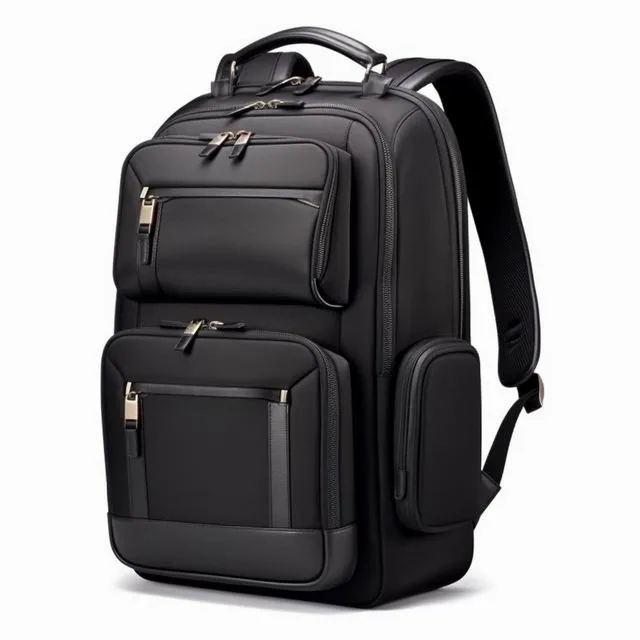
Executive Summary: Why 500 Pieces Is the Floor
Five hundred pieces per style and colour is the working floor for custom backpack production, and it is set by fabric roll lengths, marker efficiency and dye-lot minimums rather than by a salesperson's preference. Below that line the mill still dyes a full batch, the cutter still spreads a full marker, and the line still loses a day to changeover, so the fixed cost is spread across too few units: a 200-piece run typically carries a 25-40% unit price premium against the same bag at 500 pieces.
That floor holds across the price bands UK brands actually buy in. Unit price runs from about 8 to 25 US dollars per bag depending on fabric weight and specification - 420D polyester at the light end, 600D in the middle, 900D nylon with a PU backing at the top - and the MOQ does not move because the price moves. Sampling takes 6-10 working days (12-15 for complex builds) and bulk production runs 35-50 days on a 500-piece order, FOB Xiamen by default.
What can change is the effective minimum: the quantity you must commit to in order to get a workable price. Stock fabric programmes, simplified construction, longer delivery windows, shared hardware and a properly structured pilot run all reduce the commitment without pretending the economics have disappeared. What does not work is demanding 200 pieces at the 500-piece price and hoping the number is a negotiating position rather than a calculation.
What follows is the arithmetic behind the floor, the levers that move it, and the wording for a purchase order so that the minimum you agreed is the minimum that gets made.
The Three Costs That Set a Minimum Order Quantity
Every quotation contains costs that do not scale down with quantity. Three of them dominate the MOQ calculation.
1. Development and set-up. A new style needs a pattern, a graded size set, a sample or two, a cut file or die, and a pre-production meeting. Sampling is charged at 80 to 150 US dollars per style and is typically credited against the bulk order, which tells you something important: the supplier expects the sample cost to be absorbed by production. At 200 pieces, the same set-up cost is spread over 40% of the units.
2. Material minimums. Fabric, lining, webbing, zips, buckles and logo hardware are all bought in batches larger than a small order needs. A mill does not dye 180 metres for a 200-piece run; it dyes a batch and sells you the rolls, or it sells from stock at a higher rate. This is the single biggest reason the MOQ exists, and it is examined in detail below.
3. Changeover and line time. A 7-line facility running 35-50 day bulk cycles schedules by line, not by piece. Setting a line for a new style costs roughly half a day to a day in cutting, machine reconfiguration, operator briefing and first-off approval. That cost is identical for 200 pieces and for 2,000.
Add the commercial layer: a supplier taking a first order from an unknown brand carries risk that the second order never comes. The MOQ is partly a filter for serious buyers. Understanding that framing changes the negotiation - you are not arguing about a number, you are offering something that reduces the supplier's risk, whether that is a longer lead time, a simpler specification, a forecast or a deposit.
If you want the cost structure line by line before you negotiate, work through the backpack cost breakdown and BOM guide, then compare your quotation against it. Buyers who can name the fabric consumption, the trim cost and the labour minutes negotiate from a different position than buyers who only know the total.
Fabric Roll Maths: Why 300 Metres Is Not 500 Bags
Take a 25-litre daypack in 600D polyester. Fabric consumption is typically 1.2 to 1.8 metres per bag at 150 cm width, depending on how many panels, pockets and reinforcement layers the design carries. At 1.5 metres per bag, 500 pieces needs 750 metres. That is five to eight rolls depending on roll length, and it is the number that has to exist in one shade.
Now the mill side. Fabric is woven in greige rolls, then dyed in batches. A dye batch for bag fabric is commonly 300 to 1,000 metres per colour, and a mill will not break a batch for a small buyer. If you order 200 bags, you need about 300 metres - right at the bottom of a batch, which means you either pay a small-lot surcharge or you buy from stock. If the colour is not in stock, the mill's answer is a minimum you cannot negotiate, because you are not negotiating with the factory at all: you are negotiating with a dye house two steps upstream, and that dye house must also meet restricted substance limits set out in ECHA guidance on REACH.
Two consequences follow. First, an unusual Pantone match on a 200-piece order is close to impossible to source economically, while black, navy, charcoal and a handful of stock colours can be bought by the metre. Second, a supplier who offers 200 pieces in any colour you like is either holding stock you have not been told about, or planning to substitute a close shade.
Trims have their own minimums. Zips are made to length in runs; custom pulls and logo-embossed buckles need a mould, which carries a tooling cost that only amortises over thousands of pieces. Webbing and binding tape are sold by the roll, often 100 to 200 metres. Every one of these becomes a fixed cost per colourway.
The practical translation is simple: choose a stock fabric and stock trim palette for your first order, and save the custom dye for the reorder. This is the same logic that governs choosing between 420D, 600D and 900D fabric: the common weights and colours are cheaper not because they are worse, but because somebody else already bought the batch.
Cutting Efficiency and the Real Cost of a Short Run
Cutting is where a short run becomes visibly expensive. A marker is the layout of pattern pieces on the fabric; marker efficiency is the percentage of the fabric that ends up in the product. A well-nested backpack marker typically achieves 85-90%. That efficiency does not change with quantity, but the cost per unit of preparing and spreading it does.
Consider the fixed work in cutting a style: pulling and inspecting rolls, relaxing the fabric for 24 hours, spreading plies, laying the marker, cutting, bundling and ticketing, then counting and issuing to stitching. On a 2,000-piece order that work is amortised across 40 plies of 50 pieces. On a 200-piece order it is amortised across four plies of 50, and the spreading table is occupied for a fraction of the time it takes to set up.
Short runs also attract the tail of the fabric - the last metres of a roll and remnants that are good but slow to lay - so cutters add 3-5% to the consumption allowance, which you pay for.
The result is a step change, not a smooth curve. Between 500 and 2,000 pieces the unit cutting cost falls steadily. Between 200 and 500 it falls sharply, because you cross the threshold where a full marker and a full batch of fabric make sense. That is why the floor sits at 500 rather than at 300: at 300 you are paying short-run prices without the volume to justify them, and both sides know it.
If your design has many small panels, curved pockets or contrast piping, the cutting penalty on a short run is larger. Simplifying panel count for a first order is one of the most effective ways to make a small quantity viable without arguing about the number - a point explored further in the guide to MOQ for UK buyers.
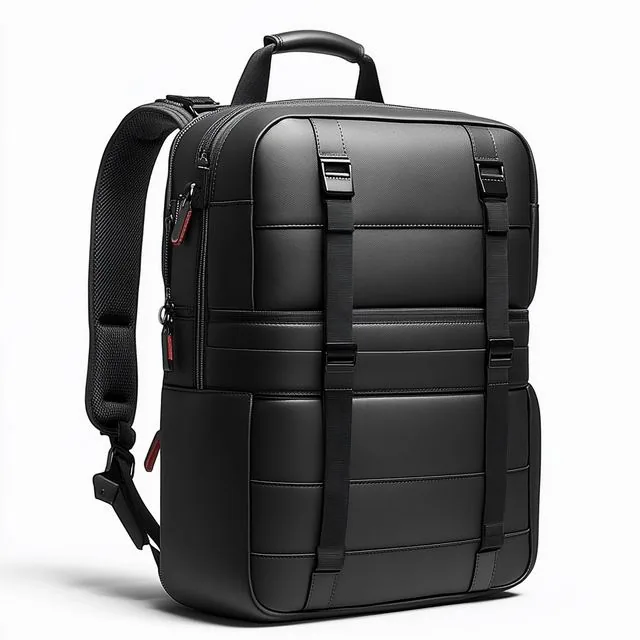
Dye Lot Economics and Colour Splits
A dye lot is one batch of fabric dyed together. Within a lot, shade is consistent; between lots, it is close but not identical, and on deep blacks and navies the difference is visible under retail lighting. This is why good factories segregate lots, tag rolls and cut an order from a single lot wherever possible.
The 500-piece minimum applies per style and colour for exactly this reason. If you order 500 pieces split across three colours, you need three fabric batches, three sets of trims in matching shades, and three cutting set-ups. The fixed cost triples while the unit count per colour falls to 167 - below the floor on every count. Suppliers who quote a headline MOQ of 500 across all colours are usually quoting a stock-fabric programme where the mill minimum has already been absorbed by someone else.
There are three honest ways a colour split works.
- Each colour clears the floor. Three colours at 500 each is a 1,500-piece order per style, and it prices like one. This is the normal route for a brand entering a second season.
- Stock fabric, split freely. If the supplier holds black, navy and charcoal 600D in stock, colour splitting costs almost nothing extra, because no new dye batch is created. Ask directly which colours are stock and which are dyed to order.
- One colour now, one colour later. Place 500 in the best-selling colour, sell through, and add the second colour on the reorder using the same pattern and trims. The second colour then benefits from an existing development file.
There is a fourth route that looks attractive and is not: asking a factory to buy 150 metres of three different colours from three different mills to make 500 bags. The fabric will arrive in three shades, three widths and three coating qualities, and the finished order will look like three orders stapled together.
For a first season, limit the palette to two colours and treat the third as a reorder decision; the logic is the same as in small batch and pilot run manufacturing.
Legitimate Ways to Lower the Effective MOQ
None of the following breaks the 500-piece floor. All of them reduce what you have to commit in cash, in risk or in specification to reach a workable price.
Stock fabric and stock trim programme. Choose colours and components the supplier already holds. This is the single largest lever available to a new brand, because it removes the mill minimum from the equation. Ask for the stock list in writing, with the caveat that stock is finite and reserved on order.
Simplified first specification. Fewer panels, one logo method instead of three, no custom-moulded hardware, standard zip lengths. Every custom element carries its own minimum, and stacking four of them on a 500-piece order is what turns a workable project into an unworkable one.
Longer delivery window. A 500-piece order that can be slotted into a quieter production period may be scheduled at a better price than one that must ship in 35 days. Offering a 55-60 day window instead of 35-50 costs you calendar time and saves the factory overtime and changeover pressure.
Order consolidation. Two styles in the same fabric and colour, placed together, share the fabric batch, the trims and the freight. You still meet 500 per style, but nothing is bought twice.
A structured pilot run. Where a supplier accepts 200-500 pieces, it is usually at a stated premium and often with a simplified specification. That is a legitimate commercial decision on both sides, not a discount. The premium is typically 25-40% on unit price, and it buys you market feedback before a 2,000-piece commitment.
Payment structure. A larger deposit or payment on production start reduces the supplier's exposure and is a real currency in the negotiation. The standard structure and its variants are set out in the guide to backpack order payment terms.
What is not a lever: promising volumes you have not funded, quoting a competitor's price you cannot verify, or asking for a lower MOQ and a lower price at the same time. Suppliers read that combination as a buyer who will be difficult at inspection.
What Small Runs Actually Cost
The table below is an index, not a quotation: it shows how unit price typically behaves as quantity rises for the same specification in the same fabric. Set 500 pieces at 100 and read the others against it. Actual prices sit in the 8 to 25 US dollar range depending on fabric and construction, so apply the index to your own quoted base.
| Order quantity (per style and colour) | Unit price index | What drives the difference | Typical lead time |
|---|---|---|---|
| 200 pieces | 125-140 | Small-lot fabric surcharge, short marker, single-ply cutting | 30-45 days plus fabric lead time |
| 500 pieces | 100 | Baseline: full marker, one dye batch, one changeover | 35-50 days |
| 1,000 pieces | 92-96 | Better fabric buying, longer cutting runs, less changeover per unit | 40-55 days |
| 2,000 pieces | 85-90 | Volume trim pricing, dedicated line time, lower freight per unit | 45-60 days |
| 5,000 pieces | 78-85 | Mill-direct fabric, mould amortisation, planned capacity | 55-70 days |
Two warnings about reading this table. First, the index applies to the same specification; if a supplier's 200-piece price looks close to the 500-piece price, check whether the specification quietly changed - thinner lining, lighter webbing, a standard instead of custom pull. Second, freight and duty are excluded. Shipping 200 bags from Xiamen costs almost as much per shipment as shipping 500, so the landed cost gap is wider than the unit price gap; HM Revenue and Customs sets out the import process for goods entering the UK.
The honest calculation for a first order is landed cost per unit at your realistic sell-through, not ex-works price. A 200-piece run at a 35% premium can still be the right decision if it de-risks a 2,000-piece reorder, and that is precisely the trade-off set out in the small batch manufacturing guide.
Negotiation Levers That Are Not Price
Buyers who negotiate only on unit price usually get a number and lose the margin elsewhere: in the fabric, in the inspection, in the shipping date. The levers below are worth more, and they are the ones a production planner can actually grant.
- Payment terms. A 30% deposit with 70% against the bill of lading copy is standard. Paying 50% up front is a concession worth asking something for, such as a shorter lead time or a waived sampling fee.
- Forecast visibility. A written 12-month forecast, even non-binding, lets a supplier buy fabric ahead and plan line time. Suppliers price uncertainty; remove some and the price moves.
- Delivery window flexibility. Giving a two-week window instead of a fixed date lets production be scheduled around peak periods rather than through them.
- Packaging simplification. Standard polybags with a printed sticker cost a fraction of custom retail packaging, and packaging is one of the few line items where a small order can claw back several percent.
- Freight consolidation. FOB Xiamen is the default basis. Combining two styles into one shipment, or accepting a later sailing, reduces cost without touching the unit price.
- Inspection regime. A clear AQL 2.5 per ISO 2859-1 standard agreed up front prevents the most expensive outcome of all: a disputed shipment that has to be reworked or re-inspected at your cost.
Sequence matters. Agree the specification and the inspection standard first, then the quantity, then the price, then the schedule. Buyers who open with price force the supplier to trade away specification, and the trade is rarely visible until the pre-shipment inspection.
Ask for the quotation broken down by fabric, trims, labour, packaging and freight, and ask which lines move with volume. A supplier who can explain that is worth negotiating with. Request a structured quotation with those lines separated.
Red Flags and How to Write MOQ Into the Purchase Order
Some offers are too flexible to be true. Watch for these.
- 'Any MOQ, any colour.' Either stock is being substituted without disclosure or the colour will drift from the swatch.
- A price far below the band. For 420D to 900D construction, 8 to 25 US dollars covers most legitimate specifications. A quote of 4 dollars for a 600D pack with YKK-style zips is a different bag.
- Tooling charges that appear late. Moulds for custom buckles or logo pulls should be quoted at the start, with ownership stated.
- Sampling fee with no credit. The 80-150 dollar sampling fee is normally credited on bulk. A supplier that keeps it and also charges for revisions is pricing your uncertainty.
- No written MOQ per colour. If the number only exists in chat, it does not exist.
Then put the agreed terms into the purchase order, not into the email thread. At minimum, the PO should state: quantity per style and colour; that the MOQ is a minimum order quantity and not a target; the approved fabric and trim references with shade standards; the sampling fee and the credit condition; the inspection standard (AQL 2.5 per ISO 2859-1); the tolerance on over- or under-delivery, typically plus or minus 3-5%; the shipping basis (FOB Xiamen unless agreed otherwise); and the payment schedule.
One clause is worth adding for first orders: a written statement that no subcontracting of cutting, stitching or finishing will occur without your approval. It protects the price you negotiated, because the cheapest way for a supplier to recover a thin margin is to move the work somewhere you have not audited.
Finally, agree the reorder in principle while the first order is running. A brand that says 'we expect to reorder at 1,500 pieces in March' at the quotation stage is negotiating; a brand that says it after the goods arrive is just hoping. QUANZHOU JUNYUAN BAGS, founded in 2014 with a founding team in the trade since 2004, runs 7 production lines across a 4,950 m2 SGS-verified facility with 137 people, which is the scale at which a 500-piece first order and a 2,000-piece reorder can be planned on the same calendar.
Frequently Asked Questions
Why is the minimum order quantity 500 pieces per style and colour?
Because fabric is dyed in batches, not by the metre, and a marker has to be spread and cut as a whole. At 500 pieces the batch, the cutting set-up and the line changeover are spread across enough units to keep the unit price sane; below that the fixed costs dominate.
Can I order 200 backpacks as a new brand?
Yes, but expect a unit price premium of roughly 25-40% and a simplified specification, usually in stock fabric and stock trims. A 200-piece order is normally treated as a pilot run rather than a production order.
Does the MOQ apply per colour or across the whole order?
It applies per style and colour, because each colour needs its own dye batch and its own cutting set-up. A 500-piece order split three ways is really three 167-piece orders, which is below the floor on every count.
Can I split 500 pieces across three colours if the fabric is in stock?
Yes. If the supplier already holds the fabric in those colours, no new dye batch is created and colour splitting costs little extra. Ask in writing which colours are stock and which are dyed to order, and get the shade references.
How much more does a small run cost per unit?
A 200-piece run typically prices at 125-140 against 100 for the same bag at 500 pieces, and freight per unit is higher too. The gap narrows steadily up to about 2,000 pieces.
Is the sampling fee deducted from the bulk order?
It usually is. Sampling is charged at 80 to 150 US dollars per style and is typically credited against the bulk order, so confirm the credit condition in writing before the sample starts.
How long does a 500-piece order take?
Sampling takes 6-10 working days, or 12-15 for complex builds, and bulk production runs 35-50 days after sample approval and deposit. Add fabric lead time if you specify a colour that is dyed to order.
What unit price should I expect for a custom backpack?
Between 8 and 25 US dollars per bag depending on fabric and construction, with 420D polyester at the lower end and 900D nylon with a PU backing and quality hardware at the upper end. Freight, duty and VAT sit on top of that.
Will a factory negotiate below 500 if I offer a bigger deposit?
Sometimes, especially where the fabric is stock and the calendar has room. A larger deposit removes credit risk but does not remove the dye batch or the cutting set-up, so it buys flexibility rather than a structural change.
Do stock colours really make that much difference?
They remove the mill minimum entirely, which is often the largest single fixed cost in a small order. On a 200-piece run in a stock black or navy, the saving can be 15-20% against a custom Pantone match.
How should MOQ be worded in the purchase order?
State the quantity per style and colour, the fabric and trim references with shade standards, the sampling fee and credit condition, the inspection standard, the delivery tolerance of about plus or minus 3-5%, and the shipping basis. Quantity terms in chat have no standing.
Can I combine two styles to reach the minimum?
You can share a fabric batch, a trim order and a shipment, which lowers cost, but each style still needs to meet its own minimum. Combining styles helps with purchasing and freight rather than with the per-style floor.
What is the cheapest way to test a design before a 500-piece order?
Order a pilot run of 200-500 pieces in stock fabric with a simplified trim package, sell it, then commit to the full quantity in the best-performing colour. The premium you pay is the price of market evidence.
Get a Free Quote for Your Backpack Programme
Our production team works to MOQ 500 pcs, 6-10 working day sampling and 35-50 day bulk lead times, with final inspection to AQL 2.5 (ISO 2859-1). Send your brief and we will return a costed quotation in 24-48 hours.
Mens Backpack Guide Editorial Team — Sourcing guides and programme notes for the UK men's backpack market, coordinated by QUANZHOU JUNYUAN BAGS. Commercial figures such as MOQ 500 pcs, 6-10 day sampling and 35-50 day production reflect published programme terms.