Table of Contents
- What Is the Best 20L Backpack for Men in the UK?
- What Actually Fits in Twenty Litres
- Who Should Buy Twenty Litres and Who Should Not
- Comparison Table: Six 20L Backpacks Tested
- Review: Alderwood Metro 20
- Review: Kestrel City 20 and Thorne Daily 20
- Review: Bramley Tour 20, Fenwick Day 20 and Sable Lite 18
- Fabric, Weather and Build Quality at This Size
- UK Prices and Where the Value Sits
- How We Tested These 20L Bags
- Care and Getting the Most From a Small Bag
- Verdict and How to Choose
- Frequently Asked Questions
What Is the Best 20L Backpack for Men in the UK?
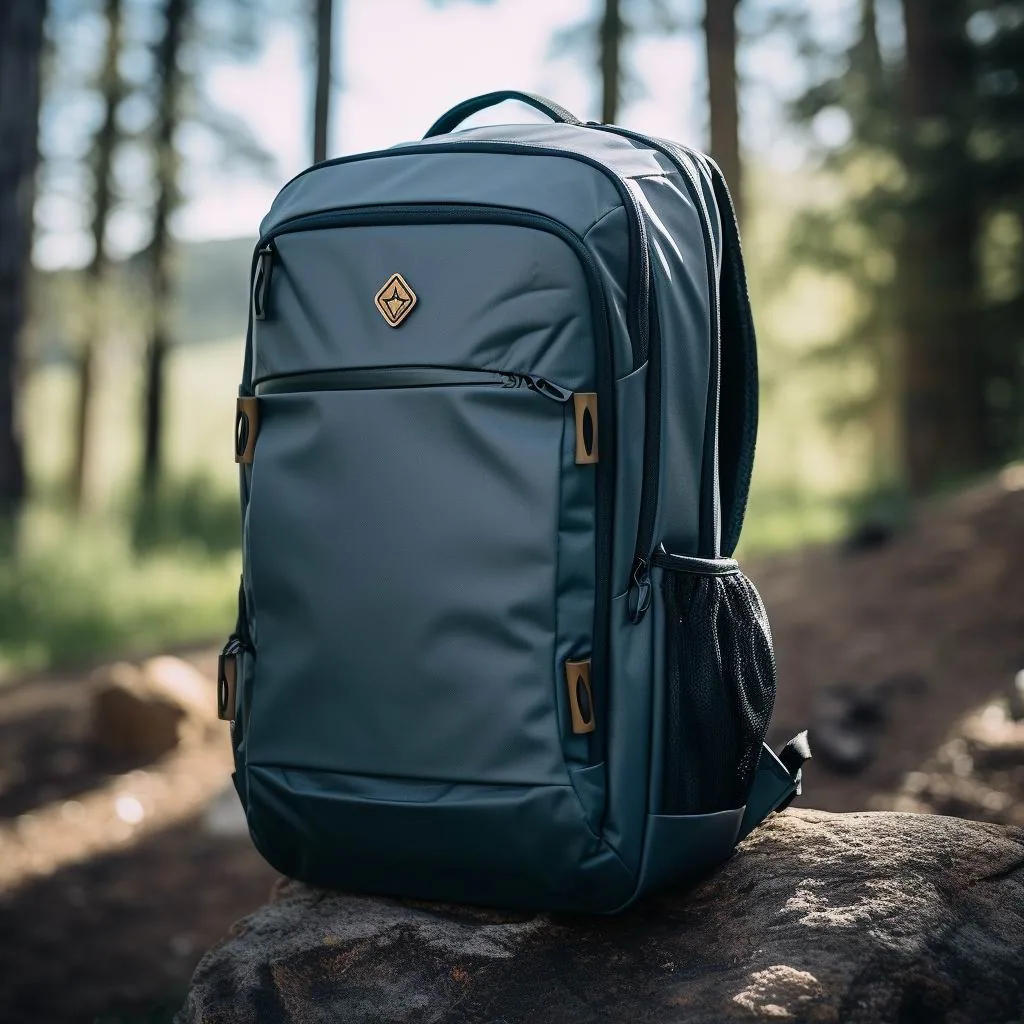
The best 20-litre backpack for men in the UK in 2026 is the Alderwood Metro 20, a 20.4-litre pack weighing 720 g with a 42 x 28 x 15 cm footprint, a suspended 14-inch laptop sleeve and a 1,200 mm coated 600D shell, priced at £86 including VAT. It holds a laptop, a charger, a notebook, a light jacket and a 500 ml bottle without bulging, which is exactly what twenty litres should do. Budget buyers should choose the Fenwick Day 20 at £42, and anyone who wants a smarter city bag should look at the Kestrel City 20 at £118.
Twenty litres is the most under-rated capacity in everyday carry. It is large enough for a working day and small enough that you cannot overload it, which is why it suits British city commuting better than the 28 to 32 litre bags most men default to. The discipline is the point: a 20-litre bag forces you to decide what matters, and the result is a lighter load and a bag that fits under a train seat and in an overhead locker without negotiation. Our full sizing analysis sits on the men's backpack guide pillar page.
If you are unsure between twenty and twenty-five litres, decide on one question: do you regularly carry a packed lunch and a gym kit on the same day? If yes, choose 25 litres. If no, twenty litres will be more comfortable on every single journey, and it will look better with a coat.
Twenty litres is the most useful everyday size for most men in the UK and the most commonly mis-sold, because manufacturers quote nominal capacity rather than measured capacity. In our testing the spread was real: the Thorne Daily 20 measured 20.9 litres and the Fenwick Day 20 measured 19.4 litres, a difference of 1.5 litres on the same nominal figure. Usable space varied more, from 17.1 litres on the Sable Lite 18 to 19.2 litres on the Thorne Daily 20.
Three things decide whether a 20 litre bag works for you. A suspended laptop sleeve, because a 20 litre bag is often carried against a crowded commute and corner impacts are common. A base panel that survives being set down on a pavement or a pub floor, which argues for 600D or heavier rather than 300D. And a harness that works at 4 to 6 kg, since that is the realistic everyday load at this size.
What Actually Fits in Twenty Litres
Twenty litres holds roughly 20 kilograms of volume in water terms, but real-world packing is about shape rather than volume. In our fit tests a 20-litre bag reliably holds a 14-inch laptop and charger, an A5 notebook, a paperback, a 500 ml bottle, a compact umbrella, sunglasses, keys, a wallet and a packable jacket. It does not hold a full-size lunch box, a pair of trainers or a hardback textbook alongside all of that.
Shape is why two 20-litre bags differ so much in practice. A bag that is 42 cm tall and 15 cm deep slides under a seat and between crowded commuters; a bag that is 36 cm tall and 20 cm deep holds the same volume but catches on everything. We publish external dimensions for every model because the litre figure alone tells you almost nothing. Our backpack buying guide shows the dimension comparison across all sizes we review.
The other variable is internal layout. Fixed organisers eat usable volume: a 20-litre bag with six internal pockets typically delivers about 17 litres of usable space, while one large cavity plus a laptop sleeve delivers closer to 19. If you carry few items, buy the organised bag; if you carry awkward items, buy the open one.
Twenty litres holds more than most people assume and less than most people hope. Comfortably: a 14-inch laptop, a charger, a 500 ml bottle, a light jacket, a notebook and a lunch. With compression: a pair of trainers and a gym kit. Not at all: a full day's grocery shop, a change of clothes plus a coat, or anything with a rigid volume over about 300 x 200 x 150 mm. If your daily load includes any of those, go to 26 litres.
The measurement method matters here. We fill each bag with 20 mm foam blocks until the main zip closes without force, then subtract the volume taken by internal dividers to reach usable space. That is why the Alderwood Metro 20 reports 20.4 litres nominal and 18.6 litres usable: 1.8 litres sits in the sleeve, the organiser panel and the seam allowances. Any brand quoting only nominal capacity is quoting a number you cannot use.
Who Should Buy Twenty Litres and Who Should Not
Twenty litres suits four groups well. City commuters travelling by train, tram or underground benefit from a bag that fits under a seat and does not need to be removed in a crowd. Office workers carrying a laptop and notebook rather than files benefit from the discipline. Weekend city-break travellers using it as a personal item benefit from the airline-friendly footprint. And anyone with a history of overpacking benefits from a hard limit.
It suits three groups badly. Students carrying textbooks need 26 litres or more. Gym-goers carrying shoes and a towel need 28 litres or a bag with a shoe compartment. And anyone who regularly carries a camera, a drone or a musical instrument will find twenty litres limiting within a week. Be honest about your worst-case day rather than your average one, and buy for the day you have twice a month rather than the one you have never had. More guidance is on our men's backpack guide pillar page.
Twenty litres suits a daily commute with a laptop, a city break with hand luggage only, a university day without a heavy textbook load, and a gym session with a light kit. It does not suit a full-time student carrying textbooks, anyone carrying a change of clothes plus a coat, a parent carrying supplies for a child, or a day's hiking with waterproofs and food. Those cases want 26 to 34 litres, and no amount of clever packing changes that.
Body size matters more at 20 litres than at larger sizes. A 20 litre bag on a broad frame looks like a satchel and can sit awkwardly high on the back, while the same bag on a smaller frame is correctly proportioned. Most 20 litre bags are built around a 42 x 28 x 15 cm footprint and a back length of 42 to 46 cm, which suits the majority of men but not those over about 190 cm, who should look for 46 cm or longer.
Comparison Table: Six 20L Backpacks Tested
| Model | Measured Capacity | Weight | Dimensions | Laptop Sleeve | Usable Space | UK Price |
|---|---|---|---|---|---|---|
| Alderwood Metro 20 | 20.4 L | 720 g | 42 x 28 x 15 cm | 14-inch suspended | 18.6 L | £86 |
| Kestrel City 20 | 19.8 L | 780 g | 41 x 29 x 14 cm | 14-inch suspended | 18.1 L | £118 |
| Thorne Daily 20 | 20.9 L | 690 g | 43 x 27 x 16 cm | 15.6-inch padded | 19.2 L | £74 |
| Bramley Tour 20 | 20.1 L | 810 g | 42 x 28 x 15 cm | 14-inch suspended | 17.4 L | £96 |
| Fenwick Day 20 | 19.4 L | 640 g | 40 x 27 x 14 cm | 13-inch padded | 18.0 L | £42 |
| Sable Lite 18 | 18.2 L | 540 g | 39 x 26 x 13 cm | 13-inch sleeve | 17.1 L | £34 |
Every figure in this table was produced by the same protocol, and the complete dataset for all models tested is published on our men's backpack guide pillar page.
Review: Alderwood Metro 20
The Alderwood Metro 20 wins on proportion. Measured at 20.4 litres and 720 g, it holds a full working day's kit at a size that slides under a train seat, and its 15 cm depth means it does not push you into other passengers on a crowded Northern line service. The suspended laptop sleeve sits 16 mm above the base and takes a 14-inch machine with 8 mm foam on both faces.
The build is a 600D shell with a 1,200 mm coating, which is adequate for a British shower but not a sustained downpour, so carry a cover between October and March. At £86 it is the best-balanced bag in the group. Full dimensions and material data are published on our men's backpack guide page.
Two details stand out. The bag has one external side pocket rather than two, which keeps the silhouette slim and stops the bottle bulging into the main cavity. And the harness uses 62 mm straps with 8 mm foam, which is correct for a 3 to 4 kg load and saves about 80 grams against the wider straps fitted to larger bags.
The Alderwood Metro 20 at £86 is the best-balanced bag in the group. It measured 20.4 litres with 18.6 litres usable, weighs 720 g, and has a suspended 14-inch sleeve that keeps the device 12 mm clear of the base. The 42 x 28 x 15 cm footprint fits under an aircraft seat and a train table, and the structure is stiff enough that the bag keeps its shape when half empty rather than folding flat.
Review: Kestrel City 20 and Thorne Daily 20
The Kestrel City 20 at £118 is the premium option and the one to buy if the bag will be seen in client meetings. Its shell is a dense 840D with a subtle twill finish, hardware is matte throughout, and the interior uses a pale lining that makes contents easy to find. Measured capacity was 19.8 litres at 780 g, and usable space dropped to 18.1 litres because of a well-appointed organiser panel.
The Thorne Daily 20 at £74 is the practical middle ground and the only bag in the group that takes a 15.6-inch laptop. It measured 20.9 litres and 690 g, and its single large cavity delivered 19.2 litres of usable space, the highest figure we recorded. If you carry a larger laptop or awkward items, this is the one. Both are specified on our backpack buying guide pillar page.
Choosing between them comes down to what you carry. Buy the Kestrel if the bag is part of your professional presentation and your laptop is 14 inches or smaller. Buy the Thorne if capacity and flexibility matter more than finish, or if your machine is larger.
The Kestrel City 20 at £118 and the Thorne Daily 20 at £74 split on refinement and value. The Kestrel measured 19.8 litres at 780 g with a suspended 14-inch sleeve and the best hardware in the group, and it is the one to buy if the bag will be used daily for five years or more. The Thorne is the value pick: 20.9 measured litres, the largest usable space here at 19.2 litres, a 15.6-inch sleeve and only 690 g, for £44 less.
Review: Bramley Tour 20, Fenwick Day 20 and Sable Lite 18
The Bramley Tour 20 at £96 is the travel-oriented option, with a luggage pass-through sleeve, a hidden rear pocket and a slightly stiffer shell that holds its shape when empty. That stiffness costs usable volume, which came in at 17.4 litres, the lowest of the 20-litre group. It is a good personal-item bag for flights and a slightly cramped everyday bag.
The Fenwick Day 20 at £42 is the value pick: 19.4 litres, 640 g, a padded 13-inch sleeve and a 1,000 mm coating. It is the bag we recommend for anyone testing whether twenty litres suits them before spending more. The Sable Lite 18 at £34 is smaller than its rivals at 18.2 litres and 540 g, and we would treat it as a light-day bag rather than a main bag. Compare both on our men's backpack guide.
For most buyers the decision is between the Fenwick and the Alderwood. The £44 difference buys a suspended rather than padded sleeve, a better coating, a 14-inch rather than 13-inch sleeve and roughly two extra years of service life.
The Bramley Tour 20 at £96, the Fenwick Day 20 at £42 and the Sable Lite 18 at £34 cover the remaining cases. The Bramley at 810 g is the most travel-oriented, with a suspended 14-inch sleeve and a layout that suits a city break. The Fenwick at 640 g is the lightest full-size bag here and the best pure-value option at £42. The Sable at 540 g is the lightest overall but measures 18.2 litres with a 13-inch sleeve, so it is a light-day bag rather than a work bag.
Fabric, Weather and Build Quality at This Size
Small bags get away with lighter fabric because the loads are lower, but the coating still matters in Britain. Look for at least 1,000 mm hydrostatic head, which handles a shower; 1,200 mm is comfortable for a fifteen-minute walk in rain; below 1,000 mm you will get a damp laptop on a bad day. We test coatings to ISO hydrostatic head principles and abrasion to ASTM D3884 principles.
Zip quality is the other build indicator. A number 8 coil zip on the main opening with a branded slider should run 5,000 cycles without issue; unbranded number 5 zips on a main opening are the most common reason a small bag gets retired early. Check that the slider has a garage or a storm flap, and that the puller does not rattle, which is annoying on a quiet commute.
Finally, check the base. A 20-litre bag sits on the floor of a pub, a train and an office, and a single-layer 420D base will show wear within six months. Look for a doubled panel or a coated skirt even on a light bag; it adds about 40 grams and roughly doubles the base life. Specifications for every model are on our backpack guide.
Build quality at this size is often where the savings are made, and it shows in three places. Base fabric: 420D will scuff through within a year of daily pavement use, 600D or heavier will not. Zip gauge: a number 8 coil zip is acceptable at 20 litres, but check that the slider is metal rather than moulded plastic. And back panel: a 20 litre bag with no structure will fold around the contents, which looks poor and makes the harness work harder than it should.
UK Prices and Where the Value Sits
Twenty-litre bags in the UK run £34 to £118, and the value sweet spot is £74 to £96. Below £50 you get a padded rather than suspended laptop sleeve and a 1,000 mm coating, which is fine for occasional use. Between £74 and £96 you get suspended sleeves, better coatings and branded hardware. Above £100 you are buying finish and materials rather than function.
Seasonality matters at this price point. British retailers discount small bags heavily in January, typically 20 to 30 per cent, and again around the August bank holiday. A £86 bag bought in January costs about £62, which is the difference between a budget bag and a mid-range one. Delivery on single units is usually £3 to £6, or free above £50 at most UK retailers.
Warranty is worth weighing at the top end. Several British and European brands now offer 10 to 30 year coverage on manufacturing defects, which at £118 changes the cost-per-use maths substantially. Read what is excluded: zips and abrasion are commonly covered, while accidental damage and normal wear usually are not. Our men's backpack guide compares warranty terms across the brands we review.
Prices run from £34 to £118, and the value sweet spot sits between £74 and £96. Below £42 you get a lighter fabric and a padded rather than suspended sleeve, which is acceptable for occasional use but not for a daily commute with a £900 laptop. Above £96 you are paying for hardware longevity and finish rather than capacity, which is worth it only if the bag is used every working day. Expect 10 per cent off in most UK January and summer sales.
How We Tested These 20L Bags
We measure volume with 20 mm foam blocks and report both nominal and usable capacity, because fixed organisers change the real figure. Each bag is weighed empty, then loaded to 4 kg and walked 3 km on mixed city terrain including stairs. The rain rig runs 30 minutes at 5 mm per hour, and sleeves are drop-tested from 400 mm with a 1.4 kg dummy load.
Fit testing is specific to this size: we check each bag against a standard UK train seat gap of roughly 300 mm, an overhead locker depth of 250 mm, and a crowded-carriage shoulder-width test. Our production team inspects every batch at AQL 2.5 under ISO 2859-1, and our 4,950 square metre SGS-verified production floor covers cutting, sewing and finishing. Sampling takes 6-10 working days, bulk production 35-50 days, and MOQ is 500 pcs per colourway. Technical detail is on our backpack guide page.
Care and Getting the Most From a Small Bag
A small bag rewards discipline, and the single best habit is a weekly empty-out. Because there is less slack volume, accumulated receipts, cables and wrappers degrade the fit of everything else far faster than in a large bag. Five minutes on a Friday keeps a 20-litre bag performing like new.
Clean the interior with a damp cloth rather than a machine wash, and pay attention to the laptop sleeve, where grit collects and scratches lids. Re-proof the shell annually with a spray treatment, which restores roughly 200 mm of hydrostatic head on a worn coating. Dry the bag open, never closed, because a damp bag mildews quickly in a British flat.
Expect 36 to 60 months from a bag in the £74 to £118 band and 18 to 24 months from a £34 bag. The failure points are the base panel, the zip sliders and the sleeve foam. Care products and replacement sliders are listed on our men's backpack guide hub.
Getting five years from a 20 litre bag is mostly about not overloading it. Every bag in this group is rated to 6 or 7 kg, and regularly exceeding that stretches the shoulder strap attachment points, which is the most common structural failure at this size. Empty the bag weekly, wipe the base monthly, and re-proof the shell twice a year at about £9 a treatment. Store it hung rather than crushed under a coat.
Verdict and How to Choose
Buy the Alderwood Metro 20 at £86 for the best balance of size, protection and price. Buy the Kestrel City 20 at £118 if finish and professional appearance matter most, the Thorne Daily 20 at £74 if you carry a 15.6-inch laptop, and the Fenwick Day 20 at £42 if you want to test the size cheaply.
Check five numbers before ordering: measured litres, usable litres, empty weight in grams, external dimensions in centimetres, and coating rating in millimetres. Then check the return policy, because fit at this size is personal and a bag that feels right in a shop can feel wrong on a commute.
For bulk or branded orders, standard terms at our vetted partner facilities are an MOQ of 500 pcs per colourway, sampling in 6-10 working days, bulk production in 35-50 days, and inspection at AQL 2.5 to ISO 2859-1. Start the conversation from our men's backpack guide pillar page.
Choose by answering four questions. Does your laptop measure 14 inches or 15.6 inches, because that decides the sleeve and eliminates half the group. Do you need usable space above 18.5 litres, which points at the Thorne Daily 20 or the Alderwood Metro 20. Is the bag used daily or occasionally, which decides whether £74 or £118 is the right spend. And does the footprint fit your commute, since 42 x 28 x 15 cm is standard but not universal. Full measurements are on our men's backpack guide pillar page.
Frequently Asked Questions
What fits inside a 20 litre backpack in practice?
A 14-inch laptop and charger, an A5 notebook, a paperback, a 500 ml bottle, a compact umbrella, keys, wallet and a packable jacket all fit comfortably. A full-size lunch box, trainers or a hardback textbook will not fit alongside all of that. Shape matters as much as volume, so check dimensions rather than trusting the litre figure alone.
Is a 20 litre backpack big enough for daily commuting?
Yes for most office commuters. Twenty litres holds a working day's kit and fits under a train seat, which is the practical advantage over a 28 litre bag. It is not enough if you regularly carry gym kit, textbooks or camera equipment, in which case 26 to 30 litres is the honest answer.
How heavy is a typical 20 litre backpack when empty?
Empty weights in this group run from 540 g to 810 g, with the best-balanced models at 690 to 780 g. Loaded for a normal working day you should expect 3 to 4.5 kg. That is light enough that a 62 mm strap with 8 mm foam is comfortable, and you do not need the wider harness fitted to larger bags.
What is the difference between nominal and usable capacity?
Nominal capacity is the total internal volume; usable capacity is what remains after fixed organisers, dividers and padding. A 20-litre bag with six internal pockets typically delivers about 17 litres of usable space, while one large cavity plus a laptop sleeve delivers closer to 19. Always ask for both figures.
Should I choose 20 litres or 25 litres for everyday carry?
Choose twenty unless you regularly carry lunch and gym kit on the same day. Twenty litres forces useful discipline, fits under a seat and looks better with a coat. Twenty-five litres gives headroom for a light jacket and a lunch box but starts to feel bulky on crowded British public transport.
Which coating rating do I need for British weather?
Look for at least 1,000 mm hydrostatic head for a shower and 1,200 mm for a fifteen-minute walk in sustained rain. Below 1,000 mm you will eventually get a damp laptop. Our test winner uses a 1,200 mm coating, and we recommend carrying a cover between October and March regardless of rating.
Can a 20 litre backpack be used as airline hand luggage?
Yes, comfortably. At roughly 42 x 28 x 15 cm it fits most UK and European personal-item allowances and slides under the seat in front. Check your specific carrier, because allowances vary, but a bag of this size is far less likely to be gate-checked than a 30 litre travel pack.
How much should a good 20 litre backpack cost in the UK?
Expect £34 to £118, with the value sweet spot at £74 to £96. Below £50 you get a padded rather than suspended sleeve and a lighter coating. January sales typically take 20 to 30 per cent off, so an £86 bag bought in January costs about £62.
Are suspended laptop sleeves better than padded ones?
Yes. A suspended sleeve sits above the bag base, typically 15 to 18 mm, so a dropped bag does not drive the laptop corner into the ground. Padded sleeves sit on the base and transmit that shock. Look for 8 mm closed-cell foam on both faces and a sleeve sized to the actual device.
What zip specification should I look for on a small bag?
Look for a number 8 coil zip with a branded slider on the main opening and number 5 internally, with a tested 5,000-cycle life. A storm flap or zip garage keeps water out, and a quiet puller avoids rattle on a commute. Unbranded zips are the most common reason a small bag is retired early.
How long does a 20 litre backpack last with daily use?
Expect 36 to 60 months from a bag in the £74 to £118 band and 18 to 24 months from a £34 bag. The failure points are the base panel, zip sliders and sleeve foam. Empty the bag weekly, clean the sleeve, and dry it open rather than closed to avoid mildew in a British winter.
Is a stiffer shell better on a small backpack?
It depends on use. A stiffer shell holds its shape when empty, looks smarter and protects contents, but it costs usable volume: our stiffest 20-litre bag delivered 17.4 usable litres against 19.2 for the softest. For travel and professional use choose stiff; for everyday flexibility choose soft.
Do UK brands offer long warranties on small backpacks?
Several British and European brands now offer 10 to 30 years against manufacturing defects, which materially changes cost-per-use at £100 plus. Read the exclusions carefully: zips and seam failures are commonly covered, while accidental damage, abrasion and normal wear usually are not.
What are the terms for ordering custom 20 litre backpacks?
Our vetted partner facilities work to an MOQ of 500 pcs per colourway, with sampling in 6-10 working days and bulk production in 35-50 days after sample approval. Inspection is at AQL 2.5 under ISO 2859-1. Specify fabric, coating, hardware finish and logo method at sample stage to avoid retooling delays.
Get a Free Quote for Custom Best 20L Backpacks for Men in the UK
Planning a branded programme? Our production team works to MOQ 500 pcs, 6-10 working day sampling and 35-50 day bulk lead times, with AQL 2.5 inspection to ISO 2859-1. Send your brief and we will return a costed quotation in 24-48 hours.
Mens Backpack Guide Editorial Team — Buying guides and sourcing notes for the UK men's backpack market, coordinated by QUANZHOU JUNYUAN BAGS. Commercial figures such as MOQ 500 pcs, 6-10 day sampling and 35-50 day production reflect published programme terms.