Best Backpacks for Interrailing in Europe: Rack Depth, Aisle Width and Locker Sizing
An Interrail trip does not test a backpack the way a flight does. There is no sizer, no 100 ml rule and no baggage carousel; instead there are open overhead shelves 280-340 mm high and 300-400 mm deep, aisles 480-560 mm wide, station stops of two to four minutes, and hostel lockers that refuse anything wider than 400 mm. Packs in the 35-45 litre range with a maximum depth of 25 cm handle all four constraints; anything deeper or taller creates a daily friction that accumulates over three weeks on the rail.
This guide works through those four constraints in the order you meet them, then covers the theft pattern on night services, the locker geometry that decides what you can store, and the fabric and hardware specifications that survive six weeks of contact with station platforms and rack frames. A closing section covers what a brand or buying team should specify when developing an Interrail-style travel pack for the European market.
Why Trains Punish a Different Bag Shape Than Planes
Air travel is a sizer problem: one rigid box, three dimensions, a pass or a fail. Rail travel is a shelf problem. The overhead shelves on European intercity and regional stock are typically 1.7 to 2.0 m long, 280 to 340 mm high and 300 to 400 mm deep, and they are open-fronted with a retaining lip of only 40 to 80 mm. A bag that is too deep either will not seat at all or sits proud of the lip and slides out under braking. A bag that is too tall has to go into the end-of-carriage bay or onto the floor, which is exactly where it is least secure. Depth, not volume, is the specification that decides whether your pack rides on the shelf or sits under your feet.
The second difference is time. A scheduled stop on a regional service can be as short as two minutes between door release and departure, and on popular summer routes the platform is crowded before the train arrives. That rules out any bag needing to be reorganised, unstrapped or fought with on the step. A pack that can be lifted by one grab handle, swung onto a shoulder and carried up a 300 mm step in a single movement is worth more on an Interrail trip than five extra litres of capacity. Door widths on most European intercity stock run 700 to 900 mm, and the vestibule beyond is often already shared with bicycles, prams and other people's luggage.
| Rail constraint | Typical dimension | What passes |
|---|---|---|
| Overhead shelf height | 280-340 mm | Pack depth up to 250 mm |
| Overhead shelf depth | 300-400 mm | Pack height up to 550 mm seated |
| Aisle width between seats | 480-560 mm | Pack width up to 320 mm |
| Door width | 700-900 mm | Any pack, worn on the back |
| Vestibule floor space | 0.6-1.2 m2 | One 40-litre pack only |
The third difference is that nobody measures or weighs anything, so the discipline has to be self-imposed. There is no check-in queue to catch an overpacker, which means the consequences of a badly chosen bag accumulate quietly: twenty minutes lost at each changeover hunting for floor space, a sore shoulder by day four, a pack left in a vestibule and forgotten. Seasoned Interrail travellers converge on the same solution for good reason. They carry a pack narrow enough to walk a 500 mm aisle without clipping seat backs, shallow enough to seat on a shelf, and light enough to lift one-handed into it, which in practice means 35 to 45 litres at 9 to 12 kg.
Volume: Why 35 to 45 Litres Is the Interrail Range
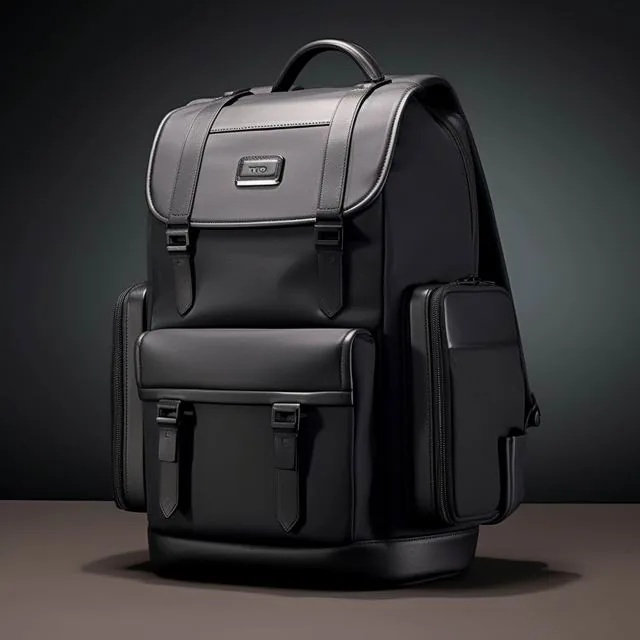
Below 30 litres you are committed to a laundry cycle every three or four days and to leaving the warm layer behind. Above 50 litres you gain capacity you cannot stow: the bag will not seat on a shelf, will not enter a standard hostel locker, and it invites you to carry things you will never use. The 35 to 45 litre band is where a seven to ten day wash cycle, a packable waterproof, a wash kit, a pair of off-trail shoes and a small camera all fit without the bag exceeding 550 mm in height or 250 mm in depth. It is also the band where European travel-pack designs concentrate their effort, so harness quality is noticeably better than at either extreme.
Weight should be treated as a self-imposed limit rather than an external one, because no rail operator will ever stop you. Nine to twelve kilograms all-in is the range that stays comfortable across a 25 to 30 day trip with daily carries of 1.5 to 4 km between station, hostel and centre. Above 13 kg the harness starts to matter more than the itinerary, and above 15 kg you will begin avoiding the stairs, the cobbles and the walk-up hostels that make a rail trip worth taking. Weighing the pack before departure and again after the first laundry cycle is the simplest check; most travellers find the second figure is one to two kilograms lower once the just-in-case items have been posted home.
- 35-45 litres covers a 7-10 day wash cycle with a warm layer
- Target 9-12 kg total; above 13 kg the harness becomes the trip
- Maximum height 550 mm and depth 250 mm to seat on a shelf
- One grab handle front and back; expect 200+ lifts on a month trip
Aisle Width, Boarding and the Two-Minute Stop
Aisle width on European intercity stock sits between 480 and 560 mm between seat pairs, and the effective width is narrower than that because seat backs and armrests intrude. Wearing a pack that is 320 mm wide with a body of 450 mm gives a total silhouette of roughly 600 to 700 mm, which means clipping seats on every row. The established practice is simple and worth stating: turn the pack to the front, or carry it, when you board. It is faster than apologising eight times, it protects the bag from contact with seat fabric, and it removes the risk of knocking a drink into someone's lap on a train you will be sharing for six hours.
When boarding, the sequence that works under time pressure is: stow the pack flat on the shelf with the back panel up so webbing and buckles do not dig into the shelf edge, then take your seat, then retrieve the small items you want for the journey. Rushing the first step is how packs end up dropping from overhead shelves under braking, which is both a safety issue and a fast way to crack an acetal buckle. If the shelf is full, use the end-of-carriage bay and keep the pack within sight, or use the space behind the last row of seats. Leaving a bag in the vestibule near the doors is the single most common way that Interrail travellers lose luggage to opportunistic theft.
- Turn the pack to the front or carry it when walking a 480-560 mm aisle
- Stow back panel up so buckles and webbing do not catch the shelf edge
- Never leave the pack in the vestibule near the doors
- Keep passport, card and phone in a hip belt or body pouch, not the lid pocket
Night Trains, Sleeper Berths and the Theft Pattern
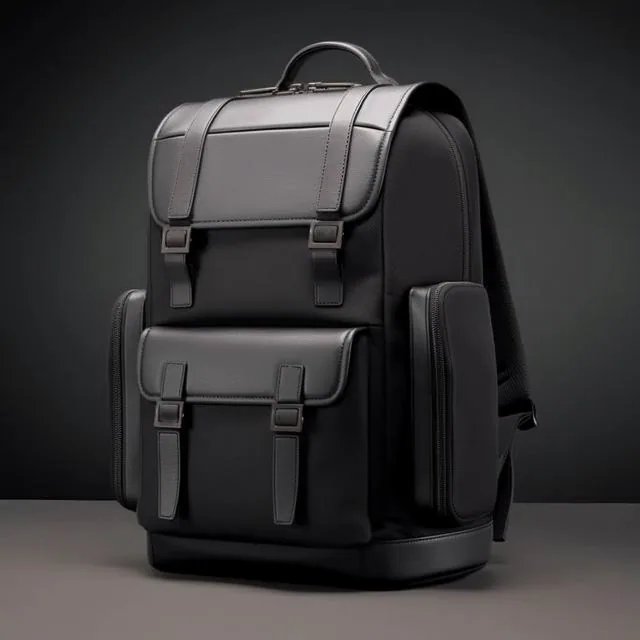
Theft on European rail is overwhelmingly opportunistic rather than confrontational, and it concentrates in two situations: bags left in a vestibule or end-of-carriage bay while the owner sits in another coach, and bags left unsecured in a shared couchette compartment overnight. A six-berth couchette gives roughly 0.4 to 0.6 m2 of floor space under the lower bunk, which is ample for a 40-litre pack and inadequate for a 65-litre one. The workable defence is a 1.5 to 2 mm steel cable lock through the pack's grab handle and a fixed frame point, plus a separate small pouch carried on the body containing passport, cards and the phone.
Layout matters more than hardware on an overnight service. Pack so that the things needed between 23:00 and 07:00 sit in the lid pocket or the hip belt pouch: earplugs, eye mask, a 500 ml water bottle, a charger and one insulating layer, since couchette compartments routinely run 22-24C early in the night and cool to 16-18C by 05:00. Keep the ticket or QR code somewhere that does not require opening the main compartment in a dark, moving carriage, and use a phone light rather than the compartment light. Sleeper and couchette reservations are additionally covered by European passenger rights, which are explained at europa.eu.
Hostel Lockers and Station Storage
Hostel lockers are the constraint that catches travellers who sized their pack for a flight. Standard under-bunk units are typically 280 to 400 mm wide, 500 to 600 mm deep and 400 to 500 mm high, and the door aperture is roughly 20 to 30 mm narrower than the internal width because of the frame. A 40-litre pack at 550 x 340 x 220 mm goes in easily. A 60-65 litre pack at 700 x 380 x 300 mm frequently does not, and a 70-litre pack almost never does. In the shoulder season you can often count on a spare locker to spread the load across; in July and August that assumption fails at precisely the moment you need it.
Bring your own lock. Hostels sell or rent them at a premium, and the padlocks fitted to older units are often worn. A four-digit combination padlock with a 6 to 8 mm hardened shackle covers most locker hasps, while a 1.5 mm steel cable lock covers the rail scenario and doubles as a locker lock where the hasp is generous. Station left-luggage offices and automated lockers charge roughly EUR 4-10 for 24 hours depending on the city, and the automated units increasingly take contactless payment rather than coins. For a one-night city stop, the smarter move is often to book accommodation with luggage storage and drop the main pack before sightseeing with a 15-20 litre day bag.
| Storage type | Opening | Fits |
|---|---|---|
| Hostel under-bunk locker | 280-400 x 400-500 mm | Up to 45 litres |
| Hostel tall locker | 350-450 x 700-900 mm | Up to 70 litres |
| Station automated locker | 450-600 x 800-900 mm | Most travel packs |
| Left-luggage office | No practical limit | Any pack |
Rain, Laundry and the Wash Cycle
A European Interrail loop between June and September runs through afternoon thunderstorms in the Alps, persistent drizzle in the Rhine valley and 32-38C heat in the south. That combination argues for a pack with a genuinely separate wet or dirty kit compartment rather than a single cavity, because a damp waterproof shell and a day's washing will regularly travel alongside clean clothing. A TPU or PU-lined base compartment of 4-6 litres handles both jobs, and a drain grommet at its lowest point stops the pooled water that otherwise appears after two days. Drying happens on the move: strap washed items to the outside of the pack with the compression straps and let a 25C afternoon do the work.
The wash cycle sets the clothing volume. Plan on laundering every seven to ten days, which means four or five days of base layers, two mid-layers, one pair of trousers plus shorts, and a single spare pair of shoes. Synthetic base layers dry in two to four hours strapped to the outside; cotton takes eight to twelve and is worth leaving at home. Hostel laundries charge roughly EUR 4-7 for a wash and EUR 3-5 for a dryer cycle, and a 30-minute cycle on synthetics returns everything wearable. A 20 ml bottle of concentrated detergent and a universal sink plug are the two items travellers most often wish they had packed on a first Interrail loop.
For a travel pack used through summer thunderstorms, look for a coated fabric with a hydrostatic head of 1,500 mm or more and taped or bound main seams. Below 1,000 mm the shell wets through under strap pressure within about 20 minutes of sustained rain.
Fabric, Zips and the Wear Points of a Rail Trip
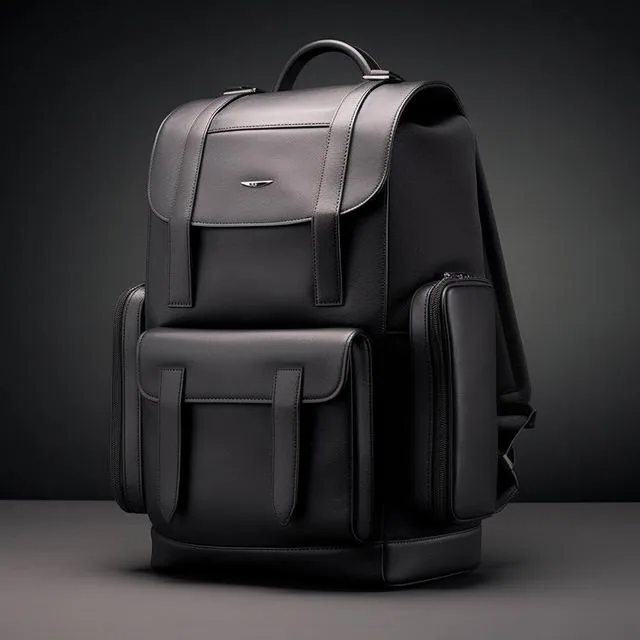
Rail travel abrades a pack in specific places. The base panel contacts platform edges, station floors and the metal lip of the overhead shelf; the back panel and harness webbing rub against seat backs and compartment frames; the top grab handle takes repeated one-handed lifts of 10 to 12 kg. Abrasion resistance is measured to ISO 12947, and a 600D polyester with a polyurethane backing should be specified at 20,000 cycles or more under a 12 kPa load, with the base panel upgraded to 900D or a laminated reinforcement. Tensile strength on the same fabric is verified to ASTM D5034, with 600 N or above in the warp a sensible working target.
Zips and hardware decide the rest of the service life. Main compartment zips should be #8 or #10 coil with a lockable slider, since an overpacked panel puts sustained outward pressure on the chain and a #5 will eventually burst at the curve. Buckles in acetal (POM) tolerate the low-temperature impact of an autumn platform better than nylon and run quieter. Webbing should be 25 mm polyester with a minimum breaking strain in the 500-900 kg range, bar-tacked at every root. Sampling plans for a production run are agreed under ISO 2859-1, typically at AQL 2.5, the level used to accept or reject a bulk shipment of travel packs.
| Component | Specification | Failure mode avoided |
|---|---|---|
| Base panel | 900D or laminated, 20,000 cycles ISO 12947 | Platform abrasion and shelf-lip wear |
| Main zip | YKK #8 or #10 coil, lockable slider | Chain burst under overpacking |
| Grab handle | 25 mm webbing, bar-tacked both ends | Tear-out under a 12 kg lift |
| Wet compartment | TPU-lined, 4-6 litres, drain grommet | Water pooling in the main cavity |
Delays, Disruption and What You Can Claim
Rail passenger rights across the European Union set compensation thresholds for delay on international and domestic services, commonly 25 per cent of the ticket price at 60 to 119 minutes and 50 per cent at 120 minutes or more, though exact thresholds vary by operator and service type. The practical consequence for packing is that your ticket, reservation and any delay documentation should stay accessible rather than buried at the bottom of the main compartment, because claims are made within a limited window and are far harder to assemble retrospectively. A dedicated A5 document sleeve costs almost nothing to specify and removes the problem entirely.
Disruption also changes the pack you want. A missed connection at a regional station at 22:40 turns a fifteen-minute walk into an overnight wait, so carrying a compressed insulating layer, a 500 ml water bottle and a head torch is cheap insurance costing about 600 g and 2 litres. If a service is cancelled and you have to walk to alternative accommodation, harness quality matters more than capacity: 11 kg on a well-fitted hip belt over 3 km is tiring, while the same load hanging from the shoulder straps is genuinely painful. Full detail on entitlements is published at europa.eu.
Building an Interrail Pack Specification for a Brand
For a brand developing a travel pack aimed at the European rail market, the specification should be written around the four constraints above rather than around a litre figure. Maximum depth of 250 mm, maximum width of 320 mm, a flat back panel that will not roll when stowed on its side, and a grab handle rated for repeated 12 kg one-handed lifts are the four lines that matter. Commercial terms for a programme of this kind are a MOQ of 500 pcs per style and colourway, sampling in 6-10 working days for a standard build and 12-15 working days where the construction is complex, and bulk production of 35-50 days from approval, with inspection at AQL 2.5 under ISO 2859-1 and shipments FOB Xiamen on T/T 30/70.
QUANZHOU JUNYUAN BAGS operates as a sourcing and programme-management company, established in 2014 and coordinating a 4,950 m² SGS-verified production floor space with 137 colleagues across 7 production lines. On a travel pack the cost drivers are the harness assembly, the frame sheet and the zip gauge, while the warranty drivers are the grab-handle attachment, the base panel and the stowage tolerance. Getting the second group right typically costs 40 to 70 pence per unit and returns several times that in avoided claims, which is why the specification review belongs before the first sampling round rather than after the third.
Frequently Asked Questions
What size backpack is best for Interrailing in Europe?
Between 35 and 45 litres. That range fits a seven to ten day wash cycle, seats on an overhead shelf 280-340 mm high and 300-400 mm deep, and enters a standard under-bunk hostel locker of 280-400 mm wide. Above 50 litres the bag will not enter that locker, and below 30 litres you are laundering every three days with no room for a warm layer.
Will a 40-litre backpack fit in a European train overhead rack?
Usually yes. A 40-litre travel pack measures roughly 550 x 340 x 220 mm, which seats on a shelf 280-340 mm high and 300-400 mm deep. Stow it back panel up so buckles and webbing do not catch the shelf lip. Packs deeper than 300 mm sit proud of the lip and slide out under braking, which is both a safety risk and a common way to crack a buckle.
How heavy should an Interrail backpack be?
Aim for 9-12 kg total, including the empty pack at 1.1-1.6 kg. No rail operator will weigh your bag, so the limit is self-imposed. Above 13 kg the harness starts dictating the itinerary, and above 15 kg you will avoid the stairs, cobbles and walk-up hostels that make rail travel worthwhile. Weigh it again after the first laundry cycle; most packs drop 1-2 kg.
Do I need a backpack with a hip belt for Interrailing?
Yes, if carrying 10 kg or more. A hip belt 40-70 mm wide transfers roughly 60-80 per cent of the load to the pelvis, which matters when walking 1.5-4 km between a station and a hostel. Stow the wings flat behind the panel when boarding or stowing overhead. Below 8 kg a hip belt is optional, but the stowage discipline still helps.
How do I stop my backpack being stolen on a night train?
Use a 1.5-2 mm steel cable lock through the grab handle and a fixed frame point under the lower berth, and keep passport, cards and phone in a body pouch. Most rail theft is opportunistic, concentrated in vestibules and unsecured couchette compartments rather than forced bag opening. A six-berth couchette gives 0.4-0.6 m2 of floor space under the bunk. Keep the key on your person rather than in the pack, and repeat the check at every changeover.
Will my backpack fit in a hostel locker in Europe?
Standard under-bunk lockers are 280-400 mm wide, 500-600 mm deep and 400-500 mm high, with the door aperture 20-30 mm narrower than the internal width. A 40-litre pack fits easily; a 60-65 litre pack often does not. Bring a four-digit padlock with a 6-8 mm hardened shackle, since hostels rent them at a premium and older hasps are worn. Tall lockers of 350-450 x 700-900 mm are rarer but take most travel packs when you find one.
Is a backpack or a wheeled suitcase better for Interrailing?
A backpack. Rail travel involves 200-400 mm steps, 480-560 mm aisles, cobbled approaches to most European hostels and two-minute stops, and wheels fail on all four. A backpack also lifts one-handed onto an overhead shelf. The exception is a traveller carrying more than 15 kg, for whom a small wheeled case plus a daypack is the better compromise. Count the steps at any Italian or German regional station and the argument settles itself.
What should I pack for a three-week Interrail trip?
Four to five days of synthetic base layers, two mid-layers, one pair of trousers plus shorts, one spare pair of shoes, a packable waterproof, a wash kit in 100 ml bottles, a 10,000 mAh power bank and a small cable roll. Launder every seven to ten days at EUR 7-12 per wash and dry. Add a compressed insulating layer for overnight delays.
Do I need a rain cover for an Interrail trip?
Prefer a coated fabric with a hydrostatic head of 1,500 mm or more plus an internal liner over an external cover. Covers flap on windy platforms, collect water that then runs into the back panel, and get left behind in restaurants. A cover is useful only as a dust shield when the pack is strapped to an outside rack or ridden through a storm.
How do I carry a backpack on a crowded train without hitting people?
Turn it to the front or carry it by a grab handle while walking the 480-560 mm aisle, then stow it back panel up on the overhead shelf. Wearing a 320 mm wide pack on your back creates a 600-700 mm silhouette, which clips seat backs in every row. Board early if you can, since shelves fill within minutes of departure.
Can I take a 65-litre backpack Interrailing?
You can, but expect friction. A 65-litre pack measures roughly 700 x 380 x 300 mm, so it will not seat on an overhead shelf and may not enter an under-bunk locker. It belongs in the end-of-carriage bay, where it is harder to watch. Drop to 45 litres plus a 20-litre packable day bag and the whole trip gets easier.
What fabric specification should I look for in a rail travel pack?
600D polyester with polyurethane backing at 20,000 cycles or more to ISO 12947, a 900D or laminated base panel, tensile strength verified to ASTM D5034 at 600 N or above, #8 or #10 lockable coil zips and 25 mm webbing bar-tacked at every strap root. Add a hydrostatic head of 1,500 mm or more and a drain grommet in any wet compartment.
Developing a Rail Travel Pack for the European Market
A rail travel pack succeeds or fails on four dimensions rather than on a litre figure: 250 mm maximum depth, 320 mm maximum width, a flat panel that will not roll when stowed sideways, and a grab handle tested for repeated 12 kg one-handed lifts. Fix those in the tech pack and the sampling rounds get shorter. Terms are a MOQ of 500 pcs per style and colourway, 6-10 working days for sampling (12-15 for complex builds), 35-50 days for bulk, AQL 2.5 under ISO 2859-1, FOB Xiamen and T/T 30/70.
QUANZHOU JUNYUAN BAGS, established in 2014, works as a sourcing and programme-management company across a 4,950 m² SGS-verified production floor space with 137 colleagues and 7 production lines. Send a reference sample or a draft tech pack and our production team will return a costed specification with a sampling and inspection schedule.
Email: service@junyuanbags.com
WhatsApp: +86 177 5002 0688