Packing a 48-Hour Business Trip in One Backpack: A UK Load Plan
A 48-hour business trip fits in a 28-32 litre backpack at 7-9 kg total, provided the footprint stays inside 52 x 35 x 20 cm. That size clears every UK airline sizer without a gate check and still holds one jacket, two shirts, a 14-inch laptop and a one-litre wash kit.
This guide works through the volume maths, the crease-control method, the liquids rule and a compartment map you can follow in ten minutes. Where commercial figures appear, they are the standard programme terms used by QUANZHOU JUNYUAN BAGS: MOQ 500 pcs per style and colourway, sampling in 6-10 working days, bulk in 35-50 days, AQL 2.5 to ISO 2859-1, FOB Xiamen and T/T 30/70.
How Many Litres a 48-Hour Trip Really Needs
Forty-eight hours on the road means one night away, two working days and one round of meetings. The base kit is smaller than most men assume. A 14-inch laptop occupies roughly 1.6 litres, a 65 W charger 0.3 litres, a wash bag 1.0 litre, a jacket folded on the third 3.0 litres, two shirts rolled 1.4 litres, a second pair of trousers 1.5 litres, a merino knit 1.2 litres, underwear and socks 0.8 litres, shoes 3.0 litres, an A4 document folder 0.5 litres and sundry items 1.0 litre. That is about 15.3 litres of actual goods. Decide the kit first and then choose the pack; buying a bag before you have fixed the item list is how men end up carrying four litres of things they never use.
Packing efficiency is never 100 per cent. Air gaps, sleeve walls and the curve of a rolled shirt add 30-40 per cent, so a 15.3 litre load needs a 21-25 litre shell in theory. In practice a structured pack with a padded laptop sleeve and a separate shoe compartment lands at 28-32 litres. Below 26 litres you will be fighting the zip on the return leg. Above 36 litres the bag will not compress to 20 cm and you will be asked to surrender it at the gate. A useful check is the two-finger test: if you can push two fingers into the main compartment above the load, the shell is too large for the trip.
| Item | Volume | Packing note |
|---|---|---|
| 14-inch laptop in sleeve | 1.6 L | Suspended sleeve, 20 mm base clearance |
| Suit jacket, folded once | 3.0 L | Inside out at the shoulder seam |
| Two rolled shirts | 1.4 L | Roll on a 15 cm core |
| Shoes, UK size 10 | 3.0-3.5 L | Wear the bulky pair |
| Wash bag, 1 L | 1.0 L | TPU-lined, not canvas |
| Document folder, A4 | 0.5 L | Quick-access top pocket |
Cabin Dimensions That Actually Pass a UK Sizer
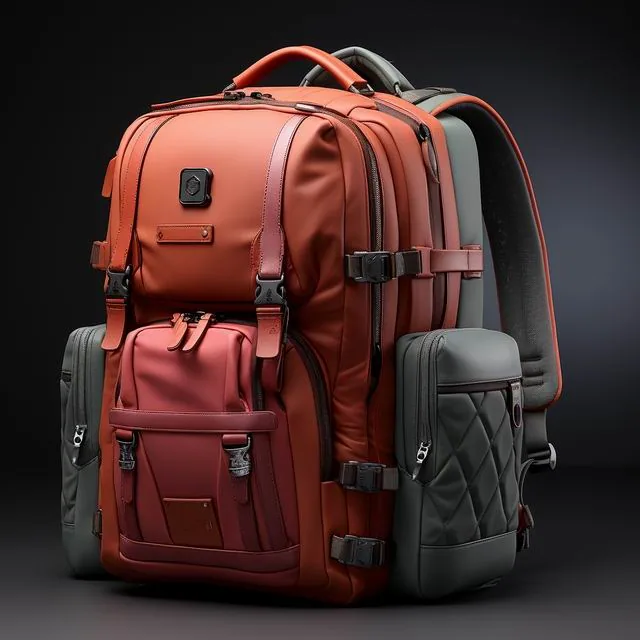
Depth is the binding constraint, not height. Ryanair allows a free 40 x 20 x 25 cm bag and a 55 x 40 x 20 cm priority bag, easyJet allows 45 x 36 x 20 cm free and 56 x 45 x 25 cm as a paid large cabin bag, and British Airways allows 56 x 45 x 25 cm plus a 40 x 30 x 15 cm personal item. A soft 30 litre pack measuring 52 x 35 x 20 cm fits all three, because the sizer is a rigid box and a soft bag can be squeezed a centimetre in each direction.
A framed travel pack behaves differently. An internal frame sheet and a moulded back panel hold the bag at its stated depth, so a 30 litre framed pack that measures 23 cm deep will not compress and will jam in a 20 cm sizer. If your route is Ryanair-heavy, choose a frameless soft pack with four compression straps and a removable frame sheet. The GOV.UK hand luggage rules cover the security-side restrictions on liquids and electronics that sit alongside each airline's commercial size limit, and they apply whatever your ticket allows. Weigh that against a soft pack, which loses 10-15 per cent of its stated volume when the compression straps are pulled but always fits the box.
Keeping a Jacket and Two Shirts Presentable
Crease recovery is a fabric property, not a folding trick. A wool-polyester blend at 240-280 gsm recovers from a single fold within two hours on a hanger, while a linen-cotton shirt does not recover at all. Fold the jacket inside out at the shoulder seam, turn one sleeve through, then fold once at the natural waist so the package measures no more than 35 x 25 x 6 cm. Roll shirts around a 15 cm core, such as a wash bag or a packed knit, so the cloth bends on a wide radius instead of creasing on a hard edge.
Hang the jacket in the bathroom while you shower. Ten minutes of steam at 40-50 C relaxes wool fibres and removes most travel creasing, and it costs nothing. A garment folder adds 180-260 g and about 1.5 litres of dead volume, which is poor value on a 48-hour trip. Shoes are the other volume problem, since a pair of UK size 10 brogues occupies 3.0-3.5 litres. Wear the bulky pair, pack the flat pair, and use a shoe compartment or shoe bag so heel grit never touches a shirt. If the hotel has no full-length hanger, lay the jacket flat on the bed with the collar supported, and gravity does the rest overnight.
- Fold the jacket once, never twice
- Roll shirts on a 15 cm core
- Steam for 10 minutes at 40-50 C
- Pack shoes heel-to-toe in a bag
- Skip the garment folder under 72 hours
The Tech and Document Layer
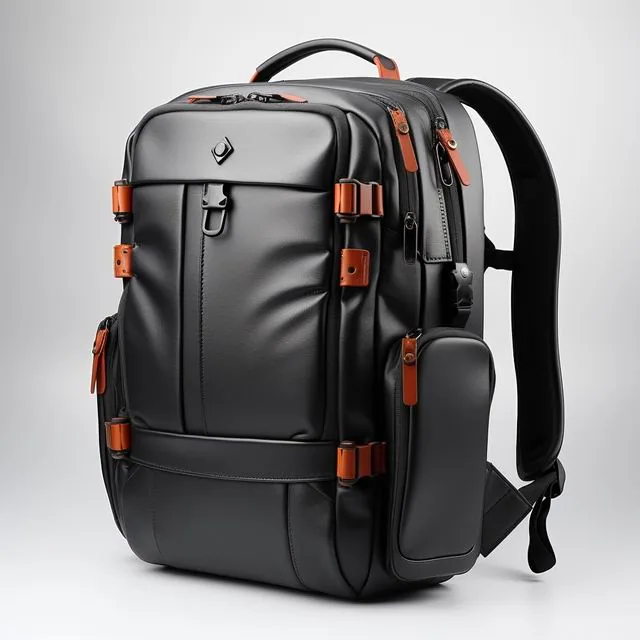
A 14-inch laptop at 1.4-1.6 kg and a 65 W USB-C charger at 190-210 g is the standard professional load. Keep the laptop in a suspended sleeve that holds the base 15-20 mm clear of the pack floor, so a bag dropped on a station platform does not drive the corner into the chassis. Power banks must travel in the cabin rather than the hold, and staff will read the watt-hour label: anything at or below 100 Wh passes without paperwork, and 100-160 Wh needs airline approval. Add a slim sleeve if the device has no rigid case, because the pressure of a packed shirt against a bare lid is enough to mark a screen.
Charger safety is covered by IEC 62368-1, the hazard-based standard that replaced the older IT-equipment rules, and an unmarked 65 W brick is a genuine fire risk on a hotel desk. Carry two USB-C cables and one short adapter in a flat tech pouch, because a tangled bundle at security costs you two minutes and one tray. Keep boarding passes, a printed itinerary and business cards in a single A4 slip pocket rather than distributed across four compartments. A 20,000 mAh bank rated at 74 Wh is the largest size that stays inside the 100 Wh threshold, and it will recharge a laptop once and a phone four times.
Wash Kit, Liquids and Leak Control
The liquids rule is unchanged: each container 100 ml or less, all of them in one resealable transparent bag of about one litre, presented separately at security. The rule is per container, not per total volume, so six 100 ml bottles are allowed even though they total 600 ml. Switching to a solid shampoo bar and a shaving soap removes two containers and about 180 ml from the tray, which is the cheapest way to speed up the morning queue at Manchester or Gatwick. Decanting into 100 ml bottles costs about GBP 6 for a set of four and pays for itself the first time you avoid checking a bag into the hold.
Leaks, not volume, ruin business trips. A screw-top bottle with a damaged thread will empty 100 ml of shower gel into a shirt in roughly four minutes of bag movement. Use bottles with a positive-lock flip cap, squeeze the air out before closing, and double-bag anything with a pump. The wash bag itself should be TPU-lined rather than cotton canvas, because a TPU liner wipes clean and stops a wet toothbrush from soaking the pack's base panel overnight. Put the wash bag low in the pack as well, so any leak that does happen drains away from shirts rather than into them.
- Decant into 100 ml bottles with locking caps
- Squeeze air out before closing
- Carry solid shampoo and soap substitutes
- Keep the liquids bag in an external pocket
- Use a TPU-lined wash bag, not canvas
A Compartment Map for Ten-Minute Packing
Pack order matters more than folding technique. Put shoes and the wash bag in the bottom compartment or the lower third of the main body, because they are dense and you want mass low and close to your back. Put rolled shirts and trousers in the middle, then lay the jacket flat against the back panel so its largest surface has nothing to crease against. Keep the laptop in its dedicated sleeve rather than loose against clothing, so heat from the chassis has an air path. If the pack has no separate bottom compartment, lay the shoes against the back panel in a bag and treat that panel as the floor.
The top third is for anything you will reach for on a train: a notebook, a water bottle, headphones and the document folder. Keep the bottle in an external sleeve rather than inside, because internal condensation and a loose cap are the two most common causes of soaked paperwork. Use the compression straps last, pulling the load toward the back panel instead of crushing it flat; two centimetres of depth reduction is usually enough to clear a sizer without creasing what is inside. Finish with the jacket last if you have not folded it, laying it flat across the top of the load rather than rolling it into a tube.
British Weather and the Case for Shower Resistance
A UK trip in any month except July probably involves rain between the station and the office. You do not need a fully waterproof pack, but you do need a face fabric with a durable water-repellent finish and a hydrostatic head of at least 1,500 mm, plus a coated base panel. The failure point is almost never the fabric, it is the zip. A standard coil zip without a storm flap or a garage wets through in about eight minutes of steady rain, so look for a covered main zip or carry a rain cover sized one litre above the stated volume.
Abrasion is the second specification that matters on a travel pack. Base and lower-back fabric is dragged across station floors, car boots and overhead bins, and ISO 12947 is the Martindale rub test buyers cite when they set a minimum for those panels. A 600D polyester rated at 30,000 rubs will outlast a 420D nylon rated at 10,000 on the same route, which is why heavier denier on the base is worth the 60-90 g of extra weight. A rain cover sized one litre above the stated volume also protects the straps, which stay wet against a shirt long after the rain stops.
Weight, Harness and the 9 kg Ceiling
Target 7-9 kg for a 48-hour load. That is roughly 10 per cent of body weight for an 80 kg man and sits inside the range most occupational guidance treats as a sensible limit for a load carried on the back over a mixed walking day. The Health and Safety Executive publishes manual-handling guidance that UK employers lean on when writing travel and lifting policies, and the same reasoning applies to a packed bag you carry for 20 minutes across a terminal. Weigh the loaded pack on bathroom scales before you leave; the number is usually 1-2 kg higher than men estimate from lifting it.
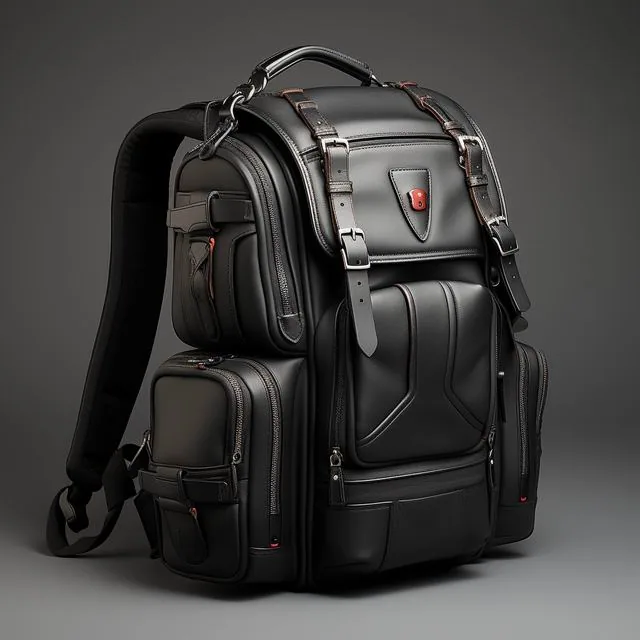
The harness carries the load, not the volume. On a 9 kg bag the shoulder straps should be 60-75 mm wide with 8-12 mm of closed-cell foam, the sternum strap should sit 30-50 mm below the collarbone, and a lightly padded hip belt should take roughly 20-30 per cent of the weight off the shoulders on any walk longer than ten minutes. If the pack has load lifters, set them at about 45 degrees from the shoulder strap attachment so the top of the bag pulls toward your spine rather than away from it. Check that the straps do not sit on the trapezius muscle: if the padded section ends before the shoulder curve, the load will pull behind you.
| Load | Effect | Fix |
|---|---|---|
| 6 kg or under | Shoulders carry nearly all of it | Any harness works |
| 7-9 kg | Hip belt becomes useful | Pad the belt, tighten load lifters |
| 10-12 kg | Strap edge digs in after 20 min | Widen straps to 70 mm+ |
| Over 12 kg | Repack or split the load | Two bags beat one strained back |
The Return Leg and Dirty Kit
The return leg is where a good pack turns bad. Damp towels, a worn shirt and a used wash kit add 300-500 g of water weight and transfer odour to clean clothing within a few hours. Carry a 20 x 30 cm dry bag or a PU-lined laundry sac: it weighs 35-60 g and isolates everything wet. Squeeze rather than roll damp items, and never seal a wet towel against a laptop sleeve, because trapped moisture finds the one component that cannot tolerate it. A microfibre towel dries to 60 per cent of its weight in about two hours on a towel rail and beats a hotel towel for both weight and speed.
Repack in the same order every time. Security trays reward consistency: laptop out, liquids bag out, jacket off, shoes only if asked. A pack with a separate laptop compartment that opens flat at 180 degrees saves the most time here, since you can pull the device with one hand and drop it back without disturbing the main body. Keeping the liquids bag in an external quick-access pocket removes the single most common cause of a delayed tray. Photograph the packed bag before you close it; the picture makes repacking in a hotel room at six in the morning almost automatic.
Specifying a 48-Hour Pack for a Team
Corporate travel packs are specified differently from retail ones. Volume should be fixed at 28-30 litres, the laptop sleeve sized for the actual fleet device rather than a nominal 15-inch class, and the colourway limited to one or two options because minimum order quantity is quoted per style and colourway. The programmes QUANZHOU JUNYUAN BAGS coordinates run at MOQ 500 pcs per style and colourway, with sampling in 6-10 working days and 12-15 working days for complex builds, then bulk production in 35-50 days. Ask for a 25 mm webbing grab handle on three sides, because teams carry these bags by hand through terminals more often than on the back.
Build the specification around failure points rather than feature lists. A 600D recycled polyester face fabric, a 1,500 mm hydrostatic head, a covered main zip, a suspended laptop sleeve with 20 mm of base clearance and a 25 mm webbing handle on three sides will survive two years of weekly travel. Inspection is set at AQL 2.5 to ISO 2859-1, shipment is FOB Xiamen on T/T 30/70, and output runs across 7 production lines within 4,950 m² of SGS-verified production floor space staffed by 137 colleagues. The company has been operating since 2014. Add one colourway only at the start and revisit a second after the first repeat order, when the tooling has already been absorbed.
28-30 litres, 600D face fabric at 30,000 Martindale rubs, 1,500 mm hydrostatic head, covered #8 main zip, suspended sleeve with 20 mm clearance, 70 mm shoulder straps, one colourway.
Frequently Asked Questions
What size backpack is best for a 48-hour business trip?
A 28-32 litre soft pack is the practical answer. A 15.3 litre kit of clothing, laptop and wash bag needs roughly 30-40 per cent headroom for air gaps and sleeve walls, which puts the requirement at 21-25 litres in theory and 28-32 litres once a padded laptop sleeve and shoe compartment are counted. Above 36 litres the pack will no longer compress to a 20 cm depth.
Can a 30 litre backpack be taken as hand luggage on Ryanair?
Yes, if it is soft and you buy priority boarding, which allows 55 x 40 x 20 cm at 10 kg. The free allowance is a 40 x 20 x 25 cm bag that must fit under the seat, so a 30 litre pack only qualifies as the free item if it compresses hard. A framed 30 litre pack measuring 23 cm deep will not pass the 20 cm sizer.
How much should a packed 48-hour business backpack weigh?
Aim for 7-9 kg, which is about 10 per cent of body weight for an 80 kg man. The heaviest contributors are usually shoes at 900-1,200 g, the laptop at 1.4-1.6 kg and the wash bag at 600-900 g. Weigh the pack empty first: a 30 litre travel pack typically weighs 900-1,300 g before you put anything in it.
How do you stop a suit jacket creasing in a backpack?
Fold it inside out at the shoulder seam, turn one sleeve through the other, then fold once at the natural waist so the parcel measures about 35 x 25 x 6 cm. Lay it flat against the back panel rather than rolling it. A wool-polyester blend at 240-280 gsm recovers within two hours on a hanger, and ten minutes of bathroom steam at 40-50 C removes most residual creasing.
Do I need a separate garment folder for a two-day trip?
No. A garment folder adds 180-260 g and about 1.5 litres of dead volume, and the crease benefit only shows on trips longer than 72 hours or on fabrics with poor recovery such as linen. A folded jacket plus two shirts rolled on a 15 cm core gives the same result at no weight cost on a 48-hour itinerary.
What is the liquids rule for UK airport security in 2026?
Each container must be 100 ml or less, and all containers go in one resealable transparent bag of roughly one litre, presented separately at the tray. The limit is per container, not per total, so six 100 ml bottles totalling 600 ml are permitted. Solid shampoo bars and shaving soap remove containers from the tray entirely and are the fastest way through.
Can I carry a power bank in a backpack in the cabin?
Yes, power banks must travel in cabin baggage and never in the hold. Units rated at or below 100 Wh pass without paperwork; 100-160 Wh requires airline approval and is usually capped at two per passenger. Check that the watt-hour figure is printed on the casing, because staff will reject a unit with no rating label regardless of its actual capacity.
Should a business travel backpack be waterproof or water-resistant?
Water-resistant is enough for a UK business trip. A face fabric with a durable water-repellent finish and a hydrostatic head of at least 1,500 mm, plus a coated base panel, handles station-to-office rain. The weak point is the main zip, which wets through in about eight minutes without a storm flap, so prioritise a covered zip or a rain cover over a fully welded construction.
How do I keep shoes from dirtying clothing in one bag?
Use the shoe compartment or a dedicated shoe bag and pack them heel-to-toe, which reduces the footprint of a UK size 10 pair from about 3.5 litres to 3.0 litres. Wear the bulky pair and pack the flat pair. Keep shoes in the bottom compartment so grit and moisture sit below the clothing layer and away from the laptop sleeve.
Is a hip belt worth having on a 30 litre business pack?
Yes, once the load passes 7 kg. A lightly padded hip belt shifts roughly 20-30 per cent of the weight off the shoulders on walks longer than ten minutes, which matters when you are crossing a terminal or walking from a station to a client site. On loads under 6 kg the belt adds weight and bulk for almost no benefit.
How do I stop damp kit ruining the return journey?
Carry a 20 x 30 cm dry bag or a PU-lined laundry sac, which weighs 35-60 g. Damp items add 300-500 g of water weight and move odour into clean clothing within hours. Squeeze rather than roll wet fabric, keep the sac away from the laptop sleeve, and dry everything within 12 hours of getting home. Dry everything within 12 hours of getting home and air the pack open, upside down, overnight.
What should a company specify when ordering travel packs for staff?
Fix volume at 28-30 litres, size the sleeve to the actual fleet device, and limit the colourway to one or two options, since MOQ is quoted per style and colourway at 500 pcs. Specify 600D face fabric, a 1,500 mm hydrostatic head, a covered main zip and 70 mm straps. Allow 6-10 working days for sampling and 35-50 days for bulk.
Plan the 48-Hour Load Once, Then Repeat It
A repeatable load plan beats a bigger bag. Fix the item list, the fold method and the compartment order once, write them down, and the packing time for a two-day trip falls to under ten minutes while the weight stays inside the 9 kg ceiling that keeps a long terminal walk comfortable.
For teams ordering branded travel packs, QUANZHOU JUNYUAN BAGS develops specification programmes at MOQ 500 pcs per style and colourway, coordinates sampling in 6-10 working days and bulk in 35-50 days, and confirms every shipment against AQL 2.5 under ISO 2859-1 on FOB Xiamen and T/T 30/70 terms.
Email: service@junyuanbags.com
WhatsApp: +86 177 5002 0688