Backpack USB Charging Port Design: Complete Manufacturing and Engineering Guide
Published by the Junyuan Bags editorial team | Last updated January 2025 | Reading time: 15 minutes



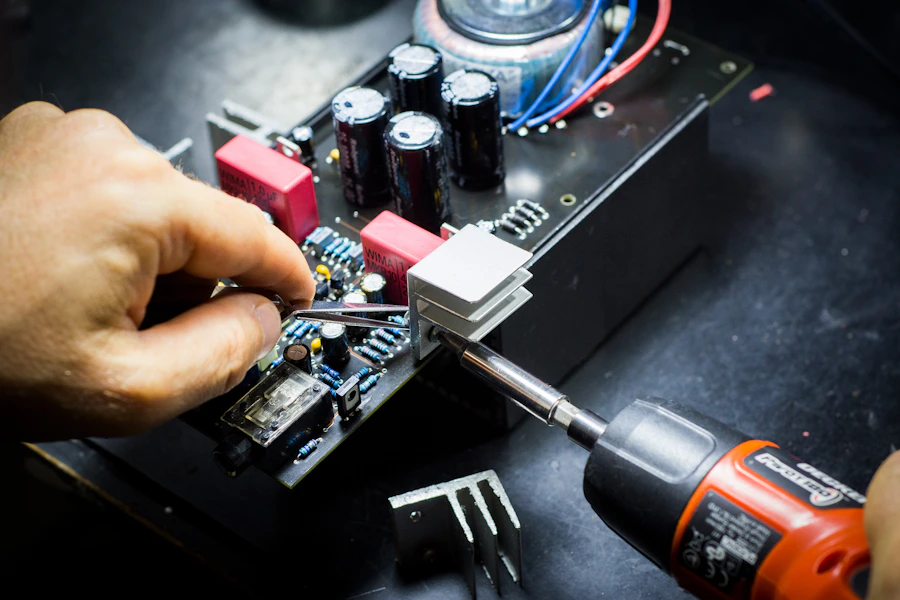
USB charging ports have become one of the most requested features in modern backpack design, enabling users to charge their devices conveniently from an integrated battery system. From the early USB-A ports on basic daypacks to today's USB-C Power Delivery systems capable of charging laptops at 65 watts, charging port technology has evolved dramatically. For backpack manufacturers and brands, understanding the technical requirements, design considerations, and manufacturing best practices for USB charging integration is essential for creating products that meet consumer expectations for reliable, safe, and fast device charging.
At Junyuan Bags, we have manufactured USB charging backpacks across multiple product lines for international brands, from basic 5V USB-A systems to advanced USB-C Power Delivery configurations supporting laptop charging. Our 15,000 square meter factory in Quanzhou has developed standardized procedures for charging system integration including battery management, cable routing, port mounting, and safety testing. Our 200-plus craftspeople across eight production lines are trained in the specific assembly requirements of charging systems, ensuring that every unit meets both electrical safety standards and our sub-0.3 percent defect rate for overall product quality.
This comprehensive guide covers the engineering, design, and manufacturing aspects of USB charging port integration in backpacks, providing the technical foundation needed for brands developing charging-enabled backpack products.
USB Standards and Charging Technologies
Understanding USB charging standards is essential for specifying the right charging system for your backpack product and communicating capabilities accurately to consumers.
USB-A: The Established Standard
USB Type-A remains the most widely compatible charging connector, working with billions of existing cables and devices. Standard USB-A charging at 5V 2.1A delivers 10.5 watts, sufficient for smartphone charging at standard speed. USB-A Quick Charge (QC 2.0/3.0) increases output to 18 to 24 watts through variable voltage (5V, 9V, 12V), enabling fast charging for compatible devices. USB-A is ideal for backpacks targeting mass-market compatibility where users expect to charge phones and small devices.
USB-C and Power Delivery
USB Type-C with Power Delivery (PD) represents the current state of the art in portable charging, delivering up to 100 watts (20V at 5A) through a reversible connector. USB-C PD automatically negotiates the optimal voltage (5V, 9V, 15V, or 20V) for the connected device, enabling everything from phone charging (18 to 27W) to laptop charging (45 to 65W) through a single port. For backpacks, USB-C PD enables positioning as a complete mobile power solution capable of charging any device the user carries.
Charging Speed Comparison
| Standard | Max Power | Phone Charge Time (4000mAh) | Laptop Charging | Cost Impact |
|---|---|---|---|---|
| USB-A 5V 2.1A | 10.5W | 2.5-3 hours | No | +8-12 USD |
| USB-A QC 3.0 | 18W | 1-1.5 hours | No | +10-15 USD |
| USB-C PD 20W | 20W | 45-60 minutes | No | +12-18 USD |
| USB-C PD 45W | 45W | 30-45 minutes | Some ultrabooks | +18-25 USD |
| USB-C PD 65W | 65W | 30-45 minutes | Most laptops | +22-30 USD |
Battery System Design for Charging Backpacks
The battery system is the heart of any charging backpack, determining capacity, charging speed, safety, and overall user experience.
Battery Chemistry and Form Factor
Lithium-polymer (Li-Po) batteries are the standard for charging backpacks, offering the best combination of energy density, form factor flexibility, and safety. Li-Po batteries can be manufactured in custom shapes that fit within backpack structures efficiently, unlike cylindrical 18650 cells that waste space. Battery capacity typically ranges from 5,000 mAh for lightweight daypacks to 20,000 mAh for full-featured business and travel backpacks. For airline compliance, battery capacity should remain below 100Wh (approximately 27,000 mAh at 3.7V nominal voltage).
Battery Management System Requirements
Every charging backpack battery requires a battery management system (BMS) that provides overcharge protection (cutoff at 4.2V per cell), over-discharge protection (cutoff at 3.0V per cell), over-current protection (limiting discharge current to safe levels), short circuit protection (instant cutoff on short circuit), temperature protection (cutoff at elevated temperatures), and cell balancing (for multi-cell configurations). The BMS is typically integrated into the battery pack assembly and must be certified to relevant safety standards including UL 2054, IEC 62133, and UN38.3 for transportation.
Battery Charging Input
The battery itself must be recharged, typically through a USB-C input port on the backpack. Input charging at 5V 2A recharges a 10,000 mAh battery in approximately 4 to 5 hours. Input charging at 9V 2A (18W) reduces this to 2 to 3 hours. Some backpacks include pass-through charging capability, allowing the backpack to charge its own battery and connected devices simultaneously from a wall outlet.
Design Integration of Charging Ports
Charging port placement and design significantly impacts user experience, requiring careful consideration of ergonomics, accessibility, and aesthetic integration.
Port Placement and Accessibility
Charging ports should be positioned for easy access during use while maintaining clean aesthetics when not charging. Common placements include side panel positions near the top for easy cable routing while wearing, front panel positions for visibility and access, and bottom panel positions for clean cable routing to internal battery. The port should be accessible without removing the backpack for phone charging during commuting, but protected from rain and debris when not in use. Spring-loaded port covers provide automatic closure when no cable is connected.
Internal Cable Routing
Cables from the battery to the output port must be routed through protected internal channels that prevent damage from backpack contents, flexing, and moisture. Silicone-insulated flexible cables in appropriate gauge for current capacity (22 AWG for up to 3A, 20 AWG for up to 5A) provide the flexibility needed to withstand repeated backpack flexing. Cable routing avoids sharp bends that could damage conductors and passes through reinforced grommets at fabric penetration points. Internal cable length should be minimized to reduce voltage drop, particularly for high-current USB-C PD systems.
Port Housing and Reinforcement
USB ports mounted in backpack fabric require reinforced housing to withstand the mechanical stress of cable insertion and removal. Injection-molded plastic port housings with flanges that sandwich the fabric provide rigid mounting that prevents port movement during use. The housing must maintain precise port dimensions (USB-C: 8.34mm by 2.60mm, USB-A: 12mm by 4.75mm) to ensure reliable connector engagement. Our factory uses custom-molded port housings designed for each specific port configuration and fabric thickness.
Manufacturing and Quality Control
Manufacturing charging backpacks requires specific assembly procedures and quality controls that ensure electrical safety and reliable performance.
Incoming Component Testing
Every battery pack and charging module undergoes incoming inspection before assembly. Battery tests include capacity verification (within 95 to 105 percent of rated capacity), open circuit voltage measurement, internal resistance check, and BMS function verification (overcharge, over-discharge, short circuit protection). Charging module tests include output voltage accuracy, current limit verification, and protocol negotiation test for USB-C PD units. These incoming tests prevent defective components from entering production and protect our sub-0.3 percent overall defect rate.
Assembly and Integration
Charging system assembly follows a defined sequence: battery pack installation in dedicated padded compartment, cable connection from battery to charging module (if separate), cable routing through internal channels, output port housing installation and fabric sandwiching, cable connection to output port, and strain relief installation at all cable termination points. Each assembly step includes visual inspection for correct routing, secure connections, and proper strain relief before proceeding to the next step.
Final Electrical Testing
Every charging backpack undergoes comprehensive electrical testing before shipment. Tests include open circuit voltage at output port (should read 5.0V plus or minus 0.25V), load test at rated current (voltage should remain within specification under load), short circuit protection test (BMS should cutoff immediately), charging function test (battery accepts charge at correct voltage and current), and continuity test for all cable connections. Test results are recorded and linked to unit serial numbers for quality traceability and warranty management.
Safety Standards and Certification
Charging backpacks must comply with multiple safety standards covering battery safety, electrical safety, and transportation regulations.
Required Certifications by Market
Key certifications include CE marking with Low Voltage Directive and EMC Directive for European markets, FCC Part 15 for electromagnetic compatibility in the US, UL 2054 or UL 62368 for battery and electronics safety in North America, UN38.3 for lithium battery transportation safety globally, and PSE for Japanese market access. Certification costs range from 3,000 to 10,000 USD depending on the number of standards and target markets, with ongoing factory audit costs for maintenance.
Partnering for USB Charging Backpack Manufacturing
At Junyuan Bags, our USB charging backpack capabilities span from basic 5V USB-A systems to advanced USB-C PD configurations at 65 watts. Our 15,000 square meter factory in Quanzhou maintains comprehensive battery and charging module testing capabilities, with trained assembly teams ensuring consistent quality across production runs. Our BSCI certification, ISO 9001:2015 quality management, and sub-0.3 percent defect rate provide the quality assurance foundation that electronic products demand.
Whether you need tech backpacks with high-power USB-C PD, business backpacks with discreet charging integration, or custom charging backpacks for your brand, our electronic integration expertise delivers reliable performance. Contact us at service@junyuanbags.com or WhatsApp +8617750020688 to discuss your charging backpack requirements.
Industry Insights & Future Outlook
USB charging port integration in backpacks has evolved from a novelty feature into one of the most widely expected functionalities in modern bags and packs. With over 70 percent of premium backpacks now offering some form of integrated charging, the market is shifting focus from basic connectivity toward faster charging speeds, smarter power management, and more elegant design integration. The USB-connected accessories market within bags and luggage is projected to grow at 9.8 percent annually through 2029, driven by increasing device power requirements and consumer expectations for seamless technology integration in everyday carry products.
The transition to USB-C Power Delivery is reshaping charging port design in backpacks. USB-C PD enables power delivery up to 240 watts through a single compact connector, sufficient to charge laptops, tablets, and smartphones simultaneously from a single internal battery through a single external port. This eliminates the need for multiple output ports and simplifies the cable management challenge that has plagued earlier multi-port designs. Manufacturers implementing USB-C PD as the standard charging interface benefit from simpler product designs, reduced cable clutter, and forward compatibility with the growing ecosystem of USB-C devices that consumers carry daily.
Wireless charging integration represents the next evolution of portable power in backpacks. Qi2 wireless charging pads embedded in dedicated pockets eliminate the need for physical cable connections entirely, offering a more convenient user experience while removing the mechanical wear point that cable connections represent. Current Qi2 systems deliver up to 15 watts of wireless power, sufficient for smartphone charging during commutes. As the Qi2 standard evolves toward higher power levels, wireless charging pockets could eventually replace physical USB ports entirely in some backpack designs, offering a cleaner aesthetic and improved water resistance by eliminating external connector openings.
Intelligent power management is emerging as a key differentiator in USB-equipped backpacks. Smart battery management systems that monitor battery health, optimize charging speeds based on device requirements, and provide accurate remaining capacity estimates through smartphone apps add significant user value beyond simple port passthrough. Some systems can learn a user's daily charging patterns and automatically pre-charge the internal battery from the solar panel during sunny commutes, ensuring maximum available power when needed. These intelligent features create opportunities for brand differentiation and premium pricing in an increasingly competitive market segment.
Manufacturers who master the engineering challenges of waterproof port sealing, flexible cable routing through padded compartments, and thermal management of high-power charging in insulated backpack environments will establish themselves as leaders in the connected backpack category. As charging technology continues to evolve toward wireless and ultra-fast standards, the manufacturers building adaptable design platforms today will be best positioned to integrate next-generation charging innovations without fundamental redesign.
Frequently Asked Questions
What USB charging standard should I specify for my backpack product?
The right USB standard depends on your target market and device charging requirements. For mass-market backpacks targeting phone charging, USB-A QC 3.0 at 18W provides fast charging at moderate cost (adding 10-15 USD to manufacturing cost). For premium backpacks targeting phone and tablet charging, USB-C PD 20W offers fast charging with modern connector appeal (12-18 USD added cost). For business and professional backpacks targeting laptop charging, USB-C PD 45-65W enables complete device charging including most ultrabooks (18-30 USD added cost). USB-C PD is recommended for new products as the industry standard direction.
How is the battery safely integrated into a charging backpack?
Battery integration follows multiple safety principles: the battery is housed in a dedicated padded compartment that protects against impact and prevents contact with sharp objects, the battery management system (BMS) provides overcharge, over-discharge, over-current, short circuit, and temperature protection, all connections use proper connectors with strain relief to prevent wire pull-out, the battery compartment includes ventilation for heat dissipation, and the battery is certified to UN38.3 transportation safety and UL 2054 or IEC 62133 product safety standards. Every battery undergoes incoming inspection before assembly and functional testing after integration.
What is the manufacturing cost impact of adding USB charging to backpacks?
USB charging system cost depends on power level and features. Basic USB-A 5V 2.1A with 5000mAh battery adds 8-12 USD to manufacturing cost. USB-A QC 3.0 with 10000mAh battery adds 10-15 USD. USB-C PD 20W with 10000mAh battery adds 12-18 USD. USB-C PD 65W with 20000mAh battery adds 22-30 USD. These costs enable retail price premiums of 20-35 percent over non-charging equivalents. Certification costs (CE, FCC, UL, UN38.3) add 3,000-10,000 USD one-time per product but are amortized across production volumes.
How long does it take to charge the backpack battery and connected devices?
Charging the backpack battery from empty through USB-C input at 18W takes approximately 2-3 hours for a 10000mAh battery. Charging a phone from the backpack output depends on the output standard: USB-A at 10.5W charges a phone in 2.5-3 hours, USB-C PD at 20W charges in 45-60 minutes, and USB-C PD at 65W charges phones at their maximum supported speed (typically 30-45 minutes). Total energy available from a 10000mAh battery at 3.7V is 37Wh, which after conversion efficiency (85-90 percent) provides approximately 31-33Wh of chargeable energy to devices.
Are charging backpacks safe to fly with?
Yes, charging backpacks with lithium batteries under 100Wh are safe for air travel and comply with IATA dangerous goods regulations. Batteries under 100Wh (approximately 27000mAh at 3.7V) can be carried in carry-on luggage without airline approval. Batteries between 100-160Wh require airline approval but are generally permitted. Batteries over 160Wh are prohibited on passenger aircraft. Most charging backpacks use batteries in the 5000-20000mAh range (18.5-74Wh), well within carry-on limits. The backpack should be carried in carry-on luggage (not checked baggage) and the charging function should be turned off during flight.
Ready to Source Sustainable and Tech-Integrated Backpacks?
Partner with a factory that combines eco-conscious manufacturing with cutting-edge technology. Our 15,000 sqm facility in Quanzhou delivers innovation at scale.
Email: service@junyuanbags.com
WhatsApp: +8617750020688
MOQ 300pcs | BSCI & ISO 9001:2015 Certified | Est. 2004
Junyuan Bags | 15,000 sqm Factory | 200+ Craftspeople | 8 Production Lines
C201-207 Huachuang Park, Quanzhou, Fujian, China
BSCI & ISO 9001:2015 Certified | <0.3% Defect Rate | MOQ 300pcs
Est. 2004 | service@junyuanbags.com | WhatsApp: +8617750020688