Backpack AI Design Tools: How Artificial Intelligence Is Transforming Product Development
Published by the Junyuan Bags editorial team | Last updated January 2025 | Reading time: 15 minutes


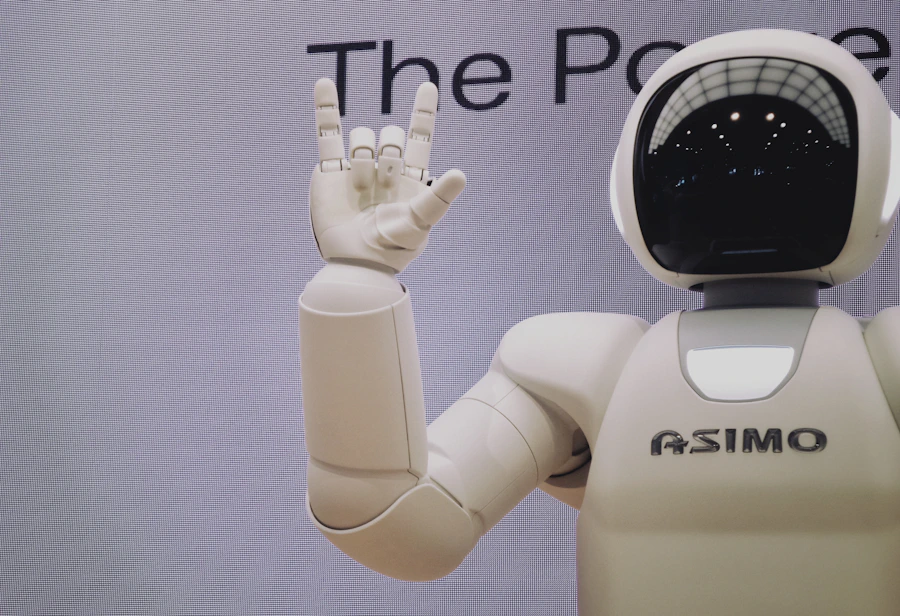

Artificial intelligence is rapidly transforming every stage of backpack design and development, from initial concept generation through pattern optimization, demand forecasting, and quality inspection. For backpack manufacturers and brand partners, AI tools offer the potential to accelerate development timelines, reduce material waste, improve demand accuracy, and enhance product quality in ways that were impossible just a few years ago. The global AI in fashion market, which includes bags and accessories, is projected to reach 4.5 billion USD by 2027, reflecting the rapid adoption of AI technologies across the industry.
At Junyuan Bags, we have been integrating AI-powered tools into our design and manufacturing processes across our 15,000 square meter factory in Quanzhou. Our design team uses generative AI for initial concept exploration, computer vision for automated quality inspection, and predictive analytics for demand forecasting and production planning. Our 200-plus craftspeople across eight production lines benefit from AI-optimized pattern layouts that reduce fabric waste by 8 to 12 percent, and automated defect detection systems that support our manual quality checks. Combined with our BSCI certification and ISO 9001:2015 quality management, these AI capabilities deliver both innovation and consistency.
This guide explores how AI design tools are transforming backpack product development, covering specific applications, implementation approaches, cost considerations, and the practical benefits for brands and manufacturers working together to bring new backpack products to market.
AI in Backpack Concept and Design Generation
Generative AI tools are transforming the earliest stages of backpack design, enabling designers to explore vast concept spaces in minutes rather than days.
Generative Design for Backpack Concepts
AI-powered generative design tools like Midjourney, DALL-E, and specialized fashion design AI platforms can generate hundreds of backpack concept variations from text descriptions or reference images. Designers input parameters such as style category (business, outdoor, travel), target user profile, color palette, material preferences, and key features, and the AI generates concept images that explore the design space rapidly. This capability enables designers to evaluate dozens of design directions in a single session, accelerating the creative exploration phase and identifying promising concepts for further development.
AI-Powered Trend Analysis and Market Intelligence
AI tools analyze social media, retail data, fashion publications, and consumer sentiment to identify emerging design trends before they become mainstream. For backpack brands, AI trend analysis reveals which features, colors, materials, and silhouettes are gaining consumer attention, enabling proactive design decisions rather than reactive trend following. These tools process millions of data points across multiple platforms to generate actionable trend forecasts that inform seasonal design directions and product portfolio decisions.
Design Optimization Through Machine Learning
Machine learning algorithms optimize backpack designs for specific performance criteria. For outdoor backpacks, AI can optimize back panel ventilation patterns, load distribution geometry, and strap attachment points based on ergonomic data from thousands of users. For travel backpacks, AI optimizes compartment layouts for maximum organization efficiency within airline carry-on dimensions. This data-driven optimization produces designs that outperform traditional intuition-based approaches in measurable performance metrics.
AI in Pattern Design and Material Optimization
AI applications in pattern design directly impact manufacturing efficiency, material costs, and production waste, delivering measurable economic and environmental benefits.
Automated Pattern Layout Optimization
AI-powered nesting algorithms optimize pattern piece layout on fabric to minimize waste. Traditional manual pattern layout achieves 75 to 82 percent fabric utilization. AI optimization algorithms, considering grain direction, pattern matching requirements, and fabric constraints, achieve 83 to 90 percent utilization, reducing fabric waste by 8 to 12 percent. For our factory processing multiple backpack product lines, this optimization translates to annual fabric savings of over 2 tonnes and corresponding cost reduction of approximately 15,000 USD.
3D Pattern Development and Virtual Sampling
AI-assisted 3D pattern development tools convert 2D patterns into accurate 3D simulations that predict how fabrics will drape, stretch, and fit on the human body. These virtual samples reduce the need for physical prototypes by 40 to 60 percent, saving both time and material costs. Designers can evaluate fit, proportion, and aesthetic in virtual reality before committing to physical samples, accelerating the design-to-production pipeline while reducing environmental impact from sample production.
Material Behavior Prediction
Machine learning models trained on material test data predict how specific fabric constructions will perform in backpack applications, including stretch characteristics, abrasion resistance, seam strength, and long-term durability. These predictions enable designers to make informed material selection decisions during the design phase, reducing the risk of performance failures discovered during testing and avoiding costly material changes late in development.
AI in Quality Control and Defect Detection
Computer vision and machine learning are transforming quality control in backpack manufacturing, enabling automated defect detection that supplements and enhances human inspection capabilities.
Automated Visual Inspection Systems
AI-powered camera systems inspect backpack components and finished products for defects including fabric flaws, stitching irregularities, color variations, hardware defects, and assembly errors. These systems process images in real-time on the production line, detecting defects that may be missed by human inspectors due to fatigue or variation in attention. Modern computer vision systems achieve defect detection rates above 99.5 percent for common defect types, significantly reducing the probability of defective products reaching customers.
Predictive Quality Analytics
Machine learning models analyze production data including machine parameters, material batch information, environmental conditions, and operator assignments to predict quality outcomes and identify conditions that increase defect risk. When the system detects conditions associated with elevated defect probability, it alerts production supervisors to intervene before defects occur. This predictive approach shifts quality management from reactive (detecting defects after they occur) to proactive (preventing defects before they happen).
Quality Data Analysis and Continuous Improvement
AI analysis of quality data across production runs identifies patterns and root causes of defects that may not be apparent through manual analysis. By correlating defect types with specific machines, operators, material batches, and environmental conditions, AI identifies the factors that most influence quality outcomes, enabling targeted improvement efforts that deliver the greatest quality enhancement per unit of investment. Our factory uses this approach to continuously refine our production processes, supporting our sub-0.3 percent defect rate performance.
AI in Demand Forecasting and Production Planning
Accurate demand forecasting is critical for backpack manufacturers, influencing material purchasing, production scheduling, and inventory management. AI tools significantly improve forecast accuracy compared to traditional methods.
Machine Learning Demand Models
AI demand forecasting models integrate historical sales data, market trends, seasonal patterns, promotional calendars, economic indicators, and consumer sentiment data to generate demand predictions with significantly higher accuracy than traditional time-series methods. Leading AI forecasting systems achieve accuracy improvements of 20 to 35 percent over conventional approaches, reducing both stockout costs from under-forecasting and excess inventory costs from over-forecasting.
Production Planning Optimization
AI optimization algorithms create production schedules that balance multiple competing objectives including delivery deadlines, machine utilization, changeover minimization, workforce scheduling, and material availability. For our factory with eight production lines and hundreds of simultaneous orders, AI scheduling reduces changeover time by 15 to 20 percent and improves overall equipment effectiveness by 8 to 12 percent compared to manual scheduling approaches.
Practical Implementation for Backpack Manufacturers
Implementing AI tools in backpack manufacturing requires careful planning, appropriate technology selection, and investment in both systems and human capabilities.
Implementation Roadmap
- Identify high-impact use cases: Start with applications that deliver clear ROI such as pattern optimization (immediate material savings) or quality inspection (defect reduction).
- Establish data infrastructure: AI requires quality data; invest in data collection systems, standardized recording practices, and data management platforms.
- Pilot and validate: Implement AI tools in pilot applications, measure results against baseline performance, and validate ROI before broader deployment.
- Scale and integrate: Expand successful pilots across production lines and integrate AI tools with existing ERP, PLM, and quality management systems.
- Develop team capabilities: Train team members in AI tool usage, data interpretation, and continuous improvement methodologies that leverage AI insights.
Cost and ROI Considerations
AI tool implementation costs range from 5,000 to 50,000 USD depending on application scope and complexity. Pattern optimization tools with immediate material savings typically deliver ROI within 6 to 12 months. Quality inspection systems with defect reduction benefits achieve ROI within 12 to 18 months. Demand forecasting improvements deliver ROI through reduced inventory costs and improved service levels within 9 to 15 months. For backpack manufacturers processing significant volumes, AI investment typically generates positive returns within the first year of operation.
Partnering with a Technology-Forward Backpack Manufacturer
Selecting a manufacturing partner that invests in AI and digital technologies provides advantages in development speed, cost efficiency, quality consistency, and responsiveness to market changes.
At Junyuan Bags, our AI-enhanced capabilities span design optimization, pattern efficiency, quality control, and production planning across our 15,000 square meter facility in Quanzhou. Our 200-plus craftspeople work alongside AI systems that optimize material usage, detect defects in real-time, and forecast production requirements with high accuracy. This technology integration, combined with our BSCI social compliance, ISO 9001:2015 quality management, and sub-0.3 percent defect rate, delivers the combination of innovation and reliability that modern backpack brands require.
Whether you need AI-optimized business backpack designs, technology-enhanced outdoor backpack products, or data-driven custom backpack manufacturing, our technology-forward approach ensures your products benefit from the latest advances in manufacturing intelligence. Contact us at service@junyuanbags.com or WhatsApp +8617750020688 to explore how AI-enhanced manufacturing can benefit your backpack product line.
Industry Insights & Future Outlook
AI-powered design tools are fundamentally transforming how backpacks are conceived, developed, and brought to market. The application of artificial intelligence in product design and development, valued at approximately 1.5 billion USD across all consumer goods categories in 2024, is growing at a remarkable 24.3 percent CAGR, with fashion and accessories identified as one of the sectors experiencing the most rapid adoption. For backpack manufacturers, AI tools are compressing design cycles from months to weeks, enabling data-driven design decisions, and uncovering innovative solutions that human designers alone might not discover.
Generative AI is opening entirely new approaches to backpack design. Large language models trained on extensive databases of product designs, material properties, and user feedback can generate thousands of design variations optimized for specific criteria such as weight reduction, cost targets, or ergonomic performance. These AI-generated designs often incorporate unconventional structural solutions, such as topology-optimized load distribution panels that use material only where structural analysis indicates it is needed, reducing weight by 20 to 35 percent compared to conventional panel designs. Companies like Autodesk and Dassault Systemes are developing AI modules specifically for textile product design, enabling backpack designers to explore solution spaces that would be impractical to search manually.
Predictive analytics powered by machine learning is transforming market-driven backpack design. AI systems that analyze social media trends, search engine data, e-commerce reviews, and cultural indicators can predict emerging consumer preferences with increasing accuracy, enabling manufacturers to develop products that meet future demand rather than merely responding to current trends. Early adopters report that AI-assisted trend prediction has improved new product sell-through rates by 15 to 25 percent compared to traditional market research approaches. As these systems improve with additional training data and more sophisticated algorithms, the competitive advantage of AI-informed design will become increasingly significant.
The integration of AI with digital twin technology creates powerful capabilities for backpack development. Virtual prototypes that accurately simulate real-world performance allow manufacturers to test thousands of design iterations computationally before building physical samples. AI-optimized digital twins can predict how fabric choices, stitching patterns, and structural elements will perform under specific use conditions, enabling design optimization for durability, comfort, and cost simultaneously. This virtual development approach reduces physical sampling by 60 to 80 percent, dramatically cutting development time and material waste while producing better-optimized final products.
Industry leaders anticipate that AI will become an essential tool in backpack design within five years, not replacing human creativity but amplifying it. Manufacturers investing in AI design capabilities, data infrastructure, and talent development today are building competitive advantages that will compound as the technology matures and training datasets grow more comprehensive. The factories and brands that learn to effectively collaborate with AI design systems will define the next generation of backpack innovation.
Frequently Asked Questions
How does AI improve backpack design and development?
AI improves backpack design through generative design tools that explore hundreds of concept variations in minutes, trend analysis algorithms that identify emerging consumer preferences from millions of data points, and performance optimization models that refine ergonomic designs based on user data. In development, AI reduces physical prototyping needs by 40 to 60 percent through accurate 3D virtual sampling, optimizes pattern layouts to reduce fabric waste by 8 to 12 percent, and predicts material behavior before physical samples are produced. These capabilities compress development timelines from 12 to 16 weeks to 6 to 10 weeks while producing better-optimized designs.
What AI quality control systems are used in backpack manufacturing?
Computer vision systems using high-resolution cameras and machine learning algorithms inspect backpack components and finished products for defects including fabric flaws, stitching irregularities, color variations, hardware defects, and assembly errors. These systems achieve over 99.5 percent defect detection rates for common defect types. Predictive quality analytics use machine learning to identify production conditions that increase defect risk before defects occur, enabling proactive intervention. AI analysis of quality data across production runs identifies root causes of defects, enabling targeted continuous improvement.
How much does implementing AI tools cost for backpack manufacturers?
AI implementation costs range from 5,000 USD for pattern optimization software to 50,000 USD for comprehensive quality inspection systems with multiple camera stations. Pattern optimization tools typically deliver ROI within 6 to 12 months through 8 to 12 percent material savings. Quality inspection systems achieve ROI within 12 to 18 months through defect reduction and warranty cost savings. Demand forecasting tools improve forecast accuracy by 20 to 35 percent, delivering ROI within 9 to 15 months through reduced inventory costs and improved service levels.
Can AI replace human designers and quality inspectors in backpack manufacturing?
AI augments rather than replaces human expertise. In design, AI generates concepts and optimizes parameters but human designers provide creative vision, brand alignment, and aesthetic judgment that AI cannot replicate. In quality control, AI detects defects with high accuracy but human inspectors provide contextual judgment, complex assembly verification, and final approval authority. The most effective approach combines AI capabilities (speed, consistency, data processing) with human capabilities (creativity, judgment, complex decision-making). Our factory integrates both AI systems and skilled human workers across our eight production lines.
What should backpack brands look for in an AI-equipped manufacturing partner?
Brands should look for: demonstrated use of AI in pattern optimization (reducing material waste), automated quality inspection systems (ensuring consistent quality), data-driven production planning (enabling accurate delivery promises), digital design capabilities including 3D sampling (accelerating development), and a culture of continuous improvement supported by data analytics. Additionally, the factory should maintain relevant certifications (BSCI, ISO 9001), transparent data sharing practices, and the ability to provide AI-generated performance metrics and environmental impact data for products.
Ready to Source Sustainable and Tech-Integrated Backpacks?
Partner with a factory that combines eco-conscious manufacturing with cutting-edge technology. Our 15,000 sqm facility in Quanzhou delivers innovation at scale.
Email: service@junyuanbags.com
WhatsApp: +8617750020688
MOQ 300pcs | BSCI & ISO 9001:2015 Certified | Est. 2004
Junyuan Bags | 15,000 sqm Factory | 200+ Craftspeople | 8 Production Lines
C201-207 Huachuang Park, Quanzhou, Fujian, China
BSCI & ISO 9001:2015 Certified | <0.3% Defect Rate | MOQ 300pcs
Est. 2004 | service@junyuanbags.com | WhatsApp: +8617750020688