8 Most Durable Backpack Materials That Last Years
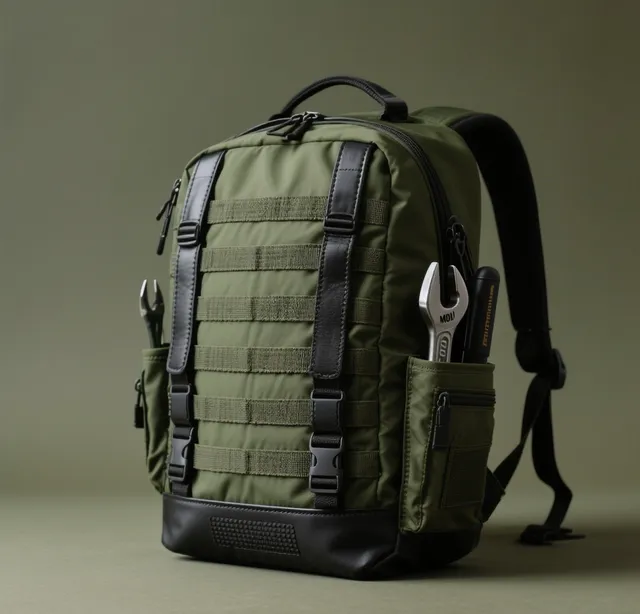
The durability of a backpack is ultimately determined by its material. Stitching quality, hardware, and design all matter, but the fabric is what faces daily abuse: abrasion against walls and surfaces, exposure to rain and UV light, punctures from sharp objects, and the constant stress of loading and unloading. Choose the right material, and your backpack can last a decade or more. Choose poorly, and you are shopping for a replacement within a year or two.
In this ranked guide, we cover the eight most durable backpack materials available today, from the indestructible world of military-grade ballistic nylon to the cutting-edge performance of laminate fabrics like X-Pac. For each material, we provide objective data on weight, abrasion resistance, tear strength, waterproof capability, and typical price premium, so you can make an informed decision based on your specific needs and use case.
How We Rank Backpack Material Durability
Before we dive into the rankings, it is important to understand the metrics we use. Durability is not a single number. It is a combination of several performance characteristics, and different use cases prioritise different metrics.
- Abrasion resistance: How well the material withstands rubbing, scraping, and contact with rough surfaces. Measured using the Taber abrasion test or similar standardised methods.
- Tear strength: How much force is required to propagate a tear once the material has been punctured or nicked. Critical for materials that might encounter sharp objects.
- Tensile strength: The maximum load the material can bear before breaking. Important for load-bearing panels and structural integrity.
- Waterproof capability: Whether the material is inherently water-resistant or requires a coating or membrane. Relevant for all-round durability, as water damage accelerates material degradation.
- UV resistance: How well the material maintains its strength and colour when exposed to direct sunlight over extended periods.
Our ranking balances these factors with practical considerations like weight, cost, and real-world performance feedback from long-term users.
The 8 Most Durable Backpack Materials, Ranked
1 1000D Cordura Nylon
1000D Cordura is the legendary workhorse of the durable backpack world. Developed by Invista (formerly DuPont), Cordura is a high-tenacity nylon fabric with a specially engineered fibre structure that delivers exceptional abrasion resistance. The "1000D" refers to the denier count, meaning each individual yarn thread weighs 1000 grams per 9000 metres. This results in a thick, robust fabric that can withstand extreme punishment.
In standardised abrasion testing, 1000D Cordura consistently outperforms standard nylon by a factor of three to five times and cotton canvas by a factor of ten or more. It is the material of choice for military gear, tactical backpacks, and work bags that need to survive harsh daily abuse. Brands like Goruck and 5.11 Tactical rely heavily on 1000D Cordura for their most rugged offerings.
Weight: Approximately 340 grams per square metre (gsm). This makes it a heavier fabric, which is the main trade-off for its exceptional durability.
Abrasion resistance: Exceptional. One of the highest of any textile fabric used in backpacks.
Tear strength: Very high, especially with a ripstop weave variant.
Waterproof level: Naturally water-resistant; with a PU or DWR coating, achieves excellent water repellency.
Price premium: 20-40% above standard nylon backpacks.
Best for: Tactical packs, work bags, heavy-duty daily use, travel packs that get thrown around
2 1680D Ballistic Nylon
Ballistic nylon was originally developed during World War II for use in flak jackets to protect airmen from shrapnel. The 1680D variant uses an extremely thick yarn that produces a dense, heavy fabric with a distinctive basket-weave texture. It remains one of the most abrasion-resistant fabrics available for consumer backpacks.
The 1680D denier count is higher than 1000D Cordura, but the two materials have different performance profiles. Ballistic nylon excels in pure abrasion resistance and tensile strength, while Cordura has a slight edge in tear resistance due to its fibre engineering. In practical terms, both are extraordinarily durable, and the choice between them often comes down to weight preference and aesthetic taste.
Weight: Approximately 400-430 gsm. This is the heaviest fabric on our list, making it best suited for bags where weight is less of a concern.
Abrasion resistance: Outstanding. Among the highest of any consumer-available fabric.
Tear strength: High, though slightly below 1000D Cordura in standardised tests.
Waterproof level: Naturally water-resistant; typically paired with a PU coating for full water repellency.
Price premium: 25-50% above standard nylon backpacks.
Best for: Executive briefcases, luxury travel packs, bags where maximum durability and a premium look matter
3 X-Pac VX21 (Laminate Fabric)
X-Pac is a family of laminate fabrics developed by Dimension-Polyant, a company with deep roots in the sailing industry where fabric performance is literally a matter of life and death. VX21, the most popular variant for backpacks, is a multi-layer construction: a 210D nylon face fabric bonded to a waterproof polyester film membrane and backed with an X-Ply reinforcement grid.
The X-Ply structure is X-Pac's defining feature. Diagonal reinforcement fibres are embedded within the laminate at cross angles, creating a grid that distributes load across the entire panel and prevents tears from propagating. This gives VX21 an exceptional strength-to-weight ratio: it is significantly lighter than 1000D Cordura while offering comparable tear resistance and superior waterproofing.
X-Pac fabric has become the material of choice for the ultralight and technical backpack community. Brands like Aer, Goruck (in their Ultralight line), and numerous cottage brands use VX21 for its combination of low weight, high strength, and distinctive technical aesthetic.
Weight: Approximately 150-170 gsm. Nearly half the weight of 1000D Cordura.
Abrasion resistance: Very good, though slightly below 1000D Cordura on pure abrasion tests.
Tear strength: Exceptional due to the X-Ply reinforcement structure.
Waterproof level: Excellent. The polyester film layer provides inherent waterproofness, not just water resistance.
Price premium: 40-70% above standard nylon backpacks.
Best for: Technical everyday carry, ultralight travel packs, commuter bags where weight and weather resistance both matter
4 500D Cordura Nylon
500D Cordura is the mid-weight variant in the Cordura family and arguably the best all-round backpack fabric when you balance durability, weight, and cost. With half the denier count of 1000D Cordura, it is significantly lighter while retaining the majority of its bigger brother's abrasion resistance.
In real-world use, 500D Cordura offers approximately 80-85% of the abrasion resistance of 1000D Cordura at roughly 60% of the weight. For most backpack applications, this is the sweet spot. The fabric is thick enough to resist everyday abrasion and puncture but light enough that a fully loaded backpack does not feel unnecessarily heavy from the material alone.
Many of the most popular premium everyday backpacks on the market use 500D Cordura, including models from brands like Topo Designs, Aer, and Bellroy. It is the material that experienced backpack enthusiasts often recommend as the default choice for daily use.
Weight: Approximately 170-190 gsm. A practical weight for all-day carry.
Abrasion resistance: Very high. Excellent for daily use and moderate outdoor conditions.
Tear strength: High, with good performance in ripstop variants.
Waterproof level: Naturally water-resistant; achieves good water repellency with PU or DWR coating.
Price premium: 15-30% above standard nylon backpacks.
Best for: Everyday carry, commuter backpacks, light travel, the best all-rounder for most users
5 Waxed Canvas
Waxed canvas is the heritage material that predates modern synthetics by centuries. It consists of a tightly woven cotton canvas that has been impregnated with a wax blend, traditionally beeswax and paraffin. The result is a fabric with a distinctive hand feel, a slightly waxy surface, and excellent water resistance that improves with re-waxing over time.
Waxed canvas backpacks offer a unique combination of durability and aesthetic character that no synthetic material can match. The fabric is naturally abrasion-resistant due to the thick cotton weave, and the wax coating provides water repellency that can be renewed indefinitely. Unlike synthetic coatings that degrade and eventually fail, wax canvas can be re-waxed by the owner at any time, effectively making the water resistance renewable for the life of the bag.
Heritage brands like Fjallraven, Filson, and numerous small leather-and-canvas makers use waxed canvas for its classic, timeless appearance and its ability to develop character marks and creases that add to the bag's visual appeal over time.
Weight: Approximately 280-370 gsm depending on canvas weight and wax content.
Abrasion resistance: Good. The thick cotton weave resists abrasion well, though it is not as tough as high-denier nylon on standardised tests.
Tear strength: Moderate. The plain weave is more prone to tear propagation than ripstop nylon unless reinforced.
Waterproof level: Good water repellency from the wax; fully renewable by re-waxing.
Price premium: 10-30% above standard canvas bags; comparable to mid-range nylon bags.
Best for: Heritage-style bags, fashion-forward everyday carry, users who value natural materials and patina
6 Hypalon (CSM Rubber-Coated Nylon)
Hypalon is a synthetic rubber (chlorosulfonated polyethylene) that is applied as a coating or laminate to nylon or polyester fabric. It is not a fabric in its own right but rather an extraordinarily durable surface treatment. Hypalon is widely used in marine applications, inflatable boat construction, and industrial protective gear because of its near-total resistance to water, UV radiation, chemicals, and extreme temperatures.
In the backpack world, Hypalon is typically used as a reinforcement material on high-wear areas like the bottom panel, zipper garages, and attachment points rather than as the primary fabric. When used this way, it adds virtually indestructible protection at the most vulnerable points of the bag. Some brands, particularly in the technical and waterproof segment, use Hypalon laminates more extensively for full-panel waterproof construction.
Weight: Varies significantly based on application; as a coating, adds approximately 100-200 gsm to the base fabric.
Abrasion resistance: Exceptional. Nearly impervious to abrasion damage.
Tear strength: Very high when applied to a high-tenacity base fabric.
Waterproof level: Complete. Hypalon is inherently waterproof and is used in applications requiring full submersion resistance.
Price premium: 30-60% above standard backpacks when used extensively.
Best for: Technical waterproof packs, marine and kayak bags, reinforcement panels on expedition gear
7 Kevlar-Reinforced Nylon
Kevlar, technically known as aramid fibre, is best known for its use in bulletproof vests and motorsport protective equipment. When blended with nylon in a woven or ripstop fabric, Kevlar dramatically increases the tear and cut resistance of the resulting material while adding relatively little weight.
Kevlar-reinforced nylon fabrics are used in backpacks designed for extreme conditions where cut and puncture resistance are priorities. The Kevlar fibres act like a microscopic net within the fabric, stopping tears from spreading and preventing sharp objects from cutting through the material. Brands like Mission Workshop and certain tactical manufacturers incorporate Kevlar-reinforced panels in their most rugged offerings.
One important caveat: Kevlar is highly susceptible to UV degradation. Prolonged exposure to direct sunlight significantly weakens Kevlar fibres over months. For this reason, Kevlar-reinforced fabrics are best used in applications where the bag is not constantly exposed to UV, or where the Kevlar is protected within a laminate structure.
Weight: Approximately 200-280 gsm depending on the Kevlar content and base fabric.
Abrasion resistance: Very good, though Kevlar's primary advantage is in cut and tear resistance rather than pure abrasion.
Tear strength: Exceptional. Kevlar's primary value proposition.
Waterproof level: Depends on the base fabric and any applied coating. Kevlar itself is not waterproof.
Price premium: 50-100% above standard nylon backpacks, due to the high cost of aramid fibre.
Best for: Tactical packs, motorcycle bags, bags that need extreme cut and puncture resistance
8 Recycled 600D Polyester (rPET)
Recycled 600D polyester, often branded as rPET (recycled polyethylene terephthalate), is made from post-consumer plastic bottles that have been cleaned, shredded, melted, and re-spun into polyester fibre. At 600D denier, it offers substantial durability while being significantly more environmentally friendly than virgin nylon or polyester.
While 600D recycled polyester does not match the raw durability of 1000D Cordura or ballistic nylon, it offers more than adequate strength for everyday backpack use and significantly outperforms the cheap 200D and 300D polyester found in budget bags. Many major brands have adopted recycled 600D polyester as their standard material, including Patagonia, Osprey, and Herschel, reflecting its position as the best balance of sustainability and durability for mainstream backpacks.
The environmental impact of rPET is substantially lower than virgin materials. Producing recycled polyester uses approximately 59% less energy and generates 32% less CO2 emissions compared to virgin polyester, while diverting plastic waste from landfills and oceans.
Weight: Approximately 180-220 gsm. A comfortable weight for everyday use.
Abrasion resistance: Good for daily use; lower than high-denier nylon but significantly better than budget polyester.
Tear strength: Moderate to good, depending on weave density.
Waterproof level: Naturally somewhat water-resistant; with DWR or PU coating, achieves good water repellency.
Price premium: 5-15% above standard polyester bags; often cheaper than premium nylon bags.
Best for: Eco-conscious everyday carry, commuter bags, users who want sustainability without sacrificing durability
Complete Durability Comparison Table
| Rank | Material | Weight (gsm) | Abrasion | Tear | Waterproof | Price Premium |
|---|---|---|---|---|---|---|
| 1 | 1000D Cordura | ~340 | Exceptional | Very high | Good with coating | +20-40% |
| 2 | 1680D Ballistic Nylon | ~400-430 | Outstanding | High | Good with coating | +25-50% |
| 3 | X-Pac VX21 | ~150-170 | Very good | Exceptional | Excellent (inherent) | +40-70% |
| 4 | 500D Cordura | ~170-190 | Very high | High | Good with coating | +15-30% |
| 5 | Waxed Canvas | ~280-370 | Good | Moderate | Good (renewable) | +10-30% |
| 6 | Hypalon (coated) | Varies | Exceptional | Very high | Complete (inherent) | +30-60% |
| 7 | Kevlar-Reinforced Nylon | ~200-280 | Very good | Exceptional | Depends on coating | +50-100% |
| 8 | Recycled 600D Polyester | ~180-220 | Good | Moderate-Good | Good with coating | +5-15% |
How to Choose the Right Material for Your Needs
The "most durable" material on paper is not always the best choice for your specific situation. Here is how to narrow down the options based on your actual use case.
Daily Commuter (Office, Gym, Errands)
For daily commuting, 500D Cordura or recycled 600D polyester provides more than enough durability while keeping the bag at a comfortable weight. You do not need the extreme abrasion resistance of 1680D ballistic nylon for walking to the office. The extra weight would be a unnecessary burden.
Heavy-Duty Travel (Checked Luggage, Rough Handling)
Travel backpacks that get thrown into overhead bins, dragged across airport floors, and stuffed into tight spaces benefit enormously from 1000D Cordura or 1680D ballistic nylon. The abrasion resistance of these fabrics directly translates to the bag surviving years of rough travel without showing significant wear.
Technical Outdoor Use (Hiking, Expedition)
For outdoor use where weight matters, X-Pac VX21 offers the best balance of low weight, high strength, and inherent waterproofing. For the bottom panel and high-wear areas of a hiking pack, Hypalon reinforcement adds virtually indestructible protection exactly where the bag contacts the ground most frequently.
Tactical or Extreme Conditions
For bags that need to survive the most punishing conditions, Kevlar-reinforced nylon or 1000D Cordura are the go-to choices. These materials are specified by military and law enforcement agencies worldwide for good reason.
Eco-Conscious Use
Recycled 600D polyester has closed the gap significantly with virgin materials in terms of durability, while offering a dramatically lower environmental footprint. For users who prioritise sustainability, rPET fabrics from brands like Patagonia and Cotopaxi represent excellent choices.
Key insight: The most durable backpack is not always the one made with the toughest fabric. It is the one where the material is appropriately matched to the intended use. A 1000D Cordura bag used only for office commuting is over-engineered. A recycled 600D polyester bag dragged through the backcountry daily will wear out prematurely. Match the material to your actual use case for the best long-term value.
Understanding Denier and What It Actually Tells You
Many consumers equate higher denier with better durability, and while there is a general correlation, it is not the full story. Denier measures the weight of the yarn: a 1000D yarn is heavier than a 500D yarn of the same length. Heavier yarn typically produces a thicker, more durable fabric, but the weave pattern, fibre type, and finishing treatments all play crucial roles.
For example, 500D Cordura can outperform 600D generic nylon in abrasion resistance because of Cordura's specialised fibre engineering. Similarly, X-Pac VX21 uses a 210D face fabric but achieves comparable overall durability to much heavier fabrics through its multi-layer laminate structure. Denier is one data point, not the complete picture.
Final Thoughts on Durable Backpack Materials
The backpack material landscape in 2026 offers more high-performance options than ever before. From the battle-tested toughness of 1000D Cordura and 1680D ballistic nylon to the cutting-edge engineering of X-Pac laminate and Hypalon coatings, there is a material for every use case and budget. The key is understanding what you need from your backpack and choosing the material that best matches those requirements, rather than simply chasing the highest denier number or the most expensive fabric.
Invest in the right material, and your backpack will be a reliable companion for years to come. Invest in the wrong one, and you will be replacing it far sooner than you should.
Frequently Asked Questions
What is the most durable backpack material available?
1000D Cordura nylon and 1680D ballistic nylon are the two most durable fabrics commonly used in backpacks. They offer exceptional abrasion resistance and tensile strength that far exceeds standard nylon or polyester. For the best strength-to-weight ratio, X-Pac VX21 is outstanding, offering comparable durability to 1000D Cordura at nearly half the weight with inherent waterproofness.
Is 1000D Cordura better than 500D Cordura?
1000D Cordura is more durable in absolute terms, but 500D Cordura offers about 80-85% of the abrasion resistance at roughly 60% of the weight. For most users, 500D Cordura provides the better balance of durability and comfort. Reserve 1000D Cordura for applications where the bag will face extreme abrasion, like tactical use or heavy travel.
What is X-Pac fabric and why is it so popular?
X-Pac is a multi-layer laminate fabric by Dimension-Polyant, featuring a nylon face fabric bonded to a waterproof film and reinforced with diagonal X-Ply fibres. It is popular because it offers an exceptional strength-to-weight ratio, inherent waterproofness, and a distinctive technical aesthetic. VX21 is the most popular variant for backpacks.
Does higher denier always mean more durable?
No. Denier measures yarn weight, not fabric performance. A 500D Cordura fabric can outperform a 600D generic nylon because of specialised fibre engineering. Similarly, laminate fabrics like X-Pac use low-denier face fabrics but achieve high durability through multi-layer construction. Denier is one factor, but fibre type, weave pattern, and finishing treatments all matter.
Are recycled polyester backpacks durable enough?
Yes. Recycled 600D polyester (rPET) offers good durability for everyday use, significantly outperforming the 200D-300D polyester found in budget bags. Major brands like Patagonia and Osprey use rPET across their product lines with confidence. While it does not match the abrasion resistance of 1000D Cordura, it is more than adequate for daily commuting and light travel.
How long should a quality backpack last?
A backpack made with quality materials like 500D or 1000D Cordura, 1680D ballistic nylon, or X-Pac should last a minimum of five to ten years of regular daily use, and often significantly longer. The limiting factor is usually the hardware (zippers, buckles) or stitching rather than the fabric itself. With quality YKK zippers and proper construction, premium backpacks routinely last well over a decade.
Is Hypalon used for entire backpacks or just parts?
Hypalon is most commonly used as reinforcement panels on high-wear areas like the bottom panel, zipper garages, and strap attachment points. Some technical and waterproof backpacks use Hypalon laminates more extensively. It is rarely used as the sole fabric for an entire backpack due to its weight and cost, but it adds nearly indestructible protection at the most vulnerable points.
Explore More Materials & Fabric Guides
Durable materials are just one piece of the quality puzzle. Deepen your knowledge with our other material and construction guides.