Table of Contents
- Expandable Backpacks: The Direct Answer
- Key Specifications at a Glance
- Anatomy and Structural Features
- Capacity Range and Typical Dimensions
- Who It Suits and Who Should Skip It
- Comfort, Fit and Load Behaviour
- Materials, Weather Resistance and Durability
- UK Price, Value and Cost per Use
- Testing Standards and Bulk Custom Orders
- Common Buying Mistakes to Avoid
- Final Verdict: Who Should Choose This?
- Frequently Asked Questions
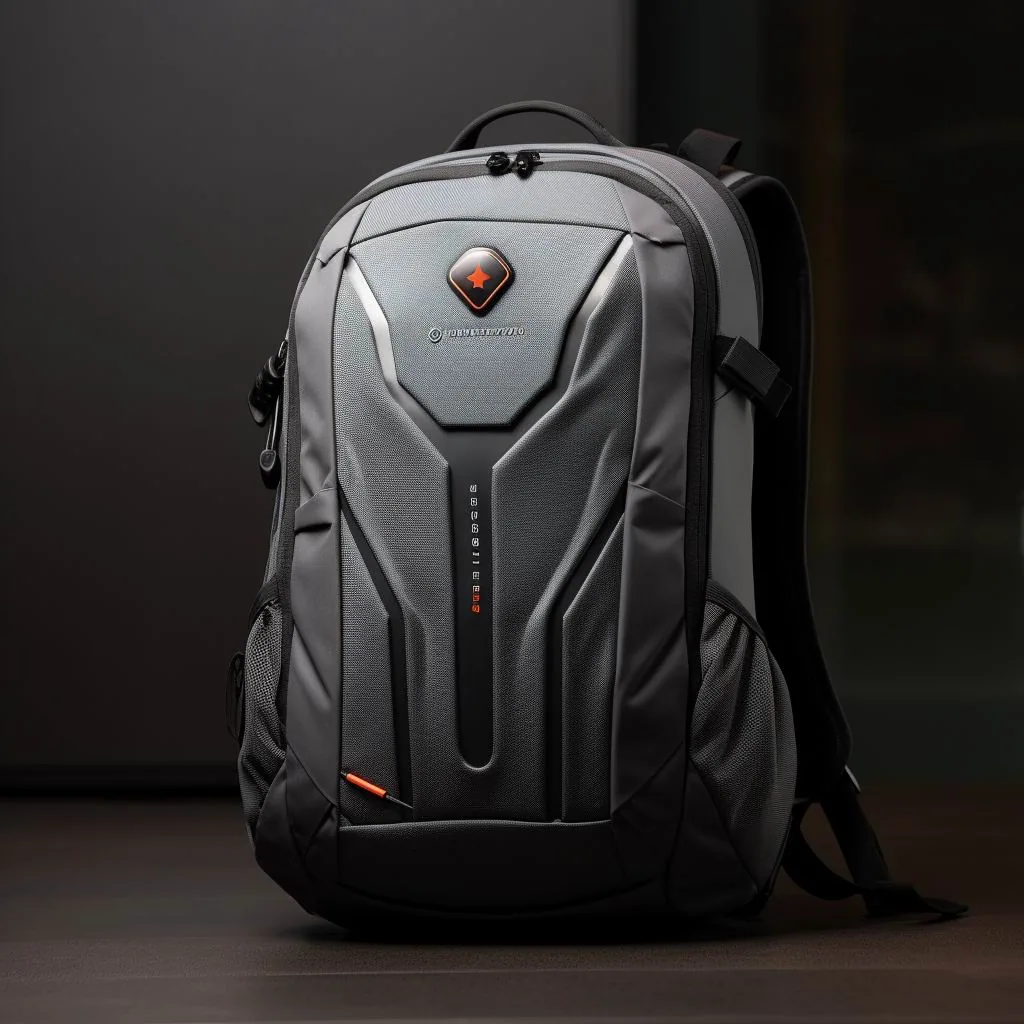
Expandable Backpacks: The Direct Answer
An expandable backpack is worth buying if your load genuinely changes between leaving and returning, and it is a mistake if it does not. The mechanism adds 90–170 g of empty weight, introduces a second water-entry point at the expansion zip, and removes structure at exactly the moment the bag is carrying the most. Those are three real costs, and they are only worth paying if you can name the day of the week on which you need the extra volume.
The mechanism is simpler than the marketing suggests. A second zip track runs around the front panel, 40–70 mm inside the main opening. Zipped, it holds a folded gusset flat against the body. Unzipped, it releases that gusset and the bag's depth grows by 50–90 mm. A 90 mm gusset running the perimeter of a 280 × 460 mm front panel works out at about 6.0 L once the taper at each corner is accounted for, which is why a bag sold as 30 + 8 L usually delivers closer to 30 + 6. The label counts the geometric volume of the gusset; the usable figure is what you can actually load into it.
The people who should buy one are easy to identify. The traveller flying out with 24 L and returning with three days of laundry and two bottles of wine. The commuter who carries a laptop, a lunch and a gym kit on Thursdays and nothing but a laptop on Fridays. The sales representative carrying sample folders on client days. The parent carrying a child's discarded layer from about October to April. In every one of those cases the load varies by 20–30 per cent and the expansion earns its keep.
- Buy one if your heaviest day exceeds your lightest day by more than about 4 L.
- Skip it if the load is the same every day: you are carrying 120 g and a leak path for nothing.
- Skip it if a strict cabin gauge governs the trip, because expansion almost always breaks the depth limit.
- Buy the version with four compression straps, which is the only thing that makes the collapsed state behave.
Key Specifications at a Glance
The figures below describe a representative zip-gusset expandable pack. Collapsible roll-top designs behave differently and are covered in section three.
| Attribute | Collapsed | Expanded | Practical consequence |
|---|---|---|---|
| Usable volume | 22–34 L depending on the base size | 4–8 L more than collapsed | The gain is smaller than the label by about 2 L |
| Depth | 180–210 mm | 250–290 mm | Breaks a 200 mm cabin gauge when open |
| Empty weight | Base shell plus 90–170 g | No further change | The penalty is paid whether or not you use it |
| Centre of mass from the spine | 95–115 mm | 135–165 mm | The load feels roughly 15 per cent heavier when expanded |
| Structure | Back panel supported by the compressed load | Panel bows unless the load fills the gusset | An expanded bag that is half empty carries badly |
| Weather sealing | Main zip only | Main zip plus a 1,400–1,600 mm gusset zip | The expansion zip is the first place water enters |
| Compression | Four 15 mm straps reclaim 50–70 mm | Straps reach their limit | Compression is what makes collapsed mode work |
The row that decides most purchases is the depth one. A 30 L pack collapsed to 200 mm passes a 55 × 40 × 20 cm priority gauge; the same pack expanded to 270 mm does not, and the difference is one zip pull you will forget to undo at the gate. If you fly hand-luggage-only more than twice a year, the expansion is a liability unless you build the habit of checking it.
The centre-of-mass row explains a complaint that is often misdiagnosed as poor padding. When a bag is expanded, its contents move 40–50 mm further from your spine. Because the torque your lumbar muscles resist is proportional to that distance, an expanded 7 kg load feels like roughly 8 kg. That is not a defect; it is physics, and it is the reason an expanded bag should always be carried with the sternum strap engaged.
Anatomy and Structural Features
The zip gusset
This is the standard mechanism and the one to judge first. Two zip tracks run parallel around the front panel. The outer one closes the bag; the inner one, typically 40–70 mm inboard, holds the folded gusset. Release the inner track and the gusset unfurls. The specification that matters is the zip gauge: a #8 coil is acceptable on a 26 L bag and marginal above 32 L, because the gusset zip carries tension from the contents pressing outward as well as from the closure itself. Look for #10 on anything with more than 6 L of expansion.
The second specification is the garage at the bottom of the gusset track. Grit collects at the lowest point of any zip, and on an expansion zip that point sits at the base of the front panel where the bag is set down. Without a garage — a fabric pocket that shelters the slider when closed — the slider abrades, spreads, and eventually fails to close the gusset at all. This is the most common failure in the category and it typically appears between eighteen months and three years.
Accordion side pleats
An alternative used mainly on leather and canvas business packs: the side panels are pleated rather than gusseted behind a zip, and the pleat is held by two press studs or a short strap. The advantage is that there is no second zip and therefore no second leak path, and the expansion is limited to a fixed 40–60 mm rather than being continuously variable. The disadvantage is that pleats hold their crease permanently, so a bag expanded once will never again look quite as tidy collapsed. For a bag that lives in an office, that is a real aesthetic cost.
Roll-top collars
The third mechanism, borrowed from dry-bag design: a roll-top collar sits above the main compartment and gives 6–10 L of genuine, continuously variable expansion with no second zip at all. It is the most robust of the three and the slowest to access. The trade is worth naming honestly: a roll-top expands more, seals better and weighs about 60 g less than a zip gusset, but reaches into the main compartment rather than adding a separate zone, which means your carefully packed layers end up under the roll.
Compression and the collapsed state
Four 15 mm straps — two per side, running from the front panel to the body — are what make the collapsed state work. Without them a gusseted bag collapsed to 22 L still measures 27 cm deep because the folded fabric has to go somewhere, and the load slumps into the bottom third. With them, the same bag pulls down to 19–20 cm and the load stays where you packed it. Compression straps also serve a second purpose when expanded: they stop the contents from pushing the gusset outward beyond its designed profile, which is what eventually fatigues the zip tape.
Capacity Range and Typical Dimensions
Published figures in this category are the least reliable of any pack type, because the second number is rarely measured the same way as the first. The base capacity is usually a block-fill figure; the expansion is usually a geometric calculation. The result is a label that overstates the gain by roughly 2 L at every size.
- Labelled 22 + 6 L: realistically 20 L collapsed and 25 L expanded, at 180 mm and 240 mm deep.
- Labelled 26 + 7 L: realistically 24 L collapsed and 30 L expanded, at 190 mm and 255 mm deep.
- Labelled 30 + 8 L: realistically 27 L collapsed and 33 L expanded, at 200 mm and 270 mm deep.
- Labelled 34 + 8 L: realistically 31 L collapsed and 37 L expanded, at 210 mm and 280 mm deep.
- Labelled 40 + 10 L: realistically 36 L collapsed and 44 L expanded, at 220 mm and 295 mm deep.
Read the two depth columns together with your transport gauge. A 200 mm collapsed depth is exactly the Ryanair priority limit of 55 × 40 × 20 cm and leaves no margin at all; a packed bag always measures 10–20 mm more than the specification, so a bag listed at 200 mm will not pass that gauge reliably. The practical rule for anyone flying is to buy a bag whose collapsed depth is 180 mm or less.
There is also a lower bound worth knowing. Below about 20 L collapsed, expansion stops making sense, because a gusset around the perimeter of a small panel adds proportionally more weight and zip length for less volume. The mechanism only becomes efficient above roughly 24 L, which is why almost all expandable packs sit between 24 L and 42 L collapsed.
One more dimension changes when the bag is expanded, and it is the one people notice on public transport: width stays constant but the silhouette becomes a wedge rather than a slab. A wedge does not sit flat against a seat back, does not slide under a table, and is more likely to catch on a train aisle. On a crowded Northern service at 17:40 that is the difference between an apologetic nod and a dirty look.
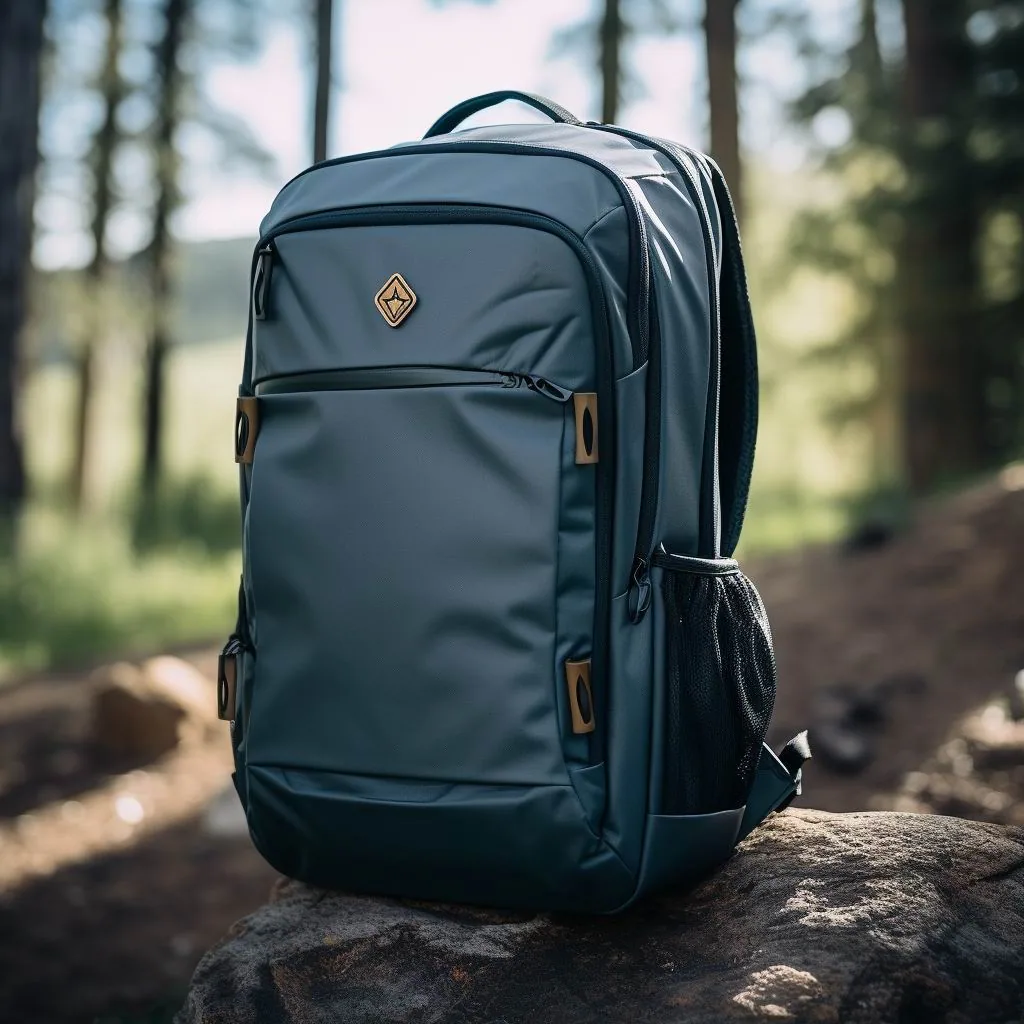
Who It Suits and Who Should Skip It
This is the most situational format in the whole category, and it is worth being strict about it, because the costs are real and the benefit is narrow.
Buy an expandable pack if any of these describes your week.
- You fly out light and come back heavy: laundry, gifts, a pair of shoes bought on the trip. This is the classic case and the one the mechanism was designed for.
- One or two days a week carry materially more than the others — a gym kit on Thursdays, sample folders on client days, a child's coat from October onwards.
- You work a hybrid pattern where two office days need a laptop, a lunch and a folder, and three home days need almost nothing.
- You travel for work with an overnight bag and want a single pack that covers two nights and four.
Skip it if any of these applies.
- Your load is identical every day. In that case you are carrying 120 g of zip and fabric, and a leak path, for a volume you will never use.
- A strict cabin gauge governs more than two trips a year. One forgotten zip pull at the gate costs £45–£60.
- You need weather sealing. The expansion zip is almost always uncoated, and it sits at the front of the bag where the rain lands.
- You need structure. An expanded soft panel bows, and a bag that must hold its shape for a camera insert or a laptop should not have a gusset in the load path.
- You want the tidiest-looking bag on the shelf. Even collapsed, a gusseted bag has a visible seam line around the front panel.
The genuine middle case is the mixed-work-week commuter, and for them the decision usually resolves in favour of expansion with one condition: four compression straps. Without them the collapsed state is sloppy enough that the bag is worse than a fixed 26 L pack on four days out of five, which defeats the purpose entirely.
Comfort, Fit and Load Behaviour
Comfort is where the expandable format quietly loses, and it loses in a way that is hard to see in a shop because the bag is empty on your back. Collapsed and lightly loaded, a gusseted pack behaves like any other pack. Expanded and full, its contents sit 40–50 mm further from your spine and the harness has to resist correspondingly more torque.
The specification that compensates is the sternum strap, and it is non-negotiable on any expandable bag above 26 L. Without it the gusset's outward pressure pulls the shoulder straps laterally, the pack rotates away from your back, and your lumbar extensors work continuously to hold it in. With it, an expanded 7 kg load is entirely manageable for a twenty-minute walk from a station.
Packing behaviour changes too, and in a counter-intuitive way. When you expand the bag, heavy items should go into the main compartment rather than the gusset, because the gusset's outer wall has no support and anything heavy placed there pulls the panel outward and downward. Use the gusset for soft, light, bulky items — a coat, a packed lunch, laundry, a pair of trainers — and keep the laptop, the charger and the water bottle in the main body against the back panel.
There is a trap in the half-expanded state. A bag expanded to 33 L and loaded with 24 L of contents is the worst of both worlds: the gusset is open, so the panel has no support, but the contents do not fill the space, so they slump into the bottom third and the pack's silhouette rounds out. Either fill the gusset or collapse it. Do not leave it half open with a light load, which is the most common misuse of the format.
Load lifters are rarely fitted to expandable packs and their absence is felt above 8 kg. If your expanded load regularly exceeds 8 kg, look for a model with a framesheet and load lifters, or accept that the bag is a travel bag rather than a carrying bag and should be used accordingly.
Materials, Weather Resistance and Durability
Three components fail on an expandable pack, in this order: the gusset zip, the gusset fabric, and the anchor points where the compression straps meet the front panel.
The gusset zip is the weak link and it is worth inspecting in detail. Most manufacturers use an uncoated #8 coil here even when the main zip is a coated #10, because a coated zip is stiffer and will not lie flat when folded inside the panel. The consequence is that the expansion track is the least weather-resistant closure on the bag, and it is positioned on the front face, which is precisely where rain lands when you walk. In sustained rain, water enters at the gusset track within about fifteen minutes and runs down the inside of the front panel, which is the reason a damp patch appears at the bottom of the bag rather than in the middle of it.
The gusset fabric is the second issue. Because it has to fold and lie flat, it is usually lighter than the body — 210D or 300D against a 420D shell. That makes it the least abrasion-resistant panel on the bag, and it is the panel that faces outward when the pack is set down or pushed under a seat. Look for a gusset in the same denier as the body, or accept that it will show wear first. A 300D gusset on a 420D body typically shows through at the fold lines in the third year.
Compression strap anchors are the third. Each strap transfers the compression load into the front panel at a single bar-tacked point, and there are four of them. If they are stitched into the panel seam rather than backed with a reinforcement patch, they tear out within two seasons — usually carrying the panel fabric with them, which turns a cosmetic problem into a structural one.
On care: lubricate the gusset track every three months with a dry zip lubricant rather than a wet one, because a wet lubricant attracts the grit that abrades the tape. Check the garage at the bottom of the track for grit monthly. And never force a gusset zip that is resisting; resistance means something is caught in the tape, and forcing it spreads the slider permanently.
Two UK compliance points apply to bulk orders. Textile products must carry fibre composition labelling, and any integrated cable, light or battery needs UKCA marking before sale. Business guidance on general product safety is published by the Office for Product Safety and Standards on gov.uk.
UK Price, Value and Cost per Use
An expandable pack used for commuting and four trips a year sees roughly 260 uses annually, and the value case is narrow: you are paying for flexibility, and you should check that you actually use it before paying a premium for it.
| Band | What you get | Realistic life at 260 uses a year | Cost per use |
|---|---|---|---|
| £45–£90 | Uncoated #8 gusset zip with no garage, 210D gusset, two compression straps | 2–3 years | About 12–20p |
| £95–£170 | Coated #10 main zip, #8 gusset with garages, 300D gusset, four compression straps, framesheet | 4–6 years | About 8–16p |
| £180–£260 | Laminated shell, #10 gusset with a storm flap, body-denier gusset, load lifters, reinforced strap anchors | 7–9 years | About 11–14p |
The specification that separates the bands is not the fabric, it is the gusset zip and the compression system. Moving from the bottom band to the middle one buys garages at both ends of the expansion track, two extra compression straps and a framesheet, and those three items roughly double the working life. Moving from the middle band to the top buys a storm flap over the gusset and load lifters, which is worth having but is a smaller step.
The honest counter-argument worth making in a value section: if you are buying expansion purely for the twice-a-year holiday, a fixed 30 L pack plus a £22 packable daypack does the same job for less money and less weight. The expandable pack only wins when the variation happens weekly rather than annually.
Budget £18 a year: a dry zip lubricant at £6, a 3,000 mm rain cover at £11 and, in year three, a slider replacement at £18 if the gusset track has been used hard. Replacing a slider is a fifteen-minute job and it is what turns a three-year bag into a six-year one.
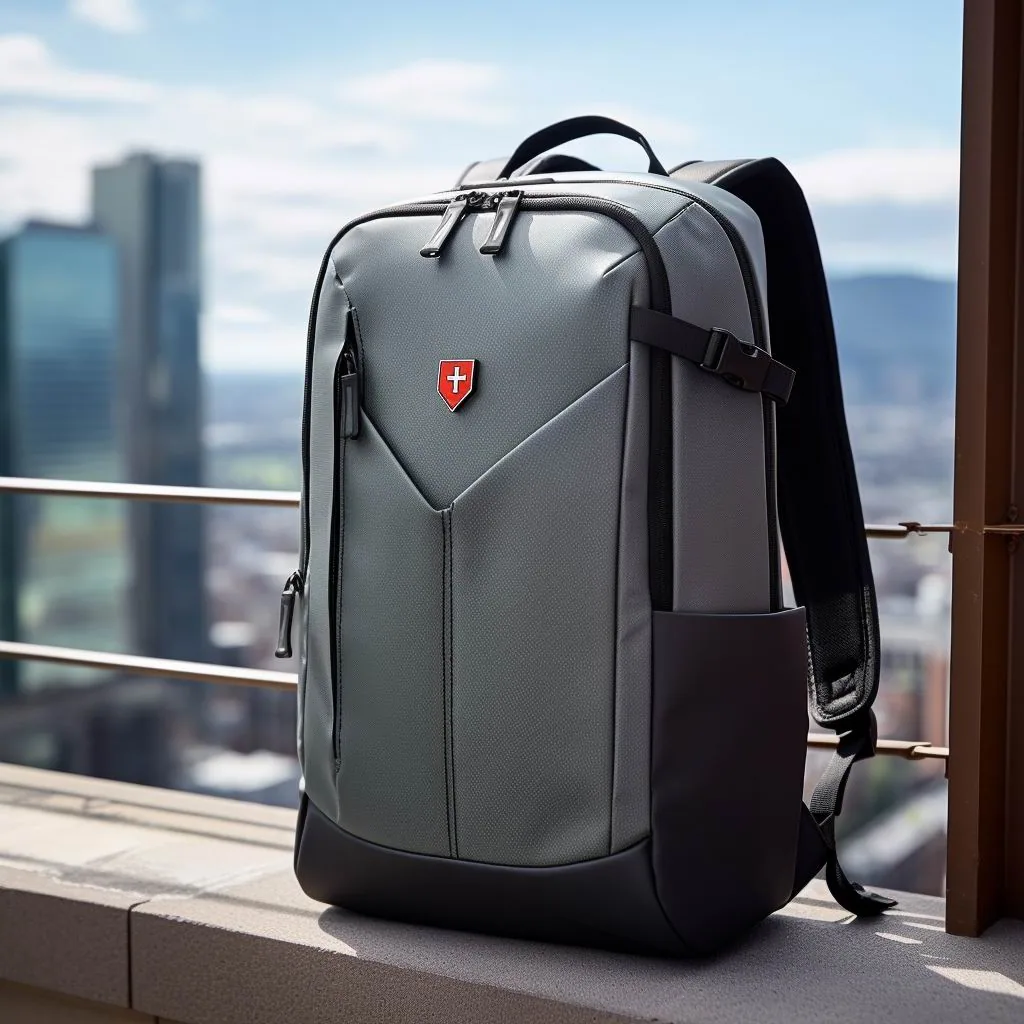
Testing Standards and Bulk Custom Orders
We are a sourcing and programme-management company. We develop pack programmes with vetted production partners and run specification, sampling, inspection and shipping; the plant belongs to our partners. Their SGS-verified production floor measures 4,950 m² and carries 7 production lines, 149 machines and 137 colleagues, with monthly output of 200,000 pieces. QUANZHOU JUNYUAN BAGS has traded since 2014, and its founder has been in the bag trade since 2004.
For corporate uniform programmes, retail private label and travel brands, the commercial parameters are fixed: MOQ 500 pcs per style and colourway, sampling in 6–10 working days (12–15 for complex builds with a storm-flapped gusset), bulk production 35–50 days, inspection at AQL 2.5 under ISO 2859-1, T/T 30/70, FOB Xiamen.
The screening routine for this format focuses on the mechanism, because that is what fails.
- Expansion cycle: 500 full expand-and-collapse transitions, then a re-check of zip function and gusset fabric for crease wear.
- Gusset zip cycle: 3,000 open-and-close operations with grit introduced after cycle 1,500, then a slider-closure check at 90 per cent fill.
- Spray exposure of 30 minutes at the front face with the gusset closed, then an internal inspection of the front panel and base for moisture tracking.
- Compression anchor pull to 150 N at each of the four strap attachment points, held for 60 seconds.
- A 1.5× lift test holding rated load multiplied by 1.5 for 60 seconds in the expanded state, which is the condition a user will actually create.
Fabric abrasion and coating references come from ASTM textile standards, textile method detail from AATCC, and the sampling plan governing how many units are pulled from a batch and how many defects are tolerated is defined in ISO 2859-1. Where a welded pocket carries an ingress-protection claim, it is graded under the IEC 60529 code, and current cabin baggage thinking is published by IATA.
Final inspection is carried out to AQL 2.5 under ISO 2859-1, and our production partners issue a measurement report with every approved sample recording empty weight in grams, collapsed and expanded volume by block fill, packed external dimensions in both states and rated load. For UK deliveries, cartons are opened from at least two pallet positions; a defect confined to one section of the batch cannot then slip through.
When you specify, state both volumes and the method used to measure each, because the two numbers on the label are almost never produced the same way. Also state the gusset denier explicitly; if it is not in the specification, it will be the cheapest fabric available.
To start a programme, send your specification, quantity and delivery date to service@junyuanbags.com or message us on WhatsApp at wa.me/8617750020688. We will confirm the gusset denier, the zip gauge and both volume figures in writing before sampling begins.
Common Buying Mistakes to Avoid
Six mistakes account for most of the disappointment, and four of them appear within the first three months.
- Buying expansion for a load that never changes. If your lightest and heaviest days differ by less than 4 L, you are carrying a zip and a leak path for nothing.
- Forgetting to collapse it at the gate. A 200 mm collapsed depth becomes 270 mm expanded, which fails a 55 × 40 × 20 cm priority gauge and costs £45–£60 per sector.
- Running the bag half-expanded with a light load. The panel has no support and the contents slump; either fill the gusset or collapse it.
- Putting heavy items in the gusset. Its outer wall is unsupported. Use it for a coat, laundry or trainers, and keep the laptop and bottle in the main compartment.
- Forcing a resisting gusset zip. Resistance means something is caught in the tape, and forcing it spreads the slider permanently.
- Ignoring the gusset denier. A 210D gusset on a 420D body shows through at the fold lines in about three years.
For bulk orders there are two more. The first is specifying only the expanded volume, which lets a supplier meet the number with a thin gusset and no reinforcement; always specify both states. The second is printing across the gusset fold, where the ink will crack within a year — keep branding on the front panel above the expansion track.
Each of these is caught by a five-minute check before purchase or before a flight, and none of them requires anything more than attention.
Final Verdict: Who Should Choose This?
Choose an expandable pack if your load varies by more than about 4 L within a single week, or between outbound and return on a trip. The traveller coming home with laundry, the Thursday gym kit and the client-day sample folder are the three cases where the mechanism genuinely pays for itself, and in each one the alternative is owning two bags.
Choose a fixed-capacity pack plus a £22 packable daypack if the variation happens twice a year rather than twice a week. It costs less, weighs less, and has no second zip to leak.
Skip the format entirely if a strict cabin gauge governs your travel, if your load is identical every day, or if you need weather sealing — the gusset track is the least protected closure on the bag and it sits exactly where the rain lands.
When you evaluate a sample, expand and collapse it twenty times, load it to your real weight in the expanded state, and walk 800 m with the sternum strap engaged. Specification sheets do not reveal how a gusset behaves under a live load, and that is the only test that matters here.
The answers below cover the questions we are asked most often by UK buyers weighing up the format.
Frequently Asked Questions
What does the second capacity number on the label actually describe?
It is usually the geometric volume of the gusset rather than a measured fill, so it runs about 2 L high. A 90 mm gusset around a 280 × 460 mm panel works out at roughly 6.0 L once the corner taper is counted.
Expect a bag sold as 30 + 8 L to deliver closer to 27 + 6 L usable.
How many litres does an expansion gusset really add?
Between 4 L and 8 L depending on the gusset width and the panel size: a 60 mm gusset on a 22 L bag adds about 4 L, a 90 mm gusset on a 30 L bag about 6 L.
Buy the collapsed size you need for an ordinary day and treat the extra as a margin rather than as capacity you plan around.
Does the expansion zip add much weight?
Ninety to 170 g, made up of the second zip track, the gusset fabric and the extra binding. That is typically 4–6 per cent of the bag's empty weight.
The penalty is paid whether or not you ever open it, which is why a fixed load never justifies the format.
Is the expanded section as weatherproof as the rest of the bag?
No, and it is usually the least protected closure on the bag. Most gusset tracks are uncoated #8 even when the main zip is a coated #10, because a coated zip will not lie flat when folded.
In sustained rain, water tracks in at the gusset within about fifteen minutes and runs down the inside of the front panel.
Which UK routine justifies paying for an expandable design?
Three: flying out light and returning with laundry and gifts, a weekly pattern where one or two days carry materially more than the others, and hybrid work where two office days need a folder and a lunch.
If the variation happens twice a year rather than twice a week, buy a fixed pack and a £22 packable daypack instead.
Is an expandable pack comfortable once it is opened out?
Less so, and for a geometric reason: contents move 40–50 mm further from the spine, so an expanded 7 kg load feels like roughly 8 kg.
The sternum strap is what compensates, and it is non-negotiable above 26 L. Without it the gusset's outward pressure pulls the straps laterally.
How long does the expansion zip last?
Between eighteen months and six years, and the deciding factor is whether there is a garage sheltering the slider at the bottom of the track. Without one, grit abrades the slider and it stops closing the gusset.
Lubricate the track quarterly with a dry lubricant and never force a zip that is resisting.
What should I pay, and is the premium worth it?
£95–£170 is the band that matters. It buys garages at both ends of the expansion track, four compression straps instead of two, and a framesheet, which together roughly double working life.
Above £180 you are buying a storm flap over the gusset and load lifters, which is a smaller step.
Will it still pass a 40 × 20 × 25 cm gauge when expanded?
Almost never. A 200 mm collapsed depth becomes about 270 mm expanded, and a packed bag already measures 10–20 mm more than the specification.
If you fly hand-luggage-only, buy a bag whose collapsed depth is 180 mm or less, and build the habit of checking the gusset at the gate.
What are the real downsides of the format?
Three: 90–170 g of extra weight, a second and poorly sealed closure on the rain-facing panel, and a loss of structure precisely when the bag is fullest.
There is a fourth that matters less but annoys more — an expanded pack becomes a wedge, which will not sit flat against a seat back or under a table.
How do I keep the gusset clean and free of grit?
Check the garage at the bottom of the track monthly and brush it out, then lubricate quarterly with a dry zip lubricant rather than a wet one, since wet lubricant attracts grit.
Collapse the gusset before storing the bag so the creases do not set under load.
Can we spec 500 branded expandable packs for a UK sales team?
Yes. State both collapsed and expanded volumes and the method used for each, plus the gusset denier explicitly — if it is not in the specification it will be the cheapest fabric available.
MOQ 500 pcs per style and colourway, sampling 6–10 working days (12–15 for a storm-flapped gusset), bulk 35–50 days, AQL 2.5 under ISO 2859-1, T/T 30/70, FOB Xiamen. Keep branding above the expansion track.
Which base capacity should I choose if I plan to expand regularly?
Buy the collapsed size for an ordinary day and treat the extra as margin. For a mixed work week that is usually 26–30 L collapsed, which expands to 30–33 L.
Going larger means running the bag half-expanded most of the time, which is the worst state: no panel support and contents slumping into the bottom third.