Common Backpack Quality Defects and Their Causes: A UK Buyer's Diagnostic Guide
Six defect families account for roughly 90% of the failures UK buyers log on backpack programmes: stitch and seam breakdown, fabric and coating faults, hardware breakage, zip failure, dimensional drift, and load-path failure at strap and handle anchors. In a 500-piece lot inspected at AQL 2.5 under a general Level II plan, the sample is 50 units, with 3 accepted and 4 rejected on major defects. The practical response is not to inspect harder but to classify each defect by cause before goods reach the line, then correct the clause in the tech pack that permitted it.
This guide is written for UK brand owners and buying teams placing private-label backpack programmes rather than for consumers. Every defect below is described by its physical signature, its most likely cause on the sewing floor or at the trim supplier, and the check that catches it before the cartons close. QUANZHOU JUNYUAN BAGS operates as a sourcing and programme-management company established in 2014; our production team coordinates across 7 production lines within 4,950 m² of SGS-verified production floor space, with 137 colleagues, and supports programmes at MOQ 500 pcs per style and colourway.
A Defect Taxonomy That Survives an Audit
The first discipline is classification. A fault a consumer calls broken has to be rewritten as a measurable statement before anyone can argue about whether it passes: a skipped stitch over 8 mm on a strap box, a coating delamination patch larger than 5 mm², a buckle that releases below 20 kg. Without a number, the inspection report becomes a negotiation, and that negotiation usually happens two days before the vessel closes. UK buyers working to AQL 2.5 (ISO 2859-1) should define critical, major and minor categories per programme rather than per supplier, so the definitions survive staff turnover on both sides of the relationship.
Critical defects make the product unsafe or unlawful: a sharp exposed burr on metal hardware, a drawcord longer than the permitted length on a children's item, a chemical result that fails the restricted-substance list. Major defects are those a retail customer would reject on sight or that shorten service life materially, such as a burst seam at a strap anchor, a zip that will not close, or a logo applied 6 mm off position. Minor defects are finishing issues that survive normal use but look wrong under retail lighting, including thread tails over 3 mm, light soiling, and a care label skewed by more than 3 degrees.
- Critical: safety, legality and restricted substances, with zero acceptance under any sampling plan.
- Major: function or service life compromised, normally inspected at AQL 2.5.
- Minor: appearance and finishing, commonly inspected at AQL 4.0 but defensible at 2.5 for premium ranges.
- Write every definition with a number and a measurement method, never with an adjective.
Stitch and Seam Defects
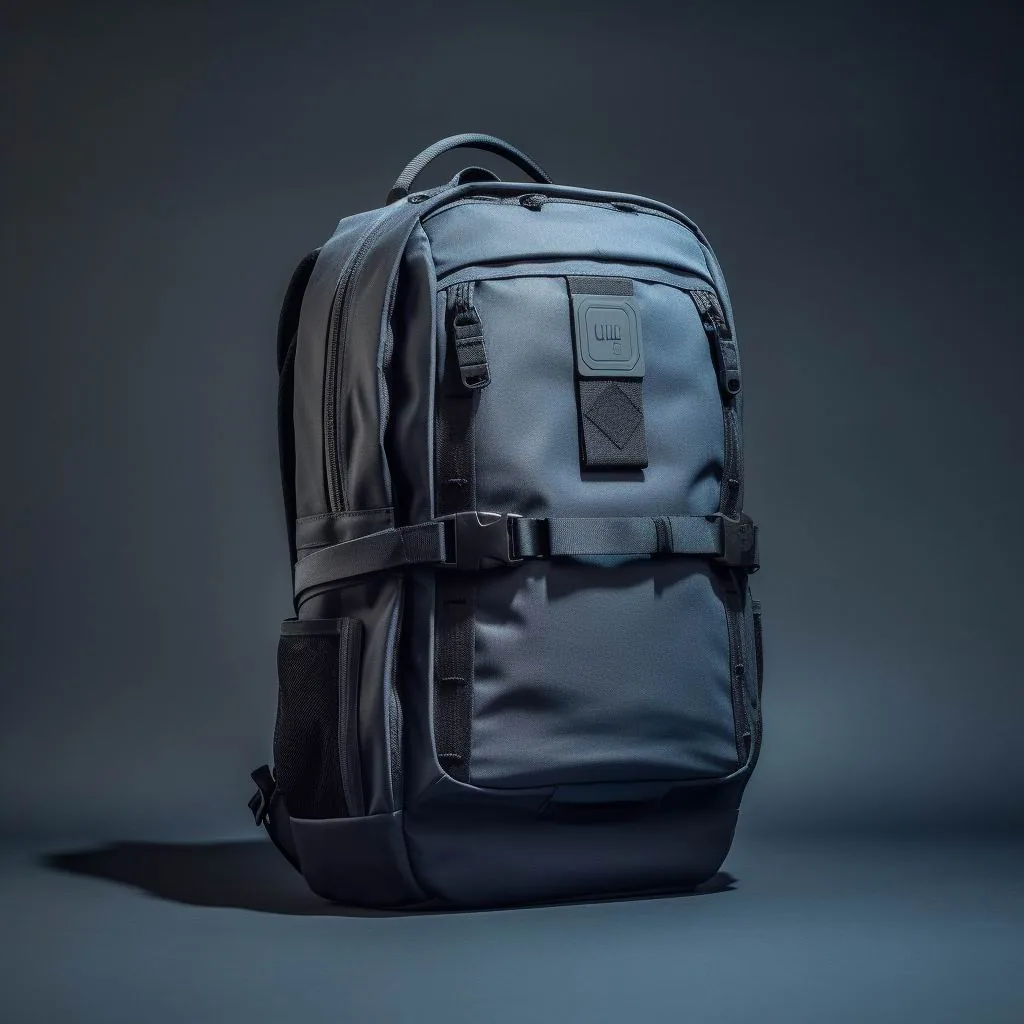
Seam failure is the family most often misdiagnosed as poor workmanship. In practice it is usually a specification failure: the stitch density was set for a light liner and then applied to a load-bearing anchor, or the seam allowance was cut to 8 mm where 12 mm was needed to stop the fabric pulling out from under the stitch line. Seam slippage, where the yarns of a woven fabric slide apart under load and the seam grins open, is a function of fabric construction and stitches per centimetre acting together, not of operator skill. A 600D polyester at 6 stitches per cm will grin where the same cloth at 9 stitches per cm holds.
The reliable field checks are simple. Pull the seam transversely with the thumbs and look for a gap opening between the needle holes; if more than 2 mm opens under firm hand pressure on a structural seam, the construction is marginal. Count stitches per cm with a gauge at three points on each of five units, and treat a variance above 1 stitch per centimetre within a single seam as evidence of feed problems or worn feed dogs. Inspect the reverse of every box stitch, because an anchor that stops short of the strap edge peels progressively from the end, and that failure typically surfaces between month three and month eight of use.
| Signature | Most likely cause | Check that catches it |
|---|---|---|
| Seam grins open under thumb pressure | Stitch density too low for the fabric construction | Count stitches per cm at three points per unit |
| Box stitch peels from the strap end | Anchor stitch stops short of the webbing edge | Measure overlap; require 10-15 mm past the edge |
| Thread breaks on the upper side | Needle size wrong for the thread Tex, or needle heat | Pull test five units; inspect the needle plate for burrs |
| Uneven stitch length within one seam | Worn feed dog or incorrect presser foot pressure | Gauge three points; variance limit 1 stitch per cm |
| Seam puckers along its length | Differential feed or unbalanced tension | Lay flat on a table; reject pucker over 2 mm |
Fabric, Coating and Colour Defects
Abrasion resistance is the specification most often quoted and least often tested. Where a buyer sets a minimum rub count, the reference method is normally ISO 12947, which runs a specimen against a standard abradant under a defined load until two yarns break. Results are reported as a rub count rather than a grade, and the load and the abradant must be written into the tech pack or the number means nothing. A 600D polyester with a plain PU backing may pass 20,000 rubs where the same cloth with a thicker, softer backing passes 35,000, because the backing is doing as much work as the face yarns.
Coating faults arrive in three forms. Hydrolysis presents as a tacky surface and a faint solvent smell after months in a warm warehouse; it is a PU degradation process driven by heat and humidity and it cannot be reversed. Delamination presents as the coating lifting in flakes or bubbles, usually beginning at a fold line. Blocking presents as panels sticking together when a pack is opened after compression packing. Colour faults are separate again: check shade against the approved reference under a controlled light source and require a colourfastness result for rubbing and for light on every new colourway, since a colourway change without re-testing drives most first-season return spikes.
- Require a hydrostatic head figure with the test method named, for example 1,000 mm minimum to a named ISO method.
- Store bulk fabric below 30 C and below 65 percent relative humidity to slow PU hydrolysis.
- Re-test colourfastness to rubbing and to light on every new colourway, not once per fabric.
- Set a delamination acceptance limit in mm² before the pre-production sample is signed off.
- Keep retained reference swatches for every colourway for at least 24 months.
Hardware and Trim Failures
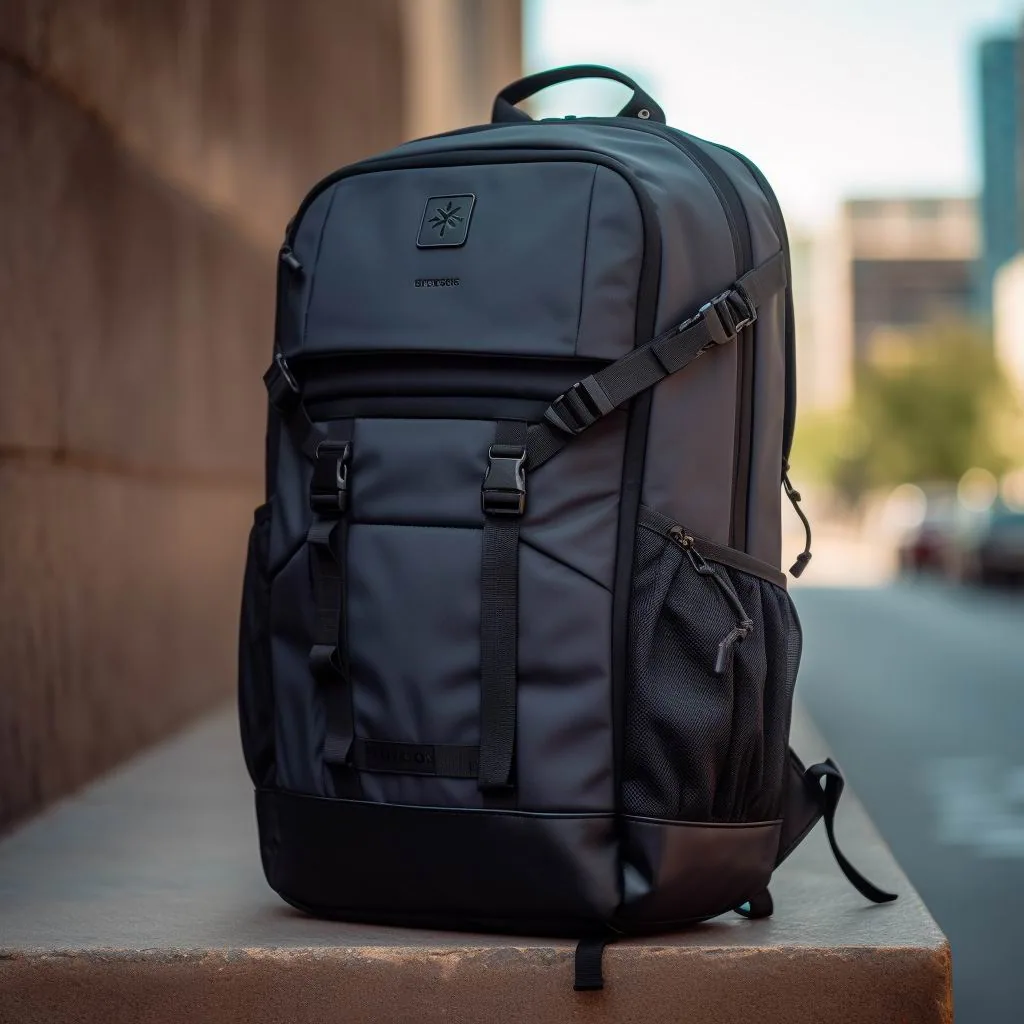
Buckles, ladderlocks, D-rings and cam locks fail in two distinct ways, and the distinction determines the corrective action. Ductile failure is visible: the part deforms, whitens at the stress point and then releases. Brittle failure is sudden, showing a clean fracture face with no whitening, and it usually points to a material problem or to a moulding run held too long at temperature. Acetal side-release buckles in 20 mm and 25 mm widths are routinely specified with a working load far below their ultimate break, because the mode buyers care about is not the break but the progressive creep that lets a strap slide 5 mm an hour under a loaded pack.
Corrosion is the other hardware cluster. A salt-spray result on plated metal parts gives an early read on whether a zinc-alloy or steel component will mark clothing or seize in service; where a programme targets a marine or coastal end use, specify the plating type and thickness rather than a generic rust-resistant instruction. Webbing is a trim defect in its own right. Check breaking strain against width, look for cut ends that have been heat-sealed rather than left to fray, and test webbing colourfastness separately from the body fabric, because webbing dyed in a different bath fades at a different rate and the mismatch becomes visible within one season.
- Specify buckle type, width, and a working-load figure with a creep test at a stated load and duration.
- Name the plating type and thickness for metal parts; avoid generic corrosion wording.
- Require heat-cut and sealed webbing ends on all visible strap terminations.
- Test webbing colourfastness separately from the body fabric.
- Batch-code hardware so a failure can be traced back to a moulding date.
Zip Failures: The Most Returned Component
Zips are the highest-frequency return reason on soft goods because a zip is a system of five tolerances that must agree: chain size and type, slider, tape, the top and bottom stops, and the seam holding the tape to the panel. A #5 coil zip sewn with the tape twisted 2 degrees will bind where the same zip sewn flat runs for years. A slider that matches the chain size but comes from a different maker may have slightly different throat geometry, and the consequence is a chain that splits behind the slider under load. That is the classic complaint of a zip that works empty and fails loaded.
The checks are mechanical. Run every zip through five full cycles on all sampled units, and treat a zip that catches once in five cycles as a reject rather than an adjustment candidate. Pull the two tapes apart laterally behind a closed slider with moderate hand force and look for the chain opening. Confirm that the slider auto-lock works by loading the pull and watching for creep. Finally inspect the stops, because a metal clamp bottom stop on a coil chain will eventually work loose where an injection-moulded stop of the correct type will not, and that calls for a specification change rather than a rework instruction.
Chain type and size, slider model and maker, tape width and material, stop type at both ends, stitch density at the tape seam, and a cycle requirement of 500 cycles with no catch, no split and no slider creep. State the pull-test load for the slider body separately from the pull-tab.
Dimensional and Fit Deviation
Dimensional drift costs the least per unit and the most per season, because it only surfaces when the product meets the thing it has to fit: a 16-inch laptop, a locker, an airline gauge, a retailer's shelf tray. A tolerance of plus or minus 5 mm on a stated 46 x 32 x 20 cm pack looks generous until the laptop sleeve is cut to a nominal 360 mm internal and arrives at 355 mm against a 358 mm device. Write tolerances per dimension, and always state the internal clear opening of every sleeve rather than the external panel size, which is what most tech packs declare and what almost nobody measures.
The second half of dimensional control is symmetry. A pack with shoulder straps sewn 4 mm out of alignment sits visibly off-centre and generates returns that no inspection clause can describe, because nothing is technically defective. Measure strap exit points from the centre line, measure hip-belt symmetry, and measure the vertical position of the sternum strap on both sides. Volume should be verified by a fill test on at least one unit per colourway per production run, using a stated fill medium and a stated method, so a claimed 28 litres can be compared against a measured figure instead of a marketing number.
| Dimension | Typical tolerance | Why it matters |
|---|---|---|
| External body height, width, depth | Plus or minus 5 mm | Retail shelf trays and locker fit |
| Laptop sleeve internal clear opening | Plus 5 mm, minus 0 mm | Negative tolerance stops devices fitting |
| Strap exit offset from centre line | 3 mm maximum | Asymmetry reads as poor quality |
| Sternum strap height | Plus or minus 5 mm | Comfort position varies with torso length |
| Measured volume by fill test | Plus or minus 5 percent | Protects the stated litre figure |
Load-Bearing Failures at Stress Points
Straps, grab handles and hip-belt anchors carry the entire load through a small number of stitch lines, and they fail at the anchor rather than along the strap. A 25 mm webbing strap with a 1,200 N breaking strain will not break; the box stitch holding it to the body will. The remedy is geometric. Increase the anchor overlap, spread the load over a wider reinforcement panel, and on heavier programmes run the webbing in a continuous loop under the body panel instead of terminating it at the seam. A grab handle rated for a loaded pack should carry a static test at a stated multiple of the filled pack weight, repeated after wetting, because nylon webbing loses strength when saturated.
Hip belts and sternum hardware fail by creep rather than by fracture. A correctly specified ladderlock holds position under a 12 kg load across a 40-minute walk; one that is not will let the belt slide until the load transfers back onto the shoulders, at which point the wearer reports back pain rather than a product fault. Grab handles deserve separate attention because they are the most common in-store breakage, since customers lift a pack by the top handle with the contents already inside. Any programme above 25 litres should specify a reinforced top handle with a webbing core running into the body panel.
- Terminate load-bearing webbing in a continuous loop under the body panel wherever the construction allows.
- Require 10-15 mm of anchor overlap past the webbing edge on every structural box stitch.
- Static-load test grab handles at a stated multiple of the filled pack weight, wet and dry.
- Ladderlock creep test: stated load, stated duration, maximum permitted slide in mm.
- Reinforce the top handle with a webbing core on any pack above 25 litres.
Tracing Defects Back to the Line
Root-cause work begins with a single question: when did the defect become visible. A fault present in the pre-production sample is a specification or tooling problem and will appear in every unit of the bulk. A fault present in 4 percent of a batch is a process-control problem, usually concentrated in one operation, one shift or one machine. A fault that appears after six weeks in a warehouse is a material or chemistry problem. Sorting defects by the moment they appeared tells you whether to change the drawing, the work instruction or the material, and those three actions carry very different costs and very different lead times.
Batch coding is what makes the trace possible. Every carton in a programme should carry a code resolving to a production line, a date, and a fabric and trim lot. Without it, a 3 percent seam failure rate across 4,000 units means re-inspecting everything; with it, inspection concentrates on the two days and the one line involved and the rest of the shipment can be released. The same logic applies to retained units: keep sealed reference samples from the approved pre-production stage and from each bulk shipment for at least 24 months, so a claim in month 18 can be compared against what was actually approved.
- Log defect type, line, date, shift and lot code, not only a total count.
- Keep sealed retained samples from the PP stage and each bulk shipment for 24 months.
- Re-inspect the affected line and date code, not the whole container, wherever coding allows.
- Escalate from rework to specification change when a defect appears in the PP sample.
- Record rework as a cost line; preventing a fault is cheaper than repairing it twice.
Building the Inspection Plan Around AQL 2.5
AQL 2.5 (ISO 2859-1) with general inspection Level II and a normal single sampling plan is the working default for sewn soft goods. On a 500-piece lot the code letter gives a sample of 50 units with 3 accepted and 4 rejected on major defects; on a 5,000-piece lot the sample rises to 200 units with 10 accepted and 11 rejected. Those figures are a statistical compromise rather than a guarantee, since a plan at AQL 2.5 will accept some lots whose true defect rate sits above 2.5 percent. Buyers who need tighter assurance move to Level III or impose a zero-acceptance rule on critical defects while holding 2.5 on majors.
Inspection is a legal act as well as a commercial one. Goods placed on the market in Great Britain have to meet the applicable product-safety framework, and the obligations that attach to the economic operator begin before the goods ship; the GOV.UK guidance on placing manufactured goods on the market in Great Britain sets out those responsibilities, while the product recalls and alerts guidance explains what follows once a safety issue is identified. In practice that means retaining inspection records, test reports and traceability codes, not merely the pass or fail outcome.
| Lot size | Sample size (Level II) | Accept / reject at AQL 2.5 |
|---|---|---|
| 500 pcs | 50 | 3 / 4 |
| 1,200 pcs | 80 | 5 / 6 |
| 3,200 pcs | 125 | 7 / 8 |
| 5,000 pcs | 200 | 10 / 11 |
| 10,000 pcs | 315 | 14 / 15 |
Corrective Action and Re-Inspection Economics
The decision after a failed inspection is commercial more often than technical. Rework at origin costs a fraction of rework after import, but only when the rework is defined in advance: who opens the cartons, what the repair method is, how repaired units are re-identified, and who pays for the second inspection. Sorting and reworking 8 percent of a 2,000-unit shipment is a manageable cost; discovering after import that 8 percent carry a seam fault means either a UK-based repair operation or a write-down, and neither is inexpensive. Put the rework protocol into the purchase terms before the first inspection, not during the argument that follows it.
The more valuable outcome is prevention on the next run. Every corrective-action record should end with a change to a controlled document, whether a tech pack revision, a work instruction, a trim specification or a test frequency, and the revision number should appear on the next purchase order. Programmes coordinated by QUANZHOU JUNYUAN BAGS run at MOQ 500 pcs per style and colourway, with sampling in 6-10 working days and 12-15 working days for complex builds, bulk production in 35-50 days, FOB Xiamen, T/T 30/70 terms, and inspection to AQL 2.5 (ISO 2859-1). A fault designed out at sampling is always cheaper than the same fault repaired at origin.
A fault caught at the pre-production sample costs a specification edit. The same fault caught at final inspection costs rework plus a second inspection. The same fault caught after import costs the unit, the freight and the customer. Move the spend earlier in the calendar.
Frequently Asked Questions
What is the most common backpack defect found at final inspection?
Stitch and seam faults lead most final-inspection reports, typically 30-40 percent of logged major defects, followed by zip problems at around 20 percent. Within the stitch family the largest single cause is insufficient anchor overlap on strap box stitches, which peels between month three and month eight of use. A workable control is to require 10-15 mm of webbing anchor past the stitch line and to pull-test five units per shipment.
How many units are inspected under AQL 2.5 on a 500-piece backpack order?
Under ISO 2859-1 with general inspection Level II, a 500-piece lot falls to code letter H, giving a sample of 50 units. At AQL 2.5 the accept number is 3 and the reject number is 4 on major defects, so four or more majors in the sample fail the lot. Minor defects are commonly inspected at AQL 4.0, which allows 5 accepted and 6 rejected on the same sample size.
What is the difference between AQL 2.5 and AQL 4.0 for bags?
AQL 4.0 is more permissive and is normally applied to minor, appearance-related faults, while AQL 2.5 is applied to major defects that affect function or service life. On a 50-unit sample the difference is 3 accepted and 4 rejected at 2.5, against 5 accepted and 6 rejected at 4.0. Premium ranges often run 2.5 on both categories to protect shelf appearance.
Can seam slippage be fixed by increasing stitch density?
Increasing stitch density is the first lever and usually the right one, because seam slippage occurs when fabric yarns slide apart between needles rather than when the thread breaks. Moving from 6 to 9 stitches per centimetre on a 600D polyester typically closes the problem. If it does not, the fabric construction itself is too loose for the load and the specification needs a tighter weave or a bound seam.
Why does PU coating go sticky in storage?
Tackiness is hydrolysis, a chemical breakdown of the polyurethane coating driven by heat and humidity. It accelerates sharply above 30 C and above 65 percent relative humidity, and it is irreversible once started. Storing bulk fabric and finished cartons in a cool, dry warehouse, and avoiding tightly sealed polybags over long storage, slows the process considerably. Packs stored in lofts and garages fail fastest, because both spaces run hot in summer and damp in winter.
What causes a zip to split behind the slider?
Splitting behind the slider is a tolerance mismatch rather than a wear issue. A slider from a different maker can have slightly different throat geometry, so it fails to close the chain fully under lateral load even though it runs smoothly when the pack is empty. Tape twisted by 2 degrees at the seam, or a bottom stop of the wrong type, produces the same symptom.
How much dimensional tolerance should a backpack tech pack allow?
Plus or minus 5 mm on external body dimensions is standard and covers normal cutting and sewing variation. Sleeves and device pockets need asymmetric tolerance, typically plus 5 mm and minus 0 on the internal clear opening, so a negative deviation cannot stop a laptop fitting. Strap symmetry should be held to 3 mm, and volume to plus or minus 5 percent by fill test.
Should hardware be salt-spray tested for UK programmes?
Salt-spray testing is worth specifying whenever metal parts appear on a pack sold into coastal or outdoor use, because it gives an early read on plating quality before corrosion marks clothing or seizes a mechanism. A neutral salt-spray run to ISO 9227 with a stated duration and an acceptance criterion in hours is inexpensive and removes a common source of season-two complaints.
How long do sampling and bulk production take on a private-label backpack?
Standard sampling runs 6-10 working days from an approved tech pack, extending to 12-15 working days where the build includes welded seams, sealed compartments or complex frames. Bulk production runs 35-50 days depending on fabric availability and order size, shipped FOB Xiamen with T/T 30/70 terms and inspection to AQL 2.5 (ISO 2859-1).
Who pays for re-inspection after a failed AQL report?
There is no default rule, so it has to be written into the purchase terms. The common arrangement is that the supplier funds rework and the buyer funds the first re-inspection, with the supplier funding subsequent inspections where the failure was theirs. Agreeing this before the first inspection avoids an argument at the point where the booking is about to close.
How long should retained samples be kept?
Twenty-four months is a workable minimum, covering two selling seasons and the window in which most durability claims appear. Keep a sealed reference from the approved pre-production sample alongside one sealed unit per bulk shipment, stored away from light and heat. Without a retained unit, an eighteenth-month claim can only be argued from emails rather than from physical evidence.
Are critical defects ever accepted under AQL 2.5?
No. Critical defects, meaning anything that makes a product unsafe or unlawful, carry zero acceptance regardless of the AQL level applied to majors and minors. A single critical finding fails the lot. Buyers should also require the lot code to be recorded so any related units already shipped can be identified quickly. A critical finding should also trigger a review of the inspection plan itself, since the defect passed earlier gates unchecked.
Build the Defect Library Before the Next Buy
The cheapest quality programme is a written one. Collect every defect logged on the last two seasons, sort it into the six families described above, and attach a number and a measurement method to each. That document becomes the inspection standard, the sampling brief and the corrective-action record in one, and it shortens every subsequent argument.
QUANZHOU JUNYUAN BAGS is a sourcing and programme-management company established in 2014, coordinating production across 7 production lines within 4,950 m² of SGS-verified production floor space with 137 colleagues. Programmes run at MOQ 500 pcs per style and colourway, with sampling in 6-10 working days (12-15 for complex builds), bulk in 35-50 days, FOB Xiamen, T/T 30/70, and AQL 2.5 (ISO 2859-1) inspection.
Email: service@junyuanbags.com
WhatsApp: +86 177 5002 0688