Table of Contents
- Backpack Branding: Which Logo Method Should You Choose?
- Embroidery: Stitch Count, Minimum Letter Height and Cost
- Screen Printing: Mesh Count, Ink Chemistry and Cure
- Heat Transfer: Full-Colour Artwork, Vinyl and Sublimation
- Woven Labels, Metal Badges and Debossed Patches
- Backpack Branding Methods Compared: Cost, MOQ and Durability
- Fabric and Substrate Compatibility: What Each Method Can Mark
- Artwork, Minimum Sizes and Placement Rules
- Colour Fastness and Durability Testing: AATCC, ISO and BS EN Standards
- What Backpack Branding Actually Costs: Setup, Unit and Tooling
- Sampling, Lead Times and Quality Control for Branded Backpacks
- Branding Compliance for the UK Market: Labelling, REACH and Country of Origin
- Frequently Asked Questions
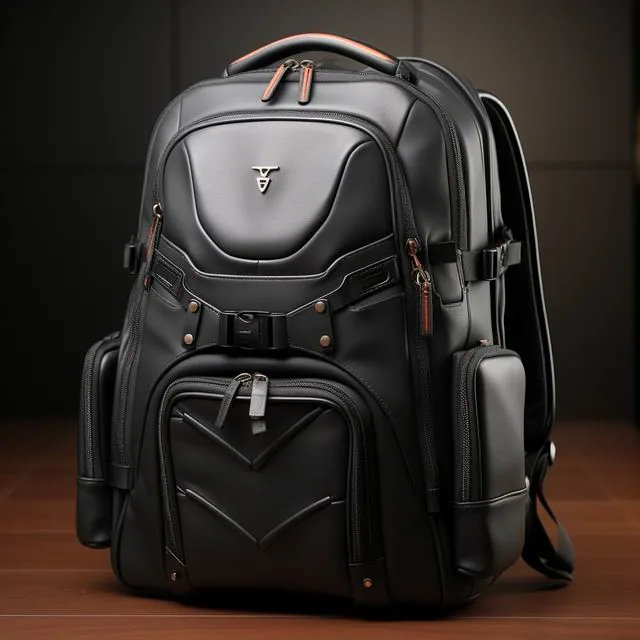
Backpack Branding: Which Logo Method Should You Choose?
Backpack branding comes down to six methods: embroidery, screen printing, heat transfer, woven labels, metal badges and debossed patches. For a British corporate programme the default is embroidery on woven fabric, because it survives daily commuting and reads as quality; screen printing is the value choice for large flat marks above 500 pieces; and heat transfer is the only practical route to full-colour or photographic artwork. Woven labels carry small repeat identity, metal badges suit premium own-label retail, and debossed patches suit leather and PU panels. Four variables decide the answer rather than taste: the substrate you are marking, the smallest detail in your artwork, the volume you are ordering, and how long the mark has to last. On a typical UK corporate programme of 500 to 5,000 bags, that decision is made once and then reordered for three to five years, so it is worth twenty minutes of thought at the briefing stage. The two failure modes to avoid are a mark that peels within a British winter and a mark that cannot reproduce your artwork at all.
If you want the short version, choose embroidery when the shell is 600D polyester or canvas and the logo has no gradient and no detail below 5 mm. Choose screen printing when the artwork is bold, one or two colours, and the order is 1,000 pieces or more. Choose heat transfer when the logo is a photograph, a gradient, or more than four spot colours. Choose a woven label when the mark is a small wordmark under 40 mm wide. Choose a metal badge when the retail price supports £0.60 to £2.50 of branding cost per unit. Choose a debossed patch when the panel is leather or 1.2 mm PU and you want the mark pressed in rather than printed onto it.
The rest of this guide covers all six with the numbers that actually decide a specification: minimum letter height in millimetres, minimum order quantity in pieces, setup and tooling cost in GBP, unit cost in GBP, expected service life in wash cycles or years, and the fabrics each method can and cannot mark. It also covers the two mistakes British buyers make most often: sending artwork in the wrong file format, and approving a colour against a paper Pantone reference rather than a physical fabric swatch. Both add a sampling round, and a sampling round costs two weeks you may not have before a UK launch date.
Embroidery: Stitch Count, Minimum Letter Height and Cost
Embroidery stitches the logo into the shell with polyester or rayon thread at 40 to 75 stitches per square centimetre. It is the most durable method available on fabric and the one British buyers instinctively read as quality. It is priced by stitch count rather than by colour count, which is the opposite of screen printing and is worth understanding before you compare two quotes line by line.
Minimum sizes are the hard constraint. A satin-stitch capital letter needs to be at least 5 mm tall to stay legible after washing, and 6 mm is safer on a textured shell. Below 4 mm the fill stitches crowd together and the letter closes up into a blob. Minimum stroke width is 1.2 mm; anything thinner disappears into the weave. Gradients cannot be embroidered at all, and fine detail below 3 mm should be removed from the artwork before digitising rather than after. Our production team will normally recommend simplifying a logo rather than shrinking it, because a simplified 50 mm crest reads better from three metres than a faithful 30 mm one.
Cost has two parts. Digitising is a one-off charge of £25 to £60 per design and it does not repeat on a reorder of the same artwork. Unit cost runs £0.45 to £1.20 depending on size and stitch count: a 40 mm wordmark at roughly 2,500 stitches sits near the bottom of the range, while an 80 mm crest at 9,000 stitches sits near the top. There is no setup charge per colour, so a five-colour embroidered logo costs very little more than a two-colour one, which is the single biggest cost advantage embroidery has over printing.
The two genuine limitations are waterproofing and stretch. A needle perforates the shell, so direct embroidery through a TPU laminate or close to a welded seam compromises water resistance; on a waterproof bag the answer is a separate embroidered patch sewn on after lamination, or moving the mark to a non-critical panel. On a four-way stretch panel the design will pucker. Embroidery also adds mass: a dense 80 mm crest adds 4 to 9 g, which is irrelevant on a 900 g business pack and noticeable on a 320 g packable daypack.
Service life is excellent. A correctly specified embroidered mark survives 50 industrial wash cycles and normally outlasts the shell fabric on a mid-market bag. Specify solution-dyed polyester thread rather than rayon on anything that will be machine washed, because rayon loses roughly 30 percent of its tensile strength when wet and fades faster under UK retail lighting.
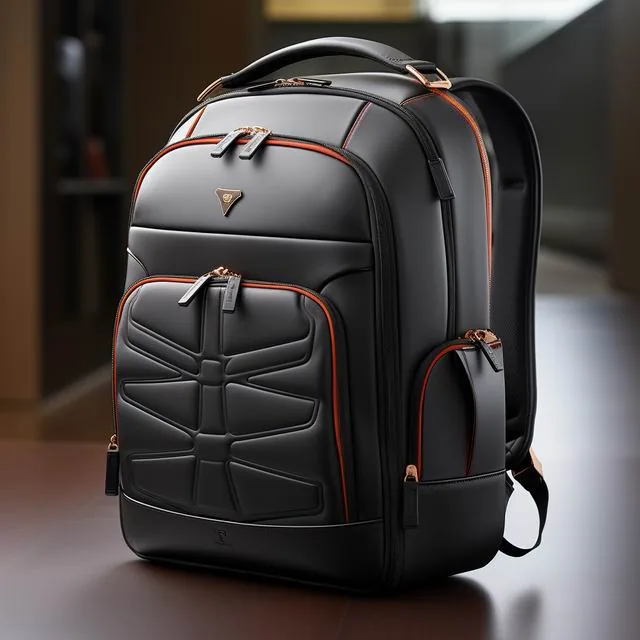
Screen Printing: Mesh Count, Ink Chemistry and Cure
Screen printing pushes ink through a tensioned mesh onto a flat panel. It is the cheapest method per unit at volume and the default for promotional, conference and onboarding bags. It is priced per colour per position, which is why a six-colour logo is a completely different proposition from a one-colour one.
Mesh count governs detail. A 120 mesh lays a thick deposit and suits bold artwork on canvas; a 160 mesh is the general-purpose choice on polyester; a 200 mesh holds detail down to roughly 0.3 mm line weight and is used for fine type. Below that, screen printing stops being the right tool. Halftones are possible to about 45 lines per inch, which is enough for a simple gradient and not enough for a photograph.
Ink chemistry is where prints fail. Plastisol is the workhorse on polyester: it cures at 150 to 160 °C for 60 to 90 seconds, sits on top of the fabric and gives good opacity on the dark navy and black shells most UK corporate buyers specify. Silicone ink gives a softer hand and better stretch on technical shells, and is the right choice on any panel that flexes. Water-based ink penetrates the fibre and feels best on canvas but gives poor opacity on dark nylon. On a PU-coated or TPU-laminated shell, adhesion is the risk: a print that has not been cure-tested on the actual production fabric will crack at the first fold, typically within three months of issue.
Cost runs at £15 to £40 per colour per position for setup, plus £0.08 to £0.30 per unit. A single-colour 100 mm logo at 1,000 pieces therefore lands near £0.14 per unit all-in, while a four-colour version of the same mark lands near £0.40. Registration tolerance is plus or minus 0.5 mm between colours, which is why tight interlocking colour areas should be avoided in the artwork and why trapping is specified at 0.3 mm.
The practical rule is to print before assembly. A flat front panel can be printed quickly and consistently on a platen; printing onto a constructed bag is slower, harder to register and produces more rejects. Build that into the tech pack: specify printing on the cut panel, and the branding arrives aligned and fully cured instead of stretched around a curve.
Heat Transfer: Full-Colour Artwork, Vinyl and Sublimation
Heat transfer covers three quite different technologies that are often quoted as a single line item. CAD-cut vinyl is a single-colour film cut to shape and pressed on: it is cheap, crisp and limited to flat spot colours. Digital print transfer is a CMYK print onto a carrier film pressed onto the panel, and it is the only practical route to a photographic logo, a complex gradient, or artwork with more than four spot colours. Dye-sublimation transfers dye into the polymer itself, works only on polyester with a minimum 65 percent polyester content, and produces a mark with no hand feel at all.
Press parameters matter and should be specified in the tech pack: 150 to 165 °C for 10 to 15 seconds at 2.5 to 3.5 bar for a standard film, with a cold peel for most garment films and a hot peel for some industrial grades. Under-curing produces a mark that lifts at the edge in the first wash; over-curing yellows a white film and can glaze a coated nylon. Every production fabric should be press-tested before the pre-production sample, because coating chemistry is substrate-specific and a film that bonds perfectly to 600D polyester can fail completely on a silicone-finished ripstop.
Cost sits between printing and embroidery: £0.25 to £0.90 per unit, with a low setup of £20 to £50 for a digital transfer and no setup at all for cut vinyl beyond the plotter file. There is no per-colour charge, which is the whole point of using it. Minimum logo size is small, around 15 mm, and fine detail down to 0.5 mm reproduces cleanly, which beats embroidery and roughly matches a 200 mesh screen.
Durability is the trade-off. A quality digital transfer survives 25 to 40 domestic wash cycles and roughly two years of daily commuting before edge lift and crazing appear; embroidery lasts longer and screen printing lasts about the same. Heat transfer should never be placed across a fold, a strap attachment point, or a high-flex zone such as the top of a roll-top closure, because film has no stretch and will crack along the flex line. Place it on a flat front panel or a lid and it performs well for the life of the bag.
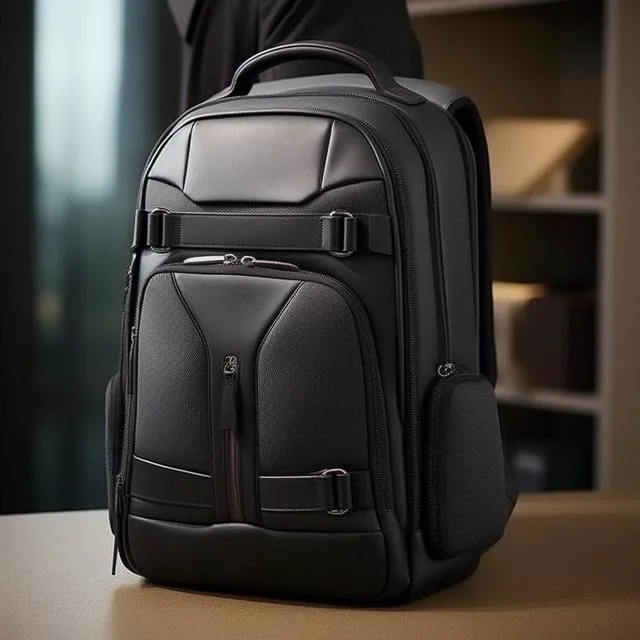
Woven Labels, Metal Badges and Debossed Patches
These three methods carry identity in the object rather than on it, and all three involve loom setup or tooling, which makes them volume decisions rather than per-unit decisions.
A woven label is made on a damask loom from 50 to 100 denier polyester thread, typically 20 to 50 mm wide and 10 to 30 mm tall, sewn into a seam, a strap end or a lining panel. Unit cost is £0.05 to £0.25, but loom setup and the mill minimum usually put the effective minimum at 1,000 to 3,000 pieces per design, which sits above the 500-piece minimum for the bag itself and surprises buyers who assumed one number covers both. Woven labels are effectively permanent, they survive the life of the bag, and they are the standard way to carry a brand wordmark, a fibre composition and a care code in a single place. Minimum letter height is about 2 mm on a damask weave and 1.5 mm on a high-definition weave, which is finer than any other method here.
A metal badge is the premium option. Zinc alloy is the common material, brass and stainless steel the upgrade, and badge weights run 3 to 12 g depending on size and section. Tooling is £150 to £600 for a die-cast or stamped tool, unit cost is £0.60 to £2.50, and attachment is by rivet, screw, or a sewn-on leather or PU mount. Badges go on a front panel, a strap end or a zip puller. The compliance point is nickel: any metal component that contacts skin has to be tested for nickel release under BS EN 1811, against a migration limit of 0.5 micrograms per square centimetre per week for post assemblies and 0.2 for articles in prolonged contact with skin under the UK REACH restriction. Ask for the test report with the pre-production sample rather than after bulk production.
A debossed patch presses the mark into a PU, TPU or leather patch with a heated die at 1.5 to 3 mm depth. Tooling runs £120 to £350, unit cost £0.35 to £1.40, minimum letter height is about 4 mm with a minimum stroke of 1 mm. Debossing reads as understated and premium, it never peels and never fades, and it is the standard choice where a brand wants the mark felt rather than seen. On genuine full-grain leather a blind deboss at 2 mm depth holds its definition across the 10 to 20 year life of the panel, which is longer than any applied mark will last.
Backpack Branding Methods Compared: Cost, MOQ and Durability
The comparison below is the one most buyers actually need, because it collapses six conversations into a single page. Read it alongside your artwork and your substrate, not in isolation: a method that looks expensive in the unit-cost column can be the cheapest option once colour count is factored in, and a method that looks cheap can be impossible on the fabric you have chosen.
Two things the table cannot show. The first is how the mark ages visibly: screen print and heat transfer fail by cracking or edge lift, which looks bad; embroidery and woven labels fail by fading, which looks acceptable; metal and debossed marks essentially do not fail at all. The second is reorder behaviour. Embroidery digitising is paid once and reused, screen print screens are usually re-made after 5,000 impressions, and metal tooling lasts for the life of the design. On a programme that reorders annually, tooling amortised over three years changes the ranking.
| Branding method | Minimum logo size | Setup / tooling (GBP) | Unit cost (GBP) | Effective MOQ | Service life | Best substrate |
|---|---|---|---|---|---|---|
| Embroidery | 5 mm letter height, 1.2 mm stroke | £25-£60 digitising | £0.45-£1.20 | 500 pcs | 50+ industrial washes | 600D polyester, canvas, leather |
| Screen print | 0.3 mm line weight, 15 mm logo | £15-£40 per colour | £0.08-£0.30 | 500 pcs | 25-40 washes | Flat polyester and nylon panels |
| Heat transfer | 15 mm logo, 0.5 mm detail | £20-£50 digital | £0.25-£0.90 | 500 pcs | 25-40 washes, ~2 years daily | Flat low-flex panels |
| Woven label | 2 mm letter height | Loom setup included | £0.05-£0.25 | 1,000-3,000 pcs per design | Life of the bag | Seam, strap end, lining |
| Metal badge | 3 mm relief detail | £150-£600 tooling | £0.60-£2.50 | 500 pcs | Life of the bag | Front panel, zip puller, strap end |
| Debossed patch | 4 mm letter height, 1 mm stroke | £120-£350 die | £0.35-£1.40 | 500 pcs | 10-20 years on leather | Leather, 1.2 mm PU, TPU |
Worked example for a UK corporate programme of 2,000 units with a two-colour 70 mm logo on a 600D recycled polyester shell. Embroidery: £45 digitising plus roughly £0.75 per unit, so £1,545 total. Screen print: £30 setup per colour plus roughly £0.14 per unit, so £340 total. Heat transfer: £35 setup plus roughly £0.55 per unit, so £1,135 total. On a pure cost basis screen print wins by a wide margin; because the brief specified a premium look and a five-year service life, embroidery was specified and the £1,200 difference was accepted as roughly £0.60 per bag on a £24 unit.
Fabric and Substrate Compatibility: What Each Method Can Mark
Substrate is the constraint that eliminates methods fastest, and it should be resolved before artwork is finalised rather than after. The rule of thumb is simple: textured woven fabric takes everything, coated or laminated fabric takes applied and pressed marks but not needle work, and stretch or open-mesh fabric takes almost nothing except a label.
Needle work and waterproofing are in direct tension. A standard embroidery needle leaves a hole roughly 0.6 to 0.9 mm across, and a 9,000-stitch crest leaves several thousand of them. On an uncoated 600D polyester that is irrelevant. On a TPU-laminated shell rated to a 3,000 mm hydrostatic head it is the difference between a waterproof bag and a shower-resistant one. Where the brief demands both, the answer is a separate embroidered patch applied with a perimeter stitch outside the critical area, or a high-frequency welded patch, both of which keep the laminate intact.
Coatings also change print and transfer chemistry. A durable water-repellent finish is a fluorocarbon or silicone treatment applied to the face fabric, and its whole job is to stop things sticking to it. Screen print inks and heat transfer films are precisely the things it is designed to repel. Production practice is either to specify a print-receptive finish on the branding panel, or to pre-treat the panel, or to move the mark to an untreated trim such as a webbing strap end or a woven label. Testing adhesion on the actual coated fabric is not optional.
| Substrate | Embroidery | Screen print | Heat transfer | Woven label | Metal badge | Debossed patch |
|---|---|---|---|---|---|---|
| 600D recycled polyester | Excellent | Excellent | Good | Excellent | Good | N/A |
| 840D nylon, TPU laminate | Caution: needle perforates laminate | Caution: adhesion test needed | Caution: coating-specific film | Excellent | Excellent | Excellent |
| 1680D ballistic nylon | Good, needle deflection risk | Good | Good | Excellent | Excellent | N/A |
| 210D ripstop lining | Poor: puckers | Poor: show-through | Good | Excellent | Poor | N/A |
| Cotton canvas 12 oz | Excellent | Excellent | Good | Excellent | Good | Caution |
| Full-grain leather 1.4 mm | Good with leather needle | Poor: cracks at fold | Poor | Good in seam | Excellent | Excellent |
| 1.2 mm PU / TPU | Caution | Caution | Good | Good | Excellent | Excellent |
| Spacer mesh / air mesh | Poor | Poor | Good on tape | Good | Poor | N/A |
Where the table says "caution", the practical next step is a physical adhesion or perforation test on the production fabric before the pre-production sample is built. Our vetted partner facilities run this as part of sampling and will report a pass or fail against a defined tape test, which is far cheaper than discovering incompatibility at inspection.
Artwork, Minimum Sizes and Placement Rules
Most branding problems are artwork problems that were never caught. Send vector files in AI, EPS or SVG with all fonts converted to outlines, plus a PDF proof and a note of the maximum and minimum permitted size. A JPEG lifted from a website has to be redrawn, and redrawing adds three to five working days before sampling can even start. Supply a one-colour version as well, because every method here has a cheaper single-colour variant and you may want it once you see the quote.
Placement is a design decision with a manufacturing consequence. Marks should sit on flat, low-flex panels, away from seam lines, strap attachment points and fold lines. A logo positioned 10 mm from a bound seam will be distorted by the seam allowance; one positioned across a strap root will crack or pucker within months. Keep a 12 mm clearance from any seam and a 15 mm clearance from any strap attachment bar-tack.
| Placement position | Typical max logo area | Recommended method | Why |
|---|---|---|---|
| Front lower panel | 80 x 50 mm | Embroidery or metal badge | Flat, high visibility, no flex |
| Front upper lid | 60 x 30 mm | Embroidery, heat transfer | Eye level on a desk or luggage rack |
| Shoulder strap | 25 mm wide repeat | Woven label or embroidery | Only flat webbing takes a mark cleanly |
| Zip puller | 20 x 12 mm | Metal badge | Moulded or cast into the hardware |
| Side gusset | 40 x 40 mm | Screen print | Curved, so print beats embroidery |
| Interior lining | 50 x 30 mm | Woven label | Carries brand plus care and fibre data |
| Back panel | Not recommended | None | Contacts the body, causes wear and discomfort |
Size discipline matters more than buyers expect. The most common error is specifying a logo too large, which increases cost, adds weight and reads as promotional rather than premium. On a 25-litre commuter pack with a 300 x 200 mm front panel, a 60 x 35 mm mark is proportionate; 100 x 60 mm looks like a giveaway bag. The second most common error is specifying it too small to reproduce: a 20 mm wordmark with 2 mm letters cannot be embroidered and will not screen print legibly either, so it becomes a woven label job whether or not that was intended.
Finally, define the tolerance. Branding placement tolerance on a soft-goods product is plus or minus 3 mm, and it goes into the tech pack alongside the dimensional tolerance of plus or minus 5 mm on panels up to 300 mm. Without those numbers written down, a 3 mm offset becomes a rejection argument at pre-shipment inspection rather than a conversation.
Colour Fastness and Durability Testing: AATCC, ISO and BS EN Standards
A branded mark has to survive washing, rubbing, light and abrasion, and each of those has a published test that a British buyer can specify by number. Naming the standard in the tech pack is what turns "it should not fade" into something testable.
Colour fastness to washing is measured by AATCC 61, which runs accelerated laundering at 40 °C with a defined detergent and reports a grey-scale rating from 1 to 5. A rating of 4 or better after five cycles is the normal commercial requirement for a branded panel, and 4-5 for a mark on a dark shell where any fade shows. Colour fastness to crocking, meaning transfer onto another surface through rubbing, is AATCC 8, and it is the test that catches an under-cured screen print, because uncured ink rubs off onto a white cuff or a shirt collar. Light fastness for a bag displayed in a British shop window is AATCC 16 or the ISO 105-B02 xenon-arc method.
Abrasion resistance of the shell itself is measured by the Martindale method in ISO 12947, reported in cycles to breakdown. A 600D polyester workhorse shell typically reaches 20,000 to 30,000 cycles, an 840D nylon 40,000 to 60,000, and a 1680D ballistic nylon 80,000 or more. A branded patch that outlasts the fabric around it is a specification failure, not a success, because it leaves a clean rectangle on a worn bag.
Nickel release from any metal badge, rivet or zip puller is tested to BS EN 1811, which BSI publishes through its standards catalogue, against the migration limits given above. If a bag carries a power bank, an LED module or a heated panel as well as branding, the electrical component has its own conformity obligations and the assembled product inherits them, so the branding specification and the component specification have to be reviewed together.
What Backpack Branding Actually Costs: Setup, Unit and Tooling
Branding cost decomposes into three lines, and confusing them is what makes quotes look inconsistent. Setup is a one-off charge covering screens, digitising files, plotter files and press trials. Tooling is a one-off charge for a physical tool: a die-cast mould, a stamping die, a deboss die or a custom zip puller. Unit cost is the per-bag charge for applying the mark.
On a 500-piece order, setup and tooling dominate. A metal badge at £400 tooling plus £1.40 per unit costs £1,100 across 500 pieces, which is £2.20 per bag; the same badge across 3,000 pieces costs £1.53 per bag. Screen print at £30 per colour setup plus £0.14 per unit costs £0.20 per bag at 500 pieces and £0.15 at 3,000. This is why the answer to "which method is cheapest" is always "it depends on volume": below about 1,000 pieces, avoid tooling; above 3,000 pieces, tooling becomes cheap per unit and the premium methods become competitive.
The standard commercial minimum for a bespoke branded programme is MOQ 500 pcs per colourway. That number is set by the fabric mill minimum for a custom-dyed lot and by the trim supplier's minimum for branded hardware, not by the branding method itself, though woven labels carry their own higher mill minimum of 1,000 to 3,000 pieces per design. If your requirement is genuinely below 500 pieces, the right answer is a stock bag with a branding application rather than a bespoke construction, and screen print or heat transfer are the two methods that work at that level.
Put branding into the landed-cost model, not beside it. On a bag that lands at £18 per unit FOB Xiamen, a £0.75 embroidered mark is 4 percent of unit cost but a visible part of perceived value; a £1.40 metal badge is 8 percent and can support a £12 retail price increase. Branding is one of the few specification lines where spending more returns more than it costs, and it is the line a UK buyer sees first on the shelf.
Sampling, Lead Times and Quality Control for Branded Backpacks
Standard programme parameters for a branded backpack run through our production team are: MOQ 500 pcs per colourway, sampling 6-10 working days for a conventional construction, bulk production 35-50 days from pre-production approval, and pre-shipment inspection to AQL 2.5 (ISO 2859-1). A complex build with custom hardware, a moulded badge or a welded pocket pushes sampling to 12 to 15 working days. Those numbers start from confirmed artwork, confirmed materials and a signed tech pack, and they exclude express courier time of 3 to 5 working days to a UK address.
Sampling has three distinct rounds and it is worth knowing what each is for. A prototype answers whether this is the right bag, and it may be built in a substitute colourway. A revision sample answers whether your comments were understood. A pre-production sample is built on the production line from bulk-booked materials with the final branding method, and once signed off it becomes the reference the bulk order is inspected against. Branding should be reviewed on the pre-production sample specifically, because that is the first time the mark is applied with the production film, ink or thread onto the production fabric.
Inspection is where branding defects are caught, and they are the most commonly disputed category. A misaligned logo is normally a major defect: the customer notices it and may return the bag. A logo applied in the wrong position is also major. A thread tail of 3 mm or a minor ink speck outside the design area is minor. Colour shade variation against an approved swatch is the hardest one, because it is judged against a physical reference rather than a number, which is exactly why the approved swatch card should be attached to the pre-production sample and held by both sides.
Acceptance quality is a statistical threshold, not a promise of zero defects. AQL is defined in ISO 2859-1 and AQL 2.5 is the normal commercial level for bags. At general inspection level II a 3,000-piece order draws a 125-unit sample with 7 defects allowed for acceptance and 8 triggering rejection. Branding defects are typically 15 to 25 percent of all defects found on a first run, so specifying a zero-critical and a tighter-major rule for branding specifically, rather than relying on the general AQL, is worth the small extra inspection time.
Branding Compliance for the UK Market: Labelling, REACH and Country of Origin
Compliance sits with the economic operator placing the product on the Great Britain market, which for a British brand importing its own bags is the brand itself. An overseas production base can supply test reports and a technical file, but it cannot assume the importer's legal duty. Three regimes touch a branded backpack.
The first is product safety and conformity marking. A plain backpack generally sits outside the UKCA sector regulations, but a regulated component changes that: a power bank, an LED module, a heated panel or a radio device each carries its own obligations and the assembled product inherits them. Where marking does apply, the government's UKCA marking guidance sets out the technical file, the declaration of conformity and the marking requirements, and the regime for goods imported into Great Britain is explained in the guidance on placing UKCA or CE marked products on the market. Check scope before you place the order, not after the container ships.
The second is chemicals. UK REACH restricts certain substances in articles, and for soft goods and branded hardware the provisions that bite are the restrictions on azo dyes that can release listed aromatic amines, on certain flame retardants, on formaldehyde in resin-finished textiles, and on nickel release from metal components. Screen print inks are the usual source of a non-compliant result, because phthalate plasticisers and certain pigments sit in older plastisol formulations. Ask for a formulation declaration from the ink supplier and a test report against the restricted substance list.
The third is labelling. A textile product sold in Great Britain needs a durable, legible fibre composition label identifying the composition and the responsible economic operator, and the woven label is the natural place to put it: one component, one operation, one permanent mark. Branding artwork should therefore be reviewed alongside the compliance label, not separately, because the two compete for the same small area on the same panel and a late change to one forces a late change to the other. Full requirements are set out in the government's textile labelling guidance for business.
Frequently Asked Questions
What is the best branding method for a backpack?
Embroidery for most British corporate programmes on woven fabric, screen printing for bold flat artwork above 500 pieces, and heat transfer for full-colour or photographic logos. Woven labels suit small wordmarks, metal badges suit premium retail, debossed patches suit leather and PU.
What is the minimum logo size for embroidery on a backpack?
A 5 mm capital letter height with a 1.2 mm minimum stroke. Below 4 mm the fill stitches crowd together and the letter closes up. Gradients cannot be embroidered, and detail below 3 mm should be removed from the artwork before digitising.
How much does backpack embroidery cost per unit?
£0.45 to £1.20 per unit depending on size and stitch count, plus a one-off digitising charge of £25 to £60 per design. A 40 mm wordmark at about 2,500 stitches sits at the lower end; an 80 mm crest at 9,000 stitches at the upper end.
How much does screen printing cost on a backpack?
£15 to £40 setup per colour per position, plus £0.08 to £0.30 per unit. A single-colour 100 mm logo at 1,000 pieces lands near £0.14 per unit all-in; a four-colour version of the same mark lands near £0.40.
Can you print a full-colour or photographic logo on a backpack?
Yes, with heat transfer, which is the only practical route to gradients and photographic artwork. Specify it on flat, low-flex panels only, and press-test adhesion on the actual production fabric because coating chemistry is substrate-specific.
What is the minimum order quantity for branded backpacks?
MOQ 500 pcs per colourway is the standard commercial minimum. Woven labels carry their own higher mill minimum of 1,000 to 3,000 pieces per design. Below 500 pieces, a stock bag with a branding application is usually the right answer.
Does MOQ apply per colourway or per order?
Per colourway. An order of 1,500 bags across three colourways is three production runs of 500 and is priced accordingly. A single shell colour with different lining, zip tape or branding changes trim rather than the dye lot and is cheaper.
How long does sampling take for a branded backpack?
Sampling 6-10 working days for a conventional construction, 12 to 15 working days for a complex build with custom hardware, a moulded badge or a welded pocket. Add 3 to 5 working days express courier to a UK address.
What is the bulk production lead time?
Bulk production 35-50 days from pre-production sample sign-off. A 500-piece run typically completes in 35 to 40 days; a 3,000-piece run with a custom dye lot takes 40 to 50 days. Material booking, not sewing capacity, usually governs the window.
What is a pre-production sample and why does branding depend on it?
It is built on the production line from bulk-booked materials with the final branding method, and once signed off it becomes the reference the bulk order is inspected against. It is the first time the mark is applied with production film, ink or thread onto production fabric.
How is branding quality controlled before shipment?
Inline checks during cutting and sewing plus a pre-shipment inspection to AQL 2.5 (ISO 2859-1). Branding defects are typically 15 to 25 percent of all defects on a first run, so a zero-critical and tighter-major rule for branding is worth specifying.
What does AQL 2.5 mean for logo defects?
AQL is the acceptance quality limit defined in ISO 2859-1 and AQL 2.5 is the normal commercial level for bags. At general inspection level II a 3,000-piece order draws a 125-unit sample with 7 defects allowed. A misaligned logo is normally a major defect.
Which fabric can and cannot be embroidered?
600D polyester, canvas and leather take embroidery well. A TPU laminate does not, because the needle perforates the waterproof layer: use a separate embroidered patch applied after lamination instead. Spacer mesh puckers and 210D ripstop lining is too light.
Will screen print crack on a coated nylon backpack?
It will if it has not been cure-tested on the production fabric. Plastisol cures at 150 to 160 °C for 60 to 90 seconds but adhesion on a PU or TPU coating is substrate-specific. Silicone inks give better stretch on technical shells.
How long does a heat transfer logo last?
25 to 40 domestic wash cycles, roughly two years of daily commuting, before edge lift and crazing appear. Embroidery lasts longer. Never place film across a fold, a strap attachment or a roll-top closure, because it has no stretch and will crack.
How much does a metal badge cost and what does it weigh?
£150 to £600 tooling plus £0.60 to £2.50 per unit, with badge weights of 3 to 12 g depending on size and section. Zinc alloy is standard, brass and stainless the upgrade. Attachment is by rivet, screw or a sewn-on mount.
Do metal badges need nickel testing for the UK?
Yes. Any metal component contacting skin must be tested to BS EN 1811 against a migration limit of 0.5 micrograms per square centimetre per week, or 0.2 for prolonged skin contact, under the UK REACH restriction. Request the report with the pre-production sample.
What artwork format should I send for backpack branding?
Vector files in AI, EPS or SVG with fonts converted to outlines, plus a PDF proof and maximum and minimum permitted sizes. A website JPEG has to be redrawn, which adds three to five working days before sampling can start.
Where should a logo be placed on a backpack?
On flat, low-flex panels with a 12 mm clearance from any seam and 15 mm from any strap bar-tack. Typical areas are 80 x 50 mm on the front lower panel, 60 x 30 mm on the lid, 25 mm on webbing and 20 x 12 mm on a zip puller.
Does branding affect UKCA or UK REACH compliance?
It can. A plain backpack is generally outside the UKCA sector regulations, but a power bank, LED or heated panel brings the assembled product into scope. Screen print inks are a common source of non-compliant substances under UK REACH, so ask for a formulation declaration.
Get a Free Quote for Custom Backpack Branding
Planning a branded programme? Our production team works to MOQ 500 pcs, 6-10 working day sampling and 35-50 day bulk lead times, with AQL 2.5 inspection to ISO 2859-1. Send your brief and we will return a costed quotation in 24-48 hours.
Mens Backpack Guide Editorial Team — Buying guides and sourcing notes for the UK men's backpack market, coordinated by QUANZHOU JUNYUAN BAGS. Commercial figures such as MOQ 500 pcs, 6-10 day sampling and 35-50 day production reflect published programme terms.