British Airways Cabin Bag Backpack Guide: Sizer, Weight and Packing Method
British Airways permits one cabin bag up to 56 x 45 x 25 cm and one personal item up to 45 x 36 x 20 cm, each capped at 23 kg. The sizer, not the scales, is what catches travellers out: a 40-litre travel pack with an overstuffed front panel bulges past 25 cm and fails, while the same bag cinched with four compression straps passes with centimetres to spare. This guide sets out the numbers, the geometry of the sizer, and the packing sequence that keeps a backpack inside both limits.
It also covers what to specify if you are a brand or buying team developing a cabin-size pack for resale: the fabric, zip and harness specifications that survive an involuntary hold transfer when the overhead bins fill up, and the commercial parameters that govern a private-label cabin programme. QUANZHOU JUNYUAN BAGS has coordinated programmes of this kind since 2014, working with a 4,950 m² SGS-verified production floor space, 137 colleagues and 7 production lines.
British Airways Cabin Allowance: The Numbers That Matter
British Airways publishes one of the more generous hand baggage allowances of any European full-service carrier. Each passenger may carry one cabin bag measuring up to 56 x 45 x 25 cm, including handles, wheels and external pockets, plus one personal item of up to 45 x 36 x 20 cm, with each piece capped at 23 kg. Neither piece attracts a charge on standard Economy fares. Multiply the main cabin bag dimensions and you get an idealised 63 litres of rectangular space, which is roughly 20 litres more than most travellers can usefully fill. That gap matters, because the binding constraint on a British Airways flight is almost never the scales. It is the rigid sizer at the gate and the finite volume of the overhead bin, and both punish a soft bag that has been overpacked rather than a heavy bag that has been packed carefully.
The 23 kg figure also deserves a reality check. A typical 40-litre travel backpack carrying seven days of clothing, a wash kit and a 14-inch laptop lands between 8 and 11 kg. To reach 23 kg you would need deliberately dense, non-compressible cargo: tools, camera bodies, hardback textbooks or several litres of liquid. The weight limit is therefore an allowance most travellers will never approach, and chasing it makes the bag unpleasant to carry through a terminal. Plan for volume first and weight second. If your pack sits at 9 or 10 kg and measures roughly 54 x 34 x 22 cm when packed, you have cleared both tests with margin in hand and without having to gate-check anything.
| Piece | Maximum size | Maximum weight | Backpack equivalent |
|---|---|---|---|
| Cabin bag | 56 x 45 x 25 cm | 23 kg | 38-45 litre travel pack |
| Personal item | 45 x 36 x 20 cm | 23 kg | 18-25 litre daypack |
| Hold bag | 90 x 75 x 43 cm | 23 kg | Not relevant to carry-on |
Specification sheets quote empty dimensions. A pack listed at 22 cm deep routinely reaches 28-30 cm once the front panel is stuffed. Measure four points at home: height, width, depth at the base and depth at the widest midpoint.
Why Volume Fails Long Before Weight Does
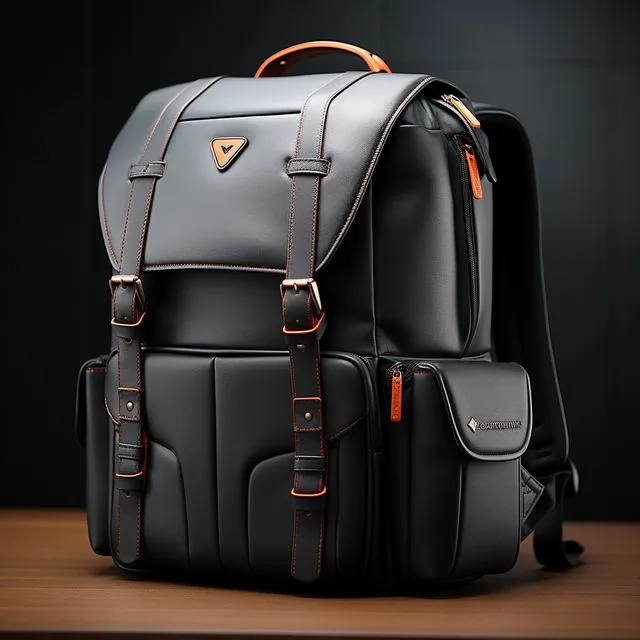
The gate sizer is a welded box with no tolerance. A soft backpack either drops into it under its own weight or it does not, and the difference is usually three or four centimetres of depth created by an overstuffed front pocket, a rolled jacket shoved under a lid, or a pair of trainers packed heel-out. Framed travel packs behave differently: an internal alloy stay holds the panel flat, so the bag cannot cheat the sizer even when under-filled, but it also cannot bulge unexpectedly. Frameless packs are the opposite in both respects. Understanding which behaviour your bag has tells you whether packing discipline or purchase choice is the fix, and it is worth establishing at home with a tape measure rather than in front of a gate agent.
Packing density explains the rest. Five kilograms of folded cotton clothing occupies roughly 25 to 30 litres; rolled and compressed in cubes the same kit falls to 20 to 25 litres. Footwear and wash kits are dense at around 1.5 to 2.5 litres per pair of trainers and 1.5 litres for a wash bag, while fleece mid-layers are the volume hogs at 4 to 6 litres each. This is why a 40-litre pack can feel cavernous on a summer trip and impossible on the same trip in February. The practical method is to pack the dense items first, seat them low and against the back panel, then fill the remaining voids with compressible clothing rather than letting clothing form a dense core that pushes outward against the panel.
- Depth is the dimension that fails; 25 cm is tight once a front pocket is stuffed
- Four compression straps typically recover 3-5 cm of depth
- Framed packs hold their shape and fail predictably; frameless packs bulge
- Dense items first, compressible items last keeps the profile flat
There is a second-order effect worth noting. Bags that pass the sizer but are visibly straining tend to attract attention from gate staff, who are trained to look for luggage being forced into the frame rather than dropped into it. A pack that slides in cleanly with a visible gap at the top invites no comment even if it is objectively close to the limit. This argues for buying slightly under the allowance rather than right up against it. A 38-litre pack measuring 52 x 32 x 21 cm passes unremarked on every flight; a 45-litre pack at 56 x 35 x 25 cm passes only when packed perfectly, and will be questioned on the one trip where it is not.
The Sizer, the Gate and the Overhead Bin
Gate checks happen when a flight is full and the crew need to reduce carry-on volume. On short-haul narrow-body aircraft the overhead bins are sized for roll-aboard cases, and once four or five are stowed sideways there is little room left for soft bags. Passengers boarding in later groups are the ones who lose their luggage, which is why the practical advice on a British Airways short-haul flight is not only about dimensions. It is about keeping the items you cannot afford to lose inside the smaller personal item, because the larger cabin bag is the one that gets tagged and placed in the hold. Assume this will happen roughly one flight in six on a full summer rotation and plan the split accordingly.
The consequences of a hold transfer are mechanical rather than dramatic. Backpacks travel badly on a baggage belt: shoulder straps and load lifters snag in the belt joins, webbing abrades against the rubber, acetal buckles take point impacts from harder cases, and coated fabric scuffs at the corners. Makers who test for this scenario use a harness stow system or a simple cover that draws over the back panel and straps. If your bag has no such system, a large packing-cube liner combined with a cheap cover gives most of the protection. What may be carried in the cabin and through security is set out in the official UK guidance at gov.uk hand luggage rules, which is the reference gate staff work from.
- Keep passport, medication, laptop and any camera body in the 45 x 36 x 20 cm item
- Clip the hip belt behind the panel and tuck all webbing before a hold transfer
- Photograph the bag before it is tagged; claims are far easier with an image
- Allow an extra 20-30 minutes at the carousel if the bag was gate-checked
Backpack Shape Against the Sizer
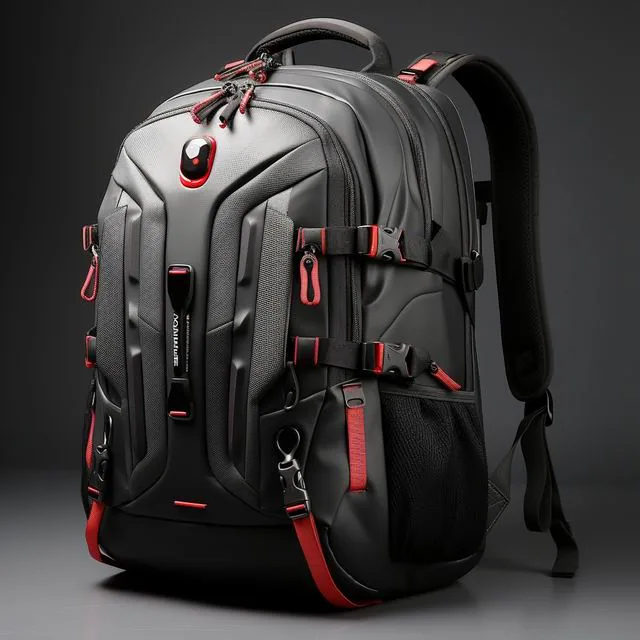
Panel-loading travel packs suit a 56 x 45 x 25 cm allowance best because they open flat, pack square and hold a rectangular profile. Top-loaders gain a little in weight efficiency but form a barrel shape that wastes the corners of the sizer and pushes depth outward as they fill. Roll-top packs are the most forgiving of all at the gate, since the closure can be dropped one or two rolls to lose 6 to 10 cm of height when bin space is tight, but they tend to run deeper than a panel-loader for the same stated volume. Externally, avoid daisy chains, ice-axe loops and bulky side pockets on a cabin pack; each one adds centimetres to a dimension that is already close to its limit.
Within the three dimensions, depth is the one to fight for. Most 40-litre travel packs measure 20 to 24 cm deep when empty and 27 to 31 cm once the front compartment is loaded, so a pack shipping at 22 cm has roughly three centimetres of tolerance and a pack shipping at 25 cm has none. Four compression straps, two per side, are more effective than two, because they control the waist of the bag as well as the ends. Look for hardware that releases cleanly under load rather than ladderlocks that slip at exactly the moment you need them to hold, and check that the straps sit over the panel rather than around a pocket, which is a common and frustrating design shortcut.
| Pack type | Empty depth | Packed depth | Sizer outcome |
|---|---|---|---|
| Panel-loader 40L | 21-23 cm | 26-29 cm | Passes with straps cinched |
| Top-loader 40L | 23-26 cm | 29-33 cm | Fails when full |
| Roll-top 40L | 18-22 cm | 24-28 cm | Passes, height adjustable |
| Framed 45L trek | 26-30 cm | 30-34 cm | Usually fails |
A Weight Budget That Actually Holds
Working to a budget by category is more reliable than packing by feel. For a seven-day short-haul trip in a 40-litre pack, allocate roughly 3.5 kg to clothing, 1.2 kg to footwear, 0.8 kg to the wash kit and 0.6 kg to documents, cables and small electronics. The laptop and charger add 1.6 to 2.2 kg and the empty pack itself 1.1 to 1.6 kg, putting total mass at 9 to 11 kg. The point of the exercise is not to hit 23 kg; it is to stay far enough below it that the bag remains comfortable to carry for the 25 to 40 minutes of walking most terminals demand between check-in, security and the gate.
| Category | Budget weight | Typical volume |
|---|---|---|
| Empty pack | 1.1-1.6 kg | n/a |
| Clothing for 7 days | 3.0-4.0 kg | 18-24 litres |
| Footwear | 0.9-1.4 kg | 3-5 litres |
| Wash kit, 100 ml liquids | 0.6-0.9 kg | 1.5-2.5 litres |
| Laptop and cables | 1.6-2.2 kg | 2-3 litres |
Two habits improve the result. First, wear the heaviest items through the terminal: a jacket, walking shoes and jeans carried on the body weigh nothing as far as the allowance is concerned, and removing 1.5 kg from the pack makes a measurable difference to shoulder pressure. Second, use packing cubes sized to the pack's internal width rather than to the clothing; a cube that is 2 cm too wide forces the panel into a curve and costs the depth tolerance you worked for. Roll soft items, fold structured ones, and compress the cubes before they go in. The aim is a flat, dense load sitting close to the back panel, which is also the configuration that carries best once you leave the terminal.
Security, Liquids and the Laptop
UK airport security applies the standard liquids rule: containers of no more than 100 ml, carried together in a single transparent resealable bag of about one litre capacity, with one bag per passenger. Large electronics, normally laptops and tablets, are removed from bags and placed in a separate tray at most UK airports, though a growing number of scanners allow devices to stay packed. The practical implication for a backpack is layout, not compliance. A bag that forces you to unload the main compartment to reach the liquids bag and the laptop costs three or four minutes at the tray table and creates the chance of leaving something behind. Design the load around two externally reachable pockets and the problem disappears.
The best cabin-pack layout puts the laptop in a rear-access sleeve that opens flat away from the back panel, so the device comes out without touching the main compartment, and puts the liquids bag in a top or front pocket that can be lifted one-handed while the pack stays upright. Keep cables and the power bank in the same pocket as the laptop so there is one movement at security rather than three. Power banks stay in the cabin and never in a gate-checked bag, so they belong in the personal item by default. Full official detail, including the rules on sharp objects and restricted items, is maintained at gov.uk and is worth checking before any flight carrying unusual kit.
- Liquids: 100 ml containers in one transparent resealable bag of about 1 litre
- Laptops and large tablets out at most UK security lanes
- Power banks travel in the cabin only, never in a hold-checked bag
- Rear-access laptop sleeve plus a top pocket removes the need to unpack
Carrying the Bag Once It Is Full
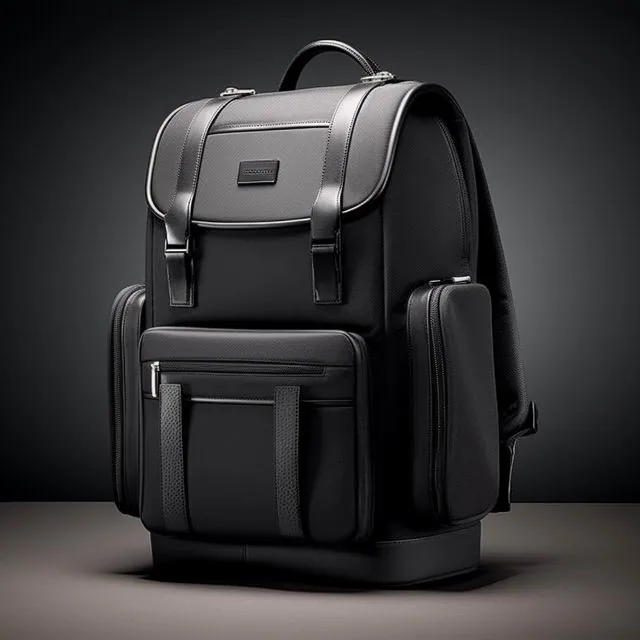
Twenty-three kilograms is a handling limit, not a carrying recommendation. Manual handling guidance used across UK workplaces treats loads above roughly 10 to 15 per cent of body weight as a risk factor when carried on the back for extended periods, which for an 80 kg man suggests 8 to 12 kg as a sensible working ceiling rather than 23 kg. The framework and the assessment charts used by employers are published by the Health and Safety Executive at hse.gov.uk. A traveller lifting a 12 kg pack from a carousel and then walking 800 m with it is doing something closer to a workplace manual handling task than to a stroll, and the same load-transfer principles apply: hip belt first, shoulder straps second, load lifters last.
Specification follows from that. Shoulder straps on a pack carrying 10 kg or more should be 60 to 75 mm wide with 8 to 12 mm of closed-cell foam, tapering to 45 to 50 mm where they meet the shoulder. The hip belt should be 40 to 70 mm wide and stiff enough to sit on the iliac crest without folding, because a belt that rolls under load transfers nothing. Load lifters should run at roughly 45 degrees from the top of the shoulder strap to the pack body; shallower than 30 degrees and they pull the straps off the shoulder, steeper than 60 degrees and they simply lift the panel. Sternum straps belong 30 to 50 mm below the collarbone with at least 80 mm of vertical adjustment.
Fabric, Zips and Hardware That Survive the Hold
Abrasion resistance is the specification most often omitted from a cabin pack and the one most likely to matter if the bag is gate-checked. The reference method is ISO 12947, the Martindale abrasion test, where a base panel in 600D polyester with a polyurethane backing should be specified at 20,000 cycles or more under a 12 kPa load before two yarn breaks. Tensile strength on the same fabric is normally verified to ASTM D5034 for grab tensile strength, with a working target of 600 N or above in the warp direction for a load-bearing cabin pack. Panels that only ever meet the overhead bin never approach these limits, which is precisely why they are specified.
| Component | Specification | Why it matters |
|---|---|---|
| Main fabric | 600D polyester, PU backed, 20,000 cycles ISO 12947 | Resists conveyor and belt abrasion |
| Base panel | 900D or 1680D reinforcement | Takes point loads when set down |
| Main zips | YKK #8 or #10 coil, reverse coil preferred | Handles overpacking without bursting |
| Buckles | Acetal (POM) side release, 25 mm | Survives impact without cracking |
| Webbing | 25 mm polyester, 500-900 kg MBS | Load margin on harness and straps |
Hardware choice follows the same logic. Reverse-coil zips with a #8 or #10 chain resist the outward pressure of an overpacked panel far better than a #5, and a lockable slider on the main compartment allows the bag to be secured with a small padlock during a hold transfer. Acetal buckles are quieter and more impact-tolerant than nylon at low temperatures, which is relevant if the bag rides in an unpressurised hold. Finally, check stitch density on harness attachment points: 7 to 9 stitches per 25 mm with a box-tack or bar-tack at every strap root, verified against sampling plans drawn from ISO 2859-1 at inspection rather than assumed from a specification sheet.
Speccing a Cabin-Size Pack for Your Own Label
Developing a cabin-size pack for resale is a geometry exercise before it is a costing exercise. The commercial baseline for a private-label programme is a MOQ of 500 pcs per style and colourway, sampling in 6-10 working days for a conventional build and 12-15 working days where the construction is complex, and bulk production of 35-50 days from sample approval. Inspection is normally agreed at AQL 2.5 under ISO 2859-1, with shipments quoted FOB Xiamen on T/T 30/70 terms. Where a brand wants a pack to sit just under a 56 x 45 x 25 cm limit, the tolerance on packed depth has to be written into the tech pack rather than left to the sampling stage, because a 2 cm change to a gusset is a different bag.
QUANZHOU JUNYUAN BAGS is a sourcing and programme-management company established in 2014, coordinating production across a 4,950 m² SGS-verified production floor space with 137 colleagues and 7 production lines. In practice that means the tech pack, the bill of materials, the sampling rounds and the inspection protocol are managed as one sequence rather than handed between parties. For a cabin pack the decisions that move cost most are the frame, the zip gauge and the harness foam; the decisions that drive returns are strap geometry and the packed-depth tolerance. Getting the second list right is usually worth more than shaving a few pence off the first.
Frequently Asked Questions
What size backpack can you take on British Airways as cabin baggage?
The main cabin bag allowance is 56 x 45 x 25 cm including handles, wheels and external pockets, up to 23 kg. A backpack with an empty footprint of 52-55 cm tall, 32-35 cm wide and 20-24 cm deep will normally pass. Anything above 56 cm tall or 25 cm deep when packed is at risk. Cinch the compression straps before the gate; four straps usually recover 3-5 cm of depth.
Can I take a 40-litre backpack as cabin baggage on British Airways?
In most cases, yes. A typical 40-litre panel-loading travel pack measures 52-55 x 33-35 x 20-23 cm empty, which sits inside the 56 x 45 x 25 cm limit with room to spare. Loaded to 9-11 kg it should drop into the sizer. The risk is a front compartment stuffed to bulging, which can push depth to 28-30 cm and cause a fail.
Does British Airways weigh cabin bags at the gate?
Rarely. Staff focus on the sizer because bin volume, not aircraft mass, is the operational problem. The 23 kg limit exists for handling safety and is enforced mainly at check-in desks where a bag is clearly heavy. If you can lift it comfortably with one hand into the sizer, weight is almost never the issue on a British Airways short-haul flight.
What counts as the smaller personal item on British Airways?
The personal item allowance is 45 x 36 x 20 cm and covers a laptop bag, handbag, camera bag or small rucksack. An 18-25 litre daypack usually fits. This is the piece that stays with you if the larger bag is taken at the gate, so passport, medication, laptop, camera body and power bank belong here rather than in the cabin bag.
Will a backpack with a hip belt fit the British Airways sizer?
Usually yes, once the belt is unclipped and folded behind the back panel. Hip belt wings project 20-40 mm on each side and will jam against the frame if left hanging. Fold them flat, tuck the webbing under the panel and cinch the compression straps. Framed packs with a fixed hip belt are the exception and should be measured before you buy.
Can I take a 60-litre backpack on British Airways?
No. A 60-litre travel or trekking pack typically stands 65-72 cm tall, which exceeds the 56 cm height limit before any other dimension is considered. There is no overflow allowance and the sizer has no tolerance. Either check the bag into the hold or drop to a 38-45 litre cabin pack plus a 20-litre packable day bag for excursions at the other end.
Is a backpack better than a cabin suitcase on British Airways?
A backpack wins on stairs, cobblestones, tram stops and the walk from a regional rail station, and it stows sideways in a full bin more easily. A wheeled cabin case wins if you are carrying more than 12 kg, since rolling beats carrying over long terminal distances. For most short-haul city trips under 10 kg, a soft backpack is the better tool.
What happens if my backpack is gate-checked by British Airways?
The bag is tagged at the gate, placed in the hold and delivered to the arrivals carousel. Allow an extra 20-30 minutes. Expect scuffing on coated panels, abrasion on webbing where it contacts the belt and possible buckle damage. Photograph the bag first, draw a cover over the harness if you have one, and keep valuables in your personal item.
Can I take liquids in my British Airways cabin backpack?
Yes, within the standard UK rule: containers of 100 ml or less, carried together in a single transparent resealable bag of roughly one litre, one per passenger. Keep that bag in a top or front pocket so you can lift it out at security without unpacking. Larger volumes must travel in hold luggage, and duty-free purchases travel sealed in the tamper-evident bag.
How heavy is too heavy for a carry-on backpack?
Comfort, not the airline limit, sets the ceiling. Carrying roughly 10-15 per cent of body weight on the back for extended periods is the range most ergonomics guidance treats as reasonable, so 8-12 kg for an 80 kg traveller. British Airways permits 23 kg, but a 23 kg backpack is unmanageable across a terminal. Aim for 9-11 kg total and wear the jacket and walking shoes instead of packing them.
Can I take two backpacks on British Airways?
Yes, within the two-piece structure: one cabin bag up to 56 x 45 x 25 cm and one personal item up to 45 x 36 x 20 cm. Two full-size backpacks are not permitted. A 40-litre travel pack plus a 20-litre daypack works, provided the daypack genuinely fits the smaller dimensions and is not strapped to the front of the larger bag.
Do I keep the cabin allowance on a British Airways Basic fare?
Yes. Hand-baggage-only fares include the same one cabin bag plus one personal item allowance as standard Economy. The difference is boarding group: Basic fares board last, by which point overhead bins on a full short-haul flight are often full. Pack so that everything essential fits inside the 45 x 36 x 20 cm personal item rather than the larger bag.
Building a Cabin-Size Pack for Your Range
If you are developing a cabin-size backpack for a UK range, the specification decisions that matter most are packed-depth tolerance, zip gauge and harness geometry, and all three belong in the tech pack before sampling rather than at inspection. Standard commercial terms are a MOQ of 500 pcs per style and colourway, sampling in 6-10 working days (12-15 for complex builds), bulk production of 35-50 days, inspection at AQL 2.5 under ISO 2859-1, FOB Xiamen and T/T 30/70.
QUANZHOU JUNYUAN BAGS, a sourcing and programme-management company established in 2014, coordinates these programmes across a 4,950 m² SGS-verified production floor space staffed by 137 colleagues over 7 production lines. Send a tech pack or a reference sample and our production team will return a costed specification, a sampling schedule and an inspection protocol.
Email: service@junyuanbags.com
WhatsApp: +86 177 5002 0688