Best Backpacks for Scottish Winter Hillwalking: Axes, Ice and Fit Over Bulk
A Scottish winter pack should be 38-45 litres, tolerate 9-11 kg, carry an axe and crampons outside the body without dangling, and be operable in thick gloves: large glove-friendly pullers, reverse-coil zips and no exposed mesh back panel. Volume is not indulgence here - winter kit simply occupies more space, and below freezing the closure points are what fail first.
This guide takes the winter-specific decisions in order: how much bigger the load actually becomes, how to carry sharp steel safely, why frozen zips and iced hydration hoses end days early, how harness fit changes over a winter shell, and what to check before dawn starts. It closes with the same specification expressed as a development brief used alongside QUANZHOU JUNYUAN BAGS.
Why Winter Turns a Three-Season Pack Into Compromise
The jump from summer to winter is not a matter of adding a jacket. A winter Munro day typically adds a helmet, axe, crampons, a second pair of gloves, goggles, a belay or insulated belay jacket, group shelter, thermos and often a second head torch - and the winter versions of every summer item are heavier and bulkier rather than merely warmer. Measured in practice, that takes a comfortable 30 litre summer load to something approaching 40 litres before you have added anything optional. Parties sharing kit find this quickly: whoever carries the group shelter reaches forty litres before personal clothing is even counted.
Weight follows. A realistic winter day - axe around 700-900 g, crampons 900 g to 1.1 kg, insulated belay jacket 700 g, plus heavier footwear worn rather than carried - brings the pack to 9-11 kg including contents, against 6-7 kg for the same hill in August. That increase is why a three-season pack with soft stays and a webbing hip belt will feel inadequate almost immediately: the frame has to be stiff enough to stop a heavier, harder load rolling, and it has to transmit it to the hips. Anything that lets a ten kilogram load roll across the lumbar panel also makes careful footwork on ice considerably harder than it needs to be.
- Summer day load: about 6-7 kg in 28-32 litres.
- Winter day load: 9-11 kg in 38-45 litres, with sharp steel carried externally.
- Every winter item is bulkier as well as heavier, so volume grows faster than weight.
- Frame stiffness and hip belt quality stop being optional above about 8 kg.
Carrying Sharp Steel: Axe Loops and Crampon Pouches
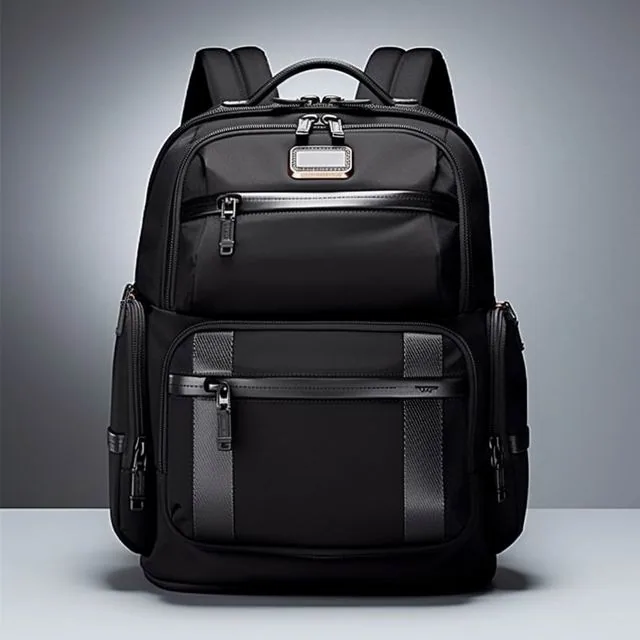
An ice axe is best carried on a dedicated shaft loop at the base of the pack with the head secured by an upper toggle or bungee, so the spike points down and away and the adze sits close to the body. Anything that lets the axe rotate horizontally across the small of your back is a hazard to you and anyone behind you on a steepening slope. Check that loops are sewn to a reinforced panel rather than to face fabric, and that they hold the shaft close enough that it cannot swing out when you are moving through trees or taking the pack off in wind.
Crampons belong outside the body too. Wet crampons carry grit, meltwater and rust into whatever they touch, and their points will puncture a liner long before the fabric wears through. A purpose-made crampon pouch with a drain hole and a reinforced internal panel is the right solution, ideally mounted low and to one side so the weight stays central. Sharp-nosed crampons should always be strapped tight inside their pouch; a loose pair tearing through panel fabric is one of the most common winter repair jobs. A stiff PVC-backed pouch keeps points contained, whereas soft fabric versions eventually let the points find daylight through the seam.
- Axe shaft at the base in a sewn loop, spike down, head secured at the top.
- Crampon pouch low and central, with drainage and no exposed liner inside.
- Loop attachment points must be bar-tacked onto a reinforced panel, not face fabric.
- Keep the axe silent; metal clicking against buckles means it is not secured properly.
Everything Freezes: Zips, Buckles and Water
Below freezing the first failures are mechanical. Water held in a zip chain turns to ice and locks the slider; condensation inside a pack becomes frost in the seams overnight; a hydration hose freezes solid even on a mild day once you are moving fast in wind chill. Design the system around those facts. Move to wide-mouth bottles carried inverted in insulated pockets so the ice forms at the bottom rather than at the cap, and treat any reservoir as summer-only equipment. Insulated pockets add roughly 80 g and usually buy two or three extra hours before the first ice appears.
Hardware matters equally. Look for reverse-coil zips, which shed ice better than straight chains, with pullers long enough to grab through mitts - a cord loop of 20-30 mm or a moulded toggle rather than a small metal tag. Side-release buckles become stiff when iced, so buckles you can locate and release through mitts beat fine adjusters for cold hands. Finally, keep anything you need inside reach rather than at the bottom: opening and unzipping in wind costs heat and dexterity with every minute it takes. Wax-based lubricants stiffen in the cold, so silicone-based alternatives suit winter use rather better.
- Carry water in wide-mouth bottles, inverted, with insulated pockets.
- Treat hydration reservoirs as summer kit unless the hose routes inside clothing.
- Fit long, glove-friendly zip pullers before the season starts rather than during it.
- Keep map, snacks, spare gloves and torch in lid or belt pockets, not deep in the body.
Harness Fit Over a Bulky Winter Shell
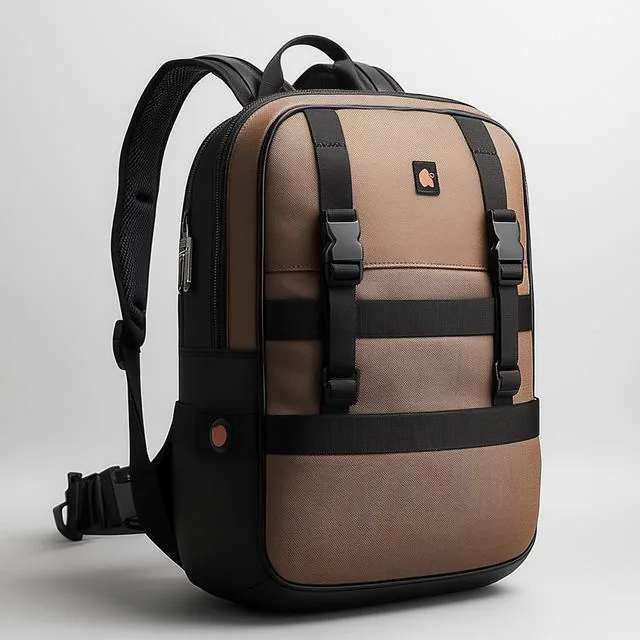
Torso length does not change in winter, but everything underneath the straps does. A bulky belay jacket plus shell lifts the shoulder straps away from the body, so a pack whose harness was set for a thin base layer often ends up riding too low, with the hip belt settling onto the soft tissue below the iliac crest rather than above it. The fix is simple: set the pack up wearing full winter clothing, then count how much adjustment range remains for summer - and reject the pack if there is not at least 50 mm of usable travel. Mark the winter harness position with tape once set, so it can be found again in poor light.
Hip belt wing length deserves particular attention. Over a thick insulated hem, the usable contact area shrinks, so belts designed for summer can end up barely overlapping at their ends. Check the belt still has 80-100 mm of webbing to spare either side when worn over winter layers, and that buckles can be released wearing mitts rather than requiring bare fingers. A chest strap set high enough to clear a bulky collar helps distribute load across the shoulders without restricting breathing under exertion. Mitt-friendly buckles are worth specifying here, because cinching a hip belt bare-handed in wind is genuinely unpleasant.
Whiteout Navigation, Wind Chill and Cold Stress
A Scottish winter ascent can lose all visual reference within minutes, which is why navigation kit is carried rather than downloaded, and why cold exposure is the governing risk rather than rain. Recognising cold stress early is a genuine skill: fine motor loss and slurred decision-making appear long before shivering becomes obvious. Established occupational guidance on cold environments - including the material from the National Institute for Occupational Safety and Health - sets out the same staged symptoms that hillwalkers learn to watch for in a group. Cold also degrades judgement quietly, which is why turnaround times should be agreed before the cloud drops rather than during it.
Practical measures follow from that. Keep a second pair of dry gloves deep inside the pack, spare cells next to the body rather than in the lid where they cool fastest, and emergency rations that will not freeze solid. Carbohydrate intake needs to be regular because working hard in cold air burns through reserves quickly. Anyone planning winter routes should also read the recognised signs of hypothermia collected by the Centers for Disease Control and Prevention, since early intervention is the difference between a slow descent and an incident. Carry bivvy-grade insulation even on short days, because it buys time when a descent takes twice as long as planned.
- Carry paper map and compass as primary tools; a phone is a backup that loses charge in cold.
- Keep spare batteries warm against the body, not in the lid.
- Pack food that stays chewable when frozen, and eat to schedule.
- Carry a group shelter and know how to deploy it in wind before you need it.
Snow Shedding, Colour and Not Losing Your Pack
Open mesh panels that are excellent in July collect spindrift in January, then melt against body heat and refreeze into a stiff slab across the back panel. On winter packs, that argues for closed face fabrics over exposed mesh, minimal external pockets where snow can gather, and a lid shape that slopes rather than forming a flat shelf. Every additional external pocket is somewhere snow will sit and something else for ice to form around while you are moving through a clag. A sloping lid sheds spindrift better than a flat one, and every external pocket you add is another place to scrape ice from at the next stop.
Colour carries two practical jobs in winter. First, an all-white or pale grey pack is genuinely hard to find when you set it down to sort crampons in poor visibility, so a strongly contrasting lid or stripe is worth specifying. Second, in group movement along a track, a high-contrast pack makes it easier to count people. This is also why external loops should be a differentiated colour from the body so you can find them quickly with reduced dexterity. Searching for a dropped pack in poor visibility wastes far more daylight than contrasting panels cost in design terms. Bright or reflective webbing helps similarly when a pack has to be set down in fresh snow.
A Realistic Winter Load Table
Writing a gram figure against each item is the fastest way to see why 38 litres arrives so quickly. The list below is a typical winter Munro day for one person carrying their own gear, excluding worn clothing and boots. Note how much of the total is dedicated purely to staying functional if the weather closes in, rather than to the walk itself - that unused volume is the price of a safe margin, and it should not be trimmed. Emergency capacity is insurance rather than dead space, and the arithmetic should be checked against the coldest plausible conditions rather than the forecast.
| Item | Grams | Notes |
|---|---|---|
| Winter pack, empty | 1,500 | Stiff frame, axe loops, crampon pouch |
| Ice axe | 850 | Carried externally |
| Crampons and pouch | 1,100 | Carried externally, sharp and wet |
| Insulated belay jacket | 700 | Goes on during every stop |
| Spare gloves, hat, buff set | 450 | Dry set kept sealed inside |
| Group shelter and first aid | 700 | Shared but carried whole |
| Thermos, 0.75 litre, plus food | 1,100 | Food stays chewable when frozen |
| Map, compass, two torches, spares | 550 | Spare cells kept warm |
| Total excluding worn items and water | 6,950 | Before water and any rope |
Two things follow. The unused-looking volume above the packed contents - typically 4-6 litres in a 40 litre pack - is not waste; it is what lets you pull a jacket out and shove it back without unpacking on a windswept col. And because so much of that weight is metal carried outside the body, compression and balance matter more than in summer: strap the steel in tight and central before starting, or it will migrate with every step. Re-tension those straps after the first twenty minutes once everything has settled, and again after any stop long enough to remove or add a layer.
Winter Specification Sheet
The summary below is what to check before handing over money. Everything is testable at home: freeze a litre of water in a bottle against the pack to check panel behaviour, zip it in a freezer for an hour to see how the pullers feel, and set the harness up over your bulkiest jacket. A pack that passes these checks will probably still be in service long after three-season models have been retired to summer use. An hour in a domestic freezer is a reasonable simulation of Scottish conditions and takes almost no effort to arrange. Repeat the same three checks each season, since coatings change performance long before failure becomes visible.
| Parameter | Target for Scottish winter |
|---|---|
| Volume | 38-45 L for a full winter day |
| Load range | 9-11 kg including external steel |
| Back panel | Closed face fabric or low-profile channels, no exposed mesh |
| Zips | Reverse-coil with 20-30 mm glove-friendly pullers and covered ends |
| Axe carriage | Sewn lower shaft loop plus upper toggle, bar-tacked to a panel |
| Crampon pouch | Low, drained, reinforced internally |
| Harness | Adjustment range of at least 50 mm for layered clothing |
| Colour | High-contrast lid or panels so it is findable in poor visibility |
Buy against one of two failure modes you are trying to avoid. Too small, and you compress an insulated jacket so hard that it stops lofting and becomes dead weight exactly when insulation matters most. Too soft, and the frame cannot hold a 10 kg load steady on icy ground, so every step transfers sideways into your ankles. Of the two, buying slightly too large is the more forgiving error. The reasoning is straightforward: surplus volume can be compressed, whereas missing volume forces either crushed insulation or essential emergency kit left behind. Spare volume costs very little compared with emergency kit that had to be left behind.
Aftercare: Drying Out Between Outings
Winter does its damage between walks rather than on them. Salt from grit-treated approaches, damp meltwater in seam channels and frost in zip chains sit together through the week and progressively attack coated fabric and hardware. Empty the pack fully after every outing, remove steel, brush grit out of seam channels and leave the bag open in a warm but not hot room - radiators and dehumidifier cabinets drive heat into coatings that were never designed for sustained direct warmth. Air it for twenty-four hours before storage, which prevents the mildew that otherwise appears along internal seam tape. Frost left in seam tape expands and contracts through the week, steadily loosening the bonded edge.
Give particular attention to the parts that carry water: the inside of the crampon pouch, the seam channels along the base and the lower inside of the lid where condensation pools. Once dry, work zips a few times to redistribute any lubricant, check buckle springs move freely and re-proof any area where the finish has stopped beading. Following that routine takes about fifteen minutes and routinely adds seasons to a pack used hard in Scottish conditions. Keep notes on what degraded during the season, since observed failure makes a far better starting point for the next purchase than any catalogue.
Building a Winter Range for the Scottish Season
Retail demand for winter-specific packs is concentrated and seasonal, so buying plans tend to favour one strong 40 litre SKU in two colourways rather than a broad family. Minimum quantity applies per style and per colourway at 500 pcs, and because axe loops, crampon pouches and glove-friendly pullers are additional operations rather than pattern changes, they are best specified from the first sample rather than added later. Expect 6-10 working days for that first prototype, and 12-15 working days where a stiffer framesheet or bespoke puller tooling is needed. Winter colourways also sell better when samples are ready early enough for buyers to see the range together.
Production planning then runs 35-50 days from gold-seal approval, quoted FOB Xiamen on T/T 30/70 terms. Winter construction deserves tighter inspection than summer goods: alongside AQL 2.5 sampling under ISO 2859-1, ask specifically for checks on bar-tack placement at axe loop roots and seam treatment at the crampon pouch. QUANZHOU JUNYUAN BAGS has coordinated seasonal programmes like this since 2014, scheduling through 4,950 m2 of SGS-verified production floor space with 137 colleagues operating 7 production lines. Booking February and March production slots matters here, because a winter range has a hard deadline that recovery planning cannot repair once the season begins.
Frequently Asked Questions
What size backpack do I need for Scottish winter hillwalking?
Between 38 and 45 litres for a full winter day. A 30-35 litre three-season pack usually cannot swallow insulated belay clothing, spare gloves, shelter, thermos and food without crushing the insulation out of the fleece. The extra five litres is functional space, letting you pull a jacket out mid-route without emptying the bag in wind. Groups sharing shelter tend to need the upper end of that range rather than the lower figure.
How heavy is a typical winter hillwalking pack?
Around 9-11 kg including contents, against 6-7 kg for the same route in summer. Crampons add 900 g to 1.1 kg, an axe another 700-900 g, insulated belay clothing about 700 g, and everything else is simply bulkier rather than merely heavier. That jump is why frame stiffness and hip belt padding stop being optional upgrades above roughly 8 kg. Weigh your own kit once rather than estimating, since most walkers under-count by a kilogram or more.
Can I carry an ice axe on any backpack?
Only if it has a proper lower shaft loop and an upper securing point; improvised bungees through compression straps let the axe rotate and swing dangerously. The loop must be sewn into a reinforced panel rather than face fabric, and the head should sit high with the spike pointing down and away. Practise fitting and drawing it at home before relying on it on steep ground.
Should crampons go inside my backpack?
No. Wet crampons carry grit and moisture into whatever they touch, and points will puncture a liner long before the outer fabric shows wear. Use a drained crampon pouch mounted low and central, with straps tightened so the points cannot work loose. If you must carry them inside in an emergency, double-bag them and place them against the back panel, never against the outer shell.
How do I stop my hydration system freezing in winter?
Simple answer: stop using it below freezing. Wide-mouth bottles carried upside down in insulated pockets work better because ice forms at the base rather than the cap, and they are easier to refill. If you must carry a reservoir, blow water back out of the hose after every drink and route it inside your jacket, though even that fails in sustained cold.
Why do my zips jam on winter walks?
Water held in the coil freezes and locks the slider. Prevent it by keeping covered zip garages dry, using silicone-compatible lubricant rather than wax, and zipping up fully so meltwater cannot sit in the chain. In the field, body heat against the slider usually frees it within a minute. Long pullers help because you can apply more leverage through mitts than a small metal tag allows.
Does my hip belt need adjusting for winter clothing?
Yes. A bulky belay jacket plus shell lifts the whole harness away from your back, so a pack set up over a base layer rides too low and lands the belt below the iliac crest. Set the harness wearing full winter clothing and confirm at least 50 mm of adjustment remains for summer. Check the belt still has 80-100 mm of free webbing either side over winter layers.
Are ventilated mesh back panels bad for winter?
Mostly yes. Exposed mesh collects spindrift, which then melts from body heat and refreezes into a stiff slab against your back, and it also lets icy wind through to insulating layers. Closed face fabrics or shallow low-profile channels work better in winter. Keep the ventilated summer pack for summer and accept carrying a winter-specific model for the Scottish season. If one pack must cover both seasons, choose closed face fabrics with modest channels rather than full mesh.
What colour should a winter backpack be?
Avoid all-white and pale grey, which vanish when you set them down during a whiteout to sort crampons or food. A strongly contrasting lid, trim or panel is worth specifying, and it also helps group members keep count of each other along a path. Choose different colours for axe loops so you can find them quickly with reduced dexterity. Choose a colourway that reads clearly against snow as well as against rock and heather.
What cold-injury signs should walkers watch for?
Look for loss of fine motor control, fumbling with zips or map cases, slurred speech, unusual irritability and stumbling, all of which appear before obvious shivering in some people. Occupational cold stress guidance from NIOSH describes similar staged symptoms, and the CDC publishes hypothermia signs worth memorising. Any of them means adding layers, food and heat immediately rather than waiting for the summit decision.
How should I dry a winter pack between trips?
Empty it fully, remove all steel, brush grit from seam channels and leave it open in a warm but not hot room. Avoid direct radiator heat, which damages coatings not designed for sustained warmth. Pay attention to the crampon pouch interior, base seam channels and the inside of the lid where condensation pools. Fifteen minutes of routine care adds seasons of service.
What is involved in developing own-brand winter packs?
Start from one 38-45 litre SKU: axe loops, a drained crampon pouch and glove-friendly pullers add operations rather than changing the pattern, so specify them from the first sample. Minimum is 500 pcs per style and colourway, sampling takes 6-10 working days or 12-15 for new framesheets, and bulk runs 35-50 days FOB Xiamen on T/T 30/70 with inspection to AQL 2.5.
Turn Winter Requirements Into a Specification
Winter packs are bought by people who already know what failed last season, so the brief should answer those failures directly: steel carriage, freeze-proof closures and harness travel over bulky layers. Share the target price, intended colourways and the winter route list your customers walk, and the construction options can be priced against real trim schedules.
QUANZHOU JUNYUAN BAGS coordinates the development from tech pack through gold seal to bulk inspection, with sampling at 6-10 working days and 12-15 for complex builds, minimum 500 pcs per style and colourway, production 35-50 days, FOB Xiamen and T/T 30/70 terms.
Email: service@junyuanbags.com
WhatsApp: +86 177 5002 0688