Best Backpacks for Lake District Fell Walks: Volume, Stability and Weatherproofing Above the Valley
A Lakeland fell day is heavier and wetter than a lowland walk, so the useful answer is narrower than most buyers expect: 22-30 litres, a back system that keeps the load flat against your spine on scrambles, taped seams or a liner rather than a shower-resistant shell, and external access for a map, shell layer and water. Plan around a 6-9 kg carried weight before food and drink.
This guide takes the fell rather than the folder as its starting point: what changes above roughly 450 m, how the geology wears fabric differently across the district, why volume choices are really about stability, and how those requirements translate into a specification a brand can order. QUANZHOU JUNYUAN BAGS develops hiking programmes from 500 pcs per style and colourway.
What Changes Once You Leave the Valley
Three things shift within twenty minutes of climbing away from a car park in Borrowdale or Patterdale: temperature drops by roughly 1 °C for every 150 m of ascent, wind speed rises because nothing is sheltering you, and the ground underfoot becomes rock, bog or loose stone rather than path. Those three together force heavier clothing and tougher footwear into the bag, even on a day the forecast calls benign, and they are why a fell pack is specified differently from a dale path pack. Planning clothing for summit conditions rather than car park conditions is the single habit that most reduces trouble later in the day.
The consequence for the bag is that weather protection and accessibility outrank features. A shell layer has to come out and go back in several times an hour in changeable conditions, so external storage for that one item saves more effort than any internal organiser. At the same time the fabric has to resist prolonged wetting, because Lakeland rainfall arrives as drizzle sustained over hours rather than as a single shower, and sustained drizzle is precisely what defeats a lightly coated shell. Accessibility and resistance to prolonged wetting are therefore the two buying criteria that belong ahead of any feature list. Volume comes a distant third once those two are settled.
- Expect roughly 1 °C less per 150 m of ascent, before wind chill.
- Plan clothing layers for conditions on the summit plateau, not the car park.
- Assume wet rock and standing water on any route above about 450 m.
- External storage for a shell layer beats internal organisation for speed.
Choosing Volume for a Wainwright Day
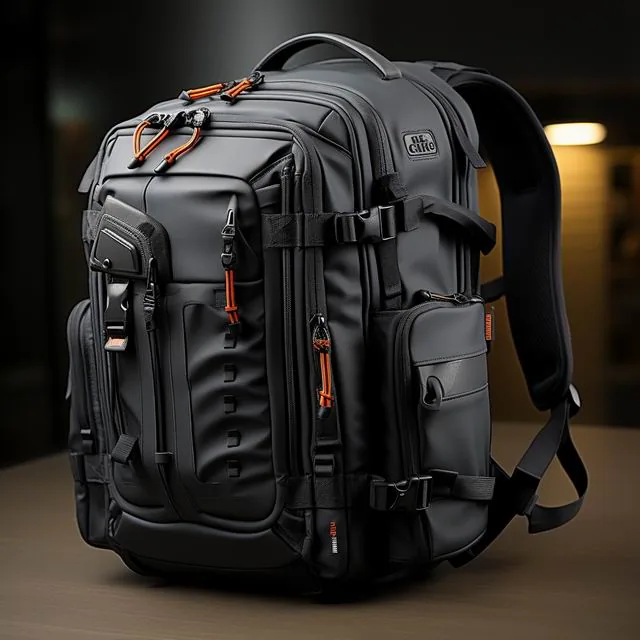
Most single-fell routes suit 22-26 litres, which comfortably holds a waterproof jacket and overtrousers, an insulated layer, 1.5-2 litres of water, food, gloves, hat and a group shelter. Longer horseshoe routes chaining four or five tops, and any winter or shoulder-season day with a spare fleece and heavier gloves, push that toward 28-32 litres. Very little besides a winter day involving full crampons and axe benefits from more than 34 litres. Even winter days involving crampons rarely exceed 34 litres unless camping kit is carried, so buying above that figure mostly buys unused space, and the more useful question becomes how adjustable that volume can be made rather than how large it starts.
There is a behavioural reason to stay at the lower end of each band. Extra volume does not simply sit empty; it gets filled with duplicate layers, second torches and oversized flasks, and that additional 1.5-2 kg is felt most on steep ground and on descents. A bag with a roll-top or a compression system lets you carry the larger option without it behaving like the larger option, which is why adjustable closure often matters more than headline litre count on mixed Lakeland terrain. Adjustability beats headline capacity for that reason, because a roll-top or compression system lets one bag cover both cases honestly. Settling that question before purchase usually avoids the second bag that appears a year later.
| Day type | Suggested volume | Typical carried weight |
|---|---|---|
| Single top from the valley, summer | 20-24 litres | 5.0-6.5 kg |
| Ridge or horseshoe route | 26-30 litres | 6.5-8.5 kg |
| Winter or shoulder season with spare layers | 30-34 litres | 8.5-10.5 kg |
| Scrambling day such as Sharp Edge or Jack's Rake | 22-26 litres, low profile | 6.0-7.5 kg |
Centre of Gravity Matters More Than Litres on Scrambles
Scrambling is where pack choice stops being theoretical. Routes that involve hands-on rock demand a bag whose mass sits close to the spine and reasonably low, because anything tall and top-heavy levers you backwards when you reach for a hold. A narrower profile, typically 280-320 mm wide, also reduces how much it catches on rock behind you in a chimney or a short gully, which is a practical concern rather than a comfort one. Position then follows naturally from that requirement: heavy items closest to the spine, bulky lightweight items furthest from it, and nothing hanging loose anywhere. Weight badly placed is more tiring than weight simply not carried.
Compression is the mechanism that delivers this. Two side straps plus one top strap pull a half-full pack down to roughly two-thirds of its nominal depth, which drops the centre of gravity by several centimetres and stops internal contents sloshing sideways on every step. Any heavy item carried inside should sit between the shoulder blades at spine height, never at the top of the lid: water bladder or bottles low and central, spare clothing above them, food and map in the lid where nothing else has to be disturbed to reach them. Keeping bottles low and central also reduces how much load shifts sideways when stepping across loose ground on a descent.
Before any hands-on section, tighten all compression straps, stow external items fully, and confirm you can reach water without taking the pack off. A swinging water bottle is a genuine hazard on rock.
Drizzle Is the Default, Not the Exception
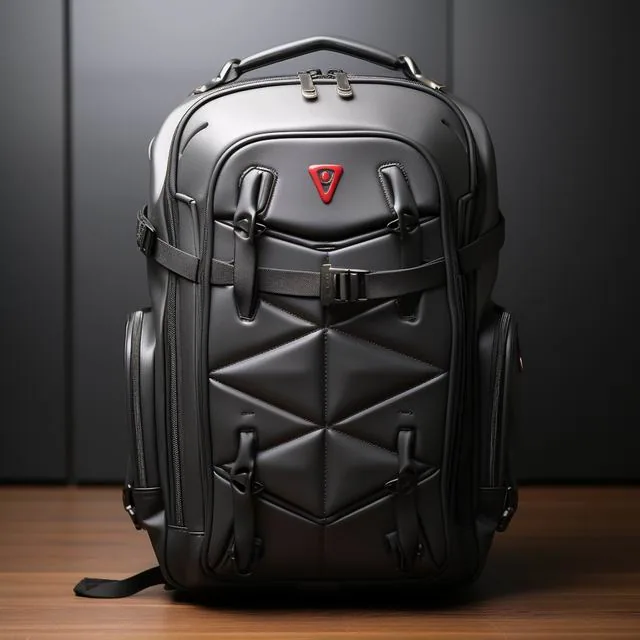
Lakeland rainfall is rarely dramatic and almost always persistent. Fabric performance should therefore be judged on hydrostatic head, measured to ISO 811, where the quoted figure represents the height of a water column sustained before seepage shows through. Around 1,500 mm copes with a shower, but eight hours of low cloud and driven drizzle rewards 3,000 mm with taped seams, and seam sealing matters more than headline numbers because stitch holes leak well before the cloth does. Sustained drizzle is precisely what defeats a lightly coated shell, so the specification should assume hours of wetting rather than minutes. Specifying seam treatment by line rather than by area removes the ambiguity that most quotations hide behind.
The liner-versus-cover debate resolves fairly cleanly for fells. A separate rain cover keeps the shell dry but leaves it flapping on exposed ridges, catches wind like a sail and tends to fill behind the back panel in horizontal rain. An internal dry liner of 60-80 micron welded TPU protects contents, adds roughly 120-200 g and stays put in wind. Many walkers therefore choose a pack with taped seams and a liner, and carry a cover only on longer expeditions where the pack is set down regularly. Weight for weight, protection that stays put in wind is worth considerably more than protection that can be removed and lost.
| Protection method | Added weight | Best use |
|---|---|---|
| Durable water-repellent finish only | 0 g | Short valley walks in settled weather |
| Separate rain cover, 20-40 litre | 180-260 g | Expedition days with camp stops |
| Internal welded liner, 60-80 micron | 120-200 g | Fell days with wind and horizontal rain |
| Fully taped shell | 60-120 g | Anyone walking regularly above 600 m |
Abrasion: Borrowdale Rock, Slate and Late-Summer Bracken
The Lake District is geologically mixed, and that affects how a pack wears. The rough volcanic rock of the western and central fells has a high-friction surface that abrades fabric quickly wherever the bag is scraped or set down; Skiddaw slate is smoother but flakes; limestone pavement on the southern fringes is sharp and unforgiving. A low-profile shell with abrasion tested to ISO 12947 in the 30,000-50,000 cycle range handles that contact for years rather than seasons. Setting the pack down on dry rock rather than dragging it across remains the cheapest wear reduction available to anyone. Reinforced lower panels help most where the pack is set repeatedly against dry rock.
Bracken is the overlooked wear agent. From late July the northern and eastern slopes carry dense growth reaching 1.5 m, and pushing through wet stems abrades both shell fabric and external webbing continuously for hours. It is also directly responsible for the ticks many walkers pick up, so a light-coloured shell that makes them visible, plus the habit of emptying and checking the pack at the car afterward, is worth more than any fabric argument. Reinforced base panels take secondary damage only. Checking clothing and legs before getting back into the car takes thirty seconds and matters more than any fabric argument about bracken. Checking the dog over afterwards takes another minute and costs nothing at all.
Navigating in Cloud: Where the Map Actually Goes
Cloudbase on the Lakeland tops sits near ground level for a good part of the year, so the navigation kit must be reachable without unpacking. A lid pocket taking an OS Explorer map folded to roughly 240 x 170 mm, plus a compass on a keeper leash rather than loose in a pocket, covers most situations. Anything involving a map case on a cord is faster still, though it needs a tie-off point inside the bag because a corded case detached from the pack is worse than having no case at all. Consistency of placement is the real requirement, since nobody wants to reason about which pocket was used last while standing in cloud.
Electronics have their place and their limits. A phone or handheld GPS in a chest pouch or strap pocket works well because it can be read without stopping, while a device buried in the lid tends to be retrieved only after the navigational doubt has already set in. Battery behaviour is the deciding factor: cold and damp drain cells far faster than expected in autumn conditions, so keeping devices in an inner pocket near body heat and carrying a small power bank preserves the option when it matters most. Keeping a paper fallback alongside electronics also removes the pressure to protect a screen with wet hands in poor visibility.
- Lid pocket sized for a folded OS Explorer map, roughly 240 x 170 mm.
- Compass on a keeper leash or a dedicated webbing loop.
- GPS or phone carried where it can be read without removing the pack.
- Power bank and spare batteries stored near the body in cold weather.
- Whistle on a strap end, accessible with gloves on.
Water, Food and Layers Without Stopping
Stopping every forty minutes costs more time than most walkers realise, and access design is largely about removing those stops. Side pockets taking a 750 ml to 1 litre bottle with a 100-130 mm diameter allowance let you re-rack water one-handed while walking. A bladder of 1.5-2 litres with an insulated hose routing over the shoulder strap avoids any stop at all, though hoses freeze from November to March unless routed inside the strap lining or blown back after each drink. Both approaches suit different walkers, and the deciding factor is usually how often you naturally stop anyway rather than any specification. Either way the water should be reachable without stopping, which is the entire point of the arrangement.
Food wants to be within the same single-action reach. Hip belt pockets of roughly 0.5-1.0 litre accept a couple of bars and a pair of gloves; anything larger interferes with the arm swing on steep ground. Layers are the opposite problem: they are bulky and only needed intermittently, so they belong either under a lid strap or between your back and the main body via an external stuff pocket. Waterproof glove and hat storage inside the lid beats deep packing, because it keeps them reachable in the first minute it starts raining. Consistency again matters more than cleverness: the same item in the same pocket every walk beats a better system used inconsistently.
Emergency Layer, Torch and Group Shelter Placement
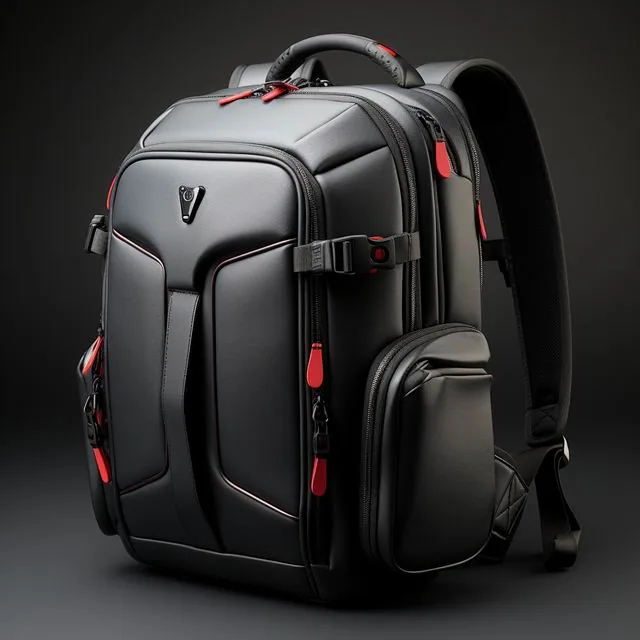
Emergency equipment only works if it can be reached in the dark, with cold hands and without unpacking anything else. A head torch belongs in the lid, in the same pocket every time; a group shelter of the two-to-four person type wants to be in the outer part of the main bag rather than at the bottom, because deploying one is already a difficult job in strong wind. Spare gloves, hat and a foil blanket should sit together in one identifiable pouch rather than distributed through three compartments. One identifiable pouch also means another walker can find it quickly if you cannot reach it yourself.
That placement logic is worth rehearsing at home rather than discovering on a ridge. Load the pack, then time how long it takes to retrieve the torch with gloves on, and note anything that requires removing another item first; the same principle is echoed in general countryside access and safety guidance published on GOV.UK. Resources from the Lake District National Park authority and mountain rescue teams consistently stress preparation and realistic timing over equipment volume. Practising that retrieval at home takes five minutes and reveals most layout mistakes before they can matter. Rehearse it once a season rather than once in five years.
Torch, group shelter, spare hat and gloves should each be reachable within about ten seconds, wearing gloves, without unpacking the main compartment. Test this before every season, not after a problem develops.
Base-Day Logistics: Car, B&B and Village Stops
Many fell days are built around a base in Keswick, Ambleside, Borrowdale or Wasdale, and the bag usually waits in a car or a hallway between walks. That idle time is when damp settles in, so drying discipline matters as much as anything on the hill. Empty the pack on return, turn linings outward, hang it open in a ventilated space rather than a porch radiator, and where the shell has a durable water-repellent finish it should be re-activated rather than replaced at the first sign of wetting out. Linings turned outward dry several times faster than a closed pack left standing in a hallway or porch.
Re-proofing timing is practical rather than cosmetic. Once outer fabric darkens evenly during drizzle instead of beading, water shedding has degraded, and a spray-applied fluorocarbon-free finish on a clean, dry bag restores it for roughly 6-10 walking days of typical Lakeland rainfall. Mud from Borrowdale paths and pale Skiddaw slate dust both shorten that window, so brushing the shell before re-treatment is not wasted effort. Storage matters too: no pack benefits from being rolled up damp for a fortnight between two weekends. Brushing off mud and slate dust before re-treatment is not wasted effort, since trapped grit shortens the effective life of any finish. Storage in a dry, ventilated space contributes as much as the treatment itself.
Turning Fell Requirements Into an Orderable Specification
Translating these requirements for a product range means avoiding adjectives. Stating 30,000-50,000 cycles to ISO 12947, hydrostatic head figures with seam taping specified separately, acceptable tolerance on width and depth, compression strap working load and whether hip belt pockets are included or omitted turns discussion into something measurable, and it makes the difference between a £60 retail bag and a £140 one auditable rather than a matter of opinion. Every figure quoted should therefore be measurable rather than comparative, because tolerances are what settle disputes later about whether bulk matches the approved sample, whereas feature descriptions are never testable in the same way. Verbal assurances about seam quality are worth little once kit prices are renegotiated.
Commercial terms for hiking programmes of this type follow a fixed pattern. The minimum is 500 pcs per style and colourway, sampling occupies 6-10 working days and 12-15 where the construction calls for moulded back panels or bonded frames, and bulk production takes 35-50 days from an approved sample. Shipments leave FOB Xiamen on T/T 30/70 terms, with inspection carried out to AQL 2.5 under ISO 2859-1. QUANZHOU JUNYUAN BAGS has coordinated hiking programmes since 2014 across 4,950 m² of SGS-verified production floor space supported by 137 colleagues and 7 production lines. Everything else is negotiable at sample stage and expensive afterwards.
Frequently Asked Questions
What size backpack do you need for Lake District fell walking?
Most single-fell days suit 22-26 litres, which takes waterproofs, an insulated layer, 1.5-2 litres of water, food and a group shelter. Long horseshoe routes and shoulder-season days need 28-32 litres. Very few summer routes justify more than 34 litres, and extra capacity tends to be filled with duplicate layers you then have to carry uphill. Adjustability matters more than the headline figure, so choose a pack whose compression pulls volume flat.
Is a rain cover or a liner better for Lakeland weather?
A liner generally wins. An internal welded liner of 60-80 micron adds roughly 120-200 g and stays put in wind, while a cover can fill behind the back panel in horizontal rain and behaves like a sail on exposed ridges. Taped seams on the shell matter more than either for sustained drizzle. Taped seams on the shell contribute more than either option applied afterwards.
What waterproof rating should a fell walking pack have?
Quote hydrostatic head to ISO 811. Around 1,500 mm handles a shower, while eight hours of low cloud and driven drizzle suits 3,000 mm or better with seams taped. Stitching leaks before fabric does, so seam treatment usually determines how dry the contents stay rather than the headline rating. Treat seam taping as a separate line item rather than assuming it comes included.
How heavy should a fell day pack be when loaded?
Plan for 6-9 kg for a summer Lakeland day including water and food. Keeping the pack below roughly 10-15 per cent of body weight reduces fatigue markedly on sustained ascent, and additional load is felt most through the knees on long descents from scree slopes rather than on the climb itself. Carried load is felt most through the knees on long descents rather than during the climb itself.
Do I need special climbing features for scrambling routes?
Not necessarily, but stability features matter. A low-profile pack around 280-320 mm wide with full side compression keeps mass near the spine, which matters when reaching for holds on routes like Sharp Edge or Jack's Rake. Everything external should be stowed so nothing swings or catches on rock. Stow everything external and check that nothing hangs below the base of the pack.
Where should I keep my map when walking the fells?
In a lid pocket sized for an OS Explorer folded to roughly 240 x 170 mm, kept in the same place every time so retrieval is automatic in cloud. A compass should sit on a keeper leash, since anything loose tends to stay in whichever compartment it was last dropped into. Fold the map the same way each time so it opens immediately to the sheet you need.
How much water should I carry on a Lakeland fell day?
Generally 1.5-2 litres for a full day, more in summer heat or on routes with no reliable streams above the feeding grounds. Two side pockets accepting 750 ml to 1 litre bottles leave hands free, though a bladder is faster on the move provided the hose is insulated and blown back after each drink in cold weather. Insulate hoses or blow them back from November onwards, otherwise they freeze partway through the walk.
What fabric denier is best for fell walking rucksacks?
Judge by abrasion cycles rather than denier. Around 30,000-50,000 cycles to ISO 12947 suits most fell use. The rough volcanic rock of the central fells abrades quickly, Skiddaw slate flakes, and late-summer bracken wears webbing and shell for hours at a time. The rough volcanic rock of the central fells abrades fabric quickly, so quoting a target cycle figure proves more useful than quoting yarn thickness.
Should a head torch go in a specific pocket?
Yes. Keep it in the lid, in the same place every walk, alongside spare gloves, hat and a foil blanket. Test the retrieval with gloves on and time it: anything needing the main compartment unpacked in the dark and low visibility is placed wrongly. Practise that retrieval wearing gloves before the season starts rather than discovering a problem at dusk.
Can the same pack be used for a Pennine Way or Coast to Coast trip?
It can for hut or B&B-based sections, usually at 30-40 litres. Carrying camping kit needs nearer 50-65 litres with a load-transferring harness, so most walkers own a smaller fell pack for day routes and a larger one for multi-day trails. Camping sections need 50-65 litres with a load-transferring harness, while day routes suit the smaller pack, so most walkers eventually own one of each.
How often should I re-proof a fell walking backpack?
When the outer stops beading and starts darkening evenly in drizzle. On a clean, dry bag a spray-applied fluorocarbon-free finish restores shedding for roughly 6-10 walking days of typical rainfall. Brushing off mud and slate dust before re-treating extends that noticeably. Brushing off mud and slate dust before treatment noticeably extends that window, and spraying a slightly damp bag simply wastes product.
Developing a Fell Walking Pack Range?
QUANZHOU JUNYUAN BAGS develops hiking and fell walking backpack programmes for UK brands at 500 pcs per style and colourway, with samples produced in 6-10 working days, extended to 12-15 for constructions involving moulded back systems or bonded frames, followed by 35-50 days bulk production.
Share your target volume, activity profile and retail price point, and our production team will put forward a fabric, harness and seam construction proposal with each figure written into the specification rather than assumed at approval.
Email: service@junyuanbags.com
WhatsApp: +86 177 5002 0688