Best Backpacks for UK Teachers: Marking Load, Laptop Fit and Staffroom Storage
A secondary teacher carrying a class set of 30 A4 exercise books and a laptop is carrying 5-7 kg before anything else goes in, so the right bag is 24-30 L with a flat A4 sleeve at least 240 x 320 mm, a suspended laptop compartment with a 25 mm false bottom, and straps 60-70 mm wide.
This guide is written for classroom teachers moving between five or six rooms a day, not for pupils. It covers real marking weights, folder dimensions, staffroom and pigeonhole storage, laptop screen protection, and what to specify if a school or trust is ordering bags for a whole department.
The Marking Load, in Numbers
Marking is the load that distinguishes teaching from almost any other professional carry. A class set of 30 A4 exercise books weighs about 2.7 kg at roughly 90 g each; add a 14-inch laptop at 1.5 kg, a charger at 0.35 kg, an A4 folder with worksheets at 0.5 kg, a 750 ml bottle at 0.8 kg and a planner and pencil case at 0.4 kg, and the total is 6.25 kg before a coat or lunch. Multiply that by five or six room changes a day and the carry stops being trivial. Departments that issue devices should weigh the laptop and charger together, since the gap between a 1.4 kg machine and a 2.1 kg one changes the entire load budget.
The useful benchmark is proportional rather than absolute. Keeping a carried load at or below roughly 10% of body weight keeps shoulder and neck complaints low, which for a 70 kg teacher means around 7 kg and for a 55 kg colleague around 5.5 kg. That is not always achievable with a full class set, which is why the practical advice is to split: books in a tote or a wheeled option on heavy marking days, laptop and essentials in the backpack. HSE guidance on manual handling applies the same logic in a workplace setting. A simple rule helps: above a tenth of body weight, books travel in a tote and the backpack carries only the device, planner and essentials.
- 30 A4 exercise books: about 2.7 kg at 90 g each.
- 14-inch laptop and charger: about 1.85 kg combined.
- A4 folder, bottle, planner and pencil case: about 1.7 kg.
- Typical total: 6.0-6.5 kg before coat or lunch; split the load above 7 kg.
Volume: Why the A4 Test Decides Everything
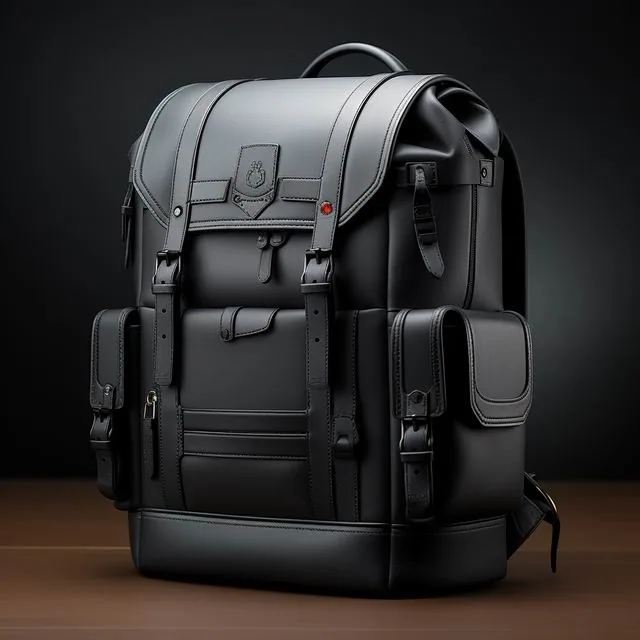
Volume follows paper, not clothing. An A4 sheet measures 210 x 297 mm, but a ring binder or the plastic wallet it lives in measures closer to 250 x 315 mm, and exercise books are slightly larger again. A backpack that claims to hold A4 but tapers towards the top will take a folder diagonally and nothing else, which is how worksheets end up folded into quarters. Specify an internal flat sleeve of at least 240 mm wide by 320 mm tall, unobstructed by pen loops or a zip garage, and check it with a real folder rather than a single sheet.
That requirement sets volume from below. To carry 30 exercise books flat you need roughly 8-10 L of book space alone, plus a laptop compartment, plus teaching kit, which lands the sensible range at 24-30 L. Below 22 L books start going in at an angle and corners get crushed; above 32 L the pack will not sit in a staffroom pigeonhole or hang on a classroom chair back without overhanging. Thirty litres with side compression straps gives a bag that runs tight on a light day and still closes over a full set. Where folders are carried daily, a rigid insert sleeve of 150-250 g keeps them upright and stops the ring mechanism pressing through the back panel.
| Contents | Size or weight | Requirement |
|---|---|---|
| A4 exercise books | 210 x 297 mm each | Flat sleeve 240 x 320 mm, unobstructed |
| Ring binder or folder | 250 x 315 mm | Rigid back panel or insert sleeve |
| 14-inch laptop | 320 x 220 mm | Suspended sleeve with 25 mm false bottom |
| 15.6-inch laptop | 360 x 245 mm | Check the sleeve, not the box claim |
| Water bottle | 750 ml, 73 mm diameter | External pocket with elasticated top |
Laptop Protection: Sleeve Sizing and False Bottoms
A school laptop is usually a 14-inch or 15.6-inch machine, and the sleeve has to be specified against the device rather than the marketing label. A 14-inch laptop measures roughly 320 x 220 mm and 17-19 mm thick; a 15.6-inch model is about 360 x 245 mm and 20-22 mm thick. The sleeve should exceed the device by 5-10 mm in each dimension so it can be taken out one-handed at the start of a lesson, and it should be suspended, meaning the bottom of the sleeve sits at least 25 mm above the base seam. A sleeve cut to the exact device dimension makes one-handed removal impossible at the start of a lesson, which is exactly when the bag is opened.
Suspension matters because of how school bags are put down. A teacher's pack is set down on a classroom floor perhaps ten times a day, often with books inside, and every drop drives the corner of the device into the base of the bag. A suspended sleeve with 6-8 mm of closed-cell foam and a false bottom absorbs that. Padding on the outer wall is less important than padding on the base and the corners, and a strap or elastic retainer stops the laptop sliding out when the bag is opened on a desk. Ask for the drop test to be repeated ten times, because screen damage usually follows a series of small knocks rather than one dramatic fall.
Put the pack down loaded from 150 mm onto a hard floor with the laptop inside, then open the device and check the corners. Any bag that fails this will eventually crack a screen, regardless of how thick the padding looks on a specification sheet.
Classroom-to-Classroom Carry
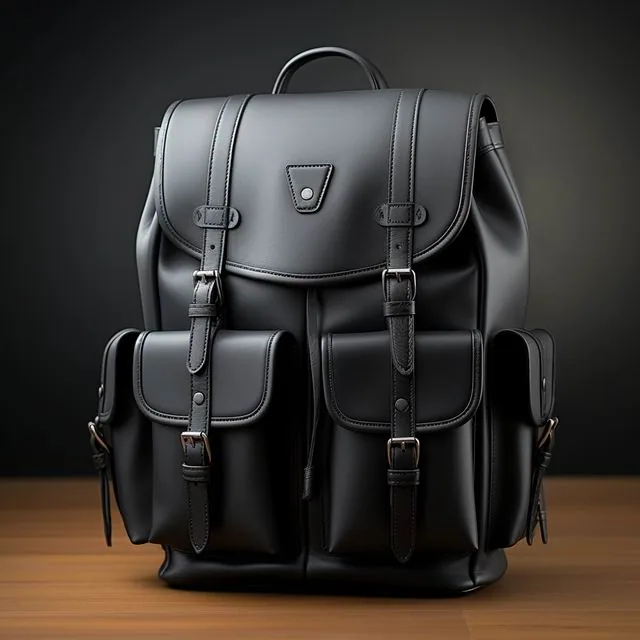
The teaching day is a series of short carries punctuated by stairs. Five or six moves, each of two to five minutes, with a 6 kg load, plus two or three flights of stairs, produces cumulative shoulder load that a single long commute does not. That argues for straps cut on a curve, 60-70 mm wide with 10 mm of foam, and a sternum strap positioned 40-60 mm below the collarbone so the load sits close to the spine without restricting breathing. A pack that sits high and close to the spine reduces the forward lean that develops when a heavy bag hangs low, which is the usual source of end-of-term neck pain.
A hip belt is rarely worth it at this weight and gets in the way in a corridor crowded with pupils. What is worth specifying is a top grab handle rated for the full load, because a bag is often carried by hand for short distances, and a back panel firm enough that books do not bow into the spine. Moulded channel panels add roughly 20 mm of depth and 200 g; a flat foam panel with a fabric cover is the better compromise for a bag that has to fit a pigeonhole. Stair carries deserve particular attention, since the load rises and falls with every step and the shoulder works harder than on level ground.
- Straps 60-70 mm wide with 10 mm foam, cut on a curve rather than folded.
- Sternum strap 40-60 mm below the collarbone; hip belt unnecessary under 7 kg.
- Top grab handle rated for the full loaded weight.
- Firm back panel so books do not bow into the spine.
- Flat foam panel preferred over deep moulded channels for storage reasons.
Staffroom Storage, Pigeonholes and Security
A teacher's bag spends most of the day in one of three places: a pigeonhole, a classroom chair back, or a department locker. Staffroom pigeonholes are typically 250-300 mm wide, 350 mm tall and 300-400 mm deep, so a bag deeper than 300 mm loaded will not go in, and a bag wider than 300 mm will overhang into the next person's slot. Hanging on a chair back imposes a different limit: anything taller than about 450 mm drags on the floor when the chair is pushed under a desk. Locker sizes vary between schools more than suppliers expect, so measure three or four before committing a departmental order to one dimension.
Security deserves more attention than it usually gets. A school-issued laptop left in a bag in an unlocked staffroom is the single most common loss, and the design countermeasures are cheap: a lockable main zip with a discreet puller, a hidden back-panel pocket for a wallet and keys, and a cable-lock loop inside the laptop compartment. Twin zip pullers that accept a small padlock cost very little and change the risk profile, particularly in buildings with public access during evening events. A discreet lockable zip is preferable to an obvious one, since it protects the contents without advertising that something worth taking is inside.
- Pigeonhole fit: under 300 mm wide, under 300 mm deep, under 350 mm tall.
- Chair-back fit: under 450 mm tall so the bag clears the floor.
- Lockable main zip with discreet pullers and a hidden back-panel pocket.
- Cable-lock loop inside the laptop compartment.
- Light-coloured lining so a lost pen or memory stick is visible.
Fabric: Whiteboard Marker, Glue and Rain
Classroom bags meet substances that office bags do not: whiteboard marker, glue stick, correction fluid, coffee and, on any campus with separate buildings, rain. A tightly woven 600D polyester with a polyurethane backing wipes acceptably and dries quickly; nylon gives better abrasion but stains more readily from marker. The base takes the harshest treatment, since the bag is set down on a corridor floor several times a day, so a 900D base panel is worth the small cost increase. Whiteboard marker and correction fluid are the two substances that permanently mark linings, so a wipeable front pocket is worth more than a stylish outer fabric.
Abrasion should be specified rather than assumed. Ask for a Martindale result to ISO 12947-2 at 12 kPa with a pass at 20,000 rubs for the body and 35,000 for the base, which is a realistic threshold for a bag that sees five days a week of floor contact across a 39-week year. Coating matters as much as weave: a polyurethane backing under 0.08 mm will craze after repeated flexing, and once it cracks the fabric beneath wets out. Where a bag is set down on a corridor floor ten times a day, base abrasion rather than body abrasion ends its life, and that is where the budget belongs.
- Body: 600D polyester or 420-500D nylon, ISO 12947-2 pass at 20,000 rubs.
- Base: 900D panel, 35,000 rubs, bound internal seams.
- Hydrostatic head of 1,200 mm or better for cross-campus walks in rain.
- Wipeable lining in the front pocket for pens, glue sticks and drinks.
Hydration, Voice and Everyday Kit
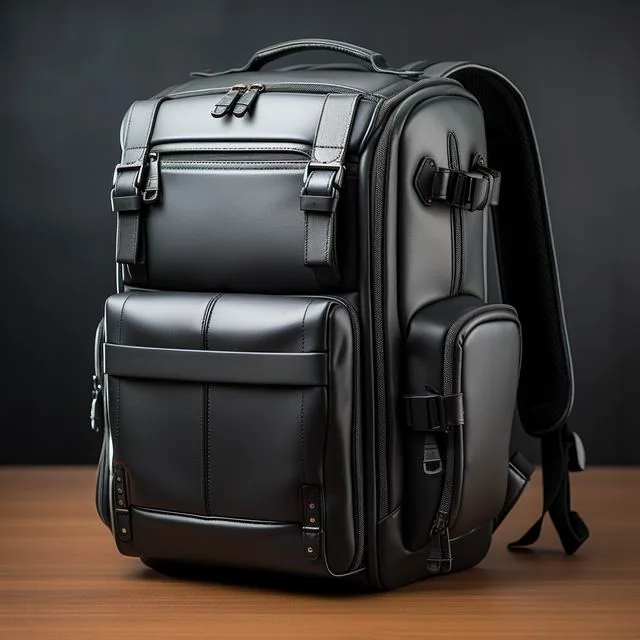
Teaching is voice work, and a teacher speaking for four or five hours a day needs more water than most professions. A 750 ml bottle covers a morning; 1 litre covers a full teaching day. That makes an external elasticated bottle pocket of at least 80 mm internal diameter a genuine requirement rather than a nicety, and it should sit on the side rather than the front so the bottle does not press against books inside the main compartment. A leak inside a bag holding 30 marked books is unrecoverable. Two 500 ml bottles give more flexibility than one large bottle, because one can stay in the classroom while the other travels between rooms.
The remaining everyday kit is small and annoying: a pencil case, a set of board pens, a USB memory stick, reading glasses, a lanyard and a phone charger. These belong in a shallow organiser panel 150-200 mm deep with elastic loops 25-40 mm wide, because they are otherwise loose at the bottom of the bag. A zipped front pocket that opens flat makes a five-minute lesson change workable, and a key clip stops a set of classroom keys being buried under marking. A zipped pocket that opens flat doubles as a marking station, letting pens and a planner be laid out without emptying the rest of the bag.
Organiser panel 150-200 mm deep with 25-40 mm elastic loops, a key clip, a zipped front pocket that opens flat, and an external bottle pocket of at least 80 mm internal diameter on the side rather than the front.
Specifying a School or Trust Order
Departmental and trust-wide bag orders behave differently from retail purchases. The design is usually a single style in one or two colourways, branded with a school crest, and issued to staff annually or on joining. Minimum order quantity is 500 pcs per style and colourway, which suits a trust purchasing across several sites but is high for a single small school; sampling takes 6-10 working days, or 12-15 working days where the build includes a moulded panel, a welded base or a bespoke organiser layout. Ordering across several sites in a single colourway is the simplest way to clear the minimum and keeps reissue straightforward when staff change.
Quality control should concentrate on the points that generate complaints: zip snagging on the lining, strap-root stitching failing under a 6 kg load, and coating cracking at the base corners. Pre-shipment inspection at AQL 2.5 under ISO 2859-1 is the standard setting for soft goods. QUANZHOU JUNYUAN BAGS has coordinated this kind of programme since 2014, operating as a sourcing and programme-management company whose production team works across 4,950 m² of SGS-verified production floor space with 137 colleagues and 7 production lines, shipping FOB Xiamen on T/T 30/70. Sample approval is the moment to run the drop test with a real laptop and a real folder inside, rather than with an empty bag on a table.
| Parameter | Standard terms | Notes |
|---|---|---|
| MOQ | 500 pcs per style and colourway | Suits multi-academy trusts; each colourway counts separately |
| Sampling | 6-10 working days | 12-15 working days for complex builds |
| Bulk production | 35-50 days | From approved sample and deposit |
| Inspection | AQL 2.5, ISO 2859-1 | Pre-shipment, before container loading |
| Commercials | FOB Xiamen, T/T 30/70 | Established 2014; 137 colleagues; 7 production lines |
A Ten-Point Checklist for a Teaching Bag
Check a teaching bag against paper, weight and storage, in that order. Paper decides whether the bag is usable at all, weight decides whether it stays comfortable across a 39-week year, and storage decides whether it survives contact with a staffroom pigeonhole. Colourway and branding come last because they are the parts a teacher will forgive, provided the bag holds a class set without folding it. Order the checks by consequence: paper fit decides whether the bag is usable, weight decides whether it survives a thirty-nine-week year, and storage decides whether it lasts beyond the first term. Test the sleeve with the year's worst case, a full class set plus a folder, rather than with the lightest load the bag will ever see.
One specification decision is worth making deliberately: whether to issue a trolley sleeve or a wheeled alternative for heavy marking days. A backpack with a luggage pass-through panel costs very little to add at the design stage and lets a teacher stack a wheeled case on those days when 30 books and 30 folders must move together. Retrofitting the preference later means buying a second product line. Buildings with lifts make a wheeled option practical; schools without them rarely do, so check before specifying a second product line. Whichever option is chosen, confirm the loaded dimensions with the kit inside, because catalogue figures measured empty understate the real footprint by 30-50 mm.
- Flat internal sleeve of at least 240 x 320 mm, tested with a real folder.
- Suspended laptop sleeve with a 25 mm false bottom and 6-8 mm base foam.
- Volume 24-30 L with side compression straps for light days.
- Loaded dimensions under 300 mm wide, 300 mm deep and 350 mm tall.
- Straps 60-70 mm with 10 mm foam, plus a sternum strap and grab handle.
- Lockable main zip, hidden back pocket and an internal cable-lock loop.
- 900D base panel, ISO 12947-2 pass at 35,000 rubs, bound seams.
- External bottle pocket of at least 80 mm diameter, side mounted.
- Organiser panel 150-200 mm deep with 25-40 mm elastic loops.
- Programme terms confirmed: MOQ 500 pcs, 6-10 working day sampling, AQL 2.5.
Frequently Asked Questions
How heavy is a teacher's bag with a class set of books?
Thirty A4 exercise books weigh about 2.7 kg, a 14-inch laptop and charger about 1.85 kg, and folder, bottle, planner and pencil case another 1.7 kg, giving 6.0-6.5 kg before a coat or lunch. Keep the total near 10% of body weight and split books into a tote on heavy marking days. Weigh the bag once on kitchen scales at the start of term rather than guessing from how it feels on the walk to the car.
What size backpack should a secondary school teacher buy?
Twenty-four to thirty litres suits most classroom teachers. Under 22 L, exercise books go in at an angle and corners crush; over 32 L the pack will not sit in a staffroom pigeonhole or hang on a chair back without dragging on the floor. Thirty litres with compression straps covers both light and heavy days. Departments issuing one model usually choose 28 L with compression straps so light and heavy days share the same bag.
Will an A4 folder fit in a backpack that claims to hold A4?
Only if the internal flat sleeve is at least 240 mm wide by 320 mm tall and unobstructed. Ring binders measure around 250 x 315 mm, larger than the 210 x 297 mm sheet they hold, and a pack that tapers towards the top will take a folder diagonally and nothing else. Test with a real folder. Take a ring binder to the shop, not a sheet of paper, and check that the sleeve is unobstructed by pen loops.
How should a laptop be protected in a teaching backpack?
Use a suspended sleeve with the bottom at least 25 mm above the base seam and 6-8 mm of closed-cell foam on the base and corners. A teacher's bag is set down on a classroom floor perhaps ten times daily, and every drop drives the device corner into the base. Test by dropping the loaded pack from 150 mm. Ask whether the sleeve is suspended, since a sleeve stitched to the base transfers every drop straight to the device corner.
Do teachers need a hip belt on a work backpack?
Not usually at 6-7 kg. A sternum strap set 40-60 mm below the collarbone does more to stabilise the load in corridors and on stairs, and a hip belt tends to snag in crowded spaces. Spend the budget on strap width, 60-70 mm, and a firm back panel instead. Spend the budget instead on strap width, a firm back panel and a top grab handle rated for the full loaded weight.
Will a teacher backpack fit in a staffroom pigeonhole?
Most pigeonholes are 250-300 mm wide, 350 mm tall and 300-400 mm deep. A bag loaded to under 300 mm wide and 300 mm deep fits; anything deeper will not. If the bag hangs on a chair back instead, keep loaded height under 450 mm so it clears the floor when the chair is pushed in. If the locker has a mid-height shelf, drop to 22-24 L or choose a pack with effective side compression straps.
What fabric holds up best for a teaching bag?
A tightly woven 600D polyester with a polyurethane backing wipes clean and dries quickly, while nylon resists abrasion better but stains more readily from whiteboard marker. Either way specify a 900D base panel and an abrasion result to ISO 12947-2, with a pass at 20,000 rubs for the body and 35,000 for the base. A wipeable front pocket matters more than a higher denier, since marker and glue are what actually ruin linings.
How much water should a teacher carry each day?
A 750 ml bottle covers a morning and 1 litre covers a full teaching day of four or five hours of talking. Carry it in an external elasticated pocket of at least 80 mm internal diameter, mounted on the side rather than the front, because a leak inside a bag holding 30 marked books is unrecoverable. Keep the bottle in an external side pocket, because a leak inside a bag holding thirty marked books cannot be recovered.
How can a teacher secure a school laptop in a staffroom?
Use a bag with a lockable main zip, a discreet hidden back-panel pocket for valuables and a cable-lock loop inside the laptop compartment. Twin pullers that accept a small padlock cost little and change the risk profile, especially in buildings with public access during evening events. Twin pullers that accept a small padlock cost very little and change the risk profile in buildings with evening access.
Can school bags be branded with a crest for a whole department?
Yes. Branded staff bags run at MOQ 500 pcs per style and colourway, with sampling in 6-10 working days and 12-15 working days for complex builds. Embroidery suits a crest on the front panel, woven labels suit a lower-cost option, and bulk production runs 35-50 days from approval. Bulk production then runs 35-50 days from approval, with inspection at AQL 2.5 to ISO 2859-1 before shipment on FOB Xiamen terms.
Should schools issue a wheeled bag for marking days?
A backpack with a luggage pass-through panel is the cheaper compromise, letting a teacher stack a wheeled case on the few days a year when 30 books and 30 folders must move together. Adding the panel at design stage costs very little; introducing a separate wheeled line later means a second tooling and sampling cycle. Adding a pass-through panel at design stage costs far less than running a separate wheeled line later.
Specifying Bags for Teaching Staff
Staff bags for schools come down to three measurable things: a flat sleeve that takes a real folder, a suspended laptop compartment that survives a classroom floor, and loaded dimensions that fit a pigeonhole. Sampling is where those are proven, with the actual kit inside the bag rather than on a specification sheet.
A departmental or trust order runs at 500 pcs per style and colourway, sampling in 6-10 working days and 12-15 working days for complex builds, then 35-50 days for bulk at AQL 2.5 to ISO 2859-1. Working with QUANZHOU JUNYUAN BAGS, established 2014, gives one point of contact across 4,950 m² of SGS-verified production floor space, 137 colleagues and 7 production lines, on FOB Xiamen and T/T 30/70.
Email: service@junyuanbags.com
WhatsApp: +86 177 5002 0688