Backpack Trends for 2027: Six Shifts Written Into the Spec Sheet
Backpack trends for 2027 are specification changes rather than silhouette changes. Six matter to UK buyers: fluorine-free water repellency becoming the default, spare-part and repair documentation, a size mix settling around 18-24 litres for weekday carry, bigger closures and thicker webbing driven by warranty data, fewer colourways per style, and product information that must exist as data rather than a cardboard tag.
This guide is written for brand owners and category buyers building autumn/winter 2027 and spring/summer 2028 assortments. Each section converts a widely discussed movement into the line item it implies, the evidence that should accompany it, and the effect on unit cost or calendar. Commercial parameters used throughout the range-planning discussion are consolidated in the closing section so that they only need reading once.
Reading a Trend as a Line Item
Buyers rarely lose money because they missed a colour. They lose it because a fashionable claim arrives without a test report, a finish stops performing after three washes, or a closure size suited to a lifestyle programme appears on a load-bearing commuter style. Every popular movement therefore needs translating before it reaches a tech pack: what precisely changes, which standard governs it, what document proves it, and what it does to the costed bill of materials. That translation is where the money is saved or lost, and it takes minutes rather than weeks. One discipline helps above all: every claim in a range brief should arrive paired with the standard governing it, since a claim without a test cannot be verified later.
The translation table below is deliberately blunt. It matches six movements making headlines against the specific line each one becomes in a 2027 development file, together with the typical cost movement per unit. Figures are indicative ranges seen across mid-volume commuter and travel builds, expressed in pence per piece, and they assume the change is agreed before sampling rather than retrofitted afterwards, which roughly doubles both the price and the delay. Hardware changes deserve particular care because tooling carries a fixed cost regardless of volume, so late amendments are priced very differently from fabric swaps. Write movements into the range plan in pence rather than percentages for the same reason.
| Widely discussed movement | What it becomes in a 2027 file | Indicative unit cost movement |
|---|---|---|
| Fluorine-free water repellency | DWR chemistry named, wash durability to ISO 4920 at 5 cycles | +4p to +9p, plus revised care labelling |
| Repairability | Standard-size replaceable buckles, published spares list | +6p to +22p depending on modularity |
| Smaller weekday carry | 18-24 L volumes, narrower base footprint | -10p to -25p from reduced fabric yield |
| Fewer colourways | Two or three rather than five or six per style | Neutral, but lowers total stock commitment |
| Product data requirements | Digital records of materials and facility per SKU | Mostly administrative, 2-4 days per drop |
| Hardware upgrade | No. 8 or No. 10 closures, 25 mm load-path webbing | +18p to +45p per piece |
Hybrid Work Has Settled the Size Mix
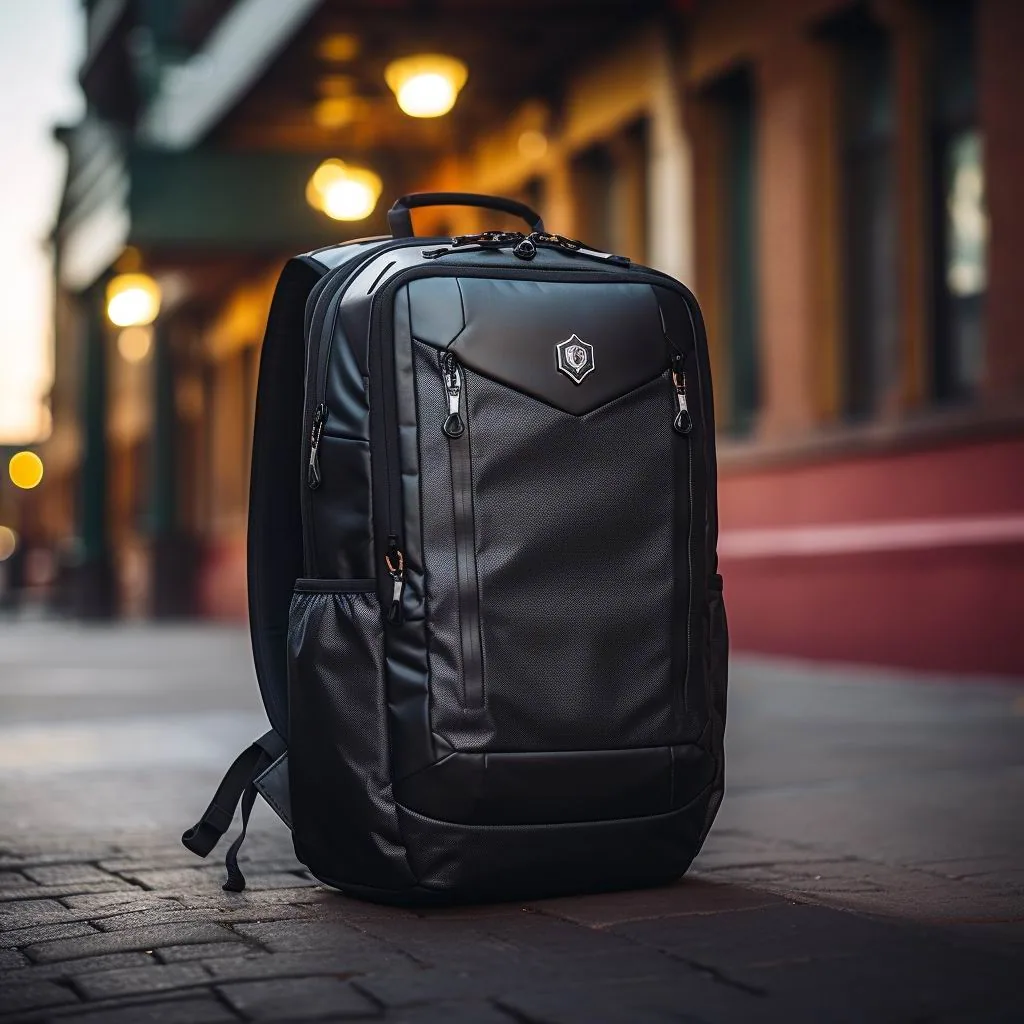
The loudest post-pandemic prediction was that office carry would disappear. The observed outcome is narrower: attendance settled around two to four fixed days for most professional employers, which produces a stable midweek load rather than a vanished one. That load is a 14-inch or 16-inch laptop, a charger, a packed lunch and gym or swim kit, and it fits comfortably into 18-24 litres. Volumes above 30 litres now sell mainly to travelling roles, while sub-15 litre slim bodies serve executives who already have a laptop sleeve. Planning around attendance patterns rather than headlines matters because corporate bag budgets follow headcount in the office, and that figure has held broadly steady for several years.
The useful consequence is that a two-body range can cover most of the market. A 20-24 litre weekday commuter with a suspended device sleeve and a separate base compartment handles the office audience, while a 30-35 litre travel body covers rail and short-haul work. Screen dimensions matter more than device count: outer shell dimensions should clear a 356 mm by 250 mm footprint for 16-inch machines with 5 mm of clearance either side, because anything tighter makes users force the laptop and eventually splits the sleeve binding at the top. Allowing those extra millimetres costs no fabric worth mentioning and prevents the single most common construction failure reported by corporate users each year.
- Plan for 16-inch outer dimensions with 5 mm clearance rather than nominal screen size.
- Two bodies cover most of the UK weekday market: roughly 22 litres and roughly 32 litres.
- Base compartments now outsell printed laptop marketing; a shoe or wet compartment drives conversion.
- Narrow footprints matter for lockers and underseat storage more than claimed litre totals.
Fluorine-Free Repellency Becomes the Baseline
The chemistry change arriving fastest is the withdrawal of long-chain fluorinated durable water repellents. Regulatory and retailer pressure across both the UK and the US has pushed converters toward fluorine-free alternatives, and the United States Environmental Protection Agency maintains detailed public material on per- and polyfluoroalkyl substances and their persistence at EPA. For a bag buyer the practical question is not ideology but durability: fluorine-free finishes typically lose performance faster under abrasion and washing, so the taped seam becomes more important than the topical finish. Suppliers substituting one fluorine-free product for another can move wash durability by ten points, so name the exact chemistry on the tech pack rather than the category.
Specify the property rather than the marketing name. Ask for spray-test ratings before washing and after five domestic cycles so that the drop is quantified, usually around ten to twenty points on a 100-point scale for a modern fluorine-free finish against a well-applied C6 predecessor. Then plan the hangtag honestly: a re-proofing instruction every eight to twelve weeks belongs on the care card, because a modern finish is a maintenance system rather than a permanent barrier. Tighter weaves and laminated panels compensate where extra tolerance is needed. Own-brand ranges benefit further, because re-proofing kit sold alongside the bag adds margin at the point where the customer relationship already exists.
Recycled Content Moves From Storyline to Documentation
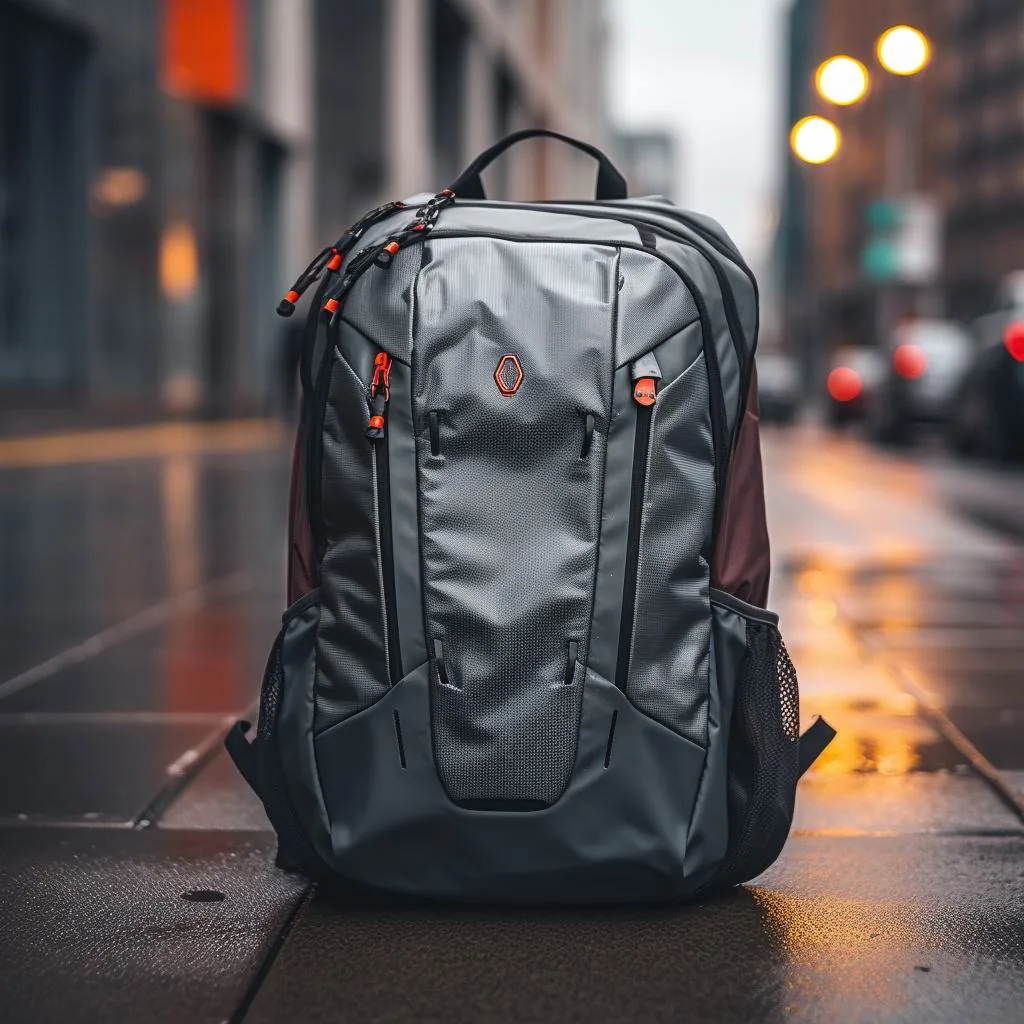
Recycled content stopped being a differentiator in UK outdoor and commuter ranges some time ago; in 2027 the differentiator is the paperwork behind it. Buyers increasingly ask suppliers to prove post-consumer input for the specific lot shipped, which means transaction certificates matched to purchase orders rather than a generic mill statement printed once a decade. Component reality also needs stating plainly: a shell can be 100% recycled while webbing, foam, thread and tape remain virgin, giving whole-product figures nearer 35-55% by weight. Establishing that figure at development stage protects the care label too, since whole-product percentages quoted badly are the most common source of retailer challenge.
That arithmetic has a direct effect on copy. Claims should describe what is true at component level because loose whole-product wording invites challenge under consumer protection rules, and corrections after print are expensive. Standard construction makes this easier: pick one shell across several bodies so large fabric lots generate one certificate set rather than five, and hold specialist recycled trims for a single flagship body where the narrative justifies their four to nine pence premium. A detailed treatment of certification language appears in our separate materials guide. Consider it money spent once per range rather than per style, because a single shared shell generates the evidence for every body built upon it.
Product Information Becomes Data, Not Cardboard
Labelling is the compliance area changing fastest, and it affects how development files are compiled. The European Union's Ecodesign for Sustainable Products Regulation introduces a digital product passport architecture that requires product information to travel with the item, and the Commission publishes the framework and its rollout timetable on the official European Union portal. Even for ranges aimed squarely at Great Britain the requirement is relevant, because most brands sell the same SKU into Northern Ireland or Ireland and will not tool two sets of labels for one product. Retail compliance teams increasingly audit these records rather than request them, so data captured once at sample stage is reused rather than painfully rebuilt.
Domestic obligations add a second layer. General product safety expectations in Great Britain are administered through the Office for Product Safety and Standards, whose requirements for traceability, contact details and clear warnings are set out on GOV.UK. In practice this pushes the buyer to capture facility identity, material batch references and warning text at purchase-order stage rather than at shipping. Doing that work once, in a single master data template, costs far less than reconstructing it retrospectively from six months of correspondence. Buyers handling several categories should use one template across all of them, because suppliers respond faster to a familiar structure than to a bespoke request each season.
Capture fabric mill references, trim supplier identity, batch numbers and warning text in one template at purchase order issue. Retrospective reconstruction across a finished season typically takes two to four weeks per drop.
Repairability and the Spare-Parts Question
Repairability reached the UK mainstream conversation via consumer law rather than lifestyle magazines, and it has now reached mailbags: buyers ask whether a buckle can be replaced in year three. A defensible answer rests on ordinary industrial choices. Use standard-size acetal side-release buckles rather than unique moulded shapes, specify replaceable webbing tails rather than permanently sewn ones on the load path, and keep spare components available for at least five years after the last production run. The unit cost of choosing stock sizes is usually negative, since common tooling is shared across styles. The same logic extends to cam and ladderlock components, where commonly used widths are stocked by virtually every supplier across the market already.
Documented repair paths cost money only where modularity is sold as a feature. Publishing a spares list, printing a part number on the reverse of each webbing tail and offering a stitch-through repair service adds perhaps six to twenty-two pence per unit depending on how much of the harness is interchangeable. The return arrives through warranty behaviour: brands that can ship a replacement buckle for two pounds see dramatically fewer whole-product returns, and the failure data they gather from those requests feeds directly into the following season's hardware specification. Log every request against its style code when it arrives, because quarterly summaries reliably hide the recurring patterns that actually drive downstream cost.
Hardware Upgrades Driven by Warranty Data
Closure failures dominate returns analysis across commuter categories, so 2027 development files show a consistent migration upward in hardware size. No. 5 zips are being replaced by No. 8 reverse coil on primary openings, and 20 mm load-path webbing by 25 mm, largely because the cost difference is eighteen to forty-five pence against a return that costs many multiples of the entire order value. Slider geometry follows: cord pulls replace flat tabs because users open packs one-handed while wearing gloves or holding a rail ticket. Considering the closure before the fabric feels counter-intuitive but is correct, since zip failures outnumber every other single defect category in commuter returns.
Two related specifications deserve attention because they are cheap and rarely requested. First, zip storm flaps: a 12-15 mm flap over the coil keeps grit and drizzle out of the chain and typically extends smooth operation by an entire season of daily urban use. Second, antioxidant treatment for plated components in any market exposed to winter de-icing salt or maritime air. Both are pennies, and both convert directly into fewer warranty emails, which is the only metric most buyers actually report upward. Both belong in every baseline specification regardless of price point, because the alternatives cost considerably more in returns administration than they ever saved at purchase.
What to Stop Doing in 2027
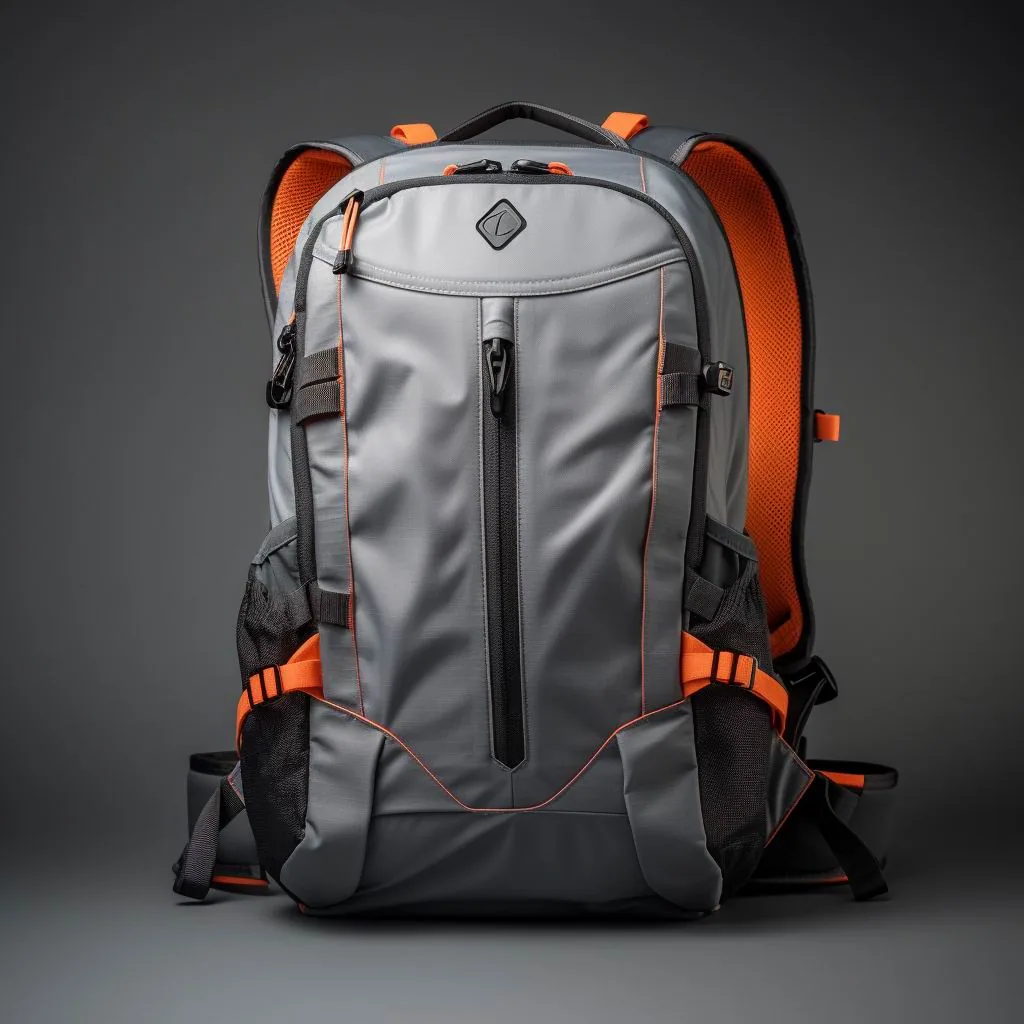
Subtractions are as diagnostic as additions. The features disappearing from credible UK ranges share one trait: they photograph well and cost money without doing any work. Decorative webbing loops that hold nothing, faux-leather patches that crack after eighteen months, oversized rubber logos that delaminate in summer heat, and internal organiser panels too small for any current device all belong in this category. Removing them typically saves twenty to forty pence and several grams, while improving how a pack reads on a shelf. Ask pattern cutters their honest opinion of each feature, because defects and sewing time concentrate in exactly the decorative details nobody ever uses.
Three further removals deserve mention because buyers still request them reflexively. Unnecessary compression straps on a 20-litre body add visual noise and nothing structural. Secondary side pockets without elastic or a firm base simply let bottles fall out, and were never going to be used as intended. Finally, laminating every internal surface to chase a water-resistance claim triples lining cost while reducing repairability, an outcome that contradicts the very trends this season's range is supposedly built around. Every retained feature should answer a question a customer actually asked; anything surviving merely because it appeared on last season's samples should be challenged at review.
- Drop decorative webbing; keep only loops tested with a specific accessory.
- Replace faux-leather patches with woven labels or laser-cut edge-bound badges.
- Remove compression systems that cannot actually compress anything at that volume.
- Resist full internal lamination; it defeats the repair argument you are making elsewhere.
SKU Count and Colourway Discipline
Assortment discipline is quietly the strongest 2027 trend, because it is where working capital hides. Most own-brand buyers underestimate how much a fourth or fifth colourway costs beyond fabric: another set of lab dips, another round of approvals, more cut tickets, more packaging variants, another block of unsold stock. Two core carryover colours plus one seasonal shade covers the overwhelming majority of demand for a commuter body, and the sales curve shows it almost immediately in markdown rates. Discount depth on the weakest shade usually exceeds the entire margin earned by the strongest, which is precisely why disciplined ranges outperform broad ones at identical turnover.
Numerically, a colourway is only viable if it clears the order threshold in two seasons. Minimum commitment is 500 pcs per style and colourway, so five shades of one body is a commitment of 2,500 pieces before any size or trim variation, and the third-best colour in that set will almost certainly be the discounted one in the January sale. A better structure is a strong core pair, one planned seasonal experiment, and a documented rule that a failing shade is dropped rather than repeated out of sentiment. Write that rule into the range plan at sign-off, because decisions taken while staring at unsold stock are rarely the ones taken at launch.
Calendar, Capacity and Cost Planning
None of the above compresses time, which is the constraint buyers most often discover too late. For own-brand ranges developed with QUANZHOU JUNYUAN BAGS, sample rounds occupy 6-10 working days for a standard body and 12-15 working days when taped seams, moulded panels or custom hardware enter the drawing. Bulk follows in 35-50 days, and every order meets a 500 pcs per style and colourway threshold. That pattern means a range intended for an early-September launch should be at second-sample stage by late spring, not at first-sample stage. Late additions then arrive too late for the window, which is exactly how most expensive emergency freight decisions came to be made in the first place.
Capacity context matters for larger programmes. Development runs across 4,950 m² of SGS-verified production floor space staffed by 137 colleagues over 7 production lines, with the organisation operating since 2014. Shipments are quoted FOB Xiamen against T/T 30/70 payment, and finished lots are sampled at AQL 2.5 following the switching procedures in ISO 2859-1. Buyers planning two or three seasonal drops should reserve line capacity in writing, because peak compliance and shipping windows overlap. Agreeing a rolling twelve-month schedule with nominated monthly volumes gives both sides planning certainty and usually secures allocation during congested months better than escalation does. Write it into the master agreement rather than repeating it each season.
Frequently Asked Questions
What backpack capacity should a UK commuting range carry in 2027?
Plan the core around 18-24 litres, which covers a 16-inch laptop, charger, lunch and light kit for hybrid schedules. Keep a 30-35 litre body for rail travellers and protected executives. Building device sleeves to clear a 356 mm by 250 mm footprint with 5 mm each side prevents the split binding failures that follow when users force oversized machines into tight sleeves.
Is fluorine-free water repellency really worse on performance?
Modern fluorine-free finishes lose durability faster under abrasion and washing, commonly ten to twenty spray-test points after five domestic cycles against a well-applied predecessor. Compensate with taped seams, tighter weaves and honest care labelling advising re-proofing every eight to twelve weeks. Specifying the measured property rather than a marketing name gives you a predictable, defensible result at the shelf. Budget for guidance printed on the care card, since customers otherwise blame the product rather than the finish applied to it.
How much recycled content can a backpack honestly claim?
Whole-product recycled content usually lands between 35% and 55% by weight, because webbing, foam, thread and tape are typically virgin even when the shell is fully recycled. Make component-level statements instead, keep transaction certificates matched to the specific purchase order lot, and use one shell fabric across several bodies so a single certificate set covers more SKUs. Shell-only statements also survive supplier changes far better than whole-product percentages recalculated every time a trim moves.
Does the EU digital product passport affect goods sold only in the UK?
It affects any range also shipped to Northern Ireland, Ireland or EU customers, and few brands tool separate labels for those markets. Even purely domestic programmes benefit from the same discipline: capturing facility identity, material batch references and warning text at purchase order stage costs days rather than the weeks needed to reconstruct it from old correspondence. Northern Ireland retailers operate under EU rules, so most brands simply build one record set covering every market they serve.
Are modular or repairable backpack features worth the unit cost?
Yes when built from stock components. Choosing standard-size acetal buckles instead of unique mouldings often costs nothing because tooling is shared. Publishing a spares list, printing part numbers on webbing tails and holding five years of stock adds roughly six to twenty-two pence, but shipping a two-pound replacement part is far cheaper than accepting a whole-product return. Stock-size components cost nothing extra because the tooling is already shared across the remainder of the catalogue.
Why are 2027 ranges moving to larger zips?
Closure failure is the single most common cause of warranty return across commuter bags. Moving from No. 5 to No. 8 reverse coil on primary openings costs about eighteen to forty-five pence per piece, while a returned pack costs many multiples of that order value. Adding a 12-15 mm storm flap over the coil costs pennies and typically buys an extra season of smooth operation.
How many colourways should one backpack style carry?
Two core carryover colours plus one seasonal shade covers most demand, and a colourway should earn itself by clearing stock within two seasons. Anything beyond that commits working capital to a shade that usually ends as the January markdown. Minimum commitment is 500 pcs per style and colourway, so five shades of a single body represents 2,500 pieces before any variation.
Which decorative features should come out of a 2027 range?
Remove anything that photographs well and does no work: decorative webbing loops, faux-leather patches that crack within eighteen months, oversized rubber logos that delaminate in heat, organiser panels too small for current devices, and compression straps on bodies too small to compress. Typical saving runs twenty to forty pence per unit and several grams of dead weight. Every removed feature also reduces sewing time and defect rate, and that saving compounds across a full production run.
How early should a 2027 autumn range start sampling?
Work backwards from the shelf date. With samples taking 6-10 working days, or 12-15 for complex builds, and bulk taking 35-50 days, a range landing in early September should be at second-sample stage by late spring. Reserve line capacity in writing for multi-drop years, because compliance testing windows and peak shipping seasons overlap heavily. Late additions then arrive outside the window, which is precisely how costly emergency freight decisions get made.
What inspection standard should UK buyers specify for backpack shipments?
Specify AQL 2.5 under the sampling procedures in ISO 2859-1, which sets sample sizes and accept/reject numbers by lot size. Agree defect classification in writing at the same time, separating critical, major and minor categories, since arguments after inspection usually concern definitions rather than the sample size itself. Record the agreement in the purchase order rather than relying on a standard alone.
Do trend changes such as smaller volumes reduce unit cost?
Smaller weekday volumes generally reduce cost, because an 18-24 litre body uses less fabric and needs less internal reinforcement than a 30 litre equivalent, often saving ten to twenty-five pence. Hardware and closure decisions sit in the opposite direction, adding eighteen to forty-five pence, so the net position should be modelled per style rather than assumed across a range. Model each style separately rather than assuming a range-wide saving, because hardware decisions move the figure the other way.
Turn 2027 Direction Into a Costed Development File
Themes are easy to present and hard to cost. The useful work happens when each one becomes a named finish, a closure size, a test report and a figure on the bill of materials, agreed before the first sample rather than discovered during inspection. Buyers who do this once build a template that every following season reuses, which is where the compounding advantage lies.
Range development support covers finish selection, hardware specification, lab dips, sample rounds and pre-shipment inspection to AQL 2.5 per ISO 2859-1. Minimum order quantity is 500 pcs per style and colourway, sampling runs 6-10 working days with 12-15 for complex builds, and production is scheduled over 35-50 days quoted FOB Xiamen on T/T 30/70 terms.
Email: service@junyuanbags.com
WhatsApp: +86 177 5002 0688