What Belongs in a Backpack Tech Pack: The Fourteen Blocks Buyers Forget
A backpack tech pack needs fourteen specification blocks before a quotation means anything: dimensions with tolerances, a fabric and coating schedule, a hardware table, a stitch and thread spec, branding coordinates and a test callout. Blank fields are the largest single cause of re-sampling on a new style.
This guide sets out what belongs in each block, the numbers that carry weight, and how one vague field turns into a defect at goods-in. Commercial references are made against the terms QUANZHOU JUNYUAN BAGS works to: 500 pcs per style and colourway as the minimum, 6-10 working days for sampling, 35-50 days for bulk, inspection at AQL 2.5 per ISO 2859-1, FOB Xiamen, T/T 30/70.
Why the Tech Pack Sets Cost and Defect Rate
A tech pack is the contract drawing for a bag. Every price returned is a direct function of the fields on it: fabric denier, coating weight, zip gauge, stitch density and hardware grade. Two packs that look identical in a photograph can differ by 40 per cent in cost because one specifies a #5 coil zip and the other a #8, or because one calls for 600D polyester and the other 900D. When a field is blank, the line fills it, and the line will fill it with the cheapest option that survives a visual check. Treat any quotation received before the pack is complete as an estimate for budgeting, not as a number you can hold anyone to.
The same blank fields drive defects. If the pack does not state a minimum Martindale rub count, there is no objective basis for rejecting a base panel that abrades through in six months. If it does not state a stitch density in stitches per centimetre, a seam that splits at 8 kg cannot be called a defect at all. Buyers who treat the document as a formality pay twice: once in re-sampling, and again in claims. A complete fourteen-block pack typically removes one full sampling round from a new style. The cost of completeness is one to two hours of a designer's time, which is trivial against a four-week delay on a launch.
- Every blank field is a cost decision you did not make
- Undefined tolerances become unenforceable claims
- Test callouts convert opinion into pass or fail
- A complete pack removes roughly one sampling round
Cover Page, Version Control and the Revision Log
The cover page carries the style code, season, product name, target retail price and the date of issue. Version control is what makes the rest of the document enforceable. Use a two-part code such as MBP-2841-TP-v03, where v03 is the third issued revision, and never allow a verbal change to survive a phone call. Every amendment since the first issue belongs in a revision log with the date, the block changed, the old value and the new value, because the escalation you will have in eleven weeks turns on who changed what and when. Number every page and put the version code in the footer, because a single printed page circulating without it will resurface as an instruction.
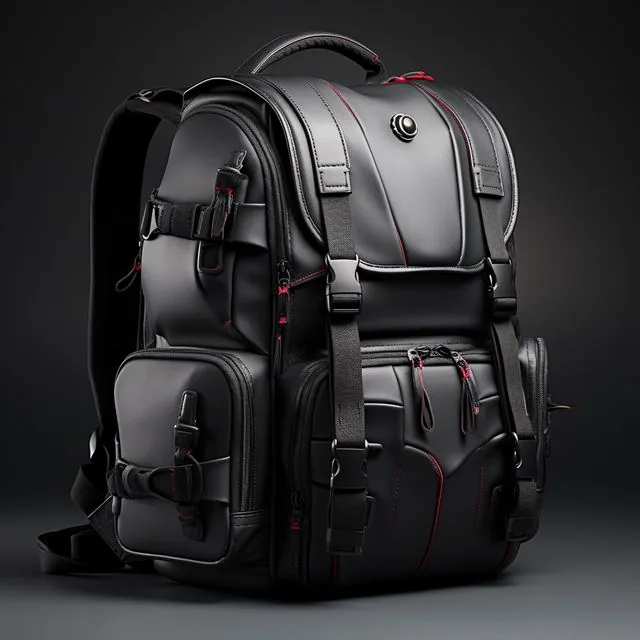
Attach a flat sketch sheet with front, back, side and base views, plus an exploded view of internal panels. Photographs of a reference sample are useful but are not a substitute for a measured drawing, because photographs hide stitch lines, edge binding and the position of a hidden magnet closure. Mark every critical dimension on the drawing with a letter code and repeat that letter in the dimension table, so nothing depends on a reader measuring a screen with a ruler. Include a scale bar on each view and note the units, since a millimetre drawing read as centimetres produces a bag twice the intended size.
| Revision | Block changed | Old value | New value |
|---|---|---|---|
| v01 | Initial issue | - | - |
| v02 | Fabric schedule | 420D nylon | 600D rPET |
| v03 | Zip schedule | #5 coil | #8 coil |
| v04 | Branding | Woven label | Silicone badge |
Dimensions, Volume and Tolerance
State external height, width and depth at the packed silhouette, not flat, and give a tolerance. A workable tolerance for a sewn soft good is plus or minus 3 mm on dimensions under 300 mm and plus or minus 5 mm above, with volume stated as a nominal figure plus or minus 1.5 litres. Volume should be measured by a fill test with 20 mm beads or by a water-displacement equivalent, and the method must be written down, because two factories using two methods will report two numbers for the same bag. State whether dimensions are taken on an empty or a packed bag; the two differ by 8-12 mm on depth for a soft pack with foam panels.
Then list the functional clear dimensions that actually decide whether the product works: internal laptop sleeve width and height with 5 mm of clearance over the device, bottle pocket internal diameter, strap length adjustment range, and the width of every webbing run. A laptop sleeve quoted as 15-inch is meaningless; a sleeve quoted as 355 x 245 mm internal clear is enforceable. Add the empty weight target in grams with a tolerance of plus or minus 5 per cent. Give the bottle pocket as an internal diameter plus a stretch allowance, because a stated 70 mm pocket in a rigid fabric will not hold a 70 mm bottle.
Fabric, Lining and Coating Schedule
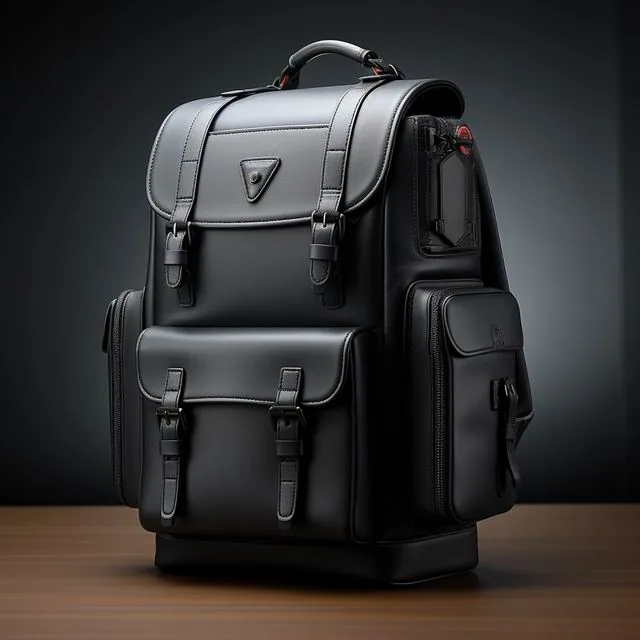
Split the schedule into face fabric, secondary fabric, reinforcement panels and lining, and give denier, weave, composition and grammage for each. A 600D polyester at 210 gsm behaves differently from a 600D polyester at 260 gsm, and the difference shows up in abrasion life and in how the panel sits on a frame sheet. State the coating type and weight too: a PU coating at 0.08 mm and a TPU coating at 0.12 mm are not interchangeable, and the coating is usually the first thing to fail by hydrolysis in a damp UK winter. Where two panels use the same denier but different finishes, list them as separate lines so a substitution cannot happen silently.
Call out performance numbers rather than adjectives. Abrasion resistance is normally referenced to ISO 12947 with a minimum rub count per panel: 30,000 rubs on the base, 20,000 on the face, 10,000 on the lining. Add colour fastness to rubbing under ISO 105-X12 at 4 dry and 3-4 wet, and a hydrostatic head in millimetres for any panel described as water-resistant. Each of these is a number a laboratory can produce, which is the point. Pair each figure with the panel it applies to, because one number covering the whole bag will be met at the cheapest panel's performance. It also lets a second supplier quote on identical terms.
- Face fabric: denier, weave, gsm, finish
- Coating: type and thickness in mm
- Lining: denier and colour
- Abrasion: ISO 12947 rub count by panel
- Colour fastness: ISO 105-X12 grade
Hardware and Zip Schedule
The zip schedule should name the gauge, the type, the brand or approved equivalent, the tape colour, the slider finish and the puller style for every single zip on the bag. A #5 coil on a front pocket and a #8 coil on the main opening is a normal split, and the main zip on a 30 litre travel pack should not be lighter than #8. Water-resistant builds need a coated or laminated tape with a stated splash rating, and the slider should be specified with a lock so a fully packed bag does not creep open on a train.
Buckles and adjuster hardware need a width, a material and a load figure. A 25 mm side-release buckle on compression straps is typically rated at 200-250 N, while a 38 mm buckle on a hip belt should be rated higher and tested after conditioning. Plated metal hardware should carry a corrosion requirement, and salt-spray exposure under ISO 9227 for 24-48 hours with no base-metal corrosion is a common pass mark for a bag sold into a coastal or wet market. Ask for the hardware to be conditioned at 23 C and 50 per cent relative humidity before load testing, or results will not be comparable.
| Component | Specification | Test reference |
|---|---|---|
| Main zip | #8 coil, reverse tape | ISO 12947 tape abrasion |
| Pocket zips | #5 coil | Cycle test 5,000 |
| Compression buckle | 25 mm, 250 N | ISO 9227, 24 h |
| Hip belt buckle | 38 mm, 400 N | ISO 9227, 48 h |
| D-rings | 20 mm, 300 N | Pull test on assembly |
Seam, Stitch and Thread Specification
Stitch density is the cheapest quality lever on the sheet and the most frequently omitted. Specify 7-9 stitches per centimetre on structural seams, 6-8 on lining seams, and name the thread: bonded nylon or polyester at Tex 40 for light assemblies and Tex 70 for strap attachments and handle roots. State the seam construction, since a single-needle plain seam and a bound or felled seam of the same stitch count differ substantially in strength and in how the panel behaves under load. Specify the needle size alongside the count, since a heavy needle at high density is what perforates a coated fabric into early failure.
Then specify reinforcement. Every stress concentration needs a bar tack or an X-box: strap roots, handle roots, hip belt attachments, bottle pocket tops and the ends of every zip. Give a bar tack size in millimetres, typically 12 x 3 mm with 42 stitches, and list the exact positions on the drawing. Seam strength itself is verified against methods such as ASTM D5034 for grab strength, with a pass figure agreed before sampling rather than after a failure. Add a pull test figure for each reinforced point, typically 250 N at a strap root, and require the result to be recorded before shipment.
- 7-9 stitches per cm on structural seams
- Tex 70 thread on all load-bearing attachments
- 12 x 3 mm bar tacks at every strap root
- Bound or felled seams on the base panel
- Agree the pass figure before sampling, not after
Branding, Labels and Placement Coordinates
Every logo needs a method, a size, a colour reference and coordinates measured from a stated datum, usually the bottom-left corner of the front panel or the centre line of the lid. A note reading logo on front panel is not a specification. A note reading 55 x 18 mm silicone badge, centre line of front panel, baseline 40 mm above the bottom seam, Pantone 426 C is. The same applies to zip puller logos, lining prints and any hardware engraving. For a printed logo give the ink type and the cure temperature, because a print that cracks at 40 C will not survive a first wash.
Labels are a separate block and they carry legal weight in the UK. Specify the sewn-in composition label, the care label with its symbol set, the country-of-origin tag and any barcoded hangtag, and give the position, the fold and the stitch method for each. Labels should be specified as durable through five domestic wash cycles without delamination or illegibility, and the artwork file should be attached to the pack as a vector rather than described in prose. Attach the artwork as a vector file and state the minimum legible text height, usually 1.2 mm, so small print does not fill in.
Colourway, Dye Lot and Trim Matching
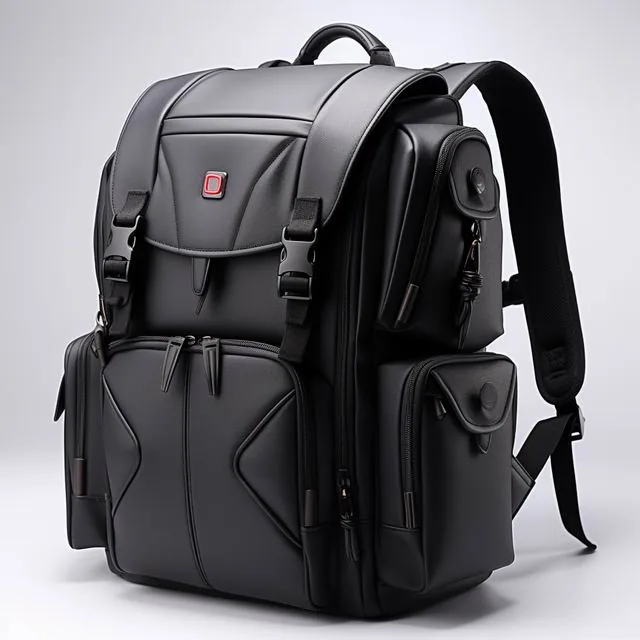
Give a Pantone TCX reference for every fabric colour, then require a lab dip approval before bulk dyeing and state the tolerance in Delta E, normally 1.0 or less against the approved standard under D65 lighting. Nylon and polyester take dye differently, so a colourway that combines a nylon face with a polyester lining will need two separate approvals and two separate dye lots, and the pack should say so explicitly. Keep the approved lab dip under controlled conditions and renew it every twelve months, because dyed standards fade on a desk in sunlight. Require two dips per colour, one on each substrate, where the colourway mixes fibres.
Trim matching is where colourways fall apart. Zip tape, webbing, binding, thread and mesh all need to be matched to the approved standard, not to the Pantone book, and each needs its own reference or an approved physical swatch card held by both sides. A black that is right on the face fabric can read blue against a black webbing tape, and the only defence is a physical standard retained under controlled conditions and renewed every twelve months. Build a swatch card holding every matched trim and require the card to travel with the order rather than a digital reference alone.
Testing Callouts and Inspection Level
The test block converts every performance claim into a pass or fail line. List each test, the method, the panel or component it applies to, the pass criterion and the frequency. A realistic list for a commuter pack runs to eight or ten entries: abrasion by panel, colour fastness to rubbing and light, hydrostatic head, zip cycle testing, strap attachment pull, buckle corrosion, seam strength, and a loaded-carry test at a stated weight for a stated distance. State the sampling size for destructive tests, usually three units per test, and who pays for the samples that are destroyed. Name the laboratory, or accept any accredited equivalent.
Inspection level belongs on the same sheet. Finished goods are inspected to AQL 2.5 under ISO 2859-1, with defects classified as critical, major or minor, and the classification list attached so an inspector is not improvising. Require three retained samples per style per colourway, one kept by the supplier, one shipped ahead of the bulk for reference and one held by the buyer, because any dispute about shade or construction resolves faster against a physical sample than a photograph. Record the inspector's defect list against the classification sheet so the acceptance decision can be reviewed later rather than argued. Both sides should sign the retained set before bulk cutting begins.
- Name the method, the panel and the pass figure
- Classify defects as critical, major or minor
- Inspect to AQL 2.5 under ISO 2859-1
- Retain three samples per style per colourway
- Renew physical colour standards every 12 months
The Fields That Trigger Re-Sampling
The fields most often left blank, in order of the damage they cause, are stitch density, bar tack positions, coating thickness, trim colour standards and the internal clear dimensions of the laptop sleeve. Any one of them produces a sample that looks correct and performs wrongly, which is the expensive kind of failure: it passes a visual approval, reaches bulk, and then has to be fixed in the field or written off against a retailer claim. A simple audit works: read every field and ask what the factory would do if it were blank, then fix any field where the answer is uncomfortable.
A complete pack shortens the cycle measurably. Sampling runs 6-10 working days on a straightforward build and 12-15 working days where the structure is complex, such as a moulded front panel, a welded seam or an integrated frame. Bulk follows in 35-50 days on MOQ 500 pcs per style and colourway. A pack that arrives with all fourteen blocks filled usually clears approval on the first or second sample, and each avoided round is two to three weeks off the critical path. The saving compounds across a range, since three styles developed on a complete template each clear faster than one style built from a partial sheet.
Check that every panel has a denier and a gsm, every zip has a gauge, every seam has a stitch count, every logo has coordinates, and every performance claim has a test method and a figure.
Frequently Asked Questions
How many pages should a backpack tech pack be?
Between 8 and 16 pages for a standard commuter or travel pack, and up to 22 for a moulded or welded build. Length is a by-product of completeness rather than a target. The fourteen blocks are cover and revision log, drawings, dimensions, fabric schedule, hardware schedule, stitch spec, branding, colourway, testing, packing, labelling, and the bill of materials. Artwork, the bill of materials and colour standards are usually attached as annexes rather than counted in the page total.
What tolerance should I allow on backpack dimensions?
Use plus or minus 3 mm on dimensions under 300 mm and plus or minus 5 mm above, with volume at nominal plus or minus 1.5 litres. Sewn soft goods move with humidity and with the tension on the needle plate, so a tolerance of zero is not achievable. State the measurement method alongside the tolerance or the number cannot be enforced.
Why do two factories quote different volumes for the same bag?
Because they measure differently. One fills with 20 mm beads and taps the bag down, another uses a water-displacement equivalent, and a third multiplies three external dimensions by a packing factor. Differences of 2-4 litres on a 30 litre pack are common. Write the method into the tech pack so both sides report the same figure. Agreeing the method before sampling removes the argument entirely.
Do I need to name a zip brand in the tech pack?
Yes, or name an approved equivalent with a documented gauge and cycle-test result. A #8 coil from one supplier and a #8 coil from another differ in tape weave, slider geometry and coating adhesion. Naming the brand plus the gauge, tape colour and slider finish removes the substitution that most often appears between the approval sample and the bulk shipment.
What stitch density is standard for a backpack?
Seven to nine stitches per centimetre on structural seams and six to eight on lining seams is the normal range. Higher density can weaken the fabric by perforating it, so more is not automatically better. Pair the figure with a thread specification, typically bonded nylon or polyester at Tex 40 for light work and Tex 70 on strap and handle attachments.
How do I specify bar tacks on a backpack?
Give the size, usually 12 x 3 mm with about 42 stitches, and mark every position on the drawing: strap roots, handle roots, hip belt attachments, bottle pocket tops and both ends of every zip. A drawing note saying reinforce as required will be interpreted as the minimum the line can get away with, and strap-root failures are among the most common field defects.
What abrasion figure should I set for a backpack base panel?
Thirty thousand Martindale rubs under ISO 12947 is a sensible floor for a base panel on a commuter or travel pack, with 20,000 on the face and 10,000 on the lining. Raising the base figure usually means moving from 420D to 600D or adding a coated reinforcement panel, which adds 60-90 g and a small cost per unit.
Should colour tolerance be written into the tech pack?
Yes. Give a Pantone TCX reference, require a lab dip approval before bulk dyeing, and set a Delta E tolerance of 1.0 or less against the approved physical standard under D65 lighting. Where a colourway mixes nylon and polyester, require two separate approvals because the two fibres take dye differently and will not match from a single reference. Renew the physical standard every twelve months, because dyed swatches fade under office lighting.
Who owns the labelling specification in a tech pack?
The buyer does. Composition, care symbols, country of origin and any warning text are legal statements attached to the product, and a supplier will only reproduce artwork supplied or approved. Specify position, fold and stitch method, and require legibility after five domestic wash cycles so the label survives the life of the bag. The supplier reproduces artwork; it does not decide what the artwork says.
How long does sampling take once the tech pack is issued?
Six to ten working days for a straightforward build once materials are confirmed, and 12-15 working days for complex structures such as moulded panels or welded seams. Bulk follows in 35-50 days on MOQ 500 pcs per style and colourway. A complete pack with all fourteen blocks filled typically removes one full round from that schedule. Add laboratory time for any chemical or physical test booked alongside the sample.
What is AQL 2.5 and where does it go in the document?
AQL 2.5 is the acceptable quality limit used for finished-goods sampling under ISO 2859-1, and it belongs in the testing block of the tech pack alongside the defect classification list. Critical defects such as a broken stitch line at a strap root are normally treated as zero-acceptance regardless of the AQL applied to minor cosmetic issues.
Can I change a tech pack after the approval sample?
Yes, but only through a numbered revision with the old and new values recorded in the revision log. A verbal change will not survive a quality dispute eleven weeks later. Every revision should be re-costed, since a change from a #5 to a #8 zip or from 420D to 600D fabric moves the unit price and sometimes the delivery date.
Fill Every Block Before You Ask for a Price
A quotation built on a partial specification is a guess, and a guess re-costed after sampling costs two to three weeks. Spending an extra hour on stitch counts, bar tack positions and trim colour standards is the cheapest schedule insurance available on a new bag programme.
QUANZHOU JUNYUAN BAGS develops specification programmes from buyer tech packs at MOQ 500 pcs per style and colourway, coordinates sampling in 6-10 working days and 12-15 for complex builds, and confirms bulk at 35-50 days against AQL 2.5 under ISO 2859-1, FOB Xiamen, T/T 30/70.
Email: service@junyuanbags.com
WhatsApp: +86 177 5002 0688