Backpack Guide for Apprentices and College Students: One Bag, Two Very Different Days
An apprentice's backpack has to survive two unrelated jobs in the same week: 26-34 L covers both, provided the bag has a wipeable base, a separate zone for dirty PPE and gloves, and a harness that stays comfortable between 4 kg and 9 kg. Under 24 L fails a tool day; over 36 L fails most college lockers.
This guide is written for the 16-19 age group moving between a training provider or college and a workplace, which is a different problem from either school or full-time employment. The key constraints are locker geometry, a real budget of roughly £45-£90, employer rules about what may be brought onto site, and the fact that one bag has to stay presentable while carrying things that are not.
Two Days That Share Nothing Except the Bag
A Level 3 construction apprentice might spend Monday to Wednesday on site carrying gloves, goggles, a tape measure, a multitool and a packed lunch, then spend Thursday and Friday at college with a laptop, three lever-arch folders, a calculator and a set of drawing instruments. Those are opposite specifications. The tool day wants a rigid base, high abrasion resistance and pockets that can be wiped out; the college day wants a suspended laptop sleeve, document protection and something that does not look out of place in a lecture theatre. A bag designed for one of those days will usually fail the other within a single term, and that is the problem worth solving.
- Site days: dense, dirty, sharp contents of 6-11 kg, carried over rough ground.
- College days: flat, fragile contents of 3-5 kg, carried between desks and buses.
- Block release: some apprentices do a full week of one then a full week of the other.
- Hybrid days: a morning on site followed by an afternoon class is the hardest case of all.
Designing for both is mostly about separation and cleanability rather than about clever features. The priorities are a lining that can be wiped rather than one that absorbs, at least one zone that stays clean because nothing dirty ever enters it, and a structure that prevents the bag collapsing into a shapeless lump when it is half full. Volume solves very little on its own: a 40 L sack makes both days worse, because everything migrates and the bag no longer fits under a desk or into a locker shelf. Fit to purpose beats extra litres every time, which is counter-intuitive when everybody around you is buying larger.
Volume by Apprenticeship Route
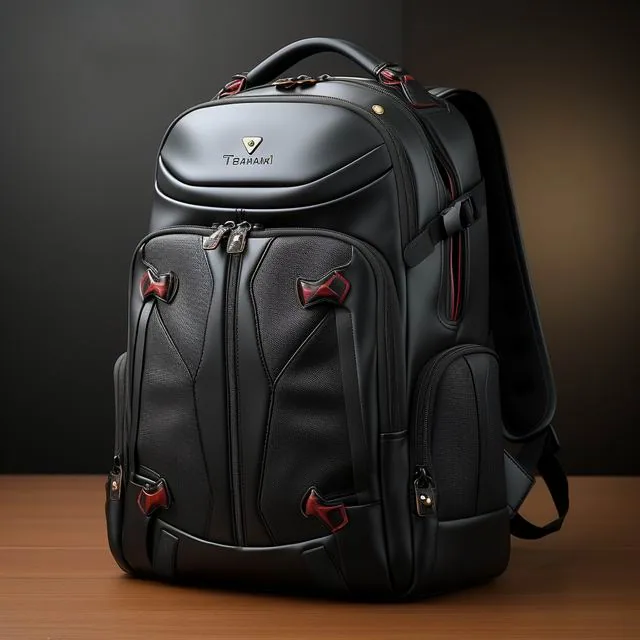
There is no single correct size, but the ranges are narrow once you know what the route carries. Engineering and manufacturing apprentices tend towards 26-30 L, because their day involves a laptop or tablet plus a small tool roll. Construction and building services sit at 30-34 L, because PPE and hand tools are bulky. Business administration, digital and health routes often get away with 20-24 L, and usually should, because they also need the bag to look presentable in a client-facing office. Where appearance matters, resist anything with external tool loops or heavy reinforcement, because they read as site equipment rather than professional kit. Ask two people doing different routes about the right size and you will get two confident, conflicting answers.
| Route | Typical daily load | Recommended volume | Note |
|---|---|---|---|
| Engineering and manufacturing | 5-8 kg | 26-30 L | Tool roll plus laptop or tablet |
| Construction and building services | 7-11 kg | 30-34 L | PPE plus hand tools dominate |
| Business, digital and finance | 3-6 kg | 20-24 L | Presentation matters most |
| Health, care and early years | 4-7 kg | 22-28 L | Uniform changes add bulk |
| Motor vehicle and transport | 6-10 kg | 28-32 L | Dirty kit needs a wipeable zone |
The mistake most first-year apprentices make is buying too big on the advice of someone doing a different job. A 35 L bag half full is genuinely worse than a 28 L bag correctly packed: contents slide, folders bend in the bottom, and the extra height catches on door frames and bus seats. It also costs more, which matters when the purchase is coming out of a first pay packet rather than being supplied by the employer. Spending slightly more on the right size costs less than replacing the wrong one in February. Fit beats capacity every time, and a bag that fits well gets used rather than replaced.
UK College Locker Geometry
Lockers are the constraint nobody warns you about. Further education colleges and private training providers generally use steel personal effects lockers of around 300-380 mm internal width, 450-500 mm depth and anything from 300 mm to 900 mm of clear height depending on whether the unit has a shelf and a hanging rail. A bag deeper than 250 mm front to back will not sit flat on a narrow shelf, and anything taller than about 550 mm will not hang from a standard hook without blocking the door. Two-tier units are the tightest constraint most apprentices meet, because a bag that cannot lie flat will not fit at all.
- Width: keep packed width under 300 mm so the bag fits a single-tier locker slot.
- Depth: under 250 mm when loaded, otherwise the door will not close on a shallow unit.
- Height: under 550 mm if the locker relies on a top hook rather than a floor.
- Check the base: some colleges issue laptop lockers of only 300 x 450 x 150 mm.
- Ask before buying: two colleges three miles apart use completely different units.
The consequence for bag choice is that a tall narrow pack beats a short wide one. A 30 L bag shaped roughly 300 x 220 x 490 mm clears almost everything in UK further education, while a 30 L bag shaped 360 x 280 x 350 mm does not. Retailers rarely publish usable shape, only stated volume, so ask the provider or measure in person. If your training provider wants bags stored under a desk rather than in a locker, the relevant number drops further, usually to about 420 mm of height. Where your provider offers only a hanging slot, treat 550 mm as your absolute maximum external height rather than an ideal.
Keeping Site Kit Away from Coursework
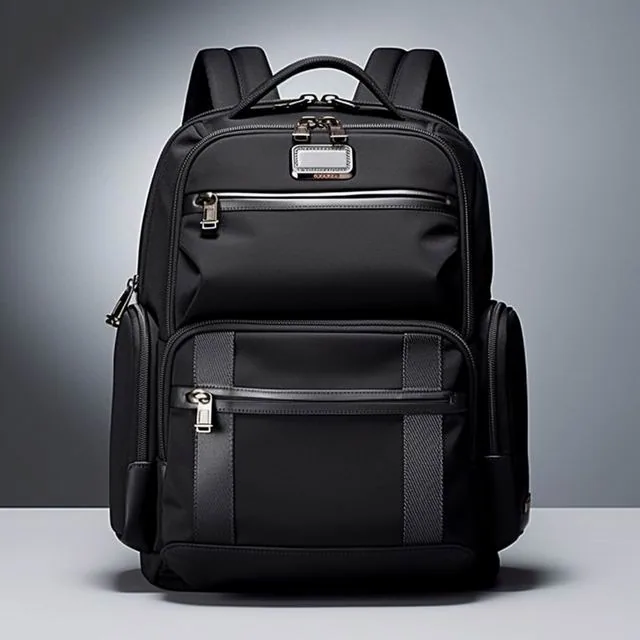
This is the single most useful feature to specify and the one least often offered. Grinding dust, PVA, flux, oil and general grit transfer from gloves and boots onto paper, screens and clothing within a week, and once a laptop lid has picked up a fine abrasive film it will mark whatever it rests against thereafter. The answer is a physical barrier: a lined secondary compartment used only for dirty items, reachable from the outside, ideally at the base of the bag. Nothing else on the bag protects your coursework half as effectively as simply never allowing dirty items into the same space. Nothing else you specify protects coursework half as effectively as simply keeping the two categories apart.
- A base-access compartment reserved for gloves, goggles and boots, lined in wipe-clean TPU.
- A document sleeve kept strictly for paper, positioned against the back rather than in the lid.
- A laptop sleeve with a lip above the opening so nothing can slide down into it.
- No shared interior: anything dirty goes into its own closed space, never into the main body.
- Weekly wipe-down with warm water, then dry fully open to keep the lining from souring.
The second-order problem is dye transfer, which affects dark-coloured bags used by persons carrying light uniforms or pale coursework. Poorly fixed black and navy polyester can rub colour onto paper and fabric, and it is worth checking whether the supplier has tested to AATCC colour fastness test methods for rubbing and perspiration fastness. A crocking test result of grade 3 or better for dry rubbing is a reasonable threshold, and it costs nothing to ask the question before buying a bag you intend to use alongside clean paperwork. Any supplier already selling into education should have those reports on file and able to produce them quickly.
Load Limits for Still-Growing Backs
The widely used rule for adolescents is more conservative than for adults. Where a grown adult might carry 15-20 per cent of body mass without complaint for short periods, a 17-year-old is better served by keeping daily loads near 10 per cent. For a typical body mass of 60-75 kg in this age group that means roughly 6.0-7.5 kg on ordinary days, with occasional peaks above that handled by carrying fewer heavy items rather than by accepting them as normal. Occasional heavy days are fine, but repeated ones at that age are worth treating seriously rather than shrugging off. Growing backs tolerate repeated load less well than finished ones, which is the whole argument for caution.
Aim for about 10 per cent of body mass as a daily ceiling for anyone still growing, which is around 6-7 kg for most 16-19 year olds. Above 12 kg consistently, consider splitting the load or using a second bag.
Because the load swings between 4 kg and 11 kg across the week, harness adjustability matters more than harness luxury. Straps that can take up more than 80 mm of length handle both a light college day in a coat and a heavy site day in workwear. A hip belt is worth having above roughly 6 kg, and a sternum strap is worth having above 4 kg, because it stops straps sliding outward on narrow shoulders, which is the most common complaint from this age group. Both features are cheap, both are retro-fittable, and both remove complaints that otherwise end in a bag being abandoned. Comfort complaints from this group are usually fit complaints rather than capacity ones.
What Employers Provide and What You Buy
It pays to ask before spending anything. Most employers issue statutory personal protective equipment, and many issue a branded bag for employees attending college on day release, particularly in construction, utilities and rail. Where a bag is issued, it is usually a promotional-quality item rather than a serious technical product, fine for a laptop and a folder, less suitable for tools and boots. Where it is issued and branded, some employers also prohibit bringing personal bags into certain areas. Knowing all three answers before you shop saves both money and an awkward conversation with your supervisor later. Thirty seconds asking during induction saves both money and an avoidable conversation on your first day.
- Ask HR during induction whether day-release equipment is provided; many do, quietly.
- Check whether personal bags are permitted in the workplace beyond the locker area.
- Ask whether a branded bag is mandatory, which settles the appearance question instantly.
- If nothing is issued, ask whether there is a uniform or equipment allowance against receipts.
- Keep receipts: some training providers reimburse course-related equipment purchases.
Where the apprentice buys their own, the sensible approach is one good bag rather than two mediocre ones, because equipment budgets at this age rarely run beyond £60-£90. The trade-off is usually between abrasion resistance and appearance: a 900D construction with a reinforced base handles tools and concrete, while a cleaner 600D with a coated finish looks appropriate in a client-facing office. Choose according to what the majority of your week actually involves, not the job you think you will have in year three. Buying for the week you have rather than the career you want is the single most reliable way to avoid wasting money.
What £45, £70 and £90 Actually Buys
Three clear tiers exist in UK retail. Around £45 buys 600D polyester, a plain finish, number 5 zips and webbing at 20-25 mm, which is adequate for a college-only load and will show wear after roughly 12-18 months of daily mixed use. Around £70 buys 900D with a coated base, number 8 coil zips on the main opening, better hardware and around 2.0-2.6 times the abrasion life. Above £90 you are generally buying brand name, warranty terms and design rather than additional durability. Above roughly £110 you are paying for marketing, and there is nothing wrong with that if you value the design. Which is fine, provided you know exactly what you are paying for and why it costs extra.
| Price band | Typical spec | Expected mixed-use life |
|---|---|---|
| £40-£55 | 600D face, #5 zips, 20 mm webbing | 12-18 months |
| £60-£80 | 900D face, coated base, #8 zips | 24-36 months |
| £85-£110 | 900D or 1680D, branded hardware, warranty | 36-48 months |
| Issued / promo | 210D-420D, printed logo | 6-12 months under tools |
Whatever the budget, ask about two things. First, the abrasion result for the base fabric, measured to ISO 12947: anything below about 20,000 Martindale cycles will go through quickly at the corners where an apprentice sets a loaded bag down. Second, the warranty wording, which should cover stitching and zip failure rather than materials alone, since those are the two realistic claims. A two-year cover stated in writing is worth more than a lifetime promise with exclusions. Those two questions take two minutes to ask and answer more future benefits than another ten minutes of product comparison. Two questions, two minutes, and a far better answer than another hour of reading product listings.
Site Rules That Change What You Can Carry
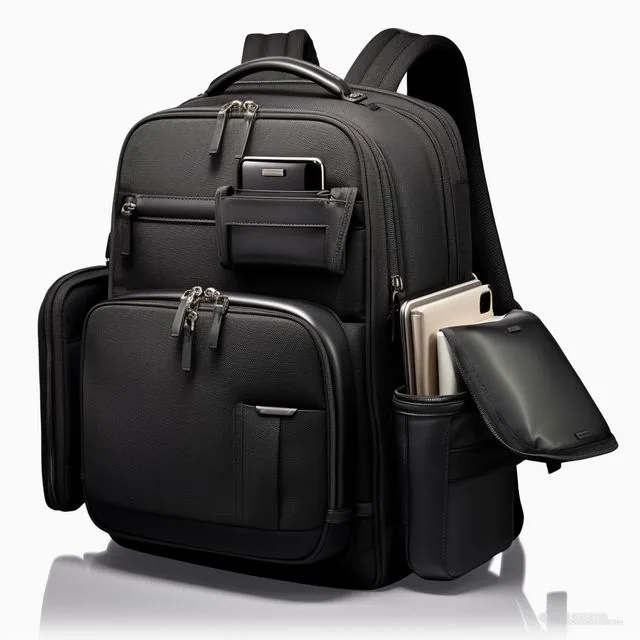
Once you pass the gate, the bag stops being a personal item and becomes something subject to site rules. Most UK sites expect high-visibility clothing, safety footwear and eye protection in working areas, and several restrict bags in the immediate work zone for trip hazard and cleanliness reasons. The relevant reference for what is expected on a construction site is the HSE construction guidance, and individual principal contractors layer their own rules on top, which can include restrictions on rucksacks in plant areas. Your supervisor or induction trainer can tell you in thirty seconds what is permitted, and asking costs nothing. Asking what is permitted costs nothing and prevents a bag being turned back at the gate.
- Nothing dangling: loose straps catch on scaffolding, plant and conveyor housings.
- No external hardware that can scratch vehicles, panels or finished surfaces.
- Expect search: some sites inspect bags leaving as well as entering, so keep it tidy.
- Keep PPE accessible at the top rather than buried, since inductions often require immediate use.
- Assume the floor is wet and muddy: a base that wipes clean is not optional.
Two practical details follow from that. Keep external webbing short, ideally under 60 mm of free tail after buckling, because long tails are what get caught in machinery and railings. And keep the bag's contents laterally stable, because apprentices are frequently moving through narrow doorways, up scaffold stairs and past moving plant with one hand free, and a bag with its centre of gravity 150 mm behind the spine becomes a balance problem on a wet step. Keeping strap tails short and the load tight is compliance rather than preference, and it costs nothing to observe. Tucked webbing is compliance rather than preference, and every supervisor notices the difference.
Getting Two to Four Years Out of One Bag
A typical Level 3 apprenticeship runs 18-24 months and a degree apprenticeship three to five years, so there is a real case for spending toward the £80-£95 end if the bag will be used daily throughout. The failures that end a bag early are almost always boring: base fabric worn through, a zip slider that has lost its spring, or damp left in the lining over a weekend causing mildew and a persistent smell that no amount of airing removes. None of them is dramatic, and all three are cheap to prevent with a weekly habit rather than expensive to repair later. All three are boring, all three are preventable, and none requires spending more on the bag itself.
- Empty it fully on Friday; damp gloves left over a weekend are how linings fail.
- Store open, off the floor, ideally on a hook rather than crushed in a locker.
- Brush out grit from the base before it grinds into the coating.
- Lubricate zips twice a year with a dry film rather than oil, which attracts grit.
- Repair early: a corner that has started to fray can be bar-tacked for a few pounds.
It is also worth planning for the change that almost always happens mid-apprenticeship. Route transfers, employer changes and a switch from day release to block release all change the carried load, and a bag that was correct in September can be wrong by the following Easter. Choosing something adjustable, with a compression system that lets a 32 L bag carry like a 24 L one, protects against exactly that, and is a more useful purchase than any amount of extra pocketing. Buying adjustability rather than capacity is how a single bag survives a route change without being replaced. Adjustability rather than extra litres is what carries a bag through a route transfer.
The Buying Checklist
In order of priority: correct volume for the route, usually 26-34 L; packed dimensions under 300 mm wide and 250 mm deep for lockers; a wipe-clean lined compartment for dirty kit; a suspended laptop sleeve sized to the device actually issued; straps adjustable over at least 80 mm; a base fabric above 20,000 Martindale cycles; and a written warranty covering stitching and zips. Everything else is preference, and paying extra for it before those seven are met is buying the wrong bag more expensively. Anything beyond those lines is preference rather than requirement, and there is plenty of time to pay for preferences later. Preferences can be added later; a wrong size or a missing barrier cannot be fixed at all.
For training providers and employer groups buying at scale, those same lines become a specification. Programmes for QUANZHOU JUNYUAN BAGS start at a minimum of 500 pcs per style and colourway, with sampling in 6-10 working days for a standard build and 12-15 working days where the bag includes a moulded base or bonded seams. Bulk production runs 35-50 days, inspection follows AQL 2.5 under ISO 2859-1, pricing is FOB Xiamen and payment is T/T 30/70. Established in 2014, the company coordinates production across 4,950 square metres of SGS-verified production floor space with 137 colleagues across seven production lines. Lead times on those lines are stable because the specification itself is stable, which is what procurement teams actually buy.
Frequently Asked Questions
What size backpack should a UK apprentice buy?
Most apprentices are best served by 26-34 litres. Construction and building services routes typically need 30-34 L for PPE and hand tools, engineering routes 26-30 L for a tool roll and laptop, and office-based routes 20-24 L. Buying larger does not help, because a half-full 40 L bag lets contents migrate and rarely fits a college locker. Match size to your own route rather than to anyone else's advice.
Will my backpack fit in a college locker?
Most UK further education lockers measure around 300-380 mm internally in width and 450-500 mm in depth, with clear height anything from 300 to 900 mm. Aim for a packed width under 300 mm, a depth under 250 mm and a height under 550 mm if the unit uses a hook. Some colleges also issue shallow laptop lockers of only 300 x 450 x 150 mm.
How much weight can a 17-year-old safely carry in a backpack?
Around 10 per cent of body mass is a sensible daily ceiling for anyone still growing, which is roughly 6-7 kg for most 16-19 year olds. Peaks above that are fine occasionally, but consistently carrying 10-12 kg or more suggests splitting the load. Use a hip belt above 6 kg and a sternum strap above about 4 kg. Occasional peaks above that are fine; consistency is what matters for developing backs.
How do I stop site dirt getting on my coursework and laptop?
Use a dedicated base-access compartment lined in wipe-clean TPU, reserved only for gloves, goggles and boots, and never put dirty items in the main body. Keep paper in a sleeve against the back rather than in the lid, and choose a laptop sleeve with a protective lip above the opening so grit cannot drop in. Wipe the dirty compartment down weekly with warm water and mild detergent, then dry it open.
Do employers have to provide a bag for apprentices on day release?
There is no general requirement to provide a bag, though statutory personal protective equipment must be supplied. In practice many construction, utility and rail employers issue one for employees attending college, usually a promotional-quality item. It is worth asking during induction, because some operating sites also restrict personal bags beyond the locker area. Ask during induction, and ask whether any equipment allowance covers a purchase you make yourself.
Is a cheap £45 bag worth buying for college and site?
It depends on the route. Around £45 buys 600D polyester, number 5 zips and light webbing, which copes with a 4 kg college load but shows wear after 12-18 months of daily mixed site use. Spending £70-£80 reaches 900D with a coated base and number 8 zips, roughly doubling abrasion life, which is usually better value over an 18-24 month programme.
How many litres do I need for tools and books together?
Plan for 30-34 litres if you regularly carry both on the same day. Hand tools and PPE occupy 6-11 kg and take volume disproportionately because they do not compress, while books and folders add flat bulk. Below 26 L you will end up carrying a second bag, and above 36 L you lose the locker fit. Tools take volume out of proportion to their mass because nothing about them compresses.
Can dark backpacks transfer dye onto paper or uniforms?
Poorly fixed black and navy polyester can rub colour onto light materials, particularly when damp with sweat. Check whether the supplier has tested to AATCC rubbing and perspiration fastness methods, and look for a grade of 3 or better for dry rubbing. This matters most for health and care apprentices carrying pale uniforms alongside darker bags. Pale uniforms and light coursework folders show the problem first, usually within a term.
What should I look for in the warranty on an apprentice backpack?
Look for written cover of two years or more that specifically names stitching, zips and hardware, since those are the realistic failure points. Material-only cover rarely pays out, as fabric failure is usually classified as wear. Keep the receipt, and ask whether the retailer handles claims directly rather than referring you to the manufacturer. Keep your receipt somewhere safe, since most claims need proof of purchase before anything is agreed.
How often should I clean a backpack used on site?
Empty it fully every Friday and leave it open to dry, since damp gloves left over a weekend are the usual cause of mildew and persistent smell. Brush grit out of the base weekly, wipe with warm water and mild detergent monthly, and avoid solvents, which attack polyurethane coatings and shorten the life of the base panel. Store the bag open on a hook rather than closed on a floor between shifts.
Should I have separate bags for college and work?
Usually not. One adjustable bag with a compression system can carry like 24 L or like 32 L, which is better value than two compromises, particularly on a £45-£90 budget. Separate bags make sense only where the employer issues a branded bag and requires it on site, or where the two loads differ by more than about 6 kg. Two bags suit people whose loads differ by more than about 6 kg in either direction.
Specifying an Apprentice or Education Range?
Education and trade starter kits reward careful specification: locker geometry, wipe-clean zones and a harness that copes with a doubling load from Wednesday to Thursday. We develop apprentice and further education backpack programmes for UK organisations from a minimum of 500 pcs per style and colourway, with sampling in 6-10 working days and bulk production in 35-50 days.
Share your locker dimensions, target retail price and required load figures, and we will come back with a construction proposal and costed specification.
Email: service@junyuanbags.com
WhatsApp: +86 177 5002 0688