Backpack Cost Breakdown: How to Read a Bill of Materials Line by Line
A backpack bill of materials splits into direct materials at roughly 55-65 per cent of FOB price, cut-make-trim labour at 20-28 per cent, and overhead, tooling, packaging and freight making up the balance. Reading it line by line is the only way to know which change actually moves the price you pay.
Every cost figure below is quoted FOB Xiamen on T/T 30/70, with MOQ 500 pcs per style and colourway, sampling 6-10 working days, bulk 35-50 days and inspection to AQL 2.5 under ISO 2859-1. The worked example is a 28-litre commuter pack aimed at a GBP 49.99 retail price point.
What a Bill of Materials Actually Is
A bill of materials is the itemised list of every physical input required to build one unit, with a quantity, a unit of measure and a unit price. It is distinct from the tech pack, which describes what the product must do, and from the quotation, which is the commercial output. A good BOM reconciles to the quotation to within 2 per cent; if it does not, something has been rounded, absorbed or hidden, and the buyer should ask which. Ask for the bill of materials in a spreadsheet with formulas visible rather than a PDF, so a change to one quantity recalculates the cost you can check.
The BOM is also the negotiation instrument. A request to reduce price by 8 per cent is vague and will be met with a vague adjustment somewhere the buyer cannot see. A request to reduce the lining from 210D to 190D and remove two internal slip pockets is specific, and its saving can be calculated and verified. Buyers who negotiate on the BOM keep control of where the money comes from, which is the difference between a cheaper bag and a worse one. A buyer who knows which line carries the margin can hold the specification where it matters and concede where it does not.
- Quantity, unit of measure and unit price per line
- Reconciles to the quotation within 2 per cent
- Separates materials, labour, overhead and packaging
- Names the supplier or grade for price-volatile lines
- Versions with the tech pack revision
Direct Materials: The Five Lines That Move Price
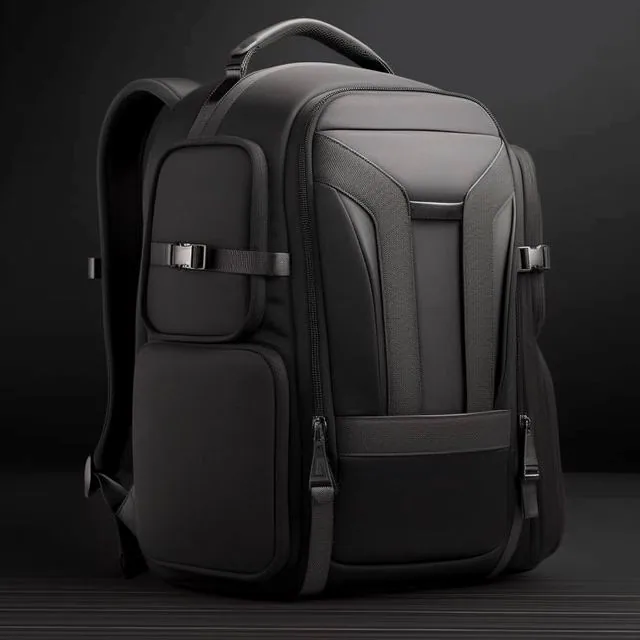
Five lines dominate material cost on a soft bag: face fabric, lining, foam and interlining, webbing, and zips. Face fabric is normally the largest single line, because consumption is high and price scales with denier and finish. A 28-litre commuter pack consumes about 1.35 m2 of face fabric. At 600D recycled polyester priced at GBP 1.85 per m2 that is GBP 2.50; moving to a branded 900D at GBP 3.40 per m2 takes the same line to GBP 4.59, an increase of GBP 2.09 per unit before any other change. Treat any fabric price quoted per yard rather than per metre with suspicion, since the 8.6 per cent difference hides in the conversion.
Lining is the second lever and the one most often over-specified. The same pack consumes about 1.10 m2 of lining, so 210D polyester at GBP 0.75 per m2 costs GBP 0.83 while a 420D at GBP 1.25 per m2 costs GBP 1.38. Foam and interlining typically run to GBP 0.55-0.75 per unit on a padded harness, webbing to GBP 0.45-0.70 at 6-7 metres of consumption, and zips to GBP 1.00-1.45 depending on gauge and count. Together these five lines account for around 60 per cent of material spend. Specify lining performance at the seam, where failures actually occur, and the cheaper cloth will usually test out identically.
| Line | Consumption | Unit price | Cost per unit |
|---|---|---|---|
| Face fabric 600D rPET | 1.35 m2 | GBP 1.85 | GBP 2.50 |
| Lining 210D | 1.10 m2 | GBP 0.75 | GBP 0.83 |
| EVA and interlining | 0.42 m2 | GBP 1.48 | GBP 0.62 |
| Webbing 25 mm | 6.40 m | GBP 0.09 | GBP 0.58 |
| Zips #8 and #5 | 4 pcs | GBP 0.30 avg | GBP 1.20 |
Trim and Hardware Lines That Hide Cost
Hardware is where quotations hide. A side-release buckle ranges from GBP 0.06 for an unbranded acetal part to GBP 0.38 for a branded part with documented load testing, and a bag with six buckles and four adjusters therefore carries a GBP 0.40-1.90 spread on this line alone. The tech pack should name the grade, because a substitution here is invisible in a photograph and very visible in a warranty return. Name the grade on the tech pack and ask for the load rating on the quotation, because a substitution here is invisible in a photograph and expensive in a warranty claim.
Small consumables are the other hiding place. Thread, binding tape, elastic, hook-and-loop, magnets, rivets, eyelets and label stock are frequently grouped into a single miscellaneous line at GBP 0.35-0.60 per unit with no breakdown. That is acceptable only if the figure is stable across revisions; if it moves when the design changes, ask for it to be itemised. Packaging belongs in a separate block entirely, because it is quoted per unit but priced per carton and is easy to mis-hand. Cap the miscellaneous line at a fixed figure per unit for the life of the style, and require itemisation if it moves by more than 10 per cent.
- Buckles and adjusters: name the grade and load rating
- Thread and binding: itemise rather than miscellaneous
- Magnets and rivets: check plating and corrosion spec
- Labels and hangtags: priced per unit, bought per thousand
- Elastic and hook-and-loop: check fatigue life, not price
Cut, Make and Trim: Reading the Labour Line
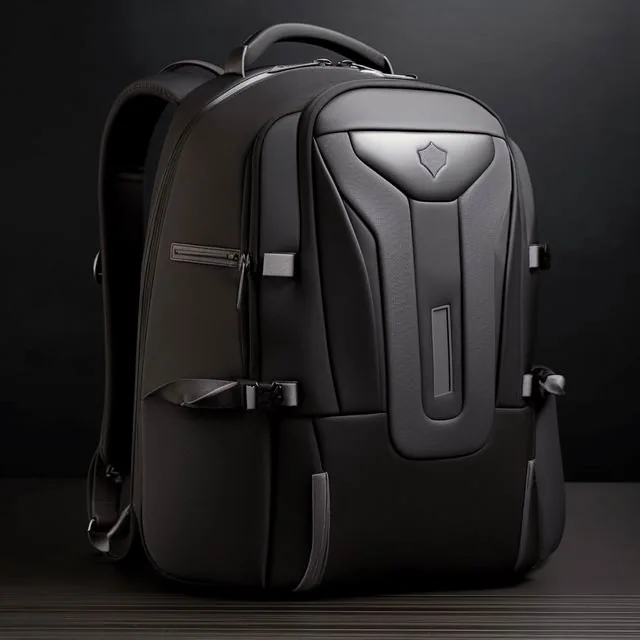
Cut-make-trim, usually abbreviated to CM or CMT, is the price of turning the cut parts into a finished bag. On a 28-litre commuter pack with a padded harness, a laptop sleeve and four external pockets, CM typically runs to GBP 2.20-2.90 per unit at MOQ 500 pcs per style and colourway. The driver is operation count rather than size: a simple drawstring sack with nine operations costs a fraction of a 28-litre pack with sixty-four operations, even at similar material consumption. Ask for the standard minute value per operation if the figure needs challenging; sixty-four operations at 0.9 minutes each is roughly one hour of line time.
Ask for the operation breakdown if the CM figure looks high. Binding an internal seam, setting a suspended sleeve and attaching a padded harness are all slow operations, and each has a cheaper alternative: an overlocked seam instead of bound, a sleeve stitched into the lining instead of suspended, a webbing hip belt instead of a padded one. Those three changes together can remove GBP 0.45-0.70 from CM, and the buyer should decide whether the saving is worth the performance loss. Confirm which of these the buyer is actually paying for, because a specification written for a feature no customer notices is money left on the table.
CM moves with operation count, not with litres. Two bags of identical volume can differ by 40 per cent in labour if one has bound internal seams and a suspended laptop sleeve and the other does not.
Overhead, Tooling and Amortisation
Overhead is applied as a percentage of materials plus labour, and 10-14 per cent is the normal range for a sewn soft-goods line. On a pack with GBP 8.10 of materials and labour, that is GBP 0.81-1.13 per unit covering line supervision, utilities, quality staff and the cost of the 4,950 m2 of SGS-verified production floor space and the 7 production lines running across it. Overhead is the least negotiable block, and pushing hard on it usually produces cuts in inspection coverage instead of real savings. Treat overhead as fixed and negotiate materials instead; the visible saving from cutting inspection coverage is repaid many times over in claims.
Tooling is separate and is amortised over the order quantity. Screen frames for a printed logo cost GBP 12-25 each, an embroidery tape GBP 30-60, a silicone or rubber badge mould GBP 350-900, and a moulded back panel or front shell GBP 4,000-12,000. At MOQ 500 pcs per style and colourway, a GBP 600 badge mould adds GBP 1.20 per unit; at 3,000 units the same mould adds GBP 0.20. This is the arithmetic that makes low minimums expensive on any customised component. Ask which tooling the buyer owns and can move to another programme, and confirm that in writing before the deposit is released.
Packaging, Freight and Landed Cost to the UK
Packaging runs GBP 0.30-0.55 per unit for a polybag, a printed hangtag, a barcode label and a share of the export carton, rising to GBP 0.90-1.40 for retail-ready presentation with a header card or a printed sleeve. Retail-ready packaging often removes a handling step at the distribution centre, so the higher unit cost should be compared against the picking and ticketing cost it eliminates rather than judged on its own. Confirm carton dimensions with the factory before quoting freight, because a 6 cm change in pack height moves the units per container by 8-12 per cent, which is worth more per unit than most fabric negotiations.
Landed cost is FOB plus freight, insurance, duty and VAT. Sea freight on a 28-litre pack packed at roughly 0.028 m3 per unit runs GBP 0.55-0.85 per unit on a full container and GBP 1.10-1.60 on a less-than-container load; air freight runs GBP 3.50-5.00 and is only justified when the retail calendar demands it. Duty depends on commodity classification and must be confirmed on the UK Trade Tariff for the specific code, and VAT at 20 per cent applies to the duty-inclusive value, as set out in the GOV.UK guidance on tax and duty for goods sent from abroad. Confirm the commodity code before the deposit is released rather than at clearance, when a correction costs storage as well as duty.
| Element | Per unit | Note |
|---|---|---|
| FOB Xiamen | GBP 10.10 | Materials, CM, overhead |
| Sea freight, FCL | GBP 0.65 | 0.028 m3 per unit |
| Insurance | GBP 0.06 | 0.6 per cent of CIF |
| Duty | Confirm on tariff | Commodity code dependent |
| VAT | 20 per cent | On duty-inclusive value |
Worked Example: A 28-Litre Commuter Pack
Putting the blocks together for a 28-litre commuter pack at MOQ 500 pcs per style and colourway: face fabric GBP 2.50, lining GBP 0.83, foam and interlining GBP 0.62, webbing GBP 0.58, zips GBP 1.20, hardware GBP 0.36, thread and consumables GBP 0.28, packaging GBP 0.42. Direct materials total GBP 6.79. Cut-make-trim at sixty-four operations is GBP 2.40. Overhead at 12 per cent of GBP 9.19 is GBP 1.10. FOB Xiamen therefore lands at GBP 10.29 before any amortised tooling. Every one of these lines should trace back to a tech pack field, so the two documents can be reconciled line by line at approval.
Add a GBP 600 silicone badge mould amortised over 500 units at GBP 1.20, and the first-order FOB is GBP 11.49. Sea freight, insurance and clearance bring landed cost to roughly GBP 12.30 plus duty and VAT. At a GBP 49.99 retail price, the buyer is working to a 4.3x multiple on first-order landed cost and about 4.9x once the mould is amortised across a repeat order, which is the normal shape of the arithmetic at this price tier. Run the same model at 1,500 units and the multiple improves again, which is the argument for committing to a second season early.
- Direct materials GBP 6.79, or 66 per cent of FOB
- CM GBP 2.40, or 23 per cent of FOB
- Overhead GBP 1.10, or 11 per cent of FOB
- First-order FOB GBP 11.49 including amortised tooling
- Repeat-order FOB GBP 10.29 once tooling is absorbed
Where Buyers Overpay Without Noticing
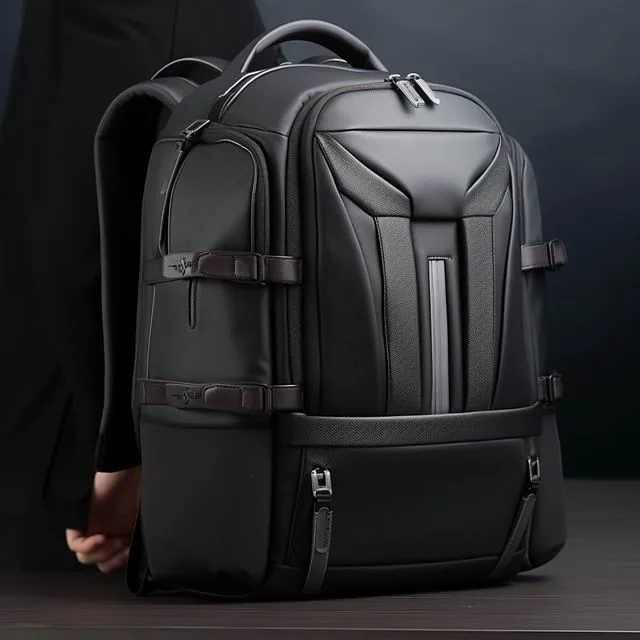
The most common overpayment is over-specification on non-critical panels. A lining upgraded from 210D to 420D adds GBP 0.55 per unit and no measurable service life, because linings fail at the seam rather than in the cloth. The second is duplicated testing: three separate laboratory reports on the same fabric across three colourways cost GBP 180-420 and can often be consolidated to one report per material per construction with a colour addendum. Ask for the test report count before you approve the schedule, then consolidate to one report per material with a colour addendum; a saving of GBP 180-420 per season is typical with no loss of cover.
The third is minimum-quantity arithmetic on trims. Custom woven labels, printed tapes and dyed-to-match webbing carry their own minimums, often 1,000-3,000 metres, which is more than a 500-unit order consumes. Either accept a stock colour for that trim on the first order or plan the excess into the next two seasons. The fourth is expediting: air freight to recover a late start costs GBP 3.00-4.00 per unit more than sea, which is usually more than the entire saving achieved by shaving the fabric specification. Plan the excess into the next two seasons or accept a stock colour for that trim on the first order; both are cheaper than writing it off.
Negotiating Without Damaging Quality
Negotiate on named lines and insist the saving is shown against that line rather than absorbed into a revised total. Cutting the lining denier, reducing the number of external pockets from four to three, standardising hardware to one finish, and accepting a stock trim colour are four changes that together remove GBP 1.10-1.60 per unit with no effect on field performance. Each is visible in the BOM and verifiable on the sample. Ask for the revised bill of materials with the old and new figures side by side, and check that the saving appears where you asked for it rather than spread across lines you did not name.
Refuse changes that are invisible in the BOM and visible in a return. Reducing stitch density below 7 per cm, dropping bar tacks at strap roots, moving from a #8 to a #5 main zip and removing the coating from the base panel each save GBP 0.10-0.35 per unit and each increase the warranty rate. With inspection set to AQL 2.5 under ISO 2859-1, none of these will be caught reliably at goods-in, which is precisely why they should be refused at the BOM stage instead. Put the four in a do-not-reduce list inside the tech pack so the next cost review starts from the same position instead of reopening them.
- Name the line you want reduced and check the delta
- Cut lining denier before face fabric denier
- Standardise hardware finish across colourways
- Refuse reductions to stitch count or bar tacks
- Never buy a schedule saving with air freight
How the BOM Links to Sampling and AQL
The BOM should be versioned in step with the tech pack, so revision v03 of one reconciles to revision v03 of the other. A sample approved against a BOM that has since changed is not an approval of the product that will be shipped, and this mismatch is the root of most first-bulk disputes. Confirm the BOM at the point the approval sample is signed, then freeze it for the duration of the bulk run. Freeze both documents when the approval sample is signed, and require a numbered revision and a re-cost for anything changed afterwards, including a material swap proposed as an equivalent.
Cost and quality controls then run on the same document. Sampling takes 6-10 working days on a straightforward build and 12-15 working days where the structure is complex, bulk runs 35-50 days on MOQ 500 pcs per style and colourway, and finished goods are inspected to AQL 2.5 under ISO 2859-1 with defects classified before the inspection begins. Shipment is FOB Xiamen on T/T 30/70, balanced against material commitments made when the BOM was frozen. Keep the frozen bill of materials attached to the inspection report so the inspector checks the product that was actually costed and approved, not a later revision of it.
An approval signed against a superseded bill of materials approves a product that will not be shipped. Version the two documents together and freeze both before bulk cutting begins.
Frequently Asked Questions
What percentage of a backpack cost is materials versus labour?
Direct materials run 55-65 per cent of FOB price on a typical sewn pack, cut-make-trim labour 20-28 per cent, and overhead 10-14 per cent. Packaging, amortised tooling and freight sit outside FOB. On the worked 28-litre example, materials were 66 per cent, labour 23 per cent and overhead 11 per cent. The split shifts when tooling is amortised: tooling adds 8-10 per cent on a first order at minimum quantity.
How much fabric does a 28 litre backpack use?
About 1.35 m2 of face fabric and 1.10 m2 of lining, plus roughly 0.42 m2 of foam and interlining. Consumption varies with panel count: every additional external pocket adds 0.06-0.12 m2 of face fabric and one or two cutting operations. Bound internal seams increase consumption by 4-7 per cent over overlocked seams on the same pattern.
Why is cut-make-trim different for two bags of the same size?
Because labour follows operation count rather than volume. A drawstring sack might involve nine operations, while a 28-litre commuter pack with a suspended laptop sleeve, padded harness and four pockets involves around sixty-four. Each operation carries a standard minute value, so a bag with twice the operations costs roughly twice the labour even at identical material consumption. A count above sixty operations usually explains a labour line that looks high.
How is tooling amortised into unit cost?
Divide the tooling cost by the order quantity. A GBP 600 silicone badge mould costs GBP 1.20 per unit at 500 pieces and GBP 0.20 at 3,000 pieces. Screen frames run GBP 12-25 each, embroidery tapes GBP 30-60, and a moulded back panel GBP 4,000-12,000, which is why low minimums are expensive on any customised component. Ask for the operation count if the labour line needs challenging.
What does landed cost mean for UK bag imports?
Landed cost is FOB price plus freight, insurance, duty and VAT. On a 28-litre pack packed at about 0.028 m3, sea freight runs GBP 0.55-0.85 per unit on a full container and GBP 1.10-1.60 on a less-than-container load. Duty depends on commodity classification and is confirmed on the UK Trade Tariff, and VAT at 20 per cent applies to the duty-inclusive value.
Is air freight ever worth it for backpack orders?
Rarely. Air freight costs GBP 3.50-5.00 per unit against GBP 0.55-0.85 by sea full container load, a difference of GBP 3.00-4.00 per unit. That premium usually exceeds every saving achieved by trimming the fabric or hardware specification, so air freight is justified only when a retail launch date is at risk and the margin loss is smaller than the lost sales.
Which cost reduction should I refuse?
Refuse anything that is invisible in the bill of materials and visible in a returns queue: stitch density below 7 per cm, removal of bar tacks at strap roots, a main zip downgraded from #8 to #5, and removal of the base panel coating. Each saves GBP 0.10-0.35 per unit and none is reliably caught at AQL 2.5 inspection.
How do I check a supplier quotation against the BOM?
Reconcile the two documents line by line and expect agreement within 2 per cent. Where they differ, ask which line absorbed the difference. Then confirm that every price-volatile input, such as face fabric, zips and metal hardware, names a grade or supplier, because an unnamed line allows substitution between the approval sample and the bulk shipment. Reconcile in a spreadsheet with formulas visible rather than against a PDF.
Why do small orders cost more per unit?
Three reasons: material purchases fall below mill minimums, fixed tooling amortises over fewer units, and the line absorbs a setup cost across a shorter run. A GBP 600 badge mould adds GBP 1.20 per unit at 500 pieces but only GBP 0.20 at 3,000. Custom trims carry their own minimums, often 1,000-3,000 metres, which a 500-unit order will not consume.
Should packaging cost sit inside the FOB price?
Usually yes, quoted as a separate line within FOB so it can be changed without re-opening the product cost. Standard packing runs GBP 0.30-0.55 per unit; retail-ready presentation with a header card or printed sleeve runs GBP 0.90-1.40. Compare the higher figure against the picking and ticketing cost it removes at the distribution centre.
How often should the BOM be revised?
With every tech pack revision, and then frozen at the point the approval sample is signed. A sample approved against a superseded BOM does not describe the product that will be shipped. After freezing, any change should be issued as a numbered revision and re-costed, because a material change also moves the delivery schedule. Re-cost every revision, since a material change also moves the delivery schedule.
What payment terms are standard for bag programmes?
T/T 30/70 is standard: a 30 per cent deposit against confirmed material commitments and 70 per cent against documents or before shipment, depending on the agreed contract. Shipment is quoted FOB Xiamen. The deposit covers fabric, hardware and trim purchases, which is why the BOM should be frozen before the deposit is released. Retention of a small balance until after inspection is sometimes agreed on a first order.
Negotiate the Line, Not the Total
A vague request for a better price produces a vague reduction somewhere the buyer cannot see it. Naming the line, checking the delta and refusing changes that only show up in a returns queue is what separates a cheaper bag from a worse one.
QUANZHOU JUNYUAN BAGS develops costed programmes from buyer specifications at MOQ 500 pcs per style and colourway, with sampling in 6-10 working days, bulk in 35-50 days, inspection at AQL 2.5 under ISO 2859-1, FOB Xiamen and T/T 30/70.
Email: service@junyuanbags.com
WhatsApp: +86 177 5002 0688