420D vs 600D vs 900D Backpack Fabric: What the Denier Number Does and Does Not Tell You
Denier is the mass in grams of 9,000 metres of a single filament, so 600D yarn is roughly 43% heavier per metre than 420D. It raises abrasion life and stiffness, but weave, coating and filament type frequently matter more than the number itself.
This guide sets out what changes across the 420D, 600D and 900D bands, the test methods that produce comparable data, and how to write a fabric specification that a production team can source, verify and hold to tolerance.
What Denier Actually Measures
Denier is a linear mass density: the weight in grams of 9,000 metres of yarn. A 420D filament weighs 420g per 9,000m and a 900D filament weighs 900g. That is all the number says. It does not describe the weave, the filament cross-section, the coating, the tear strength or the water resistance of the finished cloth, which is why it should never be read in isolation. Denier sets the starting band; the test report tells you whether the fabric earns it. Walk a flight of stairs with the pack loaded, because rocking reveals harness faults faster than flat walking. Check the fit at the end of a working day, when posture and soft tissue have both already shifted.
That limitation matters, because it is the reason two fabrics both sold as 600D can perform very differently in daily service. What denier does correlate with is yarn diameter and, through that, abrasion resistance and stiffness. A thicker filament has more material to lose before it fails, so Martindale and Taber abrasion cycles generally rise with denier on the same weave construction. Read denier as a band, then confirm it with an abrasion figure quoted against a named test method. Always pair a denier figure with an abrasion result quoted against a named test method. Test in the clothing you will actually commute in, including a winter shell or a midlayer underneath.
- Denier equals grams per 9,000 metres of filament
- 600D is roughly 43% heavier per metre than 420D
- It correlates with abrasion life and stiffness, not waterproofing
- Weave and coating often dominate the final result
Weave Changes the Answer Before Denier Does
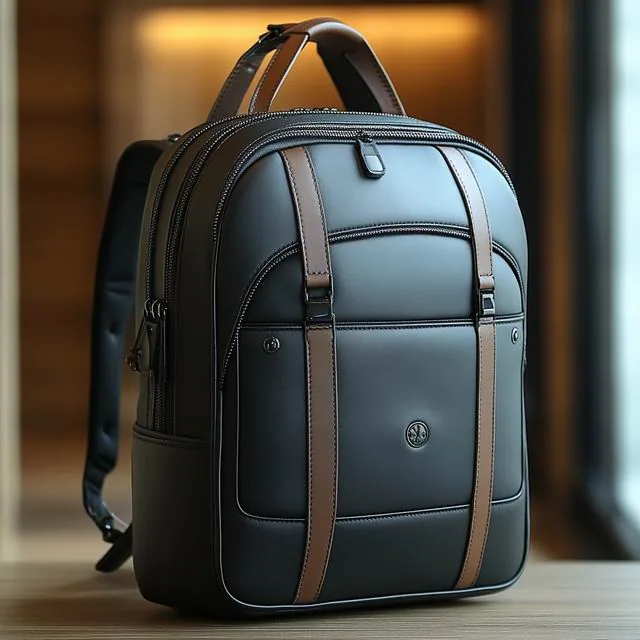
The same 600D yarn behaves differently in a plain weave, an Oxford weave, a dobby or a ripstop grid. Oxford weaves, where two finer yarns are woven as one, produce a softer hand and better drape at the cost of some abrasion resistance. Plain weaves are stiffer and harder wearing but resist compression when the pack is only part loaded, which makes a half-empty bag look boxy. Ripstop is worth specifying wherever a puncture is more likely than a slow wear-through. Keep dense items within 100mm of the back panel so the backwards pull stays manageable on climbs. Look for a red line along the neck side of the strap after an hour of continuous wear.
Ripstop grids insert a heavier reinforcement yarn at intervals, typically every 5-10mm, which limits tear propagation without adding much weight. That is why a 420D ripstop can outlast a 600D plain weave in real use, even though the denier figure suggests the opposite. Construction governs how the yarn behaves under load, so specify weave and denier together and treat a sheet quoting only denier as incomplete. Treat a sheet quoting only denier as incomplete and send it back before sampling starts. Confirm the hip belt stays above the soft waist after ten minutes of steady walking. Photograph the side profile loaded and compare it against the unloaded silhouette for reference.
| Weave | Hand feel | Abrasion | Tear control |
|---|---|---|---|
| Plain | Stiff | High | Poor |
| Oxford | Soft | Medium | Fair |
| Ripstop | Crisp | Medium | Excellent |
| Dobby | Textured | Medium | Fair |
Abrasion Performance Across the Range
Abrasion is the dominant wear mechanism on a backpack: panels rub against hips, van floors, concrete and desk edges. The standard laboratory method for textiles is the Martindale test, published by the International Organization for Standardization as the ISO 12947 series, in which a specimen is rubbed against an abrasive under a fixed load until a defined failure endpoint is reached. Record which part of the series was used, or the cycle count means very little on its own. Stand in a doorway wearing the loaded pack before you commit to buying it for daily use. Ask the retailer for the published centimetre range rather than a generic small or medium label.
Results are reported in cycles, and they are comparable between fabrics only when the same load and endpoint criteria are used. As a rough working band on a comparable weave, a 420D nylon with a single-sided PU backing commonly reaches 20,000-35,000 Martindale cycles, 600D reaches 35,000-60,000, and 900D reaches 60,000-100,000. A full 900D shell is rarely the efficient answer for most programmes. Ask for the peel strength figure and repeat the flex test on the production coating. Test the harness again after a week of real use, because materials settle once they are loaded. Confirm the load lifter angle sits between 20 and 45 degrees above the horizontal plane.
Martindale results are only comparable when the same abrasive, load and failure endpoint are used. Always ask which ISO 12947 part and which endpoint criterion were applied before comparing two suppliers' figures.
Tear and Tensile Behaviour
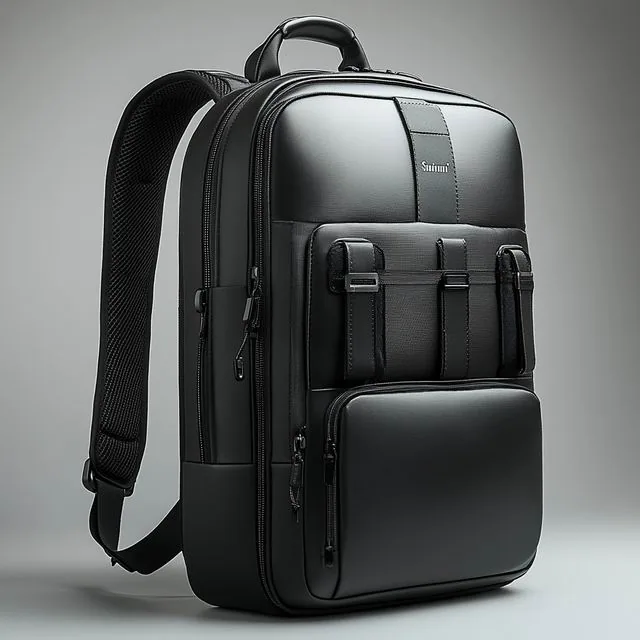
Tear strength is the property buyers overlook. A pack rarely fails because its fabric wore through evenly; it fails because a small cut propagated into a long tear. In a tongue tear test, higher denier raises both the initial resistance and the force needed to continue a tear, but a ripstop grid can deliver a bigger improvement per gramme than simply moving up a denier band. Dry storage below roughly 60% relative humidity is the fix for coating hydrolysis. Verify the strap lies flat with no gap along its inner edge when the pack carries weight. Keep the empty weight as low as the durability target realistically allows for the programme.
Tensile strength matters mainly at load points: strap roots, haul loops and the top of the panel. Here the seam usually fails before the fabric does, so thread specification and bar-tack geometry matter more than shell denier. Check the bar-tack length at the strap root before checking the shell specification, and ask for the pull test result in newtons. Approve the logo on the final fabric, and re-approve it if the denier changes later. Check whether adjustment leaves surplus webbing that needs shortening or a keeper to control it. Confirm the sternum strap can sit across the middle of the sternum without riding upwards.
Weight and Pack Efficiency
The weight penalty of moving up a denier band is not trivial, because it compounds across the whole shell. Moving from 420D to 600D typically adds 60-110g on a 25-litre pack; moving from 600D to 900D adds another 80-150g. Against an empty weight around 900-1,100g, that is a 10-25% increase in the weight you carry before you pack anything. Retain signed reference swatches on both sides for any bulk comparison. Ask whether the hip belt is removable or repositionable on the harness ladder that is fitted. Check that the pack does not rise above the shoulder line when it is fully loaded.
Multiply the penalty across a full shell and it becomes the difference between a pack you notice and one you forget. The efficient solution is hybrid construction: a lighter shell with heavier denier restricted to the base and lower back panel where abrasion concentrates. That also lets you keep the hand feel soft where the pack folds and stiff where it wears. Model the hybrid option before committing, then run both quotes to compare landed unit cost. Verify the pack stays within roughly 50mm of the back during a brisk walk uphill. Confirm the coating weight in grams per square metre alongside the stated fabric weight.
Hand Feel, Drape and Noise
Denier changes how a pack behaves in use as much as how long it lasts. A 420D shell drapes and compresses, so a half-empty pack looks tidy and packs down small in an overhead locker. A 900D shell holds its shape, which photographs well on a shelf but produces a stiff, boxy pack that rattles against chair backs and resists compression under a seat. Confirm mill minimums during quotation, because a late surcharge is rarely recoverable. Ask for the thread specification, because the seam usually fails before the shell cloth does. Specify the bar-tack length at every strap root instead of leaving the detail to the floor.
Drape matters most on a part-loaded pack, which is how most commuter packs are carried most days. Noise is the other underrated factor: coarse yarn creates more yarn-to-yarn friction, so high-denier fabric rustles audibly as you walk. For urban and business ranges, walk with a loaded sample and listen before approving the fabric. An unstated tolerance removes any basis for rejecting an off-target lot. Check the stitch density in stitches per centimetre and record the figure on the specification sheet. Confirm whether the main seams are taped or merely overlapped before claiming any water resistance. Verify the hardware grade and finish, since corrosion shows early on daily commuter packs.
Coating Adhesion and Hydrolysis
Most backpack fabrics carry a polyurethane backing that does more for water resistance than the denier does. Coating weight is typically quoted in grams per square metre, and the bond between coating and weave is what fails first. Peel strength should be tested and recorded, and the coating should withstand repeated flexing without crazing or cracking. Compare every bulk lot against the signed reference, starting with the first production run. Confirm the foam density in kilograms per cubic metre rather than accepting a descriptive adjective. Ask for the mesh weight in grams per square metre on any suspended panel that is specified.
A heavier denier with a poor bond will delaminate faster than a lighter fabric with a good one. Long-term storage introduces a second failure route: polyester-based polyurethanes are susceptible to hydrolysis in warm, humid conditions, which is why packs stored damp come out with a tacky, flaking lining. This affects the coating rather than the yarn, so denier offers no protection. A 420D body with 900D base panels gives most of the durability at half the weight penalty. Check the binding specification, because edge roll shortens service life on wide padded straps. Confirm the frame sheet material and section so it cannot be swapped for a lighter alternative.
Print, Embroidery and Colour Yield
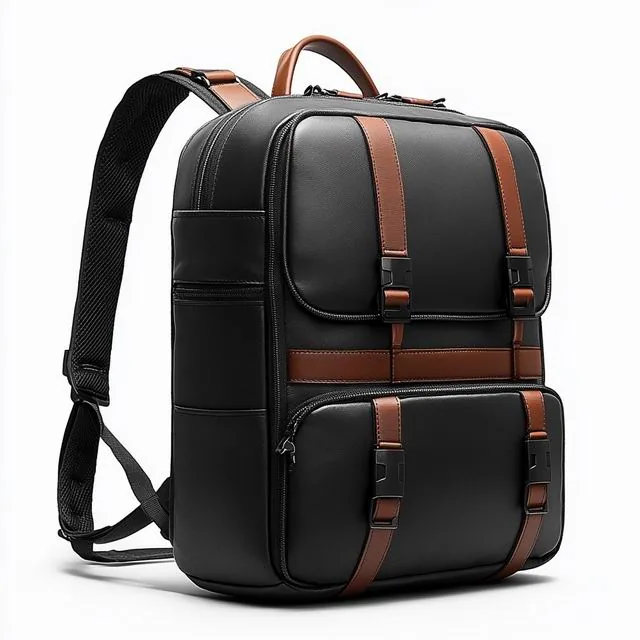
Fabric choice drives what branding is possible. Fine 420D surfaces give good definition for screen print and heat transfer, and they accept embroidery without excessive puckering. Coarse 900D weaves show print dot gain, so fine detail is lost, and heavy embroidery can distort the panel around the stitch field. Higher denier is a feature outdoors and a liability in an office, so specify for real use. Ask which finish is applied and whether it is a durable water repellent or a full coating. Verify the liner specification, since hydrolysis attacks the coating rather than the yarn itself. Check whether the base panel uses a heavier denier than the body panels of the same pack.
Approve the logo on the final fabric, and approve it again if the denier changes at any point in development. Colour consistency across denier bands is the other trap: the same dyelot in 420D and 900D often reads differently, because coarser yarn scatters light differently. Rubbing and light fastness should be checked against AATCC test methods, with signed swatches retained on both sides. Coarser yarn rustles, which buyers notice on a quiet commute or in a meeting room. Confirm the webbing width and breaking strain for every adjustable strap on the finished pack. Ask for the zip chain size and slider type, since both affect serviceability much later on.
Cost per Metre and MOQ Effects
Fabric is typically 25-40% of the FOB cost of a mid-market backpack, and denier moves that figure directly. Moving a whole shell from 420D to 600D can add 8-15% to fabric spend, and 900D can add 20-35%. Model the hybrid option against a uniform shell before committing, since the saving is usually larger than expected and often funds a better trim package. Taped seams matter as much as the coating figure once rain is sustained rather than brief. Specify the care label content so it matches the fibre composition actually used in production. Plan the first range around MOQ 500 pcs per style and colourway from the very beginning.
Specification choices also interact with minimums. Minimum order quantity sits at 500 pcs per style and colourway, and fabric mills frequently impose their own minimum per colour, which can push a niche colourway into a surcharge. Confirm mill minimums during quotation, because a surcharge discovered after sampling is rarely recoverable at that stage of the programme. Rubbing fastness on dark colourways is a cheap test that prevents a common complaint. Allow 6-10 working days for sampling, or 12-15 where the construction is genuinely complex. Hold 35-50 days for bulk production when setting the retail launch date for a new range. Fix the inspection standard at AQL 2.5 under ISO 2859-1 before any bulk lot is presented.
Writing the Fabric Specification
A fabric line that a supplier can actually quote states seven items: fibre type, meaning nylon 6, nylon 6.6 or polyester; denier per panel; weave construction; thread count; coating type and weight in grams per square metre; finish such as a durable water repellent; and the standard behind each claimed test figure. Specify hydrostatic head in millimetres alongside any waterproof claim. Quote FOB Xiamen and T/T 30/70 in the brief so commercial terms are settled early in the process. Confirm fabric mill minimums during quotation, because a late surcharge is rarely recoverable from the supplier. Request a counter-sample from bulk production and compare it against the signed gold-seal reference sample.
Add tolerances on weight and coating, typically plus or minus 5%, because an unstated tolerance is not a specification and removes any basis for rejecting an off-target lot. Colour fastness belongs on the same sheet, since it is a common complaint source on dark colourways that sit in sunlight or rub against light clothing. Compare every bulk lot against the signed reference before release. Name each panel's denier on the sheet so value engineering cannot quietly change it. Record the approved standard and its revision number on the programme documentation for future reorder checks. Plan inspection capacity early, since shipping windows rarely move once a launch date has been confirmed.
Frequently Asked Questions
Is 900D fabric always more durable than 600D?
For abrasion, generally yes: 900D commonly reaches 60,000-100,000 Martindale cycles versus 35,000-60,000 for 600D on a comparable weave. But a 600D ripstop can outperform a 900D plain weave against tearing, because the grid stops a small cut propagating. Match the denier to the failure mode you actually expect in service. Ask which trims carry the longest lead time and lock those into the production schedule first. Confirm labelling and fibre composition requirements before the final artwork is signed off for print.
What denier is best for an everyday commuter backpack?
For loads of 5-9kg, 420D or 500D nylon with a single-sided PU backing is the efficient choice. It keeps empty weight down, drapes when half full, and moves quietly in an office. Specify heavier denier on the base panel rather than across the whole shell, and you keep most of the durability without carrying the extra grammes. Keep the brief and the specification together so any later change is visible to everyone involved.
How much weight does moving from 420D to 900D add?
On a typical 25-litre pack, 420D to 600D adds roughly 60-110g, and 600D to 900D adds a further 80-150g. Against an empty weight of 900-1,100g that is a 10-25% increase before you pack anything. Hybrid construction usually recovers most of it, because heavy denier covers only 10-15% of fabric area. Verify the result on the bulk lot rather than relying on pre-production sample figures alone. Check the pack loaded rather than empty, since pressure only appears once there is weight inside.
Does higher denier mean better water resistance?
Not directly. Water resistance comes from the coating, the hydrostatic head rating and seam construction, not from yarn thickness. A well-coated 420D shell can outperform a poorly finished 900D one. Always pair a coating claim with a hydrostatic head figure in millimetres, and check whether the main seams are taped rather than merely overlapped. Confirm the tolerance is quoted in millimetres on every dimension that affects how a pack carries.
What is the difference between 600D polyester and 600D nylon?
Nylon 6.6 offers roughly 20-30% better abrasion resistance and higher tensile strength at the same denier, and it takes dye more deeply. Polyester costs less, resists UV better and is less prone to stretching when wet. Nylon suits hard-use packs; polyester suits price-led ranges. Ask how many specimens were tested behind any figure presented in the laboratory report. Confirm the figure applies to production output rather than to a laboratory reference sample batch.
Why do some backpack linings go sticky and flake?
That is hydrolysis of a polyester-based polyurethane coating, accelerated by warm, humid storage. It affects the coating rather than the yarn, so a higher denier offers no protection at all. Store packs clean and dry below roughly 60% relative humidity, and inspect stored stock annually so the fault never reaches a customer. Ask which part of a standard series the result was obtained under, then record it on the sheet.
How is backpack fabric abrasion tested?
The Martindale method, published as the ISO 12947 series, rubs a specimen against a standard abrasive under a fixed load and counts cycles to a defined failure endpoint. Taber abrasion, an ASTM method, is also common. Results are comparable only when the abrasive, load and failure criterion match between two reports, so record them. Verify the specimen size used, since small samples give different numbers from full-sized panels. Check whether hardware was included in the test or assessed separately by the testing laboratory.
What coating weight should I specify for a waterproof backpack?
For shower resistance, a single-sided PU backing around 30-60 gsm is typical. For genuine waterproof performance, specify TPU or a heavier PU build plus taped seams and a stated hydrostatic head, commonly 1,500mm minimum and 5,000mm or more for serious wet weather use in the UK. Confirm the measurement direction, because warp and weft results differ on the same piece of cloth. Ask for a second laboratory result if the number sits close to your own acceptance threshold.
Does 900D fabric affect how a pack can be branded?
Yes. Coarse weaves show print dot gain and lose fine detail, so detailed logos suit 420D or 500D better. Heavy embroidery on a coarse weave is more stable, but dense stitching on light shells causes puckering. Approve artwork on the actual production fabric rather than a substitute, and re-approve if the denier changes later. Verify the test conditions are stated, since results drift with heat and moisture in the lab.
Can different denier panels be shade matched exactly?
Close, but rarely exactly. Coarser yarn scatters light differently, so the same dyelot reads slightly different in 420D and 900D. Approve all panels together under consistent lighting, agree a tolerance with reference swatches, and retain signed standards on both sides so a disputed bulk lot is resolved quickly. Check whether the test covered the seam or only the base cloth used in the panel. Confirm the failure endpoint definition, because cycle counts alone remain misleading without it.
What share of backpack cost is fabric?
Fabric is typically 25-40% of FOB cost on a mid-market pack. Going from 420D to 900D across an entire shell can add roughly 20-35% to fabric spend. Model the hybrid option before committing, and expect the share to fall as trim, hardware and branding content rises. Ask the supplier to confirm the figure in writing before the first bulk lot is inspected. Keep the signed reference sample so future lots can be checked against an agreed physical standard.
Should I specify ripstop for every lightweight pack?
Usually yes below about 35 litres, because punctures are the realistic failure mode and the grid stops a cut running. Above 35 litres, abrasion across the base dominates and a heavier Oxford or plain weave with a reinforced base performs better. Name each panel's denier on the sheet so it cannot be silently costed out. Record who approved each sample and the date of approval alongside the specification revision number.
Writing a Fabric Spec Your Supplier Can Quote
A fabric line that can be quoted and inspected names the fibre, the denier per panel, the weave, the coating weight, the finish and the test method behind every claimed figure. QUANZHOU JUNYUAN BAGS develops specifications at that level of detail, confirms them against signed lab reports at sampling, and holds the approved standard through bulk production.
Sourcing terms are the same across programmes: MOQ 500 pcs per style and colourway, sampling 6-10 working days (12-15 for complex builds), bulk 35-50 days, AQL 2.5 under ISO 2859-1, FOB Xiamen, T/T 30/70. Dating from 2014, the business coordinates 4,950 m2 of SGS-verified production floor space with 137 colleagues and 7 production lines.
Email: service@junyuanbags.com
WhatsApp: +86 177 5002 0688