The hiking backpack market is broadly divided into men's and women's categories, but the differences go far beyond color choices and marketing. Women's hiking backpacks are engineered around distinct anatomical averages, resulting in meaningful differences in frame geometry, harness configuration, hip belt design, and torso length range. Understanding these differences is essential for finding a pack that transfers weight properly and keeps you comfortable on the trail.
This guide examines every dimension of the women's versus men's backpack comparison, from torso sizing and hip belt geometry to shoulder strap design and overall pack architecture. Whether you are a woman looking for the best-fitting pack or a man wondering whether a women's pack might suit you better, this article provides the factual foundation for an informed decision.
Why Gender-Specific Packs Exist
Gender-specific backpack designs exist because male and female bodies have statistically significant differences in proportions that affect how a pack fits and carries weight. These are population-level averages. Individual variation means that many men have proportions better suited to women's packs, and many women are better served by men's packs. The gender labels are a starting point for finding your fit, not a rigid boundary.
The key anatomical differences that drive pack design include torso length, hip-to-waist ratio, shoulder width, chest depth, and the shape and angle of the pelvis. Each of these factors influences where the hip belt should sit, how the shoulder straps should curve, and how long the frame needs to be. Getting these measurements right is the difference between a pack that disappears on your back and one that causes pain after two miles.
Torso Length: The Foundation of Pack Fit
Torso length is the single most important measurement for backpack fit. It determines whether the hip belt will sit correctly on your hip bones (iliac crest) and whether the shoulder straps will wrap around your shoulders without excessive gap or uncomfortable pressure.
Women's Torso Length Range
Women's packs typically accommodate torso lengths from 14 to 19 inches, with most models offering small (14-16 inches), medium (16-18 inches), and large (18-19 inches) frame sizes. The shorter range reflects the average female torso, which tends to be proportionally shorter relative to total height compared to male torsos.
Men's Torso Length Range
Men's packs typically accommodate torso lengths from 17 to 23 inches, with small (17-19 inches), medium (19-21 inches), and large (21-23 inches) sizes. The longer range reflects the average male torso proportions.
There is overlap in the 17-19 inch range, where both men's small and women's large frames may provide an acceptable fit. In this overlap zone, other factors like hip belt shape and shoulder strap geometry become the differentiators.
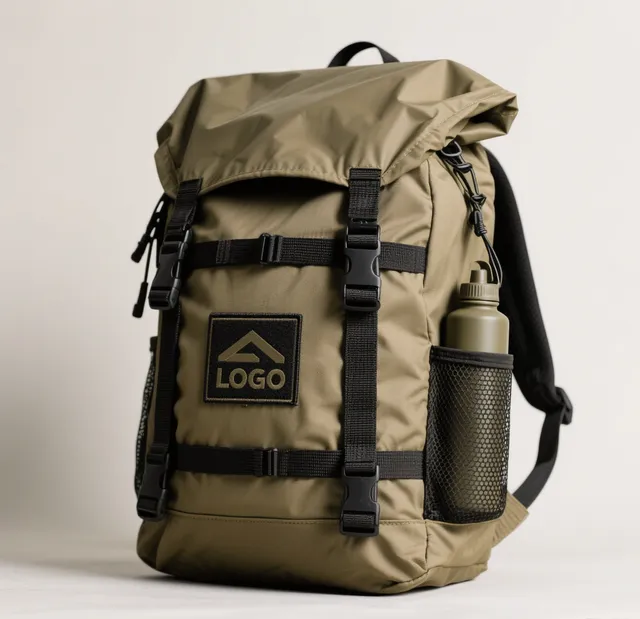
Hip Belt Design: Where Weight Transfer Happens
The hip belt is the most critical component for load transfer. It should sit on the iliac crest of your hips, transferring 80 percent or more of the pack weight from your shoulders to your hips and legs. The shape and angle of the hip belt must match your pelvic anatomy for this transfer to work effectively.
Women's Hip Belt Characteristics
- Wider and flatter profile: Women's hip belts are designed to accommodate the wider female pelvis. The belt wraps around a broader hip surface area, distributing pressure more evenly.
- More forward-angled buckle: The buckle position accounts for the different angle of the female pelvis, ensuring the belt tightens correctly without pinching.
- Softer padding composition: Women's hip belts often use slightly softer padding materials that conform to the hip shape without creating pressure points on bony prominences.
- Shorter overall length: The belt circumference is designed for the smaller waist-to-hip ratio typical of female anatomy.
Men's Hip Belt Characteristics
- Narrower profile: Men's hip belts are designed for a narrower pelvic structure with less hip flare.
- More vertically oriented padding: The padding shape follows the male hip structure, with more vertical coverage and less lateral spread.
- Firmer padding composition: Men's belts often use firmer foam that provides rigid load transfer across a narrower hip surface.
- Standard buckle positioning: Buckle placement assumes a more straightforward forward orientation matching male pelvic angles.
The hip belt difference is not cosmetic. A women wearing a men's pack may find that the hip belt rides too high or sits at an awkward angle, creating pressure points and poor weight transfer. Conversely, a man wearing a women's pack may find the hip belt too narrow or too loosely fitting, failing to grip the hips adequately under heavy loads.
Shoulder Strap Design: Comfort and Connection
Shoulder straps connect the pack to your upper body, providing stability and fine-tuning the fit. Their shape, width, and angle must match your shoulder and chest anatomy.
Women's Shoulder Strap Design
Women's shoulder straps are narrower at the top and follow an S-curve that moves away from the chest before curving back to the shoulder. This design avoids compressing breast tissue, which is a significant comfort concern for female hikers. The straps also sit closer together at the top (reflecting narrower female shoulder width) and diverge as they reach the shoulder to match the natural slope of female shoulders.
Men's Shoulder Strap Design
Men's shoulder straps are wider and follow a more direct path from the pack to the shoulder. They sit further apart at the top to accommodate broader male shoulders. The straps do not need to avoid chest tissue, so they follow a straighter, more direct load path that prioritizes efficient weight transfer over anatomical accommodation.
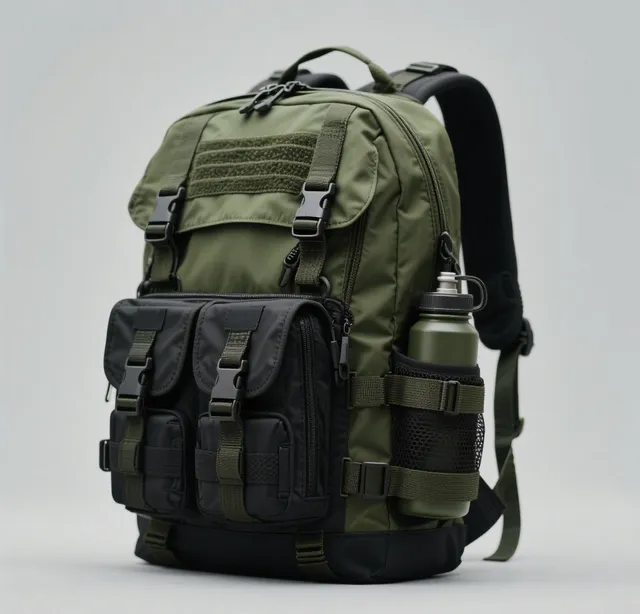
Back Panel and Frame Geometry
The back panel shape and frame geometry differ between women's and men's packs to match torso contours.
Women's Back Panel Design
Women's packs feature a shorter back panel with a slightly more tapered shape at the top. The frame stays (if present) are shorter to match the reduced torso length. The back panel contouring accounts for the curve of the female spine and the relationship between the shoulder blades and hip crest.
Men's Back Panel Design
Men's packs feature a longer, slightly wider back panel. The frame stays are longer, and the overall shape is more rectangular to match the broader male torso. The load lifter strap attachment points are positioned higher to account for the longer distance between the hips and shoulders.
Volume and Capacity Differences
Women's packs are generally offered in slightly smaller volumes than men's packs from the same manufacturer. This reflects the tendency for women to carry slightly less gear overall, particularly in the context of shared equipment (tents split between hiking partners, for example).
The difference is not dramatic. A women's 55-liter pack provides the same internal volume as a men's 55-liter pack from the same line. The volume range simply starts at a lower minimum. Where men's packs might range from 40 to 80 liters, women's packs typically range from 35 to 70 liters. Most popular sizes overlap significantly in the 45-60 liter range where the majority of backpacking needs are met.
Can Men Use Women's Packs and Vice Versa?
Absolutely. The gender labels on packs are guidelines based on population averages, not hard boundaries. Individual anatomy varies widely, and the right pack for you is determined by your specific measurements, not your gender.
When Men Benefit from Women's Packs
Men with shorter torsos (17 inches or less), narrower shoulders, or wider hips relative to their torso may find that women's packs provide superior comfort and load transfer. The shorter torso length, contoured hip belt, and narrower shoulder straps may match their anatomy better than a men's pack in the same size range.
When Women Benefit from Men's Packs
Women with longer torsos (19 inches or more), broader shoulders, or narrower hips may find that men's packs fit better. A men's small frame (17-19 inches) may match perfectly with a woman who is taller than average or has a proportionally long torso. The wider shoulder straps and longer back panel may provide a more comfortable and secure fit.
The Fitting Process
Regardless of which gender category you start with, the fitting process is the same. Measure your torso length. Visit a retailer that stocks loaded test packs. Try on packs from both categories if you fall in the overlap zone. Walk around for at least 10 minutes with weight in the pack. Check that the hip belt sits on your iliac crest without riding up or sliding down. Ensure the shoulder straps wrap snugly without gaps or pressure points. Verify that the load lifter straps connect at the proper angle (approximately 45 degrees from your shoulder to the frame).
Price and Availability
Women's backpacks are generally priced the same as comparable men's packs from the same manufacturer. There is no "pink tax" in the backpack world. A women's Osprey Aura AG 65 costs the same as a men's Osprey Atmos AG 65. The materials, construction quality, and warranty coverage are identical.
Availability may vary. Women's packs are generally well-stocked at major retailers, but some smaller shops may carry fewer models or sizes in women's-specific lines. Online shopping eliminates this limitation, and most major brands offer their full women's lineup through their websites. If you need to try before buying, call ahead to confirm which models and sizes are available for fitting.
Unisex and Gender-Neutral Options
Some manufacturers offer unisex or gender-neutral packs that use adjustable torso systems to accommodate a wide range of body types. These packs typically feature adjustable shoulder strap height, modular hip belts, and variable torso lengths that span both men's and women's size ranges. While they do not provide the anatomically optimized fit of gender-specific packs, they offer flexibility for hikers who fall between sizes or who share packs with a partner of different body proportions.
Unisex packs are becoming more common as the industry moves toward inclusive design. Brands like Granite Gear, ULA Equipment, and others offer packs designed around body measurements rather than gender categories. This approach focuses on fit based on actual measurements rather than assumptions about which pack category you should shop in.
Key Takeaways for Finding Your Fit
- Start with measurements: Measure your torso length (C7 to iliac crest) and hip circumference. These two numbers will narrow your search dramatically.
- Ignore gender labels initially: Focus on the size range and fit characteristics rather than whether the pack is labeled men's or women's. Your body determines which category fits best.
- Test with weight: Never judge a pack by trying it on empty. Load it with 25-30 pounds and walk around. The loaded feel is the only true test of fit and comfort.
- Check hip belt position: The hip belt should center on your iliac crest with no upward or downward migration when loaded. This is the single most important fit criterion.
- Assess shoulder strap contact: Straps should wrap around your shoulders with full contact and no gaps. There should be no pressure on your chest or collarbone.
- Consider adjustable systems: If you are between sizes or unsure about gender category, look for packs with adjustable torso and harness systems that allow fine-tuning.
The Science Behind Anatomical Differences in Pack Design
The design differences between women's and men's packs are not arbitrary marketing decisions. They are grounded in anthropometric research, which studies the measurement and proportion of the human body. Large-scale anthropometric studies, including those conducted by the U.S. military and various academic institutions, have documented statistically significant differences in body proportions between male and female populations.
These studies show that women, on average, have shorter torsos relative to total height, wider pelvises with a greater Q-angle (the angle at which the femur meets the tibia), narrower shoulders relative to hip width, and different fat distribution patterns that affect how padding interacts with the body. Pack designers use these population-level data points to create harness systems that fit the majority of each gender, even though individual variation means some people fall outside the average.
Torso-to-Height Ratio
Research shows that women's torso length averages approximately 26-28 percent of their total height, while men's torso length averages 28-30 percent of total height. This means that a 5-foot-6-inch woman is more likely to need a small or medium pack frame than a man of the same height. A man of the same height is more likely to need a medium or large frame. This ratio is the primary reason why women's packs start at shorter torso lengths and why the overall size range is compressed compared to men's offerings.
Hip Geometry and Load Transfer
The female pelvis is wider and shallower than the male pelvis, creating a more pronounced curve at the iliac crest where the hip belt sits. Women's hip belts are contoured to match this curvature, with padding that wraps around the hip bone more effectively and distributes pressure across a wider surface area. Men's hip belts follow the narrower, more vertically oriented male pelvic structure. Using the wrong geometry leads to pressure points, poor weight transfer, and discomfort that compounds over long hiking days.
Market Trends and Industry Evolution
The hiking backpack market has evolved significantly in its approach to gender-specific design. In the 1990s and early 2000s, women's packs were often afterthoughts: men's packs with shorter straps and different colorways. As women's participation in outdoor recreation grew and manufacturers recognized the distinct market, dedicated women's pack lines emerged with genuine design differences based on anthropometric data.
Today, the trend is moving toward more inclusive sizing. Many manufacturers now offer packs in extended size ranges that accommodate the full spectrum of body types, regardless of gender. Some brands have adopted unisex sizing based purely on torso length and hip circumference measurements, eliminating gender labels entirely. Others maintain separate men's and women's lines but offer overlapping size ranges in the middle, acknowledging that individual anatomy does not always align with gender categories.
This evolution benefits all hikers. The increased competition and broader sizing options mean that every hiker can find a pack that fits their specific body, rather than being limited to a gender category that may not match their proportions. The key is understanding your measurements and knowing which pack designs align with your unique body geometry.
Practical Shopping Tips
Finding the right pack requires a methodical approach. Here is a step-by-step shopping process that works regardless of which gender category you are exploring:
- Measure first: Have your torso length measured professionally at a specialty retailer, or measure it yourself using the C7-to-iliac-crest method. Also measure your hip circumference at the point where the hip belt will sit.
- Research online: Identify packs available in your torso size range. Read reviews from hikers with similar body types. Note which packs are praised for comfort and load transfer.
- Try multiple options: Visit a retailer and try on at least 3-4 different packs in your size range, including options from both gender categories if you fall in the overlap zone.
- Load test: Ask the retailer to load each pack with 25-30 pounds. Walk around for at least 10 minutes per pack. Pay attention to hip belt position, shoulder strap contact, back panel comfort, and overall balance.
- Check adjustment range: Ensure that all adjustment straps (load lifters, stabilizers, sternum strap) can be positioned correctly for your body. Some packs offer more adjustment range than others.
- Consider your typical load: If you regularly carry 35+ pounds, prioritize suspension quality and hip belt padding. If you carry under 25 pounds, lighter packs with simpler suspension may suffice.
- Verify return policy: If ordering online, confirm the return policy allows extended testing. Some retailers offer 30-60 day return periods that let you test the pack on actual hikes before committing.
Remember that the right pack feels like a natural extension of your body. You should not be constantly aware of it, adjusting straps, or shifting weight. If a pack requires frequent adjustment during a 10-minute store test, it will be far worse after 8 hours on the trail. Trust your body's feedback over specifications, brand reputation, or price. The best pack is the one that fits your unique anatomy, regardless of the gender label on the tag.
Beyond Gender: The Real Fit Factors
While gender-specific packs address real anatomical differences, the most important factor in pack selection is your individual body, not your gender. A proper fit accounts for torso length, hip width and shape, shoulder width, back curvature, and personal comfort preferences. Two people of the same gender and height may need completely different pack sizes and models based on their unique proportions.
Invest time in getting fitted properly. Visit a specialty retailer, try on multiple packs in your size range, and take the time to adjust every strap before making your decision. The right pack, whether labeled men's, women's, or unisex, will feel like an extension of your body. It will transfer weight efficiently, move naturally with your stride, and disappear into the background so you can focus on the trail. That is the ultimate goal, and it has nothing to do with the label on the tag and everything to do with how the pack fits your unique body.