What to Look for in a Professional Backpack: 12 Expert Features for 2026
Table of Contents
- Why Professional Backpack Features Matter
- Laptop Compartment and Device Protection
- Organisational Compartment System
- Ergonomic Shoulder Straps
- Ventilated Back Panel Design
- Water Resistance and Weather Protection
- Premium Zippers and Hardware
- Luggage Pass-Through Sleeve
- Quick-Access and Security Pockets
- Weight and Airline Carry-On Compliance
- Materials and Construction Quality
- Sustainability and Ethical Manufacturing
- Aesthetic and Professional Design Language
- The Complete 12-Feature Checklist
- Frequently Asked Questions
Why Professional Backpack Features Matter
Choosing a professional backpack is one of the most consequential purchase decisions a working professional makes. Unlike a casual daypack or a weekend bag, a professional backpack must perform across multiple demanding roles simultaneously: protecting valuable technology, organising documents and accessories efficiently, projecting a professional image in client-facing environments, and providing ergonomic comfort through daily commutes that may involve walking, cycling, and public transport. A 2025 survey by the Workplace Equipment Review found that 73 percent of professionals who invested in a purpose-built professional backpack reported improved daily satisfaction and productivity compared to those using generic or multi-purpose bags.
The professional backpack features that separate exceptional products from mediocre ones are not always obvious at first glance. A bag that looks sleek and minimalist on the outside may hide a chaotic interior with no laptop protection or poor organisation. Conversely, a backpack overloaded with pockets and compartments may sacrifice the clean exterior lines that make a professional bag appropriate for client meetings and boardrooms. This guide identifies and evaluates the 12 most important features to look for when selecting a professional backpack in 2026, drawing on expert recommendations, consumer research, and manufacturing best practices.
1. Laptop Compartment and Device Protection
The laptop compartment is the single most important feature of any professional backpack. Your laptop is not just a tool; it is your digital office, containing years of work, client relationships, and professional reputation. Protecting it should be the primary design priority of any professional backpack worthy of the name.
Suspended Laptop Sleeves
The gold standard in laptop protection is a suspended laptop compartment that positions the device above the base of the backpack, preventing impact damage when the bag is set down on hard surfaces. This design feature appears in premium models from Tumi, Thule Subterra, and Peak Design Everyday backpacks. The suspension is typically achieved through a padded shelf that extends 15 to 25 millimetres above the backpack floor, creating a buffer zone that absorbs shock from drops and bumps.
Multi-Device Protection
As professionals increasingly carry multiple devices, the best professional backpacks now accommodate a laptop and tablet simultaneously with separate, padded sleeves. Look for backpacks that offer dedicated padded sleeves for laptops up to 16 inches and tablets up to 12.9 inches. The padding should be at least 8 millimetres of high-density foam on all sides, with particular attention to corner protection where impact damage most commonly occurs.
Size Compatibility Chart
| Laptop Size | Common Models | Minimum Compartment Size | Recommended Backpack Volume |
|---|---|---|---|
| 13 inches | MacBook Air, Dell XPS 13 | 320 x 230 mm | 18 to 22 litres |
| 14 inches | MacBook Pro 14, ThinkPad T14 | 335 x 240 mm | 20 to 25 litres |
| 15 inches | MacBook Pro 16, Dell XPS 15 | 360 x 255 mm | 22 to 28 litres |
| 16 inches | MacBook Pro 16, Razer Blade 16 | 375 x 265 mm | 25 to 32 litres |
2. Organisational Compartment System
Professional life demands carrying an expanding array of items beyond just a laptop: chargers, cables, pens, business cards, notebooks, water bottles, headphones, portable batteries, and personal essentials. A well-designed organisational system transforms your professional backpack from a chaotic black hole into a efficiently ordered mobile office.
The Admin Panel
The front admin panel is a signature feature of professional backpacks. Located behind a zippered front pocket, it typically includes pen holders (at least two), a key clip, card slots, a phone pocket, and a small zippered pocket for coins or USB drives. Premium models from Bellroy and Aer have elevated the admin panel to an art form, with elastic organiser loops, magnetic closures, and removable pouches that allow customisation based on daily carry needs.
Zone-Based Organisation
The best professional backpacks use zone-based organisation that separates items by use frequency and type. The upper and most accessible zone houses items you need multiple times daily (phone, wallet, transit card). The middle zone contains work tools (notebook, pen, headphones). The lower zone stores items needed less frequently (charger, portable battery). This logical separation, employed in designs from Ripcord and Cotopaxi Allpa, reduces search time and keeps your backpack organised throughout the day.
3. Ergonomic Shoulder Straps
Shoulder strap design directly impacts your daily comfort, posture, and long-term musculoskeletal health. A professional backpack worn eight to ten hours daily must feature straps that distribute weight effectively, breathe well, and maintain their shape over years of use.
Strap Construction Principles
Quality shoulder straps use multi-density foam construction: a firm inner layer that maintains structural shape and distributes weight, surrounded by a softer outer layer that conforms to the shoulder contour. The strap width should be at least 40 millimetres at the shoulder contact point to prevent pressure points. Premium models from Osprey and Gregory apply their outdoor expertise to professional backpack designs, offering strap systems that rival dedicated hiking packs in comfort while maintaining a sleek professional appearance.
Sternum Strap and Load Lifters
A removable sternum strap prevents shoulder straps from slipping outward during movement, improving stability and comfort. Load lifter straps connecting the top of the shoulder straps to the backpack body allow fine-tuning of the load position, bringing weight closer to your body's centre of gravity. These features, standard in backpacks from Thule and Peak Design, make a measurable difference during long commutes or when carrying heavy loads.
4. Ventilated Back Panel Design
A professional backpack rests against your back for extended periods, particularly during commutes and warm weather. The back panel design significantly impacts comfort by managing heat and moisture build-up between the backpack and your body.
Channel Ventilation Systems
Modern professional backpacks employ channel ventilation systems where raised foam ridges create air channels between the back panel and your back. This allows air circulation that reduces perspiration by up to 25 percent compared to flat foam back panels, according to testing by the Textile Research Institute. Thule's back panel design uses a contoured geometry that follows the natural curvature of the spine while maximising air flow channels.
Mesh Covering Options
Some professional backpacks use a 3D mesh covering over the ventilation channels for enhanced breathability and moisture wicking. While mesh back panels are more common in travel and outdoor packs, professional models from Herschel's Classic line and Nomatic have successfully integrated mesh ventilation without compromising the clean professional aesthetic. The key consideration is balancing breathability against the potential for mesh to snag on clothing or deteriorate over time.
5. Water Resistance and Weather Protection
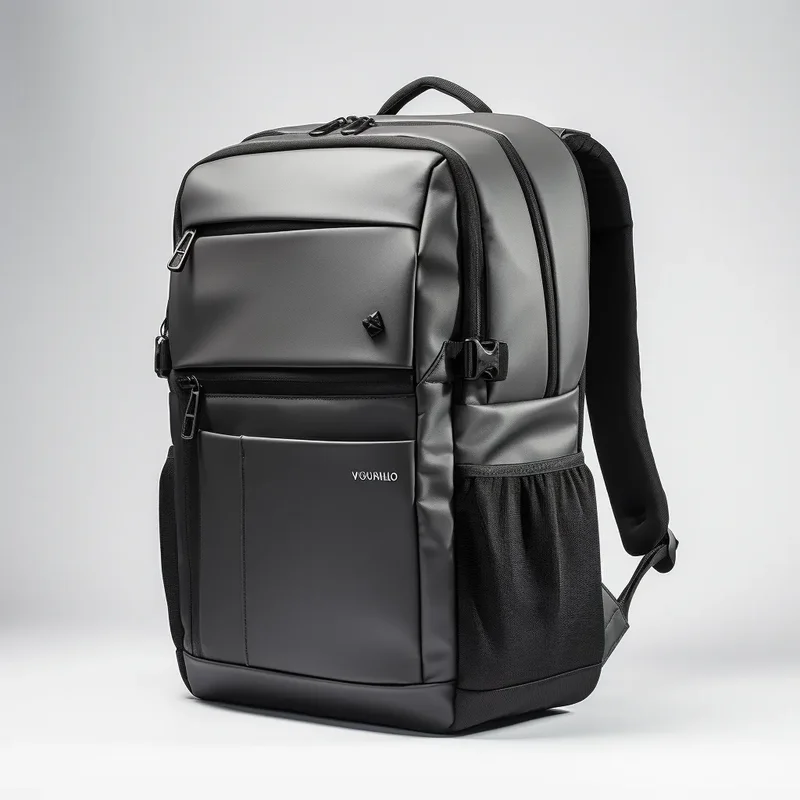
With the United Kingdom averaging 133 rain days per year according to the Met Office, water resistance is not a luxury but a necessity for any professional backpack used for daily commuting in Britain.
Fabric Water Resistance
Most professional backpacks achieve water resistance through a DWR (Durable Water Repellent) coating applied to the exterior fabric. This coating causes water to bead up and roll off the surface rather than soaking through. DWR treatments are effective on nylon, Cordura, and polyester fabrics, but they gradually diminish with use and exposure to UV light. High-quality backpacks use fabrics with a minimum 1,500mm hydrostatic head rating, meaning the fabric can withstand the pressure of 1,500 millimetres of water column before allowing moisture penetration.
Water-Resistant Zippers
A water-resistant fabric is rendered ineffective if water enters through standard zippers. Premium professional backpacks address this with aquaguard or water-resistant zippers that feature a sealed backing tape preventing water ingress through the zipper teeth. Brands like Ortlieb and Ripcurl offer fully waterproof backpacks with welded seams and roll-top closures, but these typically sacrifice the professional appearance that most users need. The practical middle ground is a DWR-coated nylon backpack with aquaguard zippers on all main compartments.
6. Premium Zippers and Hardware
Zippers and hardware are among the most common failure points on backpacks, yet they receive surprisingly little attention during the purchasing process. Understanding zipper quality separates well-made professional backpacks from those that will disappoint within months.
YKK Zippers: The Gold Standard
YKK zippers are the undisputed gold standard in the backpack industry. Japanese-manufactured YKK zippers are known for their consistent quality, smooth operation, and exceptional longevity. Professional backpacks from Tumi, Briggs & Riley, and Thule exclusively use YKK zippers. The YKK #8 and #10 sizes are preferred for main compartment zippers, while #5 sizes suit pocket zippers. YKK's Aquaguard line combines the reliability of YKK mechanisms with water-resistant sealing, offering both durability and weather protection.
Hardware Materials
Buckles, D-rings, and adjustment sliders should be manufactured from durable materials that resist corrosion and cracking. Glass-fibre reinforced nylon buckles from brands like Duraflex and Woojin offer excellent strength-to-weight ratios and resist UV degradation. Metal hardware, while attractive, adds weight and can corrode in wet conditions. The best professional backpacks use a strategic combination of reinforced nylon for high-stress buckles and stainless steel or anodised aluminium for decorative elements and attachment points.
7. Luggage Pass-Through Sleeve
For professionals who travel, a luggage pass-through sleeve (also called a trolley sleeve or suitcase strap) is an indispensable feature. This rear panel sleeve slides over the telescopic handle of rolling luggage, allowing the backpack to ride securely on top of your suitcase without occupying your hands or shoulders.
The Global Business Travel Association reports that UK business travellers average 7.4 trips per year. For anyone who travels more than three times annually, this feature transitions from convenient to essential. It is particularly valuable when navigating airport terminals, hotel lobbies, and train stations where you need free hands for tickets, phones, and coffee.
Most professional backpacks from Samsonite, Tumi, and Aer include a luggage pass-through as standard. The sleeve should accommodate telescopic handles up to 35 millimetres in width and include a securing mechanism (typically a hook-and-loop strap or snap button) to prevent the backpack from sliding off during movement.
8. Quick-Access and Security Pockets
How you access your most frequently needed items separates convenient backpacks from frustrating ones. Quick-access pockets allow you to retrieve essentials without unpacking the entire bag.
Top-Front Quick-Access Pocket
A top-front or side-access quick-access pocket allows you to reach your phone, wallet, or transit card without removing the backpack. This is invaluable during commutes when you need to scan an Oyster card, answer a call, or retrieve your wallet without stopping to put down the bag. Peak Design and Nomatic both feature well-executed side-access pockets that allow retrieval while wearing the backpack.
Hidden Security Pocket
A hidden security pocket positioned against the back panel (between the backpack and your back) provides theft-resistant storage for passports, wallets, and phones. These pockets are typically zippered and invisible from the outside, making them ideal for commuting in crowded environments. The Bobby brand and several models from Xiaomi have made hidden security pockets a hallmark of anti-theft professional backpack design.
9. Weight and Airline Carry-On Compliance
Professional backpacks should be lightweight enough to avoid adding meaningful weight to your daily load while being large enough to carry everything you need. The ideal empty weight ranges from 0.8 to 1.5 kilograms depending on the features and materials.
Carry-On Dimension Compliance
For professionals who travel, ensuring your professional backpack meets carry-on dimensions for major airlines is essential. The most restrictive common carry-on limit is 55cm x 40cm x 20cm (Ryanair's large bag allowance). Most professional backpacks between 20 and 30 litres fall within these dimensions, but always verify specific airline requirements before purchasing.
| Feature | Ideal Specification | Acceptable Range |
|---|---|---|
| Empty weight | 1.0 to 1.2 kg | 0.8 to 1.8 kg |
| Volume | 22 to 28 litres | 18 to 35 litres |
| Laptop compartment | Fits 15.6 inches | 13 to 17 inches |
| Carry-on compliant | Under 55 x 40 x 20 cm | Check specific airline |
| Water bottle pocket | Both sides | At least one side |
10. Materials and Construction Quality
The materials used in a professional backpack determine its appearance, durability, weather resistance, weight, and maintenance requirements. Understanding material options helps you make an informed choice aligned with your priorities.
Nylon: The Professional Standard
Ballistic nylon (1680D) and Cordura nylon (500D to 1000D) are the dominant materials in premium professional backpacks. Ballistic nylon offers extraordinary abrasion resistance and a distinctive weave pattern that communicates quality and durability. Cordura nylon provides an excellent balance of lightness, durability, and colourfastness. Both materials accept DWR coatings effectively and resist UV degradation, making them ideal for daily professional use across all seasons.
Recycled Polyester: The Sustainable Choice
Growing environmental awareness has driven demand for sustainable materials. Recycled polyester made from post-consumer plastic bottles (rPET) offers comparable performance to virgin polyester while reducing environmental impact. Brands including Herschel's Recon line, Cotopaxi, and Patagonia have embraced recycled materials without compromising on quality or professional appearance. Look for certifications like the Global Recycled Standard (GRS) that verify the recycled content claims.
Manufacturing Quality: Where Materials Meet Craftsmanship
The finest materials only deliver their intended performance when combined with expert manufacturing. At Junyuan Bags, established in 2004, the 15,000-square-metre facility operates 8 specialised production lines with over 200 skilled craftspeople. BSCI and ISO 9001:2015 certified, the factory produces over 200,000 professional backpacks annually with a defect rate below 0.3 percent. This combination of premium material sourcing and meticulous manufacturing quality control ensures that every professional backpack meets the demanding standards that working professionals expect. For brands seeking a manufacturing partner capable of delivering consistent quality at scale, Junyuan Bags offers the production capacity, technical expertise, and quality management systems that successful backpack brands require.
11. Sustainability and Ethical Manufacturing
Professional backpacks in 2026 must address growing consumer and corporate demand for sustainability. This encompasses materials, manufacturing processes, supply chain transparency, and product longevity.
Material Certifications
Look for professional backpacks that carry recognised sustainability certifications. The Global Recycled Standard (GRS) verifies recycled content. OEKO-TEX Standard 100 certifies that fabrics are free from harmful substances. bluesign certification covers the entire textile production chain for environmental and worker safety. These certifications provide verifiable assurance rather than vague marketing claims.
Manufacturing Standards
Ethical manufacturing is equally important. The Business Social Compliance Initiative (BSCI) certification verifies that manufacturing facilities meet standards for fair wages, safe working conditions, and environmental responsibility. ISO 9001:2015 certification demonstrates systematic quality management that reduces waste and ensures consistent product quality. Brands that transparently publish their manufacturing certifications and supply chain information demonstrate a genuine commitment to ethical production that goes beyond greenwashing.
12. Aesthetic and Professional Design Language
A professional backpack must look appropriate in every environment where you work, from client meetings to team sessions to after-work social occasions. The design language should communicate professionalism without appearing outdated or overly conservative.
Design Principles for Professional Backpacks
The most successful professional backpack designs share several aesthetic principles: clean lines with minimal visible seams, a structured rectangular form factor that maintains its shape when partially loaded, neutral colour options (black, charcoal, navy, or dark olive), minimal external branding, and a matte rather than glossy finish. Premium models from Aer, Bellroy, and Cote et Ciel exemplify these principles, creating backpacks that project sophistication and intentionality without drawing unnecessary attention.
The colour choice deserves particular attention. Black remains the most versatile and professional option, but charcoal grey and navy have gained significant acceptance in professional environments and offer a subtle differentiation from the ubiquitous black backpack. Avoid bright colours, excessive branding, and tactical or military-style designs in professional settings, as these undermine the professional image that careful selection of other features has established.
The Complete 12-Feature Checklist for 2026
Use this comprehensive checklist when evaluating any professional backpack purchase. Score each feature on a scale of 1 to 5, with 5 representing the highest quality or most complete implementation.
| # | Feature | Weight in Decision | Your Score (1-5) |
|---|---|---|---|
| 1 | Laptop compartment with suspended protection | Critical | ___ |
| 2 | Organisational compartment system | High | ___ |
| 3 | Ergonomic shoulder straps | Critical | ___ |
| 4 | Ventilated back panel | Medium | ___ |
| 5 | Water resistance (fabric and zippers) | High | ___ |
| 6 | Quality zippers (YKK or equivalent) | High | ___ |
| 7 | Luggage pass-through sleeve | Medium | ___ |
| 8 | Quick-access and security pockets | Medium | ___ |
| 9 | Weight and carry-on compliance | Medium | ___ |
| 10 | Materials and construction quality | Critical | ___ |
| 11 | Sustainability and ethical manufacturing | Medium | ___ |
| 12 | Professional design aesthetic | High | ___ |
A professional backpack scoring 4 or above in critical features and 3 or above in all other categories represents an excellent purchase. Any score below 3 in critical features (laptop protection, shoulder straps, construction quality) indicates a compromise that will affect your daily professional experience.
Frequently Asked Questions
What is the most important feature to look for in a professional backpack?
The single most important feature is a dedicated, padded laptop compartment with a suspended design. This protects your most valuable work tool from impacts, keeps it accessible at security checkpoints, and separates it from other contents. Beyond laptop protection, ergonomic shoulder straps with adequate padding and a ventilated back panel rank as the next most critical features for daily professional use.
How many compartments should a good professional backpack have?
A well-designed professional backpack should have at least four distinct zones: a laptop compartment, a main storage compartment, an admin panel for small items, and at least one quick-access exterior pocket. Premium models typically offer seven to twelve compartments including dedicated tablet sleeves, water bottle holders, hidden security pockets, and expandable sections. The key is purposeful organisation rather than simply maximising the number of pockets.
Is water resistance necessary in a professional backpack?
Water resistance is essential for any professional backpack in the United Kingdom, where rainfall occurs on average 133 days per year. A water-resistant backpack protects your laptop, documents, and electronics from sudden downpours during your commute. Look for backpacks with DWR coated fabrics, water-resistant zippers, and ideally a rain cover or aquaguard pocket system.
What is the ideal weight for a professional backpack when empty?
The ideal empty weight for a professional backpack ranges from 0.8 to 1.5 kilograms. Ultralight models weigh around 0.6 kilograms but may sacrifice protective padding. Premium leather backpacks can weigh up to 2.0 kilograms but offer superior durability. The sweet spot for most professionals is between 1.0 and 1.2 kilograms.
Do professional backpacks need a luggage pass-through sleeve?
A luggage pass-through sleeve is extremely valuable for professionals who travel regularly. According to the Global Business Travel Association, the average business traveller takes 7.4 trips per year. For anyone travelling more than three times annually, a luggage pass-through transitions from a nice-to-have feature to an essential one.
What material is best for a professional backpack?
For most professionals, 500D to 1000D Cordura nylon or 1680D ballistic nylon offers the ideal balance of durability, water resistance, professional appearance, and manageable weight. Recycled polyester is an excellent choice for environmentally conscious professionals. Leather offers classic aesthetics but requires regular maintenance.
Manufacture Your Professional Backpack Range With Junyuan Bags
Since 2004, Junyuan Bags has been crafting premium professional backpacks in our 15,000 sqm factory with over 200 skilled craftspeople and 8 dedicated production lines. BSCI and ISO 9001:2015 certified, we deliver an annual capacity exceeding 200,000 bags with a defect rate below 0.3 percent.
Email: service@junyuanbags.com
WhatsApp: +86 177 5002 0688
Continue Reading
- Business Backpack vs. Briefcase: Which Is Better for Professionals?
- How to Choose a Backpack for Work: 7 Key Factors
- Laptop Compartments in Business Backpacks: Complete Size Guide
- Leather vs. Nylon Business Backpacks: Pros, Cons and Best Picks
- Waterproof Fabric Technology for Men's Backpacks
- Backpack Zipper Quality: YKK vs SBS Comparison
- Foam Padding Technology for Backpack Comfort
- Mesh Back Panel Design and Breathability Guide
- View All Professional Backpack Products
- About Junyuan Bags
- Contact Our Team