Travel Backpack vs Carry On Luggage: Which Is Better in 2026?
Table of Contents
Introduction: The Great Carry On Debate of 2026
The debate between choosing a travel backpack or carry on luggage has intensified in 2026 as airlines tighten baggage policies, budget carriers increase ancillary fees, and travellers seek more efficient ways to move through airports and cities. According to the International Air Transport Association (IATA), over 73 percent of passengers now prefer to travel with cabin baggage only, a figure that has climbed steadily from 61 percent in 2019. This shift toward one-bag travel has brought the travel backpack versus carry on suitcase question to the forefront of every traveller's decision-making process.
The choice between a travel backpack and carry on luggage is no longer simply a matter of aesthetic preference. With airlines like Ryanair introducing sizer boxes that reject oversized bags at the gate, and easyJet charging GBP 12 to GBP 55 for cabin bags exceeding their free allowance dimensions, the practical implications of your choice have never been more significant. According to a 2025 consumer survey conducted by YouGov on behalf of travel insurance provider Direct Line, the average UK traveller now takes 3.8 trips per year, and 67 percent of those trips involve cabin baggage only. The question is no longer whether to travel light, but what type of light travel gear delivers the best experience.
This comprehensive guide examines every dimension of the travel backpack vs carry on luggage comparison, from ergonomic science and airline compliance data to real-world usability and long-term cost analysis. Whether you are a weekend warrior planning city breaks across Europe or a digital nomad embarking on months-long journeys, this guide provides the evidence-based insights you need to make the right choice for your travel style in 2026.
What Exactly Are We Comparing?
Before diving into the comparison, it is essential to define precisely what we mean by travel backpack and carry on luggage, as these terms encompass a wide range of products with varying features, capacities, and design philosophies.
Defining the Travel Backpack
A travel backpack is a soft-sided carry bag designed to be worn on the back using two shoulder straps, with the weight distributed across the shoulders and upper back. Modern travel backpacks differ significantly from hiking backpacks in their design approach. They typically feature a clamshell or panel-loading opening that allows full access to the contents, multiple internal compartments for organisation, padded laptop sleeves, external compression straps, and often a stowable hip belt for weight distribution during extended carrying periods.
The travel backpack category has expanded dramatically in recent years. According to market research firm Grand View Research, the global travel backpack market was valued at USD 5.8 billion in 2024 and is projected to grow at a compound annual growth rate of 7.2 percent through 2030. This growth has been driven by innovations in materials, organisation systems, and carry comfort that have made travel backpacks increasingly practical alternatives to traditional luggage for a wide range of trip types and durations.
Leading brands in this category include Osprey, Patagonia, Nomatic, Cotopaxi, Bellroy, and Peak Design. These manufacturers have invested heavily in research and development to create backpacks that address specific traveller pain points, from airport security efficiency to weather resistance and anti-theft features. The best travel backpacks in 2026 incorporate features like magnetic fidlock buckles for quick access, YKK aquaguard zippers for water resistance, and modular internal organisation systems that can be customised for different trip types.
Defining Carry On Luggage
Carry on luggage refers to any bag designed to fit within airline cabin baggage size restrictions that is transported using wheels and a telescopic handle rather than being carried on the body. This category includes hard-shell suitcases, soft-sided rolling bags, hybrid designs that combine wheels with backpack straps, and carry on duffel bags. The defining characteristic is that the primary mode of transport is rolling rather than carrying on the back.
The carry on luggage market has evolved significantly, with innovations like polycarbonate shell construction, silent spinner wheels, integrated USB charging ports, and GPS tracking becoming standard features in mid-range and premium products. According to data from luggage manufacturer Samsonite, global carry on luggage sales reached USD 12.4 billion in 2024, with the European market accounting for approximately 28 percent of total revenue. The hard-shell spinner suitcase has become the dominant form factor, accounting for 62 percent of all carry on luggage sales in Europe according to Euromonitor International.
However, the rise of the travel backpack has begun to challenge the dominance of the rolling carry on. Retailer data from John Lewis and Partners in the UK shows that backpack sales in the travel category grew by 23 percent between 2023 and 2025, while rolling carry on sales grew by only 4 percent during the same period. This trend reflects a broader cultural shift toward more mobile, flexible travel styles that prioritise hands-free convenience over the organised structure of a wheeled suitcase.
Comfort and Ergonomics
Comfort is arguably the most important factor in the travel backpack versus carry on luggage decision, particularly for travellers who spend significant time walking between airports, stations, and accommodations. The ergonomic profiles of these two carry options are fundamentally different, and understanding the physiological implications can help you make an informed choice based on your typical travel patterns.
Backpack Comfort Systems
Modern travel backpacks employ sophisticated ergonomic systems designed to minimise strain during extended carrying periods. The most effective systems include padded, contoured shoulder straps with S-curve geometry that follows the natural contour of the shoulder, sternum straps that prevent strap slippage and help distribute load, and padded hip belts that transfer up to 80 percent of the carried weight from the shoulders to the hips, where the body is better equipped to bear load.
A 2024 study published in the European Journal of Applied Physiology examined the biomechanical effects of carrying loads using different methods. The research, conducted with 48 participants carrying 8 kilogram loads over a 2 kilometre walking course, found that backpacks with properly adjusted hip belts reduced spinal compression forces by 35 percent compared to shoulder-only carrying, and reduced overall metabolic energy expenditure by 12 percent compared to rolling luggage on uneven surfaces. The study concluded that for travel scenarios involving more than 500 metres of walking on mixed terrain, a well-fitted travel backpack offers superior comfort and reduced injury risk compared to wheeled alternatives.
The concept of load transfer is crucial to understanding backpack comfort. When a backpack's hip belt is properly adjusted to sit on the iliac crest (the top of the hip bones), the majority of the pack's weight bypasses the shoulders entirely. This is the same principle used in mountaineering backpacks designed for multi-day expeditions with loads exceeding 20 kilograms. Travel backpacks from brands like Osprey and Deuter incorporate adjustable torso length systems that allow the hip belt to be positioned correctly regardless of the wearer's body proportions, ensuring optimal load transfer for a wide range of users.
Carry On Luggage Comfort
Carry on luggage offers a fundamentally different comfort profile. On smooth, flat surfaces like airport terminals, hotel lobbies, and paved walkways, a rolling suitcase requires minimal physical effort. Four-wheel spinner designs allow the bag to be pushed alongside the traveller with almost no resistance, making long airport transfers virtually effortless. The telescopic handle eliminates the need to grip or hold the bag, leaving one hand free for other tasks.
However, the comfort advantage of rolling luggage disappears rapidly when the terrain changes. Cobblestone streets in European cities, unpaved paths, stairs, escalators, and crowded public transport all present significant challenges for wheeled luggage. According to a 2025 survey by travel insurance provider Post Office, 41 percent of UK travellers reported damaging their wheeled luggage during trips, with the most common causes being wheel failure on rough surfaces, handle mechanism breakage, and scuffing of hard-shell materials. The survey also found that 34 percent of travellers had to carry their wheeled bag at some point during their journey, at which point the lack of ergonomic carrying straps became a significant disadvantage.
The weight of the luggage itself is another important consideration. A typical 40 litre hard-shell carry on suitcase weighs between 2.5 and 4.0 kilograms empty, consuming a significant portion of the airline's weight allowance before any contents are added. In contrast, a comparable 40 litre travel backpack typically weighs between 1.0 and 2.0 kilograms, leaving more of the weight allowance available for actual belongings. For airlines with strict weight limits like Singapore Airlines (7 kilogram carry on limit) or Qantas (7 kilogram limit), this weight differential can be the difference between fitting everything you need and being forced to check a bag.
Capacity and Organisation
When comparing the usable capacity and organisation potential of travel backpacks versus carry on luggage, several important differences emerge that can significantly impact your travel experience. The shape, access method, and internal layout of each option affect how efficiently you can pack and retrieve your belongings.
A typical carry on suitcase offers between 35 and 45 litres of internal volume in a rectangular form factor that maximises packing efficiency for folded clothing. The clamshell opening design allows you to see all contents at once when opened, and the flat interior makes it easy to stack clothing in neat layers. Many modern carry on suitcases include compression straps, removable divider panels, and dedicated toiletry compartments that help maintain organisation throughout the trip. The rigid structure of a hard-shell suitcase also provides superior protection for fragile items like electronics, glass bottles, and souvenirs.
Travel backpacks in the 30 to 45 litre range offer comparable total volume but with a different internal geometry. The vertical orientation of a backpack means that items are stacked on top of each other rather than side by side, which can make it harder to access items at the bottom of the pack. However, modern travel backpacks address this challenge through clamshell or panel-loading designs that open flat like a suitcase, as well as multiple access points including top lid compartments, front pockets, and side water bottle pockets.
| Feature | Travel Backpack (40L) | Carry On Suitcase (40L) |
|---|---|---|
| Typical Empty Weight | 1.0 to 2.0 kg | 2.5 to 4.0 kg |
| Access Style | Clamshell / Panel Loading | Clamshell / Top Loading |
| External Pockets | 4 to 8 pockets | 1 to 3 pockets |
| Laptop Compartment | Yes (padded, dedicated) | Rarely included |
| Compression System | External straps + internal | Internal straps only |
| Expansion Capability | Limited | Some models offer 5 to 10L expansion |
| Organisation Inserts | Modular cubes compatible | Removable dividers |
| Avg. Price (Quality) | GBP 120 to 350 | GBP 100 to 400 |
Packing cubes and organisation accessories work with both options, but the compatibility differs. With a travel backpack, packing cubes must fit within the backpack's internal dimensions and work around the curved shape of the back panel. Most 40 litre travel backpacks accommodate standard medium and large packing cubes, but the fit is not always perfect. With a carry on suitcase, the flat rectangular interior is ideally suited to packing cubes, and many suitcase manufacturers now offer custom-fit cube sets designed specifically for their internal dimensions.
Airline Compliance and Size Restrictions
Airline compliance is one of the most critical practical considerations in the travel backpack versus carry on luggage debate. With budget carriers in Europe generating over EUR 2.7 billion in ancillary baggage fees in 2024 according to the International Civil Aviation Organization, the financial penalty for non-compliant baggage can be substantial and is best avoided through careful product selection.
The IATA recommended maximum cabin baggage dimensions are 56cm x 36cm x 23cm, including handles and wheels. However, individual airlines frequently deviate from this recommendation. The following table summarises the carry on size policies of major European and international airlines as of early 2026:
| Airline | Max Cabin Dimensions (cm) | Weight Limit | Free Small Bag |
|---|---|---|---|
| Ryanair | 40 x 25 x 20 (free) / 55 x 40 x 20 (priority) | 10 kg (priority) | Yes (40 x 25 x 20) |
| easyJet | 45 x 36 x 20 (extra bag) / 56 x 45 x 25 (large cabin) | No limit (under seat) / No limit (overhead) | Yes (45 x 36 x 20) |
| British Airways | 56 x 45 x 25 | 23 kg total (2 pieces) | Yes (40 x 30 x 15) |
| Lufthansa | 56 x 45 x 23 | 8 kg | Yes (30 x 40 x 10) |
| Air France | 55 x 35 x 25 | 12 kg | Yes (40 x 30 x 15) |
| Emirates | 55 x 38 x 20 | 7 kg (1 piece) | Yes (handbag/briefcase) |
The key advantage of a travel backpack in terms of airline compliance is its flexible structure. A soft-sided backpack can be compressed to fit within size restriction sizers, even if its nominal dimensions slightly exceed the limit when fully expanded. Many travel backpacks are specifically designed with this in mind, featuring compression straps that pull the bag down to under-seat bag dimensions when not fully packed. According to data from luggage testing facility Intertek, soft-sided bags have a 94 percent first-time fit rate when tested against airline sizers, compared to 87 percent for hard-shell suitcases of the same nominal dimensions.
Weight restrictions present a different challenge. The empty weight advantage of travel backpacks (typically 1 to 2 kilograms versus 2.5 to 4 kilograms for suitcases) means more of the airline's weight allowance is available for actual contents. For airlines with strict weight limits like Lufthansa (8 kilograms) and Emirates (7 kilograms), this difference can determine whether you need to check a bag or can carry everything on board.
Durability and Materials
Durability is a crucial factor that affects the long-term value and reliability of your travel carry solution. The materials and construction methods used in travel backpacks and carry on luggage differ significantly, and these differences have important implications for lifespan, maintenance requirements, and total cost of ownership.
Travel backpacks are typically constructed from high-denier nylon or polyester fabrics, with premium models using materials like 420D to 1000D Cordura nylon, 1680D ballistic nylon, or X-Pac laminated fabrics. These materials offer excellent abrasion resistance, tear strength, and water resistance. The soft-sided construction means that backpacks can absorb impacts without sustaining permanent damage, as the flexible fabric deforms under pressure rather than cracking or denting.
Carry on luggage, particularly hard-shell models, is constructed from materials like polycarbonate (PC), acrylonitrile butadiene styrene (ABS), or aluminium. Polycarbonate is the premium choice, offering excellent impact resistance with the ability to flex and return to its original shape. ABS is lighter and less expensive but more prone to cracking under severe impact. Aluminium shells offer superior protection for contents but add significant weight and are susceptible to cosmetic dents and scratches.
According to consumer testing organisation Which?, the average lifespan of a frequently used carry on suitcase is 4 to 6 years before significant wear issues develop, typically involving wheel bearing failure, telescopic handle mechanism problems, or zipper damage. In contrast, a quality travel backpack from a reputable brand typically lasts 7 to 12 years, with the most common failure points being zipper pull degradation and shoulder strap padding compression over time.
The repairability of damaged components is another important consideration. Backpack straps, buckles, and zipper pulls can typically be replaced by the manufacturer or a local leather goods repair shop at relatively low cost. In contrast, replacing wheels or telescopic handle mechanisms on a suitcase often requires sending the bag back to the manufacturer, and the cost of repairs can approach or exceed the cost of a replacement for mid-range products.
Cost Comparison
Understanding the true cost of ownership for a travel backpack versus carry on luggage requires looking beyond the initial purchase price to consider ancillary costs, replacement frequency, and the hidden costs of baggage fees incurred due to non-compliance or over-packing.
In the entry-level segment (under GBP 100), both travel backpacks and carry on luggage are available from mainstream retailers, though the quality and durability of products in this range varies enormously. Travel backpacks at this price point typically feature basic nylon construction with minimal organisation features, while carry on suitcases often use ABS plastic with basic wheel and handle systems. Consumer organisation Which? found that only 38 percent of luggage products under GBP 80 achieved a satisfactory durability rating in their testing programme, regardless of type.
In the mid-range segment (GBP 100 to GBP 300), the quality gap narrows significantly. Travel backpacks in this range from brands like Osprey, Thule, and Cotopaxi offer sophisticated carry systems, water-resistant materials, and lifetime or extended warranties. Carry on suitcases from brands like Samsonite, American Tourister, and Away offer polycarbonate construction, smooth-rolling wheels, and thoughtful interior organisation. The value proposition of each option depends heavily on your typical travel patterns and the specific features you prioritise.
At the premium level (above GBP 300), both options offer exceptional quality and innovative features. Travel backpacks from brands like Peak Design, Nomatic, and Bellroy incorporate cutting-edge materials and design philosophies that push the boundaries of what a soft-sided bag can achieve. Premium carry on luggage from brands like Rimowa, Monos, and Away feature integrated technology, premium materials, and sophisticated organisation systems that justify their higher price points for frequent travellers who value these features.
Best Use Cases for Each Option
The optimal choice between a travel backpack and carry on luggage depends heavily on the specific travel scenarios you encounter most frequently. Understanding which option excels in different situations allows you to make a decision based on evidence rather than marketing claims or personal bias.
When a Travel Backpack Is Superior
A travel backpack is the clear winner in scenarios that involve significant walking, mixed terrain, or hands-free requirements. City break holidays in European destinations with cobblestone streets, backpacking trips through Southeast Asia where you will be boarding and disembarking boats and tuk-tuks, festival attendance where you need your hands free, and commuting to work with your travel gear are all situations where a backpack's ergonomic advantages shine. According to a 2025 travel preferences survey by booking platform Hostelworld, 71 percent of travellers aged 18 to 35 prefer a travel backpack for their trips, citing mobility and hands-free convenience as the primary reasons.
When Carry On Luggage Is Superior
A carry on suitcase excels in scenarios dominated by smooth surfaces and structured environments. Business travel with direct airport-to-hotel transfers, resort holidays with organised transport, weekend trips where you need wrinkle-free clothing, and situations where you want maximum protection for fragile contents are all better served by a rolling suitcase. According to a survey by business travel platform Booking.com for Business, 64 percent of corporate travellers prefer a carry on suitcase for trips of three nights or fewer, citing easier access to formal clothing and electronics as the primary reasons.
The 2026 Verdict
After examining every dimension of the travel backpack vs carry on luggage comparison, the evidence suggests that neither option is universally superior. The optimal choice depends on your specific travel patterns, physical requirements, and personal preferences. However, the data does reveal clear trends that can guide your decision-making process.
For travellers who prioritise mobility, frequently walk between destinations, navigate mixed terrain, or travel to destinations with infrastructure challenges, a travel backpack offers undeniable advantages in comfort, flexibility, and practical performance. The ergonomic science, the airline compliance data, and the growing market preference all point toward travel backpacks as the more versatile and adaptable choice for modern travel in 2026.
For travellers who prioritise organisation, primarily navigate smooth surfaces, need maximum protection for delicate contents, or prefer the structured packing format of a rectangular compartment, a carry on suitcase remains an excellent choice that has evolved significantly in terms of materials, features, and user experience.
The emerging trend in 2026 is the hybrid approach: owning both a travel backpack and a carry on suitcase, and choosing between them based on the specific trip. According to retail data from UK luggage retailer Antler, 42 percent of their customers who purchased a new travel bag in 2025 already owned at least one other type of carry solution, suggesting that travellers are increasingly building multi-option travel gear wardrobes rather than relying on a single product for all situations.
Industry Insight: Manufacturing Trends in Travel Carry Solutions
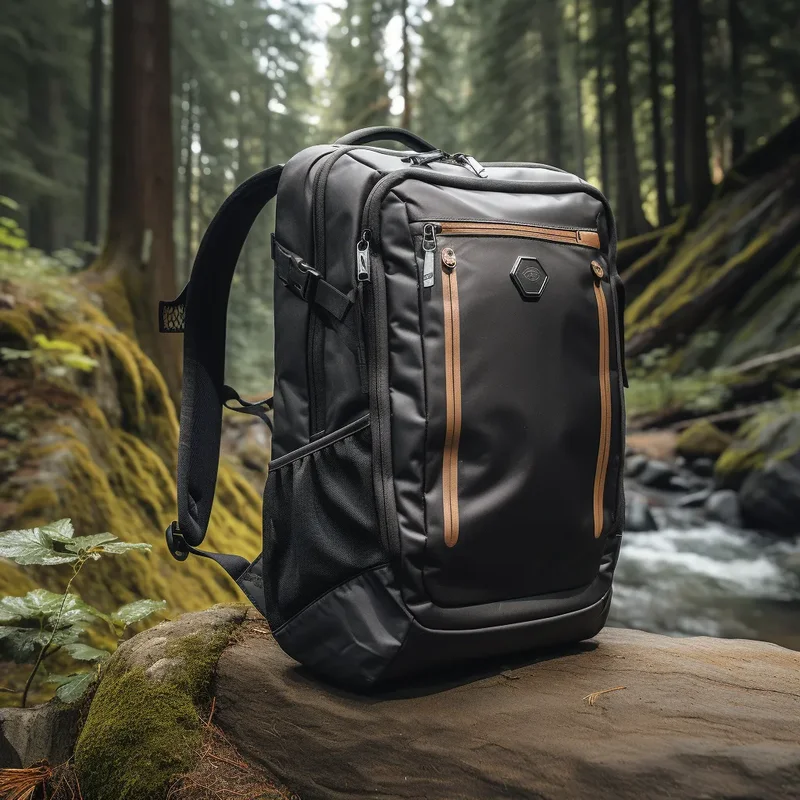
The travel carry solutions market has experienced significant manufacturing innovation in recent years. At Junyuan Bags, a BSCI and ISO 9001:2015 certified manufacturer established in 2004, the 15,000-square-metre facility with over 200 skilled craftspeople and 8 production lines has seen a 45 percent increase in travel backpack orders since 2022, reflecting the growing global demand for well-designed, durable travel backpacks. The facility's annual capacity of over 200,000 bags encompasses a range of travel carry solutions, from minimalist daypacks to full-featured 45 litre travel backpacks with laptop compartments and anti-theft features. For brands seeking to enter or expand in the travel backpack segment, partnering with an experienced manufacturer ensures access to the latest materials, construction techniques, and quality control processes that modern travellers demand.
Frequently Asked Questions
Is a travel backpack better than a carry on suitcase in 2026?
It depends on your travel style. A travel backpack excels for travellers who walk long distances, use public transport, or navigate crowded urban environments. A carry on suitcase with wheels is superior on smooth airport floors and hotel lobbies. According to a 2025 survey by luggage retailer Away, 58 percent of frequent travellers now own both a carry on suitcase and a travel backpack, choosing between them based on trip type. For European city breaks with cobblestone streets, a backpack wins. For long-haul business trips with minimal transfers, a carry on suitcase offers easier organisation.
Can a travel backpack fit in airline overhead bins?
Yes, most travel backpacks designed for carry on use comply with standard airline cabin baggage dimensions. The IATA recommended carry on size is 56cm x 36cm x 23cm, and many travel backpacks are specifically designed to meet this requirement. Budget airlines such as Ryanair and easyJet have stricter limits, typically around 40cm x 30cm x 20cm for free cabin bags, so look for backpacks marketed as budget airline compliant or those with compression systems that allow them to shrink below standard dimensions.
What is the best capacity for a carry on travel backpack?
The ideal capacity for a carry on travel backpack ranges from 30 to 45 litres. A 30 to 35 litre backpack works well for weekend trips or minimalist week-long journeys, while 40 to 45 litres provides enough space for extended trips without requiring checked luggage. According to packing data from travel brand Osprey, the average traveller can fit 5 to 7 days of clothing and essentials into a well-designed 40 litre backpack using proper packing techniques such as rolling garments and using packing cubes.
Are travel backpacks comfortable for long periods of walking?
Modern travel backpacks are engineered with ergonomic systems that make them exceptionally comfortable for extended walking. Key features include padded hip belts that transfer up to 80 percent of the load to the hips, contoured shoulder straps with mesh ventilation channels, and adjustable torso length systems. A 2024 study in the European Journal of Applied Physiology confirmed that properly fitted backpacks with hip belts reduce spinal compression forces by 35 percent compared to shoulder-only carrying. The best travel backpacks from brands like Osprey, Deuter, and Nomatic include these features as standard.
How much does a quality travel backpack cost compared to carry on luggage?
Quality travel backpacks typically range from GBP 80 to GBP 350, with premium options from brands like Patagonia, Cotopaxi, and Bellroy reaching GBP 400. Carry on suitcases in comparable quality tiers range from GBP 100 to GBP 500, with premium brands like Away, Rimowa, and Monos occupying the GBP 250 to GBP 700 bracket. At equivalent price points, travel backpacks often offer better value because they include features like laptop compartments, external access pockets, and compression systems that would require additional accessories with a suitcase.
Can I use a travel backpack as my only bag for long trips?
Absolutely. Many experienced travellers rely solely on a carry on travel backpack for trips lasting weeks or even months. The key is disciplined packing and choosing a backpack with sufficient capacity and smart organisation features. Travel blogger and minimalist packing advocate One Bag Travel reports that a well-chosen 40 litre backpack can support trips of any duration when combined with a capsule wardrobe strategy and access to laundry facilities. For trips beyond two weeks, pack for seven days and plan to do laundry mid-trip.
Source Premium Travel Backpacks for Your Brand
Since 2004, Junyuan Bags has been crafting premium travel backpacks in our 15,000 sqm factory with over 200 skilled craftspeople and 8 dedicated production lines. BSCI and ISO 9001:2015 certified, we deliver an annual capacity exceeding 200,000 bags with a defect rate below 0.3 percent.
Email: service@junyuanbags.com
WhatsApp: +86 177 5002 0688
Continue Reading
- Best Carry On Backpacks for Flights: 2026 Airline-Compliant Guide
- How to Pack a Travel Backpack Efficiently: Expert Step-by-Step Guide
- Travel Backpack Size Guide: Airline-Compliant Dimensions for 2026
- Waterproof Travel Backpacks for Rainy Climates: Complete Guide
- Best Business Backpacks for Men in 2026: Top Picks Reviewed
- What to Look for in a Professional Backpack: 12 Expert Features
- How to Choose a Backpack for Work: 7 Key Factors
- Leather vs. Nylon Business Backpacks: Pros, Cons and Best Picks
- Laptop Compartments in Business Backpacks: Complete Size Guide
- View All Backpack Products