Roll-Top vs. Zippered: Waterproof Closure Systems Compared
The waterproofness of a backpack depends on three things: fabric, seams, and closure. Most shoppers obsess over fabric ratings and seam construction but give almost no thought to how the bag opens and closes. Yet the closure system is where every waterproof backpack is either saved or defeated. A 20000mm-rated fabric with welded seams becomes useless in a downpour if the main zipper lets water through. This comparison examines the two dominant closure systems in waterproof backpacks: the roll-top and the waterproof zipper. We will look at how each works, where each fails, and which one actually keeps your gear drier in real conditions.
How Roll-Top Closures Work
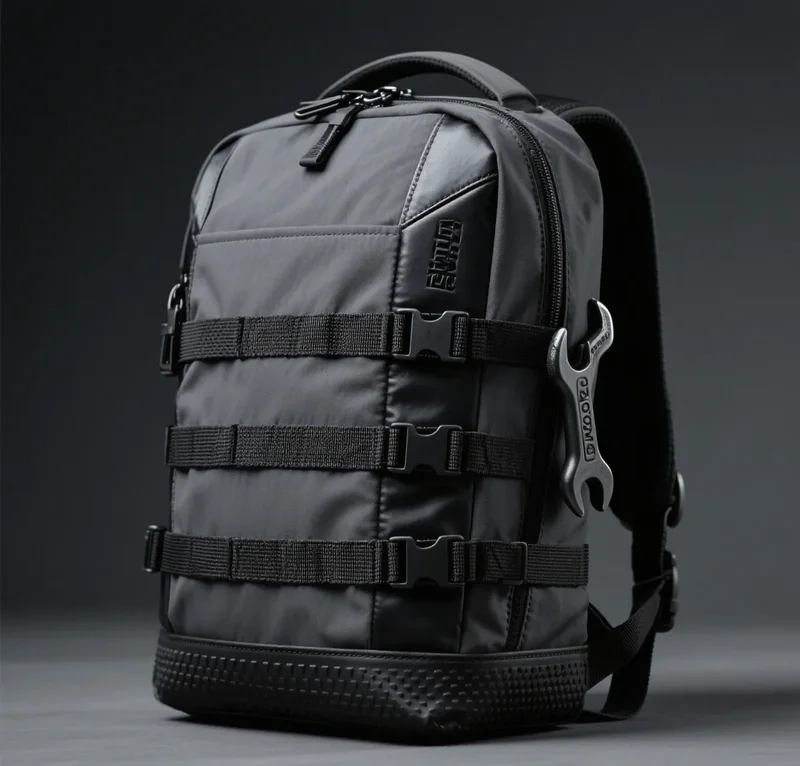
The roll-top closure is deceptively simple. The top of the bag extends well beyond the opening, creating a long flap. To close the bag, you fold or roll this flap down over the opening multiple times, then secure it with buckles, clips, or a strap. Each roll creates an additional layer of fabric between the interior of the bag and the outside world. The waterproofing principle is elegant in its simplicity: water would need to travel upward through multiple fabric layers and sharp bends to reach the interior, which is virtually impossible under rain conditions.
The Physics Behind Roll-Top Waterproofing
Water moves downward due to gravity and can only move against gravity through capillary action or under pressure. A properly rolled roll-top closure forces any incoming water to travel upward through multiple tight bends (the rolls) against gravity. Each bend acts as a barrier because water cannot easily change direction against gravity without significant pressure. This is the same principle that makes a P-trap under your sink prevent sewer gases from rising into your bathroom. With three or more rolls, the closure creates a tortuous path that rain simply cannot navigate.
Leading Roll-Top Brands and Their Approaches
Ortlieb pioneered the roll-top closure for waterproof commuter and cycling backpacks. Their City2, Back-Roller, and Commuter-Daypack lines all feature roll-top closures that achieve IPX7 ratings (submersion-proof). Aqua Quest uses roll-top closures on their Guardian and White Water series, popular with adventure cyclists and kayakers. OverBoard applies roll-top technology to their marine-grade dry bag backpacks designed for watersports. SealLine uses a variation of the roll-top on their Boundary and Klamath series, combining it with RF-welded seams for maximum water protection.
How Waterproof Zipper Closures Work
Waterproof zippers modify the standard zipper design to block water entry. The most common approach, used by YKK in their AquaGuard line, features a laminated polyurethane film on the outer face of the zipper that covers the teeth when the zipper is closed. This film fills the gaps between teeth that would otherwise allow water passage. Higher-end zippers from RiRi use a similar approach with their Aquaguard line, combining precision-machined teeth with a waterproof membrane.
The Limitations of Zipper Waterproofing
Even the best waterproof zippers have inherent weaknesses that roll-top closures simply do not share. The zipper teeth create a mechanical path that water can follow under sufficient pressure. At the zipper stops (where the slider reaches the end of travel), there are small gaps that are vulnerable to water penetration. Where the zipper tape meets the fabric, there is a seam that must be sealed separately. And the slider itself, where the two zipper halves join, is a potential leak point when not perfectly aligned.
These vulnerabilities are manageable in light to moderate rain. High-quality waterproof zippers from YKK and RiRi handle typical rainfall effectively. The problems arise in extreme conditions: wind-driven horizontal rain, prolonged submersion, or scenarios where the zipper is partially blocked by debris or fabric that prevents a clean seal.
Head-to-Head Comparison: Roll-Top vs. Zippered
| Factor | Roll-Top | Waterproof Zipper | Winner |
|---|---|---|---|
| Maximum waterproof rating | IPX7+ (submersion rated) | IPX4-5 (splash rated) | Roll-Top |
| Real-world rain performance | Excellent in all conditions | Very good, fails under extreme pressure | Roll-Top |
| Speed of access | Slow (unbuckle, unroll) | Fast (pull zipper) | Zipper |
| Frequency of access convenience | Cumbersome for frequent access | Ideal for quick grab-and-go | Zipper |
| Durability over time | Excellent (simple mechanism) | Good (moving parts wear) | Roll-Top |
| Maintenance requirements | Minimal (clean buckles) | Regular (clean teeth, lubricate) | Roll-Top |
| Capacity impact | Rolls consume 3-5L | Negligible | Zipper |
| Organisation flexibility | Single large opening | Multi-pocket compatible | Zipper |
| Weight | Lighter (no heavy zipper) | Heavier (waterproof zipper hardware) | Roll-Top |
| Security against theft | Good (hidden opening) | Fair (external zipper visible) | Roll-Top |
| Airport/travel convenience | Moderate (must unroll fully) | Easy (open like luggage) | Zipper |
| Repair difficulty if damaged | Easy (replace buckles/strap) | Difficult (replace entire zipper) | Roll-Top |
Waterproof Performance Under Pressure
The true test of any waterproof closure system is how it performs under pressure. Here is how roll-top and zippered closures compare when conditions become challenging.
Light Rain (Drizzle to Moderate)
Both systems perform excellently. A quality waterproof zipper handles light rain with ease, and a properly rolled roll-top is equally effective. In this scenario, the choice comes down to convenience rather than protection.
Heavy Rain (Downpour Conditions)
This is where the gap begins to widen. A waterproof zipper with storm flap coverage handles heavy rain well. A waterproof zipper without a storm flap may allow some moisture seepage at the zipper stops after 30 to 60 minutes. A roll-top closure remains completely impervious regardless of rain intensity because the physical barriers are not affected by water volume or pressure from above.
Wind-Driven Rain (Storm Conditions)
Horizontal rain driven by wind creates pressure that pushes water into any available gap. Waterproof zippers are vulnerable at the slider, the stops, and where the zipper meets the fabric. Even with a storm flap, the combination of wind pressure and the mechanical nature of the zipper creates risk. Roll-top closures handle wind-driven rain supremely well because the water must fight gravity and navigate multiple tight bends, a challenge that increases rather than decreases in severity with wind pressure.
Partial Submersion (Water Sports, Flooding)
This is where the comparison becomes decisive. A zippered closure, even the best YKK AquaGuard, will eventually leak under submersion. Water pressure against the zipper teeth overwhelms the laminated barrier. A roll-top closure rated for submersion (minimum 3 rolls on a quality bag like an Ortlieb or SealLine) maintains its seal under full submersion, which is why every serious dry bag and marine pack uses roll-top closures exclusively.
Durability and Long-Term Performance
Closure systems degrade differently over time, and this matters for long-term waterproof performance.
Roll-Top Longevity
The roll-top closure has remarkably few failure points. The fabric fold itself can last indefinitely if the fabric coating remains intact. The buckles are typically simple plastic side-release buckles that can be replaced for a few pounds if they crack. The main wear point is the crease where the fabric folds repeatedly, and this can develop stress marks after several years of daily use. However, because the roll has multiple folds, even if the outermost fold shows wear, the inner folds maintain the waterproof barrier. Quality roll-top packs from Ortlieb regularly last 10 to 15 years of daily use before showing any meaningful degradation in closure performance.
Waterproof Zipper Longevity
Waterproof zippers face more challenges over time. The laminated coating on the outer face of the zipper gradually wears away with use, particularly where the slider passes over the teeth repeatedly. Zipper teeth can become misaligned, the slider can loosen, and the waterproof coating on the zipper tape can crack. With regular maintenance (cleaning debris from teeth, applying silicone lubricant to the slider, avoiding forcing the zipper), quality waterproof zippers from YKK last 3 to 7 years of daily use. Budget waterproof zippers may fail within 1 to 2 years.
Roll-Top Strengths
Superior waterproof rating (IPX7+), excellent durability with minimal maintenance, lighter weight than equivalent zipper systems, simpler repair if damaged, better security (hidden opening), maintains protection even if partially damaged due to multiple barrier layers.
Roll-Top Weaknesses
Slower access (must unroll completely), reduces usable volume by 3-5 litres, single large opening limits organisation, less convenient for frequent access, less familiar to some users, can feel bulky when fully rolled.
Waterproof Zipper Strengths
Fast access (instant open/close), no volume loss, supports multi-pocket designs, easier to organise items, familiar and intuitive operation, better for airport/travel screening, can be operated with one hand.
Waterproof Zipper Weaknesses
Lower maximum waterproof rating, moving parts wear and fail, requires regular maintenance, difficult to repair or replace, heavier than roll-top hardware, single point of failure for main compartment.
Which Closure System Suits Which Activity?
Daily Urban Commuting
If you commute in a city with regular rain and carry a laptop, either system works well. A zippered closure with storm flap is sufficient for most commuter scenarios and offers the convenience of quick laptop access when passing through security. A roll-top provides extra insurance for those days when the weather is truly awful. Many commuters prefer hybrid designs that offer a roll-top main compartment with a separate zippered laptop sleeve.
Cycling and Bike Commuting
Roll-top closures dominate the cycling world for good reason. When you are cycling through rain at speed, the wind pressure on your backpack is extreme, and only a roll-top provides reliable protection in these conditions. Ortlieb's cycling backpacks all use roll-top closures, and this design choice has made them the gold standard among cycle commuters.
Hiking and Backpacking
Both systems are common in hiking. Roll-top designs from brands like Granite Gear and Hyperlite Mountain Gear are popular in the ultralight community because they save weight and provide excellent weather protection. Zippered designs from Osprey and Gregory offer better organisation and faster trail access. For wet-weather hiking in the UK, a roll-top provides the most reliable protection.
Water Sports and Marine Activities
Roll-top closures are mandatory for any serious water sport activity. Kayaking, canoeing, paddleboarding, and fishing all demand submersion-rated protection that only roll-top closures reliably provide. SealLine, Ortlieb, and OverBoard all use roll-top designs on their water sport packs.
The Hybrid Approach: Best of Both Worlds
Recognising that neither closure system is perfect for every scenario, several brands have developed hybrid designs. These packs feature a roll-top main compartment for maximum waterproof protection combined with zippered external pockets for quick-access items like phones, keys, and wallets.
Notable Hybrid Designs
Ortlieb Commuter-Daypack: Roll-top main compartment (IPX7) with zippered front pocket for quick access. The main compartment is fully submersible while the front pocket provides rain-resistant quick-access storage.
Aer Day Pack 2: Roll-top main section with side zippered pockets and a separate zippered laptop compartment. This design provides roll-top weather protection for your main contents while maintaining convenient access to electronics and small items.
Thule Subterra 22L: Features a storm-flap-covered waterproof zipper as the main closure with roll-top-style secondary protection. This hybrid approach gives zipper-like access speed with roll-top-level weather protection.
Aqua Quest Defender: While primarily a roll-top design, Aqua Quest adds zippered side pockets that allow quick access without unrolling the main compartment.
Maintenance Tips for Both Closure Types
Roll-Top Care
Keep the folding creases free of dirt and debris that can abrade the fabric coating over time. Inspect buckles seasonally and replace any that show cracking. Clean the entire closure area with mild soap and water after exposure to salt water or heavy mud. Reapply DWR treatment to the roll area to maintain the fabric's water repellency.
Waterproof Zipper Care
Clean zipper teeth after every wet outing using a soft brush and clean water. Apply a silicone-based zipper lubricant monthly during wet seasons. Never force a zipper that is stuck or jammed, as this damages the waterproof coating on the teeth. Store the pack with the zipper partially open to prevent the teeth from bonding together during long-term storage. Replace any zipper with visible damage to the laminated outer coating immediately, as compromised waterproof zippers fail rapidly once water finds an entry point.
Find Your Ideal Closure Style
Ready to put this knowledge into action? Explore our top waterproof backpack picks for 2026, featuring both roll-top and zippered designs from the best brands in the business.
See Top Picks for 2026Frequently Asked Questions
Is a roll-top backpack more waterproof than a zippered one?
Yes, in almost all real-world scenarios, a roll-top closure provides superior waterproof protection compared to a zippered closure. The roll-top design eliminates the primary vulnerability of zippers by creating a fold-over seal that water cannot penetrate without submerging the entire opening underwater. When properly rolled (minimum 3-4 rolls), the closure creates multiple layers of fabric that water must pass through, making it essentially impervious to rain from any direction. This is why virtually every serious dry bag and marine-grade waterproof backpack uses a roll-top closure.
What are the disadvantages of roll-top backpacks?
Roll-top backpacks have three main disadvantages compared to zippered alternatives. First, slower access: you must unclip and unroll the top every time you need anything, making quick access impractical. Second, reduced capacity: rolling the top consumes 3 to 5 litres of internal volume. Third, organisation challenges: the single large opening makes it harder to organise small items compared to multi-pocket zippered designs. Some users also find the buckles and straps of a roll-top less convenient for security screening at airports and train stations.
Do waterproof zippers actually keep water out completely?
High-quality waterproof zippers like YKK AquaGuard and RiRi Aquaguard significantly reduce water entry but are not 100% waterproof under all conditions. Under light to moderate rain, they perform excellently and keep the interior dry. Under heavy wind-driven rain or partial submersion, water can eventually penetrate the zipper coil, particularly at the zipper stops and where the zipper meets the fabric. This is why even the best zippered waterproof backpacks include a storm flap as a secondary barrier. For guaranteed waterproof protection in submersion scenarios, roll-top closures remain the only proven solution.
Which closure type lasts longer, roll-top or zipper?
Roll-top closures generally outlast zipper closures because they have fewer mechanical components that can fail. A roll-top relies on fabric folds and simple buckles that can survive decades of use with minimal maintenance. Zippers, even high-quality YKK zippers, have moving parts (teeth, sliders, stops) that wear over time. Zipper teeth can separate, sliders can become loose, and the waterproof coating on waterproof zippers degrades with use. With proper care including regular cleaning and lubrication, a quality zipper lasts 3 to 7 years. Roll-top buckles and fabric folds routinely last 10 or more years.
Are there backpacks that combine roll-top and zipper closures?
Yes, several brands offer hybrid designs that combine roll-top main compartments with zippered side or front pockets. Ortlieb's Atrack series, Aer's Day Pack, and several models from Thule feature roll-top main closures with auxiliary zippered pockets for quick-access items. This hybrid approach gives you the superior waterproof protection of a roll-top for your most important contents while maintaining the convenience of zippers for items you need to access frequently without unrolling the main compartment.
How many rolls do you need on a roll-top backpack for waterproof protection?
Most roll-top backpack manufacturers recommend a minimum of 3 to 4 complete rolls to achieve full waterproof protection. Each roll creates an additional layer of fabric barrier. With 3 rolls, you have triple-layer protection at the closure point. Some manufacturers like Ortlieb specify that their bags require at least 3 rolls for IPX7-rated submersion protection. Fewer than 3 rolls significantly reduces the waterproof performance. Over-rolling (5 or more rolls) provides additional security margin but reduces accessible volume inside the bag.
Which closure is better for cycling commuters?
For cycling commuters who face regular rain exposure, roll-top closures are generally the better choice. The waterproof superiority matters most when you are cycling through rain at speed, because the wind pressure on your backpack is significantly higher than when walking. Roll-top closures handle this pressure without any risk of zipper failure. The Ortlieb Commuter-Daypack and similar roll-top cycling packs have become the standard among serious cycle commuters specifically because of this weather protection advantage. If you need quick laptop access at the office, a hybrid design with roll-top main and zippered laptop sleeve offers the best of both worlds.