One-Bag Travel: The Complete Guide to Carrying Less
The One-Bag Travel Philosophy
One-bag travel is not about deprivation. It is about intentionality. The idea is simple: you pack everything you need for any trip into a single carry-on-sized bag. No checked luggage, no baggage claim wait, no lost bags, no fees. You walk off the plane with everything you own, and you walk straight to your destination.
This philosophy has gained enormous traction over the past decade, fueled by the rise of digital nomadism, budget airlines that charge for checked bags, and a growing cultural shift toward minimalism. Whether you are heading to Barcelona for a week or spending three months hopping across Southeast Asia, one-bag travel proves that less truly is more.
The concept rests on a core principle: every item in your bag must earn its place. There is no room for "just in case" items. Every shirt, every cable, every accessory must serve a clear purpose and be used at least once during your trip. This discipline forces you to confront your packing habits and discover that you probably need far less than you think.
Benefits of Traveling with One Bag
The advantages of one-bag travel extend far beyond saving money on baggage fees. Here are the most compelling reasons to embrace this approach:
Speed and Efficiency
When you carry on everything, you skip the check-in counter entirely if you have your boarding pass on your phone. You walk straight through security and straight off the plane at your destination. There is no waiting at the carousel, no anxiety about whether your bag made the connection. For business travelers who do quick turnarounds, this can save 30 to 45 minutes at each end of a flight.
Flexibility and Mobility
One bag means you can take any form of transport without hassle. Trains, buses, rickshaws, motorbikes, ferries, bicycles. You are not tethered to a rolling suitcase on cobblestones or wrestling with luggage on crowded metro platforms. The freedom to move quickly and lightly transforms how you experience a destination.
Cost Savings
Budget airlines like Ryanair, EasyJet, and AirAsia have made checked baggage increasingly expensive. A single checked bag on a European round trip can cost anywhere from 25 to 80 pounds depending on the route and timing. Multiply that across several trips per year and the savings become significant. Over a year of frequent travel, one-bag practitioners routinely save hundreds of pounds in baggage fees alone.
Mental Clarity
There is a psychological benefit to traveling light. When your entire life fits in one bag, you stop worrying about your stuff. You are not dragging it around, guarding it at the hotel, or stressing about overweight charges. The mental space you reclaim is substantial. Many one-bag travelers describe a feeling of liberation that grows with each trip.
Security
Your bag never leaves your side. There is no risk of lost luggage, no chance of the airline sending your stuff to the wrong city. You always know where your belongings are because they are on your back. This is particularly valuable when traveling through regions with high baggage mishandling rates.
The Mindset Shift: From Packing Fear to Packing Confidence
The biggest barrier to one-bag travel is not the bag itself. It is the fear of not having enough. Most people pack for worst-case scenarios. They worry about weather changes, unexpected formal events, running out of clean clothes, or needing a specific tool or gadget. This anxiety-driven packing leads to overstuffed suitcases that create more problems than they solve.
The one-bag mindset requires a fundamental shift. Instead of asking "What if I need this?" you start asking "Can I live without this?" or "Can I replace or buy this at my destination?" The answer is almost always yes. In 2026, you can find basic clothing, toiletries, and electronics accessories in virtually any city on Earth. The things you forget are almost always replaceable for a few pounds or dollars.
Another key mental shift is accepting imperfection. You will not look as polished as someone who brought a full wardrobe. You will wear the same shirt twice. You will hand-wash socks in a hotel sink. And you will be perfectly fine. The vast majority of people you meet will not notice or care what you wore yesterday.
The best travel wardrobe is the one you can wash in a sink and dry overnight.
Carry-On Size Limits by Region
Understanding carry-on dimensions is critical for one-bag travel. Your bag must fit within the limits of the airlines you fly most frequently. Here is a comprehensive comparison of carry-on size restrictions across major carriers and regions.
| Airline / Standard | Dimensions (cm) | Dimensions (in) | Weight Limit | Region |
|---|---|---|---|---|
| IATA Recommendation | 56 x 45 x 25 | 22 x 18 x 10 | None specified | Global Standard |
| Ryanair | 40 x 25 x 20 | 16 x 10 x 8 | 10 kg (small bag free) | Europe |
| EasyJet | 56 x 45 x 25 | 22 x 18 x 10 | 15 kg | Europe |
| British Airways | 56 x 45 x 25 | 22 x 18 x 10 | 23 kg | Europe / UK |
| Lufthansa | 55 x 40 x 23 | 22 x 16 x 9 | 8 kg | Europe |
| American Airlines | 56 x 36 x 23 | 22 x 14 x 9 | None specified | United States |
| United Airlines | 56 x 35 x 22 | 22 x 14 x 9 | None specified | United States |
| Delta Air Lines | 56 x 35 x 23 | 22 x 14 x 9 | None specified | United States |
| AirAsia | 56 x 36 x 23 | 22 x 14 x 9 | 7 kg | Asia |
| Singapore Airlines | 55 x 36 x 23 | 22 x 14 x 9 | 7 kg | Asia |
| Qantas | 56 x 36 x 23 | 22 x 14 x 9 | 7 kg | Australia |
| Emirates | 55 x 38 x 20 | 22 x 15 x 8 | 7 kg | Middle East |
| Air Canada | 55 x 40 x 23 | 22 x 16 x 9 | None specified | North America |
| Japan Airlines | 55 x 40 x 25 | 22 x 16 x 10 | 10 kg | Asia |
| SAS | 55 x 40 x 23 | 22 x 16 x 9 | 8 kg | Europe |
The safest bag dimensions for one-bag travel are approximately 55 x 35 x 23 cm (22 x 14 x 9 inches). This size fits virtually every major airline carry-on requirement. However, if you fly Ryanair frequently, you may want to consider a smaller personal-item-sized bag of 40 x 25 x 20 cm or a compressible bag that can shrink to those dimensions.
Weight limits vary significantly. US domestic carriers generally have no posted weight limit for carry-on bags, while Asian and Middle Eastern carriers tend to enforce strict 7 kg limits. European budget carriers like Ryanair and Wizz Air weigh bags at the gate and charge heavily for overweight items. Always check your specific airline before departure.
What to Cut from Your Packing List
Reducing your packing to one bag requires ruthless prioritization. Here are the most common categories of items that one-bag travelers learn to eliminate or drastically reduce.
Clothing
The biggest source of overpacking is clothing. Most travelers pack two to three times more clothes than they actually need. The key is to adopt a capsule wardrobe approach: choose a neutral color palette where every piece matches everything else. Pack merino wool items that resist odour and can be worn multiple times between washes. Limit yourself to two or three tops, one or two bottoms, and one layering piece. Shoes are the heaviest items, so bring just one comfortable pair on your feet plus one compact pair if absolutely necessary.
Toiletries
Full-size bottles of shampoo, conditioner, and body wash are unnecessary when traveling. Either transfer products to small 50 ml travel containers, buy toiletries at your destination, or rely on the hotel and hostel provisions. A simple solid shampoo bar, a small tube of multi-purpose moisturiser, and a travel toothbrush are enough for most trips.
Electronics
Multiple chargers, cables for every device, portable speakers, and e-readers add up quickly. Consolidate where possible: a single multi-port USB charger can replace three separate adapters. Use your phone for reading, maps, and music instead of bringing separate devices. One universal cable with interchangeable tips handles most charging needs.
"Just in Case" Items
Formal wear for events that might happen, extra shoes for occasions that will never arise, guidebooks you will never open, and medication beyond basic pain relief. If you cannot name the specific occasion when you will use it, leave it at home. The world is full of shops, and almost anything you forgot can be replaced cheaply at your destination.
Documents and Paper
Physical guidebooks, printed itineraries, paper books, and unnecessary documents are dead weight in 2026. Store everything digitally. Use cloud-based document storage, digital boarding passes, and e-book apps. Take photos of your passport, insurance documents, and prescriptions and store them in a secure cloud folder.
7-Day One-Bag Packing List
The following packing list is designed for a seven-day trip to a warm or temperate climate. It assumes access to laundry facilities at your accommodation and represents a tested, minimal set of gear that covers all daily needs.
| Category | Item | Notes |
|---|---|---|
| Clothing (worn + packed) | 1 pair of versatile trousers or chinos | Wear on the plane; quick-dry fabric preferred |
| 3 merino wool or cotton T-shirts | Neutral colours; one worn, two packed | |
| 1 lightweight long-sleeve shirt | Layering piece; doubles as sun protection | |
| 4 pairs of underwear and socks | Merino or synthetic; hand-wash and rotate | |
| Layer | 1 packable fleece or lightweight jumper | Compresses small; essential for cooler evenings |
| Rain | 1 packable rain jacket | Waterproof shell; weighs under 300 g |
| Footwear | 1 pair of versatile walking shoes | Wear on the plane; comfortable for all-day use |
| Tech | Laptop or tablet + charger | Only bring a laptop if work requires it |
| Phone + charging cable | USB-C preferred for universal compatibility | |
| Universal power adapter | Compact GaN adapter covers UK, EU, US, AU | |
| Toiletries | Travel-sized toiletry kit | Deodorant, toothbrush, toothpaste, small shampoo bar |
| Sunscreen (50 ml) | Travel tube; refill as needed | |
| Any personal medication | Minimum supply; replenish at destination | |
| Documents & Misc | Passport and ID | In a secure travel wallet or neck pouch |
| Wallet with cards and minimal cash | Contactless payment reduces the need for cash | |
| Eyewear (if required) | Everyday pair; bring contact lenses as backup | |
| Packing cubes (2-3) | Organisation and compression; game-changing for one-bag |
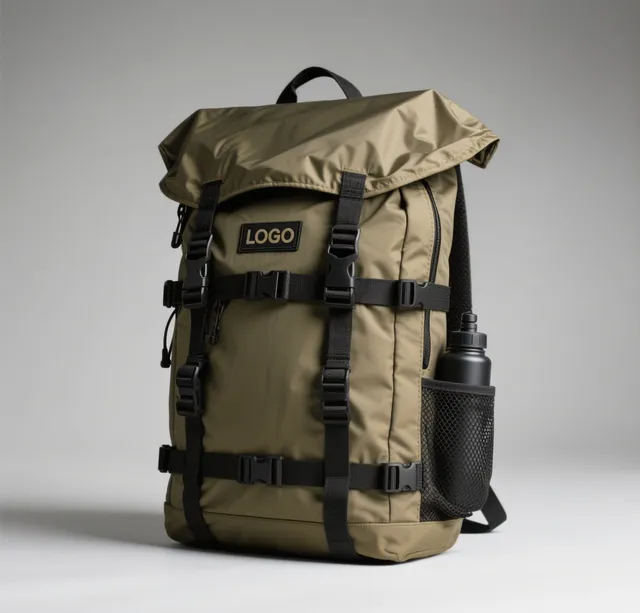
This entire list fits comfortably in a 35-40 litre travel backpack. The total weight typically lands between 7 and 10 kg, well within carry-on limits for most airlines. The key is that every item earns daily use and nothing is packed "just in case."
Pro Tips for First-Time One-Bag Travelers
Start with a Short Trip
If you have never traveled with a carry-on only, do not start with a three-week trip to a cold climate. Begin with a weekend or a five-day trip in warm weather. This builds confidence and shows you how little you actually need.
Weigh Your Bag Before Leaving
Invest in a small digital luggage scale. Weighing your bag before you leave home prevents stressful repacking sessions at the airport gate. Many budget airlines weigh carry-on bags at the gate and will charge you 30 to 60 euros if your bag exceeds their limit.
Use Packing Cubes
Packing cubes transform the interior of your backpack from a jumbled mess into an organised system. Use different cubes for clothing, electronics, and toiletries. Compression cubes reduce the volume of clothing by up to 30 percent, which makes a massive difference in a 35-40 litre bag.
Do Laundry on the Road
One-bag travel almost always involves doing laundry during your trip. This is not a compromise; it is a feature. Most accommodations have a washing machine, or you can hand-wash merino wool items in a sink. Washing clothes every three to four days means you only need to pack for three or four days, regardless of trip length.
Wear Your Bulkiest Items on the Plane
Your heaviest shoes, your thickest jacket, and your bulkiest trousers should all be worn during transit rather than packed. This frees up significant space and weight in your bag. Some experienced one-bag travelers even wear a fishing vest with multiple pockets to carry additional items through the airport.
Choose a Bag with Good Compression
Not all backpacks are created equal when it comes to fitting into overhead bins and sizers. Look for bags with compression straps, clamshell opening, and a boxy shape that maximises packing efficiency. Soft-sided bags can be slightly squished into sizers, while rigid frames cannot.
Frequently Asked Questions
Can you really travel with just one bag forever?
Absolutely. Thousands of digital nomads and frequent travelers live out of a single carry-on bag for months or even years at a time. The key is doing laundry regularly, choosing versatile clothing, and accepting that you will wear items more than once between washes. With the right gear and mindset, one-bag travel becomes effortless.
What is the best bag size for one-bag travel?
The most versatile size is between 35 and 40 litres. A 35-litre bag is ideal for trips under one week and meets virtually every airline carry-on limit worldwide. A 40-litre bag gives you more breathing room for longer trips or colder climates while still fitting in overhead compartments. Avoid anything over 45 litres if you want guaranteed carry-on compliance.
How do you handle liquids for carry-on travel?
The 100 ml liquid rule still applies at most airports worldwide. Use travel-sized containers for essential liquids, switch to solid alternatives where possible (solid shampoo bars, solid deodorant, toothpaste tablets), and buy full-size toiletries at your destination if you need them. A clear, resealable liquids bag keeps everything organised at security.
Is one-bag travel suitable for winter destinations?
Yes, but it requires more planning. The key strategies are layering (merino wool base layers are thin but warm), wearing your bulkiest items during transit, and choosing a compressible down jacket that packs to a fraction of its lofted size. Cold-weather one-bag travel works best with a 40-litre bag rather than a 30-litre bag.
What if I need to bring items home that will not fit?
If your return bag is fuller than your departure bag, you have several options: ship items home via postal service, use a foldable duffel bag as a secondary carry-on if your airline permits it, or check a bag for the return journey only. Many one-bag travelers carry a compressible 20-litre duffel as insurance for this exact scenario.
How much does a one-bag travel setup cost?
A complete one-bag setup typically costs between 200 and 600 pounds, depending on how much you already own. The largest expense is usually the backpack itself (150 to 350 pounds for a quality travel-specific bag). Clothing, packing cubes, and a luggage scale make up the remainder. This investment pays for itself within a few trips through saved baggage fees.
Can one-bag travel work for families?
One-bag travel is most practical for solo travelers or couples without children. Families with young children typically need more gear than a single carry-on per person can hold. However, older children and teenagers can absolutely adopt the one-bag approach. The trick is ensuring each family member has their own bag and knows how to pack efficiently.
Continue Your One-Bag Travel Journey
Ready to go deeper? Explore our other guides on minimalist travel and the best gear for one-bag adventures.
30L vs. 40L: The One-Bag Size Debate | Minimalist Travel Backpacking Guide | Best One-Bag Travel Backpacks for 2026