Table of Contents
- Clear Definitions: What OEM and ODM Actually Mean
- OEM Backpack Manufacturing: Deep Dive
- ODM Backpack Manufacturing: Deep Dive
- Side-by-Side Comparison
- Cost Implications
- IP and Design Ownership
- Quality Control Differences
- Transitioning from ODM to OEM
- Real-World Examples
- Decision Framework
- Frequently Asked Questions
If you are researching backpack manufacturing, you have almost certainly encountered the acronyms OEM and ODM. These terms appear in every factory listing, sourcing guide, and manufacturing discussion. Yet the distinction between them is often poorly explained, leading to confusion that can cost you time, money, and strategic direction.
This article provides a definitive, practical explanation of OEM and ODM backpack manufacturing. No jargon without explanation, no vague generalities. You will understand exactly what each model entails, when to choose which, and how the decision impacts your costs, your intellectual property, your quality control, and your long-term brand strategy.
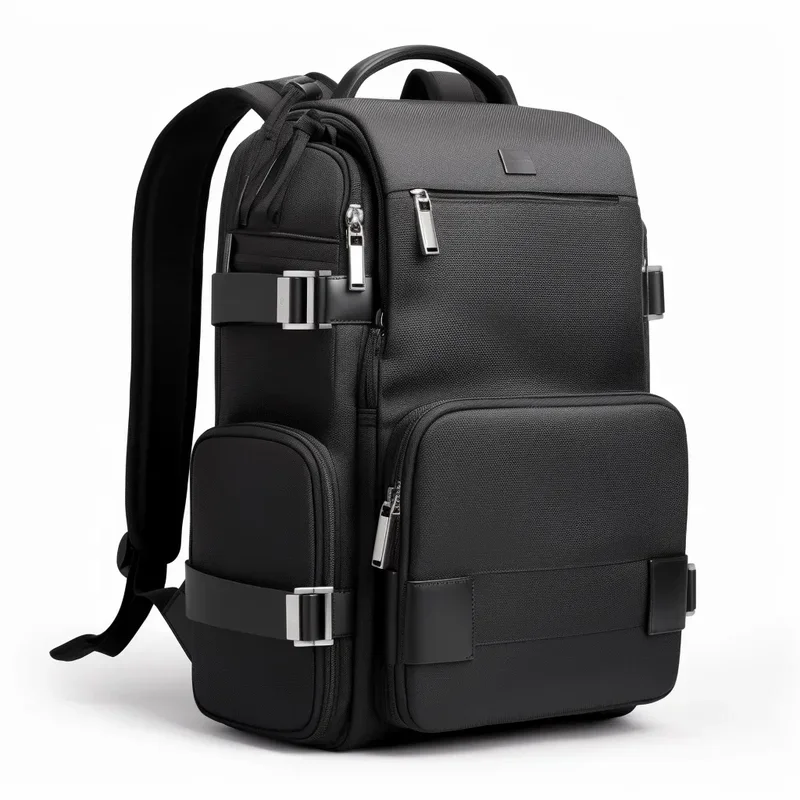
Clear Definitions: What OEM and ODM Actually Mean
Let us start with precise definitions, because these terms are often used loosely and sometimes incorrectly.
OEM — Original Equipment Manufacturing
You design it. They build it.
In the OEM model, you (the brand) provide the complete design: tech packs, patterns, material specifications, construction details, and branding requirements. The factory's role is to manufacture your design to your exact specifications. They are your production partner, not your design partner.
You own: The design, patterns, moulds, and all intellectual property.
ODM — Original Design Manufacturing
They design it. You brand it.
In the ODM model, the factory provides existing designs from their catalogue. You select a design you like and customise it with your branding, colours, materials, or minor modifications. The factory handles both design and production.
Factory owns: The underlying design IP. You own your custom branding elements.
The simplest way to think about it: OEM is like hiring a builder to construct your architect's vision. ODM is like buying a house from a developer and choosing the paint colour and fixtures.
OEM Backpack Manufacturing: Deep Dive
OEM is the model used by established brands that have their own design teams and specific product visions. It gives you complete creative control but requires more investment and expertise upfront.
How the OEM Process Works
- Design creation: Your team (or a hired industrial designer) creates the complete backpack design including dimensions, compartment layout, material specifications, hardware choices, stitching patterns, and branding placement.
- Tech pack preparation: Your design is documented in a technical package (tech pack) with detailed specifications, diagrams, Bill of Materials (BOM), and construction instructions that the factory can follow precisely.
- Factory selection: You identify a manufacturer capable of producing your design to your quality standards. This requires evaluating their equipment, capabilities, and experience with similar products.
- Sampling: The factory produces samples based on your tech pack. You review, test, and provide feedback. Multiple rounds of sampling are typical (2 to 4 rounds) until the sample matches your vision perfectly.
- Production: Once you approve the final sample, the factory sources materials and begins mass production according to your specifications.
- Quality control: You or a third-party inspector verify that production units match the approved sample in every detail.
When OEM Makes Sense
- You have a unique design that does not exist in the market
- Your brand is built on distinctive product design as a competitive advantage
- You need complete control over materials, construction, and quality standards
- You have the budget for design development and multiple sampling rounds
- You want exclusive product designs that competitors cannot easily replicate
- You have technical knowledge or access to someone who does
OEM Advantages
- Complete design ownership and exclusivity
- Products that are uniquely yours — no competitor sells the same design
- Full control over every material and construction detail
- Higher perceived brand value through unique design
- Stronger IP protection and brand defensibility
- Ability to innovate and create category-defining products
OEM Challenges
- Higher upfront investment: design development costs $500 to $3,000+ per style
- Longer time to market: 3 to 6 months from concept to first production
- Higher MOQs: typically 300 to 1,000+ units per style
- Greater risk: you are investing in unproven designs without market validation
- Requires technical expertise or professional design support
- Multiple sampling rounds add cost and time
ODM Backpack Manufacturing: Deep Dive
ODM is the model used by most new brands, promotional product companies, and businesses that want branded backpacks without investing in original design. It is faster, cheaper, and lower-risk, but with less exclusivity.
How the ODM Process Works
- Catalogue review: The factory shares their catalogue of existing backpack designs. You browse and select styles that match your needs.
- Customisation: You specify your branding requirements: logo application method, colour changes, material substitutions, minor modifications (adding a pocket, changing strap padding, adjusting dimensions).
- Sampling: The factory produces a sample with your customisations. Usually only 1 to 2 rounds of sampling are needed since the base design is already proven.
- Production: Upon sample approval, the factory produces your order with your branding and specified modifications.
- Quality control: Standard QC checks verify that production units match the approved sample.
When ODM Makes Sense
- You are launching a new brand and need to test the market quickly
- Your budget is limited and you want to minimise upfront investment
- You need backpacks for corporate gifting, promotions, or events
- Your competitive advantage is brand, marketing, or distribution — not product design
- You need to get to market fast (within 4 to 8 weeks)
- You are ordering promotional products where design exclusivity is less critical
ODM Advantages
- Low upfront cost: no design development fees
- Fast time to market: 4 to 8 weeks from selection to delivery
- Lower MOQs: typically 50 to 300 units
- Lower risk: the design is already proven in production
- Proven quality: the factory has manufactured this design before
- Minimal technical knowledge required
- Easy to test multiple styles without large investment
ODM Challenges
- Design is not exclusive: other brands may sell the same or very similar backpack
- Limited customisation: you can modify some elements, but the core design is fixed
- Lower brand differentiation: product looks like many others on the market
- The factory owns the design IP and can discontinue it at any time
- Less control over construction details and material quality
- Difficult to build a brand story around unique product design
Side-by-Side Comparison
| Factor | OEM | ODM |
|---|---|---|
| Design Control | Complete — you design everything | Limited — factory's base design with your modifications |
| Design Ownership | You own all IP | Factory owns base design IP |
| Upfront Cost | Higher ($2,000-$10,000+) | Lower ($200-$1,000) |
| Per-Unit Cost | Higher initially, decreases at volume | Lower from the first order |
| MOQ | 300-1,000+ units | 50-300 units |
| Time to Market | 3-6 months | 4-8 weeks |
| Exclusivity | Complete — unique to your brand | None — others may sell similar products |
| Risk Level | Higher (unproven design) | Lower (proven design) |
| Quality Predictability | Lower initially, improves with sampling | Higher from the start (proven process) |
| Technical Expertise Needed | High (tech packs, material knowledge) | Low (select and customise) |
| Best For | Established brands, design-driven companies | Startups, promotional products, fast launches |
Cost Implications
Understanding the full cost picture is essential for making an informed decision. The comparison goes beyond simple per-unit pricing.
Development Costs
OEM requires upfront investment in design and development. Hiring a product designer to create a backpack tech pack costs $500 to $3,000. Pattern-making adds $200 to $800 per style. Sampling rounds (typically 2 to 4) cost $80 to $200 each including shipping. Total development investment: approximately $1,500 to $5,000+ before a single production unit is made.
ODM eliminates virtually all development costs. The factory has already invested in design, patterns, and sampling. Your only upfront cost is the sample charge ($40 to $150 per style) which is often credited against your first order.
Per-Unit Cost Comparison
| Order Size | OEM Unit Cost | ODM Unit Cost | Notes |
|---|---|---|---|
| 100 units | $18-$30 | $8-$15 | OEM carries high per-unit cost due to unamortised development |
| 500 units | $12-$20 | $7-$13 | Gap narrowing as development costs spread |
| 2,000 units | $9-$15 | $6-$11 | OEM approaching cost parity |
| 5,000+ units | $7-$12 | $5-$9 | Per-unit gap minimal; OEM offers exclusivity advantage |
Key Cost Insight
At low volumes (under 500 units), ODM is significantly cheaper because you avoid development costs entirely. At high volumes (5,000+ units), the per-unit cost gap narrows substantially, and the value of OEM exclusivity and brand differentiation increases. The breakeven point where OEM total cost per unit approaches ODM typically occurs around 2,000 to 3,000 units, depending on design complexity.
IP and Design Ownership
Intellectual property ownership is one of the most important yet most misunderstood aspects of the OEM vs ODM decision. Getting this wrong can lead to costly disputes, copied products, and damaged brands.
OEM IP Rights
In an OEM arrangement, you own everything. The design, the patterns, the moulds for custom hardware, the tech pack, and any innovations in construction methods you develop are your property. A properly structured OEM agreement includes:
- A non-disclosure agreement (NDA) preventing the factory from sharing your designs
- An IP assignment clause confirming your ownership of all design elements
- A non-compete clause preventing the factory from producing your design for other brands
- Tooling ownership confirmation (any custom moulds or dies belong to you)
ODM IP Reality
In an ODM arrangement, the factory owns the base design. This means:
- The same design can be sold to multiple brands (possibly your competitors)
- The factory can discontinue the design at any time
- You cannot prevent another brand from selling a visually identical backpack
- Your customisation elements (logo, colours, minor mods) are yours, but the underlying design is not
Real Scenario: The ODM Copycat Problem
A UK brand launched a successful ODM backpack on Amazon, investing heavily in marketing and building a strong listing with 500+ reviews. Within six months, three other sellers appeared on Amazon selling the identical backpack (same ODM factory design) under different brand names at lower prices. The brand had no legal recourse because the factory owned the design and had the right to sell it to anyone. This scenario is common and illustrates the core IP risk of the ODM model.
Quality Control Differences
Quality control operates differently in OEM and ODM models, and understanding this difference helps you set appropriate expectations and QC protocols.
ODM Quality: Predictable from Day One
Because the factory has manufactured the ODM design before, they understand its construction inside and out. They know where stress points occur, which stitching sequences work best, and what materials perform optimally. This institutional knowledge translates to consistent quality from the very first order. QC checks are straightforward because there is an established quality benchmark from previous production runs.
OEM Quality: Improves Through Iteration
When a factory produces your OEM design for the first time, they are building something new. Even with excellent tech packs, initial production runs may reveal construction challenges, material behaviour issues, or assembly sequence problems. This is why sampling is critical in OEM. Each sampling round identifies and resolves issues before mass production.
The key insight: OEM quality starts lower but can ultimately exceed ODM quality because you control every specification. ODM quality starts higher but has a ceiling because you are working within someone else's design parameters.
QC Best Practices for Both Models
- Always request pre-production samples before mass production begins
- Hire a third-party inspection service for orders exceeding $5,000 in value
- Use AQL 2.5 inspection standard as minimum acceptance criteria
- Document every quality issue with photos and written descriptions
- Build quality requirements into your manufacturing contract with clear remedies
Transitioning from ODM to OEM
One of the most powerful strategies in backpack brand building is starting with ODM and transitioning to OEM as your business grows. This hybrid approach minimises initial risk while creating a pathway to full design ownership.
The Typical Transition Timeline
Phase 1: Market Validation with ODM (Months 1-8)
Launch with ODM backpacks customised with your branding. Use this phase to learn what your customers actually want: which features they use, which they ignore, what they wish was different. Collect feedback from reviews, returns, and direct customer conversations. Build your audience and cash flow.
Phase 2: Design Development (Months 8-14)
Armed with real customer insights, begin developing your own OEM designs. Address the shortcomings you discovered in the ODM products. Create tech packs that incorporate customer-requested features, improved materials, and your unique design vision. Hire a product designer if needed.
Phase 3: OEM Launch (Months 14-20)
Sample your OEM designs, refine through 2-3 rounds, and launch your first proprietary product. You now have a product that is uniquely yours, informed by real market data, and protected by IP ownership. This is when your brand truly differentiates from competitors who are still selling the same ODM designs.
Real-World Examples
Example 1: The Promotional Products Company
A UK marketing agency needed 2,000 branded backpacks for a client's conference. They chose ODM because the design needed to be professional but not unique, the timeline was tight (6 weeks), and the priority was cost-effective branding. They selected a roll-top design from their factory's catalogue, added the client's logo embroidery, and customised the colour to match the event branding. Total cost: $12 per unit. Timeline: 5 weeks. Perfect use of ODM.
Example 2: The Design-Led Startup
Two industrial designers in London created an innovative backpack with a patented modular compartment system. They needed complete control over every aspect of the design and construction. They chose OEM, spent 4 months developing the tech pack and sampling with their factory, and invested $8,000 in development before production. Their first production run of 500 units cost $16 each. The unique design justified a $149 retail price and they filed a design patent for additional protection. Perfect use of OEM.
Example 3: The Smart Transitioner
An entrepreneur launched a travel accessories brand on Amazon starting with ODM backpacks selected from three different factory designs. After 12 months of sales data showing which features customers valued most, she developed her own OEM backpack combining the best elements. Her OEM backpack addressed all the top complaints from her ODM product reviews. The OEM version launched at $89 (vs. $59 for her ODM products) and achieved 30% higher margins. Perfect example of the ODM-to-OEM transition.
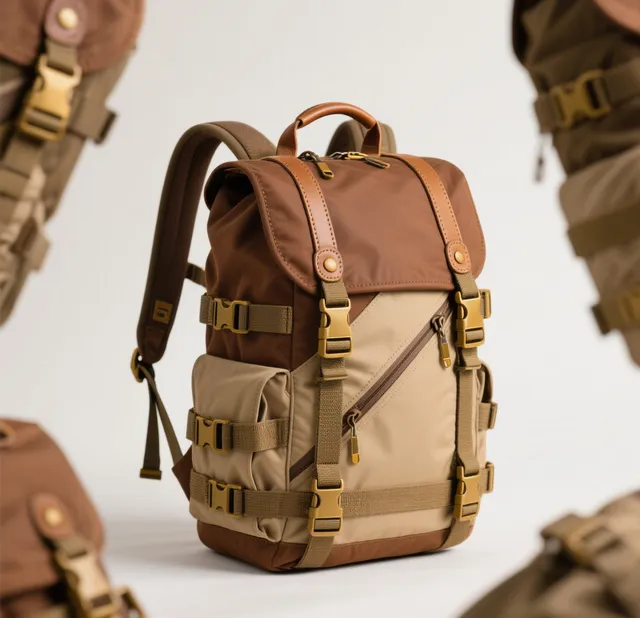
Decision Framework: Which Should You Choose?
Use this decision framework to determine whether OEM or ODM is the right choice for your situation.
Choose OEM If:
- You have a unique design that provides a genuine competitive advantage
- Your brand story centres on innovative or distinctive product design
- You have a development budget of at least $5,000-$10,000
- You can wait 3 to 6 months before first sales
- You are ordering 500+ units per style
- You have access to product design expertise (in-house or hired)
- Design exclusivity is critical to your market positioning
Choose ODM If:
- You are testing a new market or product category
- Your budget is under $5,000 for initial inventory
- You need to get to market within 4 to 8 weeks
- Your competitive advantage is brand, marketing, or price — not design
- You are ordering promotional or corporate gift products
- You want to test multiple styles before committing to one
- You lack product design expertise or technical knowledge
Consider the Hybrid Approach If:
- You are a startup that plans to grow into a design-led brand
- You want to validate market demand before investing in custom design
- You can start with ODM for revenue while developing OEM designs in parallel
- Your factory offers both ODM and OEM services
| Your Situation | Recommended | Why |
|---|---|---|
| First-time brand owner, limited budget | ODM | Low risk, fast launch, minimal investment |
| Promotional/corporate order | ODM | Fast, cost-effective, design exclusivity not needed |
| Established brand with design team | OEM | Full control, unique products, IP ownership |
| Design-driven startup with funding | OEM | Unique design is your competitive moat |
| Amazon seller testing a niche | ODM | Quick validation before committing to custom |
| Growing brand ready to differentiate | ODM then OEM | Start fast, transition to proprietary designs |
Conclusion
OEM and ODM are not competing approaches — they are complementary tools in your manufacturing strategy. OEM gives you ownership, exclusivity, and control at a higher cost and longer timeline. ODM gives you speed, affordability, and lower risk at the cost of design uniqueness.
The best choice depends on your specific situation: your budget, timeline, technical capabilities, brand strategy, and market position. Many successful backpack brands use both models at different stages of their growth. The key is to choose deliberately based on your current needs rather than defaulting to one approach out of habit or incomplete understanding.
Whether you choose OEM, ODM, or a combination of both, the most important factor is selecting a manufacturing partner who is transparent, communicative, and experienced in serving brands in your target market.
Need a Manufacturing Partner for OEM or ODM Backpack Production?
Junyuan Bags offers both OEM and ODM services with flexible MOQs, comprehensive branding, and transparent pricing. Whether you need existing designs with your logo or fully custom products from your tech pack, we have you covered.
Frequently Asked Questions
What is the main difference between OEM and ODM backpack manufacturing?
The fundamental difference lies in who controls the design. In OEM, you provide the complete design and the factory produces it. You own the design and IP. In ODM, the factory provides existing designs and you customise with your branding. The factory retains the underlying design IP.
Which is cheaper: OEM or ODM backpack manufacturing?
ODM is generally cheaper, particularly for small to medium orders. You save on design development costs ($500-$3,000), pattern-making fees, and sampling iterations. At high volumes (5,000+ units), OEM per-unit costs can approach ODM pricing as fixed development costs spread across more units.
Can I switch from ODM to OEM as my brand grows?
Yes, many successful brands start with ODM and transition to OEM. Start with ODM to test the market, identify which designs resonate, then develop your own OEM designs based on that knowledge. Many manufacturers support this transition with both ODM and OEM services.
Who owns the design in OEM backpack manufacturing?
In OEM, you (the brand) own the design, patterns, moulds, and all intellectual property. Reputable manufacturers sign NDA and IP agreements. The factory produces your design exclusively and cannot sell it to other brands.
Is OEM suitable for startups?
OEM can work for startups with unique design vision, adequate funding, and patience for 3-6 months of development. However, most advisors recommend starting with ODM to validate your market with lower risk, then transitioning to OEM once you have proven demand and cash flow.
How does quality control differ between OEM and ODM?
ODM quality is more predictable from the first order since the design is already proven in production. OEM quality starts lower but can ultimately exceed ODM because you control every specification. Sampling is critical for OEM to resolve issues before mass production.
What is the typical MOQ difference between OEM and ODM?
ODM typically has lower MOQs (50-300 units) because patterns and processes are established. OEM generally requires higher MOQs (300-1,000+) because the factory must invest in new pattern development, material sourcing, and production setup.