The frame is the skeleton of any backpacking pack. It determines how weight is distributed, how the pack moves with your body, and how comfortable you remain after miles on the trail. The two primary frame designs, internal frame and external frame, represent fundamentally different engineering philosophies, each with distinct advantages and trade-offs. Understanding these differences is essential for choosing the right backpack for your hiking style.
This comprehensive comparison examines every meaningful aspect of internal frame versus external frame backpacks, including weight distribution, stability, ventilation, load capacity, comfort, terrain suitability, and cost. Whether you are a first-time buyer or a seasoned hiker considering a switch, this guide gives you the information needed to make the best decision.
A Brief History of Backpack Frames
External frame backpacks came first, evolving from military surplus designs like the beloved ALICE pack used by American soldiers for decades. These packs featured an aluminum frame that sat outside the pack body, with gear lashed or strapped to the frame. They were rugged, repairable in the field, and capable of carrying enormous loads over long distances on established trails.
Internal frame packs emerged in the 1970s and 1980s, driven by the growing popularity of off-trail mountaineering and technical hiking. The design philosophy was simple: bring the load closer to your body for better balance and stability on uneven terrain. By the late 1990s, internal frame packs had become the dominant design, and external frames retreated to a niche market. Today, internal frame packs represent roughly 90 percent of the backpacking market, but external frames maintain a loyal following for specific applications.
How Internal Frame Packs Work
An internal frame pack uses one or more aluminum stays (rods) embedded inside the pack body, typically running vertically along the back panel. These stays may be straight or curved to match the natural shape of the spine. They connect to a framesheet (a rigid plastic panel) that distributes load across the back surface. The hip belt attaches to the bottom of the frame system, allowing weight to transfer from the shoulders down through the frame and into the hips.
Key Characteristics of Internal Frame Design
- Close body fit: The pack sits flush against your back, minimizing movement and keeping your center of gravity low. This is critical for maintaining balance on uneven ground.
- Narrow profile: The frame is contained within the pack body, creating a streamlined shape that does not snag on branches or squeeze through narrow passages.
- Body-conforming movement: Many internal frame packs allow the frame to flex slightly with your torso, creating a more natural range of motion during scrambling and steep ascents.
- Adjustable suspension: Modern internal frame packs feature adjustable torso lengths, multiple load lifter straps, and fine-tunable hip belts for personalized fit.
- Reduced ventilation: The close fit means less airflow between the pack and your back, which can cause significant sweating in warm weather.
How External Frame Packs Work
An external frame pack features a rigid aluminum frame that sits outside and behind the pack body. The pack bag attaches to the frame via straps, clips, or sleeves, while the frame extends above and below the bag. The hip belt connects directly to the frame, creating a direct load path from the pack contents through the frame and into the hips. The gap between the frame and your back allows air to flow freely, reducing sweat buildup.
Key Characteristics of External Frame Design
- Superior ventilation: The air gap between the frame and your back provides continuous airflow, making external frames the coolest option for hot weather hiking.
- Exceptional load transfer: The rigid frame creates a highly efficient load path from pack contents to hips, with minimal energy loss to pack flex or deformation.
- External attachment versatility: The frame provides numerous attachment points for lashing gear to the outside, including oversized items that would not fit inside the pack bag.
- Higher center of gravity: External frames position the load higher on your back, which can feel less stable on steep or technical terrain but provides an upright posture that many find comfortable for long-distance walking.
- Greater bulk and weight: The external structure adds width, height, and weight to the overall pack system, making it less suitable for tight spaces and lightweight hiking.
Stability and Terrain Performance
This is where the two designs diverge most dramatically. Internal frame packs excel on technical terrain because the close fit keeps the load stable against your body. When you lean into a steep traverse, the pack moves with you. When you scramble over boulders, the narrow profile does not catch on rock features. When you bushwhack through dense vegetation, the streamlined shape glides through gaps rather than snagging.
External frame packs perform poorly on technical terrain. The higher center of gravity makes you feel top-heavy on steep slopes. The wide frame catches on branches and rocks. The rigid structure does not flex with your body during dynamic movements. On well-maintained trails with gentle grades, these issues are minimal. On off-trail scrambles or dense forest, they become significant liabilities.
If your hiking involves any technical terrain, scrambling, or route-finding through vegetation, an internal frame pack is the clear winner. External frames are best suited for maintained trails, desert hiking, and open terrain where the load stays stable naturally.
Ventilation and Temperature Management
External frame packs win this category decisively. The air gap between the frame and your back provides continuous ventilation that no internal frame design can fully replicate. Some modern internal frame packs use suspended mesh back panels (like the Osprey Atmos or Deuter Aircontact systems) to create a similar air channel, and these work remarkably well. However, the gap is typically 1-2 inches compared to the 3-5 inch gap provided by an external frame.
In hot, humid conditions or desert environments, the ventilation advantage of external frames translates to significantly less sweating and more comfortable hiking. Many thru-hikers on the Pacific Crest Trail and Arizona Trail carry external frames specifically for this reason. In cooler climates, the reduced ventilation is less important, and some hikers even appreciate the slight warmth provided by the close fit of an internal frame pack.
Load Capacity and Weight Distribution
External frame packs have traditionally been the choice for carrying very heavy loads. The rigid frame transfers weight directly to the hips with exceptional efficiency, and the design allows loads of 50-70 pounds to be carried more comfortably than with internal frame designs. Military forces and hunters who regularly carry heavy loads have long preferred external frames for this reason.
However, modern internal frame packs have made significant advances in load-bearing capacity. Premium packs with dual aluminum stays, reinforced framesheets, and well-engineered hip belts can comfortably carry 35-45 pound loads. The gap between the two designs narrows at moderate loads (25-35 pounds), where both perform admirably. Only when loads consistently exceed 45-50 pounds do external frames hold a clear advantage.
Storage and Organization
Internal frame packs generally offer superior internal organization. They feature multiple compartments, zippered pockets, hydration sleeves, and organized pockets for small items. The streamlined design allows for creative internal layout that keeps frequently accessed items within easy reach.
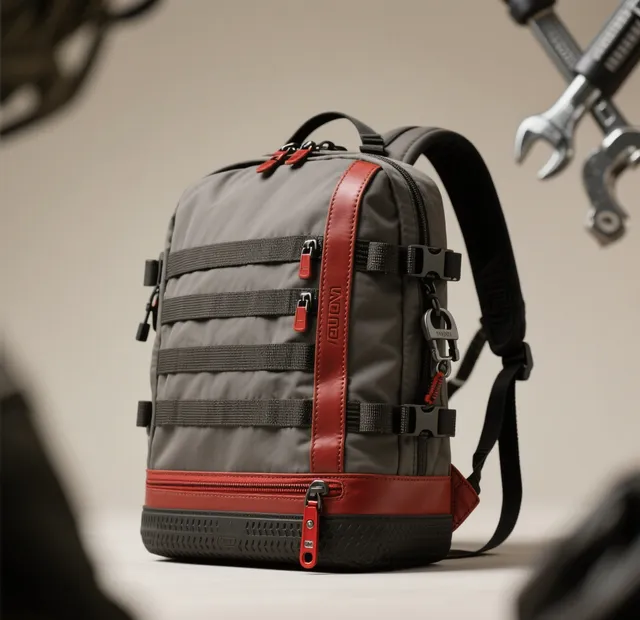
External frame packs offer superior external storage. The frame provides unlimited attachment points for strapping gear to the outside. Oversized items like foam sleeping pads, tents, bear canisters, and hunting equipment can be lashed securely to the frame without consuming internal pack space. This is why external frames remain popular among hunters, who need to carry both their gear and harvested game.
Weight and Packability
External frame packs are heavier and bulkier. The aluminum frame adds 1-3 pounds of weight, and the overall pack dimensions are larger. This matters for airline travel (external frames are more difficult to check as luggage), for storage at home, and for your baseline carry weight on every trip.
Internal frame packs are more compact and lighter for the same capacity. They compress well when not fully loaded, and the flexible design allows them to fit in tighter spaces. For hikers who fly to their trailhead or need to stow their pack in small spaces, the more compact internal frame design is a significant advantage.
Durability and Field Repair
External frame packs are simpler to repair in the field. If a strap breaks or a buckle fails, you can replace it with cord and basic hardware. If the frame itself breaks, the damage is usually isolated to a single component that can be splinted or replaced. The simplicity of the design means fewer things can go wrong.
Internal frame packs have more complex construction with more potential failure points. If an internal stay breaks, it can puncture through the pack fabric and is difficult to repair in the field. If the framesheet cracks, the entire load transfer system is compromised. However, modern materials and construction techniques have made internal frame packs remarkably durable, and failures are rare with quality packs from reputable manufacturers.
Price and Availability
Internal frame packs dominate the market, which means more options, more competition, and generally better value. You can find quality internal frame packs at every price point, from budget models around 100 dollars to premium options exceeding 400 dollars. External frame packs are produced by fewer manufacturers, with less competition resulting in fewer options and sometimes higher prices for comparable quality.
External frame packs are primarily available from specialty retailers or online. You are unlikely to find a good selection in a typical outdoor retail store, so you may need to order online and accept the return risk. Internal frame packs are available at virtually every outdoor retailer with the opportunity to try before buying.
Who Should Choose Internal Frame?
- Hikers who navigate technical terrain, scrambling, or dense vegetation
- Backpackers carrying loads under 45 pounds
- Hikers who prioritize lightweight gear and compact packability
- Those who fly to their trailhead or need a compact pack for travel
- Hikers who value internal organization and quick-access pockets
- First-time buyers who want maximum options and availability
Who Should Choose External Frame?
- Hikers who regularly carry loads exceeding 45 pounds
- Hunters who need to carry game and oversized gear externally
- Hikers in hot climates who prioritize back ventilation
- Thru-hikers on well-maintained, non-technical trails
- Hikers who value field repairability and simple construction
- Those who want to attach large items like foam pads or chairs to the outside
Weight Comparison in Detail
To put the weight difference in concrete terms, consider two comparable packs from the same product tier. A typical 60-liter internal frame pack weighs approximately 4 pounds 4 ounces empty, with dual aluminum stays, a padded framesheet, and a contoured hip belt. A comparable 60-liter external frame pack weighs approximately 5 pounds 10 ounces, with the additional weight coming from the external aluminum frame rails, cross-braces, and attachment hardware that secures the pack bag to the frame.
This 1 pound 6 ounce difference translates directly to additional energy expenditure. Research from the U.S. Army Research Institute of Environmental Medicine indicates that every additional pound of foot weight (which includes pack weight carried on your body) increases metabolic cost by approximately 1 percent. Over an 8-hour hiking day, this compounds into hundreds of additional calories burned and correspondingly more food and water required to sustain the effort.
Mobility and Agility on Trail
Internal frame packs offer superior mobility because the load moves as an extension of your body. When you lean forward on a steep ascent, the pack tilts with you, maintaining its center of gravity directly over your feet. When you twist to navigate between boulders, the pack rotates with your torso rather than resisting the movement. This body-conforming behavior is critical for maintaining balance and confidence on technical terrain.
External frame packs create a different movement dynamic. The rigid frame does not flex with your torso. When you lean forward, the pack remains upright due to the rigid frame, shifting its center of gravity behind you. When you twist, the frame resists rotation, requiring more effort to change direction. On maintained trails with gentle terrain, these effects are minimal. On scrambling terrain, dense forest, or route-finding situations, they become noticeable impediments to efficient movement.
The profile width difference also matters. An external frame pack is typically 2-4 inches wider than a comparable internal frame pack due to the frame rails extending beyond the pack body. On narrow trails with overhanging vegetation, this extra width causes the pack to catch on branches more frequently. In narrow canyon passages or tight chimney climbs, the extra width may prevent passage entirely.
Long-Term Investment Perspective
Both frame types represent significant gear investments, and understanding the longevity equation helps justify the cost. A quality internal frame pack from a reputable manufacturer typically lasts 5-10 years of regular weekend use or 2,000-4,000 miles of thru-hiking before showing significant wear. The suspension system may need occasional adjustment, and the fabric may develop abrasion spots, but the core frame and structure remain functional throughout this lifespan.
External frame packs, with their simpler construction and more accessible components, can potentially last longer because individual components are easier to repair or replace. If a strap breaks, you can replace it without specialized tools. If a frame component bends, it can often be straightened in the field. This repairability advantage makes external frames popular among military users and expedition leaders who operate in remote areas where gear failure cannot be tolerated.
Consider your usage pattern when making this investment. If you hike 20-30 days per year, either frame type will serve you well for a decade. If you hike 100+ days per year as a thru-hiker, the weight and durability equation shifts more dramatically, and you may go through 2-3 packs per season. In this scenario, the cost per mile of each frame type becomes a meaningful calculation.
Final Verdict
For the vast majority of hikers, internal frame backpacks are the better choice. They are more versatile, lighter, more stable on varied terrain, and available in far greater variety. The ventilation disadvantage has been significantly mitigated by modern suspended mesh back panel designs. Internal frame technology continues to improve in load capacity, comfort, and weight.
External frame packs remain the right tool for specific jobs. If you carry very heavy loads, hike exclusively in hot open terrain, or need extensive external attachment points, an external frame may serve you better. But these use cases represent a minority of hikers, which is why the internal frame design has become the overwhelming industry standard.
Whichever you choose, proper fit is essential. A well-fitted pack of either type will carry far better than a poorly fitted pack of the other type. Visit a retailer, load up a pack, and walk around before making your final decision. Your back will thank you for miles to come.