How to Measure Backpack Volume at Home: Three Methods Compared
You can measure a backpack's true volume at home to within about 5% using three low-cost methods: filling the bag with a known-volume filler and counting, multiplying external dimensions by a shape factor, or comparing against a reference load of known items. Published litre figures are marketing numbers measured by whichever method flatters the design, so two bags both sold as 30 L commonly differ by 4-6 L of genuinely usable space.
This guide sets out all three methods, the correction factors that make them accurate, how to separate gross volume from usable volume, and how the same measurement is written into a specification so a bulk run matches an approved sample. It is written for UK buyers comparing packs and for programme managers signing off samples.
Why Two 30 Litre Bags Never Match
There is no single legal definition of backpack capacity in the UK retail market, so brands choose their own method. Some fill the main compartment only; some fill main plus front pockets; some fill every opening including the lid pocket and the two side sleeves. The differences are not small: on a 30 L pack, external bottle pockets add 1.5-2.5 L and a lid pocket adds another 1.5 L, so the same physical bag can honestly be described as 30 L or 34 L depending on where the measuring stops. For that reason, treat any single litre figure as a band of plus or minus two litres rather than as a measurement.
Geometry explains the rest. A box-shaped pack converts nearly all of its external envelope into usable space, while a tapered or curved pack loses volume at the corners where fabric cannot be filled by rectangular objects. That is why measurement matters beyond curiosity: if you are checking whether a pack fits a cabin allowance, the external dimensions matter more than the litre figure, and the government's hand luggage rules page is the reference for what the screeners actually measure. Published capacity and external size are different claims, and a bag can be truthful about one while disappointing on the other. Both numbers are useful; they simply answer different questions.
- Main compartment only gives the lowest and most honest figure for daily carrying.
- Pockets and sleeves can add 3-5 L on a mid-size pack, which is where marketing numbers come from.
- Tapered shapes lose usable space at corners even when the external envelope is identical.
- For cabin checks, measure external dimensions, not litres.
Method 1: The Filler Count
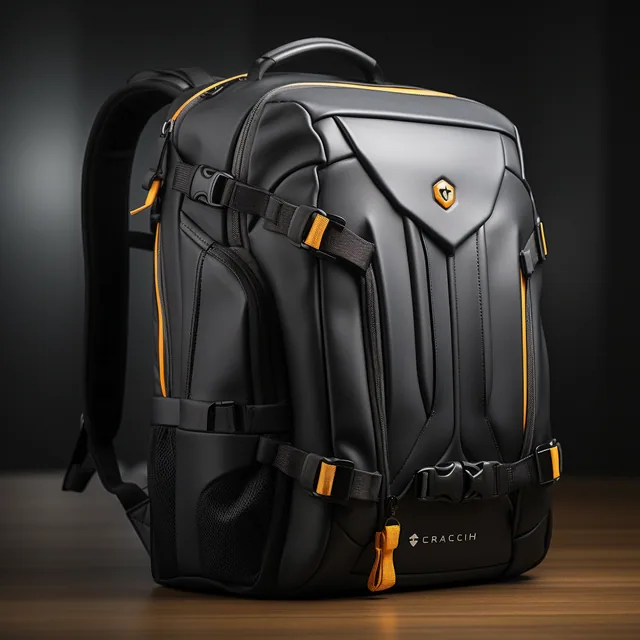
The most reliable home method is to fill the bag with a filler of known unit volume and count. Use something that packs consistently and does not compress: 20 mm expanded polystyrene beads, scrunched newspaper bundles pressed to a repeatable size, or dried lentils in sealed bags. The key is calibration - measure your filler unit first by pouring a known number of units into a measuring jug or a 10 L bucket, then divide to get litres per unit. Avoid flour and rice indoors unless you want a mess, and avoid anything that compacts under its own weight in a deep compartment. The whole exercise takes about fifteen minutes for a mid-size pack and needs no specialist equipment.
Work in a repeatable order. Fill the main compartment first, tap the bag on the floor three times to settle the filler, then top up to the point where the zip closes without strain. Count the units, multiply by your calibrated litres per unit, and record the number. Repeat the whole process twice; if the two results differ by more than 4%, your filler is compressing and you need something firmer. Expect a 30 L pack to measure 26-29 L by this method. Note the filler batch on the record sheet, because batches settle differently even when the unit size looks identical. A third run is worth doing if the first two disagree, because the median beats either single result.
- Calibrate the filler: pour 100 units into a 10 L container and record litres per unit.
- Fill the main compartment, tap the base three times, top up until the zip closes without strain.
- Count units, multiply by the calibrated factor, and record the figure in litres.
- Repeat twice and average; discard the run if two results differ by more than 4%.
Method 2: Dimensions Times a Shape Factor
The fastest method is to measure height, width and depth in centimetres at the widest points, multiply to get a cubic-centimetre envelope, then divide by 1,000 to get litres of gross envelope. A pack measuring 50 x 30 x 22 cm has an envelope of 33,000 cubic centimetres, or 33 L. Nobody packs a rectangle perfectly, so the envelope is then multiplied by a shape factor that reflects how much of that box is actually reachable. The result is an upper bound rather than a capacity, and it is the figure most often quoted in marketing copy. The method is quick enough to use in a shop, which is its main advantage over a filler count.
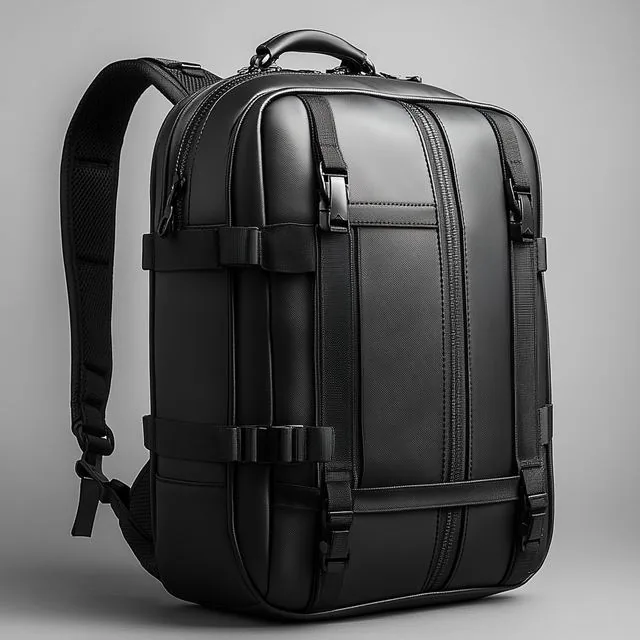
Shape factors come from experience rather than theory, and they vary with design. A square-panel travel pack with a flat clamshell opening converts about 0.85 of its envelope; a rounded hiking pack with a tapered lid converts about 0.75; a soft daypack with no frame converts about 0.70. Applying those factors to the 33 L envelope above gives 28 L, 25 L and 23 L respectively - a 5 L spread from the same external measurement, which is exactly why two 30 L bags feel different. Use the factor as a starting estimate and confirm it with one filler test; the two methods should agree within about two litres on a well-behaved shape.
| Pack type | Typical shape factor | 33 L envelope becomes |
|---|---|---|
| Square clamshell travel pack | 0.85 | 28 L usable |
| Rounded hiking pack with lid | 0.75 | 25 L usable |
| Soft frameless daypack | 0.70 | 23 L usable |
| Roll-top city pack | 0.78 | 26 L usable |
Method 3: The Reference Load
The third method answers a practical question rather than a metrological one: how much of your own kit does the bag hold? Build a reference load from items whose volume you know - a 2 L drinks bottle, a packed lunch box at about 2.2 L, a rolled jacket at about 3 L, a wash bag at 1.5 L - and load the bag until it is comfortably full. The sum of the items is the usable volume for your purposes, and it is more useful than any published figure. It also survives brand changes, because your kit does not change when the marketing does.
This method also exposes shape problems that numbers hide. If a 2 L bottle will not sit upright in a 24 L pack, the base is too narrow regardless of capacity. If a rolled jacket has to be forced, the opening is too small for the volume. Record the failures as well as the totals: a pack that swallows 26 L of soft kit but refuses an A4 folder is a 26 L pack with a 22 L usable rectangle. Record which items failed to go in as well as which did; the failures usually decide whether a bag works for you. Repeat the exercise with the bag half full, because usable volume changes with how the fabric is tensioned.
| Reference item | Approximate volume | Notes |
|---|---|---|
| 2 L drinks bottle | 2.0 L | Tests upright base width |
| Packed lunch box | 2.2 L | Tests mid-compartment depth |
| Rolled waterproof jacket | 3.0 L | Compressible, tests closure height |
| Standard wash bag | 1.5 L | Tests pocket accessibility |
Gross Volume vs Usable Volume
Gross volume is everything inside the outer shell; usable volume is what you can actually access and fill. The gap between them is made of sleeve linings, divider panels, frame sheets, foam back panels and the dead corners behind a tapered lid. On a typical 30 L travel pack that gap runs 3-5 L, which is why a bag advertised as 30 L often behaves like a 26 L bag on a three-night trip. Knowing the gap also prevents the classic overpack, where the last three litres simply refuse to accept anything rectangular. On a small 20 litre daypack the same gap is proportionally larger, since linings take a bigger share of a smaller envelope.
Usable volume is the number worth recording because it is what packing decisions are made against. To estimate it, subtract the linings: a padded laptop sleeve consumes 0.8-1.2 L of internal space even when empty, a frame sheet and back panel consume 1.0-1.5 L, and a divider adds 0.3 L. Subtract those from the measured gross figure and you have a number that predicts whether a trip will fit. A pack with a removable frame sheet gives you the choice, which is worth having if the load varies between a commute and a weekend away. Buyers using packing cubes should subtract a further 5-8%, because cubes waste corner space that loose items fill.
Measuring Pockets, Sleeves and Straps
Decide up front which zones count, and write the decision down, because it changes the headline by several litres. A common convention is three tiers: main compartment only, main plus internal organisation, and main plus every external pocket and sleeve. Record all three and the number becomes comparable across brands instead of being an argument about definitions. Whichever convention you choose, apply it to every bag you measure, because the point of measuring is comparison rather than precision. A short note on the sheet stating which zones were included prevents the argument later, when a supplier quotes a different figure for what is described as the same bag measured a different way.
External pockets are best measured separately rather than included, because they rarely carry general load. A side bottle sleeve holds 1.0-1.5 L but only holds a bottle; a lid pocket holds 1.5 L but compresses whatever is underneath. Measure them by filling with the same calibrated filler and record them as a separate line, so a buyer can see that a pack is 26 L internal plus 3 L external rather than a single flattering 29 L figure. A bottle sleeve too shallow to hold a 1 litre bottle upright is worse than no sleeve at all, whatever it adds to the headline. Record sleeve depth in centimetres alongside the volume, because the two figures together decide whether a bottle stays put.
- Main compartment only: the honest daily-carry figure.
- Main plus internal organisation: add 0.5-1.0 L for admin panels.
- Every pocket and sleeve: add 3-5 L, but note it is task-specific space.
- Always record tiers separately rather than merging them into one number.
Recording the Result on a Spec Sheet
A measurement is only useful if it can be checked later by someone else. Record the method, the filler type and calibration figure, the date, the tier definition, and the result to one decimal place. Add the external dimensions in centimetres and the empty weight in grams, because those two figures together catch most specification drift before it becomes a dispute. A photograph of the packed bag alongside the record sheet helps a supplier understand the shape you are actually trying to reproduce. A dated record also settles whether a later bulk shipment matches the approved sample, which is the real point of measuring rather than simply satisfying curiosity about a number.
For programmes where capacity is a selling point, add a tolerance. A reasonable production tolerance on volume is plus or minus 5%, or plus or minus 1.5 L on a 30 L pack, whichever is larger. Anything tighter than that costs money without improving the product, because fabric stiffness, seam allowance and foam thickness all vary slightly between batches even when the pattern is identical. Agree in advance who measures when a dispute arises, and who holds the reference sample until the shipment is signed off. Tolerances should be written as a range with the method named, so a rejection rests on evidence rather than on a disagreement about how the tape was held.
| Field | Example entry | Why it matters |
|---|---|---|
| Method | Filler count, 20 mm EPS bead | Makes the result repeatable |
| Calibration | 0.041 L per 100 beads | Removes guesswork from the count |
| Tier | Main compartment only | Stops definitional arguments |
| Result | 27.4 L, tolerance +/- 1.5 L | Gives inspection something to check |
Tolerances: How Much Deviation Is Normal
Expect variation between two examples of the same model, and between a sample and bulk. Causes are mundane: a 2 mm change in seam allowance across eight panels moves volume by about 3%, a stiffer batch of foam in the back panel steals 0.5 L, and a tighter coating changes how the fabric drapes when full. None of these are defects; they are the normal signature of soft goods production. All of them sit inside a normal tolerance band, which is why one measurement on one unit proves very little about a production run. Two units from the same production week can differ by 0.5 litres without either being faulty, which is why single-unit readings prove so little.
What matters is whether the deviation is systematic or random. If ten samples all measure 26.5 L against a 30 L claim, the pattern is undersized and the claim is wrong, which is a specification conversation. If they measure 28.0, 29.5, 27.5, 28.5 and 29.0, that is normal spread. Inspection regimes handle the second case well: a sample drawn to AQL 2.5 under ISO 2859-1 will catch systematic drift without rejecting acceptable variation. Volume drift is usually a pattern change rather than a materials change, so the fix belongs in the specification rather than in inspection. Trend data from five units is more useful than any single reading, however carefully it was taken.
Mistakes That Skew the Number
Compression is the biggest source of error in the filler method. Scrunched paper, packing peanuts and clothing all compress under their own weight, so a deep bag measured with paper will read low by 10-15% unless the filler is calibrated at the same depth. Use a rigid or semi-rigid filler, or calibrate at the actual fill depth of the bag rather than in a shallow bucket. A filler that is too large also bridges across corners and overstates the figure by several litres on a small pack. Bridging is easy to spot: if the filler surface stays domed above the zip line instead of sitting level, the reading is optimistic by several litres.
The second error is measuring external dimensions over compressed padding. If you squeeze a soft pack flat to take a depth reading, the envelope shrinks and the result is meaningless. Measure with the pack lightly filled to its natural shape, take width and depth at the widest point rather than at the base, and never measure a roll-top pack with the roll unrolled - decide whether the published figure includes the rolled extension and keep that decision consistent. Finally, measure twice on different days; a rushed single reading is the most common reason two people disagree about the same bag. Consistency between sessions matters more than absolute precision, because comparison is the purpose of the exercise.
- Compressible filler reads low by 10-15% unless calibrated at the same depth.
- Squeezing a soft pack while measuring understates the true envelope.
- Roll-top packs need a stated convention for the extended collar.
- Measure at the widest point, not at the narrower base.
Volume Verification on a Bulk Order
Bulk verification is a sampling exercise, not a full audit. Draw the inspection sample at random from across the shipment rather than from the first cartons, measure five units from different cartons using the same filler and method that approved the sample, and compare against the approved figure with the agreed tolerance. Five units is enough to detect systematic drift on a run of a few thousand pieces; it will not detect a single bad panel, and no reasonable inspection regime will. Record which cartons the units came from so a systematic problem can be traced back to a production date. Carton-level traceability turns a measurement problem into a fixable production problem rather than an argument about blame.
Commercial parameters around that check are fixed at QUANZHOU JUNYUAN BAGS: MOQ 500 pcs per style and colourway, sampling in 6-10 working days (12-15 working days for complex builds), bulk production in 35-50 days, inspection to AQL 2.5 under ISO 2859-1, FOB Xiamen and T/T 30/70 terms. Established in 2014, the organisation coordinates 4,950 square metres of SGS-verified production floor space with 137 colleagues and 7 production lines. Capacity is one of several measurable attributes on the sheet, alongside empty weight, panel dimensions and hardware count. Recording empty weight alongside capacity catches the most common substitution, which is a lighter fabric or thinner foam than the approved sample used.
- Draw the sample at random across cartons, not from the first boxes opened.
- Use the same filler and calibration that approved the golden sample.
- Agree the tolerance before bulk: plus or minus 5% is realistic for soft goods.
- Capacity tolerance agreed first: plus or minus 5%; then MOQ 500 pcs per style and colourway, sampling 6-10 working days, bulk 35-50 days.
Frequently Asked Questions
How accurate is the home filler method for backpack volume?
Done carefully, within about 5%. The two things that decide accuracy are filler calibration and compression. Calibrate by pouring a known number of units into a 10 L container, use a semi-rigid filler such as 20 mm polystyrene beads, and repeat the measurement twice. If two runs differ by more than 4%, the filler is compressing and the result should be discarded and retaken.
Why does my 30 litre backpack feel smaller than a friend's 30 litre bag?
Because there is no single agreed definition of capacity. One brand may fill only the main compartment while another includes the lid pocket and both side sleeves, which adds 3-5 L on a mid-size pack. Tapered shapes then lose usable space at the corners that rectangular packing cannot reach, so two bags with identical external dimensions can differ by 4-6 L in real packing room.
What shape factor should I use when multiplying dimensions?
Use 0.85 for a square clamshell travel pack, 0.75 for a rounded hiking pack with a lid, 0.70 for a soft frameless daypack and about 0.78 for a roll-top city pack. A pack measuring 50 x 30 x 22 cm has a 33 L envelope, so those factors give 28, 25, 23 and 26 L respectively. The factor reflects how much of the box is actually reachable.
Should external pockets count towards backpack capacity?
Record them separately rather than merging them in. A side bottle sleeve holds 1.0-1.5 L but only carries a bottle, and a lid pocket holds about 1.5 L while compressing whatever sits underneath. The honest presentation is internal volume plus external volume as two lines, for example 26 L internal and 3 L external, rather than a single flattering 29 L headline figure.
How much volume do linings and padding consume?
More than most buyers expect. A padded laptop sleeve takes 0.8-1.2 L even when empty, a frame sheet and back panel take 1.0-1.5 L, and a divider adds about 0.3 L. On a 30 L travel pack that is a 3-5 L gap between gross and usable volume, which explains why a bag advertised as 30 L often behaves like a 26 L bag on a three-night trip.
What tolerance should I accept on backpack volume in bulk production?
Plus or minus 5%, or plus or minus 1.5 L on a 30 L pack, whichever is larger. Tighter than that costs money without improving the product, since a 2 mm change in seam allowance across eight panels moves volume by about 3% and foam batches vary in stiffness. Distinguish systematic drift, where every sample reads low, from normal random spread.
How many units should be measured when checking a bulk shipment?
Five units drawn at random from different cartons is enough to detect systematic drift on a run of a few thousand pieces. Draw from across the shipment rather than the first boxes opened, and use the same filler and calibration that approved the golden sample. Inspection at AQL 2.5 under ISO 2859-1 provides the sampling framework most UK buyers already specify.
Can I measure volume by weighing the bag when full of water?
It is accurate but risky and rarely worth it. One litre of water weighs one kilogram, so a 30 L pack becomes a 30 kg load that will distort the fabric, stress the seams and soak the lining and foam. Use dry filler instead: beads, lentils in sealed bags or calibrated scrunched paper give the same accuracy without risking the bag or the harness foam.
Do compression straps change measured backpack volume?
Yes, and it is worth measuring both ways. Straps pulled tight on a half-full pack can remove 3-5 L of apparent envelope while improving stability, which is the point of them. For a comparable figure, measure with straps slack and the pack at natural shape, then note the compressed figure separately as a stability note rather than as a capacity specification.
How do I know if a backpack is big enough for a cabin bag allowance?
Ignore litres and measure external dimensions, because screeners measure the bag, not its capacity. Check height, width and depth at the widest points including pockets, then compare against the airline's published limit - typically 55 x 40 x 20 cm for Ryanair priority and 56 x 45 x 25 cm for British Airways. A pack at 47 x 33 x 20 cm passes almost everywhere.
What is the difference between gross and usable backpack volume?
Gross volume is everything inside the outer shell; usable volume is what you can actually reach and fill. The difference is sleeve linings, divider panels, frame sheets, back padding and dead corners behind a tapered lid. Manufacturers quote gross or a partial version of it, while buyers pack against usable, which is why the honest approach is to measure both and publish the gap.
Write Capacity Into Your Specification
QUANZHOU JUNYUAN BAGS has operated since 2014 as a sourcing and programme-management company, coordinating 4,950 square metres of SGS-verified production floor space, 137 colleagues and 7 production lines. Our team develops backpack programmes against buyer-written specifications, including capacity tiers, tolerances and verification method.
Commercial terms do not move: MOQ 500 pcs per style and colourway, sampling in 6-10 working days (12-15 working days for complex builds), bulk production in 35-50 days, AQL 2.5 inspection to ISO 2859-1, FOB Xiamen and T/T 30/70. Send a reference sample and the team will return measured capacity tiers and a costed specification.
Email: service@junyuanbags.com
WhatsApp: +86 177 5002 0688