How to Choose a Backpack for Work: 7 Key Factors Every Professional Should Know in 2026
Table of Contents
- A Framework for Choosing Your Work Backpack
- Factor 1: Size and Capacity
- Factor 2: Material and Durability
- Factor 3: Ergonomic Comfort and Strap Design
- Factor 4: Laptop and Device Protection
- Factor 5: Organisational Features and Accessibility
- Factor 6: Professional Appearance and Style
- Factor 7: Budget and Long-Term Value
- The Decision Matrix: Matching Backpacks to Professional Profiles
- Common Mistakes Professionals Make When Choosing
- Frequently Asked Questions
A Framework for Choosing Your Work Backpack
Choosing a work backpack might seem straightforward until you consider the competing demands it must satisfy: protecting valuable technology, carrying enough for a full working day, looking professional in client-facing environments, providing comfort during your commute, and fitting within your budget. Each of these requirements pulls the design in a slightly different direction, and the art of choosing lies in finding the right balance for your specific professional context.
This guide breaks down the process of learning how to choose a backpack for work into seven key factors, each examined in detail with practical advice, data-backed insights, and actionable recommendations. Whether you are a first-time professional backpack buyer upgrading from a student bag, or an experienced professional looking to optimise your daily carry, this framework will guide you to the right choice.
Understanding Your Professional Context
Before examining any specific backpack feature, take a moment to understand your own professional context. Your ideal work backpack depends heavily on your commute type (walking, cycling, driving, public transport), your industry and workplace dress code, your daily carry requirements, your body type and any existing back or shoulder issues, and your budget expectations. A technology consultant who cycles to client sites has fundamentally different requirements from a finance professional who drives to a city office, even though both need a professional-looking backpack. The seven factors below apply universally, but your priorities within each factor will differ based on your context.
Consider also the seasonal variations in your carry needs. In winter, you may carry additional layers, gloves, and a larger water bottle. In summer, lighter clothing and sunscreen may be necessary. The ideal work backpack should accommodate your maximum carry scenario rather than just your typical day, while still looking proportional and professional at normal capacity. Expandable backpacks with zippered gussets that add three to five litres of capacity offer useful flexibility for days when your carry requirements exceed the norm.
Another contextual factor is your workplace's bag storage situation. If you have a dedicated desk drawer, locker, or coat closet at work, you can store items like chargers and headphones at your workstation, reducing what you need to carry daily. If you work in a hot-desking environment or move between locations, your backpack must carry everything you need, making higher capacity and better organisation essential. Understanding these contextual details before shopping narrows the field significantly and prevents purchasing a backpack that is either too large for your actual needs or too small for your worst-case carry day.
Factor 1: Size and Capacity
The size of your work backpack determines everything from how much you can carry to how it looks on your back to whether it fits under airplane seats. Getting the size right is the foundation of a successful backpack purchase.
Litre Capacity Guidelines
Professional work backpacks typically range from 15 to 35 litres. The sweet spot for most daily commuters falls between 20 and 28 litres. Below 18 litres, you risk insufficient space for a laptop plus daily essentials. Above 30 litres, the backpack becomes visibly large and tends to encourage overpacking that adds unnecessary weight to your shoulders.
| Capacity Range | Best For | Carries | Example Products |
|---|---|---|---|
| 15 to 18 litres | Minimalists, tablet users | Laptop, phone, wallet, small notebook | Bellroy Transit, Aer Day Pack |
| 20 to 24 litres | Daily commuters | Laptop, charger, lunch, water bottle, accessories | Thule Subterra 2, Tumi Alpha Bravo |
| 25 to 28 litres | Heavy commuters, gym-goers | All of above plus gym clothes or overnight items | Samsonite Guardit, Herschel Heritage |
| 30 to 35 litres | Multi-day travel, large laptops | Extended carry with document files and bulky items | SwissGear ScanSmart, Nomatic Backpack |
External Dimensions Matter Too
Beyond internal capacity, the external dimensions of your work backpack affect how it looks and fits. For UK commuters, ensure the backpack fits within your typical transit environment. A backpack wider than 32 centimetres may bump into fellow passengers on crowded tube trains during rush hour. For air travellers, verify that the backpack fits within carry-on dimensions for your primary airlines. Ryanair's large bag limit of 55 x 40 x 20 centimetres accommodates most backpacks under 28 litres.
Factor 2: Material and Durability
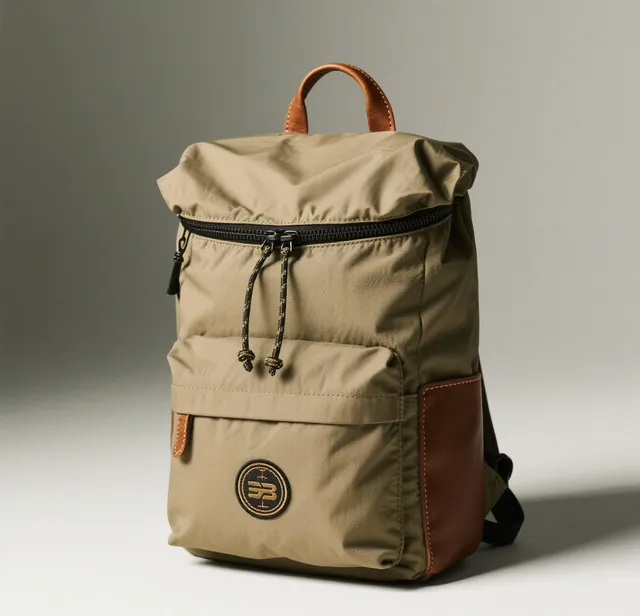
The material of your work backpack determines its appearance, durability, weather resistance, weight, and maintenance requirements. This decision has the longest-lasting impact on your daily satisfaction with the backpack.
Material Comparison for Work Backpacks
The three most common material categories for professional backpacks are nylon-based fabrics (including ballistic nylon and Cordura), recycled polyester, and leather. Each offers a distinct combination of performance characteristics that suit different professional needs and preferences.
| Material | Weight | Durability | Water Resistance | Maintenance | Professional Look | Price Range |
|---|---|---|---|---|---|---|
| 1680D Ballistic Nylon | Medium | Excellent | Good (with DWR) | Low | Technical, rugged | GBP 80 to 350 |
| 500D Cordura Nylon | Light | Excellent | Excellent (with DWR) | Low | Modern, clean | GBP 100 to 400 |
| Recycled Polyester | Light | Good | Moderate | Low | Casual-professional | GBP 60 to 200 |
| Full-Grain Leather | Heavy | Excellent with care | Poor (needs treatment) | High | Classic, premium | GBP 150 to 800 |
What to Look for in Fabric Quality
Regardless of the material category, certain quality indicators reveal whether a backpack fabric will perform well over years of daily use. The denier rating (D) indicates the weight and thickness of the yarn: higher denier fabrics are heavier and more abrasion-resistant. Look for fabrics with a DWR (Durable Water Repellent) coating that causes water to bead on the surface. Check that seam stress points are reinforced with bartacking or extra stitching rows. Examine the zipper quality: YKK zippers are the industry gold standard for smooth operation and longevity.
Factor 3: Ergonomic Comfort and Strap Design
Comfort is the factor most likely to affect your daily experience with a work backpack. An uncomfortable backpack becomes a source of dread with every morning commute, while a well-designed ergonomic backpack disappears on your back, allowing you to focus on your work rather than your carry.
Shoulder Strap Requirements
Quality shoulder straps should be at least 40 millimetres wide at the shoulder contact point, padded with multi-density foam (firm core for structure, soft exterior for comfort), and shaped to follow the contour of the shoulder without digging into the neck. Sternum straps provide additional stability during active commutes, particularly cycling. Load lifter straps that connect the top of the shoulder straps to the backpack body allow fine-tuning the position of the load relative to your body's centre of gravity.
Back Panel Considerations
The back panel design affects both comfort and ventilation. Channel ventilation systems with raised foam ridges create air pathways between the backpack and your back, reducing perspiration by up to 25 percent according to the Textile Research Institute. A contoured back panel that follows the natural curvature of the spine improves weight distribution and reduces pressure points. For warm-weather commuting or cycle commuters, mesh-covered ventilation channels provide maximum airflow.
Weight Distribution Best Practices
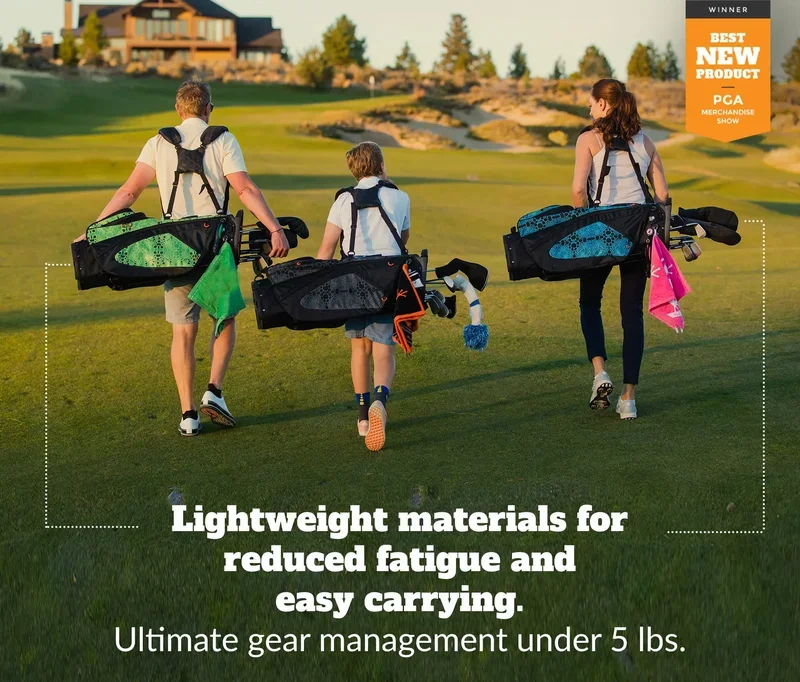
A 2024 study in the Journal of Occupational Health found that proper backpack weight distribution significantly reduces musculoskeletal complaints among daily commuters. The heaviest items (laptop, documents) should be positioned closest to your back and centred between your shoulders. Lighter items fill the outer and lower portions of the main compartment. This arrangement keeps the centre of gravity close to your body's natural balance point, reducing muscular strain on the shoulders and back during extended carrying periods.
Factor 4: Laptop and Device Protection
Your laptop is your digital office, containing years of work, client communications, and professional reputation. Protecting it during daily transit is one of the most critical requirements for any work backpack.
Laptop Compartment Design Priorities
The best work backpacks feature a suspended laptop compartment that positions the device above the base of the bag, preventing impact damage when the backpack is set down. The compartment should include at least 8 millimetres of high-density foam padding on all sides, with reinforced corners where damage most commonly occurs. A separate compartment for tablets (up to 12.9 inches) prevents the tablet from pressing against and scratching the laptop.
Beyond the Laptop: Protecting All Devices
Modern professionals carry multiple devices: smartphones, wireless earbuds, portable batteries, and cables. A well-designed work backpack should include padded pockets or pouches for these smaller devices, preventing them from shifting and potentially damaging the laptop. Admin panel pockets with elastic loops for cables and chargers keep accessories organised and prevent them from tangling or creating pressure points against the laptop screen.
Factor 5: Organisational Features and Accessibility
The difference between a work backpack that enhances your daily efficiency and one that frustrates you lies in its organisational features. A well-designed backpack puts everything in its right place, reducing search time and keeping your professional carry orderly throughout the day.
Essential Organisational Features
A functional work backpack should include at minimum: a front admin panel with pen holders, card slots, and a key clip; a dedicated phone pocket in an accessible position; at least one water bottle pocket; and a quick-access top or side pocket for items you need during your commute (transit card, earbuds, lip balm). Premium models add features like luggage pass-through sleeves for travel, hidden security pockets for valuables, expandable main compartments, and magnetic Fidlock buckles for one-handed opening.
Accessibility Patterns
Consider how you access your items throughout the day. Top-opening backpacks provide full visibility and access to the main compartment but may be inconvenient when the backpack is on your back. Panel-opening (clamshell) designs lie flat when opened, giving complete visibility and access to all contents. Side-access pockets allow retrieval of your phone or wallet without removing the backpack. The best work backpacks combine multiple access patterns: clamshell main opening for thorough organisation, side access for quick retrieval, and top quick-access for items needed most frequently.
Factor 6: Professional Appearance and Style
Your work backpack is a visible part of your professional identity. It accompanies you to client meetings, team sessions, conferences, and networking events. Its appearance communicates attention to detail, professionalism, and personal brand.
Design Principles for Professional Settings
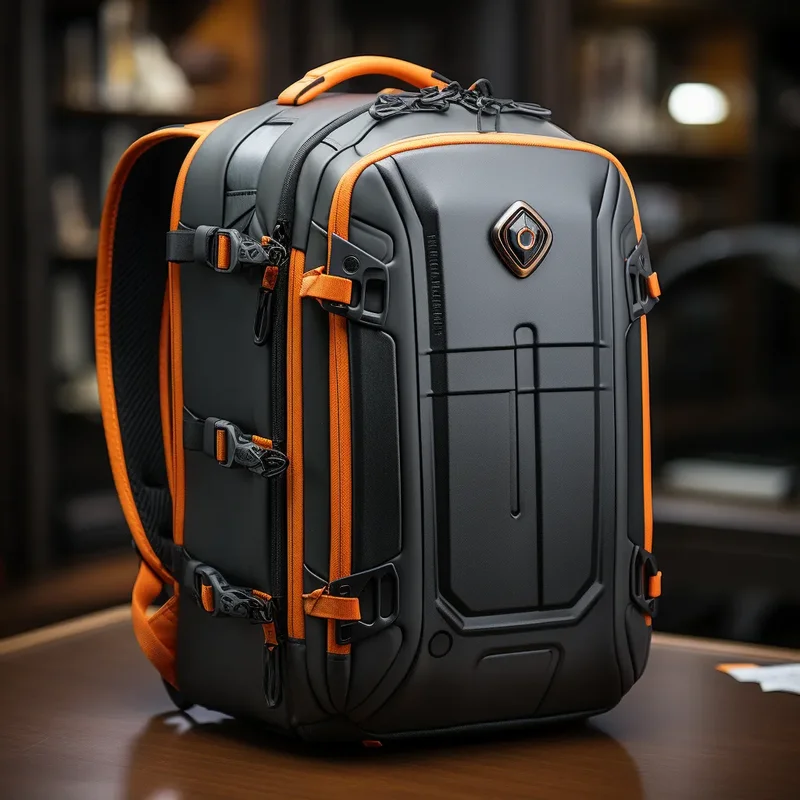
The most professional backpack designs share several characteristics: clean lines with minimal visible seams, a structured rectangular form factor that maintains its shape even when partially loaded, neutral colours (black, charcoal, navy), minimal visible branding, and matte rather than glossy finishes. These design principles apply regardless of price point; a GBP 80 backpack following these principles will look more professional than a GBP 400 backpack with excessive branding and unconventional shapes.
Industry-Specific Style Considerations
Different professional environments have different style expectations. Technology and creative industries embrace modern, technical-looking backpacks with visible construction details and innovative materials. Finance and consulting sectors lean toward understated, classic designs that communicate reliability and conservatism. Legal and government environments favour the most traditional professional aesthetics. Understanding your industry's style norms helps you choose a backpack that projects the right image without appearing either too casual or excessively formal.
Factor 7: Budget and Long-Term Value
The budget you set for a work backpack should consider not just the purchase price but the total cost of ownership over the product's useful life. A cheaper backpack that needs replacement every two years costs more in the long run than a premium backpack that lasts eight years.
Total Cost of Ownership Analysis
When evaluating budget, consider these factors beyond the purchase price: expected lifespan in years of daily use, maintenance costs (leather conditioning, zipper repair, waterproofing reapplication), warranty coverage (lifetime warranties from brands like Briggs & Riley add significant value), and resale value (premium brands retain 30 to 50 percent of purchase price in the second-hand market).
| Price Tier | Purchase Price | Expected Lifespan | Annual Cost | Maintenance Cost | Best Value Brands |
|---|---|---|---|---|---|
| Budget | GBP 40 to 80 | 2 to 3 years | GBP 15 to 40 | Minimal | Herschel, Amazon Basics |
| Mid-Range | GBP 80 to 250 | 5 to 8 years | GBP 10 to 50 | Low | Thule, Samsonite, Bellroy |
| Premium | GBP 250 to 500 | 8 to 12 years | GBP 20 to 60 | Low to moderate | Tumi, Briggs & Riley, Aer |
| Luxury | GBP 500+ | 10 to 20 years | GBP 25 to 50 | Moderate to high | Montblanc, Bottega Veneta |
This analysis reveals that mid-range and premium backpacks often deliver the lowest annual cost of ownership, making them the best value for most professionals. The budget tier, while having the lowest upfront cost, frequently incurs higher annual costs due to shorter lifespans and earlier replacement needs.
B2B Insight: Corporate Procurement of Work Backpacks
For organisations procuring work backpacks as corporate equipment or branded merchandise, the cost dynamics change significantly. Bulk orders of 500 to 5,000 units from an experienced manufacturer can deliver premium quality at mid-range or even budget per-unit prices. Junyuan Bags, established in 2004 and certified to BSCI and ISO 9001:2015 standards, operates a 15,000-square-metre facility with over 200 skilled craftspeople and 8 production lines producing 200,000-plus bags annually with defect rates below 0.3 percent. This scale enables competitive pricing for corporate clients while maintaining the quality standards that employee equipment programmes demand. Whether your organisation requires 200 or 20,000 work backpacks, partnering with a certified manufacturer ensures consistent quality, customisation options, and cost efficiency that retail purchasing cannot match.
The Decision Matrix: Matching Backpacks to Professional Profiles
Different professional profiles prioritise different factors. Use this matrix to identify which factors matter most for your specific situation.
| Professional Profile | Top Priority Factors | Ideal Capacity | Recommended Materials | Price Range |
|---|---|---|---|---|
| Technology Consultant (cycles to clients) | Protection, Comfort, Weather | 22 to 28L | Cordura nylon with DWR | GBP 120 to 300 |
| Finance Professional (drives to office) | Style, Organisation, Protection | 18 to 24L | Ballistic nylon or leather | GBP 150 to 400 |
| Creative Director (mixed commute) | Style, Innovation, Versatility | 20 to 26L | Premium nylon or leather | GBP 150 to 350 |
| University Lecturer (campus walker) | Comfort, Capacity, Organisation | 24 to 30L | Nylon or recycled polyester | GBP 80 to 200 |
| Business Traveller (frequent flights) | Protection, TSA-access, Luggage sleeve | 22 to 28L | Ballistic nylon | GBP 200 to 450 |
Common Mistakes Professionals Make When Choosing a Work Backpack
Mistake 1: Choosing Based on Appearance Alone
A backpack that looks professional on the shelf but lacks laptop protection, adequate padding, or ergonomic straps will fail in daily use regardless of its aesthetic appeal. Always evaluate the functional features before making a purchase decision based on style.
Mistake 2: Buying Too Large
Many professionals choose the largest backpack they can find, assuming that more capacity is always better. Oversized backpacks look disproportionate on the back, encourage overpacking that adds unnecessary weight, and may exceed carry-on dimensions for air travel. Choose the smallest backpack that comfortably accommodates your daily carry items with a small margin for unexpected items.
Mistake 3: Ignoring Strap Quality
Thin, unpadded shoulder straps create pressure points that cause pain and fatigue during commutes. When testing a backpack, load it with at least 5 kilograms and wear it for several minutes. The straps should distribute weight comfortably without creating hot spots on the shoulders. If the backpack feels uncomfortable when loaded in the store, it will be far worse during a full day of carrying.
Mistake 4: Neglecting Water Resistance
The UK's climate demands water-resistant carry solutions. A backpack without water resistance will soak through during unexpected rain, potentially damaging your laptop and documents. Even if you primarily commute by car, a sudden downpour between the car and the office building can cause significant damage to unprotected contents.
Mistake 5: Skipping the Warranty Check
Quality backpack manufacturers stand behind their products with warranties ranging from one year to lifetime. A backpack with a limited or no warranty suggests the manufacturer lacks confidence in its durability. Brands like Briggs & Riley (lifetime warranty), Tumi (5-year warranty), and Thule (limited lifetime warranty) provide warranty coverage that protects your investment and demonstrates manufacturing confidence.
Evaluating Brand Reputation and Reviews
When narrowing your choices among work backpacks that meet your functional requirements, brand reputation and verified customer reviews provide valuable real-world insights that product specifications alone cannot convey. Look for backpacks with a minimum of 100 verified reviews across multiple retail platforms, with an average rating of 4.0 stars or above. Pay particular attention to reviews that mention durability after one year or more of daily use, as these provide the most relevant long-term performance data.
Professional review sources such as Wirecutter, TechRadar, and The Strategist conduct hands-on testing of work backpacks and provide detailed comparisons that supplement user reviews. These professional evaluations typically assess ergonomic comfort during extended carrying, organisational effectiveness, laptop protection quality, and long-term durability under simulated daily use conditions. Combining professional review insights with verified customer experiences provides the most comprehensive evaluation basis for your purchasing decision.
Frequently Asked Questions
What is the best size backpack for daily work use?
For most working professionals, a backpack between 20 and 28 litres provides the ideal balance of capacity and manageable size. A 20 to 22 litre backpack suits minimalists, while 24 to 28 litres accommodates gym clothes, lunch containers, and additional accessories. Avoid backpacks larger than 30 litres for daily work use.
Should I choose a leather or nylon work backpack?
Nylon backpacks offer superior water resistance, lighter weight, lower maintenance requirements, and better abrasion resistance. Leather projects a classic professional aesthetic and can last decades with proper care, but is heavier, more expensive, and requires regular conditioning. For most professionals, nylon is the more practical choice.
How much should I budget for a quality work backpack?
A quality work backpack typically costs between GBP 80 and GBP 250. Budget options under GBP 60 often compromise on materials and construction. Premium brands range from GBP 250 to GBP 700. For corporate bulk orders, manufacturers like Junyuan Bags offer premium quality at lower per-unit costs.
Is a work backpack with wheels worth considering?
Wheeled backpacks add 500 to 800 grams of weight and reduce internal capacity. For most daily commuters, a standard ergonomic backpack provides better comfort and practicality. Wheeled options suit professionals who travel frequently with heavy equipment.
What colour work backpack is most professional?
Black remains the most universally professional colour. Charcoal grey and navy blue are widely accepted alternatives. Avoid bright colours and bold patterns in professional settings.
How do I know if a work backpack will fit my laptop?
Measure your closed laptop's width and depth in millimetres, then check the backpack's compartment dimensions. Add 10 to 15 millimetres of clearance. If the compartment meets or exceeds your laptop dimensions plus clearance, it will fit comfortably.
Source Premium Work Backpacks for Your Brand or Organisation
Since 2004, Junyuan Bags has been crafting premium work backpacks in our 15,000 sqm factory with over 200 skilled craftspeople and 8 dedicated production lines. BSCI and ISO 9001:2015 certified, we deliver an annual capacity exceeding 200,000 bags with a defect rate below 0.3 percent.
Email: service@junyuanbags.com
WhatsApp: +86 177 5002 0688
Continue Reading
- Business Backpack vs. Briefcase: Which Is Better for Professionals?
- What to Look for in a Professional Backpack: 12 Expert Features
- Laptop Compartments in Business Backpacks: Complete Size Guide
- Leather vs. Nylon Business Backpacks: Pros, Cons and Best Picks
- Ballistic Nylon vs Cordura: Backpack Fabric Comparison
- Backpack Strap Ergonomic Design Principles
- Foam Padding Technology for Backpack Comfort
- Waterproof Fabric Technology for Men's Backpacks
- View All Work Backpack Products
- About Junyuan Bags
- Contact Our Team