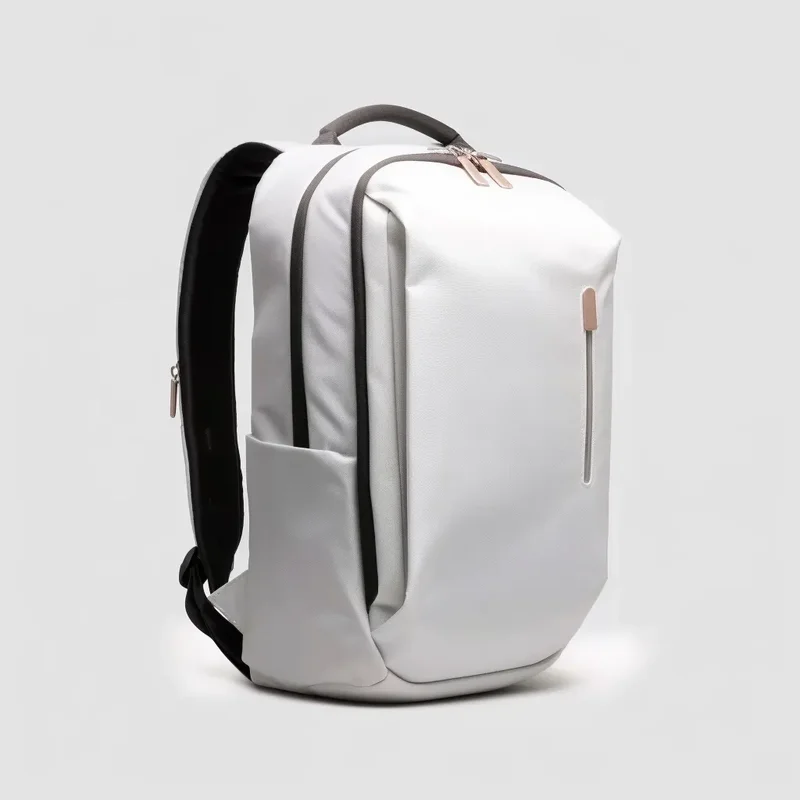
China dominates global backpack manufacturing, producing an estimated 60-70% of the world's backpacks. From budget school bags to premium technical packs for major international brands, Chinese factories handle every tier of production. Yet misconceptions about Chinese manufacturing quality persist, causing many buyers to either overpay with trading companies or miss excellent factory-direct opportunities.
This guide provides an honest, detailed look at Chinese backpack manufacturing. We cover the key manufacturing regions, quality standards, certifications, the sourcing process, factory auditing, and practical tips for getting exceptional quality at competitive prices. Whether you are launching a backpack brand, sourcing for retail, or manufacturing for your own use, this guide gives you the knowledge to navigate the Chinese backpack supply chain effectively.
China's Backpack Manufacturing Hubs
Backpack manufacturing in China is concentrated in specific regions, each with distinct specialisations, skill sets, and price points. Understanding these hubs is essential for targeting the right factory for your product.
Quanzhou, Fujian
Specialisation: Sports, outdoor, and functional backpacks
Strengths: The largest backpack production cluster globally. Thousands of factories ranging from small workshops to massive facilities employing 2,000+ workers. Deep expertise in nylon, polyester, and technical fabrics. Strong supply chain for all backpack components including zippers, buckles, and foam.
Best for: Sports packs, hiking backpacks, school bags, mid-range functional backpacks
Price range: $3-$25 per unit (FOB)
Xiamen, Fujian
Specialisation: Technical backpacks and branded goods
Strengths: Home to factories producing for premium outdoor and lifestyle brands. Higher average quality level than Quanzhou with better quality control infrastructure. Strong English-speaking management and export experience.
Best for: Premium outdoor packs, branded lifestyle backpacks, technical commuter bags
Price range: $8-$40 per unit (FOB)
Guangzhou, Guangdong
Specialisation: Fashion backpacks and leather goods
Strengths: Proximity to leather markets and fashion material suppliers. Strong design capabilities and trend awareness. Fast sampling and short lead times due to dense supply chains. Many factories serve European fashion brands.
Best for: Leather backpacks, fashion packs, urban lifestyle bags, women's backpacks
Price range: $5-$35 per unit (FOB)
Dongguan, Guangdong
Specialisation: Premium branded manufacturing
Strengths: The highest quality manufacturing tier in China. Factories here produce for luxury and premium brands with exacting standards. Advanced machinery, rigorous quality control, and experienced technical staff. Higher cost but exceptional output quality.
Best for: Premium branded backpacks, luxury bags, high-spec technical packs
Price range: $10-$50+ per unit (FOB)
Quality Tiers in Chinese Manufacturing
Chinese backpack factories operate across the entire quality spectrum. The same country that produces $3 promotional bags also manufactures packs that meet the standards of $400 premium brands. Quality is determined by the factory you choose, the specifications you provide, and the quality control you enforce.
Tier A: Export Premium (Top 10-15% of factories)
These factories produce for major global brands and maintain international quality standards. They employ dedicated QC teams, use automated cutting and sewing equipment, maintain climate-controlled material storage, and follow strict production protocols. Expect 8-10 stitches per inch, bar-tack reinforcement at all stress points, 100% YKK zippers, and comprehensive inspection procedures. These factories typically hold ISO 9001, BSCI, and relevant brand-specific compliance certifications.
Tier B: Export Standard (Next 25-30%)
Solid quality factories that produce for mid-range brands and large retail chains. Good construction quality with minor inconsistencies. May use a mix of YKK and SBS zippers, decent fabric sourcing, and adequate QC procedures. These factories can produce excellent products when given clear specifications and when third-party inspection is used.
Tier C: Domestic and Budget Export (Remaining 55-65%)
These factories focus on the domestic market and budget export orders. Quality varies widely. Construction is adequate for low-price products but unsuitable for premium positioning. Limited QC infrastructure, basic equipment, and minimal design support. Suitable for promotional items, basic school bags, and price-sensitive markets.
Essential Certifications
Certifications validate that a factory meets specific standards for quality management, social compliance, and product safety. Here are the certifications that matter for backpack sourcing:
| Certification | What It Covers | Why It Matters | Cost to Factory |
|---|---|---|---|
| ISO 9001 | Quality management systems | Ensures consistent production quality and documented processes | $5,000-$15,000/year |
| BSCI | Social compliance and worker welfare | Required by most European retailers and brands | $3,000-$8,000/audit |
| SGS / Intertek | Product testing and safety | Validates material safety, durability, and compliance with regulations | $500-$2,000/test |
| OEKO-TEX 100 | Fabric chemical safety | Confirms fabrics are free from harmful substances | $2,000-$5,000/year |
| GRS | Global Recycled Standard | Verifies recycled content claims for sustainability marketing | $3,000-$10,000/year |
| SA8000 | Labour practices and worker rights | Demonstrates ethical labour practices beyond BSCI requirements | $5,000-$12,000/audit |
Buyer Tip: Not every good factory has every certification. Smaller factories may produce excellent products but lack the resources for expensive audits. Evaluate the factory's actual output quality and QC capabilities alongside certifications. A factory without BSCI but with excellent product quality may be ideal if you sell DTC and do not need retail compliance.
The Sourcing Process: Step by Step
Step 1: Define Your Requirements
Before contacting any factory, prepare a comprehensive technical pack. This should include detailed drawings or reference samples, exact dimensions for every compartment, material specifications with denier counts and coatings, zipper and hardware requirements, colour codes (Pantone references), logo placement and application method, packaging requirements, and quantity targets. The more precise your specifications, the more accurate your quotes and samples will be.
Step 2: Find and Shortlist Factories
Use trade platforms like Alibaba and Global Sources for initial factory discovery. Attend the Canton Fair (April and October sessions) or the Bag Fair in Guangzhou for in-person meetings. Leverage sourcing agents with established factory networks. Request initial quotes from 8-10 factories, then shortlist 3-5 based on price competitiveness, communication quality, willingness to sample, and relevant production experience.
Step 3: Request and Evaluate Samples
Order samples from each shortlisted factory. Evaluate stitching quality, material accuracy, zipper operation, padding comfort, organisational layout, and overall finish. Compare samples side-by-side using a scoring matrix. The best factory is rarely the cheapest; it is the one that delivers the closest match to your quality expectations at a reasonable price.
Step 4: Conduct Factory Audit
Visit your top 2-3 factories in person or hire a third-party inspection company. See our detailed audit checklist below. A physical visit reveals capabilities that documents cannot: factory organisation, worker skill, equipment condition, quality culture, and production capacity reality.
Step 5: Negotiate and Place Trial Order
Negotiate pricing based on your target quantity, payment terms (typical structure is 30% deposit, 70% before shipment), lead time, and quality agreement. Start with a trial order of 200-500 units to validate production quality at scale before committing to larger volumes.
Step 6: Production and Quality Control
During production, conduct inline inspections (checking units during manufacturing) and pre-shipment inspections (checking finished units before packing). Use the AQL sampling standard for statistical quality control. Typical AQL levels for backpacks are 2.5 for major defects, 4.0 for minor defects, and zero tolerance for critical defects.
Factory Audit Checklist
A thorough factory audit covers these key areas:
| Audit Area | What to Check | Red Flags |
|---|---|---|
| Production Equipment | Number and condition of sewing machines, cutting equipment, automated processes | Old or poorly maintained machines; mostly manual cutting |
| Quality Control | Dedicated QC staff, inspection procedures, defect tracking systems | No dedicated QC team; no written procedures; high defect rate tolerance |
| Material Storage | Organisation, climate control, FIFO practices, material labelling | Fabric stored on floor; no moisture protection; mixed materials without labels |
| Workforce | Worker skill level, training programs, turnover rate, working conditions | Mostly untrained temporary workers; excessive overtime; unsafe conditions |
| Production Capacity | Daily output, current utilisation rate, lead time capabilities | Factory claims 5,000/day but operates with 50 workers; inconsistent with observed capacity |
| Compliance | Business license, export licenses, certifications, environmental permits | Expired licenses; operating without required permits; cannot produce documentation |
| Sample Room | Quality of sample products, design capability, sampling speed | Poor sample quality; no sample room; unable to produce prototypes |
Sample Development Process
Sample development is the most critical phase in backpack sourcing. A well-executed sampling process prevents costly production mistakes and ensures the final product matches your expectations.
Sample Types and Timeline
| Sample Type | Purpose | Timeline | Typical Cost |
|---|---|---|---|
| Proto Sample | Initial prototype to test design and proportions | 10-20 days | $100-$300 per style |
| Fitness Sample | Tests pattern, fit, and construction with correct materials | 7-15 days after proto approval | $80-$250 per style |
| Pre-Production Sample | Final sample made with all correct materials, made from production line | 7-10 days | $80-$200 per style |
| Shipment Sample | Random sample pulled from finished production for buyer approval | From production run | Included in order |
Critical Tip: Always approve a pre-production sample before mass production begins. This is your last checkpoint before hundreds of units are manufactured. Check every detail: stitching, zippers, padding, labels, colours, dimensions, and overall finish. Any issues found at this stage are cheap to fix; issues discovered after production are enormously expensive.
Common Misconceptions About Chinese Manufacturing
Myth 1: "Chinese quality is always low"
This outdated stereotype ignores the reality that China manufactures premium products for brands like Samsonite, The North Face, Patagonia, and countless luxury labels. Quality is a function of factory selection and specification clarity, not country of origin. A top-tier Chinese factory produces bags that are indistinguishable from those made in Vietnam or Indonesia.
Myth 2: "China is always the cheapest option"
While China offers strong value, it is not always the cheapest. Bangladesh and Cambodia offer lower labour costs for basic bags. Vietnam is competitive for mid-range products. China's advantage is the combination of reasonable cost, unmatched supply chain depth, quality capability, and speed.
Myth 3: "You need to speak Chinese to source from China"
Major export-oriented factories have English-speaking sales teams. Trade shows, Alibaba, and Global Sources all operate in English. While learning basic Mandarin helps build relationships, it is not a requirement for successful sourcing. Many successful buyers work through sourcing agents who bridge any language gap.
Myth 4: "Intellectual property will be stolen"
While IP protection requires attention, most reputable factories have no interest in stealing designs. Their business model is manufacturing for clients, not competing with them. Use NDAs, work with established factories, and protect critical innovations through patents. The risk is often overstated in media coverage.
Myth 5: "Minimum orders are always 1,000+ units"
While large factories have high MOQs, many medium-sized factories accept orders of 300-500 units. For new brands testing the market, some factories offer initial orders as low as 100-200 units, albeit at slightly higher per-unit costs. The MOQ landscape has become much more flexible in recent years.
Cost Advantages vs. Other Countries
| Factor | China | Vietnam | Bangladesh | India |
|---|---|---|---|---|
| Labour Cost | Medium | Low-Medium | Very Low | Low |
| Material Availability | Excellent | Good | Limited | Good |
| Quality Capability | Very High | High | Low-Medium | Medium |
| Supply Chain Depth | Unmatched | Growing | Limited | Moderate |
| Lead Time Reliability | High | Medium-High | Low-Medium | Medium |
| English Communication | Good | Moderate | Limited | Moderate |
| Overall Cost Advantage | 30-50% vs EU/US | 35-55% vs EU/US | 50-65% vs EU/US | 40-55% vs EU/US |
China's true competitive advantage is not just cost but the total value equation: reasonable pricing combined with the world's deepest supply chain for bag materials, components, and accessories. A factory in Quanzhou can source any zipper, buckle, fabric, or foam within a 50-kilometre radius. This reduces lead times, enables rapid sampling, and allows for cost optimisation that factories in other countries cannot match.
Success Factors for Sourcing from China
- Visit before you commit: A factory visit is worth more than 100 emails. Seeing production capability first-hand prevents costly mistakes.
- Invest in clear specifications: Detailed tech packs eliminate ambiguity. Include material swatches, Pantone colours, construction diagrams, and reference samples.
- Start small, scale gradually: Begin with a trial order to validate quality and communication. Increase volume as trust is established.
- Use third-party inspection: Independent QC inspections during and after production protect your investment. Budget $200-$400 per inspection day.
- Build relationships, not transactions: Chinese business culture values long-term relationships. Factories that trust your commitment offer better pricing, priority scheduling, and more willingness to resolve issues.
- Protect your IP proactively: Register trademarks in China, use NDAs, and work with factories that have no competing product lines.
- Plan for lead times: Typical production lead time is 30-60 days after sample approval. Add 15-30 days for shipping. Factor in Chinese New Year (January-February) when factories close for 3-4 weeks.
- Diversify your supply base: Maintain relationships with 2-3 factories to avoid dependency on a single source and create competitive tension on pricing.
Final Considerations
Chinese backpack manufacturing offers unparalleled capability when approached with knowledge and preparation. The key is understanding that quality is not determined by the country but by the factory, the specifications, and the quality control processes you put in place. With the right approach, you can source backpacks that compete with any brand globally while maintaining healthy margins.
Whether you are a startup launching your first backpack line or an established brand scaling production, China's manufacturing ecosystem provides the tools, materials, and expertise to bring your vision to life at competitive prices. The factories described in this guide are ready to partner with buyers who approach sourcing professionally and with clear expectations.
Frequently Asked Questions
Is Chinese backpack manufacturing quality reliable?
Yes, when sourced from certified factories. China produces backpacks for major global brands including Samsonite, The North Face, and Herschel. Quality depends on factory selection, clear specifications, and proper QC processes rather than the country of origin.
What are the main backpack manufacturing hubs in China?
The four main hubs are Quanzhou (sports and outdoor), Xiamen (technical and branded goods), Guangzhou (fashion and leather), and Dongguan (premium branded manufacturing). Each region has distinct specialisations and price points.
What certifications should I look for?
Key certifications include BSCI for social compliance, ISO 9001 for quality management, SGS or Intertek for product testing, OEKO-TEX for fabric safety, and GRS for recycled materials. Requirements vary by target market and retail channel.
How much cheaper is manufacturing in China?
Typically 30-50% less than European production and 20-35% less than Vietnam for comparable quality. The total advantage includes materials sourcing efficiency, labour costs, and logistics infrastructure.
What is the minimum order quantity?
Large factories require 500-1,000 units per colour per style. Medium factories accept 300-500 units. Small workshops may accept 100-200 units at higher per-unit costs. Sample orders of 5-50 pieces are usually available.
How long does sample development take?
First prototypes take 7-15 days for existing designs or 15-30 days for fully custom designs. Revision rounds take 5-10 days each. Allow 30-60 days total from initial brief to approved pre-production sample.
How do I audit a Chinese backpack factory?
Audits should cover production capacity, quality control systems, material sourcing, worker conditions, environmental compliance, and financial stability. Third-party auditors like SGS or Bureau Veritas can conduct formal assessments.
What are common sourcing mistakes?
Choosing the cheapest factory without quality verification, providing vague specifications, skipping pre-production samples, avoiding factory audits, and not establishing third-party inspection protocols for mass production.
Looking for a Reliable Backpack Manufacturing Partner?
With 15+ years of backpack manufacturing experience, ISO 9001 and BSCI certification, and production capability for all quality tiers, we are ready to bring your backpack designs to life.
Email: service@junyuanbags.com
WhatsApp: +86 17750020688