
Backpack Container Loading Optimisation: Maximising Shipping Efficiency
Container loading optimisation represents one of the most impactful cost reduction opportunities in backpack import logistics, directly affecting per-unit shipping costs through maximised space utilisation within standard shipping containers. Every cubic metre of wasted space in a container translates to unnecessary freight costs that erode your profit margins on every unit shipped, making systematic loading optimisation essential for competitive backpack importing operations.
At Junyuan Bags, we have developed sophisticated container loading capabilities over two decades of shipping millions of backpacks to clients across six continents. Our 15,000 square metre facility in Quanzhou City includes dedicated packing areas designed for optimal container loading, with experienced teams who understand how different backpack designs, packing methods, and carton configurations affect container utilisation efficiency. This comprehensive guide shares our expertise in container loading optimisation, providing actionable strategies that reduce your per-unit shipping costs while maintaining product protection during international transit.
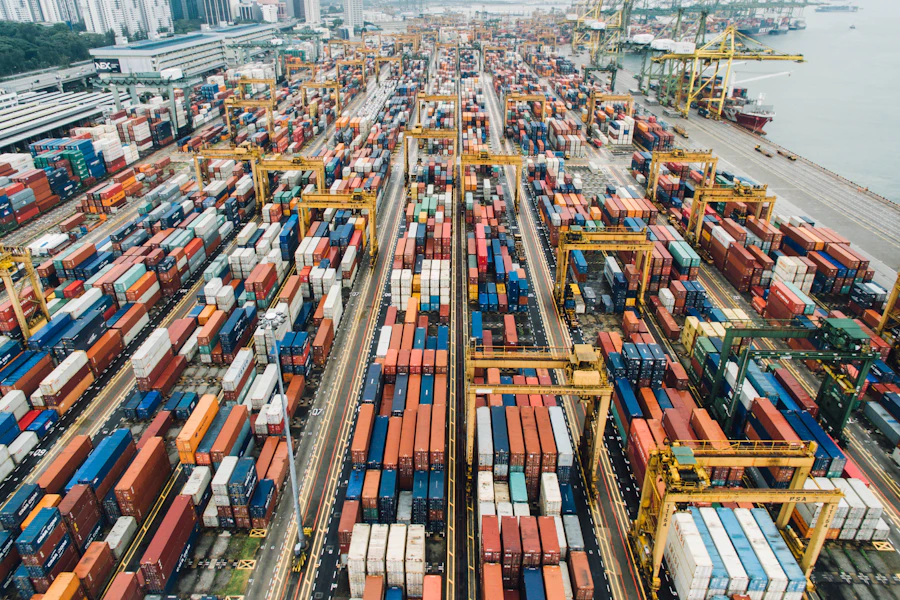
Understanding Container Dimensions and Capacity
Effective container loading begins with thorough understanding of available container types, their internal dimensions, and how these dimensions relate to your specific backpack product specifications and packing configurations.
Standard Container Specifications for Backpack Shipping
| Container Type | Internal Length | Internal Width | Internal Height | Volume CBM |
|---|---|---|---|---|
| 20-foot standard | 5.90m | 2.35m | 2.39m | 33.2 |
| 40-foot standard | 12.03m | 2.35m | 2.39m | 67.7 |
| 40-foot high cube | 12.03m | 2.35m | 2.69m | 76.3 |
These internal dimensions represent the theoretical maximum volume, but practical loading efficiency typically achieves 85 to 92 percent of this capacity due to carton shape constraints, structural requirements, and access needs for loading operations. Understanding the gap between theoretical and practical capacity helps set realistic expectations and focus optimisation efforts where they generate meaningful improvements in per-unit shipping costs for your backpack products.
Carton Design Strategies for Maximum Container Utilisation
Carton dimensions represent the single most important variable in container loading efficiency. Optimising carton design for container dimensions generates compounding savings across every shipment throughout your product lifecycle.
Dimensional Optimisation Principles
Design carton dimensions as factors of container internal dimensions wherever possible. For a 40-foot container with internal width of 2.35 metres, cartons with widths of 47 centimetres allow exactly five cartons side by side with no wasted space. Similarly, carton lengths that divide evenly into container length minimise longitudinal waste. This dimensional harmony between carton design and container specifications is the foundation of loading optimisation. Work with your manufacturer during packaging design to balance product protection requirements with container efficiency, recognising that modest carton dimension adjustments often generate significant loading improvements without compromising product safety during transit.
Compression Packing Techniques
Backpacks contain significant empty space when packed flat, creating volume that does not contribute to product value but significantly increases shipping costs. Compression packing techniques reduce per-unit volume by 20 to 35 percent depending on backpack design and materials. Methods include vacuum packing for maximum compression, fold-and-stuff techniques that maintain better shape while achieving meaningful reduction, and internal support structures that allow external compression without damaging product form. The optimal compression method depends on your distribution model, with direct-to-consumer brands accepting some creasing while retail-focused operations require better shape preservation. Discuss compression options with Junyuan Bags to identify the method that best balances volume efficiency with product presentation requirements for your specific distribution channels including business backpacks and casual daypacks.
Loading Patterns and Strategies
Systematic loading patterns maximise container space utilisation while ensuring structural stability throughout the ocean transit journey.
Column Loading Versus Brick Loading
Column loading stacks cartons directly on top of each other, creating vertical columns that distribute weight efficiently and maximise container height utilisation. This method works best when carton dimensions align perfectly with container floor dimensions, creating tight fits that prevent carton shifting during transit. Brick loading offsets each layer by half a carton width, creating interlocking patterns that provide superior stability against shifting during rough ocean conditions but may sacrifice some height utilisation. The optimal pattern depends on carton dimensions, container dimensions, and the stability requirements of your specific products and shipping routes. Experienced loading teams like those at Junyuan Bags understand when each pattern provides the best combination of space utilisation and transit protection for different product types and shipping scenarios.
Weight Distribution and Structural Considerations
Proper weight distribution within containers protects products from damage during transit while ensuring safe handling at every stage of the logistics chain from factory to final destination.
Balancing Weight Across the Container
Uneven weight distribution creates handling challenges at port terminals, increases the risk of container damage during crane operations, and may trigger overweight fines at weight checkpoints throughout the transport chain. Distribute heavy cartons evenly across the container floor rather than concentrating weight in one area. Place heavier products like business backpacks with laptop compartments and premium hardware on the bottom layers, with lighter casual backpacks on upper layers. Maintain the container centre of gravity close to its geometric centre for stable handling throughout the shipping journey. This attention to weight distribution protects your products and demonstrates professional logistics management that carriers and port operators respect throughout the shipping process.
Measuring and Improving Loading Efficiency Over Time
Systematic measurement of container loading performance creates a feedback loop that drives continuous improvement in shipping efficiency and cost reduction over successive orders.
Track key metrics including cartons per container, units per container, cubic utilisation percentage, and per-unit shipping cost for every shipment. Compare these metrics across orders to identify trends and improvement opportunities. Analyse whether carton design modifications, packing method changes, or loading pattern optimisation generate measurable improvements. Share this data with your manufacturer to collaboratively identify further optimisation opportunities. At Junyuan Bags, we track these metrics for every client shipment, using accumulated data to continuously improve loading efficiency and reduce per-unit shipping costs for our partners across all product categories. Contact us to discuss container loading optimisation strategies for your next backpack shipment.
Quality Standards in Backpack Manufacturing
Quality standards remain fundamental across all backpack manufacturing operations. ISO 9001:2015 certification provides independent verification of systematic quality management, while BSCI certification demonstrates commitment to responsible social practices. Junyuan Bags maintains both certifications with a defect rate below 0.3 percent across annual production exceeding 2,000,000 backpacks, demonstrating the manufacturing excellence that international buyers require for consistent product quality across every production run.
Sustainability in Modern Backpack Manufacturing
Environmental sustainability increasingly influences every aspect of backpack manufacturing. Consumers demand products made with recycled and sustainable materials, produced in environmentally responsible facilities. Junyuan Bags invests continuously in sustainable manufacturing capabilities, supporting brands that prioritise environmental responsibility across their entire product lifecycle from business backpacks to outdoor packs.
Partner With Junyuan Bags for Excellence
Choosing the right manufacturing partner determines your success in the competitive backpack market. Junyuan Bags brings over two decades of manufacturing excellence with our 15,000 square metre facility in Quanzhou City, 200+ skilled craftspeople, 8 production lines, and annual capacity exceeding 2,000,000 backpacks. Whether you need business backpacks, outdoor packs, travel backpacks, or casual daypacks, our team delivers consistent quality and reliable service. Contact us to discover how our manufacturing excellence can support your brand growth.
Mastering Container Loading Patterns for Maximum Efficiency
Container loading efficiency depends on understanding the dimensional characteristics of packed backpacks and how different stacking patterns affect usable space. A standard 40-foot high cube container offers 76.3 cubic metres of internal volume, yet most backpack shipments achieve only 65 to 72 percent utilisation due to irregular carton dimensions and unavoidable gaps. By implementing systematic loading methodologies, you can push utilisation above 80 percent and significantly reduce per-unit shipping costs.
The pinwheel pattern works exceptionally well for backpack cartons of uniform size. By alternating carton orientation in each row, you eliminate the corridor effect where continuous vertical gaps weaken stack stability and waste space. In a 40-foot container, a properly executed pinwheel pattern using standard export cartons of 550mm by 400mm by 350mm accommodates approximately 3,200 to 3,500 cartons, compared to 2,800 cartons with basic block stacking. This 15 to 20 percent improvement directly translates to lower freight cost per unit.
For mixed carton sizes commonly encountered in backpack orders with varying product lines, the chimney loading method provides optimal results. Larger cartons form the outer walls while smaller cartons fill the central column, creating a self-supporting structure that maximises both volume usage and stack stability. This approach requires careful pre-planning with a three-dimensional loading diagram but delivers consistent results even when handled by general warehouse labour.
Carton Design Optimisation for Container Efficiency
Container loading efficiency begins at the carton design stage, long before goods reach the shipping floor. At Junyuan Bags, we engineer our export cartons to match standard container dimensions, minimising wasted space from the outset. Our standard backpack carton of 550mm by 400mm by 350mm was specifically designed to fit optimally within 40-foot containers, allowing 12 cartons per layer in pinwheel configuration with minimal gaps.
The relationship between carton dimensions and container internal width deserves careful attention. A 40-foot container's internal width of 2,352mm accommodates different carton configurations depending on the orientation. Cartons measuring 400mm in one dimension allow five-plus-one configurations filling 2,400mm with slight compression, while 550mm cartons permit four-across arrangements. Understanding these modular relationships helps you specify carton sizes that maximise container utilisation.
Carton weight distribution also affects loading efficiency. Heavier cartons containing premium backpacks with metal frames or dense padding should form the bottom layers, while lighter cartons with ultralight models stack above. This approach prevents crushing damage and allows you to fill the container to its weight capacity without risking structural failure of lower cartons. Our 15,000 square metre factory in Quanzhou implements standardised carton specifications across all eight production lines, ensuring consistent container loading performance regardless of which line produces your order.
Documentation and Loading Supervision Best Practices
Professional container loading requires comprehensive documentation at every stage. A detailed loading plan should specify carton quantities per layer, stacking patterns, weight distribution requirements, and dunnage placement. Photographs taken at each loading stage provide evidence for insurance claims and quality disputes. At Junyuan Bags, we record container loading videos for every shipment, giving clients complete visibility into how their goods are stuffed and secured.
Loading supervision by a third-party inspector or company representative adds an additional layer of protection. The supervisor verifies carton counts, checks for damaged packaging, confirms loading sequence compliance with the plan, and documents moisture barrier installation. For high-value shipments, we recommend full-time supervision from the moment the empty container arrives at our Quanzhou facility until the seal is applied and the container departs for the port.
Container seal management forms a critical but often overlooked aspect of loading documentation. High-security bolt seals should be applied immediately after loading completion, with seal numbers recorded on the bill of lading, packing list, and commercial invoice. Any discrepancy between documented and actual seal numbers triggers an automatic security alert, preventing potential tampering or diversion during transit.
Reducing Shipping Costs Through Strategic Container Planning
The most effective container loading strategy begins with order planning rather than the loading dock. By consolidating multiple small orders into full container quantities, you eliminate the cost premium associated with less-than-container-load shipments. Our minimum order quantity of 300 pieces per design already approaches LCL territory, so planning orders in 500 to 800 piece quantities naturally fills a 20-foot container while keeping inventory investment manageable.
Seasonal demand patterns create opportunities for strategic container planning. Ordering during factory low seasons, typically February through March and July through August at most Quanzhou manufacturers, secures better production scheduling and sometimes preferential container booking rates. Junyuan Bags offers flexible production scheduling across our eight lines, allowing us to accommodate strategic timing requests without compromising quality or delivery commitments.
Working with a single freight forwarder across multiple shipments builds relationships that yield better equipment availability, priority booking during peak seasons, and competitive rate structures. Many of our European and North American clients consolidate their forwarding through preferred partners, achieving volume discounts that offset 5 to 10 percent of their freight expenditure over the course of a year.
Advanced Techniques for Irregular and Oversized Backpack Shipments
Not all backpacks ship in standard rectangular cartons. Hiking backpacks with external frames, expandable travel bags, and backpacks with protruding components require special handling to maximise container utilisation. For framed backpacks, nesting the frames within adjacent cartons reduces wasted void space by up to 25 percent. Expandable backpacks should be shipped in their compressed state, with expansion zippers secured to maintain minimum profile dimensions.
Dunnage air bags represent the most effective solution for securing irregular loads within containers. Positioned between pallet layers and along container walls, these inflatable devices eliminate movement during ocean transit without adding significant weight. A typical 40-foot container loaded with mixed backpack shipments requires eight to twelve dunnage bags of various sizes, costing approximately 50 to 80 dollars total but preventing thousands of dollars in potential damage claims.
Ventilation management during container loading protects backpacks from condensation damage, particularly during tropical sea routes. Container lining with kraft paper or specialized anti-condensation membranes absorbs moisture that forms when temperatures fluctuate between day and night cycles. For moisture-sensitive backpacks made from leather or suede materials, desiccant packs placed inside each carton provide additional protection. Junyuan Bags includes silica gel desiccants in every carton as standard practice, maintaining internal humidity below 40 percent throughout typical ocean transit durations of 25 to 35 days.
Loading efficiency improvements compound across multiple shipments. A 10 percent improvement in container utilisation achieved through better carton design and loading patterns saves approximately 200 to 400 dollars per 40-foot container. For importers shipping monthly containers, this translates to annual savings of 2,400 to 4,800 dollars, funding quality improvements or marketing investments that strengthen brand positioning. Contact Junyuan Bags to discuss how our packaging engineering team can optimise your carton specifications for maximum container efficiency on your next production run.
Building a Container Loading Protocol for Repeat Orders
Establishing a documented container loading protocol ensures consistency across repeat orders and reduces the learning curve for warehouse personnel. The protocol should specify exact carton dimensions, stacking patterns, maximum stack heights, dunnage requirements, and moisture protection measures. Including photographs of correctly loaded containers creates visual reference standards that workers can follow without ambiguity.
Technology adoption further enhances loading accuracy. Simple spreadsheet calculators that input carton dimensions and container specifications can generate loading plans in minutes, eliminating the guesswork that leads to underutilised space. Some logistics platforms offer three-dimensional loading simulation, allowing planners to test multiple configurations virtually before committing to physical loading. While these tools carry subscription costs, the container utilisation improvements typically deliver return on investment within the first few shipments.
Training loading teams at the factory level provides the greatest long-term benefits. At Junyuan Bags, our warehouse team undergoes quarterly training on container loading techniques, with specific focus on backpack carton handling. This investment in human capital ensures that every container departing our 15,000 square metre Quanzhou facility achieves maximum utilisation regardless of order composition or destination requirements. Our eight production lines feed into a coordinated logistics workflow that prioritises container efficiency from design through delivery.
Sustainability Benefits of Optimised Container Loading
Beyond cost savings, optimised container loading delivers measurable environmental benefits that align with corporate sustainability commitments. Each percentage point improvement in container utilisation reduces the number of containers needed annually, directly cutting fuel consumption and carbon emissions from international shipping. For a mid-volume importer shipping fifty containers per year, achieving 80 percent utilisation instead of 70 percent eliminates approximately four container movements annually, reducing carbon dioxide emissions by 8 to 12 metric tons.
Reduced packaging waste represents another sustainability dividend. When carton dimensions are engineered to match container modules, less corrugated material is needed per unit. Junyuan Bags has invested in right-sizing packaging specifications across all production lines, reducing total cardboard consumption by 8 percent compared to industry-standard carton dimensions. This reduction aligns with our BSCI certification requirements and supports clients pursuing their own environmental targets.
These cumulative efficiency gains demonstrate that container loading optimisation is not merely a logistical concern but a strategic business capability. Importers who invest in systematic loading planning consistently achieve lower per-unit costs, reduced environmental impact, and improved supply chain reliability compared to competitors treating container loading as an afterthought. The principles outlined in this guide apply to backpack shipments of any scale, from single-container trial orders to multi-container weekly programmes managed by our experienced logistics coordination team.
Frequently Asked Questions
How many backpacks fit in a 40-foot container?
A 40-foot container typically holds 5,000 to 8,000 backpacks depending on their packed dimensions. A 40-foot high cube container holds 6,000 to 9,000 backpacks. Efficient carton design and compression packing maximise container utilisation, potentially increasing capacity by 20 to 35 percent over uncompressed packing methods.
What is the most cost-effective container type for backpack shipping?
40-foot high cube containers offer the best cost per unit for backpack shipping due to their additional height providing 13 percent more volume than standard 40-foot containers at modestly higher freight costs. The extra capacity typically reduces per-unit shipping costs by 8 to 12 percent compared to standard containers.
How can I reduce per-unit shipping costs for my backpack orders?
Reduce per-unit shipping costs through carton dimension optimisation for container space, compression packing to reduce volume, maximising container loads to full capacity, shipping during off-peak seasons when freight rates are lower, and consolidating multiple orders into fewer shipments to reduce handling costs per unit.
Does compression packing damage backpacks?
Proper compression packing does not damage quality backpacks when done correctly. Vacuum packing provides maximum compression but may create creasing. Fold-and-stuff methods maintain better shape while achieving 20 to 30 percent volume reduction. The method depends on your distribution model and presentation requirements.
How do I calculate container loading efficiency?
Container loading efficiency is calculated as the ratio of actual cargo volume to container internal volume, expressed as a percentage. Divide total carton volume in cubic metres by container internal volume and multiply by 100. Target 85 to 92 percent efficiency for well-optimised backpack shipments with standard carton configurations.
Ready to Start Your Custom Backpack Project?
Contact Junyuan Bags for OEM/ODM manufacturing solutions.
📱 WhatsApp: +86 177 5002 0688