Branded backpacks are among the most powerful corporate assets a company can deploy. Unlike a pen that sits in a drawer or a mouse pad that gets replaced annually, a quality backpack becomes a daily companion — carried to the office, the gym, on commutes, through airports, and across campus. Every single day, your brand travels with the user into environments where hundreds of people see it. For marketing teams, HR departments, and event organizers, this makes bulk custom backpacks an investment with extraordinary reach and longevity.
But ordering custom backpacks at scale is not as simple as picking a product from a catalogue and adding a logo. The sourcing process involves multiple stakeholders, technical decisions, quality checkpoints, and timeline coordination that, if mismanaged, can result in costly delays or disappointing products. This guide provides a comprehensive roadmap for every stage of the process.
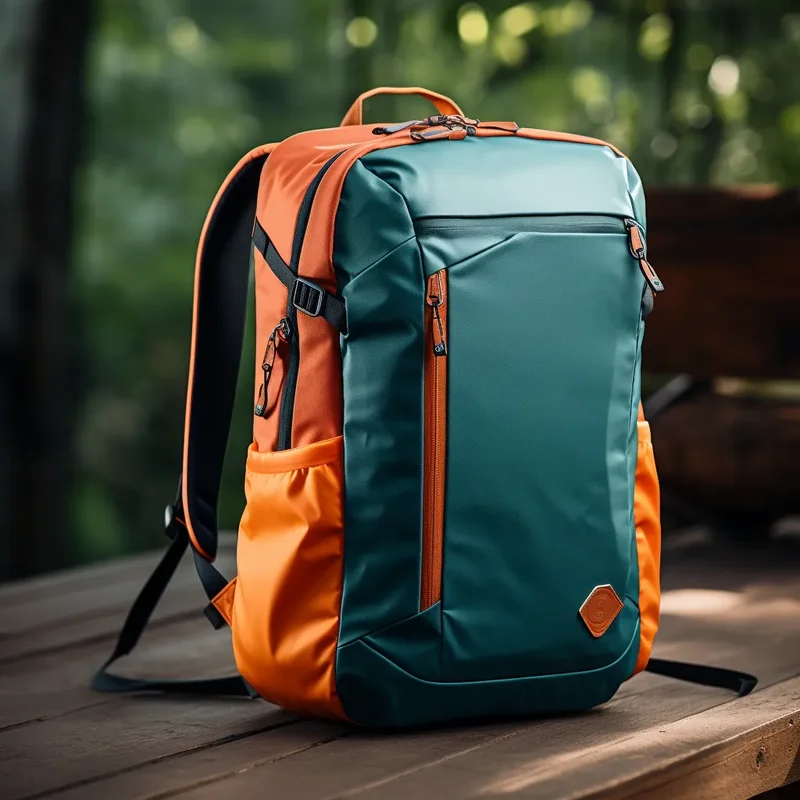
Branded backpacks turn employees and customers into mobile brand ambassadors every single day.
Why Companies Invest in Bulk Custom Backpacks
Before diving into the mechanics of sourcing, it is worth understanding why so many organizations — from tech startups to Fortune 500 companies, universities to NGOs — consistently choose backpacks as their go-to branded product.
Employee Engagement and Onboarding
A branded backpack given on an employee's first day creates an immediate sense of belonging and company pride. It is a tangible symbol of membership — something that says "you are part of this team." Companies like Google, Salesforce, and Red Bull have built legendary employer brands partly through high-quality branded merchandise that employees actually want to use and display.
Event and Conference Merchandise
At industry conferences, trade shows, and corporate events, a premium branded backpack stands out dramatically from the sea of disposable tote bags and flimsy drawstring sacks. Attendees who receive a quality backpack become walking advertisements for the duration of the event and long after, carrying your brand through airports, hotel lobbies, and city streets.
Client and Partner Gifting
A well-chosen custom backpack communicates investment in the relationship. For key accounts, strategic partners, or milestone celebrations, a premium backpack with subtle branding (perhaps embossed rather than printed) delivers a gift that is both useful and memorable — far more impactful than a bottle of wine or a gift card.
School and University Programs
Educational institutions use branded backpacks for orientation programs, athletic teams, student government, and alumni engagement. The backpack becomes part of the campus identity and creates a sense of community among students who carry the same mark.
Marketing and Brand Visibility
Unlike digital advertising that disappears the moment a user scrolls past, a backpack delivers passive, continuous brand exposure. Research from the Promotional Products Association indicates that backpacks generate among the highest cost-per-impression metrics of any promotional product category — particularly when the item is high quality enough that the recipient actually wants to carry it in public.
How to Order Bulk Custom Backpacks: The Step-by-Step Process
Ordering custom backpacks in bulk follows a structured process. Understanding each stage helps you plan timelines, allocate budget, and avoid common pitfalls.
Step 1: Define Requirements and Brief (Week 1 – 2)
Document the purpose, target recipients, quantity, budget range, quality expectations, and timeline. Include your logo files, brand guidelines (Pantone colours, font specifications), and any functional requirements such as laptop compartments, water bottle pockets, or specific dimensions. A clear brief at this stage prevents miscommunication downstream.
Step 2: Vendor Sourcing and Quotation (Week 2 – 4)
Reach out to 3 to 5 qualified suppliers with your brief. Request detailed quotations including unit pricing at multiple quantity tiers, setup and sampling costs, production timelines, material specifications, and customization options. Evaluate responses not just on price but on communication quality, willingness to answer technical questions, and transparency about capabilities and limitations.
Step 3: Sample Development and Approval (Week 4 – 7)
Request physical samples from your top 2 to 3 vendors. Evaluate fabric quality, stitching construction, zipper smoothness, strap comfort, and customization execution. Iterate on any issues until you receive a sample that meets your standards. Obtain written approval from all relevant stakeholders before authorizing production.
Step 4: Production (Week 7 – 12)
Full-scale production begins after sample approval. Maintain communication with your supplier for periodic updates and in-line photos during production. Some buyers arrange third-party inspection services for mid-production and pre-shipment quality audits.
Step 5: Quality Control and Shipping (Week 12 – 16)
Final inspection occurs before goods leave the factory. Review inspection reports, approve any necessary corrections, and authorize shipment. Ocean freight typically takes 25 to 40 days; air freight takes 5 to 10 days. Factor in customs clearance time of 3 to 7 business days.
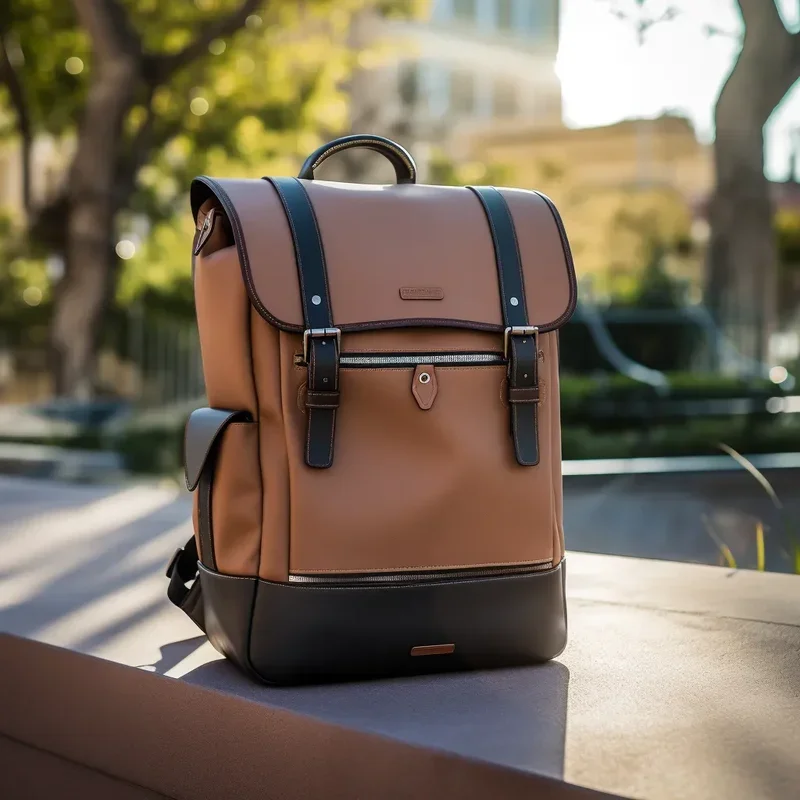
Tracking brand impressions and engagement metrics helps quantify the ROI of custom backpack programs.
Quantity Tiers and Pricing Structure
Understanding how pricing scales with quantity is essential for budget planning. Backpack manufacturers typically offer tiered pricing that rewards larger commitments.
| Quantity Tier | Customization Level | Estimated Unit Cost | Best For |
|---|---|---|---|
| 50 – 100 units | Stock backpack + logo print | 18 – 30 GBP | Small teams, pilot programs, boutique events |
| 100 – 300 units | Stock backpack + embroidery or print | 14 – 22 GBP | Department-level programs, mid-size events |
| 300 – 500 units | Custom colour selection + branding | 12 – 20 GBP | Company-wide rollouts, university programs |
| 500 – 1000 units | Custom design modifications + branding | 10 – 18 GBP | Annual conference distribution, multi-office companies |
| 1000 – 3000 units | Fully custom design + premium materials | 8 – 15 GBP | Enterprise programs, large-scale promotional campaigns |
| 3000+ units | Full bespoke with packaging | 6 – 12 GBP | Global brand launches, multi-year contracts |
Vendor Selection Criteria: What Really Matters
Choosing the right supplier is the single most impactful decision in the entire process. A good vendor delivers consistent quality, transparent communication, and reliable timelines. A poor vendor creates stress, delays, and products that reflect badly on your brand. Here are the criteria that separate the best from the rest.
Manufacturing Specialization
Work with suppliers who specialize in backpacks and bags, not general merchandise companies that source everything from pens to phone chargers. A specialist understands fabric choices, load-bearing construction, ergonomic strap design, and the specific challenges of applying branding to three-dimensional, flexible products.
Quality Certifications
Look for suppliers with recognized quality and compliance certifications:
- ISO 9001: Quality management systems certification
- BSCI (Business Social Compliance Initiative): Ethical manufacturing standards
- Sedex / SMETA: Supply chain ethical trade auditing
- OEKO-TEX Standard 100: Fabrics tested for harmful substances
- GRS (Global Recycled Standard): Certification for recycled materials
Communication and Responsiveness
The vendor's communication quality during the quoting phase is a reliable predictor of how they will perform during production. Do they respond to emails within 24 hours? Do they ask clarifying questions that demonstrate understanding of your requirements? Do they proactively flag potential issues or suggest improvements? These early signals matter enormously.
Sample Quality
The sample is the vendor's audition. If the sample has loose threads, inconsistent stitching, cheap zippers, or sloppy branding application, the production run will not be any better. Evaluate every detail of the sample with a critical eye — this is your best (and possibly only) opportunity to assess quality before committing to a full order.
Transparency and References
Reputable suppliers willingly provide references from other corporate clients, factory audit reports, and video walkthroughs of their production facilities. If a vendor is evasive about these requests, consider it a red flag. The best suppliers are proud of their operations and happy to demonstrate their capabilities.
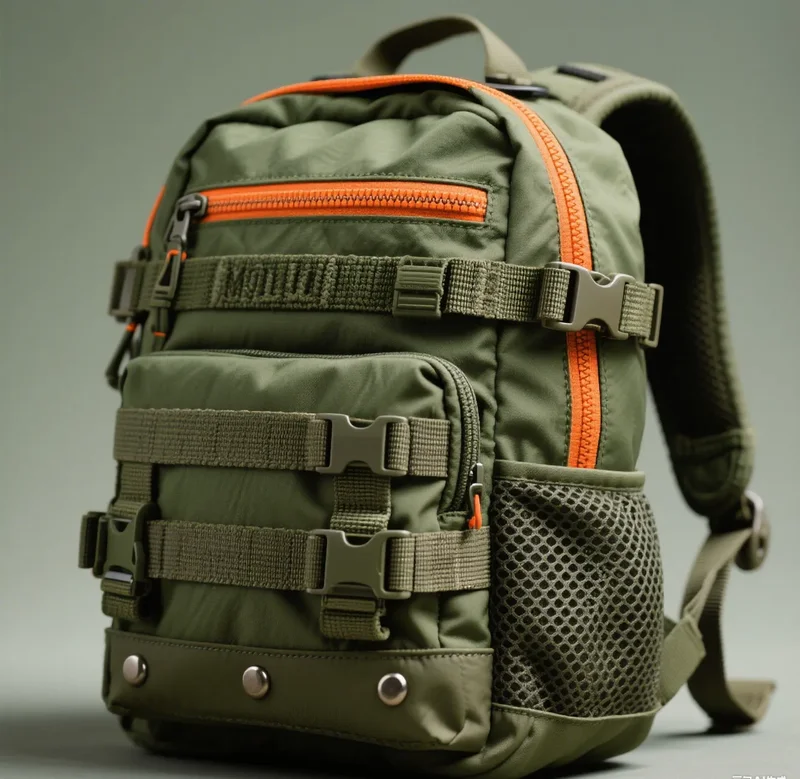
Thorough vendor evaluation and sample approval protect your investment and brand reputation.
The Sample Approval Process: A Critical Quality Gate
The sample approval process is where most problems are caught and corrected before they become expensive production errors. A disciplined approach to sampling protects your investment and ensures the final product meets expectations.
Stage 1: Digital Mock-Up
The supplier creates a photorealistic digital rendering of the backpack with your branding applied in the specified positions. This allows you to evaluate proportions, colour matching, and placement before any physical product is made. Request views from multiple angles (front, back, side, top) and in different lighting conditions.
Stage 2: Pre-Production Sample (PP Sample)
A physical sample is produced using the actual materials and customization methods planned for the full order. This is the most important sample — it lets you evaluate fabric hand feel, stitching quality, zipper function, strap comfort, and the real appearance of your branding in natural light. Test the sample rigorously: load it with weight, open and close every zipper, adjust every strap, and inspect every seam.
Stage 3: Production Sample (Top-of-Production)
Once bulk production begins, request photos or a physical sample from the first finished units off the line. This confirms that production quality matches the approved PP sample. If discrepancies emerge, they can be corrected early in the production run rather than discovered after delivery.
Quality Control Checkpoints
Professional quality control is not a single inspection at the end — it is a series of checkpoints integrated throughout the production process.
Incoming Material Inspection
Fabric, zippers, buckles, and other materials are inspected upon arrival at the factory. Fabric is checked for colour consistency, weight, and defects. Zippers and buckles are tested for smooth operation and durability. Any substandard materials are rejected before they enter the production line.
In-Process Quality Checks
During production, quality inspectors monitor cutting accuracy, stitching consistency, seam allowances, and alignment of printed or embroidered elements. These checks catch issues early when they are easy and inexpensive to correct — a misaligned logo discovered at the stitching stage costs nothing to fix; the same issue discovered after packing requires unpacking, reworking, and repacking.
Pre-Shipment Inspection (PSI)
The final and most comprehensive inspection occurs when production is complete and goods are packed for shipment. This inspection typically follows the AQL (Acceptable Quality Level) standard, most commonly AQL 2.5 for major defects and AQL 4.0 for minor defects. A random sample of units is pulled from the batch and examined against the approved PP sample for:
- Dimensional accuracy (does it match the specified measurements?)
- Stitching quality (consistent stitch density, no loose threads, no skipped stitches)
- Branding quality (correct placement, colour accuracy, clean edges)
- Hardware function (all zippers, buckles, and adjustment mechanisms work smoothly)
- Fabric and colour consistency (matches approved sample under standard lighting)
- Packaging compliance (correct labelling, barcodes, packing quantities per carton)
Third-Party Inspection Services
For high-value orders or first-time supplier relationships, many buyers engage independent third-party inspection companies such as SGS, Bureau Veritas, or Intertek to conduct pre-shipment inspections. These services typically cost 200 to 400 GBP per inspection day and provide an objective, professional assessment that protects the buyer from quality disputes.
Timeline Expectations: Planning Realistically
One of the most common mistakes in bulk backpack ordering is underestimating the timeline. Here is a realistic breakdown that accounts for the full process from initial outreach to warehouse receipt.
| Phase | Standard Timeline | Rush Timeline | Key Dependencies |
|---|---|---|---|
| Vendor selection and quoting | 2 – 3 weeks | 1 week | Brief completeness, vendor availability |
| Sampling (including revisions) | 2 – 4 weeks | 1 – 2 weeks | Design complexity, number of revision rounds |
| Production | 3 – 5 weeks | 2 – 3 weeks | Quantity, customization complexity |
| Quality control and packing | 1 week | 3 – 5 days | AQL standard, inspection scheduling |
| Shipping (sea freight) | 4 – 6 weeks | 1 – 2 weeks (air) | Origin/destination, customs clearance |
| Total | 12 – 18 weeks | 6 – 9 weeks | Buyer approval speed at each stage |
Branding Placement Strategy
Where you place your company logo and branding on the backpack affects both visibility and perception. Strategic placement maximizes brand exposure while maintaining the aesthetic integrity of the product — because if the backpack looks too much like a billboard, recipients will not want to carry it.
The Subtlety Principle
The most effective corporate backpacks balance brand visibility with design tastefulness. A small, well-placed embroidered logo on the front panel or handle area communicates brand identity without overwhelming the design. The goal is to create a backpack that the recipient is proud to carry — one that happens to feature your brand, not one that exists solely to display it.
High-Visibility Zones
- Front centre panel: Maximum visibility when the backpack is worn. Best for events where brand exposure is the primary objective.
- Top handle: Visible when hung or carried by hand. Subtle yet effective, especially with embroidery or debossing.
- Side panels: Visible when the backpack is set down or viewed from the side. Good for secondary branding elements or website URLs.
- Back panel: Visible to people standing behind the wearer. Large-format branding opportunity, but only visible from behind.
- Strap accents: Small logos or branded patterns on shoulder straps create distinctive detail visible at close range.
Internal Branding
Consider placing a full-colour logo or brand message on the interior lining or inside a zippered compartment. This creates a "hidden" branding element that the owner discovers — it builds an emotional connection and communicates attention to detail without any public visibility.
Employee Morale and Marketing ROI
Corporate backpack programs deliver value across two distinct but complementary dimensions: internal (employee engagement) and external (brand marketing).
Internal Impact: Employee Morale
Research consistently shows that tangible, high-quality branded merchandise has a measurable impact on employee satisfaction and sense of belonging. A backpack that employees actually want to use — because it is well-designed, comfortable, and functional — becomes a daily reminder of their connection to the company. This is especially powerful for remote or hybrid workers who may have limited physical interaction with the office environment.
Companies report that new hires who receive a premium branded backpack during onboarding demonstrate higher initial engagement scores and faster cultural integration. The backpack serves as a physical welcome kit anchor — a useful item that immediately connects the employee to the team.
External Impact: Marketing ROI
The marketing mathematics of branded backpacks are compelling. Consider the following scenario:
- A company orders 500 custom backpacks at 22 GBP per unit (total investment: 11,000 GBP)
- Each backpack is used daily for an average of 2.5 years (approximately 900 days)
- Each day, the backpack is seen by an average of 15 people (commute, office, meetings, public spaces)
- Total impressions: 500 recipients x 900 days x 15 impressions = 6,750,000 impressions
- Cost per impression: 11,000 GBP / 6,750,000 = 0.0016 GBP per impression
Compare this to digital advertising, where cost per impression typically ranges from 0.01 to 0.10 GBP, and the value proposition of physical branded merchandise becomes clear. Backpacks deliver orders of magnitude more impressions per pound spent, with the additional benefit of being associated with a useful, high-quality product rather than an interruptive ad.
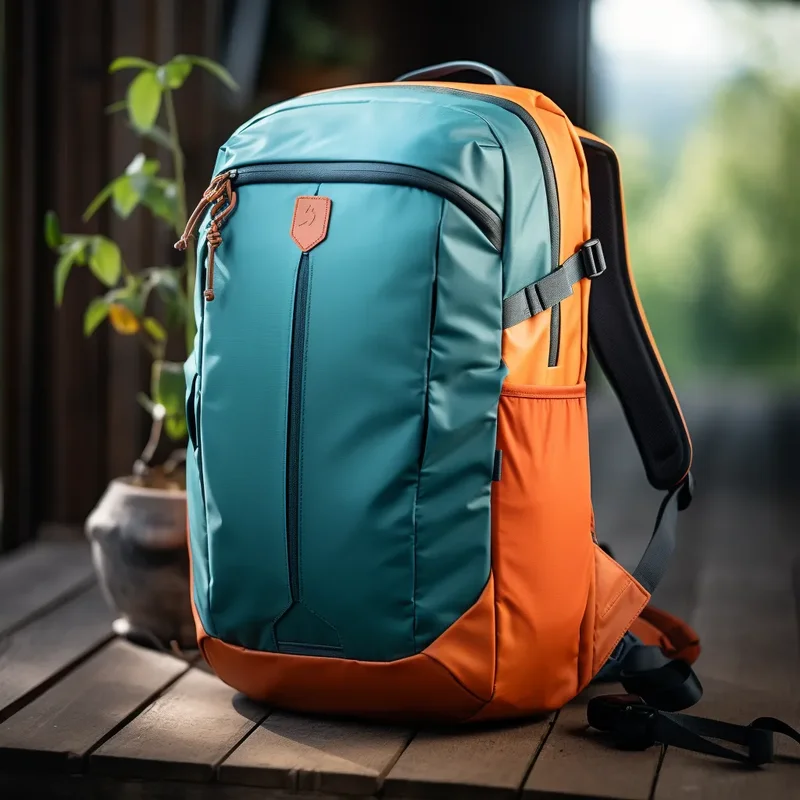
Strategic brand placement ensures backpacks are carried proudly, maximizing daily impressions.
Mistakes to Avoid in Bulk Backpack Ordering
Even experienced procurement professionals make mistakes with custom backpack orders. These are the most common and most costly:
- Choosing based on price alone: The cheapest backpack is often cheap for a reason — thin fabric, weak zippers, poor stitching. Recipients will notice, and your brand absorbs the negative association.
- Skipping the sample stage: Saving 50 GBP on sampling can cost thousands when 500 units arrive with the wrong colour, misaligned logos, or structural defects.
- Underestimating timelines: Failing to account for sampling revisions, shipping delays, and customs clearance can leave you without backpacks for a critical event.
- Over-branding: A backpack covered in logos, slogans, and website URLs looks like a promotional throwaway. Subtlety drives adoption, and adoption drives impressions.
- Ignoring the recipient: A backpack designed for corporate executives should look different from one designed for university students. Consider the recipient's lifestyle, aesthetic preferences, and functional needs.
- Forgetting about sustainability: An increasing number of consumers and employees evaluate brands by their environmental commitments. Choosing recycled materials and eco-friendly printing methods is no longer optional for many organizations.
Conclusion
Bulk custom backpacks represent a uniquely powerful intersection of utility, branding, and relationship-building. When sourced thoughtfully — with attention to vendor quality, material selection, branding subtlety, and production oversight — they deliver extraordinary value relative to their cost. The backpacks your company distributes today will carry your brand through thousands of daily interactions over the next several years, creating impressions that no digital campaign can match in longevity or authenticity.
Start with a clear brief, invest in proper sampling, maintain quality discipline throughout production, and choose a supplier who shares your commitment to excellence. Follow this playbook, and your corporate backpack program will become one of the highest-ROI initiatives in your marketing or HR portfolio.
Frequently Asked Questions
How many custom backpacks do I need to order for a bulk order?
Bulk orders typically start at 100 to 300 units for standard logo application on existing models. Fully custom-designed backpacks usually require 500 to 1000 unit minimums. Simple logo prints on stock models can start from 50 units with some suppliers.
What is the typical cost per unit for bulk custom backpacks?
Pricing ranges from 8 to 60 GBP per unit depending on quantity, materials, and customization complexity. Simple logo printing on stock models at 500+ units starts around 8 to 15 GBP. Fully custom premium backpacks cost 25 to 60 GBP per unit.
How long does a bulk order take from start to delivery?
Standard timeline is 12 to 18 weeks covering vendor selection, sampling, production, and shipping. Rush orders can be completed in 6 to 9 weeks at a premium. Always add a 2-week buffer for unexpected delays.
What should I look for in a bulk backpack supplier?
Key criteria include manufacturing specialization in bags, quality certifications (ISO 9001, BSCI), sample quality, communication responsiveness, transparency about capabilities, and references from similar corporate clients.
How does the sample approval process work?
Three stages: digital mock-up for design evaluation, pre-production physical sample for quality and branding verification, and top-of-production sample to confirm bulk quality matches the approved sample. Each stage requires written approval.
What quality control measures should I expect?
Professional suppliers implement incoming material inspection, in-process production checks, and pre-shipment AQL-based inspection. Third-party inspection services (SGS, Bureau Veritas) are recommended for high-value or first-time orders.
What is the marketing ROI of branded corporate backpacks?
A quality backpack used daily over 2 to 3 years generates an estimated 3,400 to 6,000 brand impressions annually. At bulk pricing, cost per impression is typically less than 0.01 GBP — outperforming most digital and traditional advertising channels.
Can I order different backpack models in a single bulk order?
Many suppliers accommodate mixed orders with different models, colours, or sizes within a single production run, provided the total quantity meets the minimum threshold. Branding consistency across models is maintained through shared logo files and colour specifications.
Ready to Launch Your Corporate Backpack Program?
From initial concept to warehouse delivery, our team manages every detail of bulk custom backpack sourcing. Get a detailed quote tailored to your requirements.
Email: service@junyuanbags.com WhatsApp: +86 17750020688