Best Backpacks for Winter Commuting in the UK: Dark, Grit and Salt
For a UK winter commute, judge a backpack on three measurable things rather than three marketing adjectives: 96 hours of neutral salt spray survived by every metal fitting, a 3,000 mm hydrostatic head at a taped seam, and enough retroreflective area to be seen from the front at 16:00. Nearly every winter complaint a buyer hears has one of those three as its root cause, and each is cheap to fix at specification stage.
What follows is written for commuters leaving before 08:00 and returning after 16:30 between November and February, whether on foot, by bike or mixing bus and rail. It covers hardware metallurgy, closure behaviour below freezing, how much water a soaked shell actually retains, visibility geometry and load control on icy ground. Where a consumer decision has a sourcing consequence, the programme parameters are set out in the closing section.
Why Winter Breaks Packs That Survive Summer
A backpack that copes perfectly with an August commute can fail in January for reasons that have nothing to do with how much rain fell. Winter adds three new loads at once: a corrosive saline film thrown up by gritted roads, four to five months of temperatures below 10°C, and a pattern in which both legs of the journey happen in darkness. Each load attacks a different assembly, which is why comparisons based on review scores rarely predict winter behaviour. Hardware corrodes, coatings stiffen, and the outer faces that should return light to a driver's headlights simply absorb it. Separating the mechanisms makes the decision manageable, because each has a number attached and most suppliers can quote the relevant test report if asked.
The most useful mental model is to follow the failure energy. Tyre spray from a freshly gritted road is not clean rainwater; it is a dilute chloride solution carrying fine stone dust, and it lands on the bottom 150 mm of the pack, on webbing tails and on every metal fitting below hip height. Chloride ions break down the passive oxide film on aluminium and attack the thin zinc layer on plated steel, while the quartz dust abrades the coating that protected either surface. Repeat that cycle sixty to a hundred times across a season and you have textbook conditions for crevice corrosion on rivets, springs and slider bodies, usually visible first as white powder and later as a seized buckle.
- Corrosion: a gritted-road film plus warm hallway drying cycles attacks plated steel springs, eyelets and rivets first.
- Embrittlement: plasticised PVC faces and low-grade PU backs lose flexibility below about 5°C, so folded closures stop sealing.
- Darkness: fluorescent yarns stop working without daylight, leaving retroreflective returns as the only night-time protection.
- Weight creep: a face fabric that wets out can add 150-250 g of absorbed water to the pack in one heavy shower.
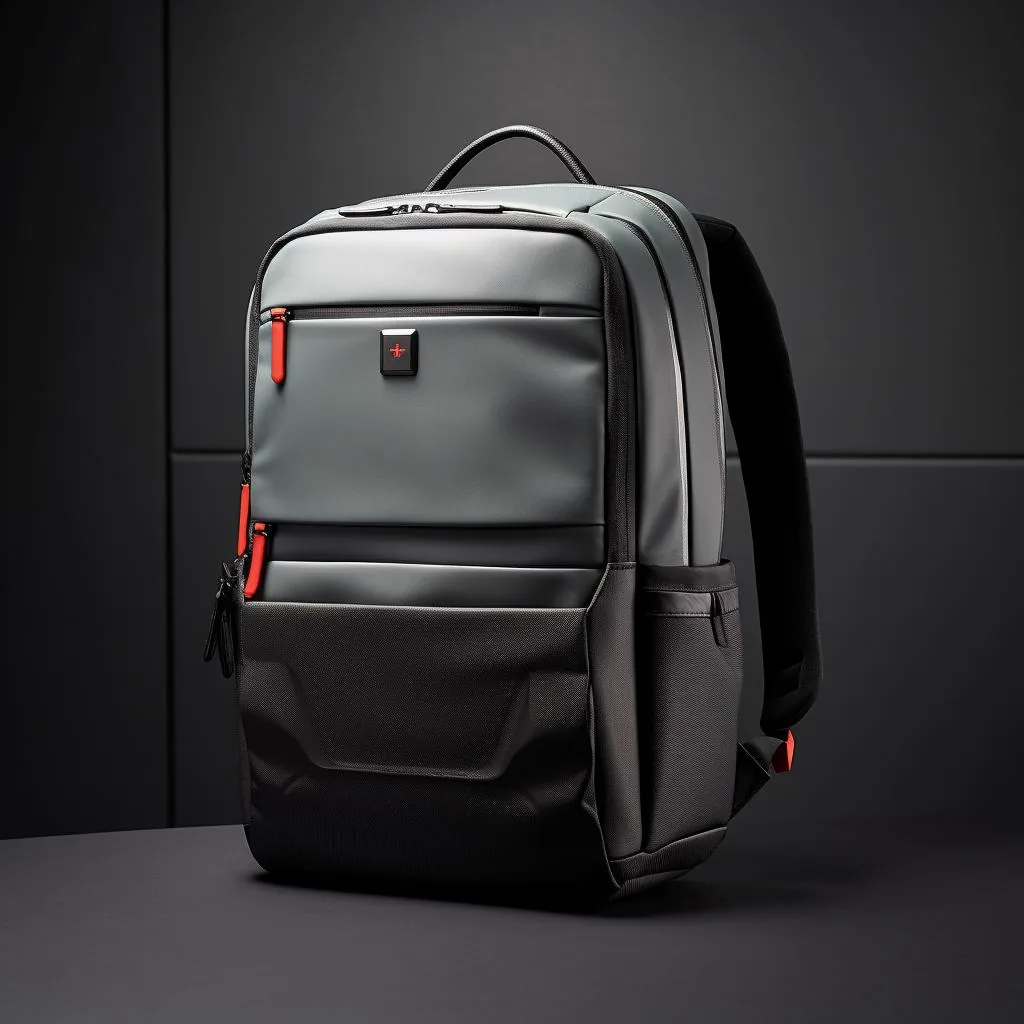
Road Salt: The Failure Mode Nobody Specifies
Hardware dies first on a British winter commute, and it is also the cheapest thing to specify correctly. The test to ask about is neutral salt spray, the procedure set out in ISO 9227, which exposes parts to a 5% sodium chloride fog held at 35°C. A 48-hour pass with no red rust is a reasonable floor for fashion hardware; 96 hours with no red rust and only light white oxidation is the figure usually demanded for workwear and cycle-commute ranges. Be precise about which components were tested: results for slider bodies tell a buyer nothing about the stamped base eyelets that sit closest to the spray.
Material selection does most of the work. Anodised 6061 aluminium ladderlocks, acetal side-release buckles and lacquered brass all pass 96 hours comfortably, whereas bright zinc-plated steel and unlacquered brass show corrosion product within a single season. Watch for mixed metals too: a stainless spring pressing against an aluminium body forms a galvanic couple that consumes the aluminium quickly once chloride is present. If the design uses rivets, ask for aluminium or brass rather than steel, and require a 3 mm PE stiffener behind them so that load is spread across the face fabric instead of tearing a 600D shell at the base seam.
- Specify anodised aluminium or acetal rather than plated steel on every fitting below hip height.
- Require the 96-hour neutral salt spray report by part number, not by drawing number.
- Avoid stainless-on-aluminium contact inside springs, hooks and magnetic closures.
- Back all rivets and eyelets with a PE or EVA stiffener to stop pull-through at the base.
- Ask for post-test photographs: written pass statements hide borderline white rust.
The Visibility Budget for a 16:00 Blackout
Darkness changes the physics of being seen. Fluorescent yellow and orange only work when there is daylight to convert, and at 17:00 in December there is none, so the single thing working in your favour is retroreflective material returning light along its incoming axis towards the driver. In practical road terms, a pedestrian in dark clothing is picked up roughly 25-35 m away under dipped beams, while a clean retroreflective band can push detection past 120 m, buying several additional seconds of reaction. Because ISO 20471 governs certified high-visibility clothing rather than luggage, backpacks mostly sit outside its scope, and UK buyers should treat visibility as an area-and-placement question rather than a certificate question.
Placement outranks quantity. Panels across the lower back become useless the moment a coat hem or a cycle cape covers them, so the highest-value zones are the shoulder straps, the two side gussets and any front-facing pocket below the flap. Aim for silver tape 25-50 mm wide with a coefficient of retroreflection above 300 cd/(lx·m²) when new, or a heat-transfer film rated for curved panels. Road film dulls the surface quickly, so a weekly wipe with a damp cloth restores a surprising amount of performance, and any branded reflective trim intended for retail should be re-measured after twenty domestic washes before a style is signed off.
Put retroreflective material on at least two planes roughly at right angles to each other: shoulder straps plus one side gusset. A pack viewed end-on by a side road needs its gusset lit, not its back panel.
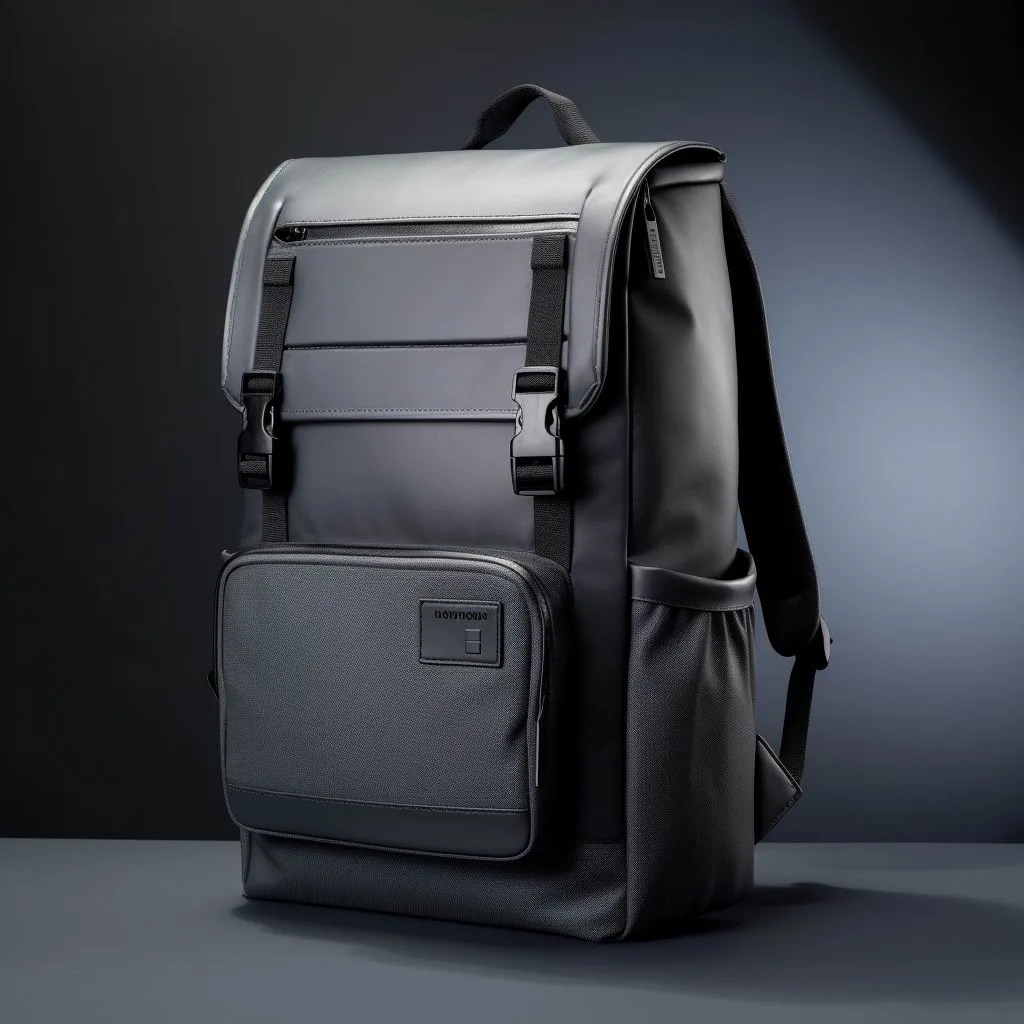
Water Uptake: What Soaked Actually Costs You
Two different numbers get sold as waterproof. Hydrostatic head, measured under ISO 811, is the water column pressure a fabric holds before penetration: 1,500 mm is ordinary shower resistance, 3,000 mm is sensible for a commuter shell whose seams are taped, and 10,000 mm and above belongs to shells intended for sustained mountain rain. That figure says nothing about what the outer face does during twenty minutes of standing at a bus stop in sleet, and face behaviour is what decides whether documents stay dry when you finally wrestle the pack open in a doorway. The two measurements answer different questions, so a strong head result never compensates for poor seam construction.
Wetting out is the real winter complaint. Once the outer surface saturates, the fabric gains mass, stops breathing and begins wicking through stitch holes at every seam line. A 600D polyester with PU backing and a factory finish will shed water for a year of commuting if it is re-proofed twice annually, while an untreated cotton canvas panel can hold 15-25% of its own dry weight. On a 950 g pack that translates to roughly 150-200 g of extra mass in a single downpour, most of it in a panel you cannot see. Taped seams, storm flaps over external zips and a laminated base panel solve it for very little money.
| Shell construction | Typical head | Winter behaviour | Verdict |
|---|---|---|---|
| 600D polyester, PU-backed | 3,000 mm | Low pickup, re-proofable twice a year | Best all-round winter commuter face |
| 420D nylon ripstop, silicone | 1,500-3,000 mm | Sheds well, resists UV on rack days | Light option, weaker at abrasion points |
| Waxed cotton canvas | Variable | Holds 15-25% water by weight | Heavy when soaked; needs re-waxing |
| TPU-laminated base panel | 10,000 mm+ | Impervious to puddle contact | Essential below 80 mm from the floor |
Cold Stiffening: When Coatings and Zips Stop Cooperating
Below about 5°C the polymer physics begin to show. Plasticised PVC faces stiffen noticeably, and some low-grade polyurethane backs lose the suppleness that lets a roll-top make three clean turns and clip shut. The field symptom is a pack you cannot close at a bus stop with cold hands, followed by a closure that leaks for the rest of the journey because it never truly sealed. Polyester carrying a TPU film, silicone-treated nylon and 210-420D ripstops with soft PU backs stay workable to around -15°C, while heavy PVC-laminated tarp fabric is the one to avoid on any closure you intend to fold repeatedly.
Zips fail differently, and for the same reason that locks do on winter mornings: contamination. Grit carried in tyre spray packs into the coil, and a half-frozen slider sticks, skips teeth or shears its own chain. A No. 8 or No. 10 reverse coil under a storm flap with a zip garage keeps contamination out of the chain roughly three times better than an exposed No. 3 or No. 5; over a season that is three times less cleaning. A thin film of silicone lubricant applied at the start of November keeps sliders free, and wax sticks should be avoided because they bind grit into the teeth. Lithium power banks belong in an inner pocket too: below 0°C a lithium cell accepts charge poorly, so a bank rated at 10,000 mAh left in an outer sleeve on a 2°C morning delivers far less than its printed figure.
- Choose TPU or silicone faces over PVC on any closure you must fold in the cold.
- Move external closures to No. 8 or No. 10 reverse coil with a garage and storm flap.
- Lubricate with silicone, never wax, and reapply after any salt-spray day.
- Keep battery banks in an inner pocket where body heat keeps them above 5°C.
Glove-Friendly Hardware: The Detail Nobody Field-Tests
Every closure on a winter pack has to work inside a 4 mm insulated glove, and surprisingly few do. The governing rule is contact area. Sliders fitted with a cord pull beat flat metal tabs, ladderlocks opened with the thumb beat those needing a pinch, and side-release buckles released from above beat ones squeezed from two sides. Webbing width follows the same logic: a 25 mm tail gives a gloved hand something to grab, a 15 mm tail does not. Check too that the grab handle admits a closed fist through it, because a flat 20 mm loop is close to useless when lifting a soaked pack out of a locker or the footwell of a train.
Access geometry deserves the same scrutiny. In cold weather you reach for a phone, a rail ticket or gloves far more often, always one-handed and usually while moving. A quick-access pocket should therefore sit above roughly 80 mm from the base, because anything lower shares space with the road film that collects on shelter floors and bus seat bases. External umbrella sleeves work well when angled away from the body so that run-off misses your trousers, and a dedicated webbing loop or daisy chain at the side beats stuffing a wet umbrella into a fabric pocket where it will sit damp until March.
Condensation, Laptops and the Wet-Kit Problem
Many damp-laptop failures blamed on leaking zips are actually caused by condensation. A machine running at 40°C goes into a cold pack, meets humid air, and moisture condenses on the coolest available surface, which is usually the metal chassis or the screen itself. Keeping the device in a suspended sleeve with 6-8 mm of closed-cell foam between it and the outer wall, and letting it cool for ten minutes before packing, removes most of the risk. A 10 g silica sachet costs pennies and pulls sleeve humidity below 50%, which sits comfortably inside the storage range most electronics makers print in their specifications.
Segregation is the second rule: wet kit must never share airspace with electronics. A TPU-lined bottom compartment fitted with a drain grommet will take a folded umbrella, a soaked hat and a pair of gloves, and can be rinsed out and dried overnight. Budget the volume honestly, because undersized wet pockets get abandoned by January. A telescopic umbrella packed is around 0.6 litres, a compact one 0.35 litres, and gloves plus a beanie another 0.4 litres, so anything below 3 litres becomes a damp pouch rather than a genuine wet compartment and the soaked jacket goes back in with the laptop.
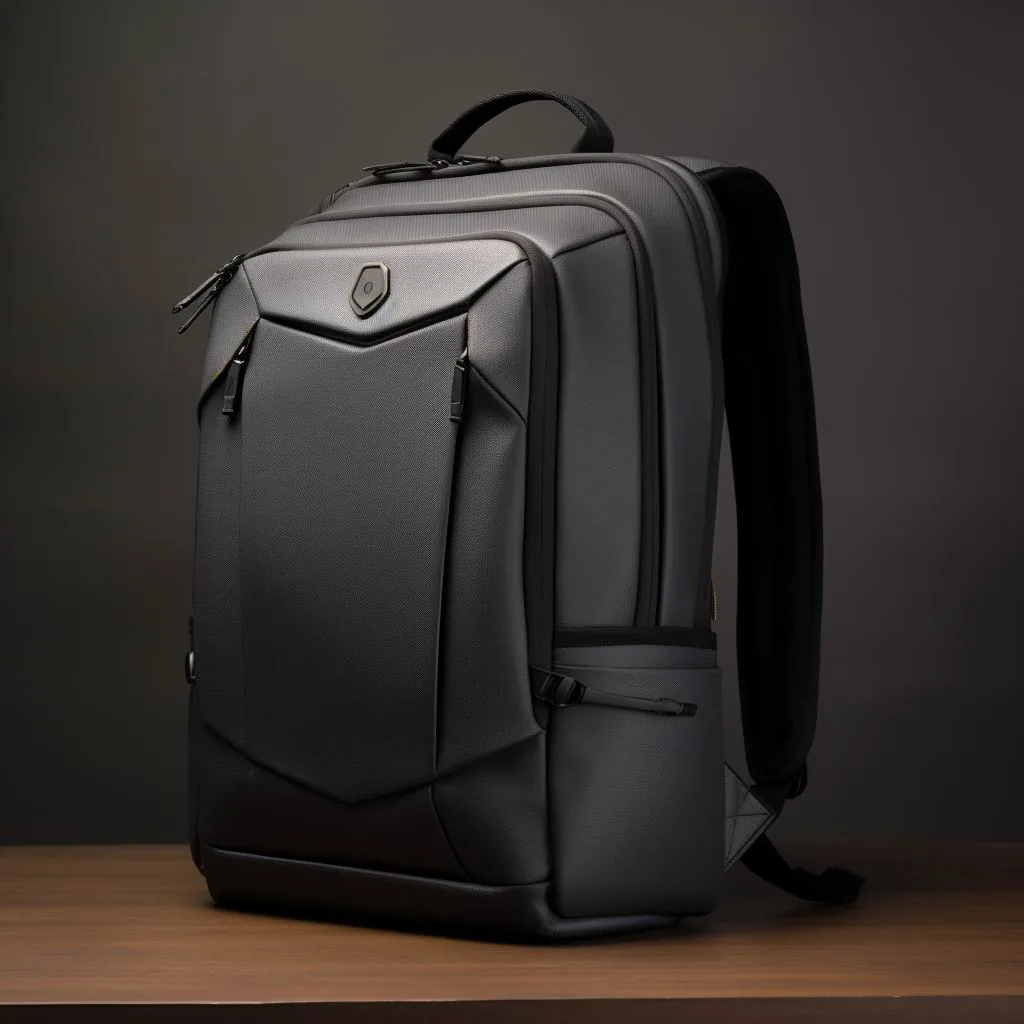
Load Control When the Pavement Is Icy
Winter changes both the load and the body carrying it. A thick coat sits between harness and torso, which typically lengthens the effective strap setting by 30-50 mm and pushes a hip belt below the iliac crest where it transfers nothing at all. Refit the pack over the coat rather than under it: shorten until the load lifters sit at roughly 45°, then verify that the hip belt still wraps above the hip bones. Where a commute crosses untreated or cambered ice, keep the total carried mass below about 10% of body weight, which is around 8 kg for an 80 kg commuter, because recovery from a slip degrades sharply above that figure.
There is also a straightforward falls argument for carrying less and carrying it tighter. Slips and trips guidance published by HSE treats route condition as a hazard that employers should manage; for an individual commuter the equivalent control is footwear plus a load they can recover from. Practically, that means keeping both hands free, cinching the compression straps so an 8 kg load does not swing during a turning step, and packing the heaviest item within 50 mm of the back panel where it stays close to your own centre of gravity rather than pulling it backwards on a greasy kerb.
The Winter Commuter Spec Sheet, Line by Line
Anything a retailer describes as a winter-ready commuter pack should be readable against a checklist rather than judged on photography. The table below compresses what actually matters into target figures a supplier can confirm on a single page. Where a line item has a common weakness, note it: versions exist with unlaminated bases, hardware mixed across two plating systems, or reflective piping narrower than 10 mm, all of which are invisible in a product shot and obvious in February. Insist on numbers, not descriptions, and on reports dated within the last twelve months. Recording each figure in the development file at nomination stage converts every later discussion into a simple comparison rather than an opinion.
| Specification line | Target for UK winter | Typical weakness to reject |
|---|---|---|
| Shell hydrostatic head | 3,000 mm minimum, ISO 811 | Untested figure quoted from the mill data sheet |
| Seam taping | 20-22 mm PU tape on all seams | Taped main seams only, unpitched side seams |
| Base panel | TPU laminate, 900D or above | Single-layer face fabric with no reinforcement |
| External zips | No. 8 or No. 10 reverse coil, garage plus flap | Exposed No. 5 with a flat puller |
| Hardware | Anodised aluminium or acetal, 96 h NSS | Zinc-plated steel with mixed-metal springs |
| Reflective | 25-50 mm tape, two viewing planes | Decorative piping under 10 mm wide |
| Wet compartment | 3 litres or more with drain grommet | Mesh lined pocket sharing main airspace |
| Harness adjustment | 100 mm or more of usable range | Fixed position that ignores winter bulk |
The table doubles as an inspection plan. Each row corresponds to something an inspector can verify in under two minutes on a bench, which is why it should accompany the purchase order rather than the design brief. Webbing width, reflective tape and base reinforcement are the three lines most often marked compliant on paper and found short in a physical check, so request interior photographs of taped seams before bulk is booked. Costing the upgrade is usually reassuring: moving every fitting to anodised aluminium or acetal adds well under a pound to the unit, while storm flaps over external closures cost pennies against the warranty returns they prevent.
Programme Parameters for Own-Brand Winter Ranges
UK brand owners developing a winter commuter range usually discover that the long-lead decisions are not shell fabrics but plating systems, seam tape widths and anything with a test report attached. QUANZHOU JUNYUAN BAGS works as a sourcing and programme-management company alongside UK buyers, coordinating those selections across 4,950 m² of SGS-verified production floor space operated with 137 colleagues across 7 production lines, and has done so since 2014. Minimum order quantity is 500 pcs per style and colourway, which matters early because a winter range is typically split across two or three colourways of the same body. Salt spray testing adds about ten working days when booked externally, so hardware decisions belong in the first specification draft rather than the revision.
Schedule backwards from the ship date rather than forwards from the design. Sampling runs 6-10 working days for a straightforward commuter build and 12-15 working days when taped seams, custom reflective or moulded hardware are involved, and bulk production then takes 35-50 days. Shipments are quoted FOB Xiamen with payment on T/T 30/70 terms, and finished goods are inspected at AQL 2.5 under the sampling plans in ISO 2859-1. For an autumn launch, that sequence usually means a November departure for goods needed on shelf before the first hard frost. Buyers planning repeat seasons should treat the second year as the easy one, since committed tooling and approved finishes remove nearly all of the first-year pipeline friction.
Hardware plating (about 3 weeks), taped seam capability (requires a separate line set-up) and salt spray reports dated within 12 months are the three items most likely to delay a UK winter programme.
Frequently Asked Questions
How waterproof does a backpack have to be for a UK winter commute?
Aim for a hydrostatic head of 3,000 mm under ISO 811 on the shell, with all seams taped using 20-22 mm PU tape. Below that, sustained contact with a wet coat or a bus seat will eventually penetrate. Higher figures such as 10,000 mm are worth paying for only on the base panel, where puddle contact and point loading coincide.
Why do backpack buckles rust so quickly in winter?
Road grit delivers a chloride solution directly onto fittings below hip height, and evening drying in a warm hallway repeats the wet-dry cycle daily. Bright zinc-plated steel fails first. Look for components tested to 96 hours of neutral salt spray under ISO 9227, or specify anodised aluminium and acetal, which resist chloride far better for very little extra cost. Record the result by part number and ask for post-test photographs, since written pass statements routinely conceal borderline white oxidation.
Is a fluorescent backpack useful on a dark winter commute?
Fluorescent material only converts daylight, so after sunset it behaves much like a dull colour. Only retroreflective material returns light to the driver. Look for 25-50 mm silver tape rated above 300 cd/(lx·m²) placed on shoulder straps and side gussets rather than only the back panel, since the back is usually covered by a coat. Treat piping narrower than 10 mm as decorative, and re-check after twenty domestic washes because both road film and laundering cut returned light.
Do roll-top backpacks still work when it is freezing?
They work if the face fabric stays supple. Plasticised PVC faces and stiff low-grade PU backs lose flexibility below about 5°C, so three turns become difficult and the closure no longer seals. Specify TPU-laminated polyester or silicone-treated nylon, which stay workable to roughly -15°C, and test a sample in a freezer before approving a winter colourway. Silicone lubricant on the slider helps a frozen closure more than force ever does, because forcing a stiff slider is exactly what shears the chain.
Can road salt damage a laptop carried inside a backpack?
Direct damage is rare; the realistic risk is condensation. A warm laptop meeting humid air inside a cold pack deposits moisture on the chassis and screen. Use a suspended sleeve with 6-8 mm foam between the device and the outer wall, allow ten minutes of cooling before packing, and keep a 10 g silica sachet in the sleeve to hold humidity below 50%.
How much reflective material should a commuter backpack carry?
Treat 100-150 cm² of exposed retroreflective area as the working target, arranged across two viewing planes rather than one panel. In practical terms that is a 25 mm strip down each shoulder strap plus a 25-50 mm band across each side gusset. Anything narrower than 10 mm is decorative and gives no meaningful return under dipped headlights. Silver tape outperforms printed transfers at wide angles, and both degrade once coated in road film, so a weekly wipe restores measurable performance.
What size wet compartment do I need for a folding umbrella?
Budget around 3 litres. A compact umbrella packs to roughly 0.35 litres and a telescopic one to 0.6 litres, while gloves and a beanie add another 0.4 litres. Anything smaller becomes permanently damp and gets abandoned by January, at which point wet kit returns to the main body alongside the laptop. A drain grommet matters as much as volume, because a sealed three-litre pocket stays damp for days without one and quickly begins to smell.
How heavy is too heavy for a winter walk to work?
Keep the total carried mass below roughly 10% of body weight when pavements may be icy, so about 8 kg for an 80 kg commuter. Refit over the winter coat rather than under it, because the extra bulk typically lengthens strap settings by 30-50 mm and pushes the hip belt off the iliac crest where it stops carrying anything. Cinch the compression straps so an eight kilogram load cannot swing on a turning step, and keep both hands free for balance on cambered ice.
Do I need to re-proof a commuter backpack every winter?
Twice a year is sensible for daily commuting. Check with a simple spray test: if water stops beading and begins to darken the face fabric within thirty seconds, the finish has worn off. Wash the pack first, apply a fluorocarbon-free proofing product evenly, and tumble or warm-cure it according to the product instructions to restore performance. Twice-yearly treatment suits daily commuting, and more frequent application helps on coastal routes where salt-laden air accelerates finish loss.
Are taped seams worth the extra cost on a commuter pack?
Yes, particularly below 80 mm from the base where puddle contact happens. Untaped stitch holes leak under pressure from a wet coat or a train seat long before the face fabric fails. The cost is modest compared with the alternative, which is a laminated liner that adds weight and reduces how far the pack can be compressed at the bottom.
What is the minimum order for a winter commuter backpack with custom reflective branding?
MOQ is 500 pcs per style and colourway, which is why most own-brand winter ranges plan two or three colourways of one body rather than single-colour runs. Sampling takes 6-10 working days, extending to 12-15 working days where taped seams, branded reflective tape or moulded hardware are specified. Allow extra calendar space for anything carrying its own test report, since external laboratories work on fixed schedules outside anyone's control.
Specify Winter Performance Before It Is Needed
Winter performance is decided at the tech pack, not at the checkout. Hardware plating systems, seam tape widths, closure sizes and retroreflective placement all need agreeing months before goods reach a UK warehouse, and each carries its own test report and lead time. Buyers who resolve those four items early avoid the February failure calls that follow every cold, wet season.
Programme support covers material selection, sample rounds and inspection to AQL 2.5 under ISO 2859-1, with shipments quoted FOB Xiamen on T/T 30/70 terms. Minimum order quantity is 500 pcs per style and colourway, and own-brand developments can begin with a single commuter style before expanding into matching accessories.
Email: service@junyuanbags.com
WhatsApp: +86 177 5002 0688