Best Backpacks for Summer Commuting in the UK: Heat, Sweat and UV
A summer commute is a moisture-management problem, not a waterproofing one. Ask for three figures and the shortlist writes itself: back-panel air permeability above 200 mm/s measured to ISO 9237, a lining that dries in under four hours at 20°C and 60% relative humidity, and colour fastness to light of grade 4 or better under ISO 105-B02. Packs missing any of those three feel unpleasant by late June.
The focus here is the June to September commuter who walks fifteen to thirty minutes each side, then carries the same bag onto rail or Underground services. It looks at back-panel microclimate, why some packs smell despite looking clean, how ultraviolet exposure changes both colour and coating chemistry, and what happens when sun cream meets a coated face fabric. Programme figures for own-brand summer ranges appear in the final section.
Summer Turns a Commute into a Heat Budget
The back is the largest heat-exchange surface available to a walker, and a backpack covers it. Roughly 0.5 m² of torso sits under the panel, walking at 5 km/h with a 7 kg load generates meaningful metabolic heat, and both have nowhere to go once a padded panel seals the area off. Measured microclimates inside a contact panel commonly sit 3-5°C above ambient and approach 100% relative humidity within twenty minutes, which is why the classic symptom is not discomfort at first but a shirt that is still damp twenty minutes after arriving at the desk. Treating those three figures as a pack specification rather than a wish list is what separates comfort claims that hold up from those that never do.
Understanding the mechanism changes what you buy. Sweat itself has no odour; the smell comes from bacteria metabolising it in warm, dark, damp fabric, so any feature that shortens the wet phase helps twice. That includes moving air through the panel, choosing a lining that releases moisture rather than holding it, and keeping the pack off the back whenever it can be put down. It also means weight matters less than ventilation in summer: shedding 300 g from the pack adds little comfort, while a panel that circulates air lowers humidity at the interface noticeably. Structural choices therefore beat purchased ones: removable linings and genuinely washable materials outlast any finish applied to a construction that traps moisture.
- Panel microclimate typically runs 3-5°C above ambient air and nears saturation within twenty minutes of brisk walking.
- Odour develops in the damp phase, so drying speed matters more than antimicrobial sprays.
- Weight reduction of 200-300 g delivers far less comfort than effective airflow.
- Shade and air movement outdoors help; stationary carriages do not, because there is no pressure differential to drive flow.
Back-Panel Airflow, Measured Rather Than Claimed
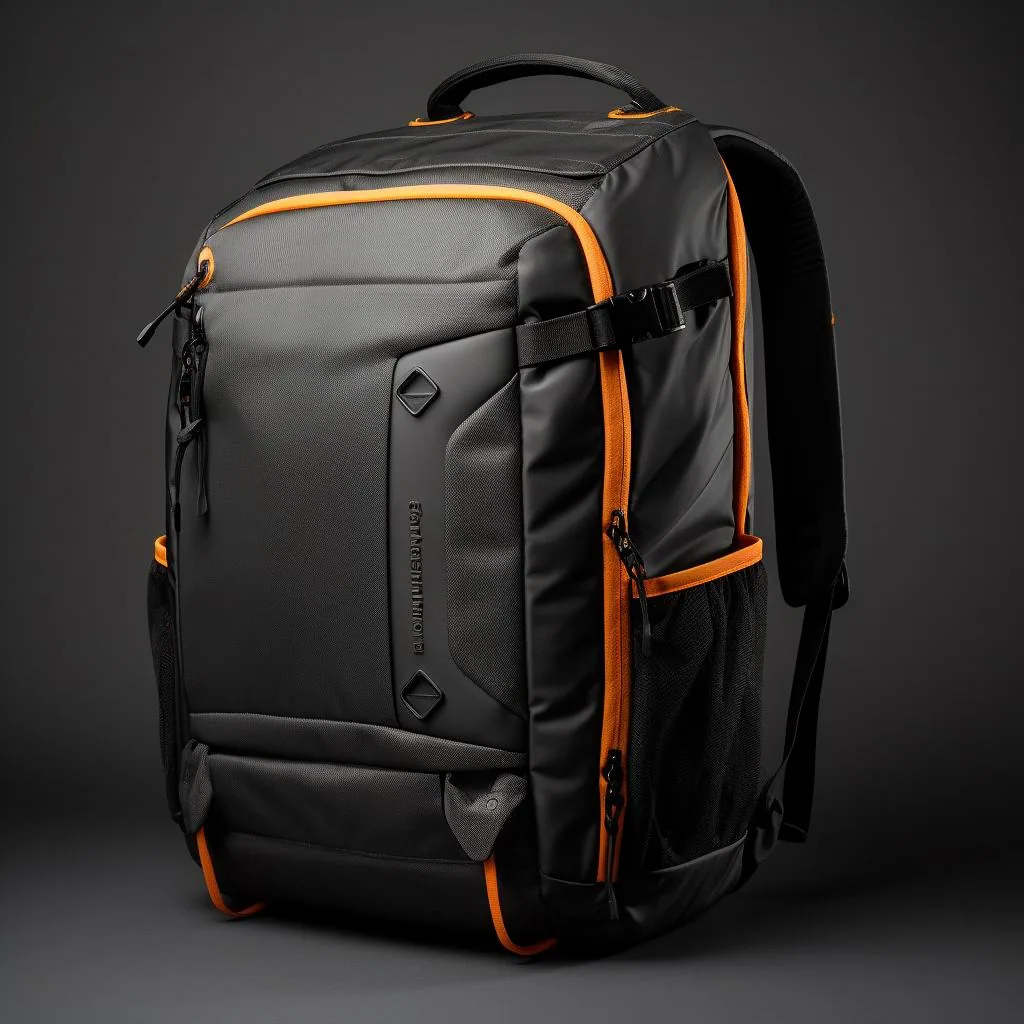
Air permeability through spacer fabrics is measured under ISO 9237, expressed as airflow velocity through the material at a fixed pressure drop. Three-dimensional spacer meshes used in suspension panels generally return 200-400 mm/s, while open cell foams and laminated linings often fall below 50 mm/s. That difference is real but frequently oversold: airflow only occurs when a pressure differential exists, which means it works while you walk and largely stops the moment you stand still on a platform with the pack loaded against your back. Side channels matter as much as the mesh itself, because a panel whose perimeter is sealed by harness stitching passes nothing regardless of how permeable the fabric is.
Geometry decides how much of that airflow you can use. A flat perforated-foam contact panel with 3-5 mm of relief barely separates the load from the torso, whereas a trampoline suspension holding 10-15 mm of air gap gives the panel somewhere to move air through, usually reducing perceived humidity at the interface by around 30-50%. The penalty is depth: pushing the load away from the spine increases the lever arm, so a suspended panel should pair with a firm hip belt and a load positioned high and close. Deep Ventilation without that correction simply makes the pack feel heavier at every step change.
- Look for a stated air permeability figure, not the word breathable on a hangtag.
- A 10-15 mm suspension gap works; anything under 5 mm behaves like contact padding.
- Check airflow is continuous front to back, with side channels unblocked by straps.
- Pair deep suspension with a load lifter angle near 45° to control the longer lever arm.
Drying Speed, Odour and Lining Hygiene
Odour control starts with how quickly the lining dries. A 300 g polyester lining holding 60-80 g of sweat takes six to ten hours to dry indoors in typical British summer conditions at 60% relative humidity, which means it never fully dries between two daily commutes. Antimicrobial finishes help early on, and their effect is quantified with tests such as the AATCC 100 assessment method, but the active chemistry degrades across roughly twenty to thirty wash cycles. The durable answer is structural: a light-coloured lining you can launder at 60°C, or a removable liner panel that can be turned out to air.
Behaviour matters as much as product design. Empty the pack fully on arrival, open every compartment wide and stand it upside down where air circulates, because closing a damp bag overnight is what establishes the bacterial population that later resists cleaning. Wash the pack every four to six weeks at 30°C with a mild, non-biological detergent and rinse twice; biological powders leave enzymes in the foam that continue generating smell. Avoid tumble drying above 40°C, since panel adhesives and printed logos soften well before the fabric is at risk. Films of lint trapped after washing are a common cause of sticking, so run every slider up and down while the pack is still damp and airing.
Hang a freshly soaked pack empty in a shaded room at 20°C. If the back panel is still damp after four hours, the lining will stay damp all summer regardless of any antimicrobial claim.
Ultraviolet Exposure and Fabric Selection
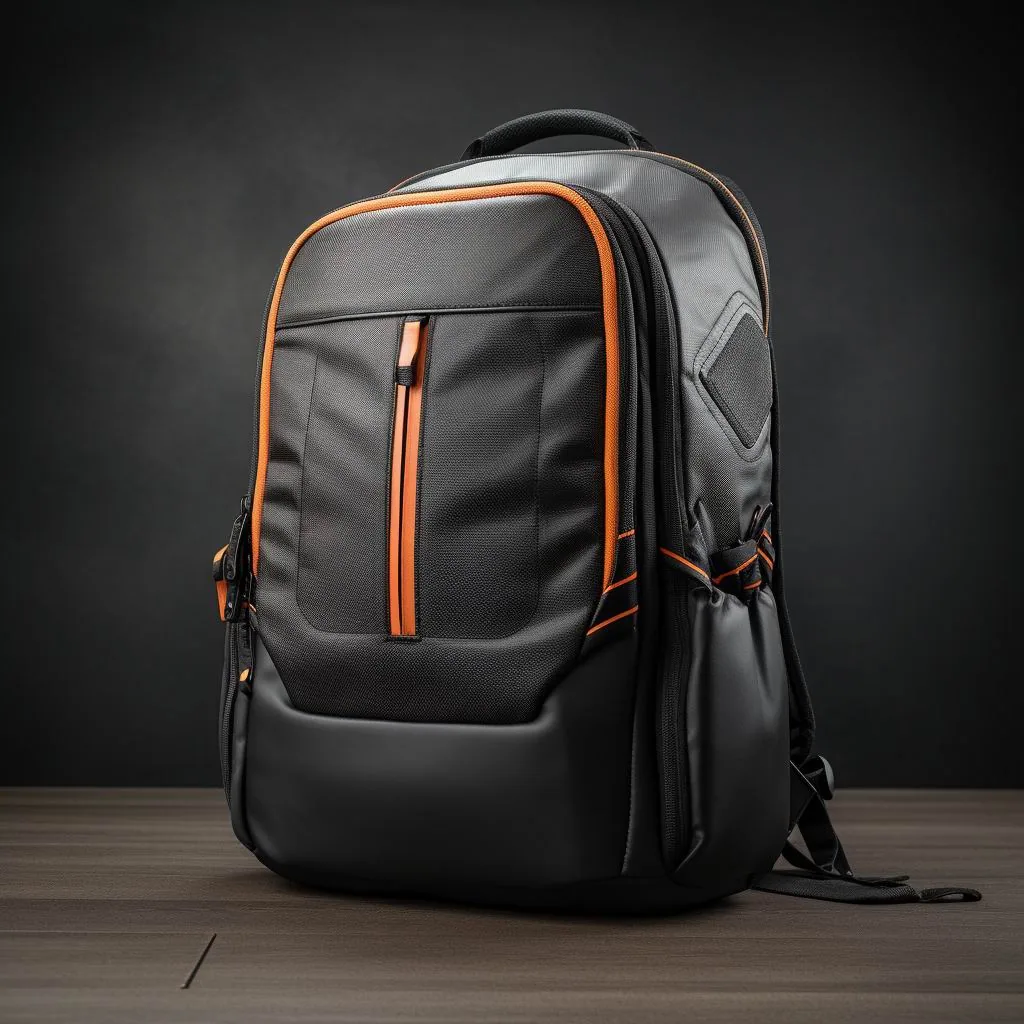
Colour change under summer sun is measurable, not subjective. Exposure testing under ISO 105-B02 rates fading on a blue-wool scale from 1 to 8, where grade 3 visible fading within a season and grade 4-5 should survive several years of daily commuting. Solution-dyed polyester, where pigment is added to the polymer before extrusion, outperforms piece-dyed nylon by roughly one full grade because pigment runs through the filament cross-section rather than sitting in an amorphous surface layer that ultraviolet light attacks first. Specifying UV-stabilised finishes and solution-dyed face yarns costs very little at nomination and cannot be retrofitted once a season of exposure has begun, so it belongs in the first tech pack rather than the revision.
Ultraviolet does more than fade colour. Prolonged exposure embrittles polyurethane backings, weakens printed transfers and accelerates surfactant loss from the top layer of webs and cords, so webbing strength falls long before colour change is noticeable. This is why racks of returned bags often show cracked strap edges and flaking coating rather than merely pale fabric. Choosing solution-dyed polyester with a UV-stabilised PU backing, avoiding dark printed logos on light panels where differential fading shows badly, and not storing a pack in direct sun behind car glass all extend usable life beyond the three-year mark. Display and commuting exposure combine, so check indicator results on two successive production lots rather than relying on a single certificate issued some years earlier.
Sun Cream, Sweat Salts and City Grime
One of the most common summer damage reports involves sun lotion rather than weather. Oil-based sunscreens migrate into polyurethane faces, plasticising the coating and leaving translucent yellow patches at strap contact points and anywhere hands are rested. The effect is cosmetic at first and structural later, because plasticised coating abrades faster. Wipe any contact area with a damp cloth the same day, keep tubes inside a lined pocket, and treat any fluorine-free re-proofing top-up as a maintenance step rather than a repair once transfer has occurred. Treat the affected area as damaged rather than stained, because once plasticiser migration starts no cleaning method restores the original coating structure underneath.
Airborne contamination is the second summer-specific issue, and it is a genuine planning factor for anyone commuting into larger conurbations. Daily variations in ozone and particulate levels are published through the UK air quality index maintained by DEFRA, and high-pollution days correlate with visible grime accumulation on dark synthetic faces and with faster degradation of some elastomeric coatings. Practically, it argues for a wipe-clean laminated base and mid-tone colourways: black shows every film of dust, while very pale shades show the shadow of every splash from a kerb. Checking published daily bands takes seconds and helps anyone planning a long walk through dense traffic decide whether to avoid the busiest routes altogether.
Lighter Kit and the Condensation Problem Nobody Mentions
Summer loads are genuinely smaller. No coat, gloves, hat or scarf typically removes 1.5-2.5 litres of bulkiest items from the daily carry, so a 26-30 L winter commuter frequently has 20-30% of its volume unused by July. That unused space is not neutral: an underfilled pack lets contents shift, straps must be cinched tight to control it, and the resulting shape presses more firmly against the back. Dropping to 18-22 L for the warm months, then packing deliberately rather than loosely, gives better comfort than any hardware upgrade. Packing cubes help here by holding shape inside a partially filled body, which keeps the load sitting where the harness can still control it properly.
Cold drinks introduce the opposite problem. A 500 ml bottle taken from a chiller and carried in an unlined side pocket sheds roughly 5-15 ml of condensate an hour in 22°C air at 65% humidity, which is enough to dampen a paperback or laptop sleeve over a single journey. Insulated neoprene or 3 mm foam sleeves cut that dramatically, and any bottle placed inside the main body belongs in a sealed wet pocket. The same logic applies to gym kit and swimwear: anything damp needs its own lined compartment, never shared airspace with electronics. Kitchen towel rolled inside the bottle sleeve on the hottest days absorbs the small amounts of condensation that any insulation eventually lets through.
- A typical summer carry is 3-5 litres lighter than winter but bulkier to organise because layers are absent.
- Drop from a 26-30 L winter volume to 18-22 L in summer to stop contents shifting.
- Expect 5-15 ml of condensation per hour from a chilled 500 ml bottle without a sleeve.
- Never leave the pack in a closed car on a sunny day: interiors above 60°C soften adhesives and stress lithium cells.
Platforms, Offices and Shoulder Contact
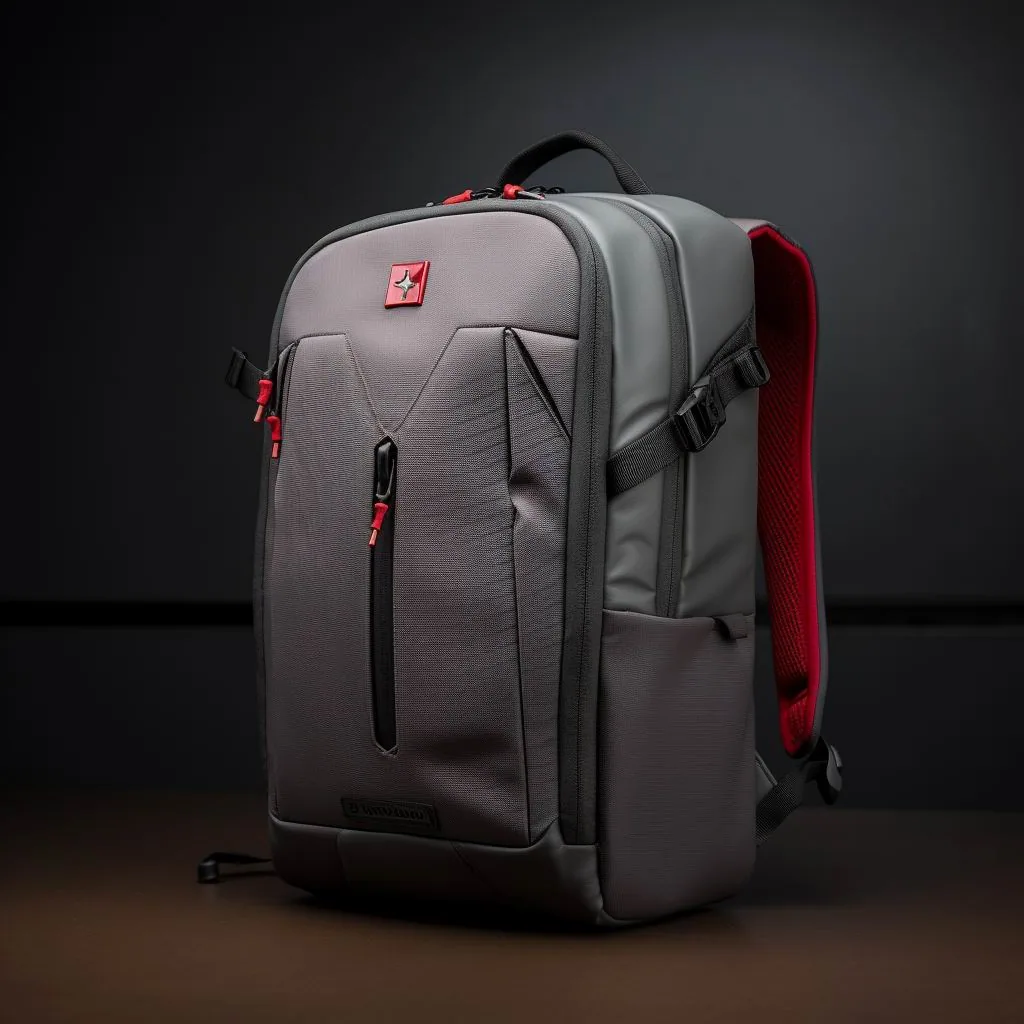
Summer commuting involves more unavoidable floor contact: waiting on warm platforms, standing in crowded carriages, sitting in a pub garden between train and home. A base panel should therefore be laminated rather than absorbent, ideally with a raised foot or a TPU skirt that keeps stitching off the ground. Dusty concrete transfers pigment onto pale webbing that no amount of brushing removes later, so dark or mid-tone webbing on the load path is worth specifying even when the body fabric is deliberately light. Feet or a raised TPU skirt cost pennies and keep base stitching clear of the damp film that forms on platform concrete during humid mornings.
Clothing contact is the other half of this. Sweat leaving salt stains on shirts follows the strap line, and dark piece-dyed webbing with poor perspiration fastness transfers dye into light cotton. Ask specifically about perspiration fastness rather than general wash fastness, since the two use different test liquors. Wider straps with lower dye load reduce transfer, a simple strap cover washable at 60°C solves it entirely, and hanging the pack rather than leaving it against a chair reduces the damp contact period that drives the staining in the first place. Strap covers washable at sixty degrees solve persistent transfer entirely and cost far less than replacing shirts across a single warm season.
The Summer Commuter Spec Sheet
Retailers describe summer packs as lightweight and breathable without ever quantifying either term. The rows below turn those words into values a supplier can confirm on one page. Two lines deserve particular attention because they are rarely printed: the lining drying time and the perspiration fastness grade of the webbing, both of which decide whether a bag is still tolerable in August rather than merely comfortable in April. Supplier literature rarely volunteers this data, which is itself diagnostic: a partner able to quote test numbers generally controls its supply chain well enough to repeat them. Ask for the figures before samples are cut rather than after approval, when changes become expensive and slow.
| Specification line | Target for UK summer | Failure symptom below target |
|---|---|---|
| Back-panel spacer air permeability | 200-400 mm/s, ISO 9237 | Shirt still damp twenty minutes after arrival |
| Suspension air gap | 10-15 mm with unblocked side channels | Pack feels heavier; no airflow when standing |
| Colour fastness to light | Grade 4 minimum, ISO 105-B02 | Visible fading within one season |
| Perspiration fastness of webbing | Grade 4 dry and wet | Dye transfer onto light shirts and collars |
| Lining drying time | Under 4 hours at 20°C and 60% RH | Persistent odour that survives washing |
| Base construction | Laminated or TPU skirted with feet | Grime absorption and stained stitching |
Two lines in that table deserve a note because they are rarely volunteered. Lining drying time is usually absent from supplier literature altogether, yet it governs whether a pack smells by August, and any buyer can measure it overnight with a soaked sample in a humid spare room. Perspiration fastness is the second: webbing that passes ordinary wash testing may still transfer dye onto light shirts once sweat is involved, because the test liquor differs. Requesting both at nomination costs nothing, and both are far cheaper to fix on paper than to discover after a season of preventable returns. Both figures belong on the same page as the fabric specification, where nobody can quietly overlook them at approval.
Programme Parameters for Own-Brand Summer Ranges
Summer ranges are usually tighter than winter ones: fewer colourways, lighter face fabrics and a greater reliance on printed rather than moulded branding to keep unit cost down. QUANZHOU JUNYUAN BAGS supports UK own-brand work from a sourcing and programme-management position, coordinating development across 4,950 m² of SGS-verified production floor space staffed by 137 colleagues over 7 production lines, and has done since 2014. Ordering starts at 500 pcs per style and colourway, so a three-colour summer drop of one 20 L body represents a deliberate commitment rather than a test. Mesh and spacer availability drives more schedules than fabric choice does, since popular three-dimensional structures sell out well ahead of peak production months.
Timing works forwards from the intended on-shelf month. Sample rounds take 6-10 working days for a standard commuter body and 12-15 working days with moulded back panels or custom mesh, with production following in 35-50 days. Goods are quoted FOB Xiamen against T/T 30/70 payment, and every shipment is sampled at AQL 2.5 following the switching rules within ISO 2859-1. For a May launch, that sequence generally requires a January departure, with air freight reserved only for late colourway additions. Buyers planning two summer drops should agree both at the outset, because booking a second slot inside the same window costs noticeably more than consolidating volume. Keeping the whole requirement in one order also keeps shade matching under a single dye lot.
Frequently Asked Questions
How much does a ventilated back panel actually reduce sweating?
Expect lower humidity at the panel rather than less sweat overall: spacer fabrics at 200-400 mm/s air permeability with a 10-15 mm suspension gap typically cut measured interface humidity by 30-50%. You still produce the same sweat, but it evaporates instead of pooling, so the shirt dries after arrival rather than staying damp for twenty minutes. It helps far less while standing still, since airflow depends entirely on movement generating a pressure differential.
What air permeability figure should I look for in back-panel mesh?
Ask for the result under ISO 9237, which measures airflow velocity through fabric at a fixed pressure drop. Three-dimensional spacer meshes commonly return 200-400 mm/s, while open cell foams and coated linings often sit under 50 mm/s. Anything published only as breathable without a figure should be treated as unverified. Insist that values are quoted at a stated pressure drop, because airflow figures are otherwise impossible to compare between suppliers.
Why does my backpack smell after a summer commute when it looks clean?
Bacteria metabolise sweat in warm, damp lining fabric, and that is what produces the smell. A 300 g lining holding 60-80 g of sweat can take six to ten hours to dry indoors, so it never dries between two daily commutes. Empty the bag fully, open every compartment, and wash every four to six weeks at 30°C without biological detergent.
Will sun cream damage my backpack fabric?
Yes, eventually. Oil-based sunscreen migrates into polyurethane faces, plasticising the coating and leaving translucent yellow patches where hands and straps rest. Wipe contact areas with a damp cloth the same day, keep the tube inside a lined pocket, and expect any affected area to abrade faster than surrounding fabric. Repeated exposure shortens coating life noticeably, so keep tubes inside a lined pocket and clean contact points promptly.
Does leaving a backpack in a hot car damage it?
Interiors routinely exceed 60°C in direct sun, which is high enough to soften panel adhesives, curl printed transfers and stress lithium cells inside electronics or power banks. Adhesive creep shows as bubbling between layers and cannot be reversed. Never store a pack behind car glass, and take a charged device out rather than leaving it in a sleeve. Interior temperature above 60°C also affects power banks and aerosols carried inside, so empty the pockets routinely rather than leaving anything behind.
Are light-coloured backpacks cooler to carry in summer?
Surface temperature differences of 8-12°C have been recorded between black and pale synthetic faces in direct sun, though that matters mainly for how hot the contents become, not for how hot your back gets, since the panel sits in shade. The trade-off against very pale shades is visible staining from dust films and kerb splashes, which is why mid-tone colourways usually age best.
How often should I wash a summer commuter backpack?
Every four to six weeks through the warm months works well, at 30°C with a mild non-biological detergent and a double rinse. Biological powders leave enzymes in foam that keep generating odour. Air dry out of direct sun, avoid tumble temperatures above 40°C, and recheck zips afterwards since caught fibres from the wash often cause early sticking. Thorough airing between washes matters at least as much as the washing itself for keeping bacterial populations under control.
Is there such a thing as a condensation-proof bottle pocket?
Not truly, but insulation reduces the problem sharply. A chilled 500 ml bottle in an unlined pocket sheds roughly 5-15 ml of condensate per hour at 22°C and 65% humidity, enough to dampen paper documents. A 3 mm neoprene or foam sleeve cuts that substantially, and a sealed wet pocket remains the right answer for anything carried inside the main body.
Which fabric holds colour best in strong sunlight?
Solution-dyed polyester performs roughly a full blue-wool grade better than piece-dyed nylon under ISO 105-B02, because pigment runs through the filament rather than sitting in a surface layer. Specify grade 4 minimum for daily commuting. Remember that ultraviolet also embrittles PU backings, so fading is rarely the first symptom you will notice on an older pack. Bonded and printed panels fade faster than the base cloth, so keep graphics small on any surface exposed to direct midday sun.
What capacity should a summer commuter backpack be?
Eighteen to twenty-two litres suits most warm-season commutes once coat, gloves and hat come out of the daily load, typically removing 1.5-2.5 litres of bulky items. Running a 26-30 L winter body half empty lets contents shift and forces straps to be cinched hard, which presses the panel against the back and defeats ventilation. Look for 18-22 litres with one clear main compartment rather than several small pockets you will never fill during summer months.
How long does a summer commuter range take from sample approval to delivery?
Allow 6-10 working days for first samples, extending to 12-15 working days where moulded panels or custom mesh are involved, then 35-50 days for production. Minimum order is 500 pcs per style and colourway, with FOB Xiamen pricing on T/T 30/70 terms and inspection at AQL 2.5. Book air freight only for genuine late additions, since peak-month rates erase margin quickly; move core volume by sea.
Build Summer Comfort Into the Specification
Warm-season performance comes from four decisions made well before a factory cuts cloth: how much air the spacer fabric passes, how quickly the lining releases moisture, how the face fabric resists ultraviolet light, and how much strap webbing touches clothing. Each can be written into a tech pack as a numeric target, which makes sample approval straightforward rather than subjective.
Development support covers spacer selection, panel geometry, colour fastness testing and pre-shipment inspection to AQL 2.5. Minimum order quantity stands at 500 pcs per style and colourway, sample rounds run 6-10 working days, and production schedules are planned on a 35-50 day cycle quoted FOB Xiamen with T/T 30/70 terms.
Email: service@junyuanbags.com
WhatsApp: +86 177 5002 0688