Best Backpacks for Snowdonia and Eryri Walks: Volume, Fabric and Load Numbers
For a day in Eryri (Snowdonia), the right pack is a 30-34 litre model weighing 1.0-1.3 kg empty, with a lid and storm collar rather than one long zip, a hip belt that carries 15-20% of the load, and a base fabric of 600D or heavier. Above 600 m the wind turns ordinary rain into horizontal spray, and every other decision follows from that: on the Welsh ridges it matters more than pocket count, brand name or colourway.
This guide applies that test to real ground - the Pen y Pass horseshoe, the Ogwen valleys, the long Llanberis slog - and gives the figures behind each recommendation: ascent per kilometre, suggested volume per route, a working weight budget and the fabric specifications that survive slate. The closing section converts the same specification into an own-brand programme, covering order quantity, sampling days and inspection terms as coordinated by QUANZHOU JUNYUAN BAGS.
Why Eryri Wears Packs Out Faster Than Lowland Hills
Two numbers separate Eryri from most British walking: how much height you gain per kilometre, and how hard the ground is on cloth. The Pyg Track climbs roughly 726 m from Pen y Pass in about 2.9 km, which is more than 240 m of ascent per kilometre and two to three times the gradient most walkers meet on southern lowland hills. Sustained gradient means a load rides steeply against the lumbar area and shoulder blades for hours, so any weakness in harness geometry, stitch placement or panel padding declares itself in the first hour rather than the third. Carrying that gradient also changes pacing: parties typically gain 300-350 m of ascent per hour rather than the 400 m planners assume on gentler ground, and every extra minute above 600 m extends exposure.
The second factor is exposure. Once you leave the shelter of the valleys, wind speed rises sharply with height, and published mountain forecasts exist precisely because conditions on the summits differ so much from those in the car park; in Wales those warnings come from the Met Office. A gust that registers as 20 mph in Llanberis routinely reaches 40-50 mph on the ridge, and at that speed rain no longer falls - it travels sideways and finds lid gaps, zip channels and needle holes that a valley shower would never trouble. Specify for the ridge, not the lay-by.
- Ascent per kilometre on the Pyg Track: about 240 m, against 60-90 m on a typical lowland hill day.
- Ridge gusts commonly double the valley-floor figure, so wind-driven rain is the norm above 600 m.
- Stone-pitched paths act like a rasp on the lower panels every time the pack is set down or scraped past rock.
- On the horseshoe both hands belong on the rock, so a load that shifts from side to side becomes a hazard rather than an irritation.
Litres by Route: Matching Volume to the Day
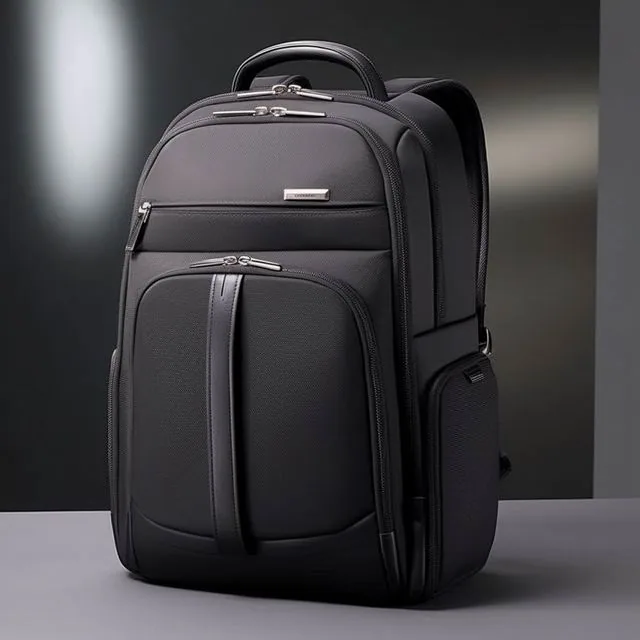
Volume here is not decided by distance but by the spare clothing and food needed to keep you safe above 600 m. Because that list barely changes between May and October, the litre figure hardly moves between an eight-kilometre circuit of Cwm Idwal and a thirteen-kilometre Snowdon horseshoe. What does change is how tightly that volume is compressed: on scrambling ground you want a slightly smaller bag filled to capacity rather than a big one run half empty, because loose contents migrate downwards and pull the centre of gravity away from your spine exactly when balance matters. A quick test settles it: fill the bag, lift it by the grab loop and shake once, because audible movement inside the body means the volume is wrong for the route.
A practical rule for Eryri: treat 22-26 litres as the summer figure and add 6-8 litres for the shoulder season, when gloves, hat, a second insulating layer and a larger first-aid roll come along. Extension collars earn their keep here. A 30 litre pack with a 6 litre collar runs at 26 litres on an August day and stretches to 34 litres in late October without distortion, whereas a fixed-volume 32 litre lid pack leaves dead air all summer and needs its compression straps wound down so hard in winter that the side panels collapse into folds. Extension collars also let one model cover both seasons, which is why they appear on most upland-specific packs sold in Britain.
| Route | Distance | Ascent | Suggested volume |
|---|---|---|---|
| Devil's Kitchen and Cwm Idwal circuit | 8 km | 480 m | 22-26 L |
| Tryfan north ridge and Glyder Fach | 10 km | 850 m | 26-30 L |
| Pyg Track up, Miners' Track down | 9 km | 730 m | 28-30 L |
| Pen y Pass horseshoe with Crib Goch | 11 km | 900 m | 28-32 L |
| Snowdon horseshoe from Pen y Pass | 13 km | 1,000 m | 30-34 L |
| Llanberis path there and back | 14 km | 980 m | 30-34 L |
The Weather Envelope: Wind-Driven Rain at Height
Coated pack fabric is usually sold on a hydrostatic head figure, tested by the water penetration method set out in ISO 811, and upland models typically quote between 1,000 mm and 3,000 mm. Read that number with care: it measures clean fabric under a static column, not the same fabric under hip belt pressure, pack compression and a headwind for three hours. Anything below 1,000 mm will begin to wet through once the face cloth is pressed and flexed, and once the coating fails to hold water out the base and side panels absorb several hundred grams, which arrives as extra weight rather than extra comfort.
Chain layouts matter more than the coating number. The widest failure point on a lidded pack is the 8-12 mm gap where the lid meets the body, so look for a storm collar of at least 80 mm, drawn in by a cord rather than left as a loose flap. Main-opening zips should be reverse-coil with a covered garage at the top end, and taped or bound seams should run along the inside of every panel that faces upwards when the pack is worn. Fabric treatment also decays: when water stops beading and starts soaking in, renew the finish rather than blaming the coating.
- Target a hydrostatic head of 1,500 mm or better for the body fabric, tested to ISO 811.
- Require a storm collar of 80-100 mm; a lid alone lets rain and spindrift through the join.
- Specify reverse-coil zips with covered ends; a straight metal chain is an obvious water path.
- Check that internal seams are bound or taped, especially along the base and lower side panels.
Scrambling Terrain: Load Position and Free Hands
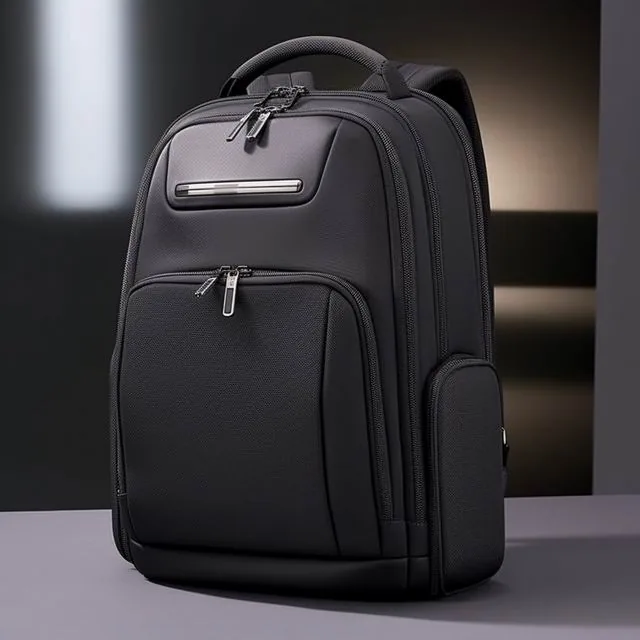
Crib Goch, Tryfan's north ridge and Bristly Ridge are not scrambles you do with a swinging load. Three dimensions matter. Keep the densest 2 kg of the contents within roughly 100 mm of the back panel so that when you lean outwards from a slab the mass does not lever you off balance. Keep total depth at or below 250 mm, because protruding volume catches on rock during chimney moves and gates at stiles. Keep every strap, compression cord and haul loop wound tight, since loose webbing is the part of a pack that most often snags on a granite edge.
Harness detail decides how much of that actually happens. Shoulder straps of 60-70 mm with medium-density foam hold their shape better than wide, soft straps that roll under load, and a hip belt with 60 mm of padding transfers enough weight to keep your shoulders free for balance corrections. Routing the hydration hose over the shoulder rather than under a pack strap lets you drink without breaking hand contact with rock, and hip belt pockets sized for a folded map and compass keep the two most-used items out of the main body. Check that those pockets sit behind the elbows rather than under them, since anything forward of the hip bone limits arm reach on steep moves.
Load the pack to 6.5 kg, tighten everything, then climb a flight of stairs two at a time for five minutes and step sideways onto a 300 mm kerb repeatedly. If the pack rotates on your back at the kerb steps, the harness is too loose, the load is too far out, or the volume is too large - fix it before the ridge, not on it.
Slate, Scree and Base Panel Specifications
Abrasion resistance of textiles is measured on a Martindale machine under the ISO 12947 series, though outdoor labels rarely publish a cycle count for packs. When they do not, fabric mass is a fair proxy for survival on Welsh rock: a 600D polyester at roughly 300 g/m2 will last several seasons of pitching against slate, while a 210D ripstop liner-weight cloth tends to show threads within twenty days of regular use on the paths above Ogwen. Add the third factor: sharp rhyolite edges abrade and then cut, so tear strength counts alongside abrasion. Reading fabric mass from the spec sheet is quicker than waiting on laboratory results, and it correlates well with how the cloth survives a season on Welsh rock.
Geometry protects the base better than denier alone. Look for a double-layer bottom panel with the closing seam raised 5-8 mm off the ground so stitching never runs along the wear line, reinforced corners that carry no exposed foam, and strap roots bar-tacked back onto at least two panels. A base that curves upward at the front and rear keeps contact with rock to a narrow strip. Packs with a replaceable scuff panel are worth the small premium: after two seasons the cheapest thing to renew is a bolt-on base plate, not the entire shell. Treat bar-tacks as inspection items too: a lifted bar-tack at a strap root is the earliest sign that a load path is failing.
- Body fabric: 420D minimum, 600D preferred; heavier does not always mean better if it costs 300 g.
- Base: two layers, seam lifted off the wear line, corners reinforced with no exposed foam cells.
- Strap roots bar-tacked across two panels rather than stitched into one.
- Expect 600D to outlast 210D by several multiples on stone-pitched paths.
Water, Warmth and Navigation Kit
Plan 1.5 litres for a summer horseshoe and 2 litres when the forecast shows a warm day on a south-facing descent, because the Miners' and Rhyd Ddu paths offer little shade. From October to March invert that habit: swap the bladder for a wide-mouth insulated bottle carried in a side pocket, as reservoir hoses freeze above 900 m even on days that start mild in the valley. Whatever the season, anything you drink from a stream should be treated first, since the Welsh uplands carry grazing animals well above the intake fences. Sodium or chlorine dioxide tablets weigh a few grams and settle the argument about whether a particular pool is safe to drink from.
Navigation in Eryri is not a formality. Cloud base sits below the summits on a large share of days, and path junctions on the Glyder plateau are separated by fields of bare rock with no distinguishing features, so carry map, compass and a charged device with the route downloaded rather than relying on a phone signal. Much of the high ground is mapped as statutory open access land, created by the Countryside and Rights of Way Act; the current rules and responsibilities are summarised by the government guidance on open access land. Overnight stays above the 600 m line are dealt with separately under local wild camping agreements.
- Water: 1.5 L summer, 2 L hot days, insulated bottle plus treatment tablets outside summer.
- Shell jacket and trousers, plus one insulating layer even in August.
- Head torch with spare cells - horseshoe timings slip by an hour in wind.
- Map, compass and downloaded route; do not rely on a signal.
- First-aid roll with a blister kit and a foil blanket.
- Hat and gloves between October and May, regardless of valley temperature.
A Weight Budget That Holds Under 6.5 kg
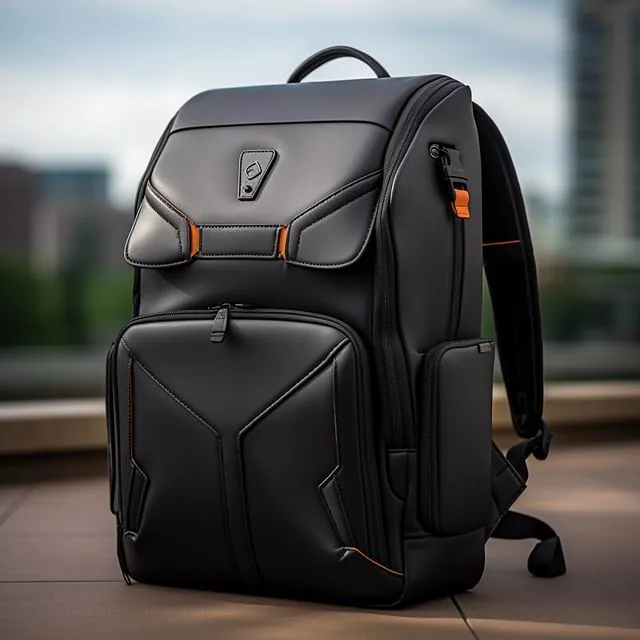
Most walkers overpack on the long ascents because the gradient suggests a long expedition rather than a summer day out. Write the list down before you leave the car and put actual gram figures against it. A typical September horseshoe with everything required comes to roughly 6.2 kg including the pack itself, and anything above 7.5 kg starts to change your foot placement on steep ground. Once the total is known, trimming usually comes from the clothing compartment, not the safety equipment. Weigh the clothing heap on its own before packing, because most groups bring 650-900 g of insulation they never put on, having dressed for the car park rather than the summit.
| Item | Grams |
|---|---|
| 30-34 L pack, empty | 1,200 |
| Shell jacket and trousers | 720 |
| Insulating layer and fleece | 650 |
| Water, 1.5 litres | 1,500 |
| Food and flask | 900 |
| First aid, blister kit, foil blanket | 300 |
| Map, compass, head torch, phone | 330 |
| Hat, gloves, spare socks | 250 |
| Total including pack | 6,350 |
Two halves of one decision follow from that table. If the pack arrives at 1,600 g rather than 1,200 g, either buy lighter elsewhere or accept the extra 400 g on your shoulders for seven hours; saving 400 g of shell fabric is usually cheaper than saving 400 g of frame, and safer than cutting food or warmth. Conversely, if your list comes in at 5 kg, resist the temptation to fill the remaining litres - compress it, because a tightly packed 30 litre bag carries far better on steep ground than a slack 34 litre one. Compression, in other words, is a performance feature rather than a way of making a bag physically smaller.
Spec Sheet: What to Write Down Before Buying
Turning those requirements into a checklist keeps purchases honest. Everything below is measurable at home or in a shop: volume can be checked with a fill test, strap dimensions with a tape measure, seam treatment by looking inside the body, and empty weight on kitchen scales. Anything a retailer cannot tell you is a reason to keep looking, because the same six parameters explain most of the difference between a pack that lasts eight seasons of Welsh hill days and one that fails in the third. Print the checklist and take it into the shop; measured parameters compare far more honestly than marketing language about comfort.
| Parameter | Target for Eryri day walking |
|---|---|
| Volume | 30-34 L, extension collar preferred over fixed volume |
| Empty weight | 1.0-1.3 kg |
| Body / base fabric | 420D-600D, hydrostatic head 1,500 mm or better |
| Closure | Drawcord under a lid with an 80-100 mm storm collar |
| Shoulder straps | 60-70 mm, medium-density foam |
| Hip belt | Padded, 60 mm, load-bearing rather than decorative webbing |
| Depth at the base | At or below 250 mm for scrambling terrain |
| Extras | Axe loops, hydration sleeve, rain cover stored low and clipped |
Two features deserve a veto rather than a preference. Reject any pack whose hip belt is a strip of webbing stitched to the body with no padding, because it will roll and the load will settle onto your shoulders for the whole descent. Reject base panels with exposed closed-cell foam at the corners, because once the outer fabric is holed by rhyolite, that foam becomes the next thing to fail and cannot be repaired in a shop. The same reasoning rules out lid pockets lined with exposed open-cell foam, which stay wet for days after one afternoon on the Glyderau.
Turning the Spec Into an Own-Brand Eryri Range
Retailers building their own Welsh upland line usually start from this same spec sheet and then adjust panel colour, lining and trim. Ordering begins at 500 pcs per style and colourway, and the first prototype of a day pack built to this construction takes 6-10 working days; add 12-15 working days when the design needs a moulded framesheet, a bonded storm collar or an unusual hardware set. Bulk production then runs 35-50 days from gold-seal approval, quoted FOB Xiamen against T/T 30/70 terms. The single largest cost lever is hardware specification: stainless fittings add unit cost but reduce warranty returns across the following two seasons.
Quality is defined before the fabric is cut rather than afterwards. Pre-shipment inspection is carried out to AQL 2.5 under ISO 2859-1, with a separate check on the items that fail hardest in Welsh conditions - base seam treatment, bar-tack placement at strap roots and zip garage coverage. QUANZHOU JUNYUAN BAGS has coordinated programmes along these lines since 2014, running schedules through 4,950 m2 of SGS-verified production floor space staffed by 137 colleagues across 7 production lines. Capacity planning follows the same logic, with autumn launches needing fabric booked and cut well before retailers begin merchandising for the following spring.
- Minimum: 500 pcs per style and colourway.
- Sampling: 6-10 working days; 12-15 working days for complex builds.
- Bulk: 35-50 days after approval, FOB Xiamen, T/T 30/70.
- Inspection: AQL 2.5 under ISO 2859-1, plus seam and bar-tack specific checks.
Frequently Asked Questions
What size backpack do I need for walking up Yr Wyddfa (Snowdon)?
Plan on 30-34 litres for the standard Llanberis or Pen y Pass routes, which run between 9 and 14 km with 730-980 m of ascent. That figure covers shell clothing, one insulating layer, 1.5 litres of water, food and safety kit without leaving dead air. If you own a 28 litre pack and your kit list is disciplined, it will work in summer only, not in the shoulder season.
Is a 25 litre daypack enough for a day in Snowdonia?
For a Cwm Idwal or Devil's Kitchen circuit in warm weather, yes - those routes are around 8 km with under 500 m of ascent and keep you within a short descent of shelter. Anything beyond that, including Tryfan and the horseshoe, needs 26-30 litres because the same emergency clothing comes along regardless of distance. Under-filling is only a problem if you then leave the waterproofs behind.
Do I need a waterproof backpack or just a rain cover in Eryri?
A rain cover handles vertical rain and costs almost nothing in weight, which is fine below 600 m. Above that, wind drives water horizontally and lifts covers from the front of the pack, so integrated waterproofing plus a drawcord closure and storm collar does more useful work. The most effective combination is a coated body fabric tested to ISO 811 and a cover kept as a second layer on genuinely wet days.
How heavy should my pack be for a scramble up Crib Goch?
Target 5-6 kg including the pack, and certainly no more than 6.5 kg. Every additional kilogram is felt hardest when you are lifting with your hands on rock rather than bracing with poles. Compressing that weight high and within 100 mm of the back panel matters more than the absolute figure, so prioritise a dense, tight load over a lighter but loosely packed one.
What fabric denier survives slate paths in Snowdonia?
600D is the practical floor for the base and lower panels, with 420D acceptable on the upper body where abrasion is rare. Denier is only part of the answer: seam placement decides when a pack fails, so insist on base seams raised off the wear line and reinforced corners. Abrasion behaviour can be assessed under the ISO 12947 Martindale methods if you need a comparable figure for sourcing.
Are hip belts worth having on a 30 litre daypack?
Yes, provided the belt is padded and genuinely load-bearing. A webbing-only belt does almost nothing in wind and can slide up over your hips on steep ground. A padded belt taking 15-20% of a 6 kg load removes that weight from your shoulders for several hours, which you feel most on descents when your knees and lower back are already working hard.
Can I use one backpack for Eryri in both summer and winter?
Yes, if it has an extension collar and external axe loops. Summer needs about 24-26 litres; winter adds insulating layers, gloves, hat, spare cells and sometimes a torch that stays on, pushing the requirement to 32-35 litres. A single 30 litre pack with a 6 litre collar covers both seasons better than two specialist bags for most walkers. Check that your summer list still fits beneath the lid collar before assuming one bag can serve both roles.
What is the minimum kit for the Snowdon horseshoe?
Shell jacket and trousers, one insulating layer, hat and gloves, 1.5 litres of water, food, a head torch with spare cells, map and compass, a small first-aid roll with blister treatment, and a phone with the route downloaded. Expect that list to weigh about 6 kg once the pack itself is included. Leave non-essential items such as spare boots, books and full-size cameras in the car.
How much water should I carry on the Pyg Track?
Carry 1.5 litres for a standard summer ascent and 2 litres for hot days or riders struggling with the gradient. There are streams around Clogwyn but livestock grazes freely above the intake, so treat anything you draw. Between October and March use a wide-mouth insulated bottle instead of a bladder, because exposed hose freezes at height even when the valley day is mild.
Are there rules about where I can walk in Eryri?
Large areas of the massif are mapped as open access land under the Countryside and Rights of Way Act 2000, which gives a right to walk on foot but also sets responsibilities around livestock, nesting birds and closed periods. Check the government guidance on open access land before you plan a route off the main paths. Field boundaries, gardens and active inbye land remain out of bounds, and the Countryside Code still applies everywhere else.
How do I stop my backpack leaking at the lid in heavy rain?
Fit a storm collar rather than relying on the lid fabric, and keep the drawcord tightened so the mouth forms a small aperture rather than a flat opening. Check that the collar is at least 80 mm deep and that its cord exits at the front where you can reach it in gloves. Finally, store the pack with the opening downwards on wet days, since water held in the lid will otherwise find the seam.
What does it cost to sample a private-label Welsh hill pack?
Cost depends more on construction than on capacity. A straightforward 30 litre construction is normally sampled in 6-10 working days, while moulded framesheets, bonded storm collars or custom hardware extend that to 12-15 working days. Ordering starts at 500 pcs per style and colourway, bulk runs 35-50 days after approval, and pricing is quoted FOB Xiamen against T/T 30/70 with inspection at AQL 2.5.
Translate This Spec Into Your Own Range
The numbers above - 30-34 litres, a 600D base, an 80 mm storm collar, harness straps at 60-70 mm - are enough to brief a development conversation without another round of guesswork. Bring the route list you care about, target landing cost and intended retail price, and the specification can be costed against real fabric and hardware options.
QUANZHOU JUNYUAN BAGS coordinates that development work, moving from tech pack through prototype, gold seal and bulk inspection, with sampling in 6-10 working days for standard builds and 12-15 working days for complex ones, from 500 pcs per style and colourway, shipped FOB Xiamen.
Email: service@junyuanbags.com
WhatsApp: +86 177 5002 0688