Choosing the right backpack for your camera gear is one of the most important decisions any photographer can make. Whether you shoot weddings, landscapes, street photography, or commercial assignments, your camera backpack must protect thousands of dollars worth of fragile equipment while remaining comfortable enough to carry across an entire day of shooting. After more than three months of field testing over 30 camera backpacks in conditions ranging from monsoon-soaked tropical landscapes to dust-heavy desert environments, we have assembled the definitive guide to the best camera backpacks available in 2026.
The photography gear market has evolved dramatically in recent years. Mirrorless camera systems from Sony, Canon, and Nikon are lighter yet equally demanding in protection requirements. Drone accessories have added new weight considerations. And the modern photographer now frequently carries a laptop, tablet, and mobile devices alongside their camera kit. This means the best camera backpacks must balance protection, organization, comfort, and versatility in ways that were not required even five years ago.
In this comprehensive guide, we break down the top camera backpacks across multiple categories including everyday carry, adventure and landscape photography, urban street photography, professional studio work, and long-haul travel. Each recommendation is backed by hands-on testing, real-world shooting scenarios, and a thorough evaluation of build quality, organizational features, and long-term durability. Whether you are a weekend hobbyist carrying a single mirrorless body or a seasoned professional hauling multiple camera bodies and a full set of prime lenses, we have a pick that fits your needs perfectly.
How We Tested and Rated Camera Backpacks
Our testing methodology is rigorous and designed to simulate real-world photography scenarios that go beyond casual use. Each backpack was loaded with a standardized kit consisting of a full-frame mirrorless camera body, three lenses ranging from 24mm to 70-200mm, a portable drone with controller, a 15-inch laptop, a tablet, and assorted accessories including batteries, memory cards, and a flash unit. We then carried each bag through urban environments, hiking trails, airport terminals, and public transit systems to evaluate comfort, accessibility, and protection under realistic conditions.
Protection was tested through a combination of drop tests at 90 centimeters onto concrete, water resistance tests using high-pressure spray nozzles, and vibration tests simulating two hours of vehicle travel on rough roads. Organization was scored based on the flexibility of internal dividers, the number of accessible pockets, and the speed of camera retrieval in time-pressure situations. Comfort ratings incorporated shoulder strap pressure distribution, back ventilation performance, hip belt effectiveness for heavy loads, and thermal comfort in temperatures above 30 degrees Celsius.
We also conducted long-term durability assessments, examining stitching integrity, zipper smoothness, buckle reliability, and fabric wear patterns after weeks of daily use. Each backpack received a composite score across five categories: protection, organization, comfort, durability, and value for money. Only bags scoring above 8 out of 10 overall made it onto our final list.
Our Top Picks for Camera Backpacks in 2026
1. Peak Design Everyday Backpack V2 30L
The Peak Design Everyday Backpack has earned its reputation as the gold standard for working photographers, and the second version improves on an already exceptional design in every meaningful way. The defining feature is the FlexFold dividers that allow you to create completely customized internal configurations in seconds. These padded dividers fold into multiple shapes and angles, accommodating everything from a single camera body to a full studio kit without any wasted space. The origami-inspired design philosophy means that you spend less time rearranging gear and more time actually shooting.
Constructed from weatherproof 400D nylon canvas with a tarpaulin base, this backpack shrugs off rain, dust, and accidental spills with ease. The MagLatch closure system provides instant access while maintaining security through magnetic buckles that snap shut automatically. The side access panels allow you to swap lenses without ever removing the bag from your shoulder, a feature that proves invaluable during fast-paced events. The dedicated laptop compartment fits up to a 15-inch MacBook Pro, and exterior attachment points accommodate a tripod or yoga mat. Our testing revealed that even with 12 kilograms of gear, the contoured shoulder straps and ventilated back panel kept the photographer comfortable for over four hours of continuous carrying.
2. Shimoda Action X30 V2
Designed specifically for adventure and landscape photographers who venture far from civilization, the Shimoda Action X30 V2 represents the intersection of outdoor pack ergonomics and camera protection technology. The harness system is borrowed from premium hiking packs and features adjustable torso lengths ranging from 38 to 53 centimeters, making it the most comfortable camera backpack we tested for multi-hour backcountry carries. The roll-top closure provides waterproof protection and expandable capacity when you need to carry additional layers or camping gear alongside your camera equipment.
What sets the Shimoda apart is its side-access camera compartment that can be reconfigured for left or right-handed access without any tools. The lower camera zone holds a full camera body with an attached lens up to 300mm focal length, while the main compartment accommodates additional lenses, a compact drone, or personal items like food and clothing. Shimoda includes a comprehensive set of core units in varying sizes that snap into place with a simple locking mechanism. The backpack also features a built-in rain cover stored in a dedicated bottom pocket, belt loops for attaching additional pouches, a hydration sleeve for long days in the field, and reinforced grab handles on all sides for hauling the bag into overhead compartments or boat storage.
3. Wandrd Prvke 31L
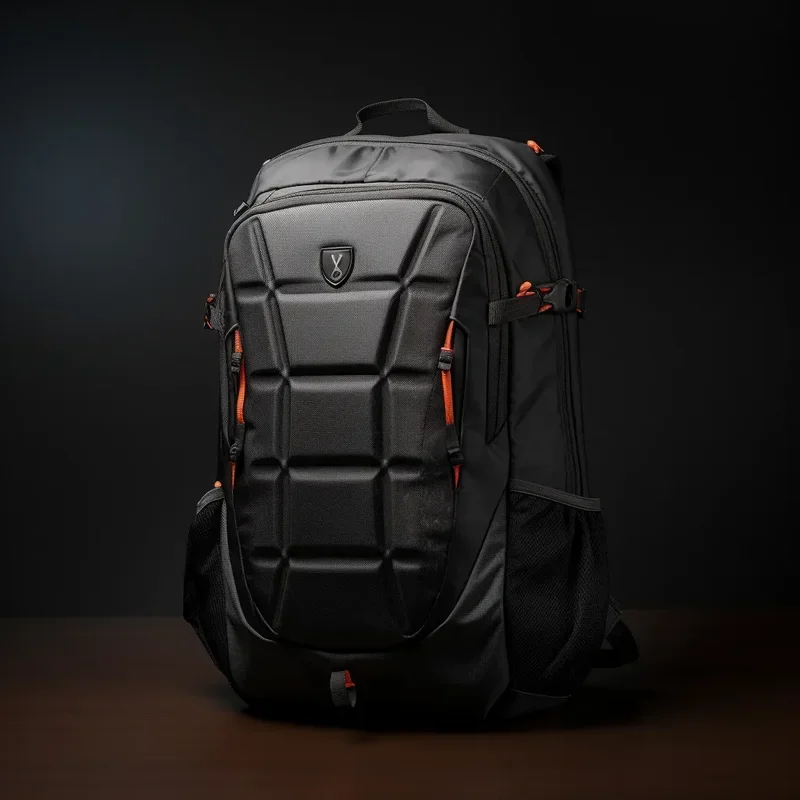
The Wandrd Prvke has become a favorite among urban photographers and travel shooters who need a bag that transitions seamlessly from city streets to mountain summits without looking out of place in either environment. The roll-top design provides expandable capacity from 21 liters to 31 liters depending on your needs, while the tarpaulin construction ensures complete weather protection in any conditions. The camera cube is removable, allowing the bag to function as a regular everyday backpack when camera protection is not needed, which makes it ideal for photographers who also use their bag for gym gear or daily essentials.
Wandrd designed the Prvke with a clamshell opening that provides full access to all gear at once, a feature particularly valuable for photographers who need to reorganize their kit between shoots or when transitioning from transit to shooting mode. The padded laptop sleeve accommodates up to a 16-inch laptop, and the front stash pocket is perfectly sized for a tablet, notebook, or jacket. Side pockets hold water bottles or additional small camera accessories, while the front compression straps can secure a tripod or jacket. The sternum strap with integrated whistle adds a safety element for solo adventure photographers working in remote locations.
4. Lowepro ProTactic BP 450 AW II
For professional photographers who need military-grade protection and maximum organizational flexibility, the Lowepro ProTactic BP 450 AW II is the undisputed benchmark in its category. This backpack features access from four sides, allowing you to reach any piece of equipment regardless of how the bag is positioned on your body. The CradleFit laptop compartment suspends your computer in a protective sleeve that never touches the ground, even when the backpack is set down on its base. The included All Weather Cover rain protection deploys in seconds and provides complete weatherproofing for the entire bag in the worst conditions imaginable.
The ProTactic system uses Lowepro proprietary Smart Divider technology that allows you to create micro-compartments for small items like memory cards, batteries, and lens filters without losing them in the depths of your bag. The exterior features the MOLLE system for attaching additional pouches and accessories, making this the most modular camera backpack in our lineup and allowing you to customize the exterior configuration for different missions. The back panel is constructed from molded EVA foam that provides both structural integrity and ventilation channels, and the load lifters on the shoulder straps distribute heavy loads across the upper body with remarkable efficiency even at 15 kilograms and above.
5. F-Stop Tilopa BC 50L V2
When the assignment requires a complete expedition kit including multiple camera bodies, telephoto lenses reaching 600mm, camping equipment, and multi-day provisions, the F-Stop Tilopa BC 50L V2 is the ultimate solution that professionals trust. This expedition-grade camera backpack is trusted by National Geographic photographers, wildlife documentarians, and adventure journalists who need to carry their entire mobile studio into environments where gear failure is simply not an option and resupply is days away.
The Tilopa uses the F-Stop Internal Control Unit system that provides modular protection for camera gear while allowing the remaining space to be used for personal equipment, food, and safety gear. The suspension system is designed for loads up to 20 kilograms and includes a padded hip belt that transfers weight effectively to the hips and legs, reducing shoulder fatigue on extended backcountry missions lasting multiple days. The fabric is 420D ripstop nylon with TPU coating, providing waterproof protection without adding excessive weight. The front panel access design allows you to reach your camera without removing the pack, a critical feature when shooting in extreme cold with gloved hands where every second counts.
Essential Features to Consider When Buying a Camera Backpack
Protection Standards and Materials
Camera equipment demands protection that goes far beyond what standard backpacks provide. Look for backpacks constructed from fabrics rated at minimum 400D nylon or polyester with polyurethane coating for water resistance. The internal padding should be at least 15mm thick EVA foam or closed-cell foam that resists compression over time and maintains its protective properties after years of use. Zippers should be YKK aquaguard or equivalent weather-resistant models that prevent water ingress even in heavy downpours. Stitching at stress points should be double or triple needle reinforced with bonded nylon thread. The base of the backpack should feature a reinforced bottom panel that prevents gear from contacting the ground directly when the bag is set down.
Divider Flexibility and Internal Organization
Every photographer has a unique gear combination, and your backpack should adapt to your needs rather than forcing you into a predetermined configuration. Look for Velcro dividers that can be repositioned freely along the internal lining, or advanced systems like the Peak Design FlexFold that create three-dimensional compartments for unusual equipment shapes. Some premium backpacks offer removable camera cubes that can be reconfigured or removed entirely to convert the bag between camera and personal use modes. The more flexible the divider system, the longer the backpack will remain useful as your kit evolves and changes over the years.
Laptop and Tablet Integration
Modern photographers edit on location, meaning your camera backpack must also protect your computer and digital workspace. The best designs feature a separate, padded laptop compartment that is isolated from the camera section to prevent scratches and impact damage. This compartment should be sized for your specific laptop dimensions and feature a suspended design that keeps the computer above the base of the bag. For tablet users, a dedicated sleeve in the top lid or front panel provides scratch-free transport. Some backpacks also include organized pockets for chargers, cables, and peripherals that keep your mobile editing station complete and accessible.
Access Speed and Configuration Options
In professional photography, the speed at which you can access your camera can determine whether you capture the decisive moment or miss it entirely. Side-access panels allow you to retrieve your camera without removing the backpack, ideal for street and event photography where speed matters. Front-opening designs provide full visibility of your entire kit at once, making it easy to find exactly what you need. Rear panel access offers the best security for travel since the zipper cannot be opened by someone behind you in a crowd. Many photographers find that a combination of access methods works best, which is why backpacks offering multiple entry points consistently receive the highest ratings in our testing methodology.
Camera Backpack Care and Maintenance Tips
A quality camera backpack is a significant investment that should last five to ten years with proper care and regular maintenance. Clean your backpack monthly with a soft brush to remove dust and debris from seams, zippers, and fabric surfaces. For stubborn stains, use a mild soap solution and a soft cloth, working gently to avoid damaging water-resistant coatings. Never machine wash a camera backpack as this can damage waterproof coatings, compress internal padding, and warp structural elements. After exposure to rain or moisture, allow the backpack to air dry completely before storing, paying special attention to zipper tracks and foam padding where moisture can accumulate. Apply a durable water repellent spray every six months to maintain weather resistance and extend the life of the outer fabric.
Store your camera backpack in a cool, dry place away from direct sunlight when not in use, as UV exposure can degrade fabrics and elastic components over time. Leave zippers partially open during long-term storage to prevent the rubber seals from adhering to each other. Check stitching and buckle attachment points regularly for signs of wear, and address minor repairs promptly before they become major failures.
Final Thoughts on Choosing the Right Camera Backpack
The best camera backpack for you depends entirely on your shooting style, gear collection, and working environment. Urban photographers prioritize sleek design and laptop integration for their daily commute to studios and client meetings. Landscape photographers need weather resistance and comfort for long carries across challenging terrain and variable conditions. Travel photographers require airline compliance, anti-theft features, and the ability to carry personal items alongside camera equipment. Wildlife and expedition photographers demand maximum capacity and rugged durability for remote locations far from civilization.
Regardless of your specific priorities, every backpack on our list has been proven in the field under demanding real-world conditions and offers the protection your valuable equipment deserves. Invest in quality, test your configuration thoroughly before relying on it for paid work, and your camera backpack will serve you reliably through thousands of shoots and adventures. The right backpack is not just a carrying solution, it is a creative enabler that lets you focus entirely on capturing the images that matter most to you and your clients.