Best Backpacks for Surveyors and Site Inspectors: Instrument Protection, Rigidity and Site Compliance
A surveyor's bag is specified around instruments rather than clothing. For most UK site inspectors the working answer is a 32-38 litre pack with a rigid base, a padded cradle that holds a GNSS rover or laser measure without movement, and a hip belt that shifts 30-40 per cent of an 11-14 kg load onto the pelvis. Add compliant fluorescent panelling and most principal contractors will pass it at induction.
This guide covers the decisions behind that answer: the masses to plan for, the abrasion and water ingress figures worth quoting, how tripods and staffs attach without wrecking your balance, and what to check at sample approval. QUANZHOU JUNYUAN BAGS develops site-survey programmes starting at 500 pcs per style and colourway, with sampling in 6-10 working days and 12-15 for complex builds.
What a Site Inspector Actually Carries Every Day
Two survey disciplines create very different loads, and confusing them is the most common reason a first specification fails. A measured building survey usually means a laser distance meter, a tablet or slim laptop, a clipboard and folded plans, a 5 m tape, an inspection mirror, a moisture meter and a compact camera, which together sit between 7 kg and 10 kg. Topographical and engineering work adds a GNSS rover, its controller, spare batteries, a levelling staff or prism pole and possibly a detection wand, and that combination regularly reaches 13-16 kg before water and a packed lunch go in. Plan the bag around the heavier day, because the mass you cannot lift off your shoulders eventually decides how far you are willing to walk with it.
Volume is the second misunderstanding. Survey equipment is dense and angular rather than bulky, so a 35 litre pack can feel full long before it looks full, while a 45 litre pack invites you to add tile samples, cable offcuts and spare PPE until the harness quietly becomes unsafe. Working back from mass is more reliable: weigh the actual kit in the van for a week, note the heaviest realistic total including 2 litres of water, then choose the smallest pack whose harness and base are rated comfortably above it. Once a single-person load approaches 16 kg, splitting it or trolleying it becomes the sensible control, which mirrors the thresholds used in manual handling assessment.
| Item | Typical mass | Packing note |
|---|---|---|
| GNSS rover and controller | 2.4-3.6 kg | Foam cradle close to the spine, cables folded flat |
| Laser distance measure | 0.2-0.4 kg | Top pouch for one-handed reach on a ladder |
| Tablet 10-11 inch plus charger | 0.9-1.4 kg | Padded sleeve with 12-20 mm clearance |
| Hand tools, tapes and fixings | 2.0-3.5 kg | Separate zone, never in contact with lenses |
| Water, lunch and PPE additions | 1.5-2.5 kg | Outer pockets to keep the centre of gravity low |
Instrument Protection: Cradles, Dividers and Drop Heights
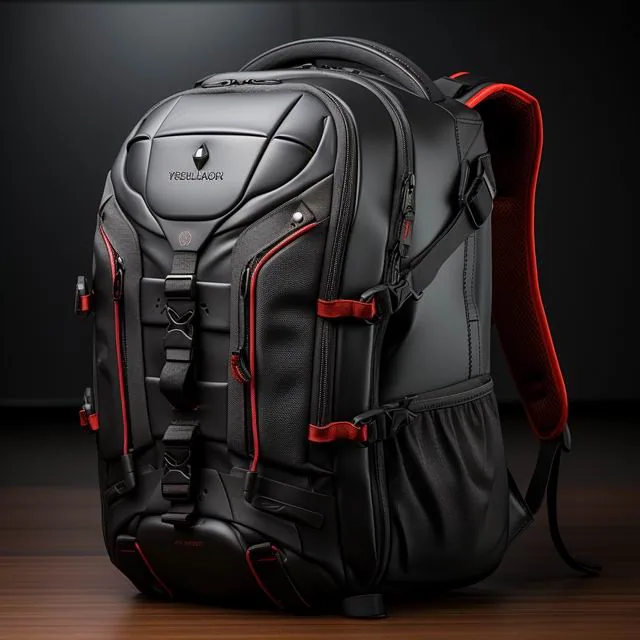
The most expensive object inside the pack is usually a GNSS rover, a controller or a laser measuring accessory, and replacement costs routinely run from £800 to several thousand pounds before you account for recalibration and lost site days. Practical protection starts with a dedicated cradle built from 8-12 mm closed-cell foam plus a semi-rigid divider between the optical or antenna end and anything metal. Sleeves should hold the device with roughly 10-15 mm of clearance on each axis so that it cannot rattle, yet without enough slack that it builds momentum before it meets the divider. Insist the cradle is stitched or bonded to the pack shell rather than dropped in loose, because a cradle that migrates under load has stopped protecting anything at all.
Field damage rarely comes from one dramatic impact. It accumulates from setting the bag down on concrete several dozen times a day, sliding it across a van floor and letting a levelling staff rest against it during lunch. A realistic approval test is therefore a loaded drop of 0.5-1.0 m onto concrete on each face, repeated five times, followed by a functional check of the instrument rather than a visual check of the fabric. Metal hardware deserves a placement rule too: any D-ring, cam buckle or eyelet should sit clear of antenna threads and optical faces, since anything hardened and metallic will eventually wear through an anodised surface.
- Cradle foam: 8-12 mm closed cell, density specified, not described.
- Clearance: 10-15 mm per axis on the instrument in its working case.
- Divider: semi-rigid panel between optics and metal tools.
- Drop test: five drops at 1.0 m loaded, then functional instrument check.
- Hardware rule: no metal contact within 40 mm of an optical or antenna face.
Rigid Bases That Survive Mud, Standing Water and Concrete
Surveyors put their bags down where commuters never would: wet clay on a new-build plot, a flooded basement slab, roadside gravel, cattle pasture for boundary work. A soft base panel collapses, wicks water up into the lining and lets the pack topple sideways, so the base deserves its own specification line. A realistic build uses a 1.5-2.0 mm HDPE or polypropylene insert beneath a 1680D or 1000D shell, with seams taped rather than merely folded, and four moulded feet that lift the lowest seam 8-12 mm clear of standing water. The whole assembly typically adds 180-320 g, and it remains the cheapest insurance available anywhere in the specification.
Water ingress through the base is quantified in exactly the same way as through any other panel: hydrostatic head measured to ISO 811, where the quoted figure is the height of a water column the fabric withstands before seepage appears on the reverse. Around 1,500 mm resists steady rain, 3,000 mm handles a sustained downpour, and 5,000 mm is effectively a working day on foot. Pairing treated base fabric with taped seams is what makes the number meaningful, because a high-performing cloth pierced by stitch holes at 1 mm spacing and then stood in a puddle offers almost nothing. Base failures rarely arrive suddenly, so checking for early softening at the corners is worth doing monthly.
1.5-2.0 mm HDPE insert, seams taped rather than folded, 8-12 mm moulded feet, and a 5,000 mm hydrostatic head with anti-wicking binding at every edge.
Hi-Visibility, PPE Compatibility and Site Induction
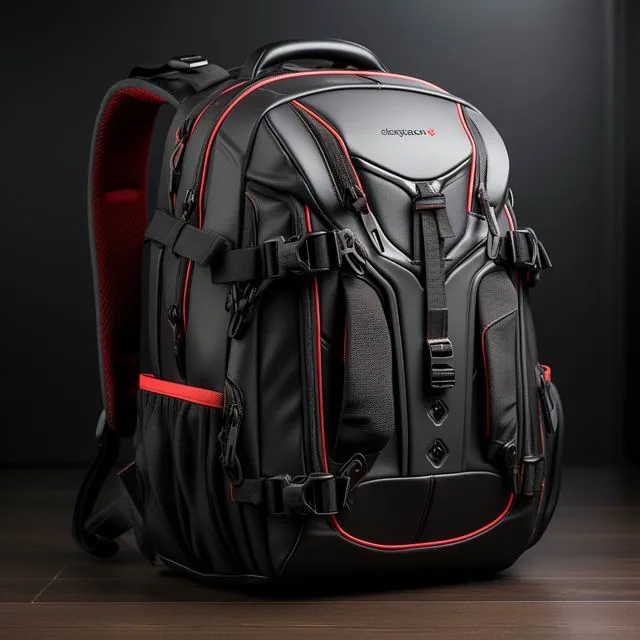
Many principal contractors require a high-visibility element before surveyors pass the gate, and most insist on it near plant movements. The performance benchmark is EN ISO 20471, where class 2 requires at least 0.50 m² of fluorescent background material and 0.13 m² of retroreflective material arranged to suggest the human form. A backpack is not certified clothing and cannot be certified as such, but panels made from compliant fluorescent polyester with segmented retroreflective piping will normally satisfy an induction check. The tape should sit across panels that remain visible when the pack is worn, rather than folded against the wearer's back where it does nobody any good.
The caveat is substitution. A bright bag does not discharge a duty under PPE rules, and it vanishes entirely the moment you set it down and walk twenty metres to take a reading. Reflective panelling should be treated as an addition to the vest or coat identified in the risk assessment, and the relevant UK reference point is the HSE guidance on personal protective equipment at work. Where the site demands a class 3 upper garment, specify the pack panel in the same fluorescent shade so the ensemble reads cleanly, and place retroreflective strips on both wide faces so operators see the outline from either direction.
Fabric Choice: Measured Building and Topographical Work Differ
Abrasion performance should be quoted as cycles to breakdown under ISO 12947 rather than inferred from the denier alone, because coating quality, weave construction and finishing change the outcome more than yarn thickness does. Two fabrics labelled 900D can differ by tens of thousands of cycles. Interior measured surveys over clean floors are comfortable at 20,000-30,000 cycles. Anything involving external works, demolition surveys, kerbs, brick stacks and daily loading into an open van wants 50,000 cycles or more before you stop worrying about the corners. Ripstop reinforcement inside the shell is worth considering where budget allows, because it limits tear propagation once face yarns finally do go, and it adds very little mass at these counts.
Colour and coating deserve the same attention as strength. Pale colourways show clay, rust and marking fluid within weeks, while solid black hides staining yet greys out under prolonged ultraviolet exposure, so ask for a lightfastness figure on any dyed polyester rather than trusting a name on a swatch card. Coating choice has a longer tail: TPU shells wipe clean of clay slurry and resist hydrolysis for roughly twice as long as standard polyurethane in a hot van, which is why a long warranty term and a PU-coated shell rarely belong together. Where budget caps the shell at 600D, spend the saving on the base instead.
| Working environment | Minimum Martindale target | Suggested shell |
|---|---|---|
| Interior measured surveys | 20,000-30,000 cycles | 600D polyester with PU backing |
| Mixed site and external work | 40,000-50,000 cycles | 900D polyester or 500D Cordura |
| Demolition, utilities and rail | 60,000+ cycles | 1000D Cordura or 1680D ballistic nylon |
Harness Geometry for Uneven Ground and Long Traverses
Carrying 13 kg across a ploughed field or a clearance plot is a different problem from carrying it along a corridor. Shoulder straps need enough width to spread pressure without chafing the neck: 55-65 mm across the padded section with 8-12 mm perforated EVA foam is the usual working range, tapering to a 25 mm webbing tail at the adjuster. A load-lifter angle of roughly 30-45 degrees above horizontal pulls the top of the pack toward the shoulders without levering them backwards, and a sternum strap sited 25-50 mm below the clavicle keeps those straps where the chest is widest rather than where the throat is softest.
A structured hip belt is not optional at these masses. An 80-120 mm padded belt backed with a stiffener transfers 30-40 per cent of the load onto the pelvis on level ground, and it stabilises the pack better than any compression strap when you cross a bund or climb a site ladder. Anyone specifying daily carriage above 12 kg should also read the position before loading to the maximum rather than after: the HSE manual handling assessment charts set out how handle distance, repetition and torso twisting reduce acceptable limits, and cutting carried mass remains the first control in the hierarchy.
Load the pack to its real mass, then confirm the hip belt centre sits 25-40 mm above the iliac crest and that the sternum strap lands 25-50 mm below the collarbone rather than across the throat.
Tripods, Staffs and Detection Equipment
Nothing shortens a long approach faster than a badly managed tripod. Purpose-built survey packs use two 25 mm compression straps down either flank plus a 20-25 mm webbing loop at the base, so a folded tripod can be lashed vertically along one side with its head uppermost and clear of the spine contact area. Cam buckles rated to a 200-300 N working load hold that arrangement through a full day, whereas ladderlock adjusters creep once the shafts begin bouncing, and creeping straps mean re-tightening every few hundred metres. Where external carriage is daily rather than occasional, insist the strap roots are bar-tacked or box-stitched rather than simply straight-stitched into the shell, since that junction carries the entire cantilevered load.
Where the tripod goes matters as much as how it is fixed. Carried flat across the top of the pack it raises the centre of gravity and makes the load feel top-heavy on side slopes, particularly when instruments already sit high against the back panel. Vertical lashing keeps mass closer to the spine and allows one shoulder to swing the bag off without catching a leg against anything. A 2 m levelling staff is a separate judgement: it catches every door frame, branch and handrail within reach, so most practitioners either mirror it in the same plane as the tripod or leave it in the vehicle until the last 200 m.
- Dual 25 mm compression straps with 200-300 N cam buckles per side.
- Bottom loop in 20-25 mm webbing, bar-tacked rather than boxed.
- Head uppermost and outboard of the spine contact panel.
- Metal detector heads padded or sheathed before lashing.
- Traverse check: no lateral swing when walking at 5 km/h.
Keeping Tablets, Field Books and Printed Plans Dry
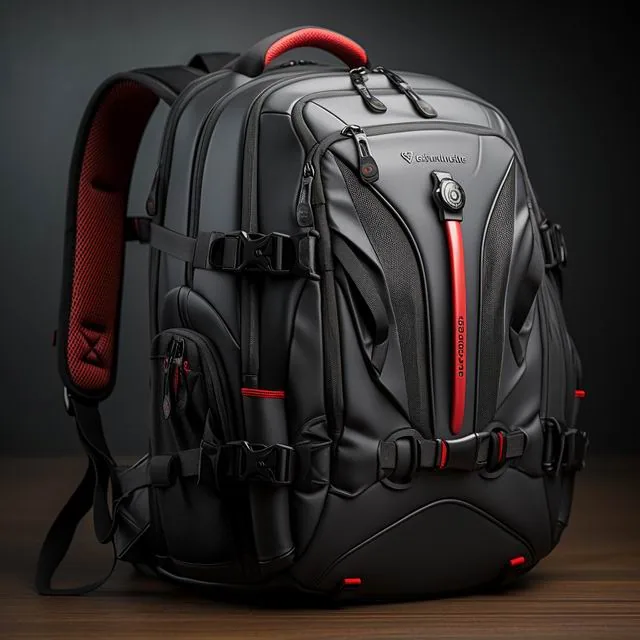
Field electronics fail for predictable reasons. Capture tablets are usually 8-11 inch devices, and the sleeve has to be dimensioned on the device inside its rugged case rather than on the nominal screen size, which means adding 12-20 mm each way to every published measurement. A suspended sleeve that holds the device a minimum of 15 mm clear of the base panel protects against the drop onto concrete that every survey pack eventually takes, and a brushed lining prevents the fine scratching that accumulates over a few hundred removals and then shows up as glare in bright sunlight. Ask too for a sleeve with a folded rather than sewn hanging loop, because a strap pressing against toughened glass flexes the device for hours at a time in transit.
Paper has not disappeared from surveying, and it behaves worse in rain than silicon does. Tape refuses to stick to damp concrete, pen feathers on wet pages and field notes become unreadable precisely when the reading matters, so the practical layout puts weathered documents outside the main volume rather than sealed inside with the instruments. A 40-60 mm gusseted external pocket taking an A4 polythene folder keeps plans and level books within one-handed reach; anything wetter goes in a separate external sleeve. Specifying the outer pocket fabric to the same hydrostatic figures already quoted for the shell completes the arrangement. No shell can keep a device dry indefinitely, so an internal polythene liner remains the surest backup available.
Weekly Servicing That Extends a Survey Bag's Life
Site bags die of grit. Fine mineral dust works into coil zips, abrades coating from the inside and gradually opens stitch holes, so a mid-range pack emptied and brushed each week will usually outlast a premium one that is never cleaned. Turn the pack fully inside out, brush along every seam and pocket corner with a soft nylon brush, then wipe with warm water and pH-neutral detergent. Solvent cleaners should be kept away entirely, since they strip both polyurethane and TPU coatings and leave the base fabric unprotected against the very water it was specified to resist. Finish by drawing a dry wax-based lubricant along each coil, which restores smooth running without attracting the dust that solvent cleaners tend to leave behind.
Three checks belong in the same routine. Re-proof the outer face once water stops beading and starts wetting out; a fluorocarbon-free spray applied to a thoroughly dry bag restores shedding for roughly 8-12 weeks of normal site use. Inspect base seam tape for lifting at the corners, which is where failure normally starts. Look over every webbing junction for broken stitches at the bar-tack, because catching a lifting one costs minutes while losing a strap on a live site costs a day. Dry the empty bag open and well ventilated rather than on a radiator, since damp enclosed storage is a recognised contributor to indoor air quality problems of the kind covered by EPA indoor air quality guidance.
Specifying a Survey Pack for Volume Production
A production-ready specification is a list of measurable thresholds rather than adjectives. Shell fabric by denier and weave with a target cycle count, lining given as a denier rather than as 'similar', webbing pull strength with a minimum of 180 N at critical junctions, hardware named by type and working load, zips specified as number 8 or number 10 coil from a stated supplier, and every dimension toleranced to plus or minus 5 mm. Anything left as a qualitative remark will be resolved in someone else's favour, usually during the cost-down conversation after sampling rather than at the point you thought you had agreed it.
The commercial parameters around such programmes are fixed rather than negotiable in practice. Minimum quantity is 500 pcs per style and colourway, sampling takes 6-10 working days for a straightforward build and 12-15 for complex constructions involving moulded backs or bonded frames, and bulk production runs 35-50 days from approved sample. Shipments go FOB Xiamen against T/T 30/70 terms, with inspection conducted to AQL 2.5 under ISO 2859-1. QUANZHOU JUNYUAN BAGS has coordinated programmes to this pattern since 2014, working across 4,950 m² of SGS-verified production floor space staffed by 137 colleagues operating 7 production lines. Anyone planning a seasonal launch should work backwards from those intervals rather than assuming that published headcounts or floor areas scale to any individual order.
Frequently Asked Questions
What size backpack does a land surveyor need?
Most surveyors work comfortably between 32 and 38 litres. That volume takes a GNSS rover and controller, a laser measure, a 10-11 inch tablet, hand tools and water without encouraging you to overload the harness. Measured building surveyors doing interior work can often manage with 24-28 litres, while anyone carrying a detection wand and staff on every job should plan nearer 40 litres.
How heavy is a typical surveyor's backpack?
Interior measured surveys typically run 7-10 kg. Topographical, boundary and engineering work regularly reaches 13-16 kg once a GNSS rover, controller, spare batteries, a levelling staff and detection equipment are included. Anything approaching 16 kg should be split into two loads or moved mechanically, which mirrors the thresholds set out in manual handling assessment guidance published by the HSE. Weighing the loaded bag once each season is a worthwhile habit, since winter gloves and extra water shift the figure.
Should a survey backpack have a hard base?
Yes. A rigid insert of 1.5-2.0 mm HDPE underneath a 1680D or 1000D shell keeps the pack upright in clay, gravel and shallow standing water, stops the load slumping and prevents the lowest seam acting as a wick. Combined with 8-12 mm moulded feet and taped seams, it typically adds 180-320 g and prevents a large share of water ingress failures.
Can a total station fit in a backpack?
A full-size robotic total station rarely belongs on your back; it ships in a dedicated case. What does travel well is the controller, batteries, prisms, mini prism poles and accessories. Those should sit in a cradled compartment with 8-12 mm closed-cell foam and a semi-rigid divider, with no metal hardware within 40 mm of any optical face. The heavy instrument itself belongs in its case, carried by the handle or moved mechanically.
Are high-visibility backpacks accepted on UK construction sites?
Usually, but only as an addition to certified clothing. A pack cannot satisfy EN ISO 20471 certification, which sets minimum areas of fluorescent and retroreflective material for garments. Panels built from compliant fluorescent polyester with retroreflective piping will normally pass induction, yet the class 3 upper garment in the risk assessment still has to be worn. Siting both fluorescent and retroreflective material on panels that face outwards when worn usually makes the difference.
What fabric denier should a survey bag use?
Specify by abrasion cycles rather than denier alone. Ask for an ISO 12947 target: 20,000-30,000 cycles for interior work, 40,000-50,000 for mixed site use, and 60,000 or more for demolition, utilities and rail. 900D polyester or 1000D Cordura usually delivers those figures, with a heavier 1680D panel on the base where wear concentrates. Denier then becomes a secondary detail once the cycle target is written into the specification.
How do you clean survey dust and grit out of a backpack?
Empty it fully, turn it inside out and brush every seam and pocket corner with a soft nylon brush, then wipe with warm water and pH-neutral detergent. Avoid solvents, which strip PU and TPU coatings. Dry it open and away from direct heat. Weekly cleaning of a mid-range pack generally beats annual cleaning of an expensive one. Drawing a dry wax lubricant along each coil finishes the job and stops it attracting dust.
Do surveyors still carry paper plans?
Many do, because levels in the rain, signatures and quick sketches are all harder on glass than on paper. The practical arrangement is a gusseted external pocket of 40-60 mm taking an A4 polythene folder, keeping damp documents outside the main volume so they cannot sweat against instruments and controllers. Many surveyors also keep a laminated field card for wet days, because it survives condensation inside a polythene folder.
How much should a hard-wearing survey backpack cost?
Retail pricing for a genuinely site-grade pack with a rigid base and a cradled instrument bay typically lands between £110 and £220 in the UK, depending on shell fabric and harness quality. Below roughly £80 the savings usually come from cheaper hardware and untaped seams, which are exactly the two areas that fail first under daily site loading. Below that level the savings usually appear in cheaper hardware and untaped seams, which are the first two things to fail.
Can a survey backpack be used as airline cabin luggage?
A 32-38 litre pack often sits close to the 55 x 40 x 20 cm template used by several UK carriers, but lithium batteries and GNSS equipment fall under separate aviation restrictions, so check both the airline rules and any dangerous goods guidance before flying. Instruments are usually better packed in padded cases and checked in the hold. Checking both carrier and dangerous goods rules before travelling avoids losing expensive equipment at a security desk.
How often should a survey backpack be replaced?
With weekly cleaning and a functioning base panel, a site-grade survey pack typically delivers three to five years of daily use. Replace it earlier once you see lifted base seam tape, hydrolysed coating that has gone tacky or dusting, or webbing bar-tacks pulling away at the strap roots, since any of those three failures puts instruments at risk. Recording the purchase date inside the lid also makes any later warranty claim considerably simpler to argue.
Planning a Survey or Inspection Backpack Range?
QUANZHOU JUNYUAN BAGS develops survey and site-inspection backpack programmes for UK brands from 500 pcs per style and colourway, with sampling completed in 6-10 working days and 12-15 for complex builds, followed by bulk production in 35-50 days at AQL 2.5 under ISO 2859-1, shipped FOB Xiamen on T/T 30/70 terms.
Send a kit list with the heaviest realistic mass and the instrument dimensions in their working cases, and our production team will come back with a fabric, base and cradle proposal you can take into a tech pack.
Email: service@junyuanbags.com
WhatsApp: +86 177 5002 0688