Best Backpacks for Plumbers and Heating Engineers in the UK: Load, Fabric and Layout
For UK plumbers and heating engineers the right bag is a 28-34 litre pack with a welded, wipe-clean base, a face fabric tested to at least 1,500 mm hydrostatic head, and a harness that stays comfortable at 12-15 kg across a nine-hour day. Under 24 L forces a second bag; over 38 L stops clearing a 560 mm loft hatch.
This guide looks at fabric, layout, clean-down and load numbers as they apply to boiler swaps, unvented cylinder servicing and first-fix copper work, not to general commuting. Where a specification figure appears, it is the figure used when writing a trade programme: MOQ 500 pcs per style and colourway, with sampling completed in 6-10 working days.
Why Wet Trades Break Ordinary Backpacks
A commuter pack is designed to move a laptop and a lunchbox between two dry rooms. A plumbing or heating bag is dragged across a wet driveway, set down in a puddle of condensate behind a combi boiler, kneeled on while a compression fitting is tightened, and then thrown into a van alongside a soil pipe and a 5 litre drum of inhibitor. That combination of standing water, grit, copper swarf and flux residue is what actually kills bags. Failures are rarely dramatic: the coating on the base panel cracks after a few months, the bottom-corner stitching wicks moisture inward, and the lining develops a persistent smell because it never dries fully between jobs on a five-day round.
The practical consequence is that a wet-trade specification should be read from the base upwards rather than from the lid downwards. Ask what the lower 150 mm of the pack is made of, whether the base seam is bound or exposed, and whether the lining is a wipe-clean film instead of absorbent brushed tricot. A bag that carries 12 kg but loses its shape after one winter of kneeling on wet blockwork is a false economy, particularly when the alternative is replacing kit every eight or nine months across an entire fleet of vans. Specifying a reinforced or replaceable base panel turns a nine-month bag into a three-year one for a modest increase in unit cost.
- Grit and copper swarf behave like an abrasive paste on the base panel every time the pack is set down.
- Condensate and inhibitor residue keep the lining damp for days, which causes odour far more than the tools do.
- Kneeling loads the lower back panel in a way that no desk-to-desk commute ever reproduces.
- Solvent flux and press-fit lubricant attack cheap polyurethane coatings long before the face fabric wears through.
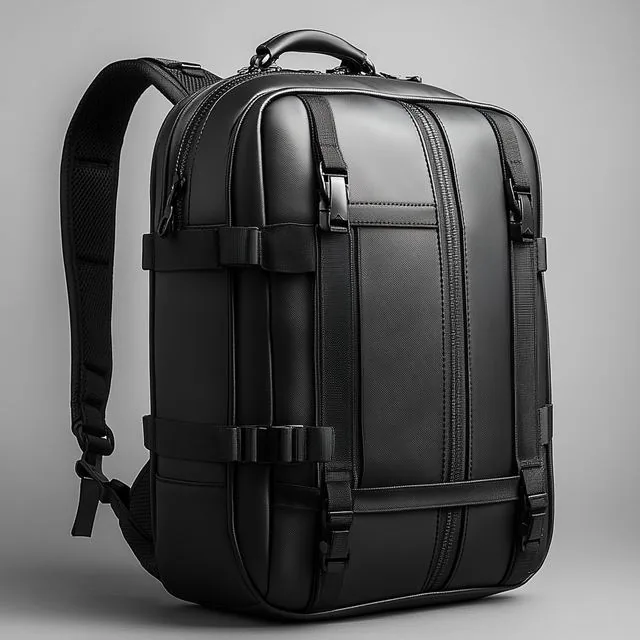
Volume and Real-World Load: 28 to 34 Litres
Service work and installation work pull a specification in different directions. A routine boiler service needs a flue gas analyser at about 1.2 kg, a compact hand-tool set, PPE and a tablet for digital commissioning records, which comes to roughly 7-9 kg and sits comfortably in 28 L. First-fix copper work adds a 22 mm press tool at around 3.2 kg plus a tube cutter and consumable fittings, taking the load to 12-15 kg and the volume requirement to 32-34 L. Below 24 L the pack simply will not close over a press-tool case, so engineers start carrying a separate tote, which is exactly when items get left behind in a loft or a customer's airing cupboard.
The upper boundary matters as much as the lower one. A 40 L pack looks generous in a van but becomes an obstacle in an airing cupboard with a 600 mm clear opening, and it catches on the trusses when you push it up through a hatch ahead of yourself. The working compromise for mixed service and install fleets is 30 L with side compression straps, so the same bag runs tight on a service day and expands for a first-fix. Anything larger only pays off for engineers who never work inside occupied homes. Fleets covering both service and installation work usually settle on one 30 L shell, which also simplifies branding, spares and reordering through the year.
| Item | Typical weight | Where it should sit |
|---|---|---|
| 22 mm press tool and jaws | 3.2 kg | Flat against the back panel, centred |
| Flue gas analyser | 1.2 kg | Padded sleeve in the main compartment |
| Hand tools and spanners | 2.5-4.0 kg | Tool panel with elastic loops |
| Consumables, fittings, tape | 1.0-2.0 kg | Clear zip pocket, lid side |
| PPE, gloves, eye protection | 0.8 kg | Wet-dry pocket with drainage |
Fabric, Coating and Abrasion Numbers
Face fabric for a wet-trade pack comes down to 600D polyester or 500D nylon. Polyester holds colour under UK daylight and dries faster after a soaking, while nylon 6.6 at an equivalent denier delivers roughly 20-30% more abrasion resistance, which is what matters when the base is dragged over blockwork and concrete. Specify the base panel separately from the body: 900D or 1680D on the lower 150 mm is cheap insurance. Abrasion should be tested to ISO 12947-2 at 12 kPa, with a pass mark of 30,000 rubs for the body fabric and 50,000 for the base. Ask for the report by fabric reference, because a mill certificate for a similar cloth proves nothing about the panels actually cut into the bag.
Waterproofing is where most trade bags quietly underperform. A hydrostatic head of 1,500 mm measured to ISO 811 keeps a pack usable through a British downpour, but the number says nothing about the seams, and seams are the failure point. Look for a welded or TPU-coated base with bound internal seams, and request a spray-test report rather than a fabric certificate alone. Coating weight matters as well: a polyurethane backing under 0.08 mm tends to craze and flake after repeated flexing in cold weather, which is why thermoplastic polyurethane laminates are worth the extra cost on bags that live in vans through winter.
- Body fabric: 600D polyester or 500D nylon, ISO 12947-2 pass at 30,000 rubs.
- Base panel: 900D to 1680D, welded or TPU-laminated, bound seams.
- Hydrostatic head: 1,500 mm minimum to ISO 811, seam-sealed or welded base.
- Lining: wipe-clean film rather than absorbent tricot, no raw edges at the corners.
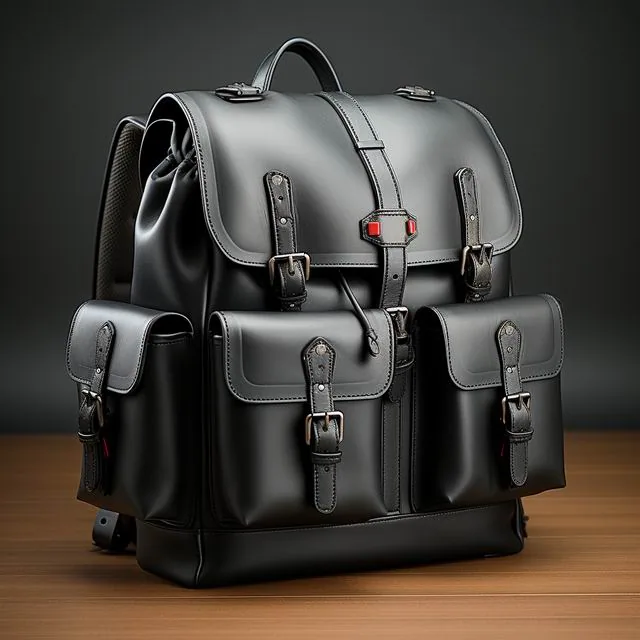
Layout: Tool Zones, Wet-Dry Split and Paperwork
A tool backpack earns its keep on layout rather than volume. The non-negotiables are a tool panel 30-40 mm deep with elastic loops sized for 250 mm and 300 mm spanners, a hard-sided sleeve for the flue gas analyser, and a pocket that will take an A5 document wallet without folding it. Benchmark certificates, service records and gas safety documentation travel folded far too often, and a creased certificate handed to a customer undermines an otherwise tidy job. A clear internal zip pocket for consumables saves the two or three minutes per job that otherwise go into hunting for a 15 mm olive.
The second layout decision is whether wet and dry share a compartment. They should not. Used gloves, a damp cloth and a wet flue brush need a drained or film-lined pocket that can be wiped out at the end of the day, and that pocket should sit on the outside of the pack so moisture never migrates into the tool panel. A tablet up to 10.9 inches, roughly 250 x 180 mm, belongs in a suspended sleeve that keeps the screen off the base of the bag, because the device is dropped into the pack far more often than it is placed into it.
- Tool panel with elastic loops, sized for 250 mm and 300 mm spanners and a 250 mm level.
- Padded sleeve for a flue gas analyser, separate from the hand-tool zone.
- A5 document sleeve that keeps commissioning sheets flat.
- External wet pocket with a wipe-clean film liner and no fabric wicking path inward.
- Suspended tablet sleeve with a false bottom, so the screen never touches the base seam.
- Two bottle pockets deep enough for a 1 litre bottle and a thermos, both with elasticated tops.
Loft Hatches, Cupboards and Van Racking Dimensions
Working dimensions beat litres in occupied homes. A standard loft hatch is around 560 x 600 mm, and the pack is usually pushed up ahead of the engineer, which means the loaded width should stay under 300 mm and the loaded height under 500 mm. A bag that measures 340 mm across when full will jam on the hatch frame, and a jammed pack in a loft is a genuine safety problem rather than an inconvenience. Depth matters for a different reason: boiler cupboards often give 450-550 mm of clear floor space in front of the unit, so a pack deeper than 220 mm loaded cannot be set down where the engineer is actually working.
Van racking sets a third constraint. Most plumbing racking runs 300-400 mm between uprights, so a pack wider than 320 mm either sits on its side or goes on the floor, where it collects water from wet boots and pipes. The practical target is a 30 L bag measuring roughly 300 x 200 x 480 mm when loaded, which clears loft hatches, sits upright in racking and still leaves floor space in an airing cupboard. Compression straps are what make those numbers achievable on a light day, so check that they run over the top of the pack rather than only around the sides.
| Space | Typical clear opening | Bag dimension that works |
|---|---|---|
| Loft hatch | 560 x 600 mm | Under 300 mm wide, under 500 mm tall |
| Airing cupboard floor | 450-550 mm deep | Under 220 mm loaded depth |
| Van racking bay | 300-400 mm | Under 320 mm loaded width |
| Under-sink access | 500-600 mm | Under 200 mm depth, rollable |
| Ladder carry | One hand free | Under 15 kg, sternum strap fitted |
Clean-Down, Legionella Awareness and Odour Control
Heating and hot water work puts engineers in contact with stored water systems, condensate and, on older cylinder jobs, stagnant water in dead legs. Manufacturers of trade bags rarely address this, but a bag that goes home covered in condensate is a bag worth cleaning on a schedule. HSE guidance on legionella control sets the duty holder's obligations for water systems; the bag-side equivalent is simple: wipe external surfaces at the end of each day, keep wet PPE out of the main compartment, and never store the pack closed while damp. A bag left closed and damp overnight is the most common source of the smell that makes an engineer abandon an otherwise sound pack.
Hand hygiene is the other half of it. CDC guidance on hand hygiene recommends washing with soap and water when hands are visibly soiled, which is almost always the case after draining a system or cutting copper. That argues for a pack that can be opened and closed with one hand and for zip pullers large enough to grip through a glove. For odour, the cause is nearly always residual moisture rather than the tools: empty the wet pocket, open the main compartment fully, and dry the pack in a warm ventilated space for at least four hours before it goes back in the van.
Empty every pocket, brush out grit and swarf, wipe the lining with a mild detergent at 1:10 dilution, rinse with clean water, then dry the pack open and upside down. Avoid bleach on printed panels and avoid machine washing a pack with a moulded back panel, which traps water in the frame channels.
Carrying Comfort and Manual Handling
Trade loads are modest compared with hiking loads but they are carried repeatedly, often up stairs and ladders, and often with one hand occupied. HSE guidance on manual handling at work sets no single weight limit, but the risk assessment filters it applies point in the same direction: keep routine carries to 10-12 kg, split loads where possible, and avoid twisting while loaded. A 15 kg press-tool day is the point at which a hip belt stops being optional, because it moves roughly 30-40% of the load off the shoulders and onto the pelvis. Loft work often means lifting a loaded bag above shoulder height, which raises the risk further and argues for two smaller loads instead of one heavy one.
Harness specification follows from that. Shoulder straps should be 65-75 mm wide at the top with 10-12 mm of closed-cell foam, tapering rather than folding at the shoulder, and the sternum strap should sit 40-60 mm below the collarbone so it stabilises without restricting breathing. A moulded back panel with 15-20 mm of airflow channels helps on stair carries in heated homes, but it adds 150-250 g and roughly 20 mm of depth, which matters when the clearance budget is already tight. Webbing should be 25 mm minimum at stress points, with bar-tack reinforcement at every strap root. Do not overlook adjustment range: a winter jacket changes harness fit by 20-30 mm, so a setup that works in August sits wrong in January.
- Routine carry target: 10-12 kg, with a hip belt fitted above 12 kg.
- Shoulder strap width 65-75 mm, foam thickness 10-12 mm, no fold at the shoulder.
- Sternum strap 40-60 mm below the collarbone.
- Webbing 25 mm minimum, bar-tacked at every load-bearing strap root.
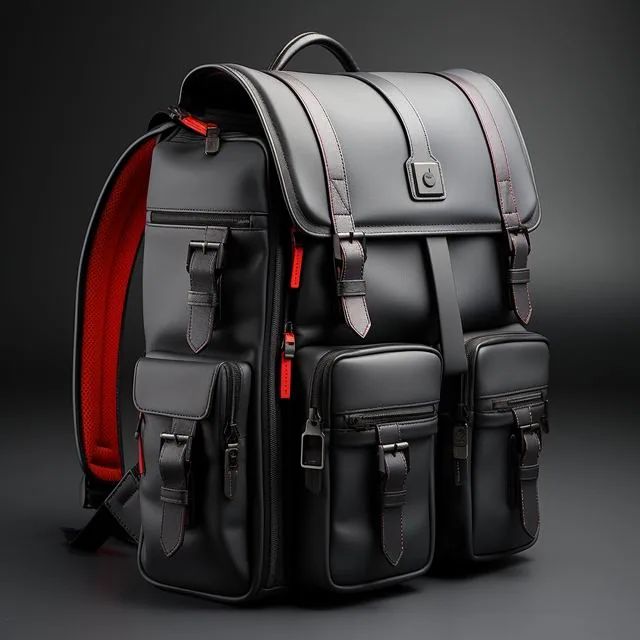
Hardware, Zips and Corrosion Resistance
Corrosion in a trade pack comes from inside as much as from weather. Flux residue, central heating inhibitor and press-fit lubricant sit on zip chains and buckle springs, and cheap plated hardware pits within a single heating season. The fix is specification rather than maintenance: acetal or polyamide buckles with stainless springs, and a #10 coil zip on the main opening with a #8 on secondary pockets. The analyser sleeve should keep the device in an environment at least as dry as the rating it carries, and IP codes such as IP42 or IP54 are defined by IEC 60529, which is worth quoting in a spec so the requirement is unambiguous.
Zip choice also decides repairability, which matters more than buyers expect. A #10 coil zip can be re-slidered on site in a few minutes with a replacement puller, whereas a moulded-tooth chain usually needs the whole chain replaced by a machinist. Ask for a zip garage at the top of the main opening so grit stays out of the teeth, and specify a 150-200 mm storm flap over any compartment holding paperwork. Buckles should be rated well above the working load: 25 mm side-release hardware rated at 20 kg gives a safety margin that a 12 kg pack rarely needs but a dropped van load does.
Main opening #10 coil, secondary pockets #8, stainless or acetal hardware, zip garage at every top stop, and buckles rated at 20 kg or more on 25 mm webbing. Avoid black nickel plating on anything that will meet flux or inhibitor.
Specifying a Trade Programme: MOQ, Sampling and AQL
For a merchant brand, a nationwide service company or a trade supplier building an own-label range, the commercial parameters drive the design as much as the fabric does. Minimum order quantity is 500 pcs per style and colourway, which is the point at which fabric, hardware and tooling costs line up; sampling takes 6-10 working days for a conventional build and 12-15 working days where the structure includes a moulded panel, a welded base or a bespoke tool panel. Bulk production then runs 35-50 days from sample approval, with inspection at AQL 2.5 under ISO 2859-1. Each colourway counts separately, so three colours of one style means three times the minimum, which is the detail first-time buyers most often miss.
QUANZHOU JUNYUAN BAGS has coordinated programmes of this kind since 2014, operating as a sourcing and programme-management company with 137 colleagues and 7 production lines across 4,950 m² of SGS-verified production floor space. Our production team develops specifications, coordinates production with our production partners and manages inspection, shipping on FOB Xiamen terms with T/T 30/70 payment. For buyers that means a single point of contact from tech pack to container, and a sampling window short enough to fit a merchant's seasonal range review. Buyers consolidating several trades into one programme can share tooling across sizes, which keeps sampling inside the standard window even with three shell variants.
| Parameter | Standard terms | Notes |
|---|---|---|
| MOQ | 500 pcs per style and colourway | Applies to each colourway separately |
| Sampling | 6-10 working days | 12-15 working days for complex builds |
| Bulk production | 35-50 days | From approved sample and deposit |
| Inspection | AQL 2.5, ISO 2859-1 | Pre-shipment, on finished goods |
| Commercials | FOB Xiamen, T/T 30/70 | Established 2014; 4,950 m²; 137 colleagues; 7 lines |
A Ten-Point Buyer's Checklist
Before signing off a trade pack, run it through a fixed list rather than a showroom impression. The checks that catch the most expensive problems are dimensional and chemical rather than cosmetic: the pack must clear the spaces it has to pass through, the coating must survive the liquids it will meet, and the hardware must still open after a winter in a van. A sample that passes all ten points below rarely generates returns in the first season. Run the checks on a production sample rather than a prototype, since prototypes are often assembled with different thread, foam density and zip tape from the bulk run.
Where a range covers both service engineers and installers, resist the temptation to specify one bag for both. A 28 L service pack and a 34 L install pack share a shell, hardware and branding, so the tooling cost is nearly identical, and each group gets a bag that fits its actual load. That split is generally cheaper over two years than replacing a single compromised size across a fleet, and it keeps the engineer's own preference out of the specification argument. Whichever route is chosen, confirm dimensions with the actual kit inside the bag, because catalogue figures are measured empty and understate the real footprint by 30-50 mm.
- Loaded dimensions under 300 x 220 x 500 mm, verified with the actual kit inside.
- Base panel welded or TPU-laminated, with bound internal seams.
- Hydrostatic head of 1,500 mm or better, plus a spray-test report on the finished bag.
- Abrasion report to ISO 12947-2: 30,000 rubs body, 50,000 rubs base.
- Tool panel 30-40 mm deep with loops sized for real spanner lengths.
- Analyser sleeve separated from hand tools, IP rating quoted to IEC 60529.
- Wet pocket that drains or wipes clean, isolated from the main compartment.
- Harness rated for 12-15 kg: hip belt, 65-75 mm straps, bar-tacked roots.
- Acetal or stainless hardware, #10 main zip with a garage and storm flap.
- Commercials confirmed: MOQ 500 pcs, 6-10 working day sampling, AQL 2.5.
Frequently Asked Questions
What size backpack does a plumber actually need?
Most service engineers work well in 28 L, while installers carrying a 22 mm press tool need 32-34 L. Below 24 L the pack will not close over a press-tool case, and above 38 L it stops clearing a 560 mm loft hatch. If the fleet does both jobs, specify 30 L with side compression so the same shell works across the week.
Is a waterproof backpack worth it for heating engineers?
Yes, but check the seams rather than the marketing. A hydrostatic head of 1,500 mm to ISO 811 handles British rain, and a welded or TPU-laminated base handles puddles and condensate. Ask for a spray-test report on the finished bag, because fabric certificates say nothing about seam leakage at the base corners. A welded base with bound seams adds roughly 60-90 g and very little to unit cost, which is cheap against replacing bags every nine months.
How much weight can a plumber carry safely in a backpack?
HSE manual handling guidance sets no single limit, but a sensible routine target is 10-12 kg with the load carried on both shoulders. Above 12 kg, or on any job involving stairs or ladders, fit a hip belt, which transfers roughly 30-40% of the load to the pelvis. Split a 15 kg press-tool day into two trips. Splitting a 15 kg load into two trips of about 8 kg reduces shoulder loading more than any harness change and costs an extra two minutes on a call.
What fabric denier is best for a plumbing tool backpack?
600D polyester is the value choice and dries quickly; 500D nylon 6.6 gives around 20-30% more abrasion resistance at a similar weight. Either way, specify 900D to 1680D on the base panel, since that is the surface that meets wet blockwork and grit. Request a Martindale report to ISO 12947-2 at 12 kPa. Denier alone misleads: a 600D polyester with a 0.10 mm polyurethane backing outlasts a cheap 900D with a 0.05 mm coating under kneeling use.
Can a work backpack be machine washed?
Bags with a moulded or framed back panel should not go in a machine, because water collects in the frame channels and the panel can delaminate. Instead empty the pack, brush out grit, wipe the lining with detergent at 1:10 dilution, rinse and dry open for at least four hours. Removable film liners can be hand washed at 40 °C.
How do I stop my work backpack smelling after wet jobs?
Odour is almost always residual moisture rather than the tools. Empty the wet pocket at the end of every day, keep used gloves out of the main compartment, and dry the pack open and upside down in a ventilated space for four hours before it returns to the van. A wipe-clean film lining helps because it does not hold water. Stuffing the main cavity with newspaper overnight removes residual moisture in roughly eight hours and costs nothing.
Will a 30 L backpack fit through a standard loft hatch?
Usually, provided the loaded width stays under 300 mm and the height under 500 mm against a 560 x 600 mm hatch. A pack that measures 340 mm wide when full will jam on the frame, which is a safety issue when you are part-way through the opening. Check loaded dimensions, not empty ones. Measure the bag loaded rather than empty, since side pockets and a full bottle pocket typically add 30-50 mm to the overall width.
What zip size should a trade backpack use?
A #10 coil on the main opening and #8 on secondary pockets is the right balance of strength and repairability. Coil chain can be re-slidered on site with a replacement puller, while moulded-tooth chain usually needs a machinist. Insist on a zip garage at the top stop and a storm flap over any compartment holding paperwork. A storm flap of 150-200 mm over the main chain keeps grit out and roughly halves zip failures in gritty trades.
Do plumbers need a hip belt on a tool backpack?
Not for service work at 7-9 kg, where a well-set sternum strap is enough. It becomes worthwhile above 12 kg, on stairs, or on long carry-ins from a parking space to a flat. Look for a belt at least 60 mm wide with a 25 mm webbing root bar-tacked into the back panel rather than stitched into the lining. Removable belts cost slightly more but let one bag serve engineers who prefer a plain harness on short service calls.
Can I get work backpacks branded for my plumbing company?
Yes. Own-label trade ranges run at MOQ 500 pcs per style and colourway, with sampling in 6-10 working days and 12-15 working days for complex builds such as a welded base or moulded panel. Branding is usually an embroidered or woven label on the front panel, with bulk production at 35-50 days from approval. Bulk production then runs 35-50 days from approval, with inspection at AQL 2.5 to ISO 2859-1 before shipment.
How long should a trade backpack last in plumbing work?
With a 900D base, a #10 zip and acetal hardware, three to four years of daily van use is realistic. The usual first failures are coating flake on the base, zip corrosion from flux and inhibitor, and split stitching at the bottom corners. Specifying those three points separately typically doubles service life against a general-purpose commuter pack. Budgeting replacement every 36 months across twenty vans is usually cheaper than specifying a heavier bag nobody asked for.
Building a Trade Backpack Range
A wet-trade pack is specified from the base upwards: welded or TPU-laminated base, 900D panel, #10 coil zip, acetal hardware and a harness that holds 12-15 kg. Those five decisions determine whether a range lasts one winter or four, and none of them add much to unit cost when they are fixed in the tech pack rather than corrected after a season of returns.
Programmes start at MOQ 500 pcs per style and colourway, with sampling in 6-10 working days and 12-15 working days for complex builds, bulk production at 35-50 days, and pre-shipment inspection at AQL 2.5 to ISO 2859-1. QUANZHOU JUNYUAN BAGS coordinates production across 4,950 m² of SGS-verified production floor space with 137 colleagues and 7 production lines, shipping FOB Xiamen on T/T 30/70 terms.
Email: service@junyuanbags.com
WhatsApp: +86 177 5002 0688