Best Backpacks for Pharmacists and Dispensary Staff: Locker Fit, Quiet Hardware and Clean Surfaces
A dispensary bag should be 14-20 L, under 250 mm deep when loaded, wipe-clean on every external surface and quiet enough to open at the counter. Loads are light, 2.5-4 kg, so the specification is driven by storage and hygiene rather than carrying comfort or volume.
This guide covers community, hospital and primary care pharmacists, along with dispensary technicians and accuracy-checking staff. It looks at locker dimensions, surface cleanability, noise at the counter, standing-shift ergonomics and what to specify for a pharmacy group order.
A Bag That Never Reaches the Bench
The defining rule of a dispensary bag is that it should never sit on a dispensing bench. Personal items stay in lockers or the staff room, away from medicines, labels and the checking area, and that single constraint drives the whole specification. Because the bag is stored rather than carried for eight or nine hours, its external surfaces, its footprint and how cleanly it closes matter more than harness sophistication or litre count. A bag that closes fully, stands upright and fits the locker supports that rule instead of quietly undermining it, which is why storage dimensions come before litre count.
That also changes what failure looks like. A commuter bag fails when a strap tears or a zip splits; a dispensary bag fails when it will not fit the locker, when powder residue settles into an open mesh pocket, or when a jangling set of zip pullers and a key ring cuts through a consultation at the counter. Those are the three problems worth designing out, and all three are cheap to solve at specification stage. All three are cheap to solve at design stage and expensive to live with afterwards, since a bag that is awkward to store gets left wherever there is space.
- Personal bags belong in a locker or staff room, not on a dispensing bench.
- Stored for eight or nine hours, so footprint and cleanability outweigh harness features.
- Common failures are locker fit, dust in open mesh and hardware noise, not strap tears.
- Loads are light: 2.5-4 kg is typical for a full shift.
Volume and Shift Contents: 14 to 20 Litres
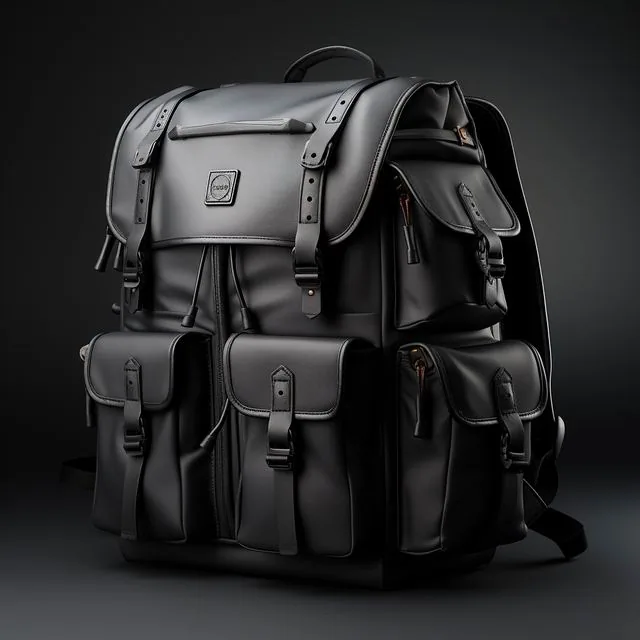
A pharmacy shift does not need much capacity. Lunch and a drink take 1.0-1.5 L, a light layer another 1.5 L, an A5 notebook or folder 0.5 L, and a wash bag and personal items the remainder, so 16 L covers most people and 20 L covers a long day with a pair of indoor shoes. Anything above 22 L is difficult to store in a locker with a coat and a bag already in it, and the empty space simply collects crumbs and dust. Sixteen litres also keeps packed weight down, which matters less for the short carry than for what happens when the bag is pulled out of a crowded locker.
Contents divide cleanly into three groups. Work paperwork, typically A5 at 148 x 210 mm, plus a tablet of around 250 x 180 mm for records or reference sources, needs a flat padded sleeve. Food and drink need an insulated or wipeable compartment. Personal items need a quick-access pocket with a key clip. A single-cavity bag mixes all three, and the result is a leaking drink on paperwork, which is the most common complaint staff raise about issued bags. Three zones also make the end-of-shift check quicker, one compartment to empty, one to wipe and one to leave alone, which is the difference between a routine that holds and one that does not.
| Contents | Size or weight | Where it belongs |
|---|---|---|
| A5 notebook or folder | 148 x 210 mm | Flat internal sleeve, no folding |
| Tablet or reference device | 250 x 180 mm | Padded sleeve, separate from food |
| Lunch and cool pack | 0.6-0.9 kg | Insulated compartment, sealed lining |
| Drink | 500-750 ml | External pocket, 73 mm diameter minimum |
| Personal items | 0.4-0.8 kg | Quick-access pocket with key clip |
Locker Fit, Bench Height and Walkway Clearance
Storage dimensions are tight in most dispensaries. Staff lockers are commonly 300 mm wide, 450 mm tall and 400-450 mm deep, sometimes shared or fitted with a mid-height shelf, and the bag usually has to fit alongside a coat. A pack loaded to 280 x 200 x 400 mm works; one at 240 mm deep will not close inside a locker with a shelf. Where a bag has to go under a bench or into a drawer, height becomes the constraint, and anything over 300 mm is unlikely to fit. Measuring the locker before ordering is the cheapest step in the whole process and prevents the common outcome of a good bag that nobody can store.
Walkway clearance is the second dimensional issue. Dispensary aisles run 900-1,200 mm wide, and a bag parked at the end of a bench reduces that by its own depth. A slim pack under 200 mm deep leaves the aisle usable; a 34 L travel-style pack does not, and is the kind of item that gets moved repeatedly and eventually put somewhere it should not be. A flat, structured base that lets the bag stand upright on a locker shelf is worth more here than any other feature. Where a dispensary has no lockers at all, a slim pack under 200 mm deep at least keeps the aisle clear when it is parked at the end of a bench.
| Storage situation | Typical clear size | Recommended bag |
|---|---|---|
| Staff locker, shared | 300 x 450 x 450 mm | 16-20 L, 280 mm wide, flat base |
| Locker with mid shelf | 225 mm opening height | 14-16 L, compressible |
| Under-bench drawer | 300 mm height | Under 300 mm tall, soft shell |
| Dispensary aisle | 900-1,200 mm walkway | Under 200 mm loaded depth |
| Hospital department office | Shared shelving | 20 L, wipe-clean shell, light lining |
Surface Cleanability and Powder Residue
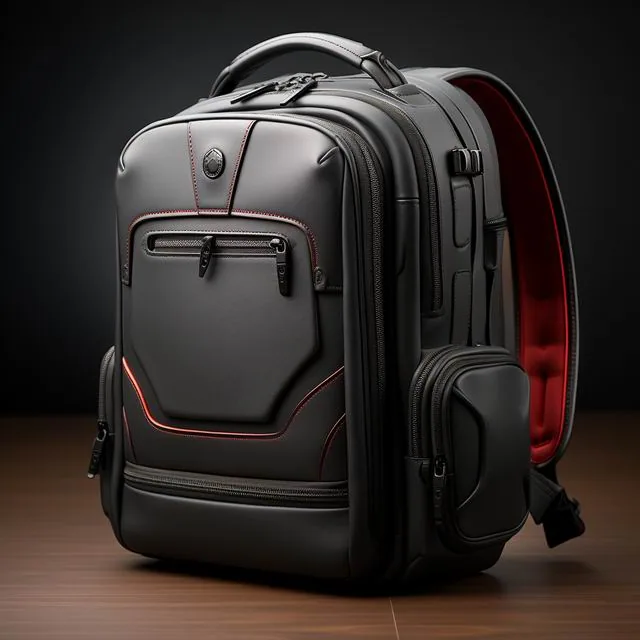
Dispensaries generate dust. Tablet and capsule handling, extemporaneous preparation and the general traffic of a busy counter leave fine residue that settles into any open weave. A smooth TPU-laminated or tightly woven polyester shell wipes clean in about 30 seconds; open mesh pockets, brushed tricot and canvas hold that residue and cannot be cleaned reliably. External pockets should be few and shallow, because every fabric fold is somewhere a wipe does not reach. A smooth shell also dries in minutes rather than hours, which matters when the bag is wiped between counter transactions rather than at the end of a shift. Residue that cannot be wiped off travels home.
Cleaning agents matter as much as fabric. Choose a shell that tolerates detergent wipes and the occasional diluted bleach solution without lifting printed branding, and check that logos sit under a protective film. The medicines environment sits inside a wider regulatory framework, and the MHRA sets UK standards for medicines, which is one reason personal kit is kept separate from dispensing activity rather than simply tidied out of the way. Practical separation is what keeps personal kit away from dispensing activity: a bag that closes fully, stores in a locker and cleans in half a minute. Those three behaviours are worth more than any pocket count.
- Smooth TPU-laminated or tightly woven polyester shell, wipeable in 30 seconds.
- No open mesh, brushed tricot or canvas on external panels.
- Few external pockets, shallow, with bound or welded seams.
- Logo under a protective film, resistant to detergent and diluted bleach.
- Light-coloured lining so spills and residue are visible.
Quiet Hardware in a Patient-Facing Space
Pharmacy counters are quiet rooms. A consultation about a new medicine, a dosette box or a sensitive over-the-counter purchase needs the space to be calm, and a bag with metal zip pullers clattering on a plastic chain cuts straight through it. Silicone-dipped pullers, a fabric zip garage at the top stop and a soft-lined pocket for keys reduce the noise to almost nothing. It is a small detail that staff notice immediately when it is missing. Ask a supplier to open and close a sample twenty times in a quiet room, which is the only reliable way to judge whether hardware reads as cheap or calm.
The same logic applies to buckles and hardware generally. Acetal or polyamide side-release buckles are silent where metal hardware rings, and a magnetic closure on a front pocket is quieter than a snap fastener. Ask for a puller design that can be opened one-handed while standing, because the bag is usually retrieved from a locker between counter transactions rather than at a desk. One-handed opening matters because the bag is usually retrieved between transactions rather than at a desk. Test it wearing a lanyard, since card holders knock against hardware. Noise is the complaint that staff notice immediately and suppliers rarely test for, so make it an explicit line item in the specification.
- Silicone-dipped zip pullers rather than bare metal.
- Fabric zip garage at the top stop to stop pullers rattling.
- Soft-lined pocket with a key clip, so keys do not knock against hardware.
- Acetal or polyamide buckles in place of metal hardware.
- Magnetic or hook-and-loop front closure instead of a snap fastener.
Standing Shifts: What the Load Actually Does
Dispensary work is standing work. Eight or nine hours on a hard floor with a bag that spends most of it in a locker means the bag contributes very little to daily fatigue, provided it is genuinely light. Keeping packed weight at 2.5-4 kg, roughly 5% of body weight, is comfortable for the short carry from the door to the staff room, and at that weight a hip belt is pointless while a 50-60 mm strap with 8 mm of foam is entirely adequate. A light bag also reduces the temptation to carry it on one shoulder all day, which is the habit that produces neck complaints rather than the weight itself.
Where bags do contribute to strain is asymmetry. Carrying on one shoulder through a long shift, or swinging a bag by a single grab handle, loads one side of the neck and shoulder repetitively, and HSE guidance on musculoskeletal disorders treats that pattern as a workplace risk rather than a personal habit. Both straps, a pack that sits high and close, and a weight budget under 4 kg are the practical countermeasures. Keeping the pack high and close, using both straps and storing it for the shift rather than wearing it, removes most of that risk without changing the bag at all.
Target 2.5-4 kg packed: lunch 0.6-0.9 kg, drink 0.5-0.75 kg, tablet 0.5 kg, layer 0.4 kg, personal items 0.4-0.8 kg. Keep the bag stored for the shift, carry it on both shoulders, and skip the hip belt entirely at this weight.
Security, Lockers and Personal Items
Theft in staff areas is an uncomfortable but real issue in retail and hospital settings, and a pharmacy has public access for most of the day. The cheap countermeasures are a lockable main zip with discreet pullers, a hidden back-panel pocket for a purse and keys, and a locker habit rather than a desk habit. A bag that can take a small padlock through twin pullers changes behaviour because it makes leaving the bag in a shared area defensible. An obvious padlock advertises value while a discreet one protects it, so specify twin pullers that close into a low-profile housing rather than a visible hasp.
Card security is a separate and frequently overstated concern. Contactless fraud is handled by the issuer, and the greater risk is theft of the physical card or of a staff pass, so prioritise a pocket that closes fully over a shielded lining. What is worth specifying is a light-coloured interior, because a card, a memory stick or a set of keys dropped into a dark cavity is effectively lost until the bag is emptied. A light interior also helps at the end of a shift in a dim staff room, when a dropped card or key would otherwise stay lost until the bag is emptied.
- Lockable twin pullers on the main compartment, discreet rather than obvious.
- Hidden back-panel pocket for purse, cards and keys.
- Light-coloured lining so dropped items are visible.
- Locker storage rather than leaving the bag on a shared desk or chair.
- Fully closing pockets preferred over shielded linings.
Wet Commutes and Seasonal Kit
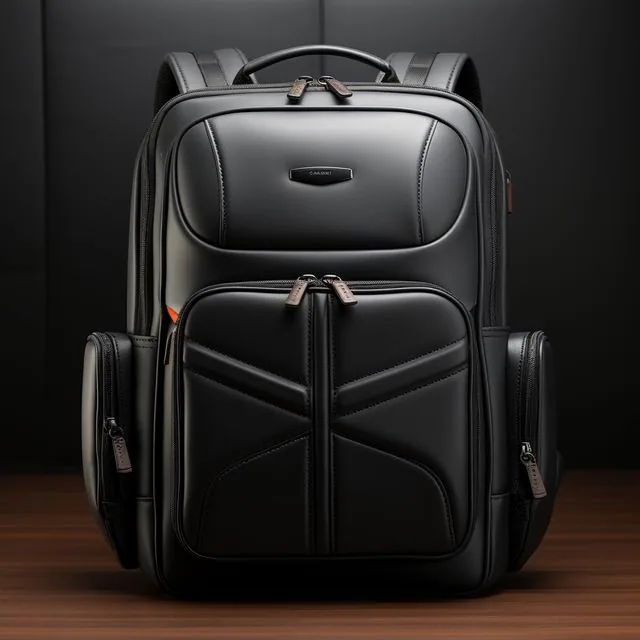
Most pharmacists commute in ordinary clothes and change on site, which means a damp coat, a wet umbrella and sometimes a pair of outdoor shoes travel with them. A pack without a wet compartment puts all three against paperwork and lunch. A film-lined external pocket 200-250 mm deep handles a rolled umbrella and a folded coat, and a separate shoe compartment is worth considering for hospital staff who change fully, though it adds 30-40 mm of depth. A wet compartment is the difference between a bag used for a full year and one quietly replaced with a supermarket tote in November.
Winter also brings a second pair of shoes, gloves and a hat, which is where a 16 L bag becomes a 20 L bag for four months of the year. Buying to the winter requirement and compressing in summer is more sensible than the reverse, provided the compression straps sit over the body of the pack rather than across the bottle pocket. A hydrostatic head of 1,200 mm or better on the face fabric keeps the interior dry on a ten-minute walk from a car park or bus stop. A pack that compresses well in summer is easier to store in a shared locker, which is where the depth budget is tightest.
- Film-lined wet pocket 200-250 mm deep for coat and umbrella.
- Optional shoe compartment for hospital staff changing on site, plus 30-40 mm depth.
- Buy to winter volume and compress in summer, not the other way round.
- Compression straps placed over the body, not across the bottle pocket.
- Hydrostatic head of 1,200 mm or better on the face fabric.
Specifying a Pharmacy Group Order
Multiple-site pharmacy groups, hospital trusts and primary care networks order staff bags as a single style in one or two colourways, branded discreetly. Minimum order quantity is 500 pcs per style and colourway, which suits a group buying across branches but is high for an independent; sampling takes 6-10 working days for a soft-shell design and 12-15 working days where the build includes a moulded panel or a welded wet compartment. Bulk production then runs 35-50 days from approval. Independents usually join a group order or buy into an existing style, which is cheaper than commissioning a run at the full minimum on their own.
Inspection priorities for this category are zip smoothness, coating adhesion after repeated wiping, and lining seams. Pre-shipment inspection at AQL 2.5 under ISO 2859-1 is the standard setting, and abrasion on the base panel should be evidenced to ISO 12947-2 at 12 kPa. QUANZHOU JUNYUAN BAGS has coordinated programmes since 2014, with our production team working across 4,950 m² of SGS-verified production floor space, 137 colleagues and 7 production lines, shipping FOB Xiamen on T/T 30/70. Zip smoothness should be tested with dust on the chain, because a zip that feels fine in a showroom can grit up within a week in a dispensary.
| Parameter | Standard terms | Notes |
|---|---|---|
| MOQ | 500 pcs per style and colourway | Suits multi-branch groups; each colourway counts separately |
| Sampling | 6-10 working days | 12-15 working days for complex builds |
| Bulk production | 35-50 days | From approved sample and deposit |
| Inspection | AQL 2.5, ISO 2859-1 | Plus ISO 12947-2 abrasion on the base panel |
| Commercials | FOB Xiamen, T/T 30/70 | Since 2014; 4,950 m² SGS-verified floor space; 7 lines |
A Ten-Point Checklist for a Dispensary Bag
Order the checks by consequence. Locker fit and cleanability come first because a bag that fails either is abandoned within a fortnight, whatever else it does well. Noise and hardware come next because they affect the working environment rather than the individual. Volume, harness detail and branding come last, because at 2.5-4 kg almost any reasonable strap will do and a discreet logo is easy to live with. Order the checks by consequence rather than by cost, since a bag that fails locker fit or cleanability is abandoned within a fortnight whatever else it does well. Review a sample after two weeks of real shifts.
One decision should be made explicitly before ordering: whether indoor shoes travel in the bag. Including a shoe compartment changes the depth budget, the locker fit and the cleaning routine, so it is far cheaper to resolve at specification stage than to discover in week two that the issued bag does not fit the lockers on a particular site. Deciding early also avoids the familiar pattern of ordering one style, finding in week two that it does not fit the lockers on a particular site, then running two styles side by side for years. One decision at specification stage prevents a decade of duplicated stock.
- Loaded dimensions under 280 mm wide, 200 mm deep and 400 mm tall.
- Smooth wipe-clean shell, no open mesh, canvas or brushed tricot outside.
- Bound or welded external seams and a wipeable, light-coloured lining.
- Volume 14-20 L, bought to the winter requirement and compressed in summer.
- Silicone-dipped pullers, zip garage, acetal buckles, soft-lined key pocket.
- Lockable twin pullers plus a hidden back-panel pocket.
- Film-lined wet pocket 200-250 mm deep for coat and umbrella.
- Separate insulated or wipeable food compartment with a sealed lining.
- Packed weight budget of 2.5-4 kg, carried on both shoulders.
- Programme terms confirmed: MOQ 500 pcs, 6-10 working day sampling, AQL 2.5.
Frequently Asked Questions
What size backpack do pharmacists need?
Fourteen to twenty litres suits almost everyone. Lunch and a drink need 1.0-1.5 L, a layer 1.5 L and paperwork 0.5 L, so 16 L covers a standard day and 20 L covers winter kit or indoor shoes. Above 22 L the bag stops fitting a shared locker and the spare space collects dust. Buy to the winter requirement and compress in summer rather than the reverse, since layers and shoes add four months of volume.
Why should a pharmacy bag stay off the dispensing bench?
Personal items belong away from medicines, labels and the checking area, so the bag should go straight to a locker or staff room. That constraint drives the whole specification: locker-compatible dimensions, wipe-clean external surfaces and a bag that closes fully rather than one that is simply tidied aside. Keeping the bag in a locker rather than on a bench or a chair is the behaviour that matters, and a bag designed for the locker makes it easy.
Will a 20 L backpack fit in a pharmacy staff locker?
Usually. Lockers typically give 300 mm width, 450 mm height and 400-450 mm depth, sometimes with a mid-height shelf. A bag loaded to 280 x 200 x 400 mm fits upright alongside a coat. If the locker has a shelf, drop to 14-16 L or choose a pack with effective side compression. If the locker has a mid-height shelf, drop to 14-16 L or specify effective side compression straps.
What fabric is best for a dispensary work bag?
A smooth TPU-laminated or tightly woven polyester shell wipes clean in about 30 seconds and does not hold powder residue. Avoid open mesh, brushed tricot and canvas externally, since none can be cleaned reliably. Check that printed branding sits under a film so detergent wipes do not lift it. A light-coloured lining also helps, since residue on a dark interior is invisible until it has spread.
How can I make a work bag quieter at the counter?
Specify silicone-dipped zip pullers, a fabric zip garage at the top stop, acetal rather than metal buckles, and a soft-lined pocket with a key clip. Together those remove almost all hardware noise, which matters in a room where consultations about sensitive purchases take place. Silicone-dipped pullers and acetal buckles remove almost all hardware noise in a room where consultations take place.
How heavy should a pharmacist's bag be?
Two and a half to four kilograms is typical: lunch 0.6-0.9 kg, drink 0.5-0.75 kg, tablet 0.5 kg, layer 0.4 kg and personal items 0.4-0.8 kg. At that weight a hip belt is unnecessary, 50-60 mm straps with 8 mm foam are adequate, and the bag should be carried on both shoulders. Store the bag for the shift rather than wearing it, and carry it on both shoulders for the walk in.
Do pharmacy staff need a wet compartment?
Most do, because pharmacists commute in ordinary clothes and change on site. A film-lined external pocket 200-250 mm deep takes a folded coat and a rolled umbrella and keeps them away from paperwork and lunch. A shoe compartment is worth considering for hospital staff who change fully. A film-lined pocket of 200-250 mm keeps a folded coat and umbrella away from paperwork and lunch.
Is RFID blocking worth having on a pharmacy bag?
It is generally overstated. Contactless fraud is handled by the card issuer, and the greater risk is theft of the physical card or a staff pass. Prioritise a fully closing hidden pocket, a lockable main zip and locker storage over a shielded lining. Prioritise a fully closing hidden pocket and a lockable main zip over a shielded lining, which addresses the smaller risk.
How often should a dispensary bag be cleaned?
Wipe external surfaces daily or whenever the bag has been near preparation areas, and wash or wipe the lining weekly or immediately after a leak. Dry the pack open for at least four hours so it is not stored damp, and avoid machine washing a bag with a moulded back panel. Dry the pack open for at least four hours so it is not stored damp between shifts.
Can staff bags be branded for a pharmacy group?
Yes. Own-label staff bags run at MOQ 500 pcs per style and colourway, with sampling in 6-10 working days and 12-15 working days for complex builds such as a welded wet compartment. Bulk production runs 35-50 days, inspected at AQL 2.5 to ISO 2859-1. Bulk production runs 35-50 days from approval, with pre-shipment inspection at AQL 2.5 to ISO 2859-1 before loading.
Should the bag include a shoe compartment?
Only if staff change footwear on site, as in many hospital settings. It keeps outdoor shoes away from uniform and food but adds 30-40 mm of depth and 150-250 g, which can push a 20 L pack out of a locker. Decide before ordering, since it changes the whole dimensional budget. Hospital staff who change footwear on site benefit most; community staff carrying lunch and paperwork rarely do.
Specifying Bags for Dispensary Teams
Dispensary bags succeed on locker fit, a wipe-clean shell and quiet hardware. Set those three at specification stage and the rest of the brief, volume, colourway and branding, resolves quickly and without argument between sites.
Group orders begin at 500 pcs per style and colourway, with samples in 6-10 working days and 12-15 working days for a welded wet compartment, followed by 35-50 days of bulk production inspected at AQL 2.5 under ISO 2859-1. QUANZHOU JUNYUAN BAGS, established in 2014, coordinates the programme with 137 colleagues across 4,950 m² of SGS-verified production floor space and 7 production lines, FOB Xiamen, T/T 30/70.
Email: service@junyuanbags.com
WhatsApp: +86 177 5002 0688