Best Backpacks for Padel and Tennis Players: Racket Geometry, Ball Storage and Court-Day Layout
Racket length decides the bag before litres do: a padel racket of about 455 mm fits inside a pack with 480 mm of internal height, while a 27 in (685 mm) tennis frame needs a diagonal or external sleeve. Plan on 22-32 litres, a ventilated shoe zone and a welded wet pocket.
This guide compares internal sleeves, external quivers and dedicated racket compartments, then sets out the fabric, odour-control and carry specifications that matter for UK club play. Ordering parameters are fixed: 500 pcs per style and colourway, 6-10 working days for sampling, 35-50 days for bulk, quoted FOB Xiamen on T/T 30/70.
Racket Geometry Decides the Bag, Not the Litres
Start with the frame. A padel racket measures up to roughly 455 mm long, 260 mm wide and 38 mm thick with no strings, so it behaves like a solid paddle and fits inside any pack offering 480 mm of internal height. A tennis frame is 27 in (685 mm), and junior and some adult frames run from 26 in to 29 in, so the longest common frame reaches 737 mm. Head width is 250-270 mm and the butt cap adds thickness at the grip, which means a straight internal sleeve needs about 700 mm of clear diagonal height to swallow a tennis racket without bending the throat.
Most backpacks are 420-480 mm tall internally, so the practical conclusion is blunt: padel rackets go inside, tennis rackets usually do not. For tennis, choose a bag with an external racket sleeve or quiver of about 700 x 280 mm, or carry a dedicated six or nine-racket bag alongside a smaller kit pack. Players who insist on internal carry should look for a diagonal sleeve in a 32 litre pack and should accept that the sleeve eats into the main cavity and pushes the load away from the spine, which is noticeable on a 2 km walk to the club. Measure the throat width as well: a frame with a 270 mm head needs a sleeve at least 280 mm wide, otherwise the racket goes in head-first and the butt cap catches door frames.
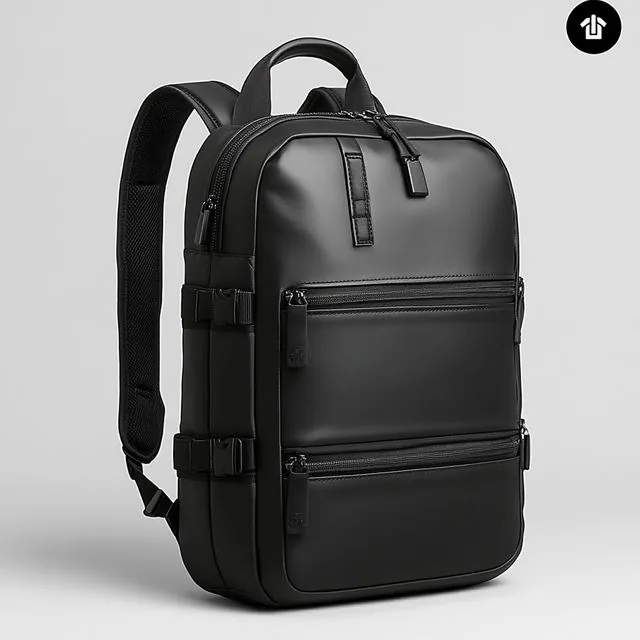
Internal Sleeve vs External Quiver for Racket Carry
Each carry method trades protection, speed and volume differently. An internal padded sleeve shields the frame from knocks in a car boot or a crowded changing room but slows access, because the racket is buried behind clothing and shoes. An external quiver is the fastest at the court and keeps court dust away from clean kit, but leaves the head exposed to door frames and boot lids. A dedicated racket compartment with its own padded wall is the best compromise and is what most club players prefer after a season of using both. Two-racket players should check whether the compartment takes two frames with a divider, since stacked rackets scuff faces and overgrip dust transfers between them.
| Carry method | Frame protection | Access speed | Volume needed |
|---|---|---|---|
| Internal padded sleeve | Good at 480 mm or more | Slow | 28-32 L |
| External diagonal quiver | Fair | Fast | 22-28 L |
| Dedicated racket compartment | Best | Medium | 30-35 L |
| Separate racket bag | Best | Slow | Kit pack plus 4-6 L |
Whichever method you choose, check three details on the sample. The sleeve mouth should be at least 280 mm wide so a padded racket cover goes in without a fight; the sleeve base should be reinforced, because butt caps punch through 210D linings within a season; and the closure should be a hook-and-loop or magnetic tab that works one-handed while you hold a drink. A sleeve that is simply an open slip pocket will drop a racket the first time the bag is set down at an angle. A quiver with an elasticated collar also stops a racket sliding out when the bag is carried at an angle, which is the most common way frames get dropped in a club car park.
Ball Compartments: Pressure, Heat and Noise
Balls are the item players underestimate. A standard pressurised can holds three balls, so carrying twelve balls for a coaching session means four cans and roughly 1.5 litres of space. Once a can is opened, balls lose internal pressure steadily; players training three times a week typically open a new can every two to three weeks. Heat accelerates that loss, and a car boot on a warm UK afternoon can exceed 45 °C, which is the environment that does the most damage between sessions, particularly for players who leave kit in the car overnight. Storage is the other half: keep unopened cans below 25 °C and rotate stock so the oldest can is opened first rather than left for months in a boot.
A thermal-lined compartment with 4-6 mm closed-cell foam and a reflective liner keeps the ball pocket within 3-5 °C of ambient for two to three hours, which is enough to carry balls from a cool clubhouse to an outdoor court in summer. Its second job is noise: four loose cans rattle against keys and a phone, so elasticated loops or a moulded tray are worth specifying. Non-pressurised balls suit high-volume coaching and remove the storage problem entirely, at the cost of a slightly firmer feel off the strings. Where noise matters, a moulded tray of 200 x 150 mm is quieter than elastic loops and stops cans deforming, which is what causes the rattle in the first place.
Shoes, Sweat and the Wet Zone
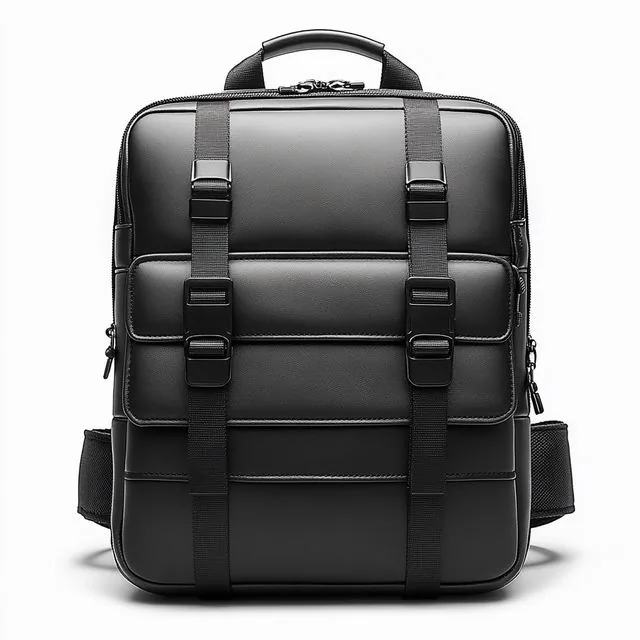
Court shoes are the bulkiest and dirtiest item in the bag. A pair of men's court shoes in UK sizes 8-11 weighs 700-950 g and occupies 4-6 litres, and clay or indoor dust transfers to everything it touches. A ventilated shoe compartment of 6-9 litres, separated by a welded or coated liner rather than a simple fabric divider, keeps that dust away from kit and grips. Look for two 8-10 mm grommets on the outer face of the compartment, because trapped moisture is what turns a shoe pocket into an odour problem within a fortnight. A coated liner that wipes clean is worth more than extra padding here, because clay dust works into foam and stays there, while a wipe-clean floor takes seconds to maintain.
The wet zone also has to cope with a soaked shirt and towel after a hard session. A welded TPU pocket of 4-6 litres with a drainage path handles that, and it should sit at the base of the pack rather than against the back panel. Shampoo and shower gel bottles are the most common cause of bag disasters, so specify a sealed toiletries sleeve with a coated floor that can be wiped out. One extra detail for outdoor club play: a foldable towel loop on the harness stops a wet towel being stuffed into the main cavity. Squad players should also look for a 1 litre sleeve for grip tape and overgrips, since loose reels unwind themselves at the bottom of the main cavity within two sessions.
Volume for a Court Session: 22-32 Litres
A realistic kit audit lands between 22 and 32 litres. Shoes take 4-6 litres, a change of kit and a towel another 6-8 litres, balls 1.5 litres, a 750 ml bottle 1 litre, toiletries 1 litre, and a racket sleeve or external quiver takes the rest. Players who go straight from the office add a 14 in laptop and a washbag, which pushes the useful figure to 28-32 litres. Below 22 litres you will be carrying a second bag, and above 35 litres the pack stops fitting a standard UK club locker. Parents packing for two players should step up to 35-40 litres and accept a taller pack, because a second pair of shoes alone adds 4-6 litres to the load.
Locker dimensions are the constraint people forget. Many UK club and gym lockers have an opening around 300 x 450 mm with a depth of 400-500 mm, so a pack wider than 320 mm or deeper than 250 mm when loaded has to be squeezed. Ask for the loaded footprint rather than the empty one, and check the depth with shoes in the compartment, because that is the dimension that grows most. A compressible design with two side straps solves the problem without losing volume. Compression straps also stabilise a half-full bag, which matters more than volume on court days when the pack carries shoes, a bottle and very little else.
Linings, Odour Control and Antibacterial Finishes
Odour is the most common reason court bags get replaced. Sweat-soaked kit sits in a closed cavity for hours after a session, and standard polyester lining offers no resistance to bacterial growth, so the smell is established long before the fabric looks worn. A lining finished with an antibacterial treatment and tested to AATCC 100 measures bacterial reduction over a 24-hour contact period; a result above 99 per cent is achievable on a coated lining and is worth asking for on the shoe compartment and wet pocket specifically, where the load is highest. Ask for the finish on the lining specifically, not on the shell: a treatment applied only to the outer fabric does nothing for the shoe compartment where the problem starts.
Finish is only half the answer; airflow does the rest. A shoe compartment with two 8-10 mm grommets and a mesh panel of at least 200 x 150 mm drops internal humidity far faster than a sealed box, and a bag that dries in four hours rather than twelve simply smells better. Washability matters too: linings should survive repeated domestic laundering, with colourfastness and dimensional change checked under ISO 6330 at 30 °C, because a lining that shrinks pulls compartment seams out of alignment and leaves gaps where dust travels. Removable lining panels are worth considering for club programmes, since a panel can be washed separately while the rest of the bag stays structurally intact.
Carry Comfort on the Walk or Ride to the Club
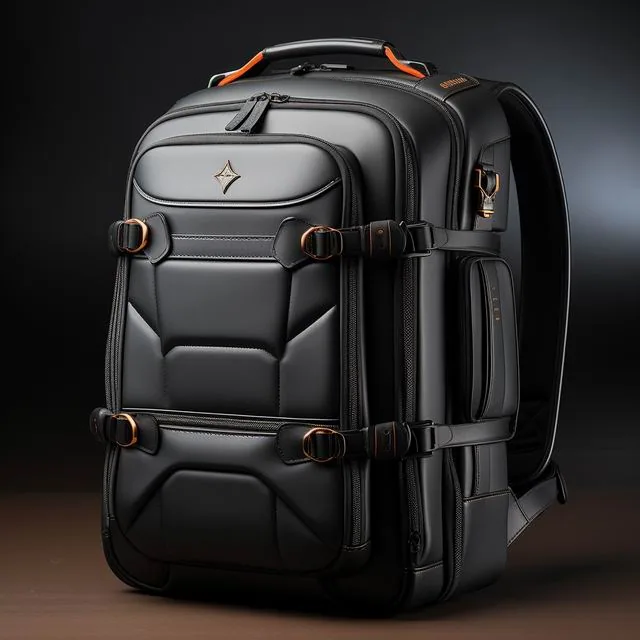
A court bag loaded with shoes, kit, balls and a bottle weighs 5-7 kg, which is below the threshold where a hip belt becomes essential but high enough that strap design matters. Straps of 60-75 mm with 8-10 mm foam spread that load comfortably over a 1-2 km walk from a station; narrow 40 mm straps with 4 mm foam feel fine for two minutes and uncomfortable by ten. A sternum strap helps when the bag is carried over a coat, and a padded grab handle makes locker handling easier than dragging the bag by one strap. A luggage pass-through panel helps players who travel to tournaments, letting the court bag ride on a cabin case instead of adding a fifth item to carry.
Loading order affects comfort more than most players expect. Put shoes and the bottle low and close to the back panel, balls and toiletries in mid pockets, and soft kit at the top. That arrangement keeps the centre of gravity within about 100 mm of the spine, which is the difference between a bag that feels stable on a bike and one that swings into the back of your knee. For anyone carrying 7 kg or more repeatedly, the HSE manual handling guidance is a useful reference on load limits and lifting technique. Padel players should also check that the solid frame sits flat against the back panel, since a paddle carried diagonally presses into the spine on longer walks.
Specs for Club Orders and Merchandise Programmes
Club and merchandise programmes run on fixed parameters. Orders begin at 500 pcs per style and colourway, with sampling in 6-10 working days and 12-15 working days where thermal-lined ball compartments, moulded shoe trays or bespoke racket sleeves are involved. Bulk production then takes 35-50 days, shipped FOB Xiamen on T/T 30/70 terms, with inspection at AQL 2.5 under ISO 2859-1. Clubs ordering for a season should place orders at least 90 days before the first fixture to allow for freight and UK inland delivery. Freight planning matters as much as production: sea freight plus UK inland delivery is where most late-season orders slip, so build the buffer into the fixture calendar.
Specification discipline saves money on repeat orders. Fix the shell fabric at 420D-600D polyester with a PU coating, agree the antibacterial finish and its test method, and confirm locker-compatible dimensions before sampling rather than after. Established in 2014, the operation behind QUANZHOU JUNYUAN BAGS coordinates 7 production lines and 137 colleagues across 4,950 m² of SGS-verified production floor space, which allows a club to split a single order across two colourways for men's and ladies' sections without splitting the delivery date. Clubs should confirm zip chain size and lining finish in writing before sampling, because those are the two items most often substituted between sample and bulk.
Cleaning Clay, Court Dust and Sweat Off Court Bags
Court bags collect three contaminants: clay or indoor dust from shoes, grip and overgrip residue, and dried sweat in the linings. Empty the shoe compartment and tap it out after every session, then brush grommets and mesh panels with a dry nylon brush so dust does not cake into the lining. For the shell, wipe with a damp microfibre cloth and a pH-neutral detergent; avoid solvent cleaners, which strip the coating and dull printed logos within a season. Pay attention to the zip garage and storm flap, where dust collects; a dry brush there prevents the grit that eventually grinds into the coil and shortens zip life.
Deep cleaning should be occasional rather than routine. Wash the bag by hand at 30 °C, rinse twice, then dry it open and upside down for 12-24 hours in moving air, keeping it below 60 °C so coatings do not hydrolyse. Re-lubricate zips with a wax stick after washing, because detergent removes the factory lubricant and a dry #8 slider starts to snag within weeks. Store the bag with the shoe compartment open and a silica gel sachet inside if it lives in a damp garage. Overgrip residue lifts with warm water and a little soap; solvents remove it faster but also remove the print on a club logo, so keep them away from branded panels.
Frequently Asked Questions
Do tennis rackets fit in a normal backpack?
Rarely. A 27 in frame is 685 mm long and some adults play 29 in at 737 mm, while most backpacks offer 420-480 mm of internal height and only about 560 mm on the diagonal. Choose a bag with an external racket sleeve of roughly 700 x 280 mm, or carry a dedicated six or nine-racket bag. Padel rackets at around 455 mm do fit inside a 480 mm internal height pack.
What size backpack do I need for padel?
Plan on 22-28 litres for shoes, kit, a towel and one or two rackets, rising to 30-32 litres if you carry a laptop or a second racket. The critical dimension is internal height of 480 mm or more for the frame, plus a shoe compartment of 6-9 litres. Check the loaded footprint against your club locker, which is often only about 300 x 450 mm at the opening.
How many tennis balls fit in a thermal compartment?
A shaped thermal pocket of 200 x 150 mm holds four three-ball cans, which is twelve balls, or about eighteen loose balls if you prefer them unpacked. Elasticated loops stop cans rattling against keys and phones during the walk to the court. For squad coaching, non-pressurised balls remove the pressure-loss problem entirely and can be stored loose in a 3 litre pocket.
Do thermal compartments actually keep balls fresher?
They moderate temperature rather than preserve pressure permanently. A 4-6 mm foam sleeve with a reflective liner holds the pocket within 3-5 °C of ambient for two to three hours, which matters when a car boot exceeds 45 °C on a warm day. That slower heat exposure extends usable bounce by roughly a week or two compared with balls left in direct heat.
Can I carry two padel rackets in one bag?
Yes, if the sleeve mouth is at least 280 mm wide and the base is reinforced. Two solid padel rackets at 38 mm thick sit at roughly 76 mm combined, so look for a compartment with a 90 mm gusset and a divider to stop the faces scuffing. Butt caps punch through light linings, so check for a reinforced sleeve floor on the sample before ordering.
Should a padel bag have a separate shoe compartment?
Yes. Court shoes weigh 700-950 g and carry clay or indoor dust that transfers to kit and grips. A 6-9 litre compartment separated by a welded or coated liner, with two 8-10 mm ventilation grommets, keeps odour down and lets the compartment dry in hours rather than overnight. Without separation, the main cavity needs washing far more often and wears out sooner.
How much should a tennis or padel backpack weigh empty?
Expect 0.8-1.4 kg for a 22-32 litre court bag built on 420D-600D polyester. Below 0.8 kg the lining and shoe compartment are usually too light to survive a season of weekly use; above 1.6 kg the structure is probably over-built for a load that rarely exceeds 7 kg. Weight matters less than pocket layout and ventilation on this type of bag.
What fabric is best for a padel or tennis bag?
420D-600D polyester with a PU coating is the practical choice: it resists court dust, wipes clean and holds a printed or embroidered logo well. Abrasion resistance should check out at 10,000-15,000 rubs under ISO 12947. Insist on a coated or welded shoe compartment liner, and confirm the antibacterial finish on linings has been tested to AATCC 100. A coated lining in the shoe compartment matters as much as the shell, since that is the surface that sees clay, court dust and sweat every session.
What is the minimum order for branded club bags?
Club programmes start at 500 pcs per style and colourway. Sampling takes 6-10 working days, or 12-15 working days with thermal ball compartments or moulded shoe trays, followed by 35-50 days of bulk production. Shipment is FOB Xiamen on T/T 30/70 with inspection at AQL 2.5 under ISO 2859-1; allow 90 days before the first fixture including freight. Logo placement, lining finish and zip chain size should be confirmed in writing before the sample is approved, so bulk matches what the coach signed off.
How long does sampling take for a custom court bag?
A first sample takes 6-10 working days for a standard build and 12-15 working days where bespoke racket sleeves, thermal pockets or custom zip pulls are specified. Approve the sample before bulk, which runs 35-50 days. Freight and UK inland delivery add another 10-14 days, so a season-opening order should be raised roughly three months ahead. A second sample round adds a further 6-10 working days, so clubs should build that possibility into the fixture calendar from the start.
How do I stop my court bag smelling?
Dry it between sessions rather than masking the smell. Empty the shoe compartment, open the wet pocket and leave the bag upside down in moving air for 12-24 hours, or four to six hours with a fan. Specify a lining with an antibacterial finish tested to AATCC 100 plus ventilation grommets, and hand wash at 30 °C when the odour persists. Avoid storing a damp bag closed in a boot.
Build a Club or Retail Court Bag
QUANZHOU JUNYUAN BAGS works with clubs, coaches and retail buyers as a sourcing and programme-management company. Send the racket dimensions, shoe compartment requirements and colourways you need, and the production team will return fabric options, lining specifications and a sampling plan with confirmed lead times.
Court bag programmes start at 500 pcs per style and colourway, with 6-10 working days for sampling, 35-50 days for bulk, AQL 2.5 inspection and FOB Xiamen delivery on T/T 30/70 terms.
Email: service@junyuanbags.com
WhatsApp: +86 177 5002 0688