Best Backpacks for UK Nurses on 12-Hour Shifts: Locker Fit, Cleanability and Load
A nursing shift bag should be 18-24 L, wipe-clean on every external surface, narrow enough for a 300 mm staff locker and light enough to stay under 5 kg fully packed. That combination matters more than any feature, because the bag spends the shift in a locker, not on your back, and it has to be cleaned between shifts.
This guide is written for ward, community and theatre nurses working 12-hour shifts with handover, not for students on placement days. It covers locker dimensions, surface cleanability, laundering turnaround, night-shift visibility and the food-and-fluid load that a long shift actually requires.
What a 12-Hour Shift Changes About the Bag
An eight-hour day and a 12-hour shift are not the same carry problem. A long shift typically runs 12.5 hours including handover, spans three breaks if you are lucky, and starts or ends in darkness for roughly half the year. That means the bag has to carry enough food and fluid for a full day rather than a lunch, enough layers for a ward that swings between 19 °C and 26 °C, and a change of uniform or shoes on the days you travel straight from another commitment. Weight creeps up invisibly: uniform 0.6 kg, shoes 0.8 kg, fluids 1.5 kg, food 0.7 kg and personal kit 1.0 kg is already 4.6 kg.
The second change is that the bag is carried for short bursts and stored for long ones. Unlike a commuter pack, which is on the back for 40 minutes twice a day, a shift bag is worn for ten minutes into the hospital and then sits in a locker for twelve hours. That inverts the usual priorities: harness sophistication matters less, while the ability to collapse flat, stand upright on a locker shelf and be wiped down at the end of the shift matters considerably more. A useful check is to pack the bag for a winter shift, weigh it on kitchen scales and compare the figure with 10% of body weight, because most people underestimate the gap.
- Shift length: 12.5 hours including handover, so plan food and fluid for a full day.
- Carry bursts are short; storage time is long, so locker fit outweighs harness complexity.
- Typical packed weight lands at 4-6 kg, well below the point where a hip belt helps.
- Half the year involves travelling to or from work in darkness, which changes the visibility requirement.
Volume and Contents: Why 18-24 Litres Wins
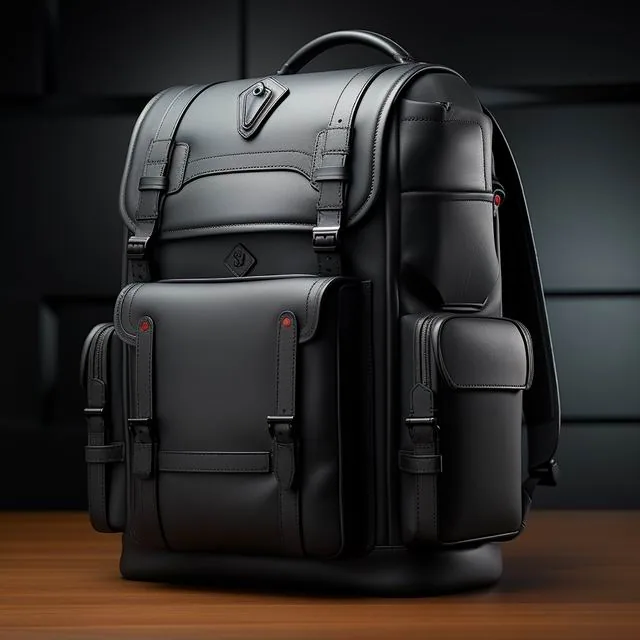
Most ward nurses are better served by 20 L than by anything larger. That volume holds a folded uniform, a pair of shoes up to UK size 10, a 1.5 litre bottle, a lunch bag, a wash bag and a device sleeve without the pack bulging past 300 mm in width. Community nurses who carry dressings, a blood pressure cuff and a handheld recording device need the upper end at 24 L, and theatre staff who change fully on site may want a separate shoe compartment. Above 26 L the pack stops fitting the standard locker shelf flat and starts being left on the floor of the staff room.
Compartmentalisation is where nursing bags usually fail. A single open cavity means a water bottle lying sideways, a leaking yoghurt pot and a stethoscope sharing the same space. The layout that works divides three zones: a clean zone for uniform and layers, a food zone with a wipeable or insulated lining, and a kit zone for a stethoscope, pen torch, scissors, drug calculator and spare pens. A separate external bottle pocket is not optional, because a bottle inside the main compartment will eventually leak onto something you need. If the bag must also hold indoor shoes, allow a further 3-4 L and confirm it still closes without compressing the food compartment.
| Zone | Contents | Design requirement |
|---|---|---|
| Clean | Uniform, fleece, spare top | Flat sleeve, no contact with food or fluids |
| Food | Lunch, snacks, cool pack | Wipeable or insulated lining, sealed seams |
| Kit | Stethoscope, scissors, pens | Elastic loops, 25-40 mm wide |
| Fluids | 1.5 litre bottle | External elasticated pocket, 90 mm diameter |
| Personal | Phone, purse, keys, badge | Quick-access pocket, lockable zip |
The Bag as a Surface: Cleanability Between Shifts
A shift bag travels through a hospital, a bus or a car, and then into a home. Treating it as a surface that needs cleaning rather than an accessory changes which materials make sense. A smooth TPU-laminated or tightly woven polyester shell can be wiped with a detergent wipe in about 30 seconds; a brushed tricot or canvas panel holds moisture and organic residue and cannot be reliably cleaned. Seams should be bound or welded externally, and external pockets should be minimal, because every fabric fold is a place a wipe does not reach. Teams issuing bags often find a mid-grey shell hides residue better than black while still looking presentable on a ward corridor.
Cleaning frequency matters as much as material. CDC guidance on hand hygiene makes the point that visibly soiled hands need soap and water rather than sanitiser, and the same logic applies to a bag that has been set down on a ward floor: wipe it, do not spray and hope. Choose a shell that tolerates the wipes your trust actually issues, typically 70% alcohol or 1,000 ppm chlorine-based, and check that printed logos sit under a film rather than on top of one, so repeated wiping does not lift the brand. Build the clean-down into the end-of-shift routine rather than leaving it to a weekly habit, because a bag used across three consecutive shifts has no natural cleaning point.
- Shell: TPU-laminated or tightly woven polyester, smooth enough to wipe in 30 seconds.
- Avoid brushed tricot, canvas and open-weave mesh on external panels.
- Bound or welded external seams; minimise external folds and pocket count.
- Logo under a protective film, compatible with alcohol and chlorine wipes.
- Light-coloured linings, so residue and leaks are visible rather than hidden.
Laundering and Turnaround Between Shifts
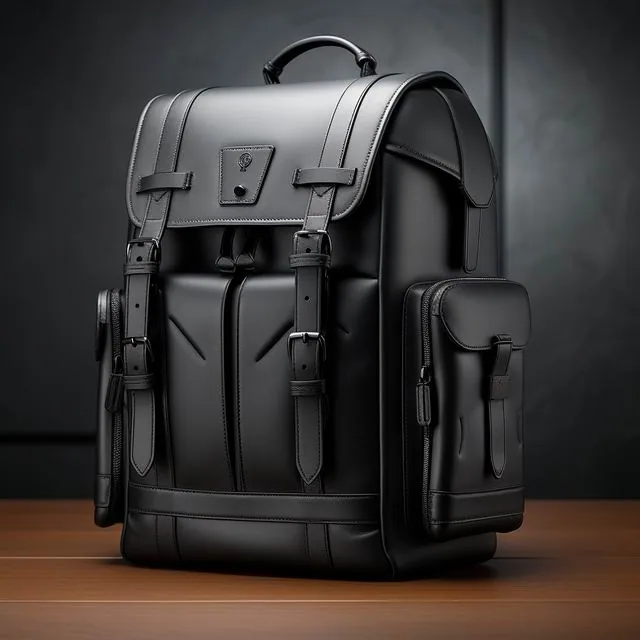
Most nurses work three long shifts in a row, which leaves roughly 12-14 hours between one shift ending and the next beginning. Anything that needs laundering has to dry inside that window. A pack that can be hand washed and drip-dried in eight hours is usable across a run of shifts; a pack that needs 24 hours is not, and will simply go unwashed. That argues for a removable lining or an entirely film-lined interior rather than a padded fabric one, and for a back panel with open channels rather than a laminated foam slab that holds water. Test drying time before approving a sample: pour 100 ml of water into the lining, tip it out, and check whether the pack is dry within eight hours at room temperature.
Uniform policy often sets the temperature benchmark. Where uniforms are laundered at 60 °C to reduce microbial load, a bag lining washed alongside them at the same temperature will survive only if it is polyester or nylon with a stable coating; PVC-backed linings stiffen and crack. Check whether the lining can be removed without tools, because a lining stitched into the corners cannot be washed properly at all. Drying should be done open, upside down, in a ventilated room, and the pack should be fully dry before it is closed for storage. Where uniforms are laundered at 60 °C, confirm that the lining and any printed label survive three cycles at that temperature before the full run is booked.
Wipe the shell at the end of every shift, remove and wash the lining weekly, and dry the pack open and upside down for at least four hours. A bag that needs more than 12 hours to dry will not survive a three-shift run without being packed damp.
Locker Fit, Staff Rooms and Ward Rules
Storage is the constraint that catches buyers out. Many wards operate a rule that personal bags stay in lockers or staff rooms and do not travel to the bedside, so the bag has to fit the locker rather than the corridor. Typical staff lockers give 300 mm of width, 450 mm of height and 400-450 mm of depth, sometimes with a shelf at mid-height that halves the usable opening. A pack measuring 300 x 180 x 450 mm when loaded fits upright; a 34 L travel-style pack does not, and ends up on a chair or the floor, which is both an infection-control issue and a trip hazard.
Two design details make locker life easier. First, a pack that stands on its own base rather than slumping, so it can be placed on a shelf without falling onto someone's coat. Second, a low-profile harness: wide moulded straps and a rigid frame add 30-40 mm of depth when the pack is set down. If the bag must be compressed into a half-width locker, side compression straps are worth having, but check that they do not sit over the bottle pocket, which is where they usually end up. A flat structured base costs very little and stops the pack sliding off a shelf onto someone's coat, which is the complaint that gets staff bags banned from shared areas.
| Storage situation | Typical clear size | Recommended bag |
|---|---|---|
| Full-height locker | 300 x 450 x 450 mm | 20-24 L, 300 mm wide, upright base |
| Half-width locker | 150-180 mm wide | 18-20 L with side compression straps |
| Open staff room shelf | 350 x 300 mm shelf | 18 L, low-profile harness, flat base |
| Community car boot | No fixed space | 24 L with a wet-kit compartment |
| Theatre changing area | Shared bench | 24 L, wipe-clean shell, no external mesh |
Comfort at 4-6 kg: Where the Money Should Go
A 4-6 kg load does not need mountaineering hardware, and paying for it is wasted budget. What matters at that weight is strap shape and strap width: 55-65 mm with 8-10 mm of foam, cut on a curve so the strap lies flat against the chest rather than folding. Padding beyond about 12 mm adds bulk without adding comfort at this load, and a hip belt on a 5 kg pack mainly gets in the way on a bus or in a corridor. A sternum strap is useful if the walk to work is more than 15 minutes or involves stairs.
The health context is repetitive strain rather than heavy lifting. Healthcare work carries its own musculoskeletal risk profile, and HSE guidance for health services covers manual handling in that setting, including patient handling and load management. For the bag itself, the practical rules are straightforward: carry on both shoulders, keep the pack under about 10% of body weight, and avoid the one-shoulder habit that develops when a bag is quick to sling. A grab handle at the top is genuinely useful on a ward. Twenty minutes of carrying a day does not justify a framed harness, and the extra depth is precisely what stops the pack fitting the locker it has to live in.
- Straps: 55-65 mm wide, 8-10 mm foam, curved rather than folded.
- Skip the hip belt under 6 kg; keep a sternum strap for walks over 15 minutes.
- Keep total packed weight near 10% of body weight.
- Top grab handle for carrying the pack through corridors and changing areas.
Night Shifts, Dark Mornings and Visibility
Finishing at 20:00 in January or starting at 06:45 in November means unlit car parks, quiet bus stops and residential streets with poor lighting. Reflective detailing is the cheapest safety feature on any shift bag. Look for retroreflective piping or a panel of at least 50 cm² on the front and on each shoulder strap, positioned so it remains visible when the pack is worn, not only when it is set down on a lit corridor floor. Dark colourways popular in healthcare settings, particularly black and navy, need the reflective area to be larger rather than smaller. Test it in a dark car park with a phone torch at about ten metres, which is roughly the distance at which a driver registers a moving shape.
Visibility also means being findable. A light-coloured lining turns a black interior into something you can actually search in a dim staff room, and a small carabiner loop or key clip stops keys ending up at the bottom of the main compartment at the end of a night shift. For cyclists, a rear light loop and a strap system narrow enough to sit between the shoulder blades is worth specifying, along with a rain cover that does not hide the reflective detailing when it is deployed. Reflective detailing low on the front panel is often covered by a coat, so specify it on the shoulder straps as well as on the body of the pack.
- Retroreflective area of at least 50 cm² on the front panel and each strap.
- Reflective placement tested with the pack worn, not laid flat.
- Light-coloured interior lining for searching in dim staff rooms.
- Rear light loop and key clip for early starts and late finishes.
- Rain cover cut so it does not obscure reflective panels.
Food, Fluid and Temperature Control
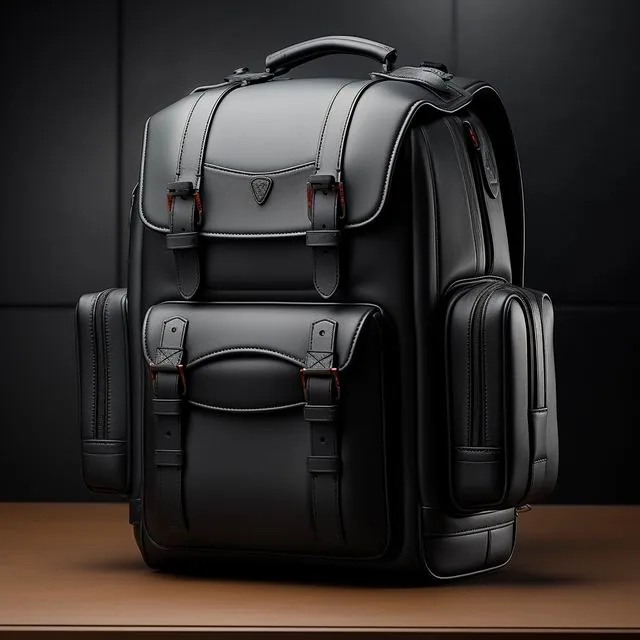
A 12.5-hour shift with three short breaks is a catering problem as much as a carrying problem. Two litres of fluid across the shift is a reasonable planning figure, which usually means a 1.5 litre bottle plus a hot drink, and that volume alone is 1.5-2.0 kg. An insulated pocket of 8-10 mm closed-cell foam with a sealed lining keeps a cool pack effective for roughly four to six hours, which is enough to cover the gap between the start of shift and the first break. A bag that cannot hold both a bottle upright and a lunch box flat will be packed badly every single day.
Food safety is the part most bag reviews skip. Chilled food left at room temperature enters the range where bacteria multiply quickly, and CDC food safety guidance sets out the four-hour limit for perishable food held between roughly 4 °C and 60 °C. In practice that means a cool pack and an insulated compartment rather than a yoghurt pot in the main cavity. Choose a lining that can be wiped after a leak, since a leaking container is a matter of when, not if. An insulated compartment with 8-10 mm foam adds roughly 120-180 g and 15 mm of depth, a small price for keeping a lunch safe across a full shift.
External bottle pocket sized for a 90 mm diameter 1.5 litre bottle, an insulated food compartment with 8-10 mm foam and a sealed wipeable lining, and space for a cool pack of at least 400 g. Keep perishable food chilled for the first four to six hours of the shift.
Specifying a Staff Bag Order
Uniform and staff-bag programmes are usually bought once and issued across a ward, a directorate or a private provider's sites, so the commercial parameters deserve the same attention as the design. Minimum order quantity is 500 pcs per style and colourway, which covers most hospital-group and private-provider volumes in a single run. Sampling takes 6-10 working days for a conventional soft-shell build and 12-15 working days if the design includes a moulded back panel, a welded wet compartment or a bespoke lining shape. Bulk production then runs 35-50 days from sample approval. Consolidating two wards or sites into one order usually clears the minimum comfortably and keeps the colourway consistent for future reissues.
Quality control on staff bags concentrates on the failures that generate complaints rather than returns: zip snagging on the lining, coating peel after repeated wiping, and strap-root stitching. Pre-shipment inspection at AQL 2.5 under ISO 2859-1 is applied to finished bags rather than to components. QUANZHOU JUNYUAN BAGS has coordinated programmes since 2014 as a sourcing and programme-management company, with our production team working across 4,950 m² of SGS-verified production floor space, 137 colleagues and 7 production lines, shipping FOB Xiamen on T/T 30/70. Sample approval is the moment to test wipe compatibility and drying time, since both are expensive to correct once 500 units have been cut and sewn.
| Parameter | Standard terms | Notes |
|---|---|---|
| MOQ | 500 pcs per style and colourway | Programme management since 2014; 4,950 m² floor space; 137 colleagues |
| Sampling | 6-10 working days | 12-15 working days for complex builds |
| Bulk production | 35-50 days | From approved sample and deposit |
| Inspection | AQL 2.5, ISO 2859-1 | Pre-shipment, on finished bags |
| Commercials | FOB Xiamen, T/T 30/70 | Established 2014; 4,950 m²; 137 colleagues; 7 lines |
A Ten-Point Checklist for a Nursing Shift Bag
The checks below are ordered by how often they cause real problems after issue. Locker fit and cleanability come first because a bag that fails either is abandoned within a fortnight, regardless of how comfortable it is. Strap comfort and weight come later, because a 5 kg load is forgiving and almost any reasonable harness will do. Branding and colourway are last, since they are the parts a wearer will forgive. Order the checks by consequence rather than by cost, because locker fit and cleanability decide whether the bag is used at all, and review the sample after two weeks of real shifts.
Where staff are asked to choose their own bag, the specification still matters: an unmanaged mix of bags creates inconsistent cleanability and inconsistent locker behaviour, which is difficult to defend in an infection-control review. A single issued model, specified once and reorderable in the same colourway, is easier to justify and usually cheaper per unit when the volume is consolidated into one style. A single issued model also simplifies replacement when a bag is lost or damaged: one style, one colourway and one reorder number, with no argument about equivalents at year end. Consistency is also easier to defend in an infection-control review than a mixture of personal bags bought individually.
- Loaded width under 300 mm and height under 450 mm for standard lockers.
- Smooth, wipe-clean shell compatible with alcohol and chlorine wipes.
- Bound or welded seams, minimal external folds, no open-weave mesh panels.
- Removable or fully film-lined interior that dries within 12 hours.
- Light-coloured lining so leaks and residue are visible.
- Separate insulated food compartment with a sealed, wipeable lining.
- External bottle pocket sized for a 90 mm diameter 1.5 litre bottle.
- Retroreflective area of at least 50 cm², visible when worn.
- Packed weight kept near 10% of body weight, both straps used.
- Programme terms confirmed: MOQ 500 pcs, 6-10 working day sampling, AQL 2.5.
Frequently Asked Questions
What size backpack is best for a 12-hour nursing shift?
Twenty litres suits most ward nurses and holds a uniform, shoes, a 1.5 litre bottle, lunch and personal kit while staying under 300 mm wide for a locker. Community nurses carrying dressings and equipment should look at 24 L. Above 26 L the pack stops fitting a standard locker shelf and ends up on the floor. Check the figure loaded rather than empty, since shoes and a full bottle add 30-50 mm to the width.
Can a nursing shift bag be wiped down with clinical wipes?
Yes, provided the shell is smooth TPU-laminated or tightly woven polyester. Brushed tricot, canvas and open mesh cannot be cleaned reliably. Check that the wipes your trust issues, typically 70% alcohol or 1,000 ppm chlorine-based, do not lift printed logos, and choose a bag with bound or welded external seams. Test with the wipes your trust actually issues and repeat fifty times on a sample panel to see whether printed branding lifts.
How heavy should a nurse's backpack be?
A realistic packed weight for a long shift is 4-6 kg: uniform 0.6 kg, shoes 0.8 kg, fluids 1.5 kg, food 0.7 kg and personal kit 1.0 kg. Keeping the load near 10% of body weight avoids shoulder and neck strain, and at that weight a hip belt adds bulk without adding comfort. Weigh the bag once on kitchen scales; most staff find they are carrying closer to 6 kg than they assumed.
Do NHS staff need a bag with a shoe compartment?
Only if you change fully on site, as theatre and some community staff do. A separate shoe compartment keeps soiled footwear away from uniform and food, but it adds 30-40 mm of depth and 150-250 g. For ward staff who change at home, a flat sleeve inside the main compartment is a lighter compromise. If shoes travel daily, a compartment keeps them off uniform and food but adds 150-250 g and about 35 mm of depth.
Will a backpack fit in a hospital staff locker?
Most lockers give 300 mm width, 450 mm height and 400-450 mm depth, sometimes halved by a mid-height shelf. A pack measuring 300 x 180 x 450 mm loaded fits upright. Check loaded dimensions rather than empty ones, and look for a flat base so the bag stands on a shelf instead of slumping. Look for a flat structured base so the bag stands on a shelf instead of slumping onto the contents below it.
How often should a shift bag be cleaned?
Wipe the shell at the end of every shift, since the bag has been set down in a clinical area and on public transport. Remove and wash the lining weekly, or immediately after a leak. Dry the pack open and upside down for at least four hours so it is not stored damp between shifts. Teams issuing bags often specify one cleaning routine per shift pattern so that the habit survives changes in rota.
What should nurses pack for a 12-hour shift?
Plan for 2 litres of fluid across the shift, food for three breaks, a layer for a ward that swings between 19 °C and 26 °C, and a spare top. Add a stethoscope, pen torch, scissors, drug calculator and spare pens in a dedicated kit zone so they are not buried under lunch. Packing to three zones, clean, food and kit, keeps a leaking drink away from paperwork and a stethoscope.
Is reflective detailing really necessary on a work bag?
For early starts and late finishes, yes. Roughly half the year involves travelling in darkness in the UK, and retroreflective piping of at least 50 cm² on the front and straps is the cheapest safety feature available. Check it is visible while worn, since dark colourways popular in healthcare hide small reflective panels. Reflective piping on the shoulder straps stays visible when a coat covers the front panel of the pack.
How long does food stay safe in a backpack?
Perishable food held between roughly 4 °C and 60 °C should not sit out beyond four hours, so a cool pack of at least 400 g plus an insulated compartment with 8-10 mm foam buys four to six hours of safe margin. Choose a sealed, wipeable lining, because leaks are a matter of when rather than if. An insulated compartment with 8-10 mm foam typically holds a cool pack effective for four to six hours.
Can staff bags be branded for a hospital or private provider?
Yes. Own-label staff bag programmes run at MOQ 500 pcs per style and colourway, with sampling in 6-10 working days and 12-15 working days for complex builds such as a welded wet compartment. Bulk production runs 35-50 days, inspected at AQL 2.5 to ISO 2859-1, shipped FOB Xiamen on T/T 30/70. Bulk production runs 35-50 days from approval, with inspection at AQL 2.5 to ISO 2859-1 before shipment on FOB Xiamen terms.
What is the difference between a nursing bag and a commuter backpack?
A commuter pack optimises for 40 minutes of carrying twice a day; a shift bag optimises for twelve hours in a locker. That inverts the priorities: wipe-clean surfaces, a flat standing base, locker-compatible dimensions and a light-coloured lining matter far more than a sophisticated harness or a hip belt. Issuing one model also keeps cleaning routines and locker behaviour consistent, which is easier to defend in an infection-control review.
Specifying a Staff Bag Programme
A shift bag is judged on three tests: whether it fits the locker, whether it wipes clean at the end of a shift, and whether it dries before the next one starts. All three are cheap to run on a sample and expensive to discover after five hundred units have been issued across wards.
Order terms start at 500 pcs per style and colourway, with a 6-10 working day sampling window, 12-15 working days where a welded wet compartment or moulded panel is involved, and bulk at 35-50 days. Inspection is set at AQL 2.5 to ISO 2859-1, and QUANZHOU JUNYUAN BAGS coordinates the run across 4,950 m² of SGS-verified production floor space with 137 colleagues and 7 production lines, FOB Xiamen, T/T 30/70.
Email: service@junyuanbags.com
WhatsApp: +86 177 5002 0688