Best Backpacks for Golf: Carry Bags, Sunday Bags and Backpack Hybrids for UK Courses
A walking golfer needs a bag that carries 14 clubs over 9-11 km, stands upright on wet grass and keeps waterproofs and a rangefinder dry: in practice 1.8-3.2 kg empty, a 240 x 190 mm top with full-length dividers, and fabric rated to at least 1,500 mm hydrostatic head.
This guide compares Sunday bags, stand bags and backpack hybrids on the numbers that decide a UK round: club geometry, harness design, pocket layout and weatherproofing, plus the ordering parameters for society and corporate programmes. Programmes at QUANZHOU JUNYUAN BAGS start at 500 pcs per style and colourway; sampling takes 6-10 working days, and bulk ships in 35-50 days.
The Walking Golf Load: 7-11 kg Over 9-11 km
A carry bag loaded for a UK round is heavier than most players expect. Fourteen clubs weigh 5.5-7.5 kg depending on head and shaft choice; add a dozen balls at roughly 600 g, waterproofs at 900 g, a 750 ml drink at 800 g, an umbrella at 400 g, a towel, two gloves and a rangefinder at 180 g, and the total lands at 7-11 kg before the bag itself. A stand bag adds 1.8-2.6 kg, a Sunday bag 1.2-1.8 kg and a backpack hybrid 2.2-3.2 kg. Walking 18 holes on a 6,200 yard course covers 9-11 km over 4.5-5 hours, so the load is carried in bursts rather than continuously.
That intermittent pattern is why golf bags are specified differently from rucksacks. There is no long steady carry to justify a framed suspension, but there is constant one-handed handling: the bag is lifted off a trolley, set down on wet grass, picked up by a single grab handle and tilted onto its stand. The failure points are therefore the grab handle, usually moulded TPE or webbing bar-tacked at 25 mm, the stand leg pivot and the base moulding. Manual handling guidance published by the HSE treats repeated lifting of 10 kg-plus loads as a risk worth assessing, which matters for greenkeepers and range staff moving hire fleets of forty bags or more.
Stand Bags, Sunday Bags and Backpack Hybrids
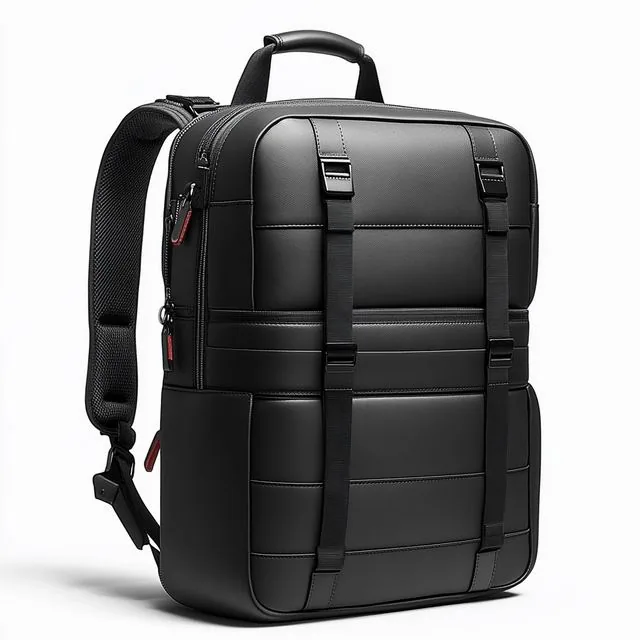
The four carry categories overlap, but they differ sharply in what each sacrifices. Sunday bags trade club count and pocket space for weight, which suits a range session, a par-3 loop or a travel cover. Stand bags are the default for walking 18 holes because the legs keep clubs and grips off saturated ground for four to five hours. Backpack hybrids put twin padded straps on a stand-bag chassis, which helps when the round involves a train, a bus or a 1 km walk from a distant car park. Cart bags are designed for trolleys and buggies and are simply too heavy, at 2.8-4.0 kg, to carry comfortably.
| Bag type | Empty weight | Club capacity | Best for |
|---|---|---|---|
| Sunday bag | 1.2-1.8 kg | 5-8 clubs | Range, par-3, travel |
| Stand bag | 1.8-2.6 kg | 14 clubs | Walking 18 holes |
| Backpack hybrid | 2.2-3.2 kg | 7-14 clubs | Walking plus public transport |
| Cart bag | 2.8-4.0 kg | 14 clubs | Trolley or buggy rounds |
For UK golfers who walk and also travel to the course by rail, the hybrid is the most interesting category, and it is also the one where marketing runs ahead of engineering. A genuine hybrid keeps the stand mechanism and the 14-way top of a stand bag while adding straps that are 60-75 mm wide with 8-10 mm foam and a sternum strap. If the straps are 40 mm webbing with 4 mm foam, the bag is a stand bag with decoration, and it will feel that way by the twelfth hole. Check also that the straps can be tucked away, since loose webbing catches on trolley frames.
Club Geometry: Dividers Matter More Than Litres
Clubs set the bag's minimum dimensions. A modern driver is 45-46 in (1,143-1,168 mm) and a putter 33-35 in, so the bag body must be at least 1,180 mm tall with a top opening of roughly 240 x 190 mm to take fourteen clubs. A 14-way divider splits that opening into slots of about 40 x 45 mm, which still jams if you run midsize grips, because a midsize grip adds around 2-3 mm to effective diameter. Volume in litres is almost meaningless for a golf bag; divider count, slot width and shaft protection are the specifications that decide whether clubs rattle audibly on every step and whether graphite shafts get scuffed by steel ones.
Full-length dividers run the whole depth of the bag and are worth paying for on graphite shafts, because they stop heads and shafts grinding together during a 9 km walk. Top-only dividers save 150-250 g but let shafts cross below the top cuff, which is where most cosmetic wear happens. Headcovers still matter: a driver cover of 320 x 200 mm costs nothing in weight and prevents the damage players blame on the bag. If you carry fewer than ten clubs, a four-way top with wider slots is quieter, lighter and easier to use than a cramped fourteen-way layout. Check the top cuff on the sample too: a moulded cuff with 3-4 mm walls resists cracking far better than a thin vacuum-formed one, and cracking at the cuff is the most common warranty claim on stand bags.
Single Strap, Twin Straps and the Shoulder Problem
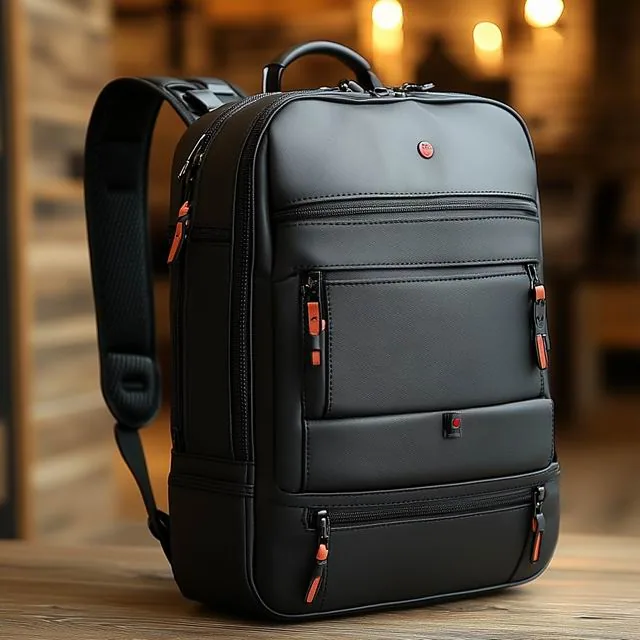
Single-strap carry puts 7-11 kg on one trapezius and forces a lateral lean that most players compensate for with the lower back. Alternating shoulders every four or five holes helps, and so does carrying the bag higher on the shoulder so the load sits closer to the spine. Twin straps remove the asymmetry entirely and are worth the 300-500 g penalty if you walk more than once a week. Either way, the strap contact patch should be 60-75 mm wide with 8-10 mm foam; narrower straps concentrate pressure and start to feel sharp after the first nine holes, particularly over a waterproof jacket.
Fit details are simple but rarely checked in a shop. With the bag loaded, the top of the bag should sit no more than 100 mm above shoulder height, and the grab handle should be reachable without rotating the shoulder. Straps need at least 250 mm of usable adjustment so the same bag works over a polo shirt in July and a waterproof shell in February. A sternum strap placed 40-60 mm below the collarbone stops straps sliding outward, and a padded hip pad of 100 mm width helps on the long walks between greens that open parkland courses demand. Make sure the strap is reversible, because a fixed strap forces the bag onto one shoulder and turns the walk up the 18th into the longest hole of the day.
Rain, Dew and Waterproofing on British Courses
British golf is played in drizzle and early-morning dew, and the bag spends four to five hours standing on wet grass. Fabric should be 600D-840D polyester or nylon with a coating rated to at least 1,500 mm hydrostatic head, and the seams under the apparel pocket should be taped. A rain hood is the part that actually keeps clubs dry, so check that it covers the full top opening and secures with a toggle rather than a single elastic edge. Where a pocket holds a rangefinder or GPS watch, ingress protection is described by the IP code in IEC 60529, though in practice a welded liner and a storm flap beat a printed rating badge.
Waterproofing fails at the details rather than the panel. Zips should be #8 or #10 reverse-coil with storm flaps, because a #5 coil zip on a valuables pocket lets dew through to a phone within an hour. The base moulding should have drainage channels, or the bag sits in a puddle at every tee and carries 200-400 g of water for the rest of the round. After the round, empty every pocket, stand the bag upside down indoors for four to six hours and leave the apparel pocket open so the lining dries before the next game. Valuables pockets should sit above the apparel pocket rather than at the base, where they collect drainage water, and a fleece lining protects a phone screen from keys and tees.
A Pocket Audit for 18 Holes
Golf bags are judged on pockets more than any other bag category, because a round involves far more small items than a hike or a commute: balls, tees, markers, pitch repairers, a rangefinder, gloves, a towel and a scorecard. The useful test is not how many pockets a bag has but whether each item has a home that can be reached while the bag is standing on its legs. A workable layout has seven zones, and the dimensions below are the ones to check on a specification sheet before committing to a bulk order or an expensive personal purchase. Pocket volume is rarely the constraint; reach is. A pocket that cannot be opened while the bag stands on its legs gets emptied on the ground, and that is how gloves and rangefinders are left behind.
- Fleece-lined valuables pocket, 180 x 120 mm, positioned above the ball pocket so it stays dry when the bag stands.
- Insulated drinks sleeve with 5 mm foam, holding a 750 ml bottle and keeping it cool for 4-6 hours.
- Ball pocket, 200 x 150 mm, sized for four three-ball cans or twelve loose balls.
- Apparel pocket of 6-8 litres for a packable waterproof jacket and a midlayer.
- Waterproof scorecard sleeve, 150 x 110 mm, readable in rain without unfolding.
- Umbrella sleeve of at least 700 mm depth plus a towel loop and a glove patch with hook-and-loop backing.
- Rangefinder pocket, 120 x 80 mm, with a magnetic or storm-flap closure rather than an open slip pocket.
Placement follows the same logic as access. The valuables pocket belongs above the ball pocket so it stays clear of drainage water when the bag stands on wet grass, and the insulated sleeve belongs on the shaded side so it is not heated by four hours of sun. Pockets that open toward the front of the bag are usable while it is on a trolley; pockets that open toward the back are usable only when it is carried. A bag that gets this wrong has the same pocket count on paper and is considerably worse on the course. Count the closures as well: seven pockets with seven different slider types is seven spares a club professional will never stock.
Range Sessions, Par-3 Courses and Home Storage
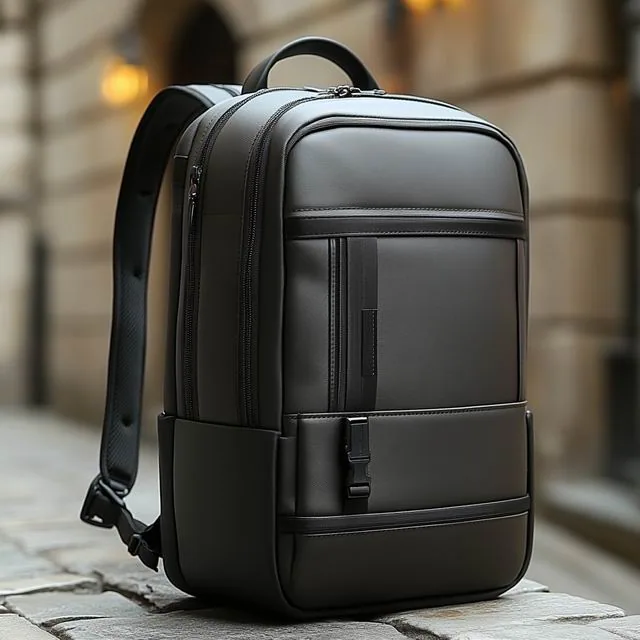
A range session needs five to eight clubs, a dozen balls and a water bottle, which is exactly what a Sunday bag is designed for at 1.2-1.8 kg. Par-3 courses suit the same bag, and many UK clubs allow them on short loops where a full bag is unnecessary weight. If you are mixing range work with a commute, look for a Sunday bag with a removable padded sling and a flat base, because a bag that rolls off a train seat arrives with a scuffed driver head. A Sunday bag also fits inside most travel covers alongside a full set. A Sunday bag should still carry a flat reinforced base and a single grab handle, or it collapses on the range floor and clubs end up scattered across the mat behind you.
Storage at home kills more bags than the course does. Stand bags left in a garage at 70-80 per cent relative humidity grow mould on the apparel pocket lining within six to eight weeks, and grips degrade faster in the same conditions. Store the bag upright with pockets open in a space below 60 per cent humidity, and remove headcovers so they dry separately. If you fly with clubs, a dedicated travel cover with 10-15 mm padding and an internal stability strap protects shafts far better than wrapping a stand bag in clothing. Check grips monthly for hardening and shine, since a glazed grip doubles the grip pressure needed and shortens the life of the club as well as the bag.
Fabric, Zips and Hardware That Survive a Season
A golf bag takes abrasion in places a rucksack never sees: the base is dragged across tarmac paths, the top cuff rubs against trolley straps and the stand legs pivot thousands of times over a season. Shell fabric of 600D-840D with a PU coating is standard; abrasion resistance should be verified with the Martindale method in ISO 12947, with 15,000 rubs a reasonable floor for the lower panel. Stand legs should be 8 mm aluminium or glass-filled nylon with a riveted pivot rather than a screw, and the leg tips should be replaceable. Ask for the test report per colourway and confirm the coating is PU rather than PVC, which stiffens in cold weather and cracks along fold lines after two winters.
Hardware is where cheap bags fail visibly. Every strap anchor should carry a 25 mm box bar-tack with a back-tack at the start, the grab handle should be tested to 60 kg static load, and zips on the apparel and ball pockets should be #8 minimum with metal or moulded sliders that survive being pulled one-handed. The base moulding should be riveted at four points rather than glued, because glued joints fail after a season of being set down hard on concrete paths outside the clubhouse. Rivets also let a base be replaced, which extends the bag's life by years. Moulded zip garages at the top of the apparel pocket keep sliders off the ground when the bag is laid flat, which prevents the bent-slider failures seen after a season.
Programme Notes for Society and Corporate Orders
Society and corporate orders are deadline-driven, so the production calendar matters more than unit price. Orders begin at 500 pcs per style and colourway; sampling takes 6-10 working days for a standard build and 12-15 working days where moulded bases, bespoke stand mechanisms or custom zip pulls are specified. Bulk production takes 35-50 days, shipped FOB Xiamen on T/T 30/70 terms, with inspection at AQL 2.5 under ISO 2859-1. Society buyers should add 10-14 days for freight and UK inland delivery before fixing an event date, and should treat a captain's prize date as immovable. Where an event date is fixed, build in a second sample round: hardware revisions are far cheaper before bulk than after 35 days of production have started.
Branding choices affect both cost and lead time. Embroidery up to 12,000 stitches on the ball pocket or apparel pocket is durable and reads well at 80-120 mm width; heat-transfer prints suit photographic logos but need a flat, coated panel. Each logo position is costed separately, and colourway changes are counted within the same 500 pcs threshold. Since 2014 the operation behind QUANZHOU JUNYUAN BAGS has coordinated 7 production lines with 137 colleagues across 4,950 m² of SGS-verified production floor space, which supports split deliveries across two or three society events in a season. Clubs ordering annually should freeze the specification after approval, because changing a fabric or a divider layout between seasons resets sampling and adds about three weeks.
Frequently Asked Questions
Can I use a backpack instead of a golf bag?
Only for a partial set. A normal backpack has no divider top, no stand and no base moulding, so clubs rattle, heads get scuffed and the bag will not stay upright on wet grass. A Sunday bag of 1.2-1.8 kg carries five to eight clubs properly, and a backpack hybrid of 2.2-3.2 kg carries up to fourteen with twin straps. Golf-specific geometry is the reason the categories remain separate.
How many clubs fit in a golf backpack?
A hybrid golf backpack with a 14-way top holds fourteen clubs, the R&A and USGA limit, provided the slots are about 40 x 45 mm and you use standard grips. Midsize grips add 2-3 mm to effective diameter and jam narrow slots. Sunday bags hold five to eight clubs and are the right choice for range work or a par-3 loop where a full set is unnecessary weight.
How heavy is a golf bag with clubs in it?
Fourteen clubs weigh 5.5-7.5 kg, and balls, waterproofs, a 750 ml drink, umbrella, towel, gloves and rangefinder add roughly 3-4 kg, giving 7-11 kg before the bag. Add 1.8-2.6 kg for a stand bag or 2.2-3.2 kg for a hybrid. That is a real load over the 9-11 km of an 18-hole walk, which is why strap width and foam density matter.
Do golf backpacks have stand legs?
Good hybrids do, and it is the feature to insist on. Legs of 8 mm aluminium or glass-filled nylon with a riveted pivot keep clubs and grips off saturated ground for four to five hours and stop the bag sliding on sloped lies. Leg tips should be replaceable, because they are the first part to wear. Bags without legs force you to lay the bag down, which soaks the apparel pocket.
What waterproof rating should a golf bag have?
Look for 600D-840D fabric with a coating rated to at least 1,500 mm hydrostatic head, rising to 3,000 mm if you play year-round on exposed links or parkland. The rain hood does most of the work, so check that it covers the full top opening with a toggle closure. Taped seams under the apparel pocket and #8 reverse-coil zips with storm flaps complete the specification.
Is a 14-way divider worth paying for?
Yes for graphite shafts and full sets. Full-length dividers stop shafts crossing and grinding below the top cuff, which is where most cosmetic wear occurs during a 9 km walk, and they add 150-250 g over a top-only divider. With fewer than ten clubs, a four-way top with wider slots is quieter and easier to use. Check slot width against your grip size before buying.
How far do you walk during 18 holes of golf?
On a 6,200 yard parkland course, walking 18 holes covers roughly 9-11 km and takes 4.5-5 hours, including the walk between greens and tees. Only about 40 minutes of that is continuous carrying; the rest is stop-start lifting, which is why single-handed handling and a reliable stand matter more than a framed suspension system. On hilly courses add 10-15 per cent to both distance and time, and carry water accordingly, because dehydration shows up in the last three holes more than any equipment choice.
What should a golf carry bag weigh when empty?
Sunday bags run 1.2-1.8 kg, stand bags 1.8-2.6 kg and backpack hybrids 2.2-3.2 kg. Below 1.2 kg the base moulding and stand mechanism are usually too light to survive a season, and the saving is meaningless against a 7-11 kg loaded total. Prioritise riveted bases, 8 mm legs and 25 mm bar-tacked strap anchors over shaving grams. Weigh the bag loaded before buying: if the total with clubs exceeds 13 kg, a trolley or a hybrid with twin straps is the kinder option for a full season.
What is the minimum order quantity for branded golf bags?
Programmes start at 500 pcs per style and colourway. Sampling takes 6-10 working days for a standard build and 12-15 working days with moulded bases or bespoke hardware, followed by 35-50 days of bulk production. Shipment is FOB Xiamen on T/T 30/70 terms with inspection at AQL 2.5 under ISO 2859-1, and buyers should add 10-14 days for freight before an event date.
How long does sampling and bulk production take?
Allow 6-10 working days for a first sample and 12-15 working days for complex builds with custom stand mechanisms or zip pulls, then 35-50 days for bulk after approval. Freight and UK inland delivery add 10-14 days, so a society order for an event should be placed at least 90 days ahead. Locking logo placement early avoids a second approval round.
Do insulated pockets in golf bags actually work?
A 5 mm closed-cell foam sleeve with a reflective liner keeps a 750 ml bottle within 4-6 °C of its starting temperature for four to six hours on a mild UK day, which is enough for a round. Performance drops sharply in direct sun, so choose a sleeve on the shaded side of the bag. Insulated pockets also double as protection for a phone in cold rain.
Plan a Golf Bag Programme
QUANZHOU JUNYUAN BAGS supports society, corporate and retail golf programmes as a sourcing and programme-management company. Share target club capacity, divider layout, colourways and logo placement areas, and the production team will return fabric options, hardware specifications and a sampling schedule with confirmed lead times.
Golf orders start at 500 pcs per style and colourway; sampling runs 6-10 working days and bulk 35-50 days, with AQL 2.5 inspection and FOB Xiamen shipment on T/T 30/70 terms.
Email: service@junyuanbags.com
WhatsApp: +86 177 5002 0688