Best Backpacks for Carp and Course Fishing: Volume, Wet Storage and Bank-Side Load Control
For carp and coarse fishing, the right pack is 35-45 litres with a welded wet compartment, a 600D or heavier coated shell and a hip belt that takes 60-70 per cent of the load. Those four numbers decide whether a bag lasts a season on the bank.
This guide sets out the specifications that matter on UK day-ticket carp waters, canals and rivers: volume mapping, seam construction, abrasion resistance and harness geometry, plus the ordering parameters a club or retailer will meet. QUANZHOU JUNYUAN BAGS coordinates bag programmes from 500 pcs per style and colourway, with sampling in 6-10 working days and bulk shipment in 35-50 days.
Why Coarse Fishing Loads Punish Ordinary Daypacks
A session load is not a commuter load. A match angler carries two tackle boxes, a landing net with a 1.8 m handle, bank sticks, a side tray, bait tubs and waterproofs; a carp angler adds a rolled unhooking mat of roughly 100 x 60 cm, a weigh sling, bank sticks and 2-3 kg of boilies or particle. Loaded weights of 12-16 kg are normal before water is added, and the shape is awkward: long, rigid and uneven, so the centre of mass sits further from the spine than 14 kg of soft clothing would. Ordinary 30 litre daypacks are built around 600 g shell fabric with 8 mm strap foam. Under a 14 kg load that foam compresses to about 4 mm within 20 minutes, shoulder pressure climbs and the pack swings on every stile and bank step. Every angler aged 13 or over also needs a rod fishing licence for coarse fish in England, and the current rules are published on gov.uk. Fisheries then add their own conditions on landing mats, keepnets and access, so read both before packing.
Three measurable differences separate a fishing pack from a walking daypack. First, the base panel: 600D polyester or 500D nylon with a 1,500-3,000 mm coating and a double-thickness bottom that resists grit abrasion where the bag is dropped on gravel pegs. Second, the wet zone: a compartment closed by radio-frequency welded seams rather than needle holes, so a soaked weigh sling can ride inside without wetting reel pouches. Third, external lash geometry: at least four compression straps plus two webbing loops rated above 15 kg each, positioned to hold 1.8-2.4 m net handles and bank sticks vertically rather than diagonally across the back panel. A pack missing any one of the three will work for a two-hour roving session and fail during a full carp day, which is why the cheap end of the category sells twice: once to a beginner, then again six months later.
Session Volume: 35 Litres for Match, 45 for Carp
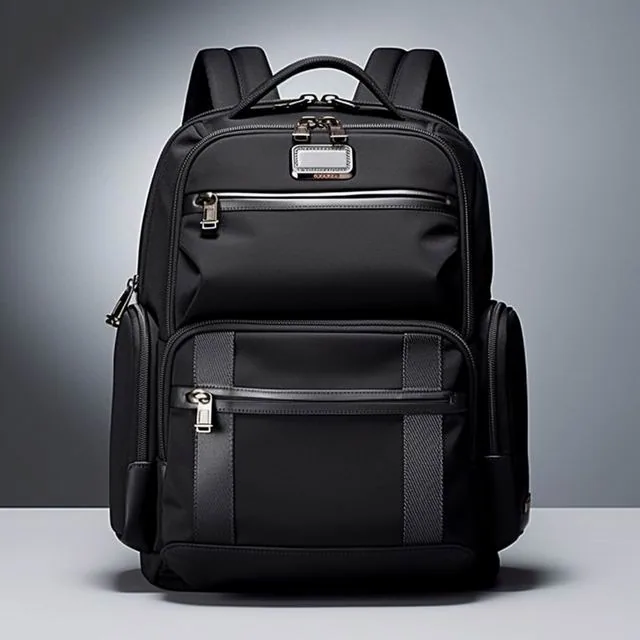
Volume follows the kit, not the angler. A single coarse tackle box at 35 x 20 x 18 cm occupies 12.6 litres before anything else goes in, so two of them fill most of a 30 litre pack on their own. Carp anglers add a rolled unhooking mat of about 9 litres, a folded weigh sling, bank sticks and 2-3 kg of bait, which is why day-session packs land at 40-45 litres rather than 30. Roving coarse anglers carrying one box, a landing net and a bait bag fit comfortably in 30-35 litres and gain a pack that is easier to lift over stiles. Anything under 25 litres forces a second bag, and two bags on a muddy bank is how gear gets left behind. Match anglers working a canal towpath for five hours usually settle at 28-30 litres with the net carried in the hand.
| Session type | Volume | Dry kit | Wet kit | Loaded weight |
|---|---|---|---|---|
| Canal match, 4-5 hours | 25-30 L | 2 boxes, pole fittings | Landing net, rag | 7-9 kg |
| River match or roving | 30-35 L | Boxes, feeders, bait | Wet net, towel | 9-12 kg |
| Carp day session | 40-45 L | Rig wallet, spod, 2-3 kg bait | Mat, weigh sling | 13-16 kg |
| Carp overnighter | 55-65 L | Adds shelter and sleeping bag | Mat, sling, wet clothing | 18-22 kg |
Be careful with stated capacities. Two packs labelled 45 litres can differ by 6 litres of usable space once back-panel foam, a stiffened base and the wet compartment divider are subtracted. Ask for interior dimensions in millimetres rather than litres: a genuine 45 litre fishing pack measures roughly 320 x 250 x 560 mm internally, and the wet zone should be a real 10-14 litres of that. Where a supplier quotes only litres, the figure is usually the outer shell measured fully expanded, which no angler achieves with rigid boxes inside. Fishery byelaws, close-season rules and water-quality notices are published by the Environment Agency, and they affect what you may legally carry to the peg. Keep the confirmation with your licence.
Wet Storage: Welded Seams Beat Stitched Liners
Leaks rarely start in the fabric. They start at the needle holes: a lockstitch run at eight stitches per inch puts eight penetrations through the coating every 25 mm, and each one is a capillary path for water from a soaked weigh sling or landing net. A radio-frequency welded seam in TPU or PU-coated polyester has no penetrations at all, which is why welded wet compartments are standard on bank-side packs and rare on general daypacks. Specify the wet zone as a fully welded liner with a welded or taped closure, then have the fabric tested to a hydrostatic head of at least 3,000 mm under ISO 811 so the coating does not become the weak point instead of the seam. Welded construction typically adds 80-150 g and about £6-£10 to unit cost, which is cheap against a season of dry tackle.
The closure matters as much as the liner. A welded compartment with a conventional coil zip still leaks along the tape, so look for a #8 or #10 reverse-coil zip under a storm flap plus a drainage grommet of 6-8 mm at the lowest corner. That grommet is the detail cheap bags omit: it lets a sling drain into a base channel instead of sitting in the liner and feeding mould. One more practical point: the wet compartment belongs at the bottom or the front, never against the back panel, because a 2 kg saturated mat against the spine shifts the load centre rearwards and makes every stile awkward. Anglers should also roll the mat in a 20 litre dry bag before it goes in, then invert the compartment over a drain the moment they get home.
Shell Fabric and Abrasion on Gravel Banks
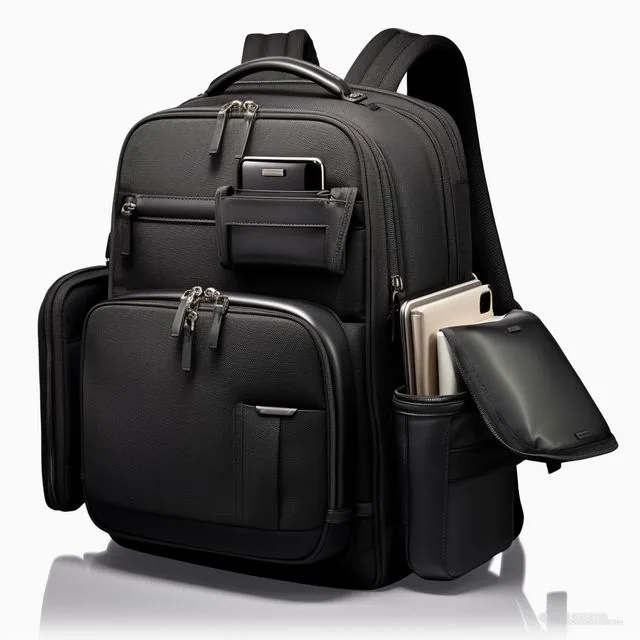
Bank-side abrasion differs from trail abrasion. Gravel car parks, concrete pegs and rod rests grind the base panel, while the shoulder area sees repeated contact with reels, bank sticks and landing-net arms. A 600D polyester with a 1,500-3,000 mm polyurethane coating is the baseline that survives; 1,000D nylon or 1,680D ballistic nylon on the base panel extends service life considerably for an extra 120-180 g. Abrasion resistance is measured with the Martindale method set out in ISO 12947. For a pack used 40-60 sessions a year, ask for results at 20,000 rubs with no yarn breakage rather than the 10,000 rubs typical of commuter bags, and ask for the test report on the exact colourway you are buying, since pigment load changes abrasion behaviour.
Break strength matters too, because fishing packs are lifted by one strap far more often than hiking packs. ASTM D5034 grab tests on the base fabric should return above 600 N in the warp direction, and every webbing anchor point should be bar-tacked with a minimum 25 mm box stitch and a back-tack at the start. Colour choice is not cosmetic here: dark olive, charcoal and brown hide groundbait and bank mud on the outside, while a pale lining makes it possible to find a size 12 hook or a rig wallet inside a 45 litre cavity. Retail buyers should note that these specifications are quoted per colourway, not per style, when a programme is costed, and that pale linings need a coated finish or they show every stain within a month.
Harness Design and Carry Distance on UK Fisheries
Carry distance on a fishery is deceptive. The walk from the car park to the peg is rarely more than 600-900 m, but it is over uneven, often wet ground with 12-16 kg on the back and long rigid items swinging. A well-fitted hip belt transfers 60-70 per cent of that weight to the pelvis, which lowers shoulder pressure and keeps the pack stable over stiles and boardwalks. Shoulder straps should be 65-80 mm wide with 10-12 mm closed-cell foam that recovers after compression; thin 6-8 mm foam flattens under a session load and leaves strap webbing cutting into the trapezius within about 30 minutes. Belt padding of 100-130 mm width spreads the load across the iliac crest rather than digging into one point, which is what makes a 16 kg load tolerable over 800 m.
Load lifters matter more on fishing packs than on walking packs because the load sits high and wide. Set at roughly 20-25 degrees above horizontal, they pull the upper pack toward the shoulders and stop the bag tipping backwards when a 1.8 m net handle is lashed on. A sternum strap positioned 40-60 mm below the collarbone stops the straps sliding outwards on a waterproof jacket. For anglers with existing back trouble, the fix is rarely a bigger bag but a better distribution: keep bait, bank sticks and net low and close to the back panel, and carry the unhooking mat on external base straps rather than inside the main cavity. That arrangement keeps the load centre within about 100 mm of the spine.
Pocket Layout and Bank-Side Access
Bank-side access happens in poor light, often in rain, with a rod in one hand, which makes single-handed opening the most underrated specification on a fishing pack. A #10 reverse-coil zip with a 15 mm pull opens with gloves on; a #5 zip behind a small metal slider does not. Top-loading designs suit fishing poorly because the items needed first, bait and rig wallets, end up at the bottom. A panel-loading or horseshoe opening that lays the pack flat exposes the whole interior, and that is what makes a 45 litre pack usable when it is lying on wet grass rather than standing upright on a peg. A pack that needs two hands to reach bait gets left open in the rain, and an open pack is how a rig wallet ends up soaked.
Pocket count should follow a kit audit rather than a marketing list. The layout below covers most coarse and carp sessions, with the target opening size for each item written in millimetres so a specification sheet can be checked against a sample. Buyers comparing two samples should open every pocket with wet hands and count how many can be worked one-handed, because that single test separates a fishing design from a hiking design with a camouflage colourway. It is also worth checking that pocket linings are coated rather than brushed nylon, since groundbait dust and hemp juice penetrate raw lining and are impossible to wash out.
- Two fleece-lined valuables pockets, 180 x 120 mm, for phone, keys and a spare bite alarm receiver.
- Four to six external lash points rated above 15 kg for net handles, bank sticks and poles up to 2.4 m.
- A 10-14 litre welded wet compartment with a 6-8 mm drainage grommet for mats, slings and wet nets.
- Two rigid-sided sleeves of 90 mm diameter for a 1.5 litre flask and a bait tub.
- One internal mesh sleeve of 250 x 200 mm for a rig wallet, plus a 5 kg-rated key clip.
Specification Notes for Retail and Club Programmes
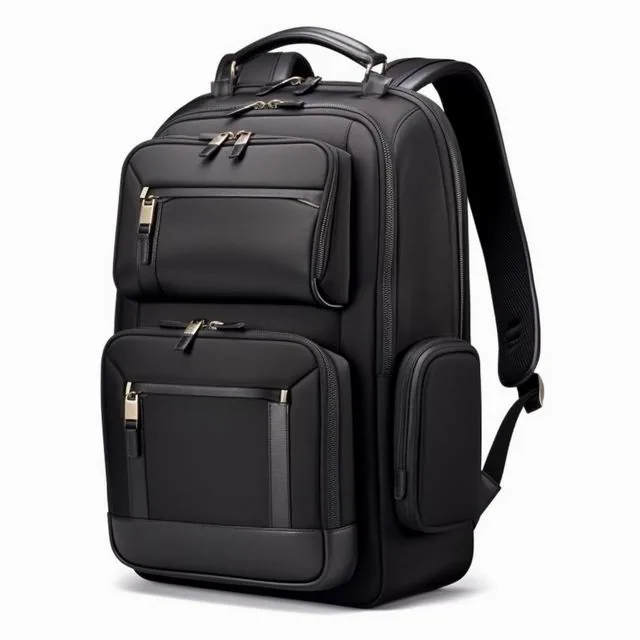
For clubs, retailers and brand owners specifying fishing packs, the parameters are stable. Orders begin at 500 pcs per style and colourway; sampling takes 6-10 working days for a conventional build and 12-15 working days where welded compartments, moulded bases or bespoke hardware are involved. Bulk production runs 35-50 days depending on fabric lead time and welding capacity, shipped FOB Xiamen on T/T 30/70 terms. Inspection is set at AQL 2.5 under ISO 2859-1, with weld integrity, zip function and strap bar-tacks as the defect classes that matter most on a fishing pack, because those are the three failures that generate returns from anglers within the first season.
Capacity context helps when planning a season. Established in 2014, the operation behind QUANZHOU JUNYUAN BAGS coordinates 7 production lines and 137 colleagues across 4,950 m² of SGS-verified production floor space, which supports mixed-colourway runs without splitting delivery. Welded wet compartments are the bottleneck in most programmes because radio-frequency welding capacity is finite, so locking the compartment geometry before sampling saves around two weeks later. Buyers should also budget for a second sample round on hardware: bank stick loops and net straps fail fit testing far more often than fabric does, and a hardware revision is cheaper at sample stage than at 35 days into bulk production.
Drying, Cleaning and Mud Control Between Sessions
Most fishing packs fail between sessions rather than during them. A welded wet compartment that is closed damp and left in a garage for a week grows mould along the weld line, and the smell transfers to dry tackle. Open the compartment fully, invert the pack over a drain and leave it in moving air for 12-24 hours before storage; a fan placed 1-2 m away cuts that to 6-8 hours. Never put PU-coated fabric against a radiator or in a tumble dryer, because sustained heat above 60 °C accelerates coating hydrolysis and the shell starts to flake within a season. Pay particular attention to the base channel and the drainage grommet, since silt collects there and blocks the drain.
Cleaning should be low-pressure and cold. Hose the exterior below 2 bar, brush grit out of the zip chain with a soft nylon brush, then wipe the welded liner with a pH-neutral solution and rinse thoroughly. Chlorinated or bleached cleaners strip the durable water-repellent finish and dull the coating. Re-proof the shell with a spray-on DWR twice a season and re-lubricate the #10 main zip with a dry silicone or wax stick after every three or four wet sessions. Store the pack half-open with the hip belt unbuckled so the foam recovers instead of taking a permanent set, and keep it off a concrete garage floor where damp rises.
Cost Per Session: What a Fishing Pack Should Justify
Price per session is a fairer comparison than price per bag. A £60 pack that delaminates after 20 sessions costs £3.00 per outing and leaves tackle wet; a £140 pack with welded seams, 600D fabric and a real hip belt that lasts 150 sessions costs roughly 93p per outing and still holds 30-40 per cent of its value after two years. The components that justify the higher figure are measurable rather than cosmetic, and they can be checked on a shop floor in under five minutes by anyone who knows what to look for. Anglers fishing 40-60 sessions a year recover the difference in the first season; occasional anglers do not, and a mid-priced 600D pack without a welded compartment is a rational choice at that frequency.
- Welded wet compartment with drainage grommet: essential above 25 litres.
- 600D minimum shell with a 1,000D or ballistic base panel for gravel pegs.
- Hip belt transferring 60-70 per cent of the load once the pack passes 10 kg.
- #8 or #10 reverse-coil zips with storm flaps and glove-friendly pulls.
- External lash points sized for 1.8-2.4 m net handles and bank sticks.
- Dark outer colourways to hide mud, pale linings to find small tackle.
Repairability changes the arithmetic as well. A pack with a replaceable base panel, a standard #10 reverse-coil zip and bar-tacked webbing can be repaired for £15-£30 by a local sewing shop or a kit-repair service, while a bonded design with proprietary hardware usually cannot. Anglers fishing 40-60 sessions a year should treat serviceable construction as part of the value, check that spare buckles and sliders are listed as spares before committing to a brand, and keep the pack out of direct sunlight when it is stored between trips. Packs stored hung on a hook rather than folded on a shelf also keep their shape, because a folded hip belt takes a permanent set after a winter in the garage.
Frequently Asked Questions
What size backpack do I need for carp fishing in the UK?
Choose 40-45 litres for a carp day session and 30-35 litres for roving coarse or match fishing. Check interior dimensions rather than the label: a true 45 litre fishing pack measures about 320 x 250 x 560 mm inside, with a welded wet compartment taking 10-14 litres of that. Under 25 litres you will need a second bag, which is the fastest way to lose gear on a dark walk back to the car.
Can I use a hiking rucksack for coarse fishing?
Yes, with two compromises. A hiking pack has no welded wet compartment, so a soaked net or weigh sling must go in a 15-20 litre dry bag inside the main body, and its 8 mm strap foam compresses under a 12-16 kg session load. The harness geometry is also designed for loads carried close to the spine, so long rigid items need external lash points that most rucksacks lack.
How do I stop a wet landing net soaking my tackle?
Use the welded wet compartment rather than the main cavity, and roll the mat or net in a 20 litre dry bag first for a second barrier. Make sure the compartment has a 6-8 mm drainage grommet at its lowest corner so water leaves instead of pooling. Wet gear should sit at the bottom or front of the pack, never against the back panel where it shifts the load centre rearwards.
What denier fabric is best for a fishing backpack?
600D polyester with a 1,500-3,000 mm polyurethane coating is the sensible baseline; 1,000D nylon or 1,680D ballistic nylon on the base panel adds 120-180 g and roughly doubles life on gravel pegs. Ask for Martindale abrasion results at 20,000 rubs under ISO 12947 rather than the 10,000 rubs typical of commuter packs, and confirm grab strength above 600 N under ASTM D5034.
Do fishing backpacks need a hip belt?
Above 10 kg, yes. A properly fitted hip belt transfers 60-70 per cent of the load to the pelvis, which keeps shoulder pressure down over the 600-900 m walk to the peg and stabilises the pack over stiles. Pair it with 65-80 mm shoulder straps using 10-12 mm foam, and set load lifters at 20-25 degrees above horizontal to stop a top-heavy load tipping backwards.
How much does a loaded carp session pack weigh?
A typical day-session carp pack weighs 13-16 kg once loaded: roughly 2-3 kg of bait, 1.5-2 kg for a rolled unhooking mat and weigh sling, 2-3 kg of bank sticks and net, 3-4 kg of tackle boxes, plus 1-2 kg of waterproofs, flask and food. Add 1-2 kg if the mat and sling are wet. That is why load transfer and strap foam density matter more than extra volume.
What is the minimum order quantity for custom fishing backpacks?
Programmes start at 500 pcs per style and colourway at QUANZHOU JUNYUAN BAGS. Sampling takes 6-10 working days for a standard build and 12-15 working days where welded compartments or moulded bases are involved. Bulk runs 35-50 days, shipped FOB Xiamen on T/T 30/70 terms, with inspection at AQL 2.5 under ISO 2859-1 and weld integrity treated as a critical defect.
Which waterproof standard applies to fishing pack fabric?
Fabric water penetration is measured as a hydrostatic head under ISO 811: around 1,500 mm resists showers, while 3,000 mm or more is needed where a wet mat presses against the shell for hours. Seams are a separate question, and welded TPU seams outperform stitched and taped seams because they remove needle holes entirely. Abrasion is covered separately by ISO 12947.
How should I dry a fishing backpack after a wet session?
Invert the pack over a drain, open every compartment and leave it in moving air for 12-24 hours, or 6-8 hours with a fan 1-2 m away. Keep PU-coated fabric below 60 °C, so no radiators and no tumble dryers, since heat drives coating hydrolysis. Once dry, re-lubricate the #10 main zip and store the pack half-open with the hip belt unbuckled.
Does a fishing backpack need built-in rod holders?
Usually not. Made-up rods of 12-13 ft are awkward to carry vertically on a pack and catch on overhanging branches, so most anglers carry rods in the hand or in a rod sleeve and use the pack for everything else. What genuinely helps is four to six lash points rated above 15 kg for net handles, bank sticks and poles up to 2.4 m.
Do I need a licence to fish coarse species in England?
Anglers aged 13 and over normally need a rod fishing licence for coarse fish and eels in England, and the licence must be carried or be available on a device while fishing. Day tickets and club rules sit on top of that requirement, and some waters add their own close seasons. Check the current rules on gov.uk before travelling, then confirm the fishery's own conditions with the bailiff.
Specify a Fishing Pack Programme
QUANZHOU JUNYUAN BAGS operates as a sourcing and programme-management company for UK outdoor and angling ranges. Send a tech pack, a reference sample and the session kit list the bag has to hold, and the production team will return fabric options, weld specifications and a sampling plan with target volumes and colourways.
Standard programmes start at 500 pcs per style and colourway, with sampling in 6-10 working days, bulk in 35-50 days, AQL 2.5 inspection under ISO 2859-1 and FOB Xiamen shipment on T/T 30/70 terms.
Email: service@junyuanbags.com
WhatsApp: +86 177 5002 0688