Backpacks with USB-C PD Output: Power, Safety and Real-World Specification
A USB-C PD output on a backpack is a routing feature rather than a power source: the pack carries a port, a lead and a pocket, and the energy comes from a power bank the user supplies. The specification that matters is what the link can carry without unacceptable loss, which for a 60 W profile of 20 V at 3 A means a total internal run under about 1.0 m with conductors of at least 20 AWG on the power pairs. Most fitted ports are rated between 5 V and 20 V and between 3 A and 5 A, and the difference shows up in charge time.
This guide explains what the numbers on the label mean, where the losses occur, how to site a power bank safely, and which compliance questions a UK buyer should settle before signing off a range. It is aimed at brand owners specifying private-label packs and at commuters deciding whether the feature earns its cost. QUANZHOU JUNYUAN BAGS operates as a sourcing and programme-management company, and our production team develops tech-integrated layouts from MOQ 500 pcs per style and colourway.
What USB-C PD Output Actually Means
USB Power Delivery is a negotiation protocol rather than a fixed output. The source, the cable and the sink exchange capabilities over the configuration channel and settle on a contract, which is why a port labelled 60 W will still charge a phone at 9 V and 2 A while feeding a laptop at 20 V and 3 A. The pack itself contributes only two elements to that negotiation, namely the electrical path and the mechanical housing. Neither generates energy. That distinction matters commercially, because a pack sold as a charging backpack without a stated voltage and current rating is a cable in a sleeve.
The second distinction sits between a pass-through port and a hub. A pass-through port is a panel-mounted coupler with a short internal lead ending in a plug that goes into the user's own power bank. A hub adds electronics: a buck-boost board, an e-marker, or a chip managing several ports, and sometimes a cell built into the bag. Hubs introduce a component that can fail and that has to be certified, and they typically cost three to five times what a passive coupler costs. For most commuter programmes the coupler is the rational choice.
- PD is a negotiated contract between source, cable and sink, not a fixed supply.
- The pack supplies a path and a housing; the user supplies the energy.
- A pass-through coupler is passive, whereas a hub is an electronic assembly.
- Ask for the port rating in volts and amps rather than accepting a wattage badge.
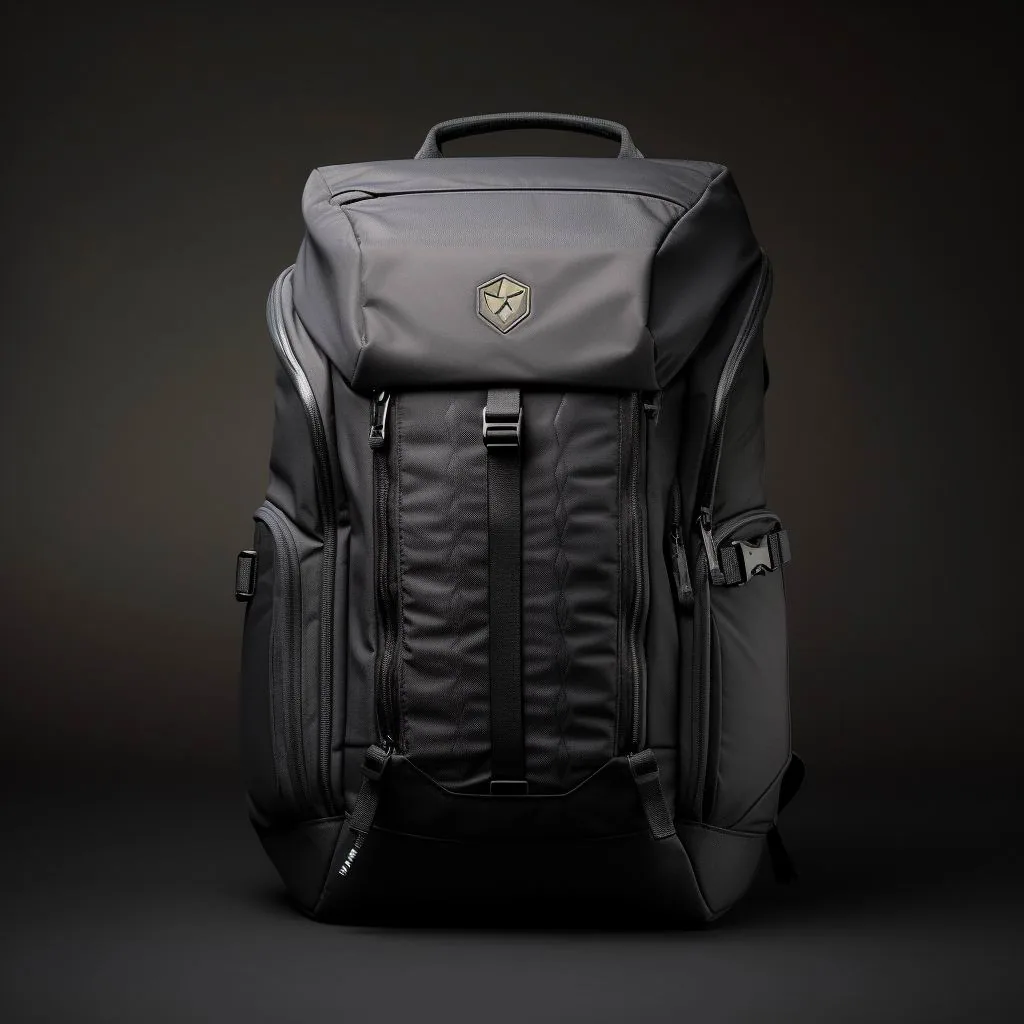
Voltage Profiles and What 20 V at 3 A Costs You
The standard power rules under USB PD 3.0 include 5 V at 3 A, 9 V at 3 A, 15 V at 3 A and 20 V at 3 A, with 20 V at 5 A available where the cable carries an e-marker and the source supports it. A handset drawing 18 W charges comfortably at 9 V and 2 A, which places modest demand on the internal link. A thin-and-light laptop asking for 60 W needs 20 V at 3 A, and at that point voltage drop along the internal lead becomes the limiting factor, since a 0.5 V drop at 3 A is 1.5 W lost as heat inside a closed compartment.
Wattage badges are frequently optimistic. A port sold as 100 W may depend on a 5 A contract that requires an e-marked cable on both the external and internal legs; if the internal lead is not e-marked, the negotiation falls back to 3 A and the delivered figure is 60 W. Buyers should therefore ask which power rule the assembly was tested against, whether the internal lead carries an e-marker, and what the measured voltage at the port is under a stated load rather than at idle. Where the internal lead is not e-marked, say so in the product copy rather than letting a customer discover it on a long flight.
| Profile | Voltage and current | Typical device | Notes |
|---|---|---|---|
| 15 W | 5 V at 3 A | Phone, earbuds | Tolerant of longer cable runs |
| 27 W | 9 V at 3 A | Phone, tablet | Standard fast-charge contract |
| 45 W | 15 V at 3 A | Tablet, small laptop | Voltage drop starts to matter |
| 60 W | 20 V at 3 A | Thin-and-light laptop | Needs short, heavy conductors |
| 100 W | 20 V at 5 A | Workstation laptop | Requires e-marked cable on both legs |
Cable Losses Inside the Bag
Voltage drop is the physics that decides whether the feature works in practice. A 1.0 m lead of 24 AWG copper carrying 3 A drops roughly 0.25 V per conductor, which is 0.5 V across the pair, and that drop is made worse by routing the lead around a frame sheet or a back panel. The practical specification is a total internal run under 1.0 m with power conductors of 20 AWG or heavier for anything above 45 W, plus a measurement point: ask the supplier for the voltage at the external port under a 3 A load rather than for a nominal rating.
Connector count is the second contributor to loss. Each mated pair adds contact resistance, and a routed link with a coupler at the panel, a plug at the bank and an intermediate joint carries three. Every joint is also a failure point in a product flexed daily. A single continuous lead from the panel coupler to the plug, fitted with strain relief at both ends and clipped at two intermediate points, is both electrically superior and mechanically longer-lived than a modular assembly. Routing the lead along a seam rather than across a panel also shortens the run and removes a snag point inside the pocket.
Total run under 1.0 m. Power conductors 20 AWG or heavier above 45 W. One continuous lead with no intermediate joints. Strain relief at both ends and two intermediate support clips. Test point: voltage measured at the external port under a 3 A load.
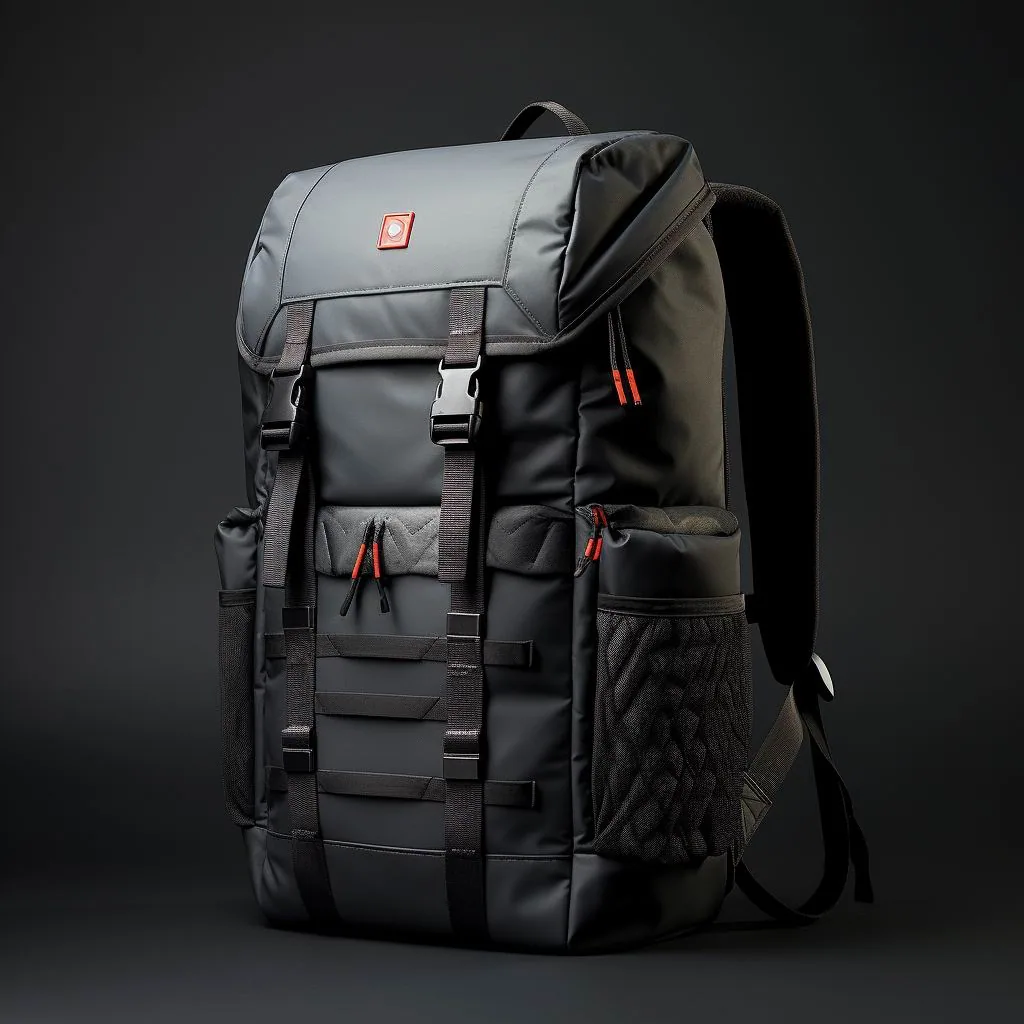
Where the Power Bank Sits and Why It Matters
Pocket placement is a thermal and ergonomic decision before it is a convenience one. A 20,000 mAh bank weighs about 400 g and sits best low and against the back panel, where it adds mass close to the spine instead of at the outer shell. Placing it in a top pocket raises the centre of mass and makes a loaded pack feel unstable on stairs and on a crowded train. The pocket needs a closed bottom, a retaining strap or elastic so the bank cannot migrate, and enough depth that the lead is not bent at a tight radius where it enters the plug.
Access matters as much as position. Charging a bank while it sits in the bag is common, so the pocket should be reachable without unpacking the main cavity, and the lead should be long enough to let the bank be lifted out and set on a desk or a train table. A pocket lined with a heat-tolerant material and vented at one edge is worth specifying, because a bank delivering 45 W inside a sealed fabric pocket will climb noticeably above ambient within twenty minutes. A pocket placed at the base also keeps the mass low, which matters more with a 400 g bank than most buyers expect.
- Low and against the back panel keeps mass close to the spine.
- Closed bottom plus a retaining strap stops the bank migrating.
- Reachable from outside the main cavity for charging on the move.
- Ventilate the pocket at one edge; sealed fabric pockets trap heat.
- Keep the lead radius gentle where it enters the plug.
Ports, Housings and Ingress Protection
The panel coupler is the part exposed to weather and the part most often specified vaguely. It should be a moulded panel-mount type with a gasketed flange and a captive cover that stays attached when opened; a push-in cap that detaches will be lost within a month. Ingress ratings for enclosures are defined in IEC 60529, and a coupler with its cover fitted and tested to IPX4 will survive a British shower, which is the realistic target for a commuting pack. Higher ratings add cost and bulk most users never need.
Housing material and mounting matter just as much. A coupler mounted directly onto a fabric panel flexes and eventually tears out the stitch line, so it should sit on a reinforced TPU or moulded patch bonded to the panel. The mounting face should be the outer shell of the pack rather than a side gusset, so water running down the shell does not collect at the port. Add a drain path behind the housing where the pack contains any sealed compartment, and require a pull test on the housing at a stated load. Where the pack carries a cover or a sealed compartment, route the drain so that water leaving the housing does not re-enter it.
| Element | Practical target | Why |
|---|---|---|
| Coupler rating, cover closed | IPX4 | Survives a British shower |
| Cover type | Captive and hinged | Detachable caps are lost quickly |
| Mounting | Bonded reinforced patch | Fabric-mounted housings tear out |
| Position | Outer face, above the base | Avoids water collecting at the port |
| Housing pull test | Stated load for 10 seconds | Confirms the bond, not just the stitch |
Compliance, Airline Rules and Product Safety
Two regulatory questions attach to this feature. The first is whether the pack with its fitted lead falls within product-safety obligations and, where an electronic hub is included, within electromagnetic compatibility requirements. The GOV.UK guidance on using the UKCA marking explains when a marking applies and who may affix it, and the Office for Product Safety and Standards oversees consumer product safety in Great Britain. A passive coupler is a far simpler case than a hub with a board inside.
The second question is the power bank, which almost always ships separately and carries its own obligations. Airlines permit lithium-ion cells in cabin baggage under capacity limits expressed in watt-hours, with banks up to 100 Wh generally accepted without operator approval and larger units requiring it, and they must never travel in the hold. Because the pack does not include the cell, the practical instruction for the user documentation is the watt-hour limit, the carry-in-cabin rule, and a clear statement that the pack is a passive accessory. Airlines also require that spare terminals are protected against short circuit, which is a simple instruction to include in the documentation.
- Establish whether the assembly is passive or contains electronics before agreeing any marking.
- Power banks travel in cabin baggage only, never in the hold.
- State the watt-hour limit in the documentation, not merely a mAh figure.
- Retain test reports and supplier declarations for the cable and coupler assembly.
- Record the revision number of any electronic component on the purchase order.
Pass-Through Charging and the Myths Around It
Three claims circulate and only one is broadly true. The first, that a pack can charge a bank and a device at once through a single port, depends entirely on the bank rather than on the pack; most banks cannot do it and simply prioritise their own input. The second, that longer cables deliver less power, is true and measurable, as set out above. The third, that a USB-C port on a pack is inherently unsafe, is not supported by anything in the standards, provided the coupler is correctly rated and the wiring is sound. The fourth claim, that a longer external cable is somehow safer, has no basis at all and is worth correcting in product copy.
The realistic expectation to set with customers is that the feature removes a cable from the pocket rather than adding charging speed. A properly specified 60 W link delivers close to the bank's rated output, while a poorly specified one loses 10-15 percent in the internal lead and, worse, produces a device that negotiates a lower contract and charges slowly for reasons no user can diagnose. Setting that expectation in the product copy lowers the return rate more effectively than any specification upgrade. A pack that states its delivered output under load, rather than a peak rating, sets an expectation it can actually meet.
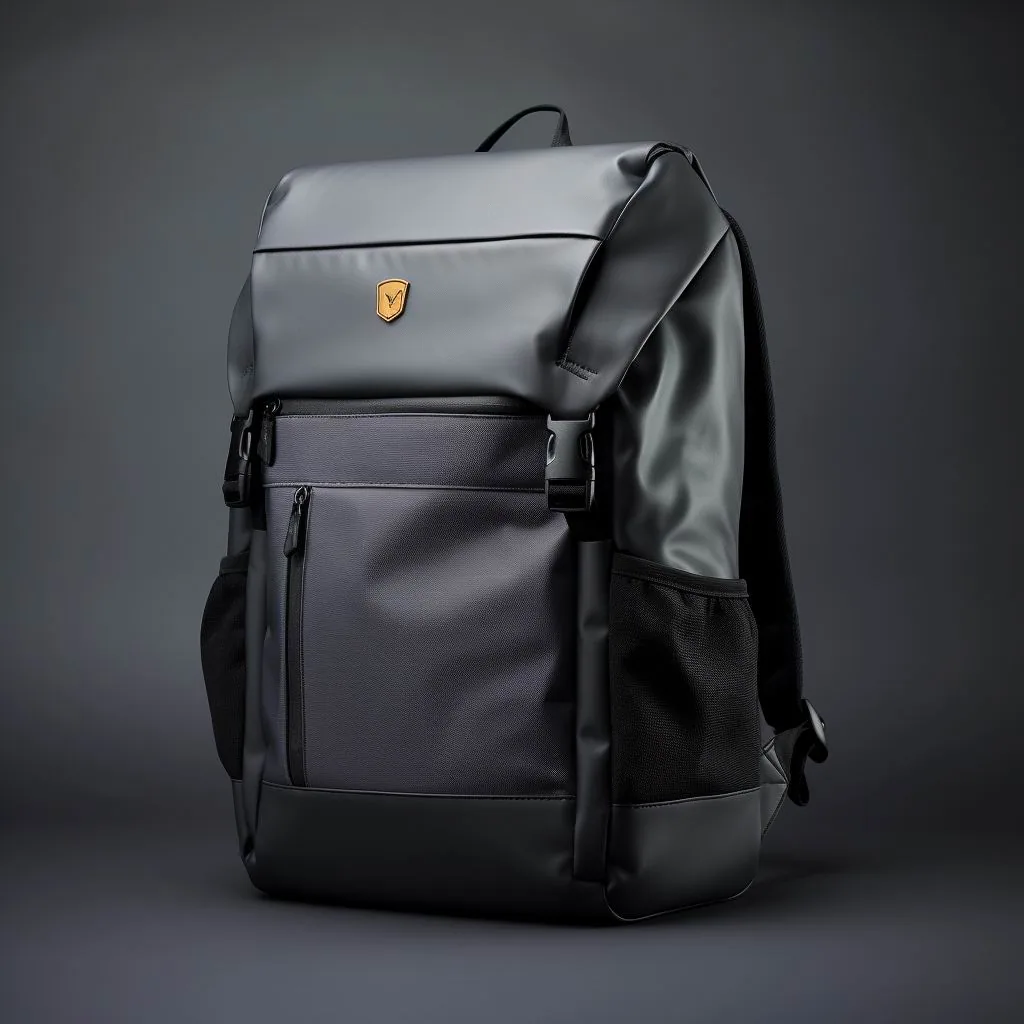
Thermal Behaviour in a Closed Bag
Heat is the failure mode nobody specifies. A bank delivering 45 W into a laptop runs at perhaps 80 percent efficiency, so around 9 W is dissipated as heat inside a fabric pocket. In a sealed pocket against a back panel that heat has two paths: into the wearer's back, which is uncomfortable, and into the cell, which shortens its life. Specify a pocket with one mesh-vented edge, a lining that does not trap heat against the back panel, and a documented instruction not to run high-wattage charging while the pack is worn. A spacer mesh layer between the pocket and the back panel costs very little and removes most of that transferred warmth.
The lead itself also warms. A 24 AWG conductor carrying 3 A over a long run heats measurably, and that warmth sits inside a closed compartment next to a lithium cell. Choosing heavier conductors is therefore a thermal improvement as much as an electrical one, and it is the cheapest single upgrade available on this feature. Where a programme specifies a hub, require a thermal cut-out, a stated maximum case temperature, and a description of where the board sits relative to the power-bank pocket. Where a hub is used, place the board away from the pocket so the two heat sources are not stacked in one compartment.
Case temperature of the bank after 30 minutes at rated output, measured in the closed pocket. Surface temperature of the internal lead at 3 A. Thermal cut-out setting on any hub. Maximum ambient operating temperature stated in the user documentation.
Specification Checklist for Buyers
Write the following into the tech pack: port type and rating in volts and amps; total internal lead length in millimetres and conductor gauge; whether the internal lead is e-marked; coupler ingress rating with the cover closed; mounting method and pull-test load; pocket position, internal dimensions and venting; and a measured voltage at the external port under a stated load. Add the documentation statements on watt-hour limits and on not running high-wattage charging while worn. Every one of those lines can be measured on a sample. Add a drawing showing the routed path of the lead, because the fitted length is usually longer than the cut length.
Add three tests at sampling. First, a load test: run the stated device from a stated bank through the pack for 30 minutes and record the delivered voltage and current at the device end. Second, a cycle test of 500 cover openings and 500 mating cycles on the plug. Third, a spray test to the stated ingress rating with the cover closed. Together these take under two hours and turn a marketing feature into an engineered one. Record the delivered voltage and current from the load test in the sample approval record, so bulk output can be checked against it.
| Spec line | Typical value | Test |
|---|---|---|
| Port rating | 20 V at 3 A | Measure at the device end under load |
| Internal lead length | Under 1,000 mm | Measure the fitted route, not the cut length |
| Conductor gauge | 20 AWG or heavier above 45 W | Visual check plus a voltage-drop test |
| Coupler with cover closed | IPX4 | Spray test to IEC 60529 |
| Housing mounting | Bonded reinforced patch | Pull test at a stated load |
When the Feature Is Worth the Cost
The honest answer depends on the user. Someone charging a phone on a train gains modestly, because the convenience is real but the handset would charge from a bank in a pocket regardless. Someone running a laptop through a long travel day gains more, provided the link is specified to 60 W and the bank supports that contract. Someone who never charges away from a desk gains nothing at all. For buyers this becomes a bill-of-materials question, since a coupler, a lead, a reinforced patch and a pocket add a modest unit cost. Where the range sits above GBP 80 retail, the feature is close to expected equipment rather than a genuine differentiator.
Programme timing follows the usual pattern. QUANZHOU JUNYUAN BAGS coordinates tech-integrated programmes from MOQ 500 pcs per style and colourway, with sampling in 6-10 working days and 12-15 working days where the build includes a bonded housing or an electronic hub, bulk production in 35-50 days, FOB Xiamen, T/T 30/70, and inspection to AQL 2.5 (ISO 2859-1). Because this feature places an electrical assembly inside a textile product, insist on a functional test at final inspection rather than a visual one alone. A functional test on a sample of units costs far less than the returns generated by a port that silently under-delivers.
Frequently Asked Questions
Do backpacks with USB-C ports include a battery?
Usually not. The vast majority are pass-through designs, meaning the pack carries a panel coupler, an internal lead and a pocket, and the user supplies the power bank. That keeps the pack free of a regulated cell and avoids airline complications. Where a pack does include a cell, it becomes an electronic product with its own certification and shipping obligations, and the documentation should say so explicitly.
Can a backpack charging port charge a laptop at 60 W?
Yes, provided three conditions are met: the power bank supports a 20 V at 3 A contract, the internal lead is short and heavy enough to limit voltage drop, and the external cable you use is rated for 3 A. In practice a lead under 1.0 m with 20 AWG power conductors and no intermediate joints will hold close to the rated output at the device end.
What does PD mean on a backpack USB-C port?
PD stands for USB Power Delivery, a negotiation protocol in which the source, cable and sink agree a voltage and current contract rather than running at a fixed 5 V. A port rated 20 V at 3 A can still charge a phone at 9 V and 2 A, because the contract is set per device. The pack itself only provides the path and the housing.
Is it safe to charge a phone from a power bank inside a backpack?
Yes, provided the power bank is a reputable unit with proper cell protection and the pocket is ventilated rather than fully sealed. Do not run high-wattage laptop charging with the pack worn, since roughly 9 W of heat is dissipated at 45 W output. A pocket with one mesh-vented edge and a heat-tolerant lining is the practical mitigation.
Can I take a backpack with a built-in battery on a plane?
A pack with a pass-through port and no cell is just a bag and travels normally. A pack with an integrated lithium cell must go in cabin baggage, never in the hold, and is subject to watt-hour limits: up to 100 Wh is generally accepted without operator approval, and 100-160 Wh requires it. Check the airline before travel, and carry spare banks in the cabin.
Why does my backpack USB port charge slowly?
The three usual causes are voltage drop in a long or thin internal lead, a power bank that does not support the profile your device wants, and a device that has fallen back to a lower contract because the negotiation failed. Measure at the device end rather than trusting the badge. A lead shorter than 1.0 m with 20 AWG conductors typically restores most of the loss.
What cable gauge should a backpack charging lead use?
For anything above 45 W, specify 20 AWG or heavier on the power conductors. At 24 AWG, a 1.0 m run carrying 3 A drops about 0.25 V per conductor, which is 0.5 V across the pair and roughly 1.5 W lost as heat. Heavier conductors improve both delivered voltage and thermal behaviour, and they are the cheapest upgrade available.
Do I need an e-marked cable for 100 W charging?
Yes. A 20 V at 5 A contract requires an e-marked cable on both legs, external and internal, because the e-marker tells the source that the cable can carry 5 A. Without it the negotiation falls back to 3 A and the delivered figure is 60 W. If a programme claims 100 W, confirm the internal lead is e-marked and not only the external one.
Is a USB-C port on a backpack waterproof?
Not by default. A moulded panel-mount coupler with a gasketed flange and a captive cover, tested to IPX4 with the cover closed, will survive a British shower. A bare port without a cover will not. Ingress ratings for enclosures are defined in IEC 60529, and IPX4 is the sensible target for a commuting pack; higher ratings add bulk for little real benefit.
How long does sampling take for a backpack with a charging port?
Standard sampling runs 6-10 working days from an approved tech pack. Where the build includes a bonded reinforced housing, a sealed cable route or an electronic hub with a board, allow 12-15 working days. Bulk follows in 35-50 days, shipped FOB Xiamen on T/T 30/70 terms and inspected to AQL 2.5 (ISO 2859-1), with a functional test at final inspection.
Does a charging port add much weight to a backpack?
Very little. A panel coupler, an internal lead of under 1.0 m, a reinforced mounting patch and a structured pocket typically add well under 100 g before the power bank itself. The bank is the mass that matters, since a 20,000 mAh unit weighs around 400 g, which is why its position low and against the back panel matters more than the port hardware.
Can the power bank overheat inside the backpack?
It can run warm, and at 45 W output roughly 9 W is dissipated as heat. In a sealed fabric pocket against the back panel that heat goes into your back and into the cell, which shortens cell life. Specify a pocket with one mesh-vented edge, avoid running high-wattage charging while worn, and never leave a charging bank in direct sun inside a closed bag.
Specify the Link, Not the Badge
A charging port is a wiring problem dressed as a feature. Port rating in volts and amps, internal lead length and gauge, coupler ingress rating, and pocket venting are the four lines that decide whether it works, and all four can be measured on a sample in under two hours. Wattage badges cannot.
QUANZHOU JUNYUAN BAGS is a sourcing and programme-management company established in 2014. Our production partners work across 7 production lines inside 4,950 m² of SGS-verified production floor space with 137 colleagues, supporting programmes from MOQ 500 pcs per style and colourway, sampling in 6-10 working days (12-15 for complex builds), bulk in 35-50 days, FOB Xiamen, T/T 30/70, AQL 2.5 (ISO 2859-1).
Email: service@junyuanbags.com
WhatsApp: +86 177 5002 0688