Backpack Rental and Resale in the UK: How the Circular Bag Economy Actually Pays Out
Rent rather than buy while your annual use sits below roughly 14-18 days. A 65-litre expedition pack retails at £180-250 in the UK and hires for £8-12 a day, or £35-55 for a seven-day trip once booking and cleaning fees are added, so two short trips a year cost £80-120 instead of a £200-260 outlay plus storage. Past that break-even point the arithmetic flips the other way: buy once, care for it, then put it back into circulation at 35-55% of the retail price after two or three seasons of use.
This guide covers what UK fleets actually stock, how a pack is cleaned and graded between hires, the numbers behind refurbishment versus parting out, and the fee and postage stack that eats resale margin. It closes with the specification choices that protect residual value, which matters just as much if you are developing a private-label programme with QUANZHOU JUNYUAN BAGS as it does if you are clearing one rucksack from a garage loft.
When Rental Beats Buying in the UK
Rental wins on cost below roughly 14-18 days of use a year. A 65-litre expedition pack retails at £180-£250 in the UK and rents for £8-£12 a day, or £35-£55 for a seven-day hire once booking and cleaning charges are added. Depreciation, repairs and the cupboard space sit with the operator, not with you, so a household running one Duke of Edinburgh expedition and one hillwalking week a year spends £80-£120 instead of £200-£260 up front. Owners who keep their own pack should still budget £6-£9 a year for reproofing spray, zip lubricant and the odd buckle to defend that resale number.
The same arithmetic applies to volumes nobody wants to store. A 75-litre rucksack swallows about 0.07 cubic metres of cupboard space, which at typical urban self-storage rates works out somewhere near £4-£6 a month to keep, against £45-£70 a week only in the weeks it is genuinely on someone's back. On the operator side, utilisation matters more than ticket price: a fleet pack earning 26-34 hire weeks a year at £40-£55 a week recovers its purchase price within one season and is retired after 90-140 hire weeks. Keeping stock in service that long is exactly the repair-and-reuse sequence described by the US EPA sustainable materials management programme, which is why serious operators publish cleaning schedules rather than quietly replacing the fleet every summer.
| Use pattern | Better option | Indicative annual cost |
|---|---|---|
| One DofE expedition (4 days) | Hire | £40-£55, includes cleaning |
| Two trips, 10-14 days total | Hire | £80-£120, no storage cost |
| 18-25 days a year, own gear | Buy then resell | £55-£70 net after resale |
| 30+ days a year, hard use | Buy then resell at 3 years | £35-£50 net per year |
What UK Rental Fleets Actually Stock
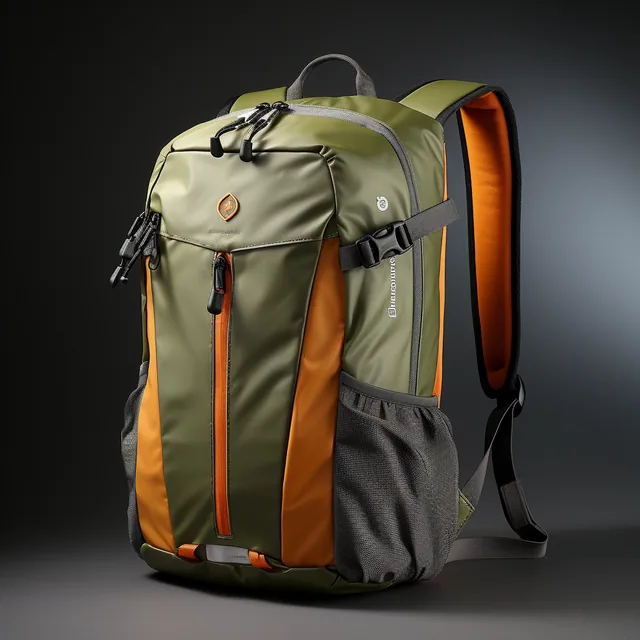
Hire fleets are narrower than most buyers expect. Around 70-80% of volume sits in 55-75 litre multi-day packs aimed at Duke of Edinburgh expeditions, Munro bagging weeks and long-distance trails such as the Pennine Way or the Coast to Coast, with 30-45 litre day rucksacks going out as add-ons. Dry bags, group shelters and 90-120 litre expedition duffles absorb most of the remainder. Volumes below 20 litres and above 85 litres barely move, because walkers either own something that size already or cannot carry it comfortably for six hours at a stretch. Fleets therefore buy two or three sizes per model and standardise everything else.
Hire duty is harsh in a way that retail reviews never capture. A fleet pack is loaded to 12-18 kg by someone who will never read the fitting card, dragged across granite, strapped to the outside of a minibus in horizontal rain, then returned damp with grit ground into every zip track. Operators plan for 90-140 hire weeks, meaning three to four peak seasons, and they specify accordingly: 600D or 900D polyester bodies instead of light 210D nylon, #10 rather than #5 main chains, replaceable side-release buckles and frame sheets that survive being sat on at 15 kg. Every one of those choices is also what keeps the pack worth money once it leaves the fleet and goes to a resale shelf.
- Body fabric of 600D-900D polyester with a PU backing heavier than 0.10 mm, because thin backings delaminate long before the face fabric wears.
- #10 coil chain on the main compartment and #8 on the lid, with sliders that can be replaced without unpicking the whole binding.
- Side-release buckles in standard 25 mm and 38 mm sizes so spares are interchangeable across the fleet rather than model-specific.
- Removable hip belts and foam back panels, since these are the two parts that take the most sweat and therefore the most depreciation.
- Neutral colourways with a small chest logo, which lets the pack be reissued across schools, scout groups and corporate trips.
Hygiene and Turnaround Between Hires
Between hires an operator typically has 6-12 hours, and the binding constraint is drying time rather than washing. Deposits that actually work are: brush out grit and crumbs dry, spot-treat straps and hip belt with pH-neutral detergent diluted to roughly 5-7 pH, hand-wash the shell at 30 degrees Celsius or below, then force-dry at ambient temperature for 18-30 hours with the lid open and the frame sheet removed. Nothing should go into a tumble dryer, because heat above 40 degrees Celsius softens the adhesive behind the back panel and shortens the life of the PU coating. Packs returned genuinely wet go into a quarantine rack for 48 hours.
Odour control is the part operators most often get wrong. Sweat salt left in closed-cell foam is what produces the sour smell customers notice a week later, so the fix is a low-concentration detergent soak plus complete dry-through rather than fragrance sprays that simply mask it. Antibacterial finishes can help on strap linings, and claims should be backed by test evidence rather than adjectives: AATCC 100 measures bacterial reduction against a control inoculum while ISO 20743 covers textile substrates specifically, and both fall away after repeated laundering. Assume any finish has largely gone by hire twenty, and treat cleaning discipline rather than chemistry as the primary control. UV-C and ozone cabinets with 20-30 minute cycles are used by some depots as a finishing step, not a substitute for washing.
Budget 45 minutes of labour per pack per hire cycle. At a £14-£18 hourly labour cost that is £11-£14 of turnaround cost per hire week, which is why a £30 weekly ticket rarely covers anything above 45 litres.
What Actually Drives Backpack Resale Value
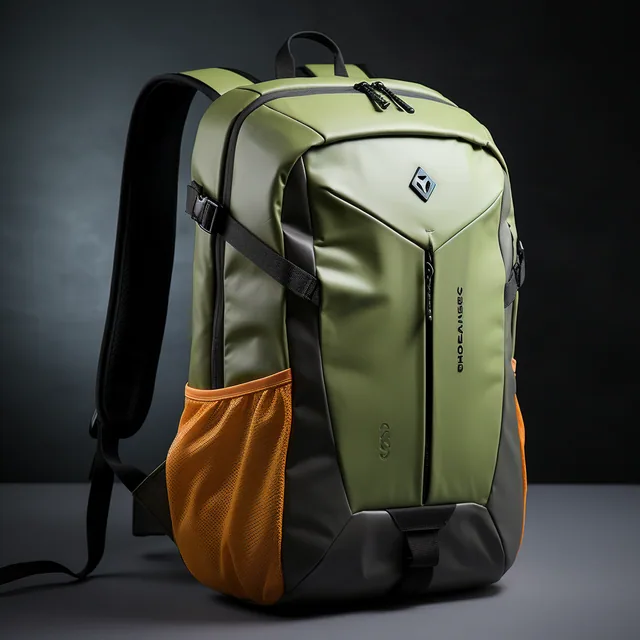
Five variables explain most of the spread in second-hand prices: brand recognition, whether the warranty follows the product, fabric and hardware condition, size demand, and season. A recognised outdoor brand with a transferable lifetime warranty routinely recovers half its retail price, while an unbranded 65-litre pack from a supermarket will struggle to reach a fifth of what it cost new. Size demand is sharper than people assume: 24-30 litre day packs and 55-65 litre expedition packs sell within days because they map onto either a daily commute or a hill day, whereas 40-litre and 80-litre volumes can sit for a month.
Timing is worth real money. Listing a 65-litre pack in late February prices against Easter expeditions; listing the same pack in October loses £15-£25 against a February listing. Photographs matter in a measurable way: listings with twelve or more images, including close-ups of seam junctions, zip tracks and the base corners, attract markedly more watchers than four-shot listings. Always publish actual dimensions in centimetres and the stated litre figure, since most resale disputes start with a buyer who expected a different internal volume. Expect a mid-priced UK rucksack in grade B condition to sell in 5-12 days, with anything still unsold after 21 days realistically priced about 20% too high.
| Retail band | Typical resale recovery | Median days to sell |
|---|---|---|
| £25-£60 high street | 25-35% | 10-18 days |
| £80-£150 mid-tier | 35-45% | 6-12 days |
| £180-£300 technical | 45-55% | 4-9 days |
| £300+ with lifetime warranty | 50-60% | 3-7 days |
A Practical Condition-Grading Standard
Without a grading language, sellers argue about adjectives instead of prices. A workable UK resale scale runs from A to C. Grade A means clean, structurally sound, no repairs, no sun fading and no delamination, which typically lands at 50-60% of retail. Grade B covers cosmetic marks, strap fuzz, a scuffed base or a replaced buckle, priced at 35-45%. Grade C means functional but visibly tired: flakingPU lining, a repaired seam, a stiff zip or faded fabric, and it should clear at 15-25% with every defect photographed. Anything whose load-bearing seam has parted, whose frame is cracked or whose foam has compressed beyond about a third of original thickness is spare parts rather than a sellable pack.
Apply fixed deductions and listing becomes arithmetic. Take £4-£6 off per missing buckle or strap keeper, £8-£12 from expected resale for a zip that needs two hands, £10-£15 for a soft flaking liner that will eventually drop black flakes into whatever is inside, and £15-£25 for a professionally restitched load-bearing seam. Mention whether the rain cover, hip belt pockets and removable lid are included, since each of those is a £5-£15 hit on a buyer's own economics. Photograph the four base corners, both shoulder strap attachment points, the hip belt stitching and every zip track; those eight frames answer about 90% of the questions that otherwise turn into returns.
- Grades A, B and C map to roughly 50-60%, 35-45% and 15-25% of the UK retail price.
- Any failed load-bearing seam or cracked frame removes the pack from the resale pool entirely.
- Compression beyond one third of original foam thickness is not cosmetic; it changes how the pack carries weight.
- A flaking PU liner should be disclosed even after cleaning, because it will return within weeks.
- Eight standard photographs cover almost every dispute: four base corners, two strap roots, hip belt stitching and zip tracks.
Refurbishment: Repair It or Part It Out
Repair decisions should be made against expected resale value, not sentiment. The usual working rule is to authorise a repair when parts and labour together come in below 30% of what the finished pack should fetch. In practice that means a slider swap on a #10 chain at £6-£12 in parts and about twenty minutes of bench time nearly always pays for itself, a buckle and two strap keepers at £3-£6 always pays, and restitching a split load-bearing seam at £15-£25 only pays above roughly £70 of expected resale. Rewebbing a whole harness at £30-£45 rarely does unless the pack carries a transferable warranty.
Some failures are terminal because they are systemic rather than local. A shell whose PU backing has hydrolysed will keep flaking no matter how many times it is wiped, since the coating is breaking down chemically and not just shedding dirt. Polyester bodies resist this better than nylon in damp UK storage, which is partly why hire-grade packs are polyester. A frame sheet creased through its full width changes the load path and leaves pressure points on the back. Mould that has grown into open-cell foam rather than sitting on the surface leaves permanent staining and odour. Where a pack cannot be resold whole, parting out still recovers value: hip belts, rain covers, removable lids, compression straps and buckles all resell individually to people repairing their own packs.
Fees, Postage and Distance-Selling Rules
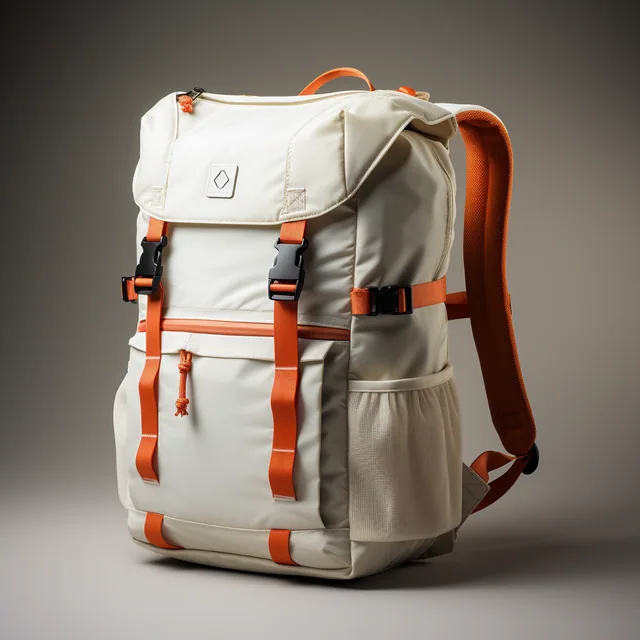
The fee stack is where casual sellers lose their margin. Marketplace commissions generally run 10-25% of the sale price, payment processing adds another 2.5-4%, and tracked postage on a 1-2 kg parcel inside the UK lands around £3.20-£7.50 depending on service and whether it is dropped off or collected. A £60 appearance pack can therefore net closer to £40-£45 once everything is deducted, which is why low-value items are better sold in bundles or locally for cash. Insured shipping above £100 of declared value is worth the extra couple of pounds, since a lost parcel paid at standard compensation eats the entire profit on several other sales.
Distance-selling law also shapes the numbers. Under the GOV.UK guidance on returns and refunds, consumers buying from a business seller get a 14-day cancellation window for goods bought at a distance, so a professional reseller needs return postage and restocking priced into the margin, whereas private sellers generally do not have to offer returns at all. Free economy postage takes three to five working days in the UK and should be quoted honestly rather than padded. If you list to buyers in the EU, different consumer rules and customs formalities apply; the baseline is summarised at the Your Europe consumer portal, and most UK sellers find cross-border parcels only make sense above roughly £90 of item value.
Designing a Range With Its Second Life Priced In
Residual value is decided at the specification stage, long before anything reaches a resale listing. Specify single-polymer shells where a recycler can handle them, keep trim to replaceable industry-standard parts rather than proprietary mouldings, print a care label that gives an actual washing temperature, and avoid bonding structures that cannot be opened without destroying the panel. Documenting the denier, coating type and zip chain size lets whoever owns the pack in year five order the right spare. For brands developing their own range rather than reselling someone else's, QUANZHOU JUNYUAN BAGS works as a sourcing and programme-management partner established in 2014, operating 4,950 square metres of SGS-verified production floor space with 137 colleagues across seven production lines.
The commercial parameters behind that kind of programme are predictable, which helps the resale maths. Minimum order quantity is 500 pcs per style and colourway on custom work, sampling takes 6-10 working days for standard builds and 12-15 working days for complex multi-panel constructions, and bulk production runs 35-50 days after sample approval. Inspection is quoted at AQL 2.5 under ISO 2859-1, terms are FOB Xiamen with payment at T/T 30/70. For a UK buyer, the useful consequence is that a repairable specification can be costed from first sample onward, so the difference between a pack worth £12 second-hand and one worth £45 is decided while the bill of materials is still open.
Reading a Second-Hand Listing Before You Pay
Buyers should shop against a fixed checklist rather than a photograph that flatters the pack. Ask for the model year or approximate age, because coatings and foams age regardless of use and a seven-year-old pack stored in a damp loft can be worse than a three-year-old one that saw thirty hill days. Check that the hip belt still has its original shape, since compressed foam changes load transfer and no amount of adjusting fixes that. Confirm whether the rain cover is present and whether the internal frame sheet is flat, and count the litre figure rather than trusting an external photograph of something that looks generously sized.
Four signals justify walking away. First, a liner that sheds black flakes when you run a finger across it, which is advanced coating failure and will get worse. Second, zips that separate behind the slider, meaning the chain itself is worn rather than just dirty. Third, any sweetness or mustiness in the smell after the pack has dried, indicating microbial growth inside open-cell foam. Fourth, asymmetric strap webbing, where one strap root has stretched or been restitched short, because that usually follows a structural failure elsewhere. Buying used still saves 45-65% on the retail price of a technical pack; it just requires twelve properly framed photographs and about six questions before money changes hands.
- Request the age of the pack and where it was stored, not just how often it was used.
- Ask for photographs of both strap roots and the full hip belt stitching run.
- Confirm litre capacity, dimensions in centimetres and whether the lid and rain cover are included.
- Check zip tracking by asking whether the main chain separates behind a closed slider.
- Price any needed repairs against a new equivalent before agreeing the asking figure.
Frequently Asked Questions
Is it cheaper to rent or buy a backpack in the UK?
Renting is cheaper below roughly 14-18 days of annual use. A 65-litre pack retailing at £180-£250 hires for £8-£12 a day or £35-£55 a week, so two short trips cost £80-£120. Buying wins above about 18-25 days a year, particularly if you resell after three seasons at 35-55% of retail, which brings net annual cost down to roughly £50-£70. Add about £4-£6 a month of storage space and £6-£9 a year in reproofing and repair items to the ownership side, since both quietly narrow the gap between the two routes.
How much can you resell a backpack for in the UK?
Recovery tracks the retail tier. A £25-£60 high-street pack returns 25-35%, a £80-£150 mid-tier pack returns 35-45%, a £180-£300 technical pack returns 45-55%, and models above £300 with a transferable lifetime warranty can hold 50-60%. Season matters too: the same 65-litre pack listed in February can be worth £15-£25 more than the same item listed in October. Presentation moves the figure by roughly ten points either way, so twelve photographs, dimensions in centimetres and a realistic grade beat a flattering description every time.
How do UK rental companies clean backpacks between hires?
Most operators allow 6-12 hours and treat drying as the constraint. The usual sequence is: dry-brush grit, spot-clean straps with pH-neutral detergent at roughly pH 5-7, hand-wash the shell below 30 degrees Celsius, then force-dry at ambient temperature for 18-30 hours with the frame sheet removed. Nothing goes above 40 degrees Celsius. Damp returns are quarantined for around 48 hours before they re-enter the hire pool.
How many times can a rental backpack be hired before retirement?
Fleet packs are typically planned for 90-140 hire weeks, which is three to four peak seasons, depending on how they are loaded and returned. Utilisation of 26-34 paid hire weeks a year at £40-£55 a week recovers purchase price inside one season. Retirement usually follows coating failure, compressed foam or parted seams rather than cosmetic wear, all of which are accelerated by returns that are put away wet.
Which backpack sizes are in most demand for rental in the UK?
Around 70-80% of hire volume sits in 55-75 litre multi-day packs for Duke of Edinburgh expeditions, Munro weeks and long-distance trails, with 30-45 litre day packs as add-ons. Dry bags and 90-120 litre expedition duffles cover much of the rest. Sizes under 20 litres or above 85 litres rarely justify fleet space because walkers tend to own those volumes already or cannot carry them comfortably all day.
Do backpack warranties transfer to a second owner in the UK?
It depends entirely on the wording of the guarantee. Some outdoor brands honour lifetime repair schemes on the product rather than the purchaser, which is why those models resell at 50-60% of retail, while others limit cover to the original buyer and require proof of purchase. Always check whether claims need the original receipt and whether the cover is repair-only. The absence of transferable cover typically costs a seller 10-15 percentage points of resale value.
What fees apply when selling a used backpack online in the UK?
Budget 12-29% of the sale price in total. Marketplace commission runs 10-25%, payment processing adds roughly 2.5-4%, and tracked postage for a 1-2 kg parcel costs £3.20-£7.50. A £60 sale therefore nets closer to £40-£45. Below about £25 of item value, bundle items together or sell locally for cash, because fees and postage can exceed the margin entirely. Insurance above roughly £100 of declared value adds £1-£2 and is cheaper than losing one parcel at standard compensation rates.
How should I grade a used backpack before listing it?
Use three bands. Grade A is clean, unrepaired and unfaded at 50-60% of retail. Grade B allows cosmetic marks, strap fuzz and a replaced buckle at 35-45%. Grade C is functional but tired, with flaking lining, a repaired seam or a stiff zip, priced at 15-25% with every defect photographed. Anything with a separated load-bearing seam or a cracked frame belongs in the spares category, not the listings.
Is a rental backpack worth repairing before resale?
Yes when repair cost stays under roughly 30% of expected resale value. A #10 slider at £6-£12 in parts almost always pays, buckles and keepers at £3-£6 always pay, and restitching a load-bearing seam at £15-£25 pays above about £70 of expected resale. Rewebbing a full harness at £30-£45 rarely pays unless the pack carries transferable warranty cover. Skip systemic failures such as hydrolysed linings or creased frame sheets entirely, since no repair restores a resale grade there.
How do I spot hidden damage in photographs of a used backpack?
Request twelve or more images and look specifically at the four base corners, both shoulder strap attachment points, the hip belt stitching run and every zip track; those eight views resolve about 90% of later disputes. Ask whether a closed main zip separates when pressed, whether the liner sheds flakes when wiped, and whether both straps measure identically. Asymmetry usually signals a previous structural failure rather than wear.
Why do some old backpacks smell even after washing?
Odour usually comes from dried sweat salt and microbial growth inside open-cell foam, particularly hip belts and back panels, rather than dirt on the shell. Fragrance sprays mask it; the effective fix is a diluted pH-neutral soak followed by 24-48 hours of complete dry-through with airflow. Once mould has colonised foam below the surface, staining and smell are effectively permanent, so that pack should be priced as grade C or used for spares.
Building Range That Holds Its Value
Resale recovery is a specification outcome, not a marketing one. Repairable trim, documented deniers, replaceable buckles and a care label with a real washing temperature are what turn a £12 grading into a £45 grading three years after purchase. QUANZHOU JUNYUAN BAGS supports that kind of long-life specification work for UK brands, coordinating sampling, materials selection and inspection rather than pushing volume.
Standard programmes run at a minimum order quantity of 500 pcs per style and colourway, with sampling at 6-10 working days and 12-15 working days for complex builds, bulk production at 35-50 days, inspection at AQL 2.5 under ISO 2859-1, FOB Xiamen terms and payment at T/T 30/70. If you are planning a range for 2027, the residual-value conversation is worth having while the bill of materials is still open.
Email: service@junyuanbags.com
WhatsApp: +86 177 5002 0688