Backpack Printing Methods Compared for UK Brands: Screen, Transfer, DTF and Sublimation
There is no universally best print method for a backpack, only the best match between a method and a substrate. Screen printing with plastisol is the default for flat logos on PU-coated polyester and costs the least per unit at volume. Heat transfer vinyl suits small personalised runs on awkward panels. DTF handles fine detail and photographs on coated cloth. Dye sublimation gives the most durable result of all, and works only on white or light polyester. Choosing by unit price alone is how branded bags come back after three months with a cracked logo.
This guide compares the five methods a UK brand is realistically choosing between, on the criteria that decide the outcome: adhesion to the specific fabric, resistance to rubbing and washing, chemical compliance, unit cost and lead time. As a sourcing and programme-management company, QUANZHOU JUNYUAN BAGS specifies print alongside fabric rather than after it, because the coating on the cloth decides most of the answer. Print programmes are quoted at 500 pcs per style and colourway, with sampling in 6-10 working days and bulk in 35-50 days, inspected at AQL 2.5 and shipped FOB Xiamen.
The Substrate Decides Most of the Answer
Every print method is a contest between an ink film and a surface, and bag surfaces are hostile. PU-coated polyester has low surface energy, so inks sit on it rather than in it. rPET behaves like virgin polyester but varies more between lots. 1680D ballistic nylon has a coarse weave that breaks up fine detail. TPU laminate is smooth and accepts transfer well but is heat sensitive. Silicone-finished ripstop is deliberately slippery, which is exactly what makes it hard to print. Ask the mill for the coating type and its surface energy figure before the artwork is finalised, not after the first printed sample fails.
Two further complications are specific to bags. Plasticiser migration from a PVC or soft PU coating can soften a plastisol film from underneath over months, producing tackiness and dye migration. And a printed panel on a backpack is flexed, abraded against clothing and rubbed at contact points in a way a printed T-shirt never is. That is why a method that passes a wash test on flat goods can still fail on the strap contact area of a bag. Print on a front panel and print on a strap contact patch behave differently, so both should be tested before approval.
- PU-coated polyester has low surface energy; adhesion is the main risk.
- rPET varies more between lots than virgin polyester.
- 1680D ballistic weave breaks up fine detail and small type.
- Plasticiser migration softens print films from underneath over time.
Screen Printing: Plastisol and Water-Based
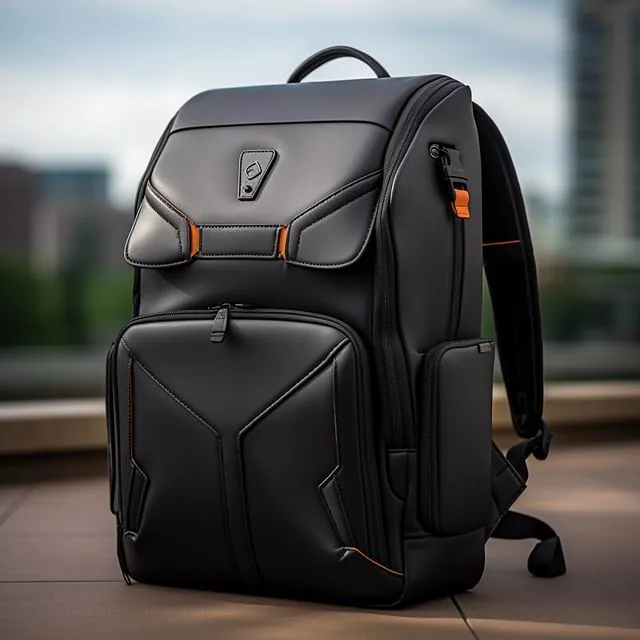
Screen printing pushes ink through a mesh stencil directly onto the panel. Mesh count sets the balance between deposit and detail: 62T to 90T for a bold logo on a coarse weave, 120T and above for fine type. Plastisol is a PVC-particle suspension that cures by fusion at roughly 150 to 160 °C, and it is forgiving, opaque and cheap. Water-based ink penetrates the fibre and has a softer handle, but it needs longer curing and more control on coated fabrics. A pre-production adhesion test on the actual coated cloth is worth more than any datasheet, because cure windows vary with coating chemistry.
The weakness of plastisol on bags is film thickness and flexibility. A heavy deposit of 100 micrometres or more will crack where the panel folds, and it will feel like a sticker on a soft shell. Additives reduce the problem at the cost of opacity. Screen printing also carries a per-colour screen charge, so a six-colour logo carries six screens and six registration steps, which is why it suits one to three colours and stops being economic beyond that. Registration tolerance on a sewn bag is wider than on a flat panel, so allow plus or minus 2 mm and inspect against a printed placement template.
| Parameter | Plastisol | Water-based |
|---|---|---|
| Cure temperature | 150-160 °C | 150-160 °C with longer dwell |
| Film thickness | 80-150 micrometres | 10-30 micrometres |
| Handle on the panel | Plastic, noticeable | Soft, close to bare fabric |
| Best for | Bold flat logos, 1-3 colours | Soft-handle retail bags |
Heat Transfer Vinyl and Cad-Cut Film
Heat transfer vinyl is a coloured polyurethane or PVC film cut to shape on a plotter and pressed onto the panel, typically at 150 to 160 °C for 10 to 15 seconds at 3 to 4 bar. It gives sharp edges, exact Pantone matching and no screens, so the economics are inverted relative to screen printing: no set-up cost, higher unit cost, and no penalty for adding colours or for changing artwork between bags. Vinyl also allows a logo to be applied after the bag is assembled, which is the only practical option on a curved or quilted panel. Pressing time, pressure and temperature should all be recorded on the sample card and then repeated exactly in bulk.
That makes it the right answer for personalised names and numbers, for short runs, and for panels that are hard to screen because of zips, seams or curvature. Its limits are durability and hand feel. A vinyl film of 80 to 120 micrometres sits proud of the fabric and can lift at the edges after repeated abrasion, and stacking multiple layers for a multi-colour logo produces a stiff, plasticky patch that customers notice immediately. Where a design needs more than three colours, a printed transfer film is usually better than stacking several vinyl layers. Vinyl also blocks the weave, so it changes how the panel breathes and how it creases when the bag is packed.
- Press at 150-160 °C for 10-15 seconds at 3-4 bar.
- No screen charge; unit cost stays flat across colours.
- Ideal for names, numbers and short or personalised runs.
- Edges lift under abrasion; avoid on strap contact points.
DTF: Digital Film Transfers
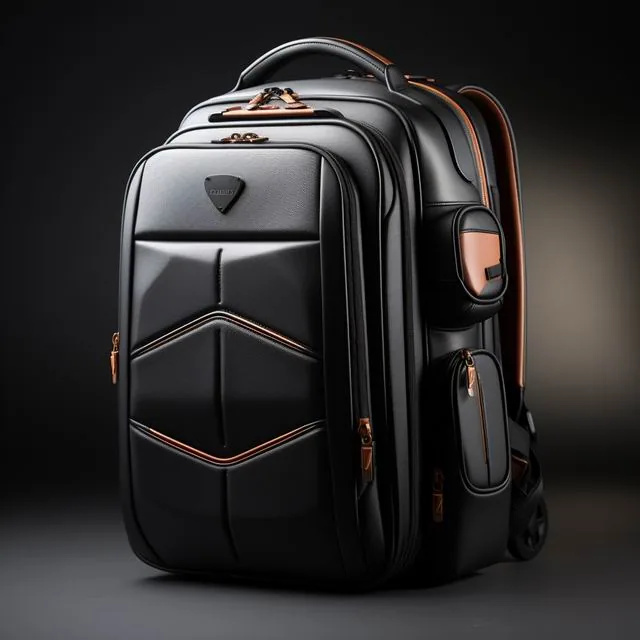
Direct-to-film printing puts a digitally printed image onto a release film, dusts it with a hot-melt adhesive powder, gels the powder, then heat presses the whole thing to the panel at around 130 to 160 °C. It has taken a large share of the market from screen printing because it removes screens entirely while still producing a full-colour image with gradients, small type and photographic detail. Ask for the press parameters used to be recorded on the sample card, so that bulk production can repeat them exactly. It also removes the minimum-run economics that make screen printing awkward for a first season or a test drop.
On bags it works best on flat, coated polyester panels and worst on coarse ballistic weaves, where the adhesive cannot reach into the weave and the edges of fine detail begin to lift. It is also the method most sensitive to press conditions: under-pressed film looks fine on day one and peels in week three, which is why a peel test on the actual panel is worth more than a supplier sample swatch. Expect a slightly rubbery hand feel and a visible film edge. DTF also holds small type down to roughly 1 mm, which screen printing on a coarse weave cannot reproduce reliably.
- Full colour with no screens; artwork changes are free.
- Press at 130-160 °C after gelling the hot-melt powder.
- Best on flat coated polyester; poor on coarse ballistic weave.
- Require a peel test on the actual production panel, not a swatch.
Dye Sublimation: the Most Durable and the Most Restricted
Sublimation is not a film at all. Disperse dye is printed onto paper, then transferred to polyester under heat and pressure, typically 180 to 200 °C for 45 to 60 seconds, where it converts to a gas and bonds into the fibre. The result has no handle, no thickness, no cracking and no peeling, and it survives washing and abrasion better than any applied film. It is also unrestricted in colour and in detail. Colour is matched through a profile rather than a spot colour, so a proof on the actual production fabric is essential before bulk. The transfer is done under heat and pressure, so the panel must be flat and must tolerate 200 °C without shrinking.
The restriction is absolute: the substrate must be polyester or a polyester-rich blend, and it must be white or very light, because the dye is transparent and sits over the base colour rather than covering it. That rules out sublimation for a black bag, for nylon, for canvas and for most coated shells with a coloured face. Where it applies, it is usually the best answer for an all-over pattern and the wrong answer for a small discrete logo. It is also the only method that adds no weight and no stiffness, which matters on lightweight packable bags. Where the ground is dark, a sublimated panel produced separately and sewn in is sometimes the workable compromise.
| Method | Substrates | Restrictions |
|---|---|---|
| Dye sublimation | White or light polyester | No dark grounds, no nylon, no canvas |
| DTF transfer | Coated polyester, some nylon | Weak on coarse weaves and high-pile cloths |
| Heat transfer vinyl | Most coated synthetics | Poor on low-melt TPU and silicone finishes |
| Screen print | Most bag fabrics | Weak adhesion on low surface energy coatings |
Silicone, Puff, Reflective and Other Special Effects
Special effects sell bags and each one carries a specification risk. Silicone ink gives a rubbery, thick, very durable badge effect and bonds well to coated synthetics, but it needs a higher cure temperature and a two-part system with a pot life, so it suits dedicated production runs rather than small orders. Puff additive raises the print into a raised foam and looks good until it is abraded, at which point it flattens unevenly. Silicone is also the most resistant to plasticiser migration, which makes it a better choice than plastisol on soft PVC-coated cloth. Silicone also cures to a much thicker film, around 300 to 500 micrometres, which changes how the panel folds.
Reflective transfers are the most functionally useful of the group, because a bag is carried on dark roads. Retroreflective film applied as a heat transfer adds night-time visibility where it is placed, and it should be specified with a minimum coefficient of retroreflection plus a wash and rub requirement, not simply as a grey stripe. Glitter, metallic and glow-in-the-dark films are available and all suffer the same constraint: they are surface films and they abrade first at the contact points. Place reflective transfers where they stay visible when the bag is carried: the front face, the shoulder straps and any side gusset.
- Silicone: durable rubber badge, needs two-part mixing and higher cure.
- Puff: raised foam effect, flattens unevenly under abrasion.
- Reflective: functional safety benefit; specify a performance figure.
- All surface films abrade first at strap and back contact points.
Durability Testing: What to Demand Before Approval
Print durability is measured, not asserted. Colour fastness to rubbing is the first gate, and the standard method is ISO 105-X12, which rubs a white cloth against the print under a 16 mm finger at 9 N, dry and wet, and grades transferred colour on a 1 to 5 scale. Grade 4 is a reasonable pass for a bag logo and grade 4-5 is expected on retail product. Wet rubbing is the one that catches under-cured prints. Wet rubbing is the one most often skipped and the one most often failed, because an under-cured film transfers colour as soon as it is damp.
The second gate is washing and the third is abrasion. A domestic wash cycle at 40 °C for 30 minutes, repeated five times, with an inspection for cracking, edge lift and colour change, is a fair proxy for the first year of a commuter bag. Abrasion should be run on the printed panel with a Martindale-type machine to 20,000 rubs for a retail bag and 10,000 for a promotional one, followed by a visual grade. Insist that all three are run on the production panel, not on a swatch. Re-test after any change of ink batch, coating batch or press setting, since all three shift adhesion.
- Rubbing fastness to ISO 105-X12: grade 4 minimum, 4-5 for retail.
- Five domestic washes at 40 °C for 30 minutes; check for lift and cracking.
- Abrasion to 20,000 rubs on retail panels, 10,000 on promotional.
- Test the production panel with its coating, never a generic swatch.
UK and EU Compliance for Printed Bags
Printed graphics are a chemical compliance question as much as a print question. The EU chemicals framework, Regulation (EC) No 1907/2006 (REACH), restricts substances in articles placed on the market, including phthalates in plastisol inks and certain azo dyes. Bags intended for children attract additional scrutiny, because migration limits for certain elements apply to any part a child can mouth, and a printed panel is exactly that. Plastisol formulations vary widely, so a phthalate-free declaration should be requested explicitly rather than assumed from a generic sheet. Children's bags in particular should be specified with migration testing on the printed area, because the print is a mouthable surface.
For brands placing goods on the Great Britain market, the Office for Product Safety and Standards is the regulator to check requirements against, and its guidance sits alongside the UK chemicals regime. Practically, that means asking the print supplier for a declaration tied to the specific ink and powder batch, not to the ink family, and keeping the test reports with the tech pack. A declaration without a batch reference is not worth the paper when a retailer asks. Keep a retained sample from every production run, because a complaint about a printed bag is far easier to resolve with a physical reference.
Ink and powder batch numbers; REACH declaration covering phthalates and azo dyes; migration results for certain elements where the bag is for children; rubbing fastness to ISO 105-X12 with grades; wash test report; and abrasion result run on the production panel.
Unit Cost and the Economics of Each Method
Cost has two halves, the one-off and the per-unit, and the two move in opposite directions. Screen printing carries a screen charge per colour and then the lowest unit cost in the group. Heat transfer vinyl and DTF carry no set-up and a moderate unit cost. Sublimation carries a paper and press cost per panel and no set-up. Silicone carries a mixing and tooling cost and the highest unit price of the five. Silicone also needs longer curing time per piece, so it affects throughput as well as unit price. Digital methods also carry almost no cost penalty for a late artwork change, which is worth more than it sounds.
Order quantity decides which half dominates. Below roughly 1,000 units across a programme, films usually beat screens on total cost once artwork changes are counted. Above that, screens win decisively unless the artwork is full colour. The other cost is rework: a mis-registered screen run on finished bags is a write-off, whereas a mis-pressed transfer can often be removed and re-applied. Ask how a method fails, not only what it costs. Where artwork changes between seasons, film-based methods avoid writing off screens that will never be used again. Ask for the unit cost at your actual quantity rather than at a headline figure, because the two are rarely the same.
| Method | Set-up | Unit cost band | Rework risk |
|---|---|---|---|
| Screen print, plastisol | Screen per colour | Lowest at volume | High; mis-registration scraps the panel |
| Heat transfer vinyl | None | Low to moderate | Low; can often be re-pressed |
| DTF transfer | None | Moderate | Moderate; removal can mark the coating |
| Dye sublimation | None | Moderate | None; the piece is scrap if wrong |
| Silicone badge | Tooling and mixing | Highest | High; cannot be removed cleanly |
Writing the Print Specification
A print spec has seven lines: method; substrate including the coating; colour reference in Pantone TCX or a numbered standard; position with a tolerance, normally plus or minus 2 mm; size in millimetres; durability requirements with the standard and the grade; and artwork format, which should be vector with outlines converted. Missing any one of the seven produces a sample that looks right and an argument later about whether it was right. Add an eighth line for a retained reference sample, signed off at approval and kept for the life of the programme. A placement drawing with dimensions is worth more than three paragraphs of description and removes most approval delays.
At QUANZHOU JUNYUAN BAGS the commercial frame around that spec is fixed: 500 pcs per style and colourway, sampling in 6-10 working days and 12-15 working days for complex builds such as silicone or multi-process panels, bulk in 35-50 days, inspection at AQL 2.5 under ISO 2859-1, FOB Xiamen and T/T 30/70. Print durability testing is the part most often skipped to save a week, and it is the part that costs the most when it is skipped. A week saved at sampling is usually paid for several times over in returns, reprints and lost shelf space. The commercial terms stay the same whichever method is chosen, so the decision can be made on performance alone.
- State method, substrate and coating, colour reference and tolerance.
- Give position tolerance at plus or minus 2 mm and size in millimetres.
- Name the durability standard and the pass grade on the tech pack.
- Supply vector artwork with fonts converted to outlines.
Frequently Asked Questions
Which printing method is best for a backpack logo?
For a bold one to three colour logo on PU-coated polyester at volume, screen printing with plastisol is the standard answer and the cheapest per unit. For full colour or photographic artwork, DTF is better. For names, numbers or short runs, heat transfer vinyl wins because there is no screen charge. For an all-over pattern on white polyester, sublimation is the most durable option available.
Why does screen print crack on some backpacks?
Usually because the ink film is too thick for the flex the panel takes, or because plasticiser from the coating has migrated into the film and softened it. Deposits above about 100 micrometres crack where a panel folds, and coated synthetics with soft PVC or PU finishes are the worst offenders. Thinner deposits, a flexible additive and a lower cure check usually resolve it.
Can you print on 1680D ballistic nylon?
Yes, but expectations need adjusting. The coarse weave breaks up fine detail and small type, so logos should be simplified and enlarged, and a thicker deposit or a transfer film is needed to bridge the weave. Screen printing works; DTF struggles because the adhesive cannot reach into the weave valleys, and fine edges begin to lift after abrasion. Always approve a production panel rather than a laboratory swatch before committing to bulk.
How is print durability tested on bags?
Three tests cover it. Colour fastness to rubbing to ISO 105-X12, dry and wet, graded 1 to 5 with grade 4 usually the pass mark. Five domestic washes at 40 °C for 30 minutes, inspected for cracking and edge lift. And abrasion to 20,000 rubs on retail panels. All three should be run on the production panel with its actual coating, not on a swatch.
Is DTF durable enough for a bag that is used daily?
It can be, provided press temperature, pressure and dwell are validated on the production fabric and verified with a peel test. DTF fails when it is under-pressed, because the film looks correct on day one and peels within weeks. On flat coated polyester it performs well; on coarse ballistic weaves and high-pile cloths it is a poor choice regardless of press settings.
Can dye sublimation be used on a black backpack?
No. Sublimation dye is transparent and bonds into the fibre rather than covering it, so it can only lighten or tint a light ground. It requires white or very light polyester, or a polyester-rich blend, and it cannot be used on nylon, canvas or most coloured coated shells. For a dark bag, DTF, heat transfer vinyl or screen printing are the realistic options.
What temperature is needed for heat transfer on bags?
Heat transfer vinyl is typically pressed at 150 to 160 °C for 10 to 15 seconds at 3 to 4 bar. DTF film is pressed at 130 to 160 °C after the hot-melt powder has been gelled. Sublimation runs hotter, around 180 to 200 °C for 45 to 60 seconds. Silicone needs the highest cure of the group and uses a two-part system with a limited pot life.
Do printed bags need chemical compliance testing in the UK?
Yes. REACH restricts substances in articles, including phthalates used in plastisol inks and certain azo dyes, and bags for children attract additional migration limits for certain elements on parts a child can mouth. Brands placing goods on the Great Britain market should check requirements against the Office for Product Safety and Standards and keep batch-specific declarations on file. Ask for declarations tied to the specific ink and powder batch, not to the ink family.
How much does backpack printing add to unit cost?
It varies by method rather than by size. Screen printing has the lowest unit cost at volume but carries a screen charge per colour. Heat transfer vinyl and DTF have no set-up and a moderate unit cost that stays flat across colours. Silicone is the most expensive. Below roughly 1,000 units across a programme, films often beat screens once artwork changes are counted.
Can a printed logo be removed or re-done on a finished bag?
Sometimes. A mis-pressed heat transfer can often be lifted with heat and re-applied. Screen print, sublimation and silicone cannot be removed cleanly, so an error on those methods usually scraps the panel or the bag. That rework asymmetry is worth weighing when a programme is likely to change artwork between seasons. Screen print and sublimation errors normally scrap the panel, so approve a struck-off sample first.
How long does sampling take for a printed backpack?
Standard sampling runs 6-10 working days. Complex builds that combine processes, or that use silicone badges, reflective films or a new ink system on an unfamiliar coating, run 12-15 working days because adhesion and durability testing cannot be compressed. Bulk production then takes 35-50 days from approval, shipped FOB Xiamen on T/T 30/70 and inspected at AQL 2.5. Approving artwork before the first sample is what keeps the window at the shorter end.
Choosing a print method for a UK bag programme?
Since 2014, QUANZHOU JUNYUAN BAGS has worked as a sourcing and programme-management company. Our production team specifies print alongside fabric, because the coating on the cloth decides adhesion, cure window and durability long before the artwork does. Each programme carries a written print spec with method, colour reference, position tolerance and named durability tests.
Send artwork and the fabric specification, or a competitor sample, and the team will return a method recommendation with unit cost bands and test requirements, then quote against 500 pcs per style and colourway, sampling in 6-10 working days, bulk in 35-50 days, AQL 2.5, FOB Xiamen and T/T 30/70.
Email: service@junyuanbags.com
WhatsApp: +86 177 5002 0688