Hip Belt vs No Hip Belt: Thresholds, Constructions and Buying Trade-Offs
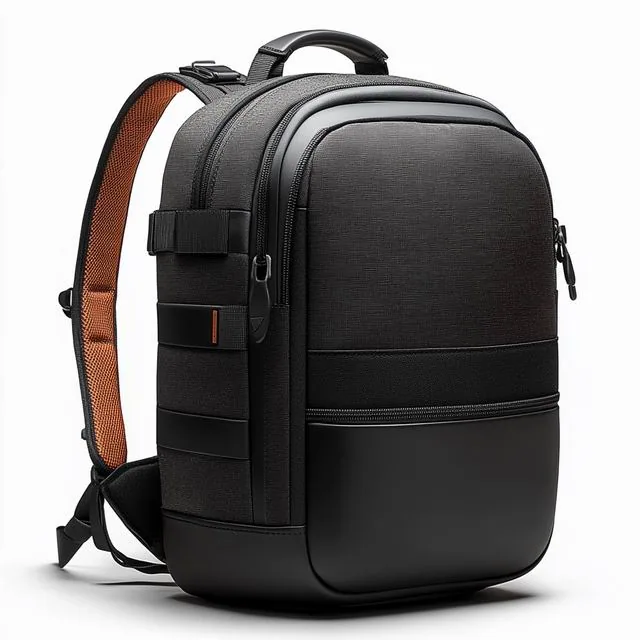
Take the hip belt whenever the load passes roughly 7 kg or the carry runs beyond 45 minutes, because that is the point at which a padded belt starts moving 60-70 per cent of the mass onto the hip bones. Below about 5 kg and under half an hour it is mostly added bulk. The honest answer therefore depends on load and duration rather than on how technical the pack looks.
This guide compares the two routes with numbers: what load transfer really achieves, the three belt constructions and what each weighs and costs, how UK body shapes change the fit maths, and how a range should decide which variants to carry. It is written for British buyers developing harness programmes with QUANZHOU JUNYUAN BAGS, established in 2014, whose colleagues coordinate production across 7 production lines.
The Short Answer, With Two Thresholds
Two variables decide the question: sustained weight and time on the move. Under 5 kg and under 30 minutes, a hip belt contributes very little, contributes nothing to comfort, and gets in the way of reaching pockets or sitting down. Between 5 and 7 kg it becomes worthwhile. Above 7 kg, or on any carry longer than three quarters of an hour, take the belt every time, because the alternative is loading the trapezius with mass that the skeleton should be handling. Read the number off bathroom scales with the pack fully loaded rather than trusting how heavy it feels.
The second threshold matters because fatigue accumulates. A four-mile walk to a survey site at 9 kg will hurt more in the final mile than the first, and the belt is what keeps the load path intact once posture starts to slump. Note also that a real hip belt means a padded, shaped band contacting the iliac crest; a plain 25 mm webbing loop with a buckle is a stabiliser, useful above 6 kg but not a load-carrying device at all. Sales copy rarely distinguishes between the two, which is why some packs appear to have a belt yet carry nothing.
- Under 5 kg, under 30 minutes: belt is optional bulk
- Over 7 kg or over 45 minutes: load-bearing belt every time
- Padded and shaped beats webbing-only above about 6 kg
- Webbing straps stabilise; they do not transfer much weight
What Load Transfer Numbers Really Say
On a well-adjusted harness the hip belt takes roughly 60-70 per cent of carried mass, and expedition builds with stiff, well-wrapped belts can reach 80-85 per cent in steady walking. The remainder deliberately stays on the shoulders. That residual load is not waste: it keeps the pack against the back, allows the shoulders to steer it over uneven ground, and prevents the belt from rocking every time you take a long stride. Terrain matters: sticky mud, stone staircases and packed Tube stairwells all punish a load that hangs away from the spine.
Put the same idea in concrete terms. At 4 kg total, moving 65 per cent to the hips takes barely 2.6 kg off the shoulders, which few people notice. At 12 kg it removes nearly 8 kg, and that difference decides whether a day ends with an ache between the shoulder blades. The other side of the coin is that a belt worn too high simply presses on soft tissue around the waist, offering none of this benefit and causing numbness instead. Shoulder soreness is almost always a symptom of belt position rather than insufficient padding.
Three Belt Constructions Compared
Not all hip belts do the same job. What matters is contact area over the hip bones, the stiffness of any internal stiffener, and how much of the belt length actually sits on the body rather than hanging in front. These three families cover nearly everything on the UK market, and choosing between them is mostly a question of what weight the product will genuinely be asked to carry by its owner. Check this by looking at the belt from above while someone else wears it loaded. Waterproof units marketed as rain covers fall outside this comparison entirely.
| Construction | Padding and width | Added weight | Practical ceiling |
|---|---|---|---|
| Webbing strap plus buckle | 25-38 mm webbing, no padding | 40-70 g | 6 kg, longer durations begin to dig |
| Padded wrap, fixed | 6-10 mm foam, 70-110 mm at back | 120-220 g | 16 kg, the default for hill and travel |
| Padded wrap, removable | 8-12 mm foam with a stiffener | 180-260 g | 14 kg, with a small penalty in bulk |
The padded fixed wrap is the workhorse where duty is predictable, since nothing can be lost or unclipped. Removable belts suit packs moving between city and holiday use, but they need a sleeve or flap that adds fabric, roughly 25-40 mm of panel height and another component to fail. Whichever route is chosen, the padding should wrap at least half of the contact length rather than stopping short at the sides of the pack. Stiffer padding is not automatically better: too much stiffness stops the belt wrapping and leaves gaps either side of the hips.
When a Belt-Free Harness Is the Better Buy
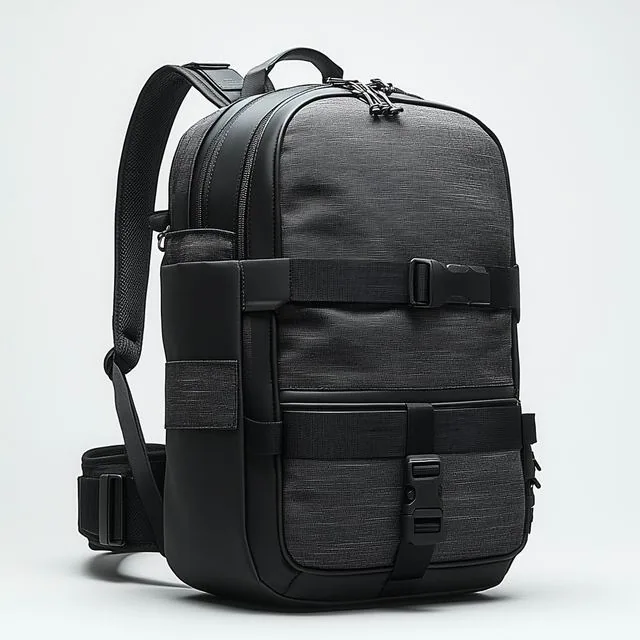
City commuting under 5 kg is the clearest case. A slim laptop pack carried eleven minutes from the station does not need a belt, and a padded one tends to ride up over a suit jacket hem, catch on shirt tails and leave a visible crease across the lower back. Cyclists are similar: a stiff padded belt restricts hip flexion and rotates every time you stand on the pedals, so most riders choose a belt-free pack below 6 kg. Sitting down for long stretches is another argument against a bulky belt in an office setting.
Design reasons matter too. Belt-free harnesses keep a clean silhouette, sit better under tailoring, and avoid the bulky back profile that some buyers associate with hiking gear rather than workwear. There is also a security angle on busy UK services: without a belt you can slide the pack round to your chest quickly, although with a belt you can do the same and it actually holds it there more securely, which is worth trying before deciding. Try both options for a full day rather than judging from a few minutes in a shop.
Wrap Angle, the Iliac Crest and UK Body Shapes
A belt only transfers load if it lands on the iliac crest, the ridge of bone running round towards the front of each hip. Fit the empty pack loose, place the belt's centreline roughly 2-4 cm above the top of the hip bones, then tighten; it should settle onto the crest rather than riding onto the waist. Coverage matters as much as position: about half the belt length should be in contact with bone and muscle, not dangling forward. Take the measurement standing, since sitting changes the position of soft tissue by several centimetres.
Body shape decides how easy that is. Men carrying a larger waist often find standard belts too short to wrap properly, leaving the buckle pulled hard against one side, so a longer tail of 15-20 cm each side widens the usable size range considerably. Shorter torsos can struggle in the opposite direction, where the belt sits too high whatever happens; those users are genuinely better served by a good webbing stabiliser and a lighter load. Insist on seeing stated hip belt circumference before ordering, because many listings quote only pack volume.
Removable and Stowable Belts: The Honest Trade-Off
A removable belt sounds like the ideal compromise, and for mixed-use packs it often is. The cost is bulk and complexity: the sleeve that hides the pads adds seams, the hook-and-loop closure collects lint and makes a tearing noise every time it opens, and users who remove the pads rarely refit them. A stowaway flap that folds into a rear panel pocket is quieter than hook-and-loop, but it needs 30-40 mm of extra fabric height. Machine washing with pads removed is easier, which is a genuine advantage for gym-focused ranges.
Evaluate any removable system by loading the pack to 10 kg and walking a flight of stairs with it. If the pads shift in their sleeve, or if the whole belt rotates downward under the load, the mechanism is carrying forces it was not designed for. Check also where the pads go when removed: systems that leave a bare webbing loop across the lower back tend to dig in within twenty minutes of wearing. Weight the tote-style result too: some systems leave a shape that looks unfinished when the pads are out.
What Each Route Costs in Weight and Budget
The bill of materials difference is not huge, but it is real and it multiplies across a range. A webbing stabiliser is cheap, mostly hardware and a bar-tack or two. A fixed padded belt brings foam, a stiffener, a covering panel, additional patterns and roughly double the assembly time. A removable system adds all of that plus a closure and a sleeve. Weight follows the same curve, from tens of grams to a quarter of a kilogram. Freight and duty both scale with weight, so a quarter kilogram is noticed across a full container.
| Element | Webbing stabiliser | Fixed padded wrap | Removable system |
|---|---|---|---|
| Key materials | 25-38 mm webbing, buckle | Foam, stiffener, cover panel | Foam, stiffener, sleeve, closure |
| Added weight | 40-70 g | 120-220 g | 180-260 g |
| Added operations | 2-3 | 8-12 | 12-16 |
| Typical administrative load | None | One extra SKU for size runs | One extra SKU plus fit trials |
The fabric choice matters alongside this. Belt padding covers get rubbed against jacket linings, car seat backs and station barriers for years, so the cover should be tested for abrasion resistance to ISO 12947. Padding foam that sits against skin through a British summer also benefits from an antibacterial finish evaluated against AATCC 100, particularly on darker colourways that are worn for long shifts. Sample the cover fabric in the chosen colourway, since pigment load can change abrasion behaviour by several thousand rub cycles. Ask for the rub-test report number with the quotation rather than after bulk has shipped.
How Each Route Fails in the Real World
Belted failures almost always come down to position. A belt sitting 5 cm too high rests on the soft tissue of the waist, where it cannot help and frequently compresses the lateral cutaneous nerve, giving that familiar tingling down the outer thigh. Too loose and it hangs below the crest, achieving nothing. Too tight and it stops blood returning comfortably, so people unclip it within the hour and carry on their shoulders anyway. Marks on the waistband of a shirt after a long walk are a reliable sign of a misplaced belt.
Belt-free failures are duller but just as predictable. Without a belt, weight past 7 kg pulls the shoulder straps down and back, so wearers compensate by leaning forward and shortening the straps, which raises the load even higher and loads the neck. Sway becomes the main complaint, and the natural remedy, buying a bigger pack, usually makes it worse by allowing more mass further from the spine. The sign of the second failure is strap wear: shoulder webbing that frays within a season is carrying load it was never meant to.
- Belt too high: numbness along the outer thigh after 30-40 minutes
- Belt too loose: hangs below the crest and carries nothing
- No belt at 8 kg plus: forward lean, neck loading and sway on stairs
- Removable pads left in a drawer: worst of both, webbing across the back
Decision Matrix for Common UK Use Cases
Applying the thresholds to real British routines makes the choice straightforward. The table sets out four everyday patterns with their typical loads, the recommended solution and the reason. Where a case sits between two answers, choose based on the longest rather than the shortest carry, since the belt you leave at home is worse than no belt at all. Weights are for typical British routines, including the laptop, files, lunch and weather layers most people actually carry rather than an idealised minimum. Where a routine includes flights, remember that a belt also changes how the pack sits on a tray.
| UK use case | Typical load and time | Recommended route | Reason |
|---|---|---|---|
| Rail or Tube commute with laptop | 4-6 kg, 20-40 minutes | Webbing stabiliser or none | Tailoring, crowds, short duration |
| Warehouse shift or site inspection | 9-14 kg, several hours | Fixed padded wrap | Sustained load needs real transfer |
| Duke of Edinburgh or hill day | 10-15 kg, 6-8 hours | Fixed padded wrap with stiffener | Long off-camber carries punish sway |
| Mixed office and weekend use | 5-9 kg, variable | Removable padded system | One pack, two different duties |
Notice that only one row favours a removable belt. They are often marketed as the universal answer, but for anyone whose routine is consistent they simply add weight and complexity. Choose removable only where the same pack genuinely has to serve two different loads in the same week, and insist that the odd shoe syndrome does not apply: the pads must stay with the pack, in the pack. Be honest about the heaviest day in the working week, because that is the day the decision will be judged on. Carry time, not distance, usually decides comfort on a British winter commute.
Planning a Range: Which Variants to Actually Produce
The production consequences of adding a belt variant are larger than the component itself. A belt and belt-free version are separate styles with different patterns, different cost lines and different photography, and each has to be quoted separately. Minimum quantity is fixed at 500 pcs per style and colourway, so adding a second road through the range commits another full line rather than an experimental handful. Version control then gets harder to manage, particularly where hardware and fabric are shared across several bodies. Fit photography has to be shot again for each variant as well. Assembly is coordinated across a 4,950 m² SGS-verified production floor space where 137 colleagues operate 7 production lines, a set-up in place since 2014.
Timings then stack up. Prototypes arrive in 6-10 working days for a standard harness, rising to 12-15 where the belt involves moulded foam or a bonded stiffener, and bulk occupies 35-50 days once the gold seal is approved. Inspection follows AQL 2.5 under ISO 2859-1, shipment is FOB Xiamen, and terms are T/T 30/70. The most useful decision a buying team can take is therefore early: settle belt versus no belt before the tech pack is written, not after the first sample lands. Lock belt decisions at the same time as materials, not after the first fit session.
Frequently Asked Questions
Is a hip belt worth it on a 20 litre commuter backpack?
Usually not. Below 5 kg and under 30 minutes the belt adds 120-220 grams of bulk for almost no benefit, and it tends to crease a jacket hem. A plain 25 mm webbing stabiliser is enough to stop sway up to about 6 kg. Above 7 kg, or on carries past three quarters of an hour, move to a padded belt that contacts the iliac crest.
What percentage of backpack weight should a hip belt carry?
On a well-adjusted harness, roughly 60-70 per cent, with expedition builds reaching 80-85 per cent in steady walking. The remainder stays on the shoulders deliberately, because it keeps the pack against your back and lets you steer it over rough ground. Trying to reach 100 per cent usually means overtightening, which restricts breathing and drives the belt onto soft tissue above the hip bones.
Why does my hip belt cause numbness in my legs?
Almost always because it sits 3-5 cm too high, on the soft waist rather than the iliac crest, where it can compress the lateral cutaneous nerve. Refit by loosening the belt, placing its centreline 2-4 cm above the top of the hip bones, then tightening. If symptoms continue after 20 minutes of walking, lighten the load or move to a wider padded belt for better distribution.
Are removable hip belts a good idea?
They suit genuinely mixed duty, such as one pack covering a weekday commute and a weekend hill walk. The trade-off is extra bulk from the sleeve, hook-and-loop noise, and the risk that users never refit the pads. Test any removable system at 10 kg: if the pads shift in their sleeve or the belt rotates downward under load, pick a fixed wrap instead.
Do cyclists need a hip belt on a commuting backpack?
Usually not, and many riders actively dislike them. A stiff padded belt restricts hip flexion and rotates when you stand on the pedals. Below 6 kg, a belt-free harness plus a sternum slider keeps things stable without limiting movement. Above 8 kg, or on long road descents where the load moves, a modest webbing stabiliser helps without the bulk of a full padded wrap.
How wide should a padded hip belt be?
Around 70-110 mm at the back where it contacts the iliac crest, tapering to 40-60 mm towards the buckle so it does not dig into the abdomen. Padding of 6-10 mm closed-cell foam is normal, stiffened with a thin polyethylene sheet on heavier packs. At least half the belt length should be in contact with the body rather than hanging loose in front of you.
Can a backpack hip belt be too long or too short?
Yes. Too short and the buckle is dragged sideways, leaving the padding off-centre and unable to wrap properly; men with larger waists hit this problem first. Too long and the tails flap and catch on doors and turnstiles. Aim for belt tails 15-20 cm per side beyond the comfortable fastening point, which covers a reasonable range of UK body shapes.
What is the difference between a hip belt and a webbing stabiliser strap?
A hip belt is padded, shaped and sits on the iliac crest, transferring 60-70 per cent of carried mass onto the skeleton. A webbing stabiliser is typically 25-38 mm webbing with a buckle; it stops the pack swinging and helps above about 6 kg but transfers very little weight. The two are often confused in product descriptions, which is worth checking before paying for the difference.
Does adding a hip belt add much cost to a backpack?
Compared with a bare panel, yes, though not dramatically. Expect additional foam, a stiffener, a cover panel, extra pattern pieces and roughly double the assembly time, plus heavier shipping per unit. A removable system costs more again because of the sleeve and closure. The bigger commercial commitment is that the belt variant clears the 500 pcs minimum set for each style and colourway.
How long does it take to develop a new hip belt design?
Allow 6-10 working days for a prototype on a standard harness, extending to 12-15 days where the belt uses moulded foam or a bonded stiffener. Bulk then runs 35-50 days after gold seal approval. Inspection follows AQL 2.5 under ISO 2859-1, with shipment on FOB Xiamen and payment by T/T 30/70, so belt decisions should be settled before the tech pack is written.
Should I keep using a hip belt with a heavy laptop only?
A single dense laptop is deceptive: 2-3 kg concentrated against a thin panel feels worse than its weight suggests, but it is still below the point where a padded belt pays off. Use a suspended sleeve to keep the panel close to your spine instead. Combine that laptop with files, gym kit and lunch above about 7 kg and the calculation changes in favour of a real belt.
Decide the belt question before the tech pack
Every harness decision downstream of this one is cheaper if the load class is settled early: frame stiffness, back panel length, webbing tails and even photography all follow from whether the pack carries 5 kg or 15 kg.
QUANZHOU JUNYUAN BAGS helps UK buyers settle that question at quotation stage, working to 500 pcs per style and colourway, prototypes in 6-10 working days and bulk slots of 35-50 days on FOB Xiamen, T/T 30/70 terms.
Email: service@junyuanbags.com
WhatsApp: +86 177 5002 0688