Backpacks for Warehouse and Shift Workers: Lockers, Hygiene, Cold Stores and Yards
For most warehouse roles the right bag is a 20-26 litre pack under 300 mm wide with a wipe-clean lining, no dangling webbing and reflective detailing on both straps. That carries 3-6 kg of water, food and personal kit for a twelve-hour shift without catching on plant or slowing anyone down at an end-of-shift search.
This is written from the shift rather than the commute, which is a different question. What breaks bags in distribution centres is not rain but damp, lockers, search desks, conveyor housings and temperature cycling between an ambient aisle and a chilled one. The guidance below assumes an eight or twelve hour shift pattern of roughly 200-250 shifts a year.
What a Warehouse Shift Asks of a Bag
A distribution shift is unusually hard on soft goods, and rarely in the way people expect. The bag is not rained on, dropped in gravel or dragged through a building site. Instead it spends eight to twelve hours in a steel locker or on a bare floor, is opened and closed perhaps ten to twenty times, gets pushed through a turnstile, and is carried past racking, pallet trucks and conveyor housings where any loose strap is a snag point. Cumulative damage, not single events, is what ends it. Understanding that distinction changes what you should spend money on, and it is not the thing most people expect.
- Long dwell times: the bag sits idle for most of the shift, usually in contact with a steel locker floor.
- Repetitive opening: twenty closures a day is 5,000 closures a year on the same zip.
- Movement through plant: every walk past racking is a snagging risk for loose webbing.
- Temperature swings: ambient aisles, chilled zones and a cold exterior at night.
- Shared space: lockers are communal, so anything wet or smelling becomes somebody else's problem.
Because the working load is small - typically 3-6 kg of water, food, medication, phone, keys and a spare high-visibility vest - the temptation is to buy anything cheap. That is the wrong conclusion. The bag is carrying a lower load but experiencing far more cycles than a commuter pack, and cycle count rather than load is what drives zip failure, lining breakdown and that particular locker smell that never quite comes out. Buying for durability of openings and linings is the shift-specific lesson. Cycle count rather than carried weight drives failure here, which inverts the usual buying logic entirely. Cycle count drives failure here, which inverts the logic most people bring from commuting.
Lockers, Turnstiles and the End-of-Shift Search
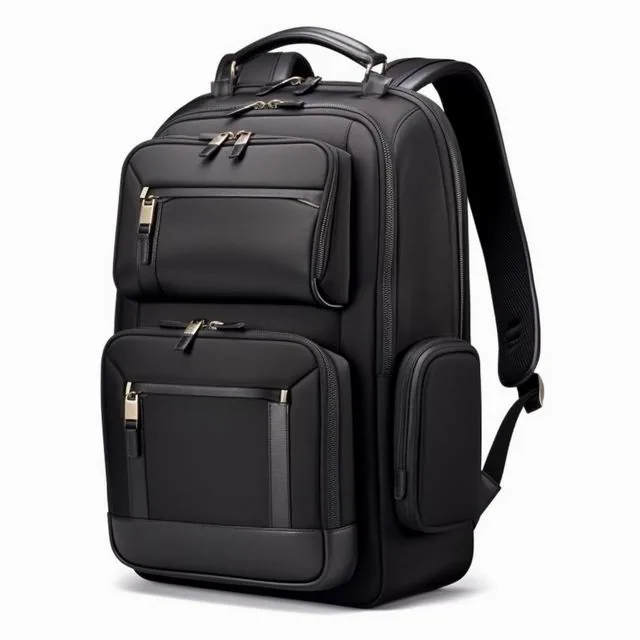
Most UK distribution sites use personal effects lockers of roughly 300 mm internal width by 450 mm depth, with clear height varying from about 300 mm to 900 mm depending on whether the unit is single or two-tier. Older sites can be narrower still, sometimes 255 mm. A bag wider than 300 mm when lightly loaded will not sit squarely, and anything deeper than around 250 mm stops the door closing on a shallow unit, so those two numbers decide most shortlists before features do. Measuring your own locker before buying saves the return postage and a fortnight of using a plastic bag instead. Measuring your locker first costs nothing and saves an entire return process later.
| Setting | Practical limit | Why it matters |
|---|---|---|
| Standard personal locker | 300 mm wide, 450 mm deep | Common across UK DCs |
| Narrow or legacy locker | 255 mm wide | Older sites and retrofitted welfare areas |
| Two-tier locker | 300-400 mm clear height | Bag must lie flat, not stand up |
| Search desk | Under 4 compartments | Fewer pockets clear inspection faster |
| Turnstile and canteen queue | Under 250 mm packed depth | Reduces shoulder-checking in crowds |
The search desk is the other half of this, and it is the reason minimalism wins. Many sites operate a bag check at the end of every shift for stock-loss reasons, and a pack with seven pockets, three hidden compartments and a rolled jacket strapped underneath turns a fifteen-second check into a ninety-second one for you and whoever is behind you in the queue. Four or fewer compartments and nothing externally strapped is the specification that gets a person through quickly and keeps their name off any incident log. Nobody enjoys a ninety-second search at 18:00, least of all the colleagues queuing directly behind you.
Hygiene, Wipe-Down and Cross-Contamination
Warehouse done correctly is stricter about bags than most offices are about anything. On food, drink and pharmaceutical sites, personal bags are frequently restricted to the locker area, and anything entering production or packing zones has to be cleanable. Even where it is not written down, a bag that sits on a welfare-area floor and then goes home with a person handling unpackaged product is a hygiene question, and hand hygiene is the reference point that most site rules are built on: the CDC hand hygiene guidance sets out why cleanable surfaces and dry storage matter. The underlying principle is straightforward: a surface you cannot clean is a surface that carries contamination onwards.
- Wipe-clean lining: TPU or PVC faced rather than absorbent brushed tricot.
- Sealed seams inside the main body so liquid cannot wick into the foam.
- No carpet-like pocketing that traps crumbs, spillages and dust.
- Colour coding where the site asks for it, so personal and work kit stay visually separate.
- Weekly wipe with a site-approved sanitiser, then dry fully open before the next shift.
Damp is the villain. A bag containing a half-empty water bottle, a damp hi-vis vest and a used gym towel will develop microbial growth within about 48 hours in a warm welfare area, and once the lining smells it rarely recovers fully. The practical rules are unglamorous but effective: nothing damp goes in, water bottles go in an external mesh pocket rather than the main body, and the bag is stored open on a hook rather than closed on the locker floor. Keeping bottles outside the main body is a smaller change than it sounds and removes the problem entirely. External water storage also means bottles get refilled rather than quietly forgotten all shift.
Cold Store, Chilled Zones and Temperature Cycling
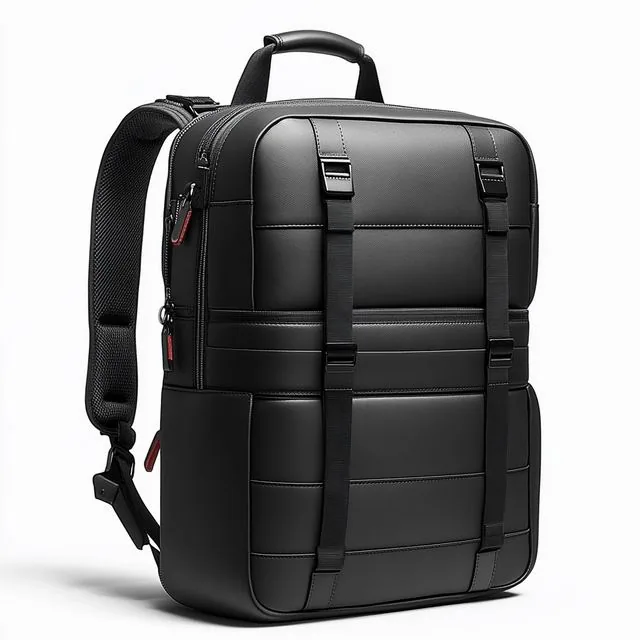
Anyone working chilled or frozen sections introduces a failure mode ordinary commuters never see. Moving between an ambient aisle at 18-22 C and a chilled zone at 2-8 C several dozen times per shift means every air space in the bag repeatedly cycles through the dew point. Water condenses inside laptop pockets, on zip coils and between lining and foam, and in a frozen environment at -18 C or below that moisture then freezes and expands inside materials not designed for it. Those repeated cycles do more damage over a season than any single soaking you would get walking home in the rain. Repeated cycling damages materials far more than any single soaking would ever manage.
Expect condensation rather than leakage. Anything electronic stays in the ambient zone, and damp towels or gloves never go into a closed bag before the end of the shift. Leave the main compartment open for at least two hours between shifts to dry.
Materials respond differently to that cycling. Polyurethane-coated fabrics stiffen and eventually craze at low temperatures, and some cheap PVC backings become brittle below about -10 C. Zips tolerate cold well, but a frozen slider needs defrosting before use, which people force, which is how sliders break. For chilled work, choose a bag without a heavy PU base coating, keep electronics out of the cold entirely, and accept that the lining needs replacing or cleaning far more often than an ambient bag would. Where roles involve long spells below freezing, treat the lining as a consumable rather than as part of the bag. Treat the lining as consumable rather than as something the bag is expected to keep.
Night Shifts, Yards and Visibility
A great deal of UK distribution runs overnight, and the walk across a trailer yard between 02:00 and 05:00 is the most exposed part of many people's day. Moving forklift trucks, reversing curtainsiders and trailers swinging on a tight yard give very little warning, and a person in dark workwear carrying a dark bag is genuinely hard to see. This is where the bag can contribute more than anywhere else on shift, because it is the largest surface you carry. Choosing dark workwear plus a dark bag at 03:00 is a decision worth revisiting before somebody gets hurt. Dark workwear and a dark bag at 03:00 is a combination worth reconsidering immediately.
- Continuous reflective banding across the lower back panel, not just piping.
- Reflective detailing on both shoulder straps, which face oncoming vehicles.
- A light loop positioned 400-600 mm above the ground for a clip-on rear light.
- Avoid an all-black specification if the yard is unlit; a grey or hi-vis accent helps.
- Nothing that flaps: loose straps read as movement errors to reversing drivers.
Where personal protective equipment is part of the job, the bag and the vest interact. Many sites issue high-visibility clothing free of charge to anyone working near vehicles, and the relevant reference for employers is the HSE guidance on personal protective equipment. A dark bag worn over a compliant vest cancels out roughly a third of that garment's visible area, so if your role requires high-visibility clothing, choose a bag whose panels do not cover the banding on your back, or wear it on the front while crossing yards. Either way, the bag should support what you are issued rather than quietly cancelling part of it out.
Dangling Straps and Machinery Safety
Loose webbing is the one feature of a backpack that is an actual hazard rather than an annoyance in a distribution environment. Conveyor housings, pallet trucks, roller shutters and cage wheels all catch straps, and a strap can catch far faster than a person can react when walking across a moving line. Keep every strap tail under about 60 mm once buckled, and avoid external daisy chains, carabiners and key clips entirely in roles that take you near moving equipment. No feature on a backpack is worth that risk, including modular attachment systems sold as useful additions. No modular attachment system is worth that risk, whatever the extras promise in the catalogue.
- Trim or tuck all strap tails; anything beyond 60 mm of free webbing is a snag risk.
- No external hardware: metal clips scratch racking, cages and painted vehicle interiors.
- Avoid shoulder carry: one strap off the shoulder swings the bag into whatever is beside you.
- Secure the whole pack before crossing any conveyor aisle or dock leveller.
- Report snagged bags: a caught strap usually means something needs guarding, not just a new bag.
There is a carrying-side argument as well. Shift work involving manual handling already carries its own load on the body, and the HSE guidance on musculoskeletal disorders is the reference employers use when assessing that risk. Keeping a personal bag to 3-6 kg and distributing it across two padded straps, rather than slinging it over one shoulder for twelve hours, costs nothing and leaves you with fewer aches at 06:00. On a twelve-hour shift the small load is carried for a long time, and duration matters as much as mass. Two straps, a sensible load and twelve hours is a combination your back will tolerate for years.
What Shift Workers Actually Carry
Compared with a trade toolkit, the load is light but surprisingly bulky. Two litres of water is 2 kg on its own, food for a twelve-hour shift is 0.5-1.2 kg depending on whether there is a canteen, a spare hi-vis vest or polo shirt is 0.2-0.4 kg, personal items including phone, wallet, keys and medication add 0.5-1.0 kg, and winter layers add another 0.6-1.5 kg. Most people land between 3.0 kg and 6.0 kg, which is why 20-26 L is generous enough and why nobody needs a 35 L bag. Everything else either stays in the locker or gets left in the car, and knowing which is which saves carrying it.
| Item | Typical mass | Note |
|---|---|---|
| Water, 1-2 litres | 1.0-2.0 kg | The single heaviest item most people carry |
| Food and flask | 0.5-1.2 kg | Depends on canteen provision |
| Spare hi-vis or shirt | 0.2-0.4 kg | Often compulsory after a spill or tear |
| Personal items | 0.5-1.0 kg | Phone, wallet, keys, any medication |
| Winter layers | 0.6-1.5 kg | Unheated aisles and yard work |
The corollary is to buy for shape rather than litres. Because nothing in that list compresses well - a 1 litre bottle is a 1 litre bottle whether it sits in a 20 L or a 40 L bag - a rigid, boxed bag that stands upright in a locker and keeps everything visible beats a soft sack every time. Look for at least one external bottle pocket sized to take a 75-90 mm diameter bottle, because internal water storage is how linings get wet. External water storage also keeps the bottle visible, which means it is emptied and refilled rather than forgotten. An external pocket also keeps the bottle visible and therefore actually used during shift.
Fleet Buying: Cost per Head per Year
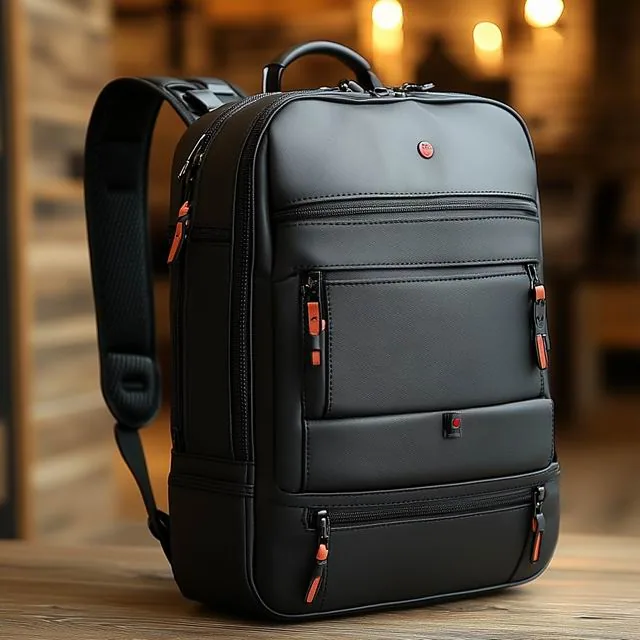
Operations managers rarely care about unit price; they care about replacement frequency and complaint volume. A standard 20-25 L bag bought wholesale for £18-£35 depending on spec and quantity, replaced every 18-30 months under daily use, costs roughly £8-£20 per head per year. That compares well against issuing a promotional item at £6-£10 that fails in six months and generates replacement requests through the welfare office for the rest of its short life. Multiply that across headcount and the cheap option stops looking cheap very quickly indeed. Multiply that across headcount and the cheap option stops being cheap remarkably quickly.
- Specify the base fabric above 20,000 Martindale cycles and test it to ISO 12947.
- Specify number 8 coil zips rather than number 5 on the main opening.
- Ask for reflective material on both straps, which is what night-shift sites request.
- Agree the spare allocation up front: 3 per cent of headcount covers most sites.
- Keep one SKU rather than three, so replacement stock always matches the issued item.
The two specification decisions that pay back fastest are zip size and lining type. Number 5 coil is fine on a commuter bag but is the single most common warranty claim once a bag is opened twenty times a day, and upgrading to number 8 costs a small amount per unit. A wipe-clean lining costs marginally more than brushed tricot and removes most of the cleaning complaints. Neither upgrade is visible on a tender document, but both show up clearly in month fifteen. Together they account for most of the replacements a site orders in its second year. Together those two account for most replacements ordered during a site's second year.
Keeping One Bag Going Through 250 Shifts
At roughly 200-250 shifts a year, a bag accumulates the equivalent of a decade of ordinary commuter use inside three years. The thing that shortens life most is not the carrying; it is what happens between shifts. A bag left closed on a locker floor with condensation inside will fail from the lining outwards, while the same bag emptied, opened and hung up will usually outlast the high-visibility vest issued alongside it. Three years of uninterrupted service is realistic with that habit and unlikely without it. Three years of service is realistic with that habit and unlikely without establishing it first.
- Empty it every night: nothing organic or damp stays in the bag overnight.
- Hang it open: a hook and twenty minutes of airflow prevents almost every smell.
- Clean zips quarterly: warm water first, then a dry-film lubricant, never oil or grease.
- Brush the base: grit from warehouse floors grinds into coatings at every set-down.
- Patch early: a 20 mm tear in a base corner costs a few pounds now and a bag later.
It is also worth keeping an eye on the two things that quietly become safety issues rather than comfort issues. Reflective material that has gone grey and dusty after eighteen months has lost a large share of its performance, and it is cheap to replace with self-adhesive tape. A strap whose stitching has begun to shear away from the body will eventually drop the load onto a conveyor line or into a doorway, which is the worst possible place for that to happen. Both cost a few pounds to put right and considerably more to ignore over a full shift pattern. Both cost a few pounds now and considerably more to ignore across a full shift pattern.
The Buying Checklist
In priority order: packed width under 300 mm, depth under 250 mm; 20-26 litres with a boxed rather than soft structure; a wipe-clean sealed lining; one external bottle pocket taking a 75-90 mm bottle; number 8 coil zip on the main opening; base fabric tested above 20,000 Martindale cycles to ISO 12947; reflective banding on the lower panel and both straps; no external hardware; every strap tail tuckable to under 60 mm; and four or fewer compartments to keep the end-of-shift check quick. A bag meeting those lines will run three years on a four-on four-off pattern. Sites that buy to those lines tend to reorder the same SKU for years rather than re-tendering every season.
For site-level buying, these become procurement lines rather than shopping notes. Programmes coordinated for QUANZHOU JUNYUAN BAGS begin at a minimum of 500 pcs per style and colourway, with sampling completed in 6-10 working days for standard builds and 12-15 working days where the bag uses a welded base or bonded lining. Bulk lead times sit at 35-50 days and lots are inspected against AQL 2.5 under ISO 2859-1, on FOB Xiamen terms with T/T 30/70 payment. The company has been running since 2014 and coordinates output over 4,950 square metres of SGS-verified production floor space, where 137 colleagues staff seven production lines.
Frequently Asked Questions
What size backpack suits a warehouse shift?
Twenty to 26 litres covers most roles. The load is only 3-6 kg, but water bottles and food do not compress, so usable shape matters more than stated volume. Below 18 L you will struggle to fit two litres of water and winter layers; above 28 L the bag stops fitting standard UK site lockers comfortably. Shape matters more than stated litres, since bottles and food do not compress into spare corners.
Will my backpack fit in a site locker?
Most UK distribution centres use personal lockers around 300 mm wide by 450 mm deep, though older or retrofitted welfare areas can be as narrow as 255 mm. Aim for a packed width under 300 mm and depth under 250 mm. Two-tier lockers usually give only 300-400 mm of clear height, so a bag must lie flat rather than stand. Measure before buying, because two sites run by the same employer can use different units.
Why do some sites band personal bags from work areas?
Food, drink and pharmaceutical sites apply hygiene rules based on cleanability, and a personal bag that has been on a locker floor cannot be easily cleaned. Restricting bags to welfare and locker areas removes that cross-contamination route. Where bags are permitted, choose a wipe-clean sealed lining rather than absorbent fabric. Following the site rule is quicker than arguing about it, and supervisors have heard every exception before.
How do I stop my bag smelling after shifts?
Empty it fully every night and hang it open for twenty minutes, because nothing damp or organic should stay in the bag. Store it on a hook rather than closed on the locker floor. Fully drying a damp lining takes well over 24 hours in a closed bag, which is long enough for microbial growth to start. Warm welfare-area air speeds the process considerably, especially over a two-day rest period.
Are dangling backpack straps really a safety issue at work?
Yes, near moving equipment. Conveyor housings, pallet trucks and cage wheels catch loose webbing faster than a person can react, and metal clips scratch racking and painted surfaces. Keep strap tails under about 60 mm once buckled, avoid external carabiners and daisy chains, and never carry the pack over one shoulder near plant. Tucked webbing also stops the bag catching on cage sides and vehicle interiors during normal movement.
What should I look for in a bag for night shifts?
Prioritise visibility. Look for a continuous reflective band across the lower back panel rather than decorative piping, reflective detailing on both shoulder straps facing oncoming vehicles, and a light loop 400-600 mm above the ground. Remember that a dark bag over a compliant hi-vis vest cancels around a third of that garment's visible area. Reflective panels read best when they move, which is why strap detailing performs well with drivers.
How much weight do warehouse staff carry in a personal bag?
Usually 3-6 kg. Two litres of water is 2 kg, food and a flask 0.5-1.2 kg, spare workwear 0.2-0.4 kg, personal items 0.5-1.0 kg, and winter layers 0.6-1.5 kg for unheated aisles. Keeping the load under about 6 kg and distributed across both straps reduces fatigue noticeably across a twelve-hour shift. Anything beyond that is usually heavy winter layers rather than anything genuinely necessary for the shift.
Can a backpack go into a cold store?
It can, but expect condensation rather than leakage, because repeated moves between ambient aisles and chilled zones at 2-8 C push the bag through the dew point dozens of times a shift. Keep electronics out of the cold entirely, avoid heavy PU-coated bases which stiffen at low temperatures, and defrost rather than force a frozen zip slider. Leave the bag open for a couple of hours afterwards so any trapped moisture has time to disperse.
What is the best zip specification for shift use?
A number 8 coil zip on the main opening. At twenty openings a day over a 250-shift year, that is about 5,000 cycles on one slider, and number 5 coil is the single most common failure point under that regime. Clean zips quarterly with warm water followed by a dry-film lubricant, avoiding oil, which attracts grit. A well-sized coil also runs more smoothly when grit is present, which it usually is.
How often should site bags be replaced?
Plan for every 18-30 months under daily use. A bag bought wholesale at £18-£35 works out at roughly £8-£20 per head per year, which compares well against a £6-£10 promotional item failing within six months. Hold about 3 per cent of headcount as spare stock and keep to one SKU so replacements always match. Tracking replacement dates beats reacting to complaints, which usually arrive after the failure.
Is a hip belt useful for warehouse work?
Rarely. The load is usually below 6 kg, and hip belts add bulk that snags on lockers, cage sides and seat backs. Two well-padded shoulder straps plus a sternum strap are a better combination for this context. Anything adding extra thickness at the waist tends to be more nuisance than benefit across a shift of constant movement. Spend that money on reflective detailing and a wipe-clean lining instead, which pay back every shift.
Sourcing Bags for a Site or Fleet?
Shift bags are bought against replacement cycles, not against a feature list. We develop warehouse, logistics and industrial backpack programmes for UK operators from a minimum of 500 pcs per style and colourway, with sampling in 6-10 working days and bulk production in 35-50 days.
Tell us your locker dimensions, hygiene requirements and headcount, and we will come back with a construction proposal and per-unit costing.
Email: service@junyuanbags.com
WhatsApp: +86 177 5002 0688